Disclosure: We may earn a commission when you buy through links on this page, at no extra cost to you. We buy nothing, sell nothing and accept no payment for coverage — commissions never decide what we recommend. How we make money.
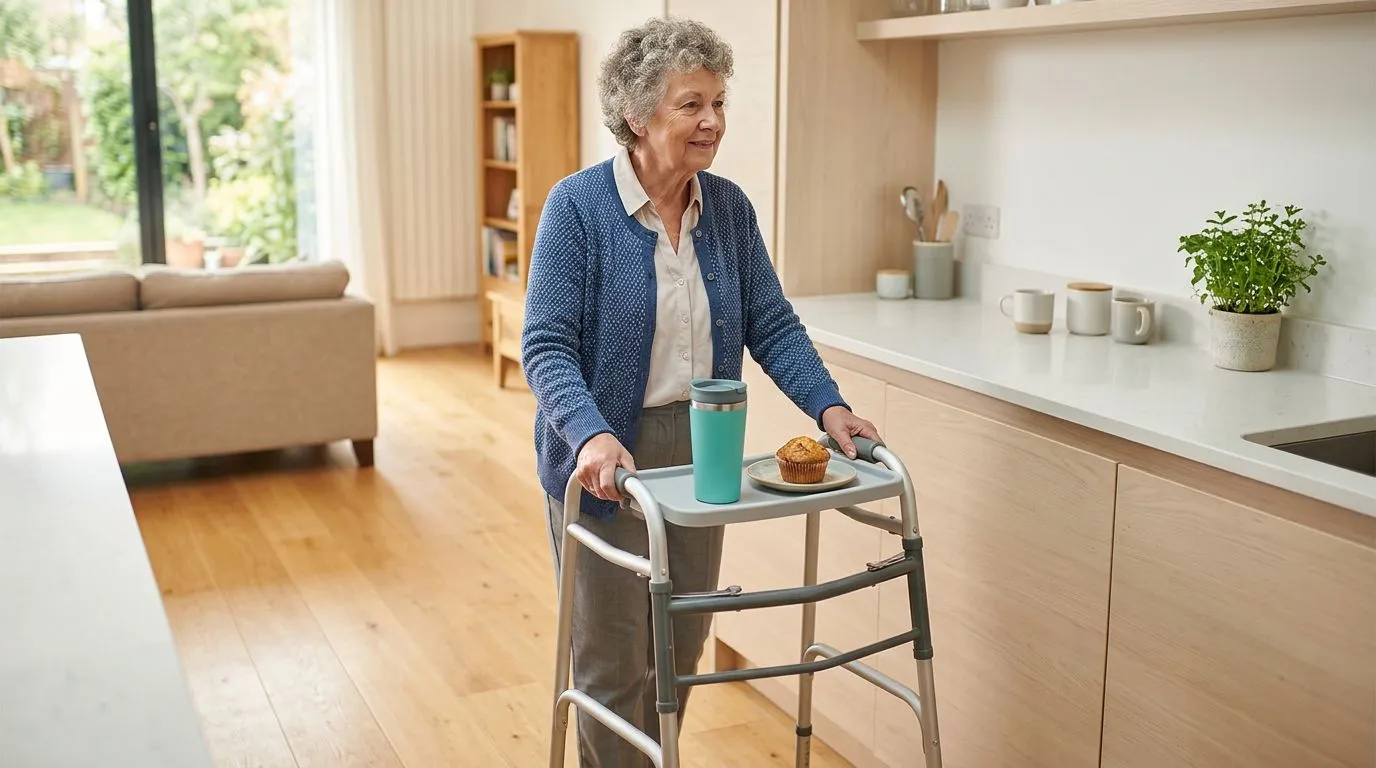
Walker trays and clip-on tables can be helpful for light indoor tasks, such as carrying a covered drink, a plate, a phone, or eyeglasses from one room to another. They make the most sense for steady indoor routines on level floors. They are not safe as a shelf to lean on, a substitute for a caregiver, or a way to carry heavy or hot items.
The key question is not simply whether a tray fits your walker or rollator. It is whether the tray lets you keep both hands on the grips, see your feet, control the device, and move without rushing. If it blocks safe walking, braking, folding, or sitting, it is the wrong accessory for that routine.
Walker trays vs. rollator clip-on tables: 5 key differences
A walker tray and a rollator clip-on table may look similar, but they attach to different mobility aids and raise different safety concerns. A standard walker, folding walker, two-wheel walker, or no-wheel walker frame is designed to be lifted or advanced step by step. A rollator is a wheeled walker, usually with 3 or 4 wheels, hand brakes, and often a built-in seat.
That difference matters. A tray on a standard walker moves only when you move the frame. A tray or table on a rollator can roll away if the brakes are not controlled. On a 4-wheel rollator, the user also needs clear access to the brake handles, seat, and folding mechanism.
| Feature | Walker tray | Rollator clip-on table or tray |
|---|---|---|
| Common device | Standard, folding, two-wheel, or no-wheel walker | 3-wheel, 4-wheel, upright, or bariatric rollator |
| Wheel control | No wheels or 2 front wheels; movement is slower | 3 or 4 wheels; requires hand brake control |
| Seat access | Usually no built-in seat | May cover or interfere with the seat |
| Typical use | Carrying light items room to room | Light surface while stopped, sometimes over the seat or basket |
| Main safety issue | Leaning on the tray or blocking foot view | Rolling movement, brake access, and seat interference |
For walkers, the safest trays are usually simple, lightweight, and easy to remove before folding. For rollators, the safest table-style accessories do not block the hand brakes and can be removed before sitting or folding if needed.
Benefits indoors: carrying a 12-ounce drink without freeing a hand
The main benefit is practical: a tray can help you move small items while still using both hands on the walker grips or rollator handles. For many people, that is safer than carrying a mug, phone, book, or snack in one hand while steering with the other.
Common indoor uses include taking a covered 8- to 12-ounce drink from the kitchen to a chair, moving medication organizers to a table, carrying reading glasses, or transporting a light meal plate. A tray can also reduce repeated trips. Instead of walking 3 times to collect a phone, napkin, and water bottle, one trip may be enough.
For standard walkers, trays may be especially useful because the user often has limited hand freedom. A folding walker or no-wheel walker frame usually requires both hands for steady movement. A tray can create a small work surface without changing the basic walking pattern.
For rollators, a clip-on table can be convenient when the rollator is parked beside a chair or kitchen counter. A 4-wheel rollator with a seat may already have a basket or pouch, but a flat tray is better for items that should stay upright. A 3-wheel rollator is narrower and easier to maneuver in tight rooms, but it may offer less tray stability because it has a smaller frame footprint.
These benefits are real, but limited. A tray helps with light carrying. It does not make a walker or rollator more stable, and it should never encourage carrying more than you can safely manage.
Safety limits: many trays are rated around 5 to 10 pounds
Most walker trays and clip-on tables are meant for light household items, not heavy loads. Many accessories have weight limits in the range of about 5 to 10 pounds, though the exact rating depends on the design and should be checked on the product label or instructions. Even if a tray technically holds more, the mobility aid may become harder to control.
The biggest safety rule is simple: do not put body weight on the tray. A tray is not a handgrip, grab bar, transfer aid, or countertop. Pressing down on one edge can tip the tray, shift the walker, or make a rollator move.
- Do not carry open hot coffee, soup, or tea while walking.
- Do not stack items high enough to block your view of the floor.
- Do not hang heavy bags from the tray or side rails.
- Do not use a tray on stairs, outdoor slopes, gravel, curbs, or wet floors.
- Do not let the tray cover brake handles on a rollator.
- Do not sit on a rollator seat while a clip-on table blocks safe positioning.
A tray can also change balance. Extra weight at the front of a walker may make the frame feel nose-heavy. On a rollator, weight on the tray can make steering less predictable, especially when turning through a doorway that is only 28 to 32 inches wide.
Hot liquids need special caution. If you use a tray for drinks, choose covered cups, fill them only partly, and move slowly. Better yet, transport hot items with help or use a sealed container that will not spill if bumped.
Who it is best for: 4 indoor routines that may make sense
A tray is most useful for someone who already uses a walker or rollator safely indoors and wants help with small, repeated tasks. It is not usually the first accessory to buy when someone is still learning to walk with a new mobility aid.
1. Short, level trips under about 30 feet
A tray often makes sense for short home routes, such as kitchen to dining table, bedroom to bathroom counter, or living room chair to side table. The floor should be level, dry, and uncluttered.
2. Light meal and drink routines
If the usual task is carrying toast, a covered cup, a small bowl, or a medication organizer, a tray can reduce one-handed walking. This is where walker trays often shine.
3. Small-item organization
Phones, hearing aid cases, remote controls, tissues, pens, and glasses are easy to misplace. A tray gives them a visible place during a room-to-room move.
4. Parked rollator use
For a rollator, a clip-on table may help while the rollator is stationary with brakes locked. For example, it can hold a book or light snack beside a chair. The user should still avoid leaning on it or treating it like furniture.
People using upright or stand-up rollators should be extra careful with tray height and visibility. Upright handles place the body in a different position than standard rollator handles, and a table that sits too high can interfere with safe turning or arm position. Bariatric rollators also vary in frame width and weight capacity, so the accessory must match the frame design without reducing stability or brake access.
When a tray may be risky: 6 red flags to watch for
A walker tray is not right for every home or every user. If any of the following red flags apply, a different strategy may be safer.
- The user leans on furniture, counters, or the tray. If support is needed during transfers, ask a clinician about safer transfer equipment or grab bars.
- The home has tight turns under about 30 inches wide. A tray can make it harder to judge doorways, hallways, and bathroom entrances.
- The walker must be folded several times a day. Some trays must be removed before folding, which can become frustrating or unsafe.
- The user has poor foot visibility. If the tray blocks the view of shoes, thresholds, pets, or rugs, fall risk may rise.
- The routine involves hot, heavy, or messy items. Open soup bowls, frying pans, full pitchers, and glass dishes do not belong on a moving walker tray.
- The rollator brakes are hard to reach or weak. On a rollator, reliable hand brakes are essential before using any table accessory.
Cognitive changes also matter. If a person forgets to lock rollator brakes, overloads the tray, or tries to sit while the table is attached, supervision or a different setup may be needed. A tray should simplify a routine, not add another step that is easy to miss.
How to choose and measure: 7 checks before buying
Fit is more than width. Before choosing a tray or clip-on table, measure the mobility aid and think through the route where it will be used. A small mismatch can become a daily annoyance or a safety issue.
| What to check | Why it matters | Typical detail to measure |
|---|---|---|
| Frame width | The tray must sit securely without forcing the sides apart | Outside-to-outside width, often about 23 to 26 inches on many walkers |
| Handle clearance | Hands must stay fully on the grips | At least enough open space for both hands and brake levers if present |
| Tray depth | Too deep may block foot view | Check view of toes and the next 2 to 3 feet of floor |
| Cup holder size | A loose cup can tip | Match to common cup or bottle diameter |
| Weight rating | Overloading affects control | Look for a stated limit, often around 5 to 10 pounds |
| Foldability | Many walkers are folded for cars or storage | Confirm whether the tray must be removed first |
| Cleaning surface | Food and spills happen | Smooth, wipeable material is easier to maintain |
For standard walkers and folding walkers, check whether the tray rests on the side rails, clips to the frame, or spans the handgrip area. It should not wobble, rattle loose, or require awkward force to install.
For two-wheel walkers, make sure the front wheels can still roll freely and the rear legs still land flat. A tray that shifts weight forward may make the walker feel different when turning.
For rollators, confirm that the table does not cover the hand brakes, brake cables, folding strap, storage pouch, or seat latch. On 4-wheel rollators, also check whether the user can still stand close enough to the handles. On 3-wheel rollators, be cautious with large trays because the narrower triangular frame may be less forgiving with side-to-side weight.
Height matters, too. Walker and rollator handgrips are commonly adjusted so the user’s wrist crease lines up with the grip when standing tall with arms relaxed. A tray should not force the user to hunch, reach forward, or walk farther behind the frame than usual.
Walker and rollator feature comparison: 3 accessory-friendly setups
Some mobility aids accept trays more naturally than others. The best setup depends on walking pattern, indoor layout, and whether the user needs a seat.
| Mobility aid type | Tray or table fit | Best use | Main caution |
|---|---|---|---|
| Standard or folding walker | Often compatible with simple removable trays | Short indoor carrying tasks | Do not lean on tray or block foot view |
| Two-wheel walker | May work if tray stays level and secure | Level floors where lifting a walker is difficult | Forward weight can affect turning |
| 3-wheel rollator | Usually limited to smaller clip-on surfaces | Tight indoor spaces and light items | Less frame width for large trays |
| 4-wheel rollator with seat | May accept seat-top trays or clip-on tables | Parked use, light snacks, covered drinks | Must keep brakes and seat access safe |
| Upright rollator | Fit varies because handles are higher | Stationary light surface if compatible | May interfere with posture and steering |
| Bariatric rollator | Requires accessory sized for wider, heavier-duty frames | Light items on a larger frame | Accessory rating is separate from rollator capacity |
One important point: a bariatric rollator’s higher frame weight capacity does not mean its tray can carry heavy loads. The accessory has its own limit. A tray rated for 10 pounds should still be treated as a 10-pound tray, even if the rollator frame itself supports much more body weight.
How to use one safely: a 7-step routine
A safe routine is repeatable. Practice the route with an empty tray first, then with one light item, before using it during a real meal or medication routine.
- Clear the path. Remove throw rugs, cords, pet toys, and clutter from the route.
- Install the tray fully. Make sure it is clipped, seated, or locked as designed.
- Keep the load low and centered. Place heavier items near the middle, not on one edge.
- Use covered containers. A lidded cup is safer than an open mug.
- Keep both hands on the grips. Do not steer with fingertips or carry an item in one hand.
- Move slowly through turns. Take small steps and avoid sudden pivots.
- Park before unloading. With a rollator, lock both brakes before reaching for items.
For rollator users, brake habits are especially important. Lock the brakes before using the table as a stationary surface, before reaching forward, and before sitting on the rollator seat. If the table blocks safe sitting, remove it first.
For walker users, avoid lifting the frame with a loaded tray unless the design and your balance allow it safely. A no-wheel walker or standard walker often requires small lifts. If items bounce, slide, or make the walker hard to place, the tray is not working well for that task.
Practical alternatives: 5 options when a tray is not the safest choice
If a tray adds risk, there are other ways to make indoor routines easier. The safest solution may be a combination of home setup and simple carrying tools.
- Walker pouch or basket: Better for soft or non-spill items such as tissues, mail, or a phone.
- Small crossbody bag: Keeps lightweight items on the body instead of the walker.
- Rolling kitchen cart: Useful when another person can help position it safely.
- Multiple landing spots: Place small tables every 10 to 15 feet along a common route.
- Covered travel cup or sealed food container: Reduces spill risk even without a tray.
Home modifications can matter more than accessories. A clear route, good lighting, non-slip footwear, and sturdy chairs with arms often do more for daily safety than adding another attachment to a walker or rollator.
If you are unsure, ask a physical therapist, occupational therapist, or qualified mobility professional to watch the exact routine: where the item starts, where it goes, how turns are made, and whether the user keeps proper hand placement. A 5-minute observation can reveal problems that measurements alone miss.
FAQ: 5 common questions about walker trays and rollator tables
Can I put a tray on any walker?
No. Some trays fit only certain frame widths, rail shapes, or folding designs. Measure the walker, check the attachment style, and make sure the tray does not block the grips or the user’s view of the floor.
Are walker trays safe for hot drinks?
Only with caution. Use a covered cup, keep it partly filled, and avoid rushing. Open hot coffee, tea, or soup can spill during turns or when the walker is lifted.
Can a rollator tray stay on while I sit down?
Sometimes, but not always. If the tray covers the seat, blocks your body position, or interferes with the brakes, remove it before sitting. Always lock both rollator brakes first.
How much weight can a walker tray hold?
Many are intended for light loads, often around 5 to 10 pounds, but the actual limit depends on the accessory. Follow the stated weight rating and avoid carrying heavy cookware, large pitchers, or full grocery bags.
Is a tray better than a walker basket?
It depends on the item. A tray is better for flat, upright items like a covered drink or plate. A basket or pouch is often safer for soft, irregular, or non-spill items such as mail, tissues, and small personal belongings.
Keep reading
Related guides
Walker Trays and Cup Holders: What Works Best for Standard Walkers, Two-Wheel Walkers, and Rollators
15 min read
Walker Tray vs Basket vs Storage Bag: Safer Ways to Carry Items on a Walker or Rollator
14 min read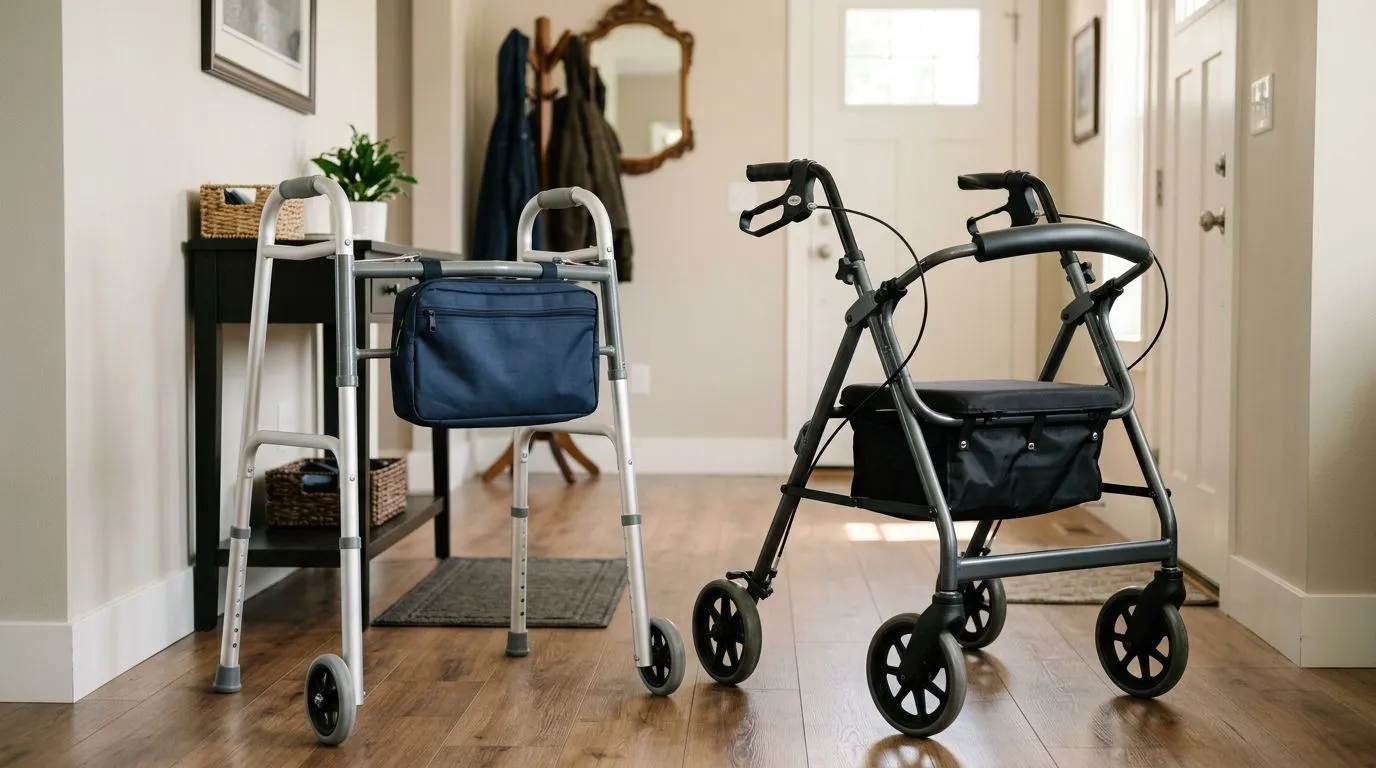
Walker Bags, Baskets, and Carriers: Safer Ways to Carry Items on Walkers and Rollators
15 min read