Disclosure: We may earn a commission when you buy through links on this page, at no extra cost to you. We buy nothing, sell nothing and accept no payment for coverage — commissions never decide what we recommend. How we make money.
A heavy-duty rollator walker is made for larger adults who need a higher weight rating, a wider seat, a stronger frame, and a more stable wheeled base than a standard rollator provides. Most standard rollators support about 250 to 300 pounds, while heavy-duty and bariatric rollators commonly support 350 to 500 pounds or more, depending on frame design. The best choice depends on body weight, hip width, walking balance, doorway clearance, brake control, and whether the user needs a seat for rest breaks.
The phrase “rollator walker” is common, but walkers and rollators are not the same device. A walker is usually a simple frame with no seat and either no wheels or 2 front wheels. A rollator has 3 or 4 wheels, hand brakes, and usually a built-in seat. For larger adults and caregivers, it helps to compare both categories: a heavy-duty rollator offers comfort and mobility, while a heavy-duty walker may give more controlled support for shorter indoor distances.
Standard vs heavy-duty rollators: 300 lb, 400 lb, and 500 lb ratings
Weight capacity is often the first number shoppers notice, and for good reason. A rollator should be rated above the user’s body weight, not right at the limit. If someone weighs 295 pounds, a 300-pound-rated rollator leaves almost no margin for clothing, a bag, uneven force while sitting, or leaning during transfers.
Standard rollators often list a capacity of about 250 to 300 pounds. Heavy-duty rollators commonly start around 350 pounds, with many bariatric designs rated around 400, 450, or 500 pounds. Some specialized frames may be rated higher, but the label is only part of the story. Seat size, frame width, wheelbase, brake design, and overall fit still matter.
| Type | Common weight capacity | Typical seat width | Best use |
|---|---|---|---|
| Standard 4-wheel rollator | 250 to 300 lb | 13 to 16 in | Average-size adults who need a seat and brakes |
| Heavy-duty rollator | 350 to 400 lb | 16 to 20 in | Larger adults needing more width and frame strength |
| Bariatric rollator | 400 to 500+ lb | 18 to 24 in | Users needing maximum capacity and a wider base |
| Heavy-duty walker frame | 350 to 500 lb | No seat | Users who need slower, more controlled support |
A higher capacity usually means a heavier mobility aid. A standard rollator may weigh roughly 14 to 20 pounds, while a heavy-duty rollator may weigh 20 to 30 pounds or more. That added weight can improve planted stability, but it can also make lifting the device into a car trunk harder.
Walker or rollator: 0 wheels, 2 wheels, 3 wheels, or 4 wheels?
The biggest decision is not just “standard or heavy-duty.” It is whether the person needs a walker or a rollator. Walkers are more basic and deliberate. Rollators are easier to push continuously, but they require brake awareness and enough balance to control a wheeled device.
A no-wheel walker frame must be lifted and set down with each step. That can feel secure for some users, especially indoors, but it takes arm strength and coordination. A 2-wheel walker rolls forward while the rear legs stay in contact with the floor, creating a mix of glide and control. A 3-wheel rollator is narrower and turns easily, but it usually does not offer the same seating comfort or stability as a 4-wheel rollator. A 4-wheel rollator is the most common seated option and is often the best starting point for larger adults who need rest breaks.
| Mobility aid | Seat | Hand brakes | Stability feel | Good fit for larger adults? |
|---|---|---|---|---|
| No-wheel walker | No | No | Very controlled, slower | Yes, if rated high enough |
| 2-wheel walker | No | Usually no | Controlled with easier forward movement | Yes, especially indoors |
| 3-wheel rollator | Usually no full seat | Yes | Easy turning, less seated support | Sometimes, but check width and rating |
| 4-wheel rollator | Yes | Yes | Stable when properly fitted | Often the best rollator style |
As a practical rule, a rollator works best when the user can walk with a continuous motion, squeeze the brakes, and follow a routine before sitting. A walker is often better when the user needs to pause frequently for balance, puts heavy downward pressure through the arms, or has trouble managing wheels and brakes.
Seat width and sitting comfort: 16 in vs 20 in vs 24 in
Seat width is more than a comfort feature. It affects whether the user can sit safely without perching on the edge or feeling squeezed between the handles. Many standard rollators have seats around 13 to 16 inches wide. Heavy-duty rollators often offer 18, 20, 22, or even 24 inches of seat width.
To estimate the right seat width, measure the user’s seated hip width at the widest point while they are wearing normal clothing. Add about 1 to 2 inches of clearance. For example, if seated hip width is 18 inches, a 20-inch seat is usually more comfortable than a 16-inch seat. The user should be able to sit fully back without the frame pressing into the thighs or hips.
Seat depth matters too. A seat that is too shallow can feel unstable, while one that is too deep may press behind the knees. Many rollator seats are roughly 8 to 14 inches deep. Larger users may prefer a deeper padded seat, but deeper is not automatically better if it changes posture or makes standing harder.
- Measure seated hip width: use a soft tape across the widest point while seated.
- Add 1 to 2 inches: this allows clothing and easier positioning.
- Check seat height: feet should reach the floor when seated, if possible.
- Test the backrest position: a back strap should not push the user forward.
Caregivers should also check the space between the handles. A seat may be listed as wide, but the usable sitting area can feel smaller if the handles or side frames crowd the user.
Frame strength and materials: aluminum, steel, and cross-bracing up to 500 lb
A heavy-duty rollator is stronger for reasons beyond thicker tubing. Frame geometry, reinforced joints, axle design, cross-bracing, and wheel mounting points all contribute to real-world stability. Two devices may both list a 400-pound capacity, yet one may feel steadier because its wheelbase is wider and its seat support is better braced.
Aluminum frames are common because they resist rust and keep weight lower. Steel frames can feel very solid, but they may be heavier. Either material can work if the rollator is properly engineered and rated for the user. The complete frame matters more than the metal name alone.
Look for a frame that feels rigid when the user sits down and stands up. The seat platform should not twist noticeably. The handles should not wobble. The folding mechanism should lock securely when open. On higher-capacity rollators, a wide front-to-back wheelbase and reinforced side supports can make a major difference.
Frame strength also affects transport. A rollator that weighs 28 pounds may be stable in use but difficult for a spouse or caregiver to lift into an SUV. If the device has to be loaded several times a week, folded weight and folded dimensions are not minor details. They affect daily usability.
Stability basics: wheel size, base width, and 28 to 32 in doorways
Stability comes from a mix of width, wheel placement, user posture, and surface conditions. A wider heavy-duty rollator can feel more secure, but it may be harder to maneuver through bathrooms, hallways, and older interior doorways. Many US interior doors are around 28 to 32 inches wide, while exterior doors are often around 36 inches.
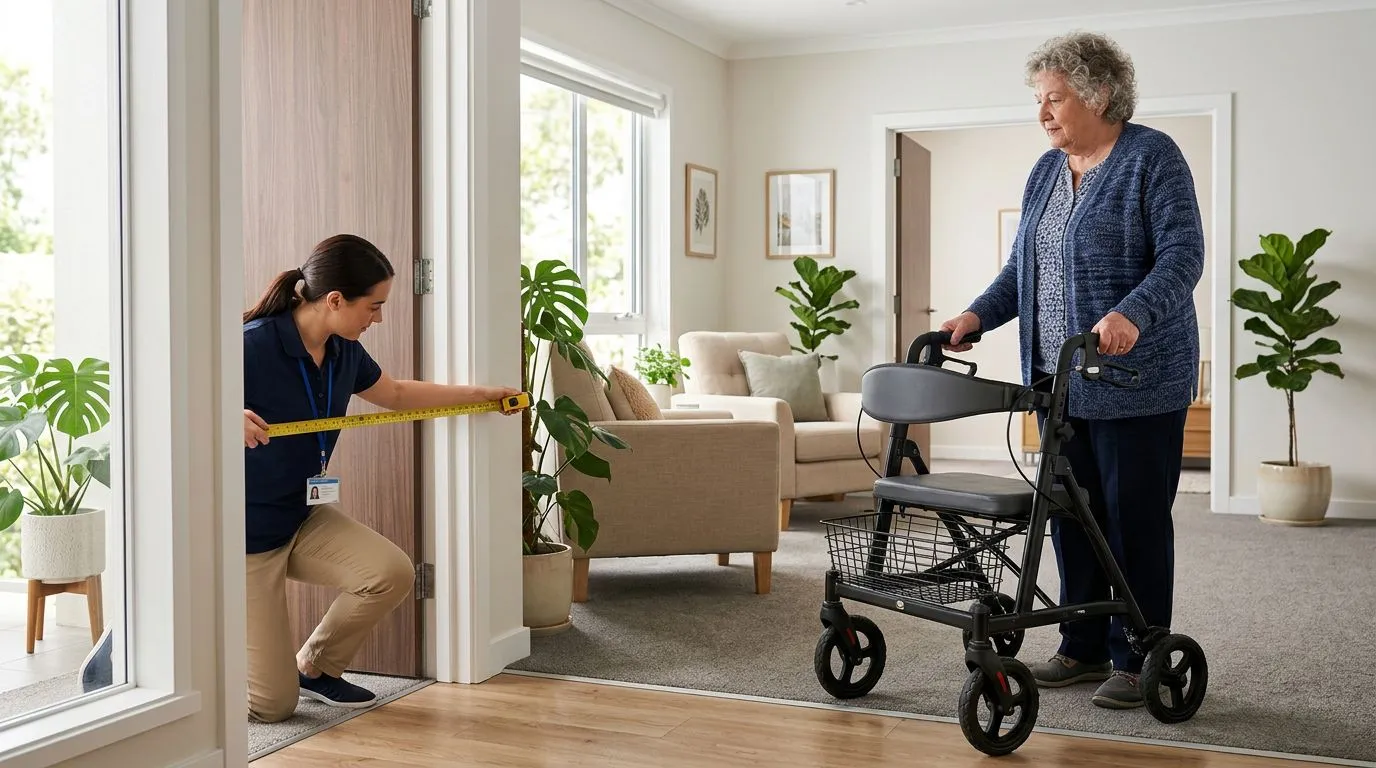
Measure the narrowest areas the rollator must pass through: bathroom door, bedroom doorway, hallway turns, kitchen gaps, and the space beside a favorite chair. Compare those measurements with the rollator’s overall width, not just the seat width. A 22-inch seat may come on a frame that is close to 28 or 30 inches wide overall.
Wheel size matters as well. Smaller 6-inch wheels may work well on smooth indoor floors. Larger 8-inch or 10-inch wheels tend to handle sidewalk cracks, thresholds, low-pile carpet, and outdoor surfaces better. For a larger adult, larger wheels can reduce the jolt when crossing uneven surfaces, but they do not replace careful walking or proper brake use.
- Indoor use: prioritize turning radius and doorway clearance.
- Outdoor use: consider 8-inch or larger wheels for rougher surfaces.
- Mixed use: balance wheel size with total frame width.
- Tight bathrooms: measure before choosing a wide bariatric frame.
No rollator is tip-proof. Avoid hanging heavy bags from one handle, especially a 10-pound purse or grocery bag, because side-loading can reduce stability. Use the manufacturer’s basket or pouch limits, and keep weight centered and low whenever possible.
Brakes and handles: grip strength, height range, and 15-degree elbow bend
Rollators use hand brakes, usually loop-style handles that squeeze to slow and push down to lock for parking. Before sitting, both parking brakes should be fully locked. This is not optional. A rolling seat can move unexpectedly, especially on tile, hardwood, ramps, or sloped driveways.
Handle height should let the user stand tall with relaxed shoulders. A common fitting method is to have the user stand in normal shoes with arms resting at the sides, then set the handles near the crease of the wrist. When holding the grips, the elbows should bend slightly, often around 15 to 20 degrees. If the handles are too low, the user may lean forward. If they are too high, the shoulders may rise and the rollator can become harder to control.
Grip strength is just as important as handle height. Larger adults may need a heavy-duty frame, but that does not automatically mean they have strong hands. Arthritis, neuropathy, stroke history, or general weakness can make brake squeezing difficult. If the user cannot reliably squeeze and lock the brakes with both hands, a rollator may not be the safest choice without professional guidance.
Walkers work differently. Standard walkers and 2-wheel walkers usually do not have hand brakes, so the user controls movement by lifting, placing, or slowing the frame with body position. For someone who cannot operate brakes but still needs support, a properly fitted walker may be safer than a rollator.
Who a heavy-duty rollator is best for: 350 lb capacity and daily rest breaks
A heavy-duty rollator is often a good match for a larger adult who can walk with a steady gait but needs support, a place to rest, and a frame sized for comfort. The seat is especially useful for people who need to pause after 2 or 3 minutes of walking, wait in line, or take breaks during longer outings.
It may be best for someone who:
- Weighs above the safe range of a standard 250 to 300-pound rollator.
- Needs a seat wider than 16 inches.
- Can control a wheeled device without pushing it too far ahead.
- Can squeeze and lock both hand brakes every time.
- Uses the rollator on level indoor floors, sidewalks, stores, or clinics.
- Needs more stability than a narrow 3-wheel rollator can provide.
A heavy-duty walker may be better for someone who needs maximum control, has poor brake use, or mainly moves short distances from bed to bathroom, chair to kitchen, or car to doorway. A walker can feel slower, but slower is sometimes safer.
An upright or stand-up rollator is another option for some larger adults who stoop over a standard rollator. These devices use higher forearm supports or elevated handles to encourage a more upright posture. They can help with posture comfort, but they are usually larger and need careful fitting. Weight capacity, forearm platform width, and overall stability should be checked closely.
How to choose and measure: 6 checks before buying
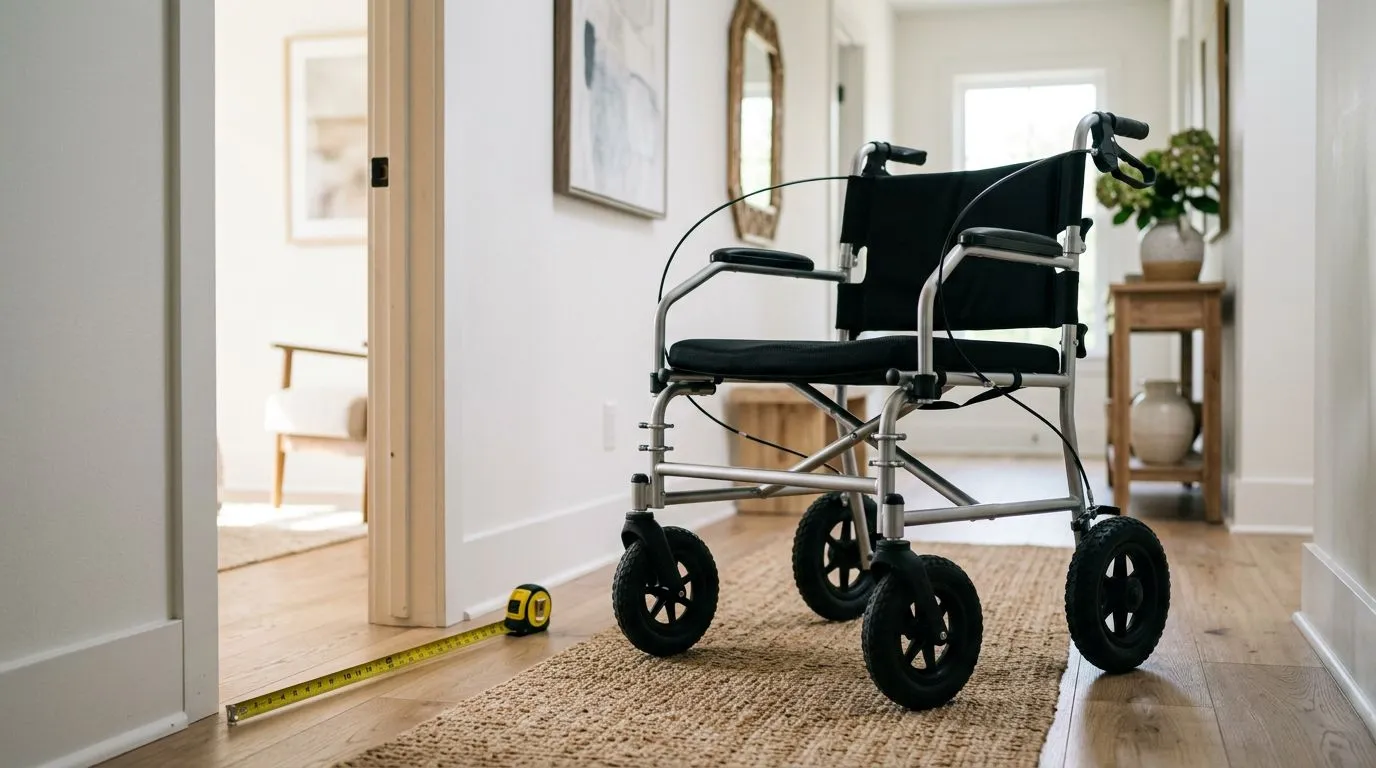
A good choice starts with measurements, not guesses. Use a tape measure, the user’s regular shoes, and the actual home environment. If possible, involve a physical therapist, occupational therapist, physician, or trained mobility professional, especially after a fall, surgery, stroke, or major change in walking ability.
- Check weight capacity. Choose a rollator or walker rated comfortably above the user’s body weight. Do not treat the listed capacity as a target.
- Measure seated hip width. Add 1 to 2 inches to find a practical seat width for a rollator.
- Measure handle height. Set grips near wrist crease height with shoes on, aiming for a slight elbow bend.
- Measure doorways. Confirm the overall frame width fits through the narrowest doorway, often 28 to 32 inches indoors.
- Test brake control. The user should squeeze and lock both brakes without pain or confusion.
- Consider transport weight. If a caregiver must lift it into a car, compare folded weight and folded size.
Think through a real day. Will the rollator be used mainly inside a one-level apartment? Across a parking lot? In a medical office? On a ramp? Around pets? A device that works beautifully in a wide store aisle may be frustrating in a small bathroom.
Also watch the user’s walking pattern. Rollators are not meant to be pushed far ahead while the user leans forward. The safest posture is usually inside the frame area, with the rollator close enough for the user to stand tall and control it.
Feature comparison: 4 choices that affect safety and comfort
Features should solve specific problems. A wider seat helps only if the rollator still fits through the home. A heavier frame helps only if someone can still transport it. Use the table below to connect features with everyday decisions.
| Feature | Why it matters | Helpful range or example | Trade-off |
|---|---|---|---|
| Weight capacity | Supports user and sitting loads | 350, 400, or 500 lb rating | Higher capacity often adds weight |
| Seat width | Improves sitting comfort and fit | 18 to 24 in for many heavy-duty users | Wider seat means wider frame |
| Wheel size | Affects rolling over thresholds and sidewalks | 8 to 10 in for mixed indoor/outdoor use | Larger wheels may increase bulk |
| Overall width | Determines doorway and bathroom access | Compare with 28 to 32 in doorways | Too wide can limit indoor use |
Accessories need the same practical review. A storage pouch can be useful for a phone, keys, and wallet, but overloading it changes handling. Trays can help indoors, yet they should not encourage carrying hot liquids while walking. Oxygen tank holders, cane holders, and cup holders may be appropriate, but they should attach securely and not interfere with folding or braking.
Maintenance and safe use: 5-minute weekly check
Even a strong rollator needs routine checks. Set aside 5 minutes once a week, or more often if the rollator is used outdoors daily. Caregivers can make this part of a normal Sunday routine.
- Squeeze both brakes and confirm the wheels stop evenly.
- Lock the parking brakes and gently try to roll the device forward.
- Check wheel nuts, axle areas, and folding locks for looseness.
- Look for cracked grips, loose back straps, or torn seat material.
- Wipe dirt, grit, and moisture from wheels and brake areas.
Replace worn parts promptly when the device design allows it. If the frame is bent, cracked, or no longer locks open securely, stop using it until it is inspected. A rollator that has been dropped down stairs, hit by a vehicle, or overloaded may not be safe even if it still rolls.
Daily habits matter too. Lock brakes before sitting. Sit only on the built-in seat, not on a tray or bag. Do not use a rollator as a wheelchair unless the device is specifically designed for transport use. Most rollators are walking aids, not passenger chairs.
FAQ: 5 common heavy-duty rollator questions
What is the difference between a heavy-duty rollator and a bariatric rollator?
The terms overlap. “Heavy-duty” often refers to rollators rated above standard capacity, such as 350 or 400 pounds. “Bariatric” usually describes wider, higher-capacity designs, often around 400 to 500 pounds or more. Always compare the actual weight rating, seat width, and overall frame width.
Is a heavy-duty rollator safer than a standard walker?
Not automatically. A heavy-duty rollator can fit someone who can control wheels and brakes and needs a seat. A standard or heavy-duty walker may be safer for someone who needs slower movement, does not need a seat, or cannot operate hand brakes reliably.
How wide should the seat be for a larger adult?
Measure seated hip width and add about 1 to 2 inches. If the user measures 19 inches across the hips while seated, a 20- or 22-inch seat may be more comfortable than a standard 16-inch seat. Check the usable space between handles too.
Can heavy-duty rollators fit through bathroom doors?
Sometimes, but not always. Many bathroom and bedroom doors are around 28 to 32 inches wide, and some heavy-duty rollators approach that width. Measure the actual doorway and compare it with the rollator’s overall width before choosing.
When should I ask a clinician for help choosing?
Ask for help after a fall, surgery, stroke, new weakness, dizziness, or any major change in walking. A physical or occupational therapist can assess gait, balance, brake use, and whether a walker or rollator is the better match.
FAQ
Frequently asked questions
How wide should a rollator seat be for a larger adult? +
Measure the user’s seated hip width and add about 1 to 2 inches. For example, someone measuring 19 inches across the hips may be more comfortable on a 20- or 22-inch seat than on a standard 16-inch seat.
Will a heavy-duty rollator fit through indoor doors? +
It depends on the overall frame width. Many interior doors are about 28 to 32 inches wide, and some heavy-duty rollators are close to that width. Measure the narrowest doorway and compare it with the rollator’s total outside width.
When should a caregiver ask a professional for help choosing a walker or rollator? +
Ask a clinician, physical therapist, or occupational therapist after a fall, surgery, stroke, dizziness, new weakness, or major change in walking ability. They can assess balance, gait, brake use, and whether a walker or rollator is the safer choice.
Keep reading
Related guides

Best Walker Features for Tall People, Larger Adults, and Higher Weight Capacities
13 min read
Heavy-Duty Walkers and Bariatric Rollators: What Higher Weight Capacity Adds to the Price
14 min read
Mobility Walker With Seat vs Standard Walker: Which One Is Right for You?
14 min read