Disclosure: We may earn a commission when you buy through links on this page, at no extra cost to you. We buy nothing, sell nothing and accept no payment for coverage — commissions never decide what we recommend. How we make money.
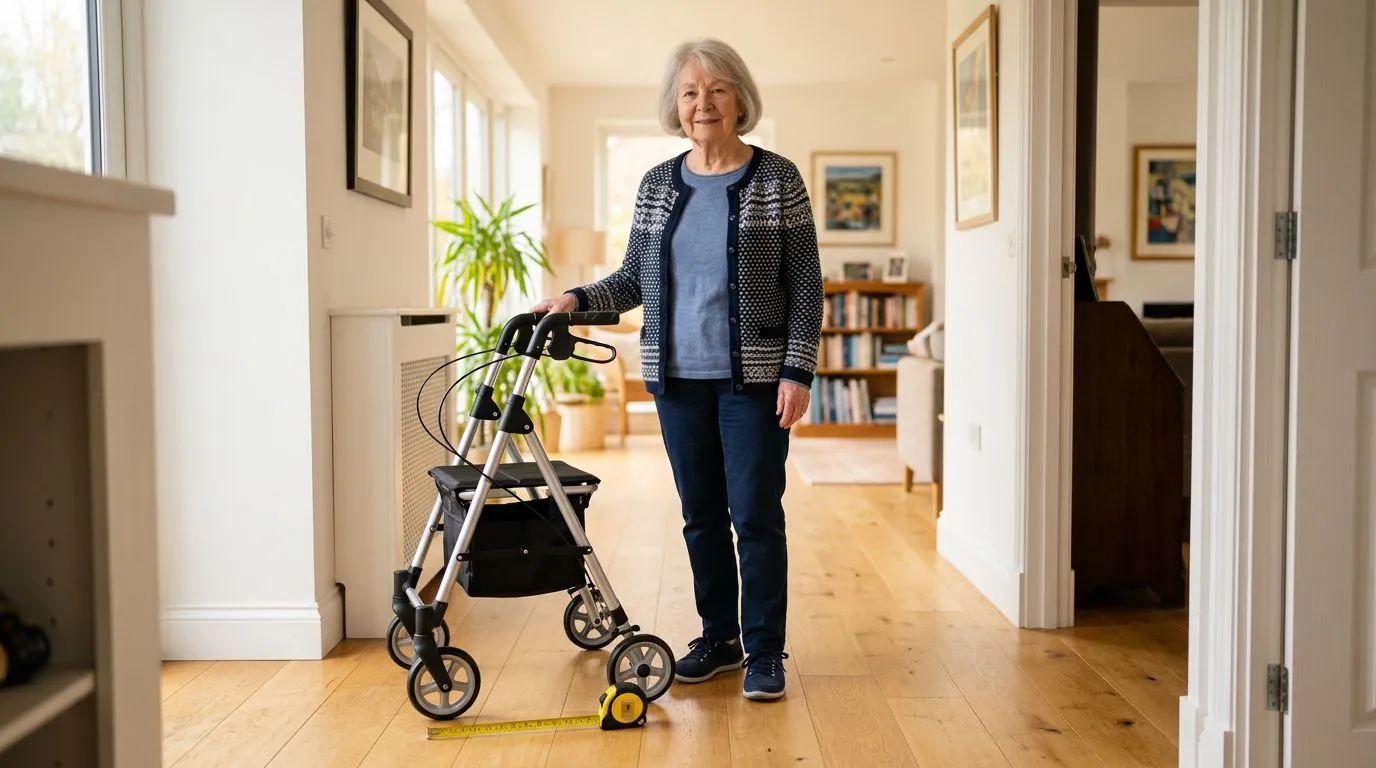
A compact or junior-size walker can be the right choice for a petite adult when a standard walker is too tall, too wide, or hard to keep close to the body. The best fit lets the user stand upright with a slight bend in the elbows, usually about 15 to 20 degrees, while the walker remains stable and easy to control.
For many shorter adults, the problem is not strength or confidence. It is fit. A walker that is even 1 or 2 inches too tall can affect posture, strain the shoulders, and make turning in tight spaces harder than it should be.
Why standard walkers can feel too large for adults under about 5 feet 4 inches
Many standard adult walkers are built to fit a broad height range, often starting around 5 feet 4 inches or 5 feet 5 inches depending on the frame. That works for many people, but it can leave shorter adults with handles that do not adjust low enough. When the grips sit too high, the user may shrug the shoulders, bend the wrists, or push the frame too far ahead of the body.
Width matters as well. A standard walker may measure roughly 23 to 25 inches wide at the front. In a small bathroom with a 24-inch doorway opening, that extra width can be the difference between easy access and daily frustration. Petite adults often have a narrower stance and shorter step length, so a wide frame can feel less natural during turns.
Depth is another factor people often overlook. A deeper walker frame may feel stable, but it can also take more room to maneuver around a bed, recliner, kitchen island, or hallway corner. A compact walker frame may reduce the turning burden without giving up the basic support that makes a walker useful.
The goal is not simply to buy the smallest walker available. The goal is to choose a frame that matches the person, the home, and the way the walker will be used every day.
Compact vs junior-size walkers: key differences in 2 inches, 5 pounds, and daily use
The terms compact and junior-size are sometimes used loosely, but they do not always mean the same thing. A junior-size walker usually refers to a shorter frame with a lower handle height range. A compact walker may also be narrower, lighter, or easier to fold, but it is not automatically shorter.
For example, one petite adult may need handles that adjust down to about 28 inches from the floor. Another may feel comfortable at 31 inches but need a walker that is under 22 inches wide to move through a narrow apartment. Those are different fit problems.
| Walker type | Typical fit advantage | Common tradeoff | Who it may help |
|---|---|---|---|
| Junior-size standard walker | Lower handle height, often useful for shorter adults | May have a smaller frame opening | Petite adults who need firm support and a lower grip height |
| Compact folding walker | Narrower frame and easier storage | May feel less roomy for larger clothing or wider stance | People in small homes, apartments, or tight hallways |
| Two-wheel compact walker | Easier forward movement than a no-wheel frame | Less braking control than a rollator with hand brakes | Users who can manage some weight bearing but need guidance and stability |
| No-wheel junior walker | High stability because it must be lifted or placed | Requires more arm effort with each step | People who need a steady frame and move at a slower pace |
Weight can matter too. Some lightweight walker frames are around 5 to 8 pounds, while heavier-duty versions may weigh more. A petite adult with limited upper-body strength may notice a 3-pound difference when lifting the walker into a car or over a threshold.
Who a smaller walker is best for: 5 common fit problems
A compact or junior-size walker is best for a smaller adult whose current walker gets in the way of posture, control, or access at home. It can also help someone recovering from surgery or illness who needs support that does not feel oversized.
Here are 5 signs that a smaller walker may make sense:
- The handles are too high at the lowest setting. If the shoulders rise toward the ears or the elbows stay almost straight, the walker may be too tall.
- The user stands too far behind the frame. A large frame can encourage reaching, which may reduce control.
- The walker barely fits through doorways. Many interior doors are about 28 to 32 inches wide, but older homes and bathrooms can be tighter.
- Turning feels clumsy. A narrower or shallower frame can be easier to pivot in a kitchen, bedroom, or hallway.
- The walker is hard to lift into a car. Smaller folding walkers can be easier for users and caregivers to handle.
A smaller walker is not only for very short adults. It may also help someone with a narrow build, short arms, limited grip strength, or a home layout where every inch counts.
Still, smaller is not automatically safer. If the frame is too narrow for the user’s stance, or if the person bumps the back legs with each step, the walker may be a poor match. A proper fit should feel steady, not cramped.
How to measure for walker height in under 2 minutes
Walker height is one of the most important measurements. A good starting point is simple and takes less than 2 minutes.
- Have the person stand in supportive shoes on a flat surface.
- Ask them to relax their arms at their sides.
- Measure from the floor to the crease of the wrist.
- Look for a walker handle range that includes that measurement.
- When holding the grips, check that the elbows bend slightly, usually about 15 to 20 degrees.
If the wrist crease measures 29 inches from the floor, a walker that only adjusts down to 32 inches is likely too tall. Those 3 inches may not sound like much, but they can change shoulder position and make the walker feel harder to control.
Shoes matter. Measure in the shoes the person wears most often, because a thicker sole can add about 1 inch. If the user switches between slippers and outdoor shoes, check the fit in both. The safest setting should not make the person hunch in one pair or shrug in another.
Check handle height again after any major health change, weight change, or change in footwear. Rubber tips and wheels also wear down over time, which can slightly affect height and stability.
How to measure width, depth, and home clearance with 3 doorway checks
A walker that fits the body also has to fit the home. Before choosing a compact or junior-size walker, measure 3 places: the narrowest doorway, the bathroom entrance, and the tightest turning area, such as beside the bed or around a dining table.
Use a tape measure and write down the actual clear opening, not just the door size. A door labeled 28 inches may have less usable space because of the door itself, hinges, trim, or a towel rack. If the narrowest usable opening is 24 inches, a walker that is 25 inches wide will cause problems.
Depth affects turning. A standard walker may work in a wide hallway but feel awkward in a small bathroom. A compact folding walker with a shallower frame can make it easier to approach a sink or toilet while keeping support close.
Also check flooring transitions. A no-wheel walker may need to be lifted over thresholds, while a two-wheel walker can roll over small transitions more easily. Loose rugs, cords, and raised thresholds should be addressed because they can catch walker legs or wheels.
| Measurement | Why it matters | Practical target |
|---|---|---|
| Handle height | Controls posture and arm position | Wrist crease height with shoes on |
| Overall width | Determines doorway and bathroom access | At least 1 inch narrower than tightest passage when possible |
| Frame depth | Affects turning and close positioning | Short enough to use near bed, chair, and toilet |
| Folded size | Helps with car transport and storage | Fits trunk, closet, or beside a chair |
No-wheel, two-wheel, or folding walker: choosing among 3 smaller-frame options
Compact and junior-size walkers come in several styles. The right choice depends on balance, endurance, home layout, and whether the user needs maximum steadiness or easier movement.
No-wheel standard walker
A no-wheel walker has four legs with rubber tips. The user lifts or places the walker forward, then steps into it. This style can feel very stable because it does not roll away. It may be a good fit for someone who moves slowly and needs firm support with each step.
The tradeoff is effort. Lifting the frame repeatedly can be tiring, even if the walker weighs only 6 or 7 pounds. For a petite adult with shoulder pain, wrist pain, or limited stamina, a no-wheel frame may feel secure but demanding.
Two-wheel walker
A two-wheel walker has wheels on the front legs and rubber tips or glides on the rear legs. The front wheels allow smoother forward movement, while the back legs add resistance. This can help a user who has trouble lifting a no-wheel frame but does not need or want a full rollator.
Wheel size varies, but small front wheels are common on basic two-wheel walkers. Larger wheels may handle uneven surfaces better, though the frame still does not offer the same outdoor rolling performance as a rollator.
Folding compact walker
A folding walker can be stored beside a chair, placed in a closet, or loaded into a car. For smaller adults who travel to appointments, a frame that folds flat can reduce caregiver strain and make daily routines easier.
Check how the folding mechanism works. Some require two hands, while others are easier to release with limited dexterity. Folded size matters too; a walker can be compact in use but still bulky when folded.
When a petite adult should consider a rollator instead of a walker, including 3-wheel and 4-wheel styles
A walker and a rollator are not the same. A walker is usually a simpler frame, with no wheels or two front wheels, and is often chosen for steady support at a slower pace. A rollator is a wheeled walker with hand brakes and typically a built-in seat; many 4-wheel rollators include a storage pouch or basket.
A petite adult may consider a rollator if they walk longer distances, need a seat for rest breaks, and can safely use hand brakes. Rollators can be easier to push outdoors, especially with larger wheels, but they are not meant to support heavy leaning the same way a standard walker might. Brake control is essential.
For smaller users, rollator fit can be just as challenging as walker fit. Seat height, handle height, overall width, and brake reach all matter. A seat that is 21 inches high may be uncomfortable for someone whose feet do not rest flat on the floor when seated. A handle range that starts too high can cause the same shoulder strain as an oversized walker.
| Device | Main features | Best for | Use caution if |
|---|---|---|---|
| Compact or junior walker | Stable frame, no seat, usually no hand brakes | Shorter adults needing close, steady support | The user cannot lift or guide the frame safely |
| 3-wheel rollator | Narrow turning, hand brakes, usually no full seat | Tight spaces and users who need maneuverability | The user needs frequent seated rest breaks |
| 4-wheel rollator | Hand brakes, seat, storage, rolling movement | Longer walks and planned rest breaks | The user leans heavily or cannot manage brakes |
| Upright rollator | Forearm supports, taller posture, hand brakes | Some users who need a more upright stance | The frame is too large or difficult to control indoors |
| Bariatric rollator | Higher weight capacity and wider frame | Users who need more capacity and seat width | A petite user needs narrow width or lower handles |
Rollators can be very helpful, but they are not a direct substitute for every walker. If a clinician has recommended a walker after surgery or because of balance concerns, ask before switching to a rollator.
Weight capacity, frame size, and stability: why a 300 lb rating is not the only number
Many adult walkers list weight capacities around 250 to 300 pounds, while heavy-duty or bariatric mobility aids may be rated higher. Weight capacity is important, but it does not tell the whole fit story for a petite adult.
A walker can have an adequate weight rating and still be too tall, too wide, or awkward to steer. Likewise, a smaller walker should never be used if the user is above the stated capacity. The frame, cross braces, rubber tips, and adjustment buttons are all designed for a specific range of use.
Stability comes from the match between the user and the base of support. A very narrow walker may pass through tight spaces, but it should still let the user step naturally inside the frame without hitting the back legs. The user should not have to twist the torso or take unusually short steps to avoid the walker.
Check the tips and wheels regularly. Rubber tips can wear unevenly, and worn tips reduce grip. Wheels should roll freely without wobbling. A 10-second check before leaving the house can catch many small problems before they become safety concerns.
Features petite adults should compare before buying: 8 practical details
Because there is no single best walker for every petite adult, compare features by fit and daily use. A difference of 1 inch in handle height or frame width can matter more than an extra accessory.
- Handle height range: Make sure the lowest setting matches the user’s wrist crease measurement.
- Overall width: Compare it with the narrowest doorway and bathroom path.
- Inside frame space: The user should be able to step comfortably without bumping the frame.
- Weight of the walker: A lighter frame may be easier to lift, fold, and transport.
- Foldability: Check whether it folds easily and stays closed when carried.
- Grip size and texture: Smaller hands may prefer grips that are not too thick.
- Wheel or tip style: Choose based on flooring, thresholds, and arm strength.
- Adjustment hardware: Buttons should click securely into place at the same height on both sides.
Avoid choosing by height label alone. Terms like junior, petite, compact, and narrow are useful clues, but the actual measurements are what count.
Safe setup and first-week adjustment: 7 checks before daily use
Once a smaller walker is chosen, setup matters. Take 10 to 15 minutes to adjust and test it before relying on it for daily movement.
- Set both handles to the same height.
- Confirm adjustment buttons are fully locked.
- Check that all four legs, wheels, or tips contact the floor evenly.
- Remove loose rugs or cords from common walking paths.
- Practice turning in the bathroom, bedroom, and kitchen.
- Test folding and unfolding before leaving home.
- Ask a physical therapist, occupational therapist, or qualified clinician to review fit when possible.
During the first week, watch for new shoulder, wrist, or back discomfort. Mild unfamiliarity can happen with any new mobility aid, but pain or increased unsteadiness is a reason to stop and reassess the fit.
Caregivers should watch from the side rather than pulling the walker forward. The user should guide the walker at a comfortable pace, keeping it close enough to support natural steps.
FAQ: 5 questions petite adults ask about smaller walkers
What height is a junior-size walker for?
A junior-size walker is generally intended for shorter users who need a lower handle height than a standard adult walker provides. The exact fit depends on the handle height range, so measure from the floor to the user’s wrist crease while they wear normal shoes.
Is a compact walker less stable than a standard walker?
Not automatically. A compact walker can be stable when it fits the user’s height, stance, and weight capacity. If it is too narrow for the person’s natural step pattern, it may feel cramped or less secure.
Should a petite adult choose a walker or a rollator?
Choose a walker when the priority is slow, steady support and close control. Consider a rollator when the user can manage hand brakes, walks longer distances, and benefits from a built-in seat for rest breaks.
Can a smaller walker fit through a bathroom door?
It depends on the walker’s overall width and the clear doorway opening. Measure the narrowest point of the bathroom entrance; if the opening is 24 inches, the walker must be narrower than that to pass through easily.
How do I know if walker handles are too high?
Handles may be too high if the user’s shoulders lift, elbows stay straight, wrists bend upward, or the walker feels hard to keep close. Proper height usually allows a slight elbow bend of about 15 to 20 degrees.
FAQ
Frequently asked questions
How wide should a walker be for small doorways? +
Measure the clear opening of the narrowest doorway, especially the bathroom. When possible, choose a walker at least 1 inch narrower than that opening so it can pass through without scraping or turning sideways.
Keep reading
Related guides

Best Walker Features for Tall People, Larger Adults, and Higher Weight Capacities
13 min read
Standard Walker Fit Guide: Sizing No-Wheel and Two-Wheel Walkers for Height, Width, and Support
13 min read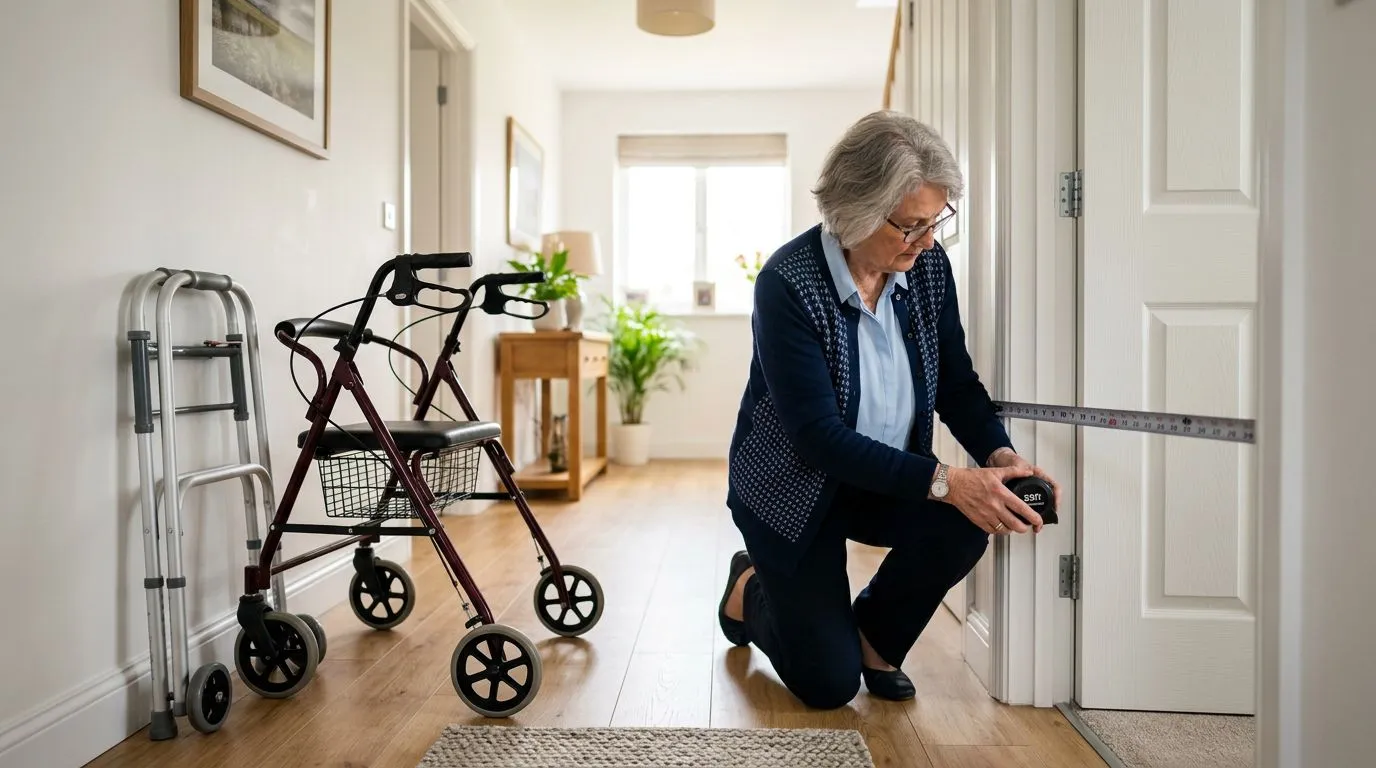
Will a Walker or Rollator Fit in Your Home? Doorways, Hallways, Turning Space, and Storage
14 min read