Disclosure: We may earn a commission when you buy through links on this page, at no extra cost to you. We buy nothing, sell nothing and accept no payment for coverage — commissions never decide what we recommend. How we make money.
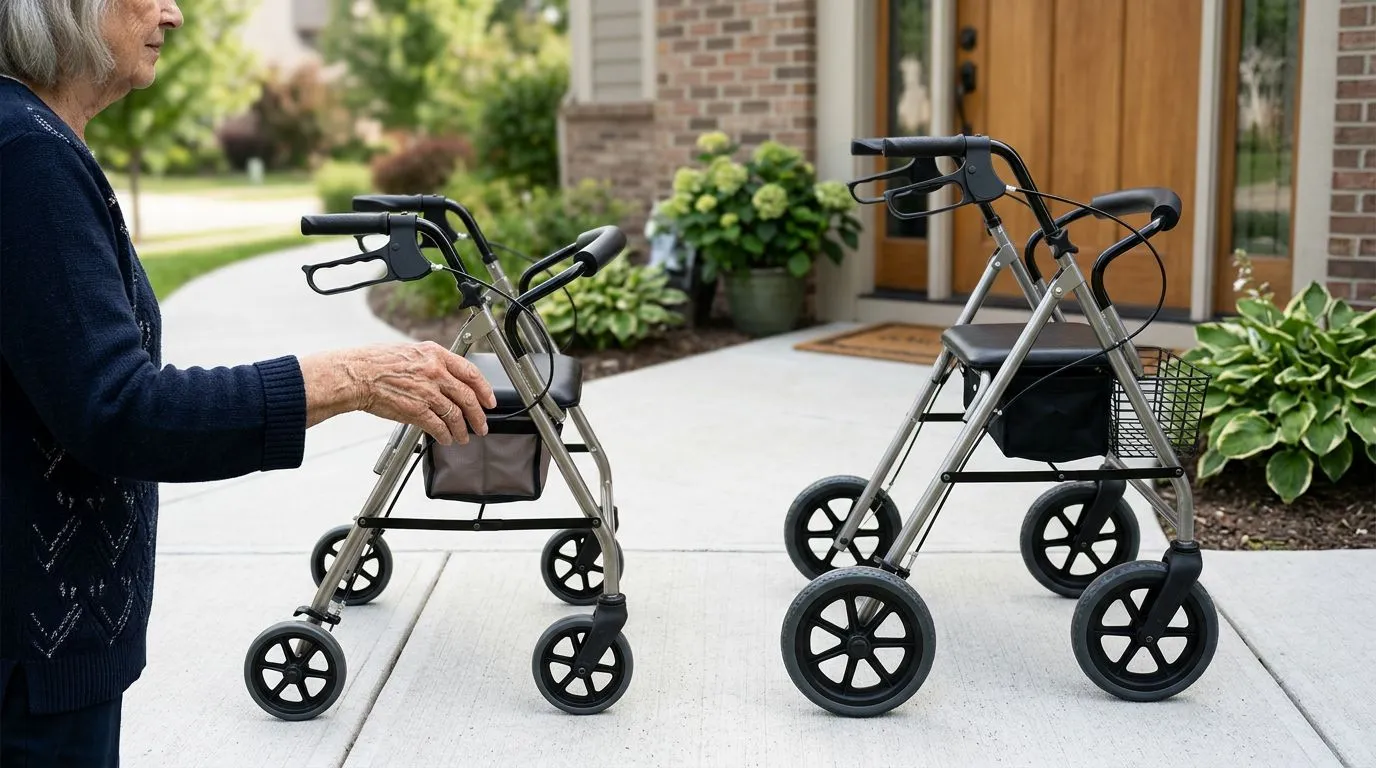
Large-wheel rollators usually move more smoothly over cracks, thresholds, grass, and uneven sidewalks. Small-wheel rollators are often lighter, easier to turn indoors, and simpler to store. For many adults, 8-inch wheels are the balanced middle ground: 6-inch wheels favor indoor use, while 10-inch or larger wheels favor outdoor surfaces and a longer walking stride.
Wheel size is only one part of a good fit. Handle height, frame width, brake reach, seat height, user weight capacity, and your usual walking surfaces all matter when choosing between a compact rollator and a larger-wheeled design.
Quick answer: 6- to 10-inch wheels change clearance, stride, and control
Most rollators use wheels in the 6- to 10-inch range, although some upright and outdoor-focused rollators may use larger wheels. A larger wheel has more diameter to climb over small obstacles, so it tends to feel smoother on sidewalk seams, curb cuts, pavers, gravel paths, and door thresholds.
Small wheels can still be safe and practical. They are common on compact 3-wheel rollators and lightweight 4-wheel rollators made for homes, apartments, senior living hallways, clinics, and shopping aisles. If you mostly walk indoors on level floors, a 6-inch wheel may be enough.
The trade-off is maneuverability versus surface tolerance. A small-wheel rollator can pivot neatly around furniture, but it may catch more easily on a raised crack. A large-wheel rollator may glide better outdoors, yet feel bulky in a narrow bathroom or crowded kitchen.
Rollator wheels in 3 common sizes: 6, 8, and 10 inches
Rollator wheel size is measured by wheel diameter. A 6-inch wheel is smaller and sits closer to the floor; a 10-inch wheel is taller and gives the frame more rolling clearance. That difference may sound minor, but it affects how the rollator feels with every step.
| Wheel size | Common use | Main advantage | Main trade-off |
|---|---|---|---|
| 6 inches | Indoor walking, tight rooms, smooth floors | Compact turning and easier storage | Less forgiving on cracks and rough outdoor surfaces |
| 8 inches | Mixed indoor and outdoor use | Good balance of smooth rolling and maneuverability | May still feel limited on grass, gravel, or broken pavement |
| 10 inches or larger | Outdoor walking, uneven sidewalks, longer routes | Better obstacle clearance and smoother stride | Can be heavier, wider, or harder to maneuver indoors |
Wheel material matters too. Many rollators use solid rubber or foam-filled tires, which require no air and are common for everyday use. Air-filled tires can soften the ride, but they may need more maintenance and are less common on basic rollators.
Walker or rollator: 2 different tools before you compare wheel size
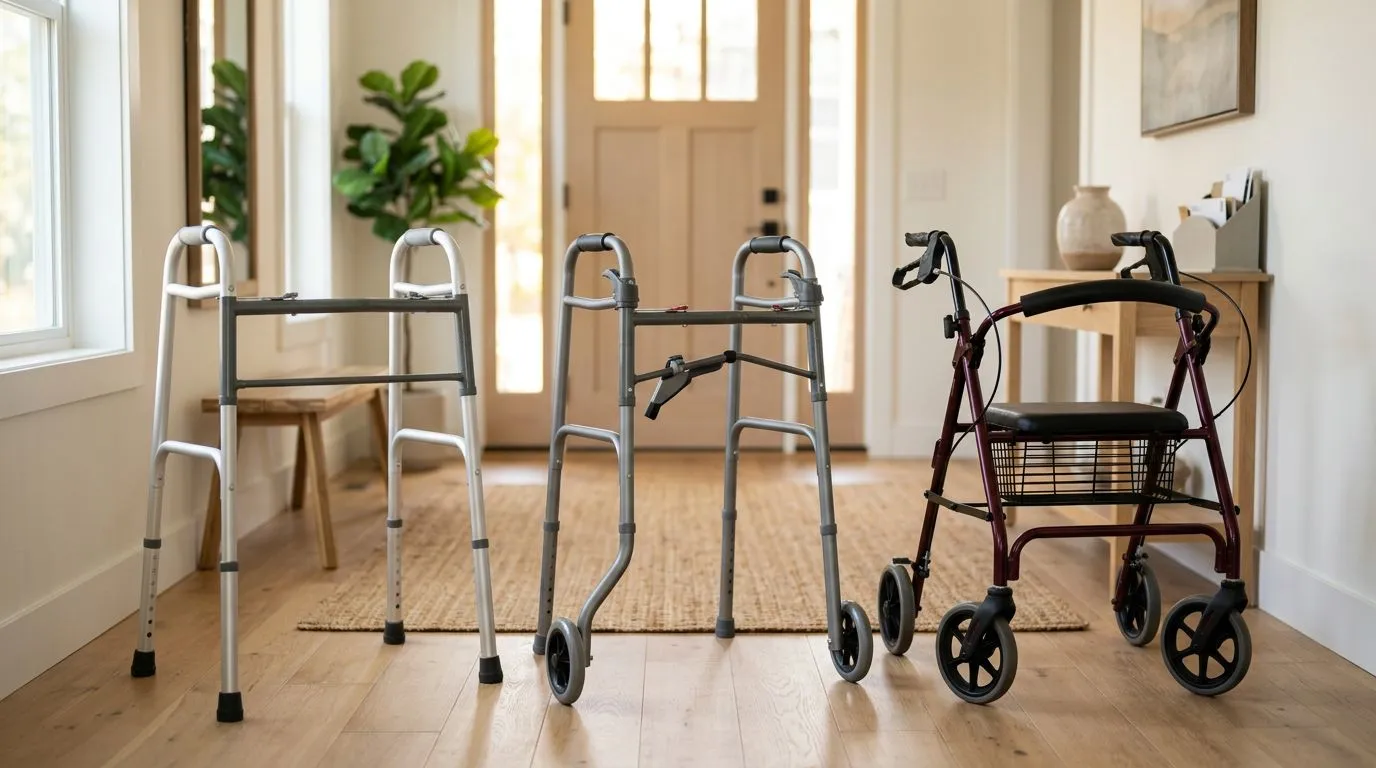
A rollator is a wheeled walker with hand brakes, and most 4-wheel rollators include a built-in seat. Standard walkers and folding walker frames are different: they usually have no wheels or 2 front wheels, do not have a seat, and are lifted or partially lifted during use.
This difference matters. A standard walker can provide a very stable support pattern because the frame is placed, then stepped into. A rollator keeps moving unless the brakes are controlled, so it requires enough hand strength, reaction time, and balance to manage rolling motion.
If you need firm weight-bearing support with each step, ask a clinician whether a standard walker or 2-wheel walker is more appropriate. If you can walk with a continuous gait and mainly need balance support, rest breaks, and help carrying small items, a rollator may fit better. Wheel size becomes the deciding factor only after a rollator is the right category.
Fit and posture: why wheel size can change a 30-inch handle setup
Rollator fit starts at the handles, not the wheels. With shoes on, stand upright with your arms relaxed at your sides. The handgrips should usually line up near the crease of your wrist, allowing a slight bend in the elbows, often around 15 to 30 degrees.
Wheel size can affect fit because larger wheels may raise the frame geometry or change how the rollator approaches your body. Two rollators with the same listed handle height range may not feel identical if one has compact 6-inch wheels and the other has 10-inch wheels with a deeper frame.
Pay close attention to these measurements:
- Handle height range: Many adult rollators adjust roughly from the low 30-inch range to the high 30-inch range, but ranges vary.
- Seat height: Common rollator seat heights are often around 20 to 24 inches. Taller users may need a higher seat to stand comfortably.
- Overall width: A rollator may need to pass through interior doorways, often about 28 to 32 inches wide in many homes.
- Depth from handles to front wheels: A deeper frame can affect how close you stand to the rollator.
A rollator that is too low can encourage a rounded posture. One that is too high may make braking and steering less controlled. The right wheel size should support your walking style without forcing you to lean, reach, or shuffle.
Stride and turning: 3-wheel vs 4-wheel rollators in tight spaces
Wheel size changes stride feel, but frame design changes it too. A 3-wheel rollator often has a triangular frame and no built-in seat, which can make it easier to steer through tight spots. A 4-wheel rollator is more common for people who want a seat, storage pouch, and broader base.
For a short, careful stride, smaller wheels may feel responsive. For a longer, more continuous stride, larger wheels can reduce the stop-start feeling that happens when small wheels meet uneven surfaces. This is especially noticeable outdoors, where a 1-inch sidewalk lip can interrupt a compact wheel more than a larger one.
Turning radius is the other side of the decision. In a narrow kitchen, a small-wheel rollator can feel nimble because the wheelbase is often shorter. In a parking lot or on a walking path, a larger-wheel 4-wheel rollator may track more smoothly and need fewer steering corrections.
Do not choose a larger wheel only because it sounds more stable. A rollator that is too wide, too deep, or too fast-rolling for your balance can feel less controlled. Stability comes from the match between the user, the frame, the brakes, and the walking surface.
Stability on 5 everyday surfaces
Think about where you walk in a normal week. Five surfaces reveal a lot: carpet, tile, thresholds, sidewalks, and grass or gravel. A rollator that feels perfect on a clinic floor may feel very different outside a grocery store.
| Surface | Small wheels, about 6 inches | Medium wheels, about 8 inches | Large wheels, about 10 inches or more |
|---|---|---|---|
| Low-pile carpet | Usually manageable, may need more push effort | Smoother rolling | Smooth, but frame may feel large indoors |
| Tile or hardwood | Easy to steer | Easy to steer | Easy, but may be less compact |
| Door thresholds | More likely to catch if the lip is raised | Better clearance | Best clearance of the three |
| Sidewalk cracks | Can feel choppy | Generally acceptable | Smoother and more forgiving |
| Grass or gravel | Not ideal | Usable for short, firm sections | More suitable, though still not a substitute for an all-terrain device |
Brakes are critical on every surface. Rollators typically use loop-style hand brakes that squeeze to slow and push down to lock, though designs vary. Before sitting, both brakes should be locked and the rollator should be on level ground.
Who each wheel size is best for: 6-, 8-, and 10-inch profiles
The best wheel size depends less on age and more on walking environment, stride, hand control, and balance. Here is a practical way to match the wheel to the user.
6-inch wheels: best for compact indoor use
Choose smaller wheels if you mostly walk on smooth indoor floors, live in a smaller apartment, or need to maneuver around furniture. They may also suit people who travel by car often and want a lighter, more compact rollator.
Be cautious if your daily route includes broken sidewalks, steep curb cuts, thick carpet, gravel driveways, or frequent thresholds. Small wheels can work, but they give less margin when the surface is uneven.
8-inch wheels: best for mixed daily use
An 8-inch wheel is often the most versatile choice for someone who walks indoors and also goes to appointments, stores, restaurants, and paved paths. It gives better clearance than a 6-inch wheel without feeling as large as an outdoor-focused rollator.
This size is a strong starting point for many shoppers because it supports a normal cadence on level sidewalks while still fitting many homes. Still, measure width, handle range, and seat height before deciding.
10-inch wheels or larger: best for outdoor comfort
Larger wheels are useful if your routine includes rough pavement, long sidewalks, curb cuts, packed dirt, or uneven parking lots. They can make the rollator feel less jarring and help maintain a smoother stride.
The possible downside is size. A large-wheel rollator may be harder to fit into a small trunk, turn in a tight hallway, or store beside a bed. If you need a bariatric rollator, also check the weight capacity, seat width, and frame width, because heavy-duty frames can be wider than standard models.
How to choose and measure in 10 minutes
You can narrow your choice quickly with a tape measure, your usual shoes, and a realistic look at your walking routes. If possible, test a rollator on more than one surface before buying or committing to a long-term rental.
- Measure wrist height: Stand tall in walking shoes with arms relaxed. Measure from the floor to the wrist crease. Look for a handle range that includes that number.
- Check doorway clearance: Measure the narrowest doorway or hallway you use daily. Leave extra space for hands and turns, not just the frame width.
- Test seat height: If the rollator has a seat, your feet should rest on the floor when seated, and standing up should not require a deep squat.
- Review weight capacity: Standard and bariatric rollators have different limits. Choose a frame rated for the user, including clothing and carried items.
- Match wheels to surfaces: Mostly indoor use points toward 6 or 8 inches. Mixed use often points toward 8 inches. Outdoor routes often justify 10 inches or larger.
- Try the brakes: You should be able to squeeze and lock the brakes without pain, slipping, or an awkward wrist position.
Bring the rollator close enough that you can walk upright inside the handles, not far behind them. If your feet hit the rear wheels or frame, the rollator may not match your stride or posture. If you feel pulled forward, slow down and reassess handle height, wheel size, and brake control.
Upright and bariatric rollators: 10-inch wheels are only part of the fit
Upright rollators, sometimes called stand-up rollators, often use larger wheels and higher arm supports to encourage a more upright position. They can help some users, but they are not automatically safer or better. Forearm platform height, brake access, overall width, and turning control all need careful testing.
Bariatric rollators are designed with higher weight capacities and wider frames. Some support several hundred pounds, but the exact capacity varies by design. A higher rating does not replace proper fit; the seat must be wide enough, the brakes must hold securely, and the frame must still fit through the places you use every day.
With both upright and bariatric rollators, larger wheels can improve outdoor rolling, but they can also add bulk. If you use elevators, medical office restrooms, or a compact vehicle, measure first.
Safety checks before using a rollator for 5 minutes or 5 miles
A rollator should be checked regularly, especially if it is used outdoors. Before each walk, confirm that the brakes engage, the wheels spin freely, and the frame locks open. Loose handles or worn brake cables can change how the rollator behaves.
- Lock both brakes before sitting on the seat.
- Do not use the seat as a transport chair unless the device is specifically designed for that purpose.
- Avoid hanging heavy bags from one handle, which can tip the frame.
- Slow down on ramps, wet pavement, and curb cuts.
- Replace worn wheels or brake parts according to the device instructions.
If you have had recent falls, dizziness, major surgery, changing strength, or a neurological condition, ask a physical therapist or other qualified clinician to assess whether a rollator, standard walker, or 2-wheel walker is the safer match.
FAQ: 5 questions about rollator wheel size
Are bigger wheels always better on a rollator?
No. Bigger wheels usually handle rough surfaces better, but they can make the rollator larger, heavier, or harder to turn indoors. The best size is the one that fits your body, home, stride, brakes, and walking surfaces.
Is an 8-inch wheel enough for outdoor walking?
For many people, yes. An 8-inch wheel is often suitable for paved sidewalks, stores, clinics, and parking lots in reasonable condition. If you often walk on grass, gravel, broken pavement, or long outdoor routes, 10-inch wheels or larger may feel smoother.
Do small wheels make a rollator less stable?
Not automatically. Stability depends on the full frame design, width, brake quality, user posture, and walking surface. Small wheels are stable on smooth indoor floors but may feel less steady when they meet cracks, thresholds, or uneven ground.
What wheel size is best for a short person?
Do not choose by height alone. A shorter user should first check handle height range and seat height. If both fit, wheel size can then be chosen based on surfaces: 6 inches for mostly indoor use, 8 inches for mixed use, and larger wheels for rougher outdoor routes.
Can I replace small rollator wheels with larger wheels?
Usually, you should not modify wheel size unless the manufacturer specifically allows it. Changing wheel diameter can affect brake alignment, frame height, folding, stability, and warranty coverage. It is safer to choose a rollator built with the wheel size you need.
Keep reading
Related guides

Walker and Rollator Wheel Size Explained: Small Wheels, Large Wheels, Swivel Wheels, and Rougher Surfaces
14 min read
3-Wheel vs 4-Wheel Rollator Walkers: Which Design Fits Your Needs?
11 min read
Rollator Seat Height and Handle Height: How to Measure for a Safer Fit
13 min read