Disclosure: We may earn a commission when you buy through links on this page, at no extra cost to you. We buy nothing, sell nothing and accept no payment for coverage — commissions never decide what we recommend. How we make money.

If a rollator walker has minor wear, repair can make financial sense when the frame is solid, the brakes adjust reliably, and the repair costs less than about 50% of a comparable replacement. Replace it when the frame is bent, the brakes still slip after adjustment, the seat or handles no longer support the user safely, or several parts are failing at once.
The goal is not to keep a mobility aid going forever. It is to provide safe, dependable support at the lowest reasonable lifetime cost. This guide explains how to evaluate brakes, wheels, seats, frames, and handles without relying on any specific brand or model.
Quick rule: repair under 50%, replace when safety is uncertain
A simple financial test works well for many rollator decisions: if one repair costs less than 50% of a similar new rollator and the frame is still straight and stable, repair is often reasonable. If repairs approach 50% to 60% of replacement cost, or if two or more major systems are worn, replacement usually makes more sense.
That rule is only a starting point. A rollator is not just a cart with wheels. It is a mobility device with hand brakes, a folding frame, handles, wheels, a seat, and usually a storage pouch or basket. If one non-safety part wears out, repair may be simple. If the braking or frame structure is questionable, the risk is higher.
Think of the decision in 3 layers:
- Safety: Does it stop, steer, support weight, and fold without wobbling?
- Fit: Are the handles at the right height, and is the seat usable for the person?
- Cost: Will the repair extend useful life enough to justify the money and time?
When safety and fit are both good, cost can guide the decision. When either one is poor, replacement deserves serious consideration even if a repair looks inexpensive.
Rollator walker vs standard walker: 4 differences that affect repair decisions
Many people use the word “walker” for several mobility aids, but standard walkers and rollators are different. A standard walker, including a folding walker or two-wheel walker, typically has no built-in seat and no hand brakes. A rollator has 3 or 4 wheels, hand brakes, and a seat, which means more moving parts to inspect and more parts that can wear out.
| Mobility aid type | Typical features | Common wear points | Repair vs replace issue |
|---|---|---|---|
| Standard walker frame | No wheels or 2 front wheels; lifted or pushed step by step | Rubber tips, glide caps, folding buttons, hand grips | Often inexpensive to maintain if the frame is straight |
| Two-wheel walker | 2 front wheels, rear tips or glides | Rear tips, front wheels, grips | Replace if the frame twists or height holes are damaged |
| 3-wheel rollator | 3 wheels, hand brakes, narrow turning radius, usually no full seat | Brake cables, wheels, folding joints, handles | Repair depends heavily on brake reliability and frame stability |
| 4-wheel rollator | 4 wheels, seat, backrest, hand brakes | Brakes, wheels, seat, backrest, frame hinges | Replace sooner if seat support or brakes are compromised |
| Upright or stand-up rollator | Forearm supports, hand brakes, larger frame | Arm pads, brake cables, height locks, wheels | Fit and posture support matter as much as parts cost |
This article focuses on rollators, sometimes called rollator walkers or wheeled walkers with seats. The comparison still matters. If a person no longer needs a seat or hand brakes, a standard walker may be a simpler, lower-maintenance option. If they need to rest every few minutes, walk longer indoor or outdoor distances, or cannot safely lift a walker, a rollator may be more practical.
The 10-minute safety inspection before you spend money
Before ordering parts or shopping for a replacement, do a basic 10-minute inspection on a flat, dry surface. If possible, have another adult nearby, and do not test a questionable rollator on stairs, ramps, gravel, or wet flooring.
- Check the brakes: Squeeze both hand brakes. The wheels should stop firmly. Push the brake locks down, then try to roll the device forward. A locked rollator should resist movement.
- Look at the wheels: Spin each wheel. It should rotate without grinding, wobbling, or rubbing the frame. Check for flat spots, cracks, missing tread, and hair or debris wrapped around the axle.
- Inspect the frame: Stand behind the rollator and look for leaning, twisting, cracked welds, missing screws, or loose folding joints.
- Test the seat: Press on the center and edges of the seat. Look for sagging, cracks, loose brackets, or a backrest that shifts more than expected.
- Check the handles: Make sure height adjustment buttons or knobs lock into place on both sides at the same setting.
- Fold and unfold it: The rollator should open fully, latch securely if it has a latch, and fold without forcing the frame.
If the rollator fails more than 1 safety check, treat it as more than normal wear. A single worn wheel may be a parts issue. Worn wheels plus weak brakes plus loose handles may point to end-of-life.
Brake problems: adjust, repair, or replace after 2 failed tests
Rollator brakes are one of the most important safety systems. Many use cables, similar in concept to bicycle brakes. Over time, cables can stretch, brake pads can wear down, and handles can loosen. A small adjustment may restore performance, but brakes that repeatedly slip should not be ignored.
Start with 2 basic brake tests. First, squeeze both brake handles while standing still and gently try to push the rollator. Second, lock both parking brakes and see whether the wheels stay still under light forward pressure. If either test fails after adjustment, the rollator should be repaired by someone qualified or replaced.
| Brake symptom | Likely issue | Repair usually makes sense? | Replace sooner if... |
|---|---|---|---|
| Brake handle feels loose | Cable stretch or adjustment needed | Often yes, if adjustment restores firm stopping | The handle or cable housing is cracked |
| One side stops better than the other | Uneven cable tension or worn brake pad | Often yes, if parts are available | The rollator pulls sharply or remains unpredictable |
| Parking brake will not hold | Locking mechanism or cable issue | Maybe, depending on parts and labor | It still moves after 2 adjustment attempts |
| Brake lever is cracked | Damaged handle assembly | Maybe, if replacement handle assembly is available | Both levers or mounting points are worn |
Do not accept “good enough” brakes on a rollator. Unlike a standard walker, a rollator rolls continuously, so brake reliability is central to safe use, especially when sitting down, standing up, or pausing on a slight slope.
Wheels, seats, frames, and handles: 5 parts to judge separately
Not every worn part carries the same risk. A missing storage pouch is an inconvenience. A cracked frame is a safety issue. Evaluating the 5 main areas separately helps prevent overspending on cosmetic repairs while missing a structural problem.
1. Wheels
Rollator wheels commonly range from about 6 to 10 inches in diameter. Smaller wheels may work well indoors on smooth floors. Larger wheels usually handle sidewalk cracks, thresholds, and outdoor surfaces better. Replaceable wheels can make repair worthwhile if the frame and brakes are still strong.
Repair or wheel replacement may make sense when only 1 wheel is worn, the axle is straight, and the rollator tracks forward without drifting. Replacement is more sensible when several wheels wobble, the frame rubs the tires, or the wheel mounts are bent.
2. Seat and backrest
A rollator seat is for short rests, not long-term sitting or transport while someone pushes from behind unless the device is specifically designed for that purpose. If the seat is cracked, sagging, loose, or no longer level, treat it seriously.
Seat repair may be practical if the seat panel or backrest is replaceable and the mounting points are intact. Replace the rollator if the seat brackets have pulled away from the frame, the frame flexes under normal seated use, or the user’s weight is near or above the device’s stated capacity.
3. Frame
The frame is the deciding factor in many cases. Aluminum rollators are often lighter, while steel frames may be heavier. Bariatric rollators are built with higher weight capacities and wider frames, but any frame can become unsafe if it is bent, cracked, or loose at the joints.
Repairing a structural frame crack is rarely a good do-it-yourself project. If the frame is bent after a fall, accident, or repeated hard use, replacement is usually the safer financial decision because other aligned parts may also be stressed.
4. Handles and grips
Handles should sit at a height that lets the user stand comfortably with a slight bend in the elbows, often around 15 to 30 degrees. Worn rubber grips can sometimes be replaced. Loose height-adjustment hardware is more serious.
Repair makes sense for worn grips, missing end caps, or a single knob that can be replaced securely. Replace sooner if handle posts slip, height holes are enlarged, or the handles cannot be set evenly on both sides.
5. Folding joints and latches
Many rollators fold for car trunks, closets, or travel. A folding joint that pinches, fails to lock, or opens unevenly can change how the rollator bears weight. If the rollator folds and unfolds several times per week, these joints deserve close attention.
A loose screw may be simple. A worn hinge, cracked crossbar, or frame that will not fully open is a warning sign. Replacement is often smarter than repeated tightening.
When repair makes financial sense: 4 practical examples
Repair is most attractive when the problem is isolated, the rollator still fits the user, and the repair gives meaningful additional life. In practical terms, that means one main issue, not a chain of failures.
- Example 1: Worn grips only. If the hand grips are torn but the brakes, frame, and wheels are sound, repair is usually sensible.
- Example 2: Brake adjustment needed. If the brakes are weak but become firm after proper adjustment, replacement is not automatically necessary.
- Example 3: One damaged wheel. If 1 wheel is cracked from outdoor use and matching replacement wheels are available, repair may extend the rollator’s useful life.
- Example 4: Missing backrest or pouch. Comfort and convenience parts may be worth replacing if they do not hide a bigger frame or seat problem.
Repair also makes sense when the rollator is a good fit. If the handle height is comfortable, the seat height works, the width fits through home doorways, and the weight is manageable for loading into a vehicle, keeping it may be wise.
Ask 3 questions before authorizing repair: Will it stop reliably? Will it support the user within its stated weight capacity? Will the repair solve the problem for more than a short time? If the answer to any question is no, keep looking.
When replacement is smarter: 6 red flags not to ignore
Replacement can feel wasteful, but it may be the better financial choice when an aging rollator needs repeated attention. Paying for one repair after another can exceed the value of a dependable replacement, especially when transportation, waiting time, and safety concerns are included.
Consider replacement if you see any of these 6 red flags:
- Brake failure after adjustment: If the brakes still do not hold after a proper adjustment, the rollator is not dependable.
- Bent or cracked frame: Structural damage is a major warning sign.
- Loose seat supports: A shifting or sagging seat can make sitting and standing less safe.
- Multiple worn wheels: Several wobbling or cracked wheels suggest heavy wear throughout the device.
- Handle posts slip: If the handles will not lock at the set height, control is compromised.
- Poor fit for current needs: If the user needs a wider seat, higher weight capacity, lighter frame, or upright forearm supports, repair will not fix the mismatch.
Also consider changes in use. A rollator that worked for short indoor trips may not be right for daily outdoor walking. A narrow 3-wheel rollator may maneuver well in tight spaces but may not provide the seat stability a person now needs. A heavier bariatric rollator may be supportive but difficult for a caregiver to lift into a car.
How to compare repair cost to replacement value using 3 numbers
You do not need exact national averages to make a good decision. Use your local repair estimate and the cost of a comparable replacement, then compare 3 numbers: repair percentage, expected remaining life, and number of problem areas.
| Number to check | How to calculate it | How to use it |
|---|---|---|
| Repair percentage | Repair estimate divided by comparable replacement cost | Under 50% favors repair if safety is solid; over 50% favors replacement |
| Expected remaining life | How long the repaired rollator is likely to stay dependable | A repair that lasts months may not be worth the hassle; years may be |
| Problem areas | Count brakes, wheels, seat, frame, handles, folding joints | 1 area favors repair; 2 or more major areas favors replacement |
For a more balanced decision, get 2 sources of information: one repair estimate and one comparable replacement option. Compare like with like. A basic 4-wheel rollator should be compared with another basic 4-wheel rollator, not an upright rollator or heavy-duty bariatric model with different features.
Include hidden costs, too. Will the user be without the rollator for several days? Is transportation to a repair shop difficult? Are replacement parts uncertain or delayed? Is the current rollator so heavy that it discourages use? Money matters, but inconvenience and confidence matter as well.
How to choose and measure a replacement rollator in 7 steps
If replacement is the better choice, do not buy only by appearance. Fit is one of the biggest factors in comfort and safe everyday use. Take 7 measurements or checks before deciding.
- Handle height: With shoes on, stand upright with arms relaxed. The handles should be near wrist height, allowing a slight elbow bend.
- Seat height: The user should be able to sit and stand without dropping too low or perching too high. Many rollator seats are roughly chair-like, but measurements vary.
- Seat width and depth: The seat should support short rests comfortably without forcing the user against the frame.
- Overall width: Measure narrow home doorways, bathroom entries, and hallways. Many interior doorways are around 28 to 32 inches wide, but older homes vary.
- Wheel size: Consider 6-inch wheels for mostly indoor use and larger wheels, such as 8-inch or 10-inch, for more outdoor surfaces.
- Weight capacity: Choose a rollator with a stated capacity above the user’s body weight and any regular carried items.
- Lift weight: If it must go into a car trunk, the folded weight and folded size matter every week, not just on the day of purchase.
For upright rollators, also check forearm support height, pad comfort, and whether the user can control the brakes while standing tall. For bariatric rollators, check both weight capacity and home maneuverability because wider frames can be harder to use in small bathrooms or tight kitchens.
Who it is best for: repair, replace, or switch walker type
The best choice depends on the person, the home, and how the mobility aid is used over a normal 7-day week. A rollator used outdoors every day wears differently from one used only between the bedroom and kitchen.
| Best option | Who it is best for | Typical reason |
|---|---|---|
| Repair the rollator | Someone whose current rollator fits well and has 1 isolated worn part | Lower cost and familiar handling |
| Replace with similar rollator | Someone with worn brakes, wheels, seat, and handles but the same style still fits | Better lifetime value and renewed safety features |
| Replace with upright rollator | Someone who needs forearm support and a more upright walking position | Fit needs have changed beyond simple repair |
| Replace with bariatric rollator | Someone who needs a higher stated weight capacity or wider seat | Standard frame or seat is no longer appropriate |
| Switch to standard walker | Someone who does not need a seat and needs slower, more stable step-by-step support | Fewer moving parts and no brake system to maintain |
| Switch to two-wheel walker | Someone who struggles to lift a no-wheel walker but does not need a rollator seat | Simple mobility aid with less rolling speed |
A clinician, physical therapist, occupational therapist, or durable medical equipment professional can help if the choice is not obvious. That is especially useful after a fall, surgery, strength change, balance change, or new home environment. The right device should support mobility without encouraging unsafe speed or poor posture.
Final decision checklist: 12 yes-or-no questions
Use this 12-point checklist before spending money. If several answers point toward replacement, trust the pattern.
- Do both brakes stop the rollator firmly?
- Do the parking brakes hold when locked?
- Are all wheels round, secure, and free of wobble?
- Is the frame straight with no cracks or bent tubing?
- Does the seat feel solid during short rests?
- Do the handles lock at the same height on both sides?
- Does the rollator fold and unfold without forcing it?
- Is the device still within the user’s weight needs?
- Does it fit through the home’s narrowest doorway?
- Can the user or caregiver lift and transport it when needed?
- Is only 1 major part worn?
- Is the repair less than about 50% of a comparable replacement?
If the answer is “yes” to the safety and fit questions, repair may be sensible. If the brakes, frame, seat support, or handles raise doubts, replacement is not just a purchase decision. It is a safety decision.
FAQ: 5 common questions about rollator repair and replacement
Can rollator brakes usually be repaired?
Often, yes. Many brake problems come from cable stretch, worn brake surfaces, or loose adjustment points. If proper adjustment does not restore firm stopping and parking brake hold, replacement or professional repair should be considered.
Is it safe to use a rollator with one bad wheel?
It is not ideal. One cracked, flat-spotted, or wobbling wheel can make the rollator pull to one side or feel unstable. If the wheel and axle can be replaced securely, repair may work. If the wheel mount is bent, replacement is safer.
How long should a rollator last?
There is no single lifespan. Use frequency, user weight, indoor versus outdoor surfaces, storage, and maintenance all matter. A rollator used daily outdoors may wear wheels and brakes much faster than one used lightly indoors.
Should I repair a cracked rollator frame?
Usually no. A cracked or bent frame is a structural problem, not a normal wear item. Because the frame supports the user’s weight and keeps the wheels aligned, replacement is generally the more responsible choice.
When would a standard walker be better than replacing a rollator?
A standard walker may be better when the person does not need a seat, should move more slowly, or needs a simpler device without hand brakes. A two-wheel walker can be a middle option for someone who cannot lift a no-wheel walker easily but does not need a full rollator.
Keep reading
Related guides

Can a Mobility Walker or Rollator Be Repaired? DIY Fixes, Replacement Parts, and When to Get Service
14 min read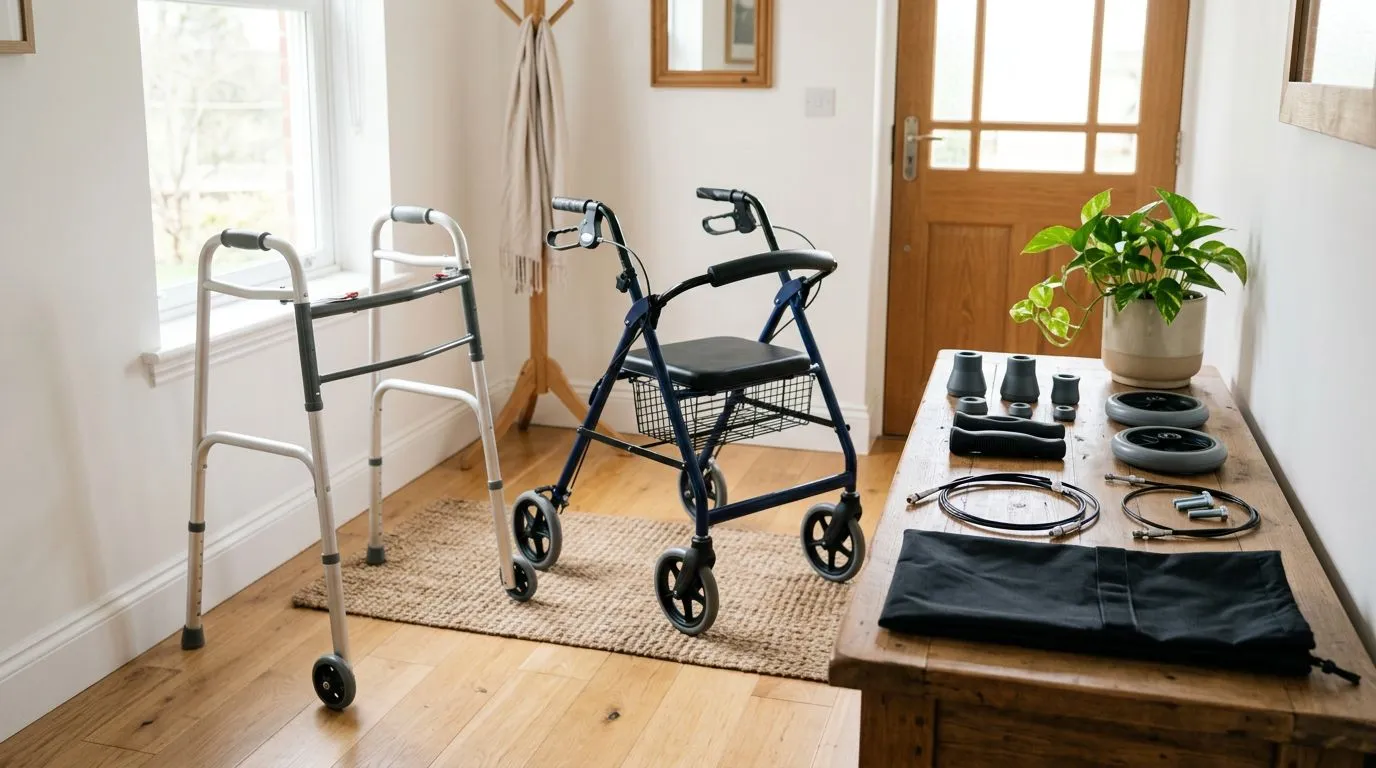
The True Cost of Owning a Walker or Rollator: Parts, Accessories, Maintenance, and Repairs
13 min read
New vs. Used Rollator Walkers: What to Check Before Buying Secondhand
14 min read