Disclosure: We may earn a commission when you buy through links on this page, at no extra cost to you. We buy nothing, sell nothing and accept no payment for coverage — commissions never decide what we recommend. How we make money.
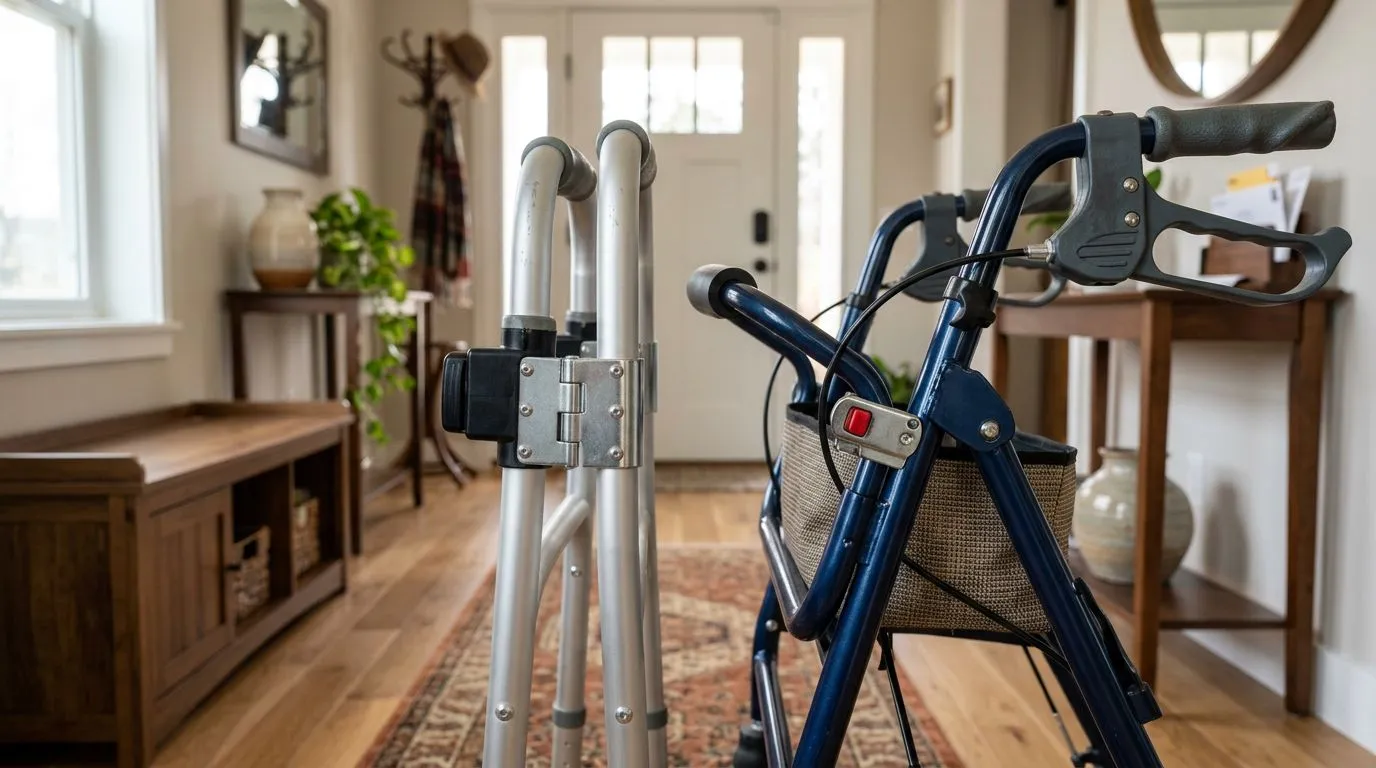
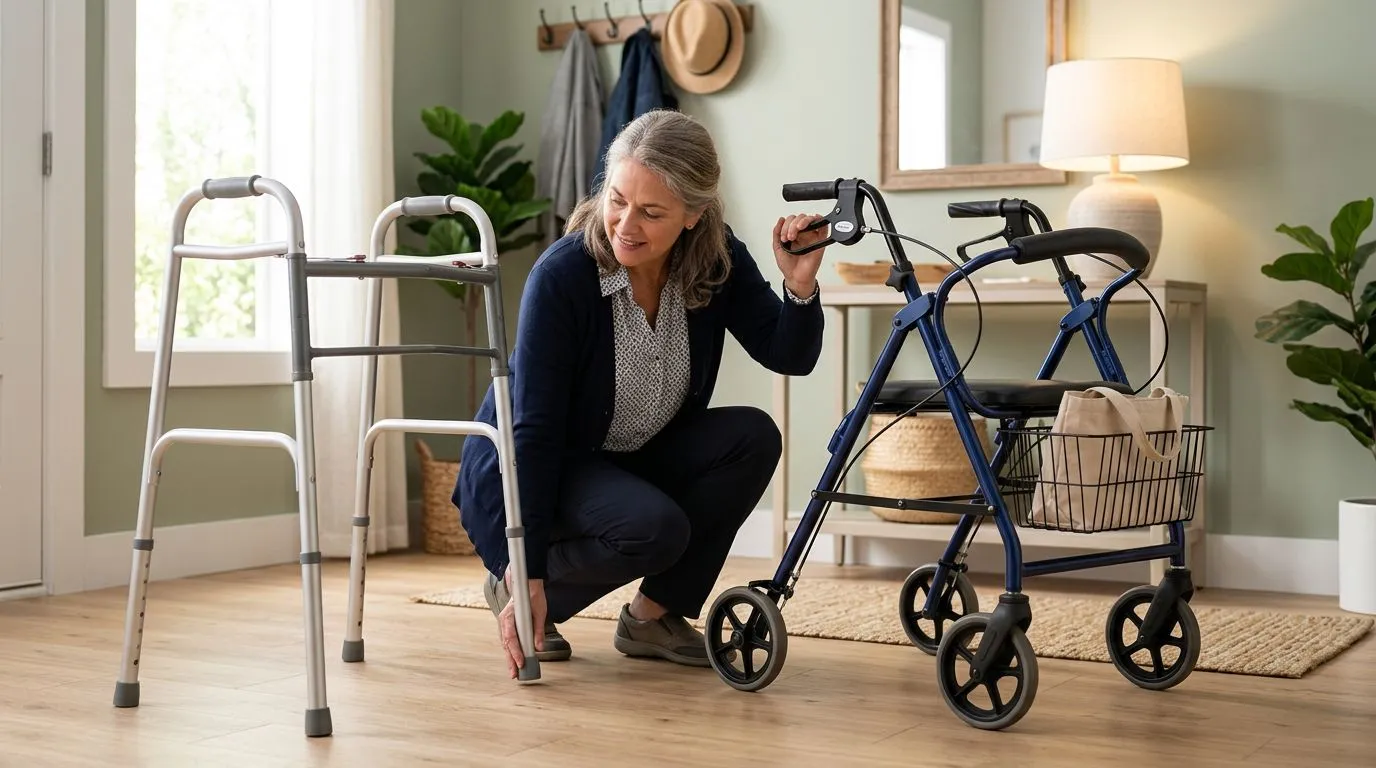
To keep a folding walker or rollator safely locked, inspect the hinges and latches before every use, clean dirt from moving parts, and make sure each lock clicks or seats fully before you put weight on it. If a walker frame or rollator latch is stuck, loose, bent, or only partly engaged, do not use it until the problem is corrected or a qualified repair person checks it.
Folding mobility equipment is made to be portable, but that portability means more moving parts. A standard folding walker may have 2 side locks, while a 4-wheel rollator can have frame hinges, a seat latch, hand brakes, and height-adjustment buttons. These parts need simple, regular care.
Why 1 Unlocked Latch Can Make a Walker or Rollator Unsafe
A folding walker or rollator is stable only when its frame is fully opened and locked. One loose latch can let a side frame, cross brace, or seat support shift at the exact moment the user leans forward, turns, or rises from a chair.
Walkers and rollators are different tools, but both rely on secure locking. A standard folding walker supports weight through a rigid frame and 4 legs, sometimes with 2 front wheels. A rollator rolls on 3 or 4 wheels, uses hand brakes, and usually includes a built-in seat. A rollator is easier to push continuously, but it should not be treated like a plain walker because the wheels and brakes add more parts to check.
The biggest maintenance mistake is assuming a folded device is ready as soon as it opens. Listen for the lock, look at the latch, and gently test the frame. That 3-step habit takes less than a minute and can catch many problems before use.
Walkers vs. Rollators: 5 Locking Parts to Know
Before cleaning or adjusting anything, identify the kind of mobility aid you have. A no-wheel walker frame has fewer moving parts than a 4-wheel rollator with a seat, but both can develop sticky hinges or worn locks over time.
| Type | Common locking parts | Maintenance focus | Best safety habit |
|---|---|---|---|
| Standard or folding walker | Side latches, folding release buttons, cross brace | Keep hinges clean and verify both sides lock evenly | Push down lightly on both handgrips after opening |
| Two-wheel walker | Same frame locks as a standard walker, plus wheel attachments | Check front wheels for secure attachment and smooth rolling | Confirm rear legs stay flat and frame does not twist |
| 3-wheel rollator | Central folding hinge, frame latch, hand brakes | Inspect the folding joint and brake cables | Lock or squeeze brakes before standing still |
| 4-wheel rollator | Folding hinge, seat latch, backrest or basket mounts, hand brakes | Check that the seat support locks and brakes hold | Test brakes before sitting or leaning |
| Upright or bariatric rollator | Heavier frame hinges, arm support adjustments, brakes | Watch for looseness at height settings and folding joints | Check all adjustment pins after transport |
Many folding walkers use simple push-button or paddle-style release mechanisms. Many rollators fold by lifting a seat strap, pulling a center bar, or releasing a side latch. Designs vary, so keep the user instructions if available and follow the manufacturer’s locking sequence.
The 60-Second Lock Check Before Every Use
A pre-use check does not require tools. Do it every time the walker or rollator has been folded, placed in a car, stored in a closet, or handled by someone else.
- Open it fully. Spread the frame until both sides or the central hinge reach their normal open position.
- Listen and feel. Many latches make a click, but do not rely on sound alone. Feel for the lock seating into place.
- Look at both sides. On a folding walker, compare left and right latches. They should sit evenly, not half-raised.
- Press test the handgrips. Apply gentle downward pressure with both hands. The frame should not fold inward, wobble, or shift.
- For rollators, test the brakes. Squeeze the hand brakes while standing still. If parking brakes are present, lock them and try to roll the unit gently. It should resist movement.
- Check the seat before sitting. On a 4-wheel rollator, the seat must be fully supported. Never sit if the seat is tilted, loose, or not latched.
This does not replace a full inspection, but it is the most important habit. A clean hinge is still unsafe if the latch is not fully engaged.
Clean Hinges and Latches in 10 Minutes
Dirt, lint, pet hair, dried mud, road salt, and spilled drinks can make a folding latch sticky. A basic cleaning session usually takes about 10 minutes and should be done more often if the walker or rollator is used outdoors.
Use a dry cloth, a soft toothbrush, cotton swabs, and mild soapy water. Avoid soaking the frame, especially around spring-loaded pins, brake cables, and padded grips. For most routine cleaning, a lightly damp cloth is enough.
- Fold and unfold once. Notice where the hinge sticks or rubs.
- Remove loose debris. Brush around the latch slot, hinge pin, and release button.
- Wipe the contact surfaces. Clean the metal or plastic areas that slide against each other.
- Dry completely. Moisture left inside a hinge can attract grit or contribute to corrosion.
- Open and lock again. Repeat the 60-second lock check before use.
For rollators, clean around the folding hinge without pulling on brake cables. If the device has a fabric seat, basket, or pouch, remove debris from those areas too; loose straps can sometimes interfere with folding or latch movement.
Stuck Hinges, Loose Latches, and 6 Common Fixes
Not every latch problem means the walker or rollator is worn out. Some issues come from debris, misalignment after folding, or a loose accessory. Even so, if a fix does not restore a firm lock, stop using the device until it is serviced.
| Problem | Likely cause | What to try | When to stop |
|---|---|---|---|
| Latch will not click | Frame not fully opened or latch slot blocked | Reopen on a level floor and clean the latch area | If it only locks when forced |
| Hinge feels stuck | Dirt, corrosion, or bent hinge parts | Clean and dry; use only light lubricant if appropriate | If metal is bent, cracked, or grinding |
| Latch feels loose | Worn spring, loose fastener, or enlarged hole | Check visible screws or knobs by hand | If the latch wiggles after tightening |
| Walker opens unevenly | One side folded under pressure or frame twisted | Set all 4 legs on a flat floor and reopen slowly | If one leg does not touch the floor |
| Rollator seat will not sit flat | Seat support not aligned or fabric caught | Clear the hinge path and relatch the frame | If the seat support drops or shifts |
| Brakes work sometimes | Cable tension, dirty wheel surface, worn brake parts | Clean wheel contact areas and check cable routing | If brakes cannot hold the rollator still |
Do not force a folding hinge with body weight. Forcing can bend the frame, and a bent frame may no longer lock squarely. A walker should stand with all legs level; a rollator should roll straight without one wheel lifting or dragging.
Lubrication: Use 1 Small Drop, and Keep It Off Brakes
Lubrication can help a dry hinge, but too much lubricant creates new problems. One small drop at a hinge pin is usually plenty. Wipe away the excess so it does not collect dust or drip onto floors.
Never spray lubricant broadly across a rollator. Keep lubricant away from hand grips, tires, wheel rims, brake pads, brake cables, and the seating surface. Slippery grips or weakened brakes are safety concerns.
If you use lubricant, choose a general household product suitable for metal moving parts and apply it carefully with a cloth or narrow applicator. Afterward, fold and unfold the walker or rollator several times, wipe the area dry, and perform the full lock check. If the hinge remains stiff, the issue may be wear, corrosion, or bending rather than dryness.
Plastic latch parts may not need lubricant at all. Some lubricants can damage certain plastics or rubber, so when in doubt, clean first and consult the user manual or a mobility equipment technician.
Who Folding Walkers and Rollators Are Best For in 3 Common Situations
Folding designs are most useful when the mobility aid must travel, store compactly, or move between indoor and outdoor settings. The right choice depends on balance, walking pace, hand strength, and whether a seat is needed.
- Folding walker: Often best for someone who needs a stable frame and moves step by step. A standard walker or two-wheel walker can be easier to control in tight indoor spaces, such as a 30-inch doorway or small bathroom.
- Folding rollator: Often best for someone who walks more continuously and can safely use hand brakes. A 4-wheel rollator adds a seat for rest breaks, but it requires brake awareness and enough control to prevent rolling away.
- Upright or bariatric rollator: May help users who need a taller support position or higher weight capacity. These frames can be heavier, so latch strength, foldability, and transport weight matter more.
A walker is not automatically safer than a rollator, and a rollator is not automatically easier than a walker. The safer option is the one that fits the person’s balance, home layout, strength, and ability to lock, brake, fold, and unfold it correctly.
How to Measure Fit and Choose Safer Folding Features: 4 Checks
Good latch maintenance starts with a device that fits. If the walker or rollator is the wrong height or too wide for the home, it is more likely to be dragged, twisted, bumped into door frames, or folded roughly.
- Handle height: With the user standing tall in regular shoes, handles commonly align near the wrist crease when arms hang relaxed. Elbows should have a slight bend, often around 15 to 20 degrees, when holding the grips.
- Overall width: Measure the narrowest doorway or hallway used daily. Many interior doorways are about 28 to 32 inches wide, but trim and furniture reduce usable space.
- Folded size: If it rides in a car, measure the trunk or back seat opening before buying or replacing a device. A folding latch that is constantly forced into a tight space may wear faster.
- Weight capacity and frame weight: Check the stated user weight capacity and the item’s carry weight. Bariatric rollators often have higher capacity but can be heavier to lift and unfold.
Look for latches that are easy to see and operate with the user’s hand strength. A person with limited finger dexterity may struggle with small buttons or stiff release tabs. If a caregiver folds the device most of the time, both the user and caregiver should know how to confirm it is locked.
When to Stop Using It: 7 Warning Signs
Some problems should not be handled with cleaning or lubricant. Stop using the walker or rollator and arrange repair, replacement parts, or professional evaluation if you notice any of these 7 warning signs.
- A latch does not fully engage every time.
- The frame begins folding inward during the press test.
- A hinge pin, rivet, screw, or bracket is missing.
- Metal tubing is cracked, sharply dented, or visibly bent.
- One walker leg or rollator wheel does not contact the floor on a flat surface.
- Rollator brakes cannot hold the unit still when locked.
- The seat, backrest, or height adjustment slips under normal use.
A quick repair may be possible, but do not guess when the frame is load-bearing. If the device is used after a fall, car impact, airline handling, or a hard drop from a curb, inspect it closely before the next use.
Many people keep a backup mobility aid at home. Even a simple no-wheel walker can be useful while a rollator is being repaired, as long as it is properly fitted and the user can operate it safely.
5 FAQs About Folding Walker and Rollator Latches
How often should I check a folding walker latch?
Check it before every use, especially after folding, transport, or storage. A deeper cleaning and inspection every 1 to 4 weeks is reasonable for many users, depending on outdoor use and dirt exposure.
Can I use a folding walker if only one side latch clicks?
No. Both sides of a folding walker must be fully locked before use. If one side does not latch, the frame can fold or twist when weight is applied.
Why does my rollator open but still feel wobbly?
The frame latch may not be seated, the seat support may be misaligned, a height adjustment may be loose, or a wheel or brake part may need attention. Do not sit or lean on it until the wobble is corrected.
Is it safe to spray lubricant on rollator hinges?
Use caution. If lubrication is needed, apply a very small amount only to the hinge area and wipe away excess. Keep lubricant away from wheels, brake surfaces, hand grips, and the seat.
Should I repair a loose latch myself?
You can clean debris and tighten obvious hand knobs if the instructions allow it, but do not modify, drill, bend, tape, or improvise a latch repair. Load-bearing latch problems should be checked by a qualified repair person or replaced according to the manufacturer’s guidance.
FAQ
Frequently asked questions
Is it safe to lubricate rollator hinges? +
It can be safe if done sparingly. Use only a small amount on the hinge area, wipe away excess, and keep lubricant away from wheels, brake surfaces, hand grips, and the seat.
When should I stop using a walker or rollator with latch problems? +
Stop using it if a latch does not fully engage, the frame shifts during a press test, metal is bent or cracked, hardware is missing, or rollator brakes cannot hold the unit still.
Keep reading
Related guides

How to Stop a Walker or Rollator From Squeaking, Rattling, or Feeling Loose
12 min read
Walker or Rollator Feels Wobbly? Common Causes and What to Check First
12 min read
Daily Walker Safety Checklist: What to Inspect Before Each Use
13 min read