Disclosure: We may earn a commission when you buy through links on this page, at no extra cost to you. We buy nothing, sell nothing and accept no payment for coverage — commissions never decide what we recommend. How we make money.

You can buy a rollator walker near you at medical supply stores, some pharmacies, big-box retailers, warehouse clubs, and rehabilitation equipment shops, or order one online for home delivery. Shopping in store is usually best if you need fitting help, want to test the brakes and seat height, or are unsure whether you need a rollator or a standard walker. Online shopping may be better if you already know your measurements, need more style or weight-capacity options, and can review return and assembly policies before checkout.
The right purchase path depends on more than price. A rollator has wheels, hand brakes, and usually a seat; a walker may have no wheels or 2 front wheels and is built for a different kind of support. Before you buy, confirm the device type, handle height, overall width, weight capacity, return window, delivery method, and who will assemble or adjust it.
Rollator walker vs standard walker: 4 buying differences to understand first
The phrase rollator walker is common in US shopping searches, but a rollator and a walker are not the same device. A rollator typically has 3 or 4 wheels, hand brakes, and often a built-in seat. A standard walker has no wheels, while a 2-wheel walker has front wheels and rear tips or glides. The distinction matters: a rollator moves more continuously, while a no-wheel walker is lifted and placed with each step.
If you are shopping locally, use both terms when calling stores. Ask for rollators, wheeled walkers with seats, and standard or folding walkers. Some stores group all of them under “walkers,” while others keep rollators in their own aisle or special-order category.
| Device type | Typical features | Often best for | Key buying check |
|---|---|---|---|
| Standard walker | No wheels, lightweight folding frame | People who need maximum stability and can lift the frame | Handle height and frame width |
| 2-wheel walker | 2 front wheels, rear tips or glides | People who need support but cannot lift a walker fully each step | Wheel size and rear-tip condition |
| 3-wheel rollator | 3 wheels, hand brakes, narrow turning radius, usually no full seat | Indoor use and tighter spaces | Stability, brake reach, storage pouch |
| 4-wheel rollator | 4 wheels, hand brakes, seat, backrest, basket or pouch | People who need a place to sit during longer outings | Seat height, width, brakes, weight capacity |
| Upright rollator | 4 wheels, forearm supports, taller frame | People who are prescribed or advised to walk in a more upright position | Forearm pad height and overall length |
| Bariatric rollator | Wider reinforced frame, higher weight capacity | Larger users needing more seat width and frame strength | Weight capacity, door clearance, vehicle fit |
A rollator is not automatically safer because it has brakes and a seat. If a person leans heavily on the frame for every step, a rolling device may move too easily unless it is properly fitted and used with good brake control. When balance, falls, surgery recovery, or neurological conditions are involved, ask a physical therapist, occupational therapist, or prescribing clinician which type of mobility aid is appropriate.
Where to buy a rollator walker near you: 5 local options
Most US shoppers can check 5 local channels before ordering online: medical supply stores, pharmacies with home-health sections, big-box or discount retailers, warehouse-style stores, and rehabilitation or durable medical equipment suppliers. Availability varies by ZIP code, and smaller stores may carry only 2 or 3 rollator styles on the floor.
- Medical supply stores: Often the best local stop for hands-on fitting, brake demonstrations, replacement parts, and advice on walkers versus rollators.
- Pharmacies with mobility aisles: Convenient for basic folding walkers, 2-wheel walkers, and some 4-wheel rollators, though size and color choices may be limited.
- Big-box and discount retailers: Useful for immediate pickup if inventory is in stock. Staff may not be trained to fit mobility aids.
- Warehouse-style stores: May offer value on common rollator types, but selection can change and trial fitting may be minimal.
- Rehab equipment or durable medical equipment suppliers: Better for specialized needs, such as bariatric rollators, upright rollators, or insurance-related paperwork.
Call before you drive. Ask whether they have assembled floor samples, whether you can test brakes and seat height, and whether the unit you take home is already adjusted. A 3-minute phone call can save a frustrating trip, especially if you need a wider seat, a lighter frame, or a rollator that fits through a narrow hallway.
Buying in store: fitting help, test walks, and same-day pickup
In-store shopping gives you one advantage the internet cannot: you can put your hands on the rollator for 5 to 10 minutes before deciding. That short trial can reveal a lot. Are the handles at wrist height? Can you squeeze and lock the brakes? Is the seat comfortable enough for a brief rest? Does the frame feel too wide for your home?
Local shopping is especially helpful if you are choosing between a standard walker, a 2-wheel walker, and a 4-wheel rollator. A salesperson at a mobility-focused store may be able to show how each device moves, folds, and locks. They can also point out details that are easy to miss online, such as brake cable routing, basket placement, wheel clearance, and whether the rollator stands when folded.
| In-store advantage | Why it matters | What to ask |
|---|---|---|
| Hands-on fitting | Handle height affects posture and control | Can you adjust the handles while I stand in my usual shoes? |
| Brake testing | Hand strength and reach vary | Can I try both the squeeze brakes and the parking locks? |
| Seat trial | Seat height and width affect comfort | What is the seat width in inches? |
| Same-day pickup | Helpful after discharge, injury, or a sudden change in mobility | Is this exact unit in stock today? |
| Local returns | Returns may be easier than shipping a large box | Can I return it if it has been assembled and used indoors? |
The tradeoff is selection. A local store may not stock every frame size, wheel size, or weight capacity. If you need an upright rollator, a very narrow 3-wheel rollator, or a higher-capacity bariatric rollator, you may need to special order it or compare online options.
Buying online: more options, delivery, and careful policy reading
Online shopping often gives you a wider selection of rollators, walkers, seat widths, colors, and weight capacities. Delivery may take 2 to 7 days for common items, though large or specialty mobility aids can take longer. For shoppers who already know their measurements, online buying can be practical and efficient.
The risk is that photos can hide fit problems. A rollator that looks compact online may still be too wide for a 24-inch bathroom doorway or too heavy to lift into a car trunk. A seat that looks generous may measure smaller than expected. A lightweight frame may be easier to transport but feel less steady to a particular user.
- Read the full specifications: Look for handle-height range, seat height, seat width, overall width, product weight, folded dimensions, and weight capacity.
- Check what arrives in the box: Some units arrive mostly assembled; others require attaching wheels, handles, backrests, storage bags, or brake cables.
- Confirm the return window: Common retail return windows may be around 30 days, but medical equipment can have stricter rules once opened or used.
- Look for return shipping details: A rollator box can be bulky. If the buyer pays return shipping, the cost may be significant.
- Save packaging for at least 1 week: Keep the box, manuals, hardware, and inserts until you are confident the fit is correct.
Online shopping is not only for rollators. If a clinician recommends a standard walker or 2-wheel walker instead, online listings can also help you compare frame width, folding mechanisms, and accessory compatibility. Avoid choosing a rolling device only because it seems more convenient. The support needs come first.
How to choose and measure before you buy: 7 checks
Measure before you shop, even if you plan to buy locally. Seven basic checks can prevent the most common rollator and walker mistakes: handle height, seat height, seat width, overall width, product weight, weight capacity, and folded size.
1. Handle height
Stand in your usual walking shoes with your arms relaxed at your sides. The rollator or walker handles should generally line up near the crease of your wrist. Many adult rollators adjust within a range of several inches, but not every range fits every person. If you are very short or tall, verify the actual handle-height range before purchase.
2. Seat height and seat width
For a 4-wheel rollator, the seat should let you sit and stand without dropping too low or perching too high. Many rollator seats fall roughly in the low-20-inch range from the floor, but compact, tall, and bariatric models vary. Seat width matters too; measure the user while seated and allow enough room for comfort without choosing a frame that is too wide for the home.
3. Overall width
Measure the narrowest doorway or hallway you use daily. Interior doorways in older homes can be tight, and bathroom doors are often the limiting point. Compare that measurement with the rollator’s overall width, not just the seat width.
4. Product weight
If the rollator will be lifted into a car, product weight matters. Some lightweight rollators are easier to manage, while reinforced bariatric frames can be substantially heavier. Ask who will lift it and how often.
5. Weight capacity
Choose a device with a listed weight capacity above the user’s body weight, including normal clothing and carried items. Do not use the basket or pouch as a seat support. The seat and frame must be rated for the person using it.
6. Brakes and hand strength
Most rollators use loop-style hand brakes that squeeze to slow and push down to lock for parking. The user should be able to operate both sides confidently. Weak grip, hand pain, or limited reach can make brake testing especially important.
7. Folded size and storage
Ask where the device will live: beside a bed, in a hallway, in a car trunk, or near an apartment door. Folded dimensions are especially important for 4-wheel and upright rollators, which can be longer or taller than a standard folding walker.
Returns, delivery, and assembly: 6 questions to ask before paying
Before you buy a rollator walker near you or online, ask 6 practical questions about what happens after the sale. These details can matter as much as the device itself.
- What is the return window? Ask for the number of days and whether the clock starts at purchase, pickup, delivery, or opening the box.
- Can it be returned after indoor testing? Some sellers treat mobility aids differently once wheels show outdoor wear.
- Who pays return shipping? For online orders, this can be the difference between a simple return and an expensive one.
- Is assembly included? Local stores may assemble or adjust the rollator before pickup. Online orders may require basic tool-free assembly, but policies vary.
- Are brake adjustments included? Brakes should engage evenly and lock securely before the rollator is used.
- What if a part is missing? Confirm whether you contact the seller, distributor, or manufacturer for hardware, manuals, or replacement parts.
If the rollator arrives boxed, inspect it before discarding packaging. Check that the frame opens and locks, the brakes stop both rear wheels, the seat attaches correctly, and all fasteners are secure. If you are not comfortable with assembly, ask a local mobility shop, therapist, handy family member, or community support service for help before using it outside.
Who it’s best for: local store, online order, or standard walker
The best place to buy depends on the user’s needs, not just convenience. A person buying their first mobility aid after a fall has different needs than someone replacing a worn rollator they have used for 3 years.
| Shopper situation | Best purchase path | Why |
|---|---|---|
| First-time user unsure about device type | Local medical supply store or clinician-guided choice | Hands-on comparison between walker, 2-wheel walker, and rollator |
| Needs a rollator immediately | Local in-stock purchase | Same-day pickup may be possible |
| Already knows exact measurements | Online or local | Can compare specifications and policies confidently |
| Needs bariatric or upright rollator | Specialty local supplier or online | Broader range of capacities and frame styles may be needed |
| Has limited hand strength | In-store fitting | Brake reach and lock force should be tested |
| Lives in a small apartment | In-store test or careful online measuring | Overall width, turning space, and folded size matter |
| Was advised to use a standard walker | Buy the walker type recommended | A rollator may not provide the same level of stable support |
A rollator is best for people who can control a wheeled device, benefit from a seat during outings, and can use hand brakes reliably. A standard walker or 2-wheel walker may be better for someone who needs a slower, more stable frame and does not need a built-in seat. If the choice is tied to surgery recovery, fall risk, stroke, Parkinson’s disease, neuropathy, or another medical condition, get professional guidance before buying.
A 10-minute local calling script before you drive
Use a quick call to narrow your choices. In 10 minutes, you can usually tell whether a store is worth visiting and what measurements to bring.
- “Do you have 4-wheel rollators with seats in stock today?”
- “Do you also carry standard walkers and 2-wheel walkers, in case a rollator is not the right fit?”
- “Are there assembled floor samples I can try?”
- “What handle-height ranges do you have?”
- “What are the seat heights and seat widths in inches?”
- “Do you have lightweight, upright, or bariatric rollators available?”
- “Can your staff adjust the handles and check the brakes?”
- “What is your return policy if it has only been tested indoors?”
- “Is assembly included, and can I take it home the same day?”
Bring the user’s height, weight, doorway measurements, and vehicle storage space if you are shopping for someone else. If possible, bring the person who will use the device. A caregiver’s best guess is useful, but a real fit check is better.
FAQ: buying a rollator walker near you
Is it better to buy a rollator walker in store or online?
Buy in store if you need fitting help, want to test the brakes, or are unsure whether you need a rollator or a standard walker. Buy online if you know your measurements, want more options, and are comfortable checking return shipping and assembly details.
What should I measure before buying a rollator?
Measure handle height needs, seat height, seat width, the narrowest doorway at home, vehicle storage space, and the user’s weight for capacity matching. Also check whether the user can squeeze and lock the brakes with both hands.
Can I return a rollator after trying it?
It depends on the seller. Some allow indoor trials within a set return window, while others restrict returns after assembly, outdoor use, or wheel wear. Ask before buying and keep the packaging until you are sure.
Do rollators come assembled?
Some rollators come mostly assembled, while others require attaching handles, wheels, a backrest, storage pouch, or brake components. Local stores may assemble and adjust the device; online orders may require basic setup at home.
Should I buy a rollator if I only need help around the house?
Maybe, but not always. A 3-wheel or compact 4-wheel rollator can work in some homes, but a standard walker or 2-wheel walker may be more stable in tight spaces or for people who need firmer support. Fit and safety should guide the choice.
Keep reading
Related guides

Buying Your First Walker or Rollator: Questions to Ask Before You Order
15 min read
Where to Buy a Mobility Walker in the U.S.: Local DME Suppliers, Retail Stores, and Online Options
14 min read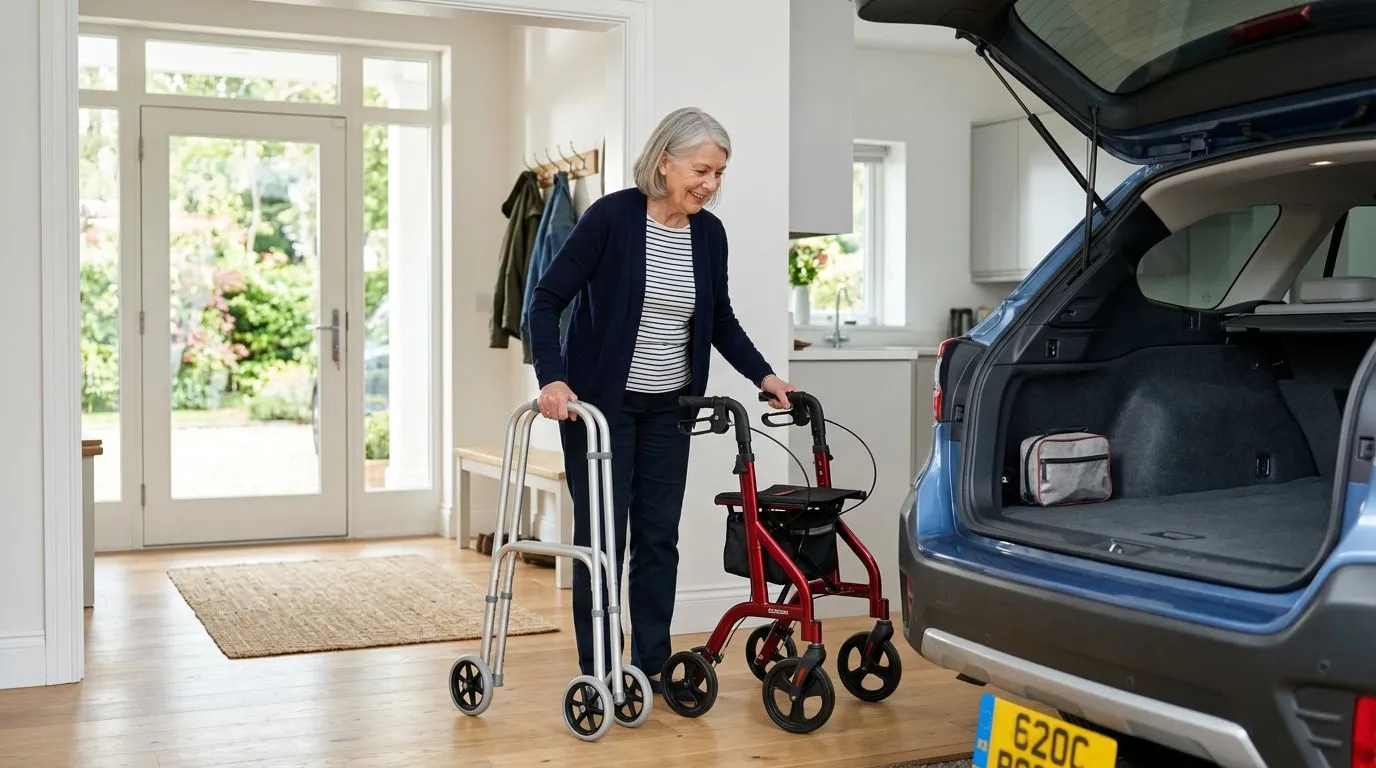
Folding Mobility Walker Buying Guide: Choosing a Compact Walker or Rollator
15 min read