Disclosure: We may earn a commission when you buy through links on this page, at no extra cost to you. We buy nothing, sell nothing and accept no payment for coverage — commissions never decide what we recommend. How we make money.
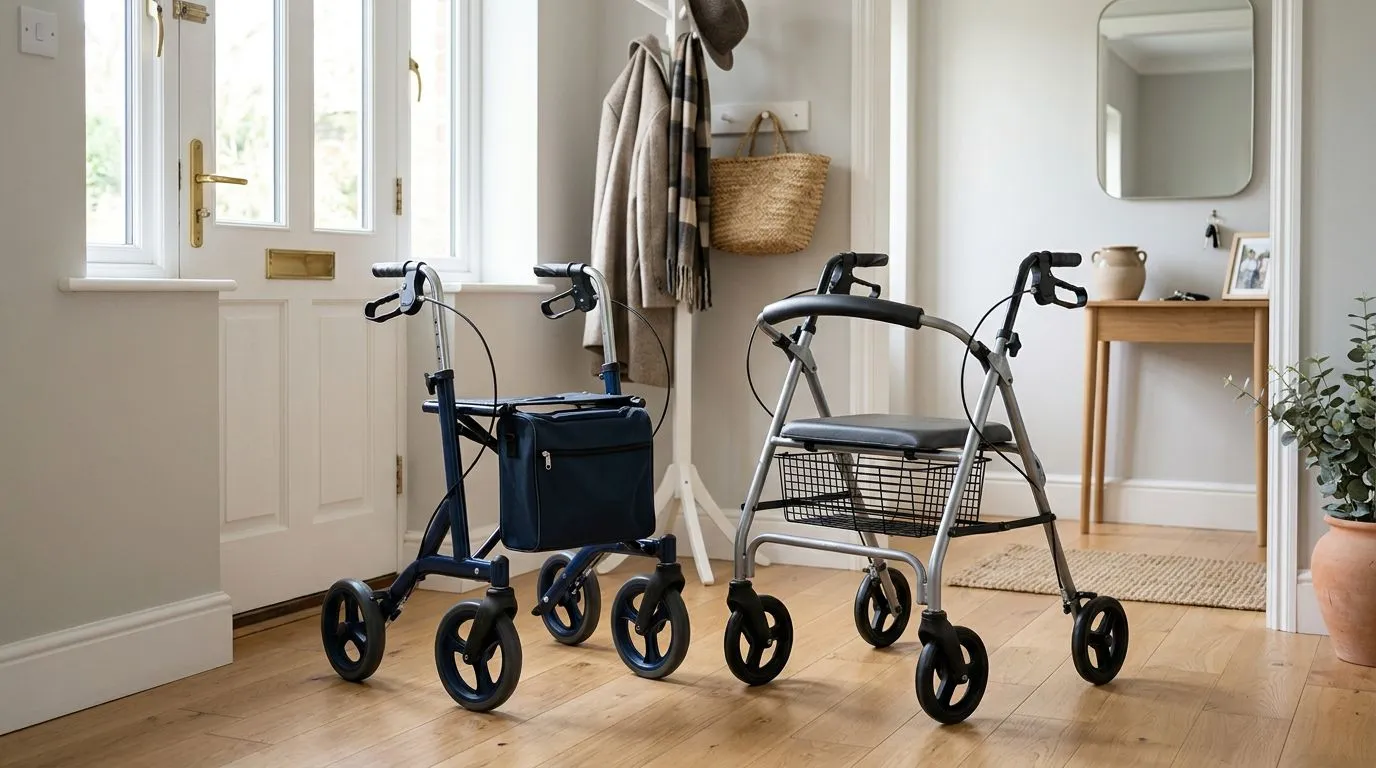
A 3-wheel rollator is usually best when you need a narrow, lightweight mobility aid for tight indoor spaces, quick turns, and easy storage. A 4-wheel rollator is usually the better choice if you want more stability, a built-in seat, and greater confidence outdoors or on longer walks.
Both are wheeled walkers with hand brakes, but they suit different needs. The right choice depends on your balance, walking distance, doorway widths, storage space, and whether you need a place to sit and rest.
3-wheel vs 4-wheel rollators at a glance: 6 key differences
The main practical difference is straightforward: a 3-wheel rollator has a triangular frame and usually no seat, while a 4-wheel rollator has a wider rectangular frame and usually includes a seat. Many 3-wheel designs are about 23 to 26 inches wide, while many 4-wheel designs are closer to 24 to 30 inches wide, depending on frame size and weight capacity.
| Feature | 3-wheel rollator | 4-wheel rollator |
|---|---|---|
| Best strength | Maneuverability in tight spaces | Stability and seated rest breaks |
| Wheels | 3 wheels in a triangular layout | 4 wheels in a wider, rectangular layout |
| Seat | Usually no seat | Usually includes a padded or sling-style seat |
| Typical user weight capacity | Often around 250 to 300 lb | Often around 250 to 350 lb; bariatric options may be 400 lb or more |
| Storage | Often folds narrow, sometimes about 9 to 12 inches deep | Folds, but may take more trunk or closet space |
| Outdoor use | Fine for smooth sidewalks and short errands | Better for longer walks, uneven pavement, and rest breaks |
Think of the 3-wheel rollator as the more nimble design. Think of the 4-wheel rollator as the more supportive, all-around option.
Rollator walkers vs standard walkers: why the difference matters
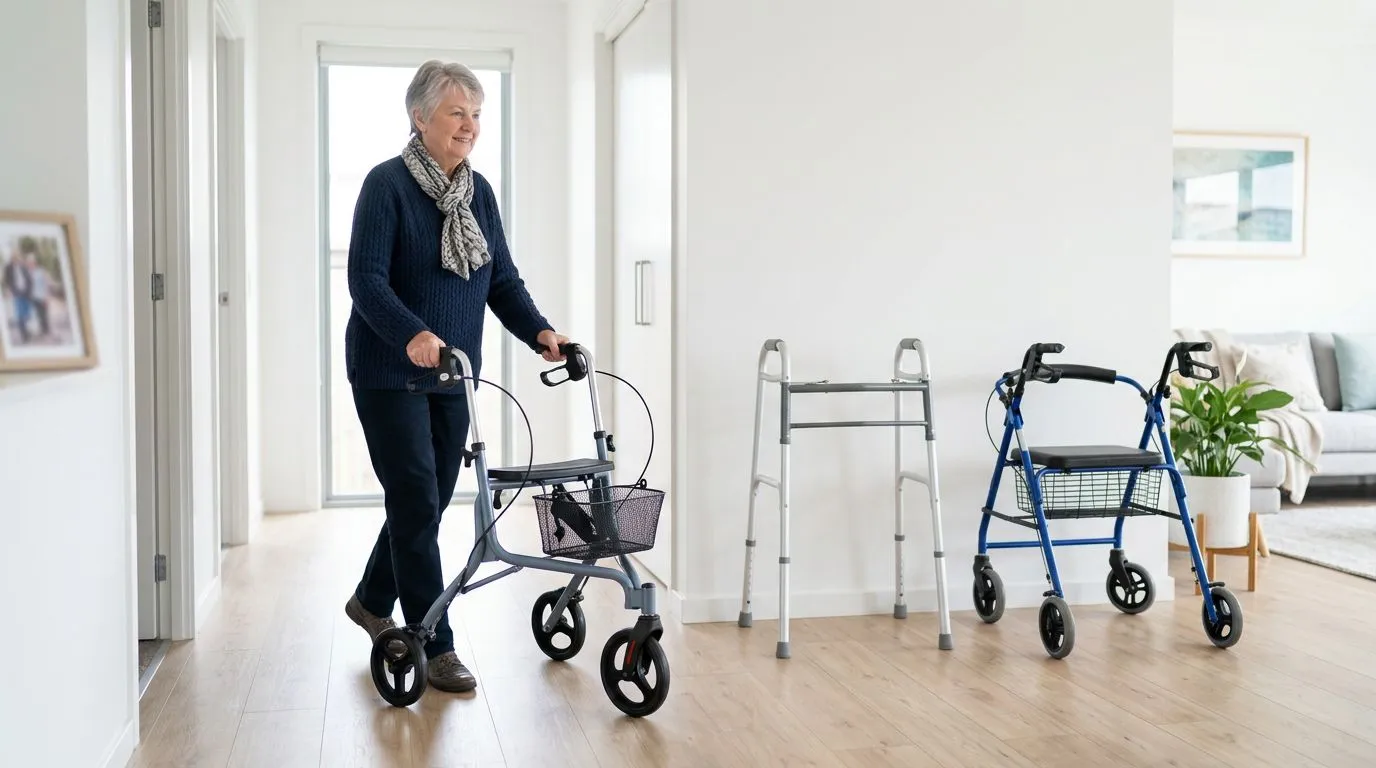
A rollator is not the same as a standard walker. A standard walker usually has no wheels or 2 front wheels, no seat, and no hand brakes. The user lifts or partially lifts the frame, places it forward, and steps into it. That slower pattern can help people who need maximum control and should not use a device that can roll away from them.
A rollator walker has 3 or 4 wheels, hand brakes, and a rolling frame. Most 4-wheel rollators also include a seat and backrest. Many 3-wheel rollators include a pouch or basket but not a seat. Because a rollator moves continuously, it generally works best for someone who can stand upright, steer, squeeze the brakes, and control speed.
This distinction matters when shopping. If you need heavy support with every step, a standard walker or 2-wheel walker may be safer than a rollator. If you can walk but need balance support, a place to steady yourself, or help conserving energy over 100 to 300 feet, a rollator may be more practical.
When in doubt, ask a physical therapist, occupational therapist, or prescribing clinician to watch you walk with the device. A 5-minute gait check can show whether you are leaning too hard, pushing the frame too far ahead, or needing a more stable walker instead.
Who a 3-wheel rollator is best for: narrow spaces and quick turns
A 3-wheel rollator is often a good fit for people who mainly need light balance support and easier steering in hallways, kitchens, bathrooms, elevators, and small apartments. The single front wheel lets the frame pivot more easily than many 4-wheel designs.
That smaller footprint can be a real advantage. For example, if your bathroom doorway is 24 inches wide or your hallway has sharp 90-degree turns, a compact 3-wheel rollator may feel less awkward than a wider 4-wheel model. It can also be easier to tuck beside a restaurant table, in a closet, or behind a car seat.
A 3-wheel rollator may fit you if:
- You need help with balance but do not rely heavily on the frame for weight support.
- You walk mostly indoors or on smooth, level outdoor surfaces.
- You do not need a built-in seat for rest breaks.
- You want a lighter frame for lifting into a car trunk.
- You live in a smaller home, apartment, or assisted living room with limited storage.
The tradeoff is stability. A 3-wheel rollator has a narrower base and can feel less planted, especially when turning quickly or crossing uneven ground. It is also not designed for sitting, unless a specific device clearly includes a manufacturer-approved seat, which is uncommon in this category.
Who a 4-wheel rollator is best for: stability, seat, and longer walks
A 4-wheel rollator is the more common choice for people who want a stable rolling frame and the option to sit. The four-point wheel layout gives the device a broader base, and the seat can be very helpful if you tire after a few minutes of walking or need to pause while shopping, waiting for transportation, or visiting a clinic.
Typical 4-wheel rollators have seat heights around 20 to 24 inches, wheel sizes from about 6 to 10 inches, and weight capacities commonly in the 250 to 350 lb range. Bariatric rollators may support 400 lb or more, but they are wider and heavier, so doorway and vehicle fit become even more important.
A 4-wheel rollator may fit you if:
- You want more stability than a 3-wheel rollator provides.
- You need a seat for planned rest breaks.
- You walk outdoors on sidewalks, parking lots, or longer building corridors.
- You carry small personal items in an under-seat bag or pouch.
- You prefer a more traditional rollator feel with a wider stance.
A 4-wheel rollator is not automatically safer for everyone. Because it rolls easily, the brakes must be easy for you to reach and squeeze. You also need enough judgment and balance to lock the brakes before sitting, stand before unlocking them, and avoid using the rollator like a wheelchair.
How to choose and measure in 10 minutes
You can narrow your choice quickly with a tape measure, your regular walking shoes, and a realistic look at where you walk each week. Set aside about 10 minutes and check these measurements before buying any rollator walker.
1. Measure handle height
Stand tall in your usual shoes with your arms relaxed at your sides. The rollator handles should line up roughly with the crease of your wrist. When you hold the grips, your elbows should have a slight bend, often about 15 to 30 degrees. Handles that are too low can make you hunch; handles that are too high can make steering and braking harder.
2. Measure doorway and hallway clearance
Measure your narrowest doorway, especially the bathroom and bedroom. Many interior doors are 28 to 32 inches wide, but older homes may have tighter openings. Leave at least 1 to 2 inches of practical clearance so you are not scraping the frame every time you pass through.
3. Check seat height and seat width for 4-wheel rollators
If you are considering a 4-wheel rollator, sit-to-stand comfort matters. A seat that is too low can make standing difficult. A seat that is too high may leave your feet unsupported. Many users do best when the seat height is close to a firm dining chair, often around 18 to 20 inches, though rollator seats commonly run a little higher.
4. Compare folded size and lifting weight
If you drive, measure your trunk opening and cargo depth. A few inches can make the difference between easy transport and daily frustration. Also consider the frame weight. Some people can lift 15 lb comfortably; others struggle with anything over 20 lb. The best rollator is one you can actually move and store.
5. Match wheels to surfaces
Smaller 6-inch wheels may work well indoors. Larger 8- to 10-inch wheels are often better for sidewalk cracks, curb cuts, and outdoor paths. Neither design is meant for rough trails, deep gravel, or stairs.
Maneuverability, stability, storage, and outdoor use: feature comparison
Shoppers usually decide between 3 and 4 wheels based on 4 everyday issues: how easy it is to turn, how steady it feels, where it can be stored, and how it handles outdoor surfaces. Use the table below to match features to real life, not just product photos.
| Shopping priority | Choose 3-wheel if... | Choose 4-wheel if... |
|---|---|---|
| Maneuverability | You need to turn in tight rooms, narrow hallways, or small elevators. | You have enough space and prefer a steadier frame over a tighter turning feel. |
| Stability | You need light balance assistance and can control the frame well. | You want a broader base and more confidence on longer walks. |
| Seating | You do not need to sit on the device. | You need a seat for rest breaks during errands or appointments. |
| Storage | You have a small apartment, compact car, or limited closet space. | You can store a wider folded frame and value the seat and larger bag. |
| Outdoor use | You mostly walk on smooth pavement for short distances. | You walk outdoors often and want larger wheels, a seat, and a steadier base. |
| Carrying items | You only need a small pouch or basket for light belongings. | You want under-seat storage for a jacket, small shopping bag, or personal items. |
Here is one practical example: a person who walks 50 feet from bedroom to kitchen several times a day may value a narrow 3-wheel frame. A person who walks 2 blocks to a pharmacy and needs to rest halfway will usually be better served by a 4-wheel rollator with a seat and larger wheels.
Brake, wheel, and frame details to check before you buy
Hand brakes are central to rollator safety. Before choosing any 3-wheel or 4-wheel rollator, confirm that you can squeeze the brake handles with both hands and lock the parking brakes without pain. If hand strength is limited by arthritis, neuropathy, or weakness, brake feel matters as much as frame style.
Wheel size also changes the experience. A rollator with 6-inch wheels may feel compact and easy indoors, but it can catch more on sidewalk seams than an 8-inch wheel. A 10-inch wheel may roll more smoothly outdoors, but the frame may be bulkier and harder to fit in a small trunk.
Frame material and weight capacity should match the user, not just the average shopper. Always stay within the stated weight limit, including how the device is used. A rollator seat is designed for seated rest by one person, not for carrying another person, standing on the frame, or being pushed like a transport chair unless it is specifically designed for that purpose.
- Brake reach: Your fingers should wrap the handles without stretching.
- Parking lock: You should be able to lock both brakes before sitting.
- Wheel tread: Softer or textured wheels may feel better on outdoor surfaces.
- Frame width: Check it against your narrowest doorway, not your widest room.
- Fold mechanism: Practice folding and unfolding before relying on it daily.
If a rollator will be used every day, inspect the brakes and wheels at least once a month. Worn brake cables, loose knobs, or damaged wheels should be corrected before the next outing.
When a standard walker may be safer than a rollator
A rollator is not the right tool for every mobility need. If you put a large amount of body weight through your arms, have frequent falls, cannot reliably use hand brakes, or feel that the device rolls too fast, a standard walker or 2-wheel walker may be a better match.
Standard walkers move more slowly. That can be a benefit. With a no-wheel walker, the frame stays put until you lift it. With a 2-wheel walker, the front wheels help it glide while the back legs add friction. This can provide more control for some users, even though it requires more effort and does not include a seat.
A simple rule: if you need a device to stop you from falling with nearly every step, get professional fitting advice before choosing a rollator. A rollator can support mobility and independence, but it should not replace medical guidance after a fall, surgery, stroke, or sudden change in walking ability.
FAQ: 5 common questions about 3-wheel and 4-wheel rollators
Is a 3-wheel rollator safer than a 4-wheel rollator?
Not usually. A 3-wheel rollator is often easier to maneuver, but a 4-wheel rollator usually offers a wider, more stable base. Safety depends on your balance, brake control, walking surfaces, and fit.
Can you sit on a 3-wheel rollator?
Most 3-wheel rollators do not have a seat and should not be used for sitting. If sitting is important, a 4-wheel rollator with a locking brake and manufacturer-approved seat is usually the better choice.
Are 4-wheel rollators too wide for indoor use?
Not always. Many fit through standard 30- to 32-inch interior doorways, but tight bathrooms, older homes, and cluttered rooms can be challenging. Measure your narrowest doorway before buying.
What wheel size is best for outdoor walking?
For outdoor use, 8- to 10-inch wheels often handle sidewalk cracks and curb cuts better than smaller 6-inch wheels. Very rough ground, stairs, deep gravel, and wet grass are not ideal for rollators.
Do rollators work for people over 300 lb?
Some do, but you must choose a rollator with an appropriate stated weight capacity. Bariatric 4-wheel rollators may support 400 lb or more, but they are typically wider and heavier, so measure doors and transport space carefully.
For most shoppers, the decision comes down to this: choose a 3-wheel rollator if tight-space maneuverability and compact storage matter most. Choose a 4-wheel rollator if you want more stability, a seat, and better support for outdoor errands or longer walks.
Keep reading
Related guides
3-Wheel Rollator Safety: When Tight Turning Helps and When It Adds Risk
12 min read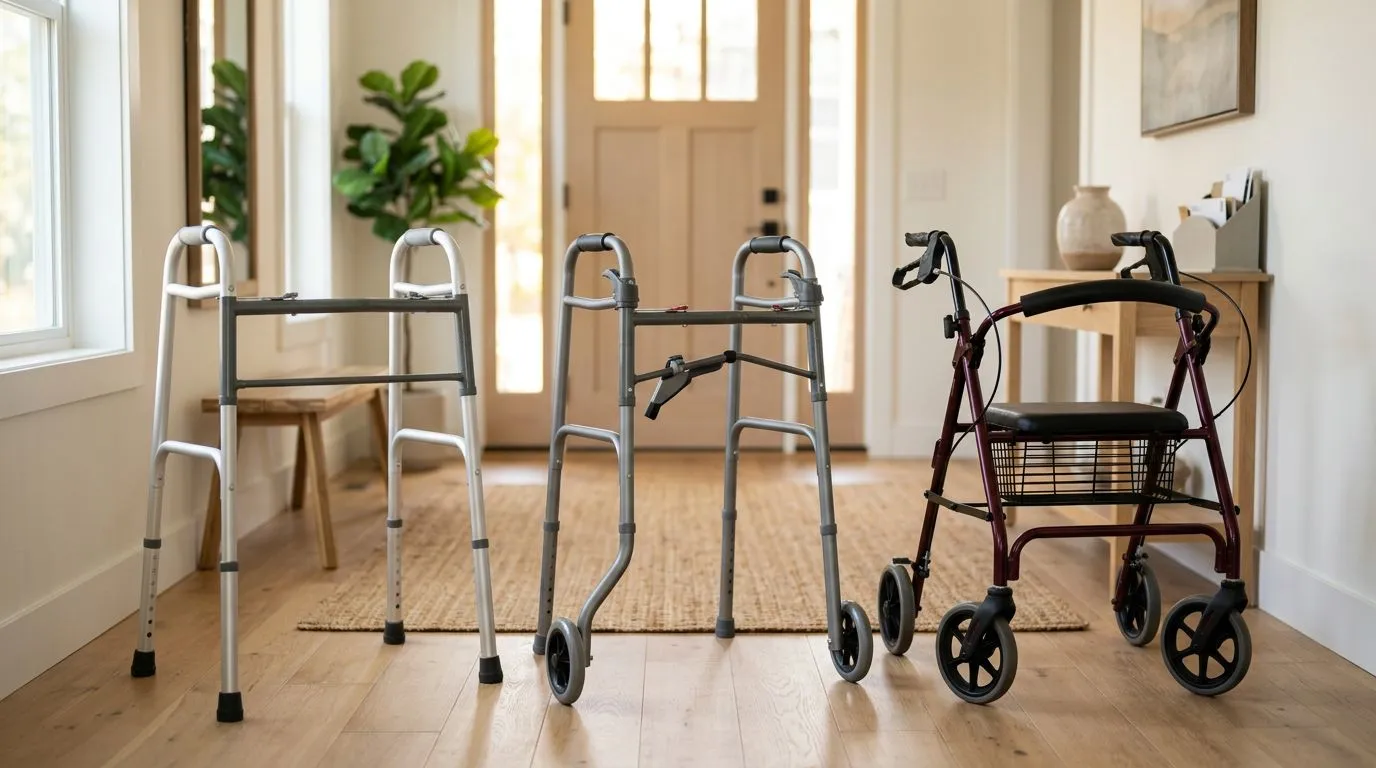
No-Wheel Walker vs Two-Wheel Walker vs Rollator: How Wheels Change Stability, Effort, and Control
13 min read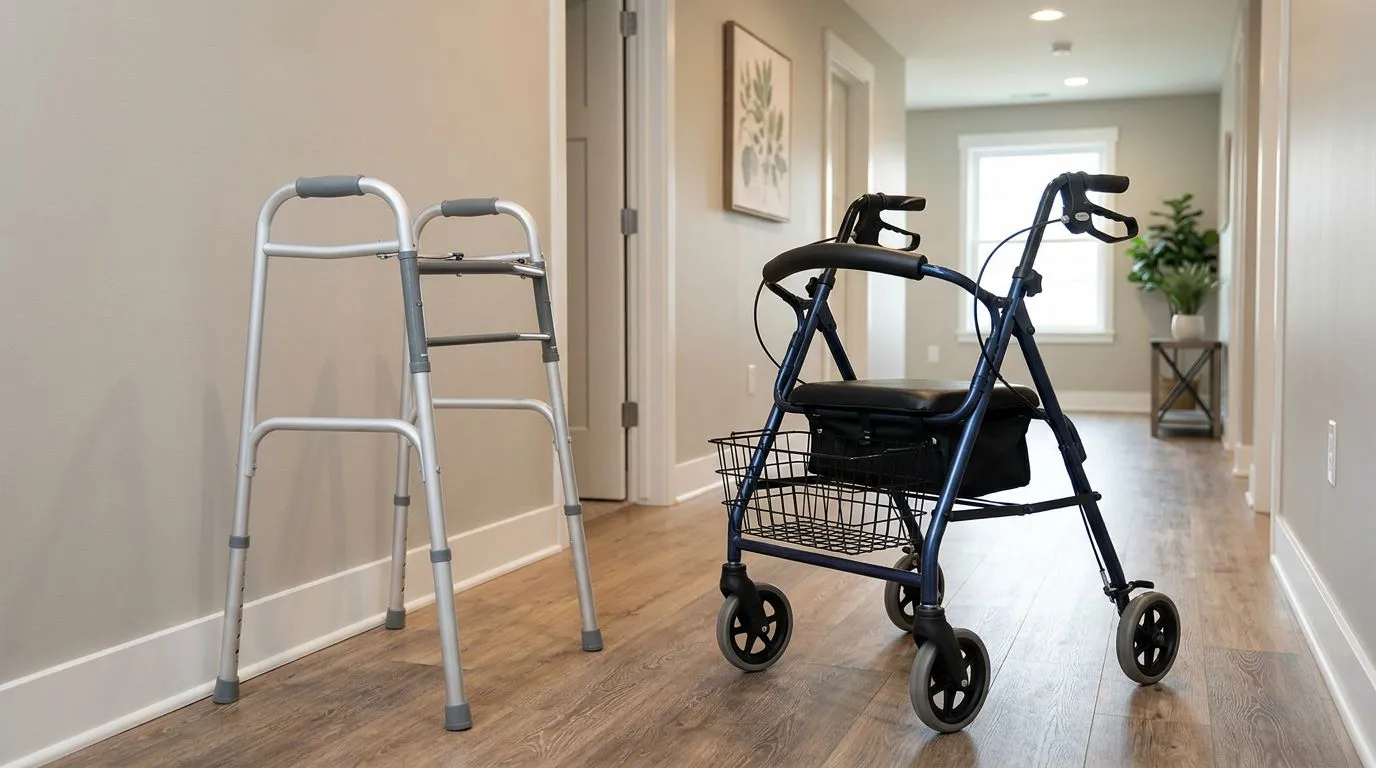
Mobility Walker With Seat vs Standard Walker: Which One Is Right for You?
14 min read