Disclosure: We may earn a commission when you buy through links on this page, at no extra cost to you. We buy nothing, sell nothing and accept no payment for coverage — commissions never decide what we recommend. How we make money.
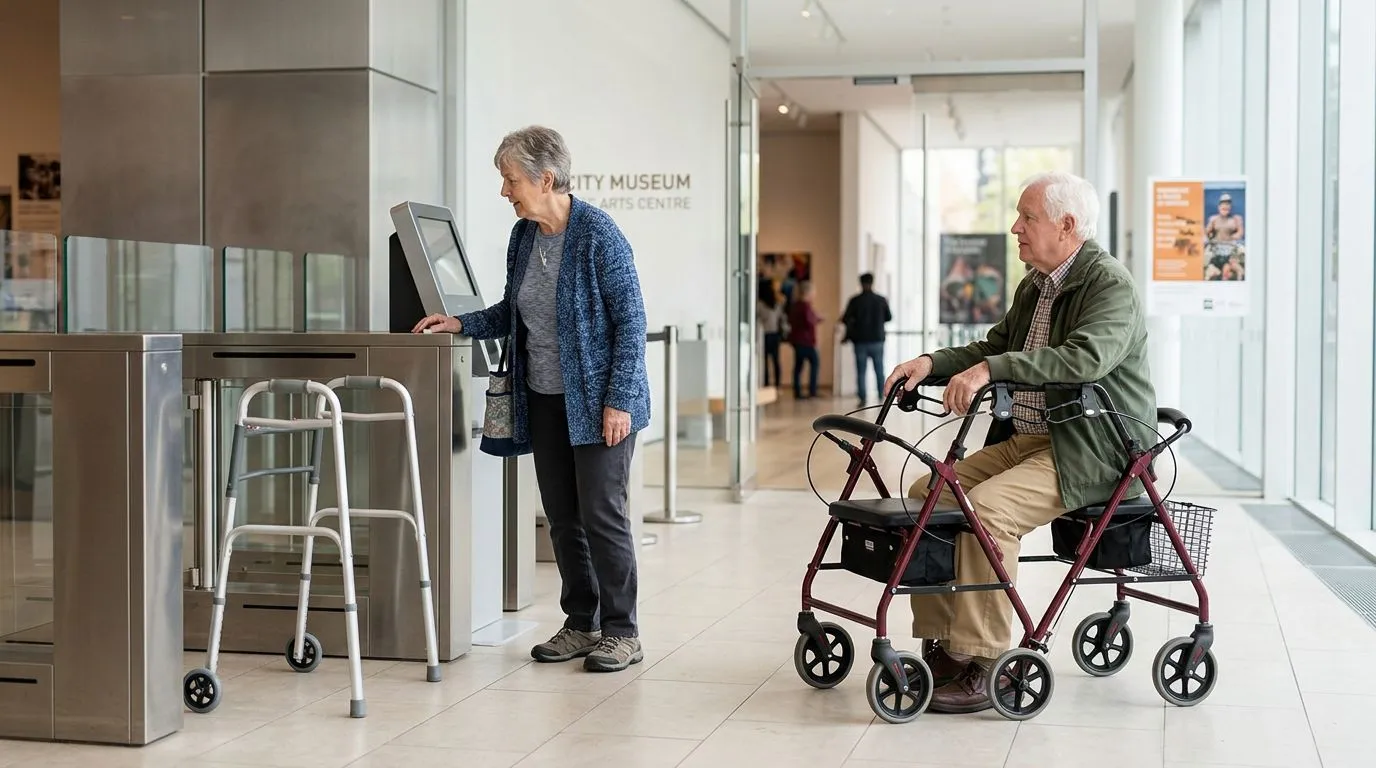
For day trips and events, choose a walker when you need the most stability for short, careful walking. Choose a rollator when you can control hand brakes and need a seat for longer distances. A standard or two-wheel walker is often better in tight, stop-and-go spaces, while a 3-wheel or 4-wheel rollator may feel more comfortable in museums, parks, long hallways, and venues with limited seating.
The safest choice comes down to 5 practical factors: your balance, walking distance, turning space, need for rest breaks, and how the device will be transported or stored. A mobility aid that works beautifully at home may feel awkward in a crowded restaurant aisle, on a stadium ramp, or during a 3-hour museum visit.
Walker vs. rollator for a 2- to 4-hour outing
A walker and a rollator are related, but they are not the same tool. A walker is usually a frame that you lift or partially roll forward, then step into. Common types include standard no-wheel walkers, folding walkers, and two-wheel walkers with front wheels and rear tips or glides. Walkers prioritize stability and controlled movement.
A rollator is a wheeled walker with 3 or 4 wheels, hand brakes, and usually a built-in seat. Many have a storage pouch or basket. Upright or stand-up rollators position the handles higher to encourage a more upright posture, while bariatric rollators use a wider, heavier-duty frame with higher weight capacities. Rollators are easier to move over distance, but they require brake control and good judgment in crowds.
For a 2-hour restaurant visit with a short walk from the parking lot, a folding walker may be enough. For a 4-hour museum visit with long galleries and few benches, a rollator may reduce fatigue because the user can sit during planned breaks. The key is not which device looks easier. It is which one the person can use safely in the real environment.
| Mobility aid type | Best day-trip use | Watch-outs |
|---|---|---|
| Standard no-wheel walker | Maximum stability for short distances, uneven confidence, slow pace | Requires lifting; tiring over long distances |
| Folding walker | Car travel, restaurants, appointments, short indoor events | Check folded size before using rideshares or small trunks |
| Two-wheel walker | Short to moderate indoor walking with less lifting than a standard walker | Rear tips can catch on thick carpet or thresholds |
| 3-wheel rollator | Narrow spaces, quick turns, lighter errands | Usually no full seat; less stable than many 4-wheel designs |
| 4-wheel rollator | Longer outings, museums, flat paths, venues with rest breaks | Needs brake control; wider turning space |
| Upright rollator | Users who tolerate an upright handle position and need a seat | Often taller and bulkier; practice turning before crowds |
| Bariatric rollator | Higher weight capacity and wider seat needs | Heavier frame may be harder to load into a car |
Who each option is best for: 6 common outing scenarios
Different trips create different mobility demands. A good match for a 20-minute medical appointment may not be ideal for a Saturday at a stadium with ramps, lines, and a long walk back to the car.
1. Museums and galleries
Museums often mean slow walking, hard floors, quiet spaces, and long routes. A rollator works well for many people because it rolls smoothly and provides a seat when benches are full. A walker may be better if balance is unpredictable or if the person tends to push too far ahead on wheels.
2. Restaurants
Restaurants can have aisles as narrow as 24 to 30 inches between tables, especially during busy hours. A folding walker or two-wheel walker can be easier to park beside a chair than a wide rollator. If using a rollator, ask for a table near the entrance or along a wall so the device does not block servers or other guests.
3. Stadiums and arenas
Stadiums may include ramps, security lines, elevators, escalator alternatives, and seats with limited legroom. A rollator can help during long approaches from parking lots, but storage at the seat can be difficult. A folding walker is often simpler near assigned seating, while a rollator may be better if the venue provides accessible seating space.
4. Outdoor fairs and festivals
Outdoor events add uneven pavement, grass, gravel, curb cuts, and crowds moving in several directions. Rollators with larger wheels can be easier over small surface changes, but only if the user can brake confidently. Standard walkers may feel secure, but they can be tiring if the route is more than a few blocks.
5. Shopping centers
For an indoor mall or large store, a rollator is often comfortable because the floor is smooth and rest breaks may be needed every 15 to 30 minutes. A walker still makes sense for someone who needs firm support with each step or becomes distracted in busy aisles.
6. Short religious services, ceremonies, or community events
When most of the time is spent seated, a compact folding walker can be the easiest option. If the walk from the parking area is long or seating is uncertain, a rollator may offer more independence. The deciding detail is often the first and last 200 feet of the outing, not the event itself.
How to choose and measure before you leave: 3 fit checks
Fit affects safety. A walker or rollator that is too low can encourage leaning; one that is too high can make the shoulders tense and reduce control. Before a day trip, check height, width, and weight capacity.
Handle height
Stand in your regular walking shoes with arms relaxed at your sides. The handgrips should line up near the crease of the wrist. When holding the grips, elbows should bend slightly, often about 15 to 30 degrees. This rule applies to both walkers and rollators, though upright rollators use a different forearm or handle position and should be adjusted according to their intended support style.
Overall width
Measure the widest part of the frame. Many standard walkers and rollators are roughly 22 to 30 inches wide, but bariatric frames may be wider. Compare that width with doorways, restaurant aisles, bathroom entrances, elevator doors, and vehicle space. A device that fits through a 32-inch doorway at home may still feel awkward in a crowded café.
Weight capacity and seat fit
Check the listed weight capacity and do not exceed it. Standard adult walkers and rollators commonly have capacities around 250 to 300 pounds, while bariatric versions may support more depending on the design. For rollators, the seat is not just a convenience feature. The user should be able to sit fully, keep feet on the floor, and lock the brakes before sitting or standing.
| Fit point | Walker | Rollator |
|---|---|---|
| Handle height | Wrist-crease height with slight elbow bend | Same for standard rollators; upright designs differ |
| Width | Usually easier to manage in tight indoor spaces | Check wheel-to-wheel width before restaurants or stadiums |
| Seat | No built-in seat | Seat height and brake use must be safe |
| Brakes | No hand brakes on most standard walkers | Hand brakes should stop and lock securely |
| Transport | Often lighter and simpler to fold | Can be heavier due to wheels, seat, and brake hardware |
Crowds, turns, and tight spaces: plan for 24 to 36 inches
Crowded places change how a mobility aid feels. People stop suddenly, children cross in front, restaurant chairs slide into aisles, and stadium lines move in short bursts. The more crowded the environment, the more important turning control becomes.
Walkers move predictably because the user places the frame, shifts weight, and steps. This helps in slow lines, narrow halls, and tight dining rooms. A two-wheel walker can reduce lifting while still keeping the rear of the frame from rolling away too easily.
Rollators turn more easily, especially 3-wheel designs, but they also keep moving unless controlled. In a crowd, the user should keep both hands on the handles and avoid hanging heavy bags from one side, which can affect steering. With a 4-wheel rollator, take wider turns around corners rather than twisting sharply.
As a practical rule, assume you will need 24 to 36 inches of clear path for comfortable movement and more space for turning. If the outing includes a small restroom, a packed dining room, or narrow historic building hallways, a compact folding walker may be safer than a full-size rollator.
Seating and rest breaks: plan every 15 to 30 minutes
Rest is not a failure. It is part of a safe outing. Many people can walk farther when they pause before fatigue becomes severe. For longer trips, plan a seated break every 15 to 30 minutes, or sooner if pain, shortness of breath, dizziness, or unsteadiness appears.
This is where rollators have a clear advantage. A 4-wheel rollator with a seat can provide a controlled place to rest when benches are occupied or far away. Before sitting, move out of the traffic path, turn the rollator so it is stable, lock both brakes, and reach back for the seat if needed. Never sit on a rollator while someone pushes it unless the device is specifically designed and approved for that use.
Walkers do not provide seating. If using a walker, build the route around known chairs, benches, lobby seating, café stops, or accessible seating sections. For example, a museum visit may work well with a walker if you choose 2 galleries, rest in the lobby, then decide whether to continue.
Be realistic about the full day. Walking distance includes parking, security lines, restrooms, concessions, and the trip back to the car. A person who can walk 300 feet at home may need a different plan for a venue that requires 800 to 1,500 feet of walking before reaching a seat.
Transport, storage, and venue rules: ask 3 questions before arrival
Day trips often fail at the logistics stage, not the walking stage. A device may be safe on the sidewalk but too heavy for a caregiver to lift into the trunk. It may roll well at the museum but have nowhere to go beside a restaurant booth.
Before leaving, ask these 3 questions. First, how will the walker or rollator get there? Many folding walkers are relatively easy to place in a back seat or trunk. Rollators often fold too, but the wheels, seat, and brake cables can make them heavier and bulkier.
Second, where will it be stored during the event? At a restaurant, a walker can sometimes fold and rest against a wall. A rollator may need space at the end of the table. At a stadium, accessible seating areas may offer better room, but standard rows may not.
Third, what does the venue allow or provide? Many museums, theaters, stadiums, and event halls have accessibility pages or guest services numbers. Ask about accessible entrances, elevators, seating areas, companion seating, bag policies, and whether mobility devices can remain with the guest. A 2-minute phone call can prevent a long walk to the wrong entrance.
Safety checklist for 4 common places
A quick checklist helps reduce surprises. Use it before museums, restaurants, stadiums, and crowded public events.
| Place | Walker tips | Rollator tips |
|---|---|---|
| Museum | Choose shorter routes and identify benches on the map | Lock brakes before viewing exhibits from the seat |
| Restaurant | Ask for a table near the entrance or wall | Park with brakes locked and wheels out of the aisle |
| Stadium | Use accessible entrances and avoid stairs when possible | Confirm storage or accessible seating space in advance |
| Crowded festival | Move slowly and pause away from traffic flow | Keep both hands on brakes and avoid steep grassy slopes |
For both walkers and rollators, wear supportive shoes, keep loose bags secured, and avoid rushing to keep up with a group. If the user has new weakness, repeated falls, dizziness, or major changes in walking ability, it is wise to ask a healthcare professional or physical therapist for individualized guidance before tackling a demanding outing.
Practice for 10 minutes before the real trip
A short practice session can reveal problems while you are still at home. Spend 10 minutes walking, turning, stopping, folding, and loading the device before the event day. Practice in the same shoes and with the same jacket, purse, oxygen tubing, or small bag you plan to bring.
Walker users should practice stepping into the frame without leaning too far forward, turning in small steps, and crossing a threshold. If the walker has front wheels, confirm that the rear tips or glides move smoothly without catching.
Rollator users should practice squeezing the brakes, locking the brakes, sitting, standing, and turning in a hallway. The brakes should be easy to reach and strong enough to hold the rollator still. If the hands are painful, weak, or numb, a rollator may not be safe without professional adjustment or a different mobility plan.
Caregivers should practice lifting and unfolding the device too. A rollator that weighs 18 to 25 pounds may be manageable for one person and too much for another, especially after a long event. The best mobility aid is the one the user and helper can manage calmly from the front door to the final seat and back again.
A practical decision guide for your next outing
Choose a walker if the outing is short, the space is tight, balance support is the top priority, or the user is not confident with hand brakes. A standard or folding walker is especially useful for restaurants, small venues, short ceremonies, and situations where the device must be stored beside a chair. A two-wheel walker can be a good middle ground when lifting a no-wheel walker is tiring but full rolling motion feels unsafe.
Choose a rollator if the outing involves longer distances, smooth surfaces, and a real need for rest breaks. A 4-wheel rollator is often the most versatile option for museums, shopping centers, large medical campuses, and accessible event spaces. A 3-wheel rollator may help in narrower areas, though it usually offers less seating support. Upright and bariatric rollators can be helpful for specific body types and support needs, but their size and weight should be checked before travel.
If you are unsure, match the device to the hardest part of the day. That may be a 1,000-foot walk from parking, a 28-inch restaurant aisle, a crowded restroom, or a stadium section with limited storage. Planning for that challenge usually leads to the safer choice.
One final point: the goal is not to prove independence by doing too much. The goal is to enjoy the outing with enough support, rest, and confidence to get home safely.
FAQ
Frequently asked questions
Is a walker or rollator better for a museum visit? +
A rollator is often better for a long museum visit because it rolls easily on smooth floors and provides a seat for rest breaks. A walker may be safer if balance support is the main concern or if the person has trouble using hand brakes.
Can I bring a rollator into a restaurant? +
Usually, yes, but space can be tight. Ask for a table near the entrance, along a wall, or with room at the end so the rollator does not block aisles. Lock the brakes whenever it is parked.
Are rollators safe in crowded places? +
They can be safe for users who have good hand control, can brake quickly, and can steer without rushing. In very crowded or narrow spaces, a folding walker or two-wheel walker may offer more controlled movement.
What should I check before taking a walker to a stadium? +
Check accessible entrances, elevator locations, seating space, storage rules, parking distance, and whether stairs can be avoided. A folding walker may be easier near tight seats, while a rollator may help with long ramps and approaches.
How do I know if a rollator seat is safe to use? +
The seat should support the user's weight rating, allow both feet to touch the floor, and feel stable with both brakes locked. The user should practice sitting and standing before using it in public.
Should I use the same mobility aid for every outing? +
Not always. Some people use a walker for short, crowded indoor trips and a rollator for longer outings with smooth surfaces and limited seating. Choose based on the distance, crowding, storage, and your ability to control the device safely.
Keep reading
Related guides
One Mobility Walker for Home and Outdoors? Standard Walkers vs Rollators for Daily U.S. Use
13 min read
No-Wheel Walker vs Two-Wheel Walker vs Rollator: How Wheels Change Stability, Effort, and Control
13 min read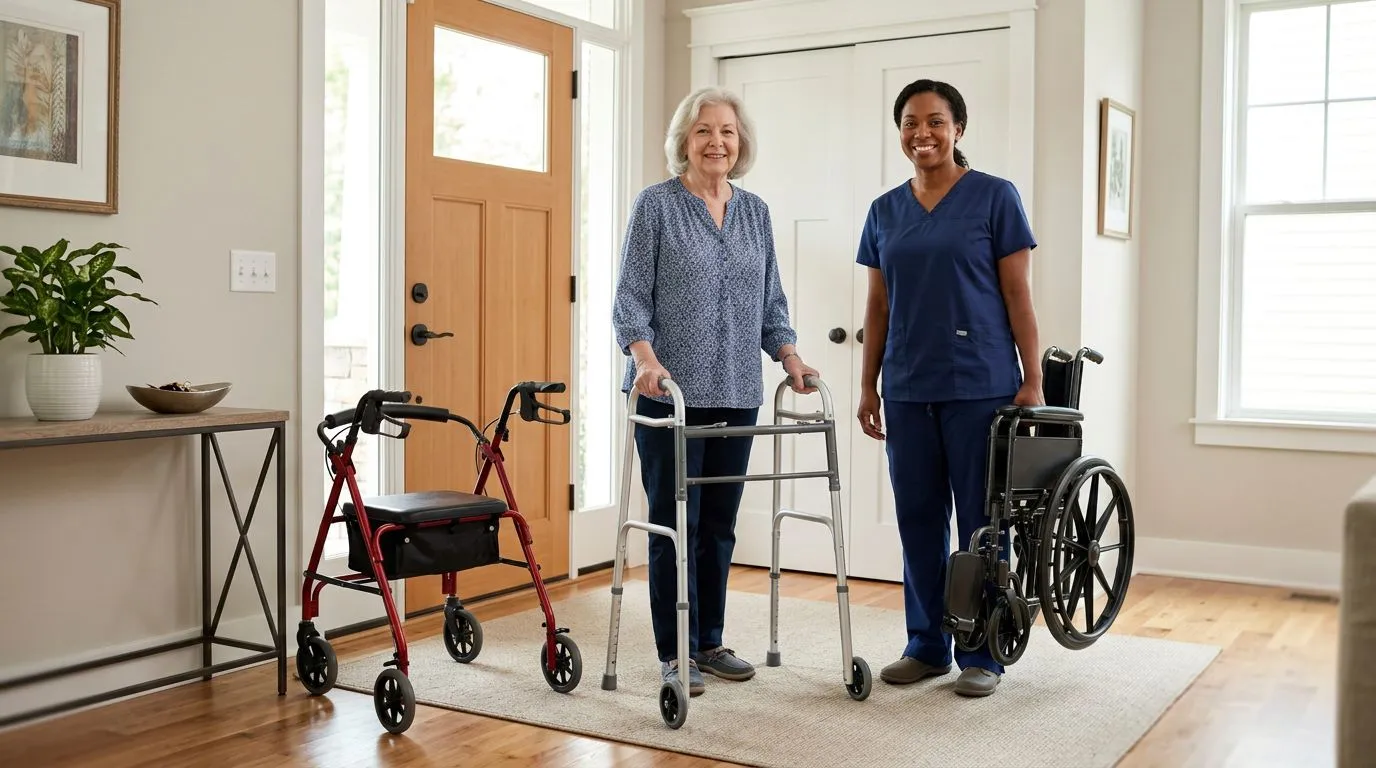
Walker vs Wheelchair: When to Use a Mobility Walker, a Transport Chair, or Both
13 min read