Disclosure: We may earn a commission when you buy through links on this page, at no extra cost to you. We buy nothing, sell nothing and accept no payment for coverage — commissions never decide what we recommend. How we make money.
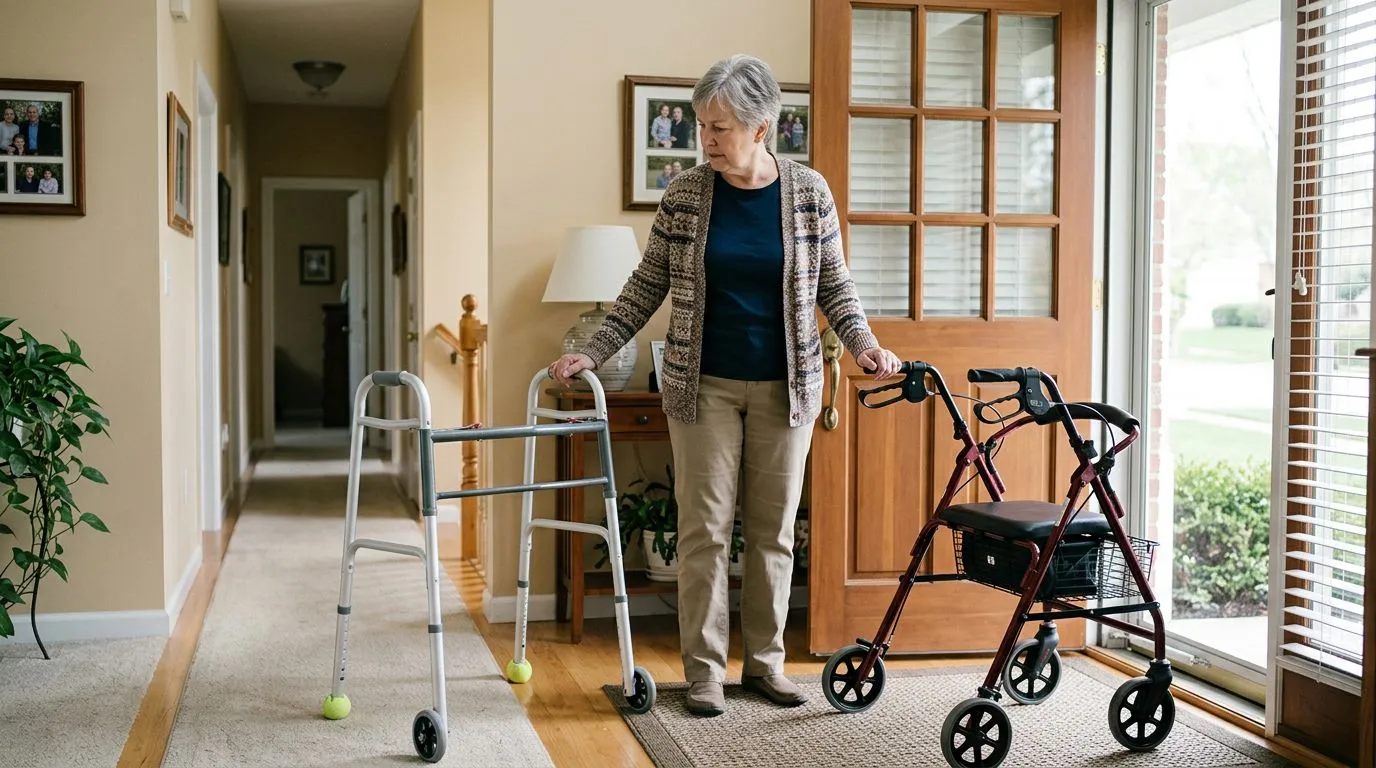
One mobility device can work at home and outdoors if your walking routes are fairly smooth, your doorways are wide enough, and you can control the device safely on turns, curbs, and slopes. Many people do better with a standard or two-wheel walker indoors and a rollator outdoors, especially when the home is tight but community distances are longer.
The right choice depends less on the device name and more on your balance, endurance, hand strength, home layout, and typical trips. A standard walker provides the most stable support because it does not roll freely. A rollator moves faster and usually includes a seat and hand brakes for longer outings.
Walker vs rollator basics: 0, 2, 3, or 4 wheels
In everyday U.S. shopping language, people often use “walker” for several different mobility aids. To choose wisely, it helps to separate them into two groups: walkers and rollators.
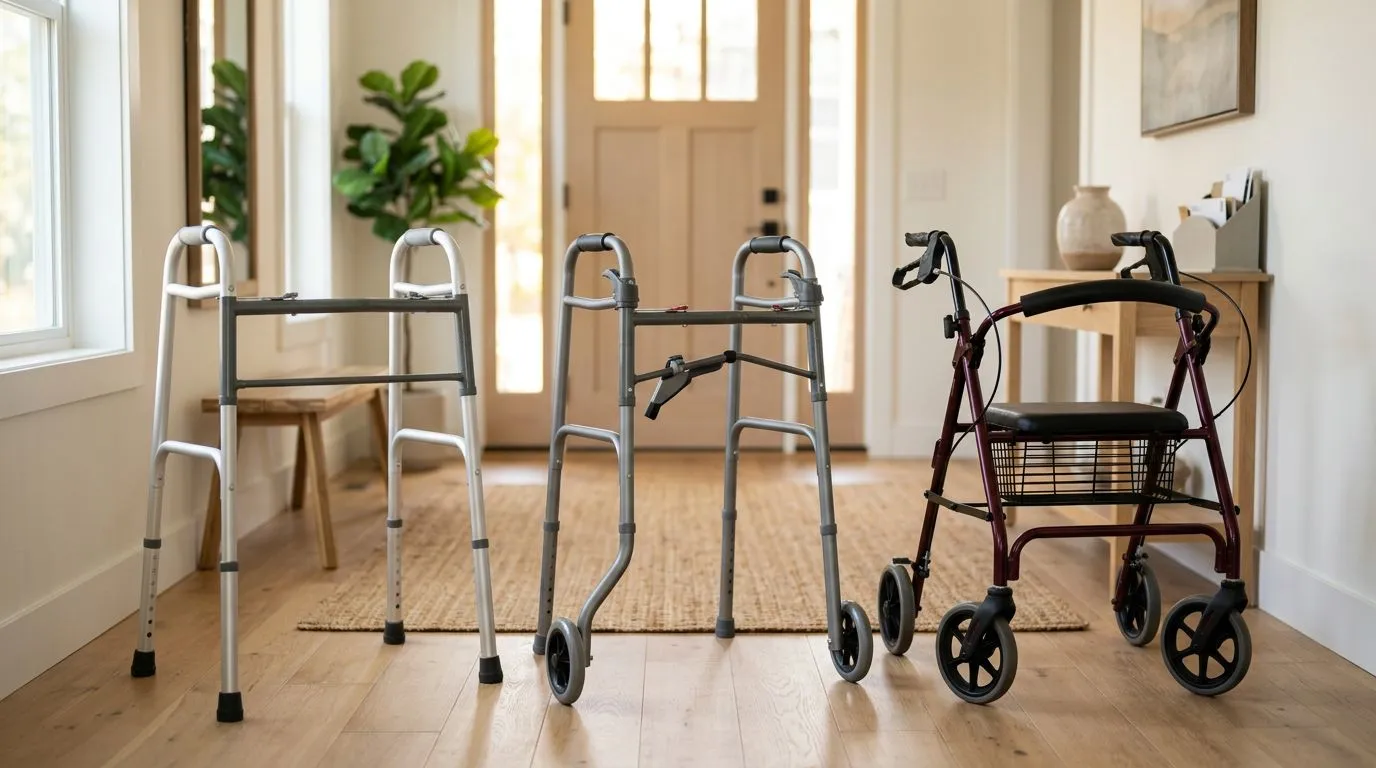
A standard walker is a lightweight frame with no wheels. You lift it, place it forward, then step into it. A folding walker is usually the same idea, with a frame that folds for car trunks, closets, or travel. A two-wheel walker has wheels on the front legs and rubber tips or glides on the rear legs, so it can slide forward without requiring you to lift the whole frame. These walker styles are common for indoor use, recovery periods, and people who need steady support at slower speeds.
A rollator is a wheeled walker with 3 or 4 wheels, hand brakes, and usually a built-in seat. A 4-wheel rollator is the most common seated style. A 3-wheel rollator is often narrower and easier to maneuver in stores, but it usually has no full seat or offers less seating support. Upright or stand-up rollators have taller forearm or hand platforms to encourage a more upright posture. Bariatric rollators are built with wider frames and higher weight capacities, often in the 300 to 500 lb range depending on the design.
| Type | Typical setup | Main advantage | Main limitation |
|---|---|---|---|
| Standard walker | 0 wheels, 4 rubber tips | High stability at a slow pace | Must be lifted with each step |
| Folding walker | 0 or 2 wheels, folds flat | Stores and transports easily | May still feel wide in small rooms |
| Two-wheel walker | 2 front wheels, 2 rear tips | Less lifting than a standard walker | Not as smooth outdoors as a rollator |
| 3-wheel rollator | 3 wheels, hand brakes, narrow frame | Turns well in aisles and hallways | Less stable than most 4-wheel rollators |
| 4-wheel rollator | 4 wheels, brakes, seat | Good for longer community walking | Requires brake control and judgment |
| Upright rollator | 4 wheels, higher handles or forearm supports | May reduce forward hunching for some users | Larger turning radius and heavier frame |
Indoor daily use: measure 24 to 36 inches of real space
Home use is where many “one-device” plans run into problems. A mobility aid that feels great on a sidewalk can be awkward between a bed and dresser, beside a toilet, or around a kitchen island.
Many interior doorways in U.S. homes are about 28 to 32 inches wide, while older bathrooms may have less clear space once the door swings open. Standard walkers are often around 25 inches wide, though sizes vary. Rollators may be similar or wider, especially 4-wheel, upright, and bariatric designs. Width is only part of the issue. You also need room to turn, back up, approach a chair, and park the device without blocking your feet.
A no-wheel standard walker can be the better indoor choice when balance support matters more than speed. It stops when you stop. It does not roll away as you stand from a chair. A two-wheel walker may work well when lifting a frame is tiring but a full rollator feels too mobile indoors.
Rollators can be used inside, but they require consistent brake habits. Before sitting, the brakes must be locked. Before standing, the device must be positioned so it will not move. In a small bathroom or narrow bedroom, a rollator seat and rear wheels may add bulk. Some users also find hand brakes harder to manage during rushed nighttime trips.
Who an indoor walker is best for
- People who need slow, deliberate support over short distances such as 10 to 30 feet.
- Homes with tight bathroom turns, narrow hallways, or furniture close to walking paths.
- Users who have limited reaction time or difficulty managing hand brakes.
- Post-surgery or short-term users following professional instructions for protected walking.
Outdoor errands: plan for 100 feet, uneven pavement, and curbs
Outdoor mobility is a different test. A trip from a parking space to a clinic entrance may be 100 to 300 feet before you even reach the waiting room. Grocery stores, pharmacies, sidewalks, apartment parking lots, and medical campuses can include slopes, thresholds, curb cuts, door mats, and cracked pavement.
This is where a rollator often makes daily life easier. Larger wheels roll over small surface changes better than the small front wheels on many two-wheel walkers. The built-in seat gives you a place to rest while standing in a line or waiting for a ride. Hand brakes help control speed on gentle declines, as long as the user has the grip strength and awareness to use them correctly.
A standard walker can be used outdoors for short, smooth routes, but it is slow and tiring because the frame must be lifted repeatedly. Rubber tips can catch on rough concrete. A two-wheel walker handles smooth sidewalks better than a no-wheel walker, yet it still lacks a seat and does not match the rolling efficiency of a 4-wheel rollator on longer outings.
Wheel size matters. Many rollators use wheels in the 6 to 10 inch range. Larger wheels tend to handle outdoor cracks and transitions more comfortably. Smaller wheels may feel better indoors but less forgiving on uneven pavement. No wheel size makes a device safe for every surface; grass, gravel, steep ramps, ice, and broken sidewalks require extra caution and sometimes a companion.
Who an outdoor rollator is best for
- People who can walk but need rest breaks every few minutes or every 100 to 500 feet.
- Users who can squeeze and lock hand brakes reliably.
- Shoppers who need a seat while waiting for transportation, appointments, or checkout lines.
- People walking mostly on smooth sidewalks, stores, senior communities, and medical buildings.
When 1 mobility aid can handle both home and outdoors
One device is realistic when your home, body mechanics, and daily routes all fit the same tool. This is most likely when you have open floor space, doorways that clear the device by at least 2 inches on each side, and outdoor routes that are mostly smooth and level.
A two-wheel folding walker can be a practical one-device choice for someone who needs stable indoor support and only takes short outdoor walks, such as from the front door to a car or across a flat clinic lobby. It is usually simpler than a rollator because there are no hand brakes or seat rules. The tradeoff is endurance. If you need to stop and sit during errands, a two-wheel walker may not meet your needs.
A compact 4-wheel rollator can work as a single device for someone with good brake control, moderate balance, and a home with enough turning room. This setup often suits people who are steady enough not to lean heavily on the frame while walking, but who need help pacing themselves through stores, sidewalks, and appointments.
A 3-wheel rollator may be tempting as a one-device solution because it turns easily and can feel less bulky. It can be useful in narrow spaces, but it is not the same as a seated 4-wheel rollator. If you need a secure seat for rests, compare carefully. Some 3-wheel designs have a bag or tray, not a true sitting surface.
| Daily situation | One device may work if... | Watch closely for... |
|---|---|---|
| Small apartment | Hallways and bathroom turns are wide enough for the frame | Rear wheels catching on furniture or door trim |
| Single-level home | Walking paths are cleared to about 36 inches where possible | Throw rugs, cords, pets, and tight chair approaches |
| Clinic visits | Distance from parking to check-in is manageable | Need for rest before reaching the entrance |
| Grocery shopping | You can control brakes while carrying light items | Crowded aisles, sloped parking lots, automatic doors |
| Outdoor walks | Sidewalks are even and routes are familiar | Cracks, curb cuts, wet leaves, gravel, and steep ramps |
When 2 devices make more sense: 1 indoor walker and 1 outdoor rollator
Using two mobility aids is not a failure. It is often a practical setup, much like wearing different shoes in the house and for walking outside. The goal is to match the device to the environment instead of forcing one frame to do everything.
A common arrangement is a standard or two-wheel walker inside the home and a 4-wheel rollator for community outings. The indoor walker gives controlled support in tight spaces. The outdoor rollator covers longer distances and offers a seat. This can be especially helpful when the bathroom is narrow, but the person still wants to attend appointments, visit stores, or walk through a senior living campus.
Two devices may also reduce lifting and transport hassles. A folding walker can stay near the bed or favorite chair, while a rollator stays in the car, garage, or entryway. If the rollator weighs 15 to 25 lb, lifting it into a trunk several times a day may be difficult for some users or caregivers. Keeping devices where they are used most can make the routine smoother.
Bariatric needs deserve careful attention. Higher weight capacity frames are often wider and heavier. A bariatric rollator may be excellent outdoors but too wide for a bathroom doorway. In that case, a properly rated indoor walker and a separate outdoor rollator may be safer and more comfortable than trying to squeeze one large device through every room.
Signs a two-device plan is worth considering
- Your outdoor device fits sidewalks but not your bathroom.
- You need a seat outside but not inside.
- You can walk 20 feet at home but struggle with 200 feet at appointments.
- You feel rushed or unsafe locking rollator brakes during nighttime bathroom trips.
- Your caregiver can transport one device, but you need another available at home.
How to choose and measure: 6 checks before you buy
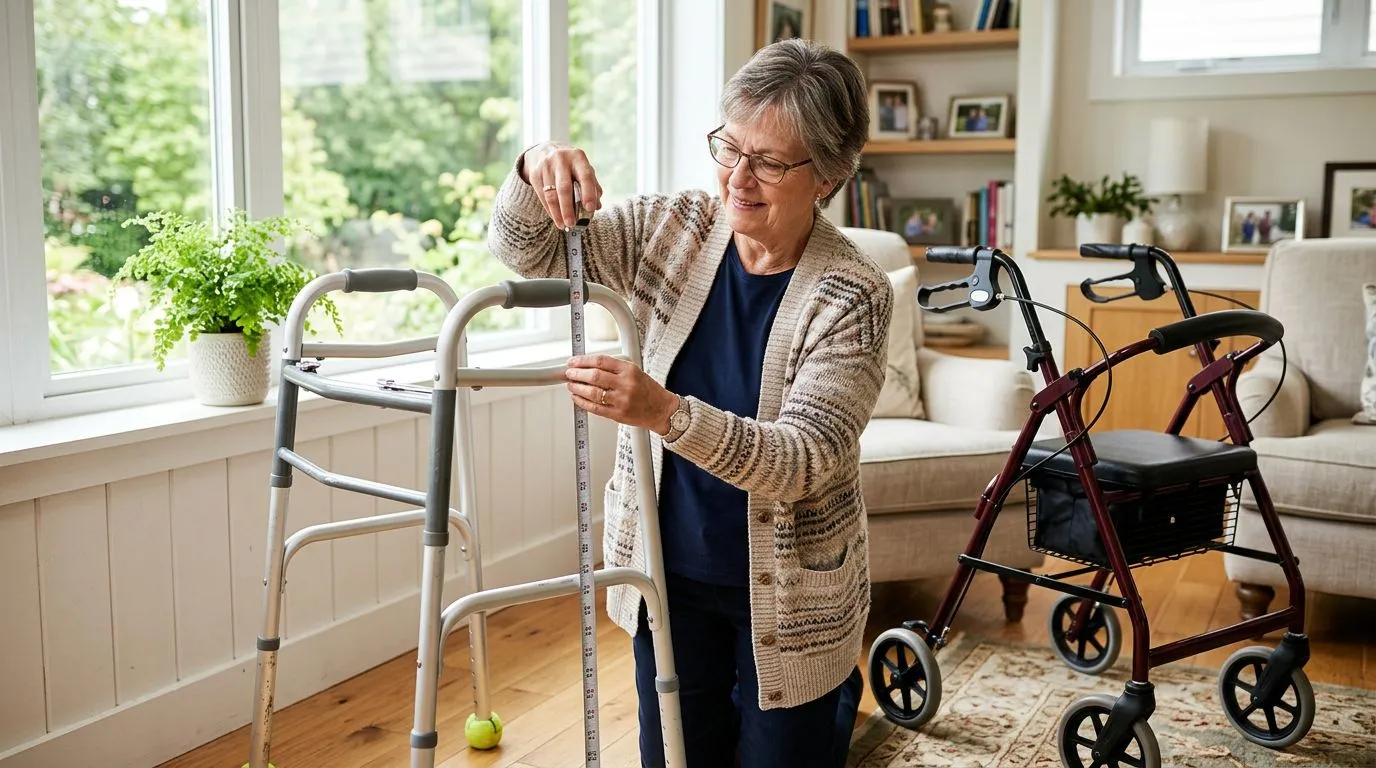
Before choosing one mobility walker or a walker-plus-rollator setup, measure the real places you use every day. A tape measure and 15 minutes can prevent an expensive mismatch.
- Doorway clearance: Measure the narrowest doorway you must pass through, especially bathrooms and bedrooms. Compare it with the overall device width, not just the seat width.
- Turning space: Test or estimate the turn beside the bed, toilet, shower entrance, recliner, and kitchen counter. A device that fits straight through a 30 inch doorway may still be hard to turn.
- Handle height: With shoes on, stand upright with arms relaxed. Walker or rollator handles commonly adjust in 1 inch increments. A typical starting point is wrist-crease height, but a physical therapist can fine-tune this for posture and gait.
- Seat height and width: For rollators, check whether the seat height allows controlled sitting and standing. Many seats are roughly 18 to 23 inches high, but the right height depends on leg strength and body size.
- Weight capacity: Choose a frame rated for the user’s weight, including clothing and any carried items. Standard capacities are often around 250 to 300 lb, while bariatric options may go higher.
- Lift weight: If the device goes in a car, confirm who will lift it. A few pounds matter when loading into a trunk after an appointment.
Whenever possible, try the device on the same kinds of surfaces you use: carpet, tile, thresholds, sidewalk, curb cuts, and store aisles. If you have had a recent fall, new weakness, dizziness, or a medical condition affecting walking, ask a physical therapist, occupational therapist, or other qualified clinician for fit and training.
Feature comparison: 8 factors for daily U.S. use
The best device is the one you can use correctly every day, not the one with the longest feature list. Compare features through your actual routine: morning bathroom trips, meal prep, getting to the car, medical appointments, and errands.
| Factor | Standard or two-wheel walker | Rollator |
|---|---|---|
| Stability | Very stable when used slowly; no-wheel versions do not roll forward | Stable for many users, but wheels require brake control |
| Speed | Slower pace; standard walkers require lifting | Faster, smoother walking on suitable surfaces |
| Indoor fit | Often better in tight rooms and short paths | Can feel bulky in small bathrooms or bedrooms |
| Outdoor comfort | Best for short, smooth routes | Better for longer sidewalks, stores, and appointments |
| Resting seat | No built-in seat | Common on 4-wheel rollators and many upright rollators |
| Brakes | No hand brakes to manage | Requires squeezing and locking brakes properly |
| Transport | Folding versions can be easy to load | May be heavier due to wheels, seat, and brake hardware |
| Posture options | Standard handle height adjustment | Standard or upright designs, depending on user needs |
Do not assume a rollator is automatically “better” because it has more features. A person who leans heavily forward may push a rollator too far ahead. A person with weak grip may not control the brakes well. At the same time, do not assume a standard walker is always safest outdoors. Fatigue, rough pavement, and lack of a seat can create their own risks.
Setup and safety habits for the first 14 days
The first 2 weeks with a new walker or rollator are the adjustment period. Small setup choices become habits during this time, so it is worth slowing down and practicing.
Clear at least the main walking paths at home. Remove loose throw rugs, cords, low baskets, and clutter near the bed or bathroom. Check rubber tips on standard walkers and rear tips on two-wheel walkers; worn tips can slip or catch. For rollators, learn the difference between squeezing the brakes to slow down and pushing or pressing them into the locked position for sitting.
Practice transfers before relying on a rollator seat in public. The seat is for resting, not for being pushed like a wheelchair unless the device is specifically designed and rated for that use. Park on a level surface, lock both brakes, turn slowly, reach back for the seat or stable armrest if appropriate, and sit with control.
For car trips, rehearse the loading routine. Fold the device, lift with safe body mechanics, and make sure it will not roll or shift in the trunk. If a caregiver loads it, the user still needs a safe way to stand while the device is being unfolded. At medical buildings, consider drop-off zones when the distance from parking is too long.
Reassess after real use. If you avoid rooms because the device is too wide, stop halfway through errands because there is no seat, or feel unsafe on slopes, the setup is not matching your life. The answer may be a different type, professional fitting, home modifications, or two separate devices.
The practical decision: match 1 device or 2 devices to your daily route
If your home is open, your outdoor surfaces are smooth, and you can manage brakes well, a compact rollator may cover both indoor and outdoor needs. If your home is tight or your balance requires slower, more planted support, a standard or two-wheel walker may be better indoors.
For many daily U.S. routines, the strongest plan is not one perfect device. It is the right device in the right place: a stable walker for rooms, bathrooms, and short household trips, plus a rollator for sidewalks, stores, parking lots, and appointments. Choose based on measured spaces, walking distance, brake control, weight capacity, and how you actually move through the day.
FAQ
Frequently asked questions
Can I use the same walker inside the house and outdoors? +
Yes, if it fits your doorways, turns safely in your rooms, and handles your outdoor surfaces without making you tired or unsteady. Many people still prefer a standard or two-wheel walker indoors and a rollator outdoors because the needs are different.
What is the main difference between a walker and a rollator? +
A standard walker is a stable frame with no wheels or two front wheels, usually without a seat or hand brakes. A rollator has 3 or 4 wheels, hand brakes, and often a built-in seat for resting during longer walks.
Is a rollator safer than a standard walker? +
Not automatically. A rollator can be helpful outdoors and for rest breaks, but it requires good brake control and balance. A standard walker is often more stable for slow indoor walking because it does not roll freely.
How wide should my doorways be for a walker or rollator? +
Measure your narrowest doorway and compare it with the device’s overall width. Many walkers and rollators are around the mid-20-inch range, but wider upright and bariatric rollators may need more clearance, especially for turns.
Who should consider using two mobility aids? +
Two devices may make sense if your indoor spaces are tight but your outdoor trips are long, or if you need a seat for errands but more controlled support at home. A common setup is a standard or two-wheel walker inside and a 4-wheel rollator for community use.
Should I ask a professional before choosing a walker or rollator? +
It is wise to ask a physical therapist, occupational therapist, or qualified clinician if you have had a fall, recent surgery, dizziness, weakness, or a major change in walking ability. Proper fit and training can make the device easier and safer to use.
Keep reading
Related guides
No-Wheel Walker vs Two-Wheel Walker vs Rollator: How Wheels Change Stability, Effort, and Control
13 min read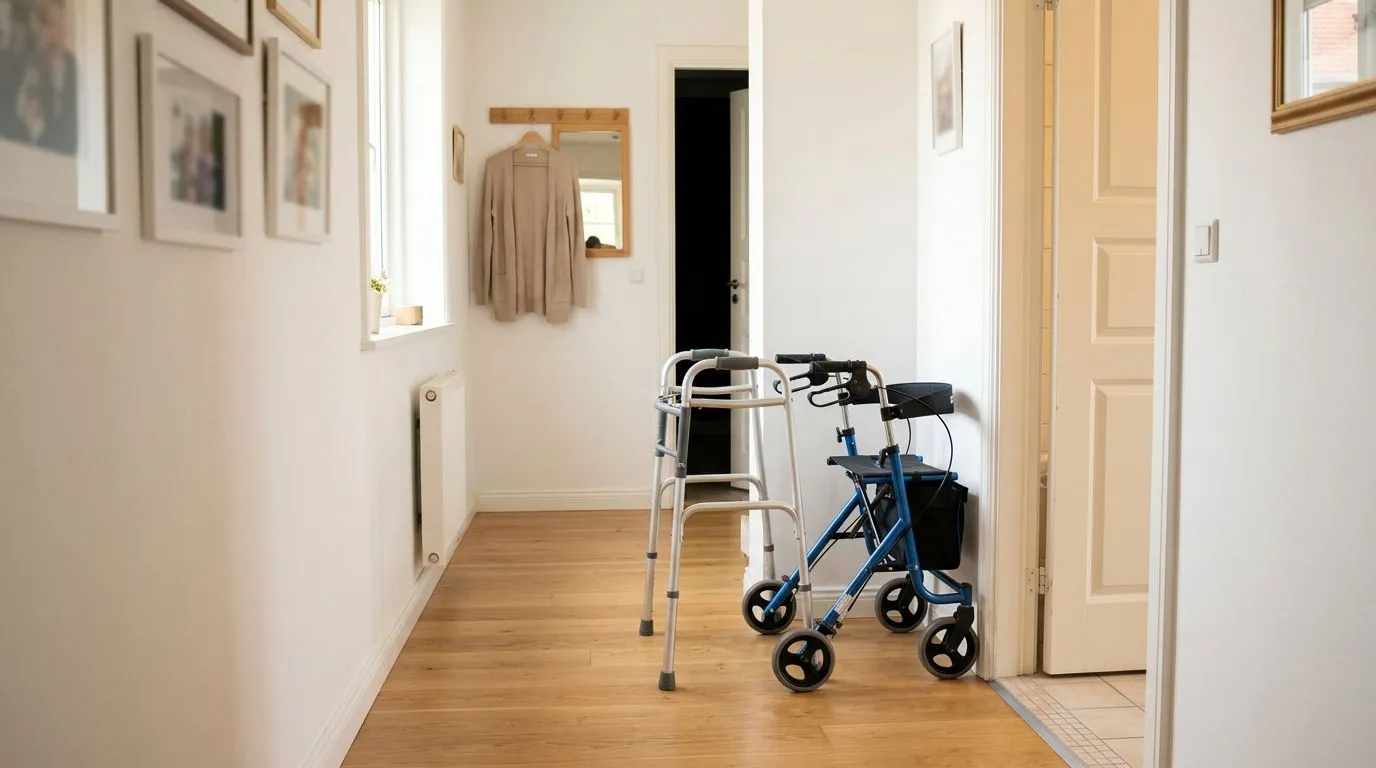
Indoor Mobility Walkers: Choosing a Walker or Rollator for Tight Spaces at Home
13 min read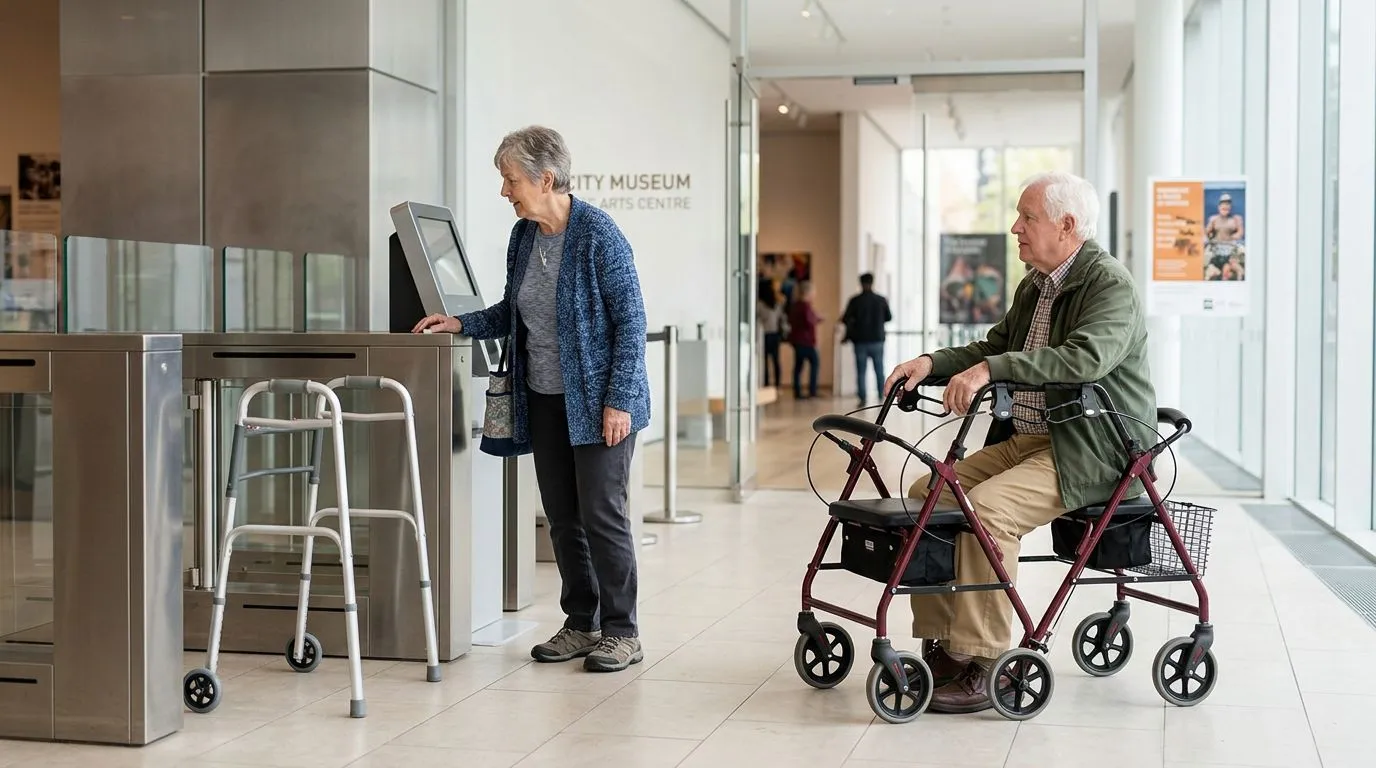
Walker or Rollator for Day Trips and Events: Museums, Restaurants, Stadiums, and Crowded Places
12 min read