Disclosure: We may earn a commission when you buy through links on this page, at no extra cost to you. We buy nothing, sell nothing and accept no payment for coverage — commissions never decide what we recommend. How we make money.

The best place to buy a mobility walker in the U.S. depends on what matters most: hands-on fitting, Medicare billing help, fast pickup, or the widest selection. Local durable medical equipment suppliers are usually the best choice for fit and insurance questions. Retail stores work well for basic walkers and quick purchases, while online sellers offer the most options for rollators, bariatric frames, and specialty features.
Before buying, decide whether you need a walker or a rollator. A walker is usually a lighter frame, often with no wheels or 2 front wheels. A rollator is a wheeled walker with hand brakes and typically a built-in seat. The right choice depends on balance, endurance, braking ability, home layout, and whether a clinician has recommended a specific mobility aid.
Start with the right category: walkers vs. rollators in 2 minutes
In everyday shopping, many people use the word walker for everything. In practice, walkers and rollators address different mobility problems, and choosing the wrong type can make daily movement harder or less safe.
A standard walker has 4 legs and no wheels. The user lifts it, places it forward, then steps into it. A 2-wheel walker has wheels on the front legs and tips or glides on the back legs. A folding walker is a standard or 2-wheel walker that folds for storage, often to about 4 to 6 inches wide depending on the frame style. These walkers are commonly chosen when maximum stability matters more than speed.
A rollator has 3 or 4 wheels, hand brakes, and usually a seat. Four-wheel rollators are common for outdoor errands and longer indoor walks. Three-wheel rollators are narrower and easier to turn in tight spaces, but they typically do not offer the same seated rest support as a 4-wheel model. Upright rollators place the handles higher and may support the forearms, while bariatric rollators use wider frames and higher weight capacities, often 300 to 500 lb or more depending on the product.
| Type | Common setup | Who it is often best for | Shopping note |
|---|---|---|---|
| Standard walker | 4 legs, no wheels | People who need a very stable frame and can lift it repeatedly | Check height adjustment and rubber tips |
| 2-wheel walker | 2 front wheels, rear tips or glides | People who need stability but cannot lift a frame every step | Try it on flooring similar to home |
| 3-wheel rollator | 3 wheels, hand brakes, usually no full seat | People who need maneuverability in narrow spaces | Confirm storage basket and brake reach |
| 4-wheel rollator | 4 wheels, brakes, seat, backrest | People who need rest breaks during walks | Measure seat height and overall width |
| Upright rollator | 4 wheels, higher handles or forearm supports | People advised to walk more upright and able to manage brakes | Fit is especially important |
| Bariatric walker or rollator | Reinforced wider frame | Users needing a higher weight capacity or wider seat | Check doorway width before buying |
Local DME suppliers: best for fit help, Medicare questions, and 1-on-1 service
A local durable medical equipment supplier, often called a DME supplier, is usually the strongest first stop when you want in-person help choosing between a walker and a rollator. Many communities have DME stores within a 10 to 30 minute drive of hospitals, rehabilitation clinics, senior communities, or larger medical offices.
The biggest advantage is fitting support. A knowledgeable staff member can help set handle height, explain brakes, compare wheel sizes, and check whether a seat feels too low or too narrow. For a standard walker or 2-wheel walker, handle height is often adjusted so the handgrips line up near the wrist crease when the user stands upright with arms relaxed. For a rollator, the same general starting point helps, but brake reach, seat height, and posture matter too.
DME suppliers may also understand local prescribing habits and Medicare paperwork better than general retail stores. If you plan to use Medicare Part B or another insurance plan, call before visiting and ask if the supplier accepts your coverage and, for Medicare, whether they accept assignment. That phrase matters because it affects how much you may pay beyond the approved amount.
There are tradeoffs. Local suppliers may have fewer models on the floor than large online marketplaces, and prices can be higher than discount retail. Return policies can also be stricter, especially for equipment that has been used outdoors or adjusted. Ask about the return window in days, whether there is a restocking fee, and whether returns are allowed after home trial use.
Who local DME suppliers are best for
- First-time walker or rollator buyers who want hands-on fitting.
- People choosing between a no-wheel walker, 2-wheel walker, and 4-wheel rollator.
- Shoppers who need a bariatric frame, an upright rollator, or a nonstandard seat height.
- Anyone using Medicare, Medicaid, veterans benefits, or private insurance.
- Caregivers who need help loading, adjusting, or learning the equipment.
Retail stores: a practical option for basic walkers under one roof
General retail stores, pharmacies, warehouse clubs, and medical aisles in larger stores can be convenient if you need a common walker quickly. A basic folding walker or 2-wheel walker may be available the same day, which can help after a minor injury, a hospital discharge, or a sudden change in mobility.
Retail stores work best when the need is straightforward. For example, someone who has already used a walker in therapy and knows the recommended height range may be comfortable buying a folding 2-wheel walker from a store shelf. Many adult walkers adjust across several inches, and common handle-height ranges may cover roughly 30 to 39 inches, though exact ranges vary.
Rollator shopping at retail stores can be more limited. You may find a few 4-wheel rollators with seats, but fewer 3-wheel, upright, narrow, tall, petite, or bariatric options. Floor models may not be assembled, and staff may not be trained to evaluate brake fit or gait safety. If you cannot test the hand brakes with both hands before buying, an in-person DME supplier may be the safer choice.
The return policy is the main retail advantage. Some stores offer simple returns within 30 days or more, but mobility equipment may have exceptions. Keep every insert, receipt, packaging piece, and accessory until you know the walker or rollator fits. If the equipment will be used by a family member, have that person test it indoors before taking it outside, because outdoor wear can affect return eligibility.
Online options: widest selection, but measure twice before checkout
Online shopping is often where you will see the broadest range of mobility walkers and rollators for sale. This is especially true for specialty needs: 3-wheel rollators, upright rollators, extra-wide seats, heavy-duty frames, lightweight aluminum walkers, and compact folding designs for car trunks.
The convenience is real. From home, you can compare frame width, handle-height range, wheel diameter, product weight, folded dimensions, seat size, and listed weight capacity. For a caregiver shopping after work, that can be easier than visiting 3 stores across town. Online listings also make it simpler to filter for practical needs, such as an overall width under 25 inches for narrow interior doors or a product weight under 20 lb for lifting into a vehicle.
The risk is fit. A rollator that looks comfortable in photos may have a seat that is too high, brakes that are hard to squeeze, or wheels that feel bulky inside a small apartment. A walker may technically adjust to the user height but still feel awkward if the frame is too wide around furniture. Online photos can also hide how a frame folds, whether it stands when folded, or how much hand strength the brakes require.
If you buy online, read specifications instead of relying on images. Look for the return window, who pays return shipping, whether opened medical equipment can be returned, and whether assembly is required. A rollator can be large and costly to ship back. If the return label is not prepaid, a bargain purchase can become expensive quickly.
| Buying option | Main advantage | Main drawback | Best fit |
|---|---|---|---|
| Local DME supplier | In-person fitting and insurance help | Smaller selection than online | First-time buyers, Medicare questions, specialty fitting |
| Retail store | Fast pickup and familiar return process | Limited guidance and fewer specialty choices | Basic folding walkers and simple 2-wheel walkers |
| Online seller | Largest selection and easy comparison | Fit uncertainty and possible return shipping costs | Experienced users and shoppers needing specific dimensions |
| Secondhand source | Lower upfront cost | Wear, missing parts, no fitting help | Temporary backup only after careful inspection |
How to measure before you buy: 5 fit checks that prevent returns
Good fit matters more than the lowest price. A walker or rollator that is too tall, too short, too wide, or too hard to brake may increase strain and reduce confidence. If a physical therapist, occupational therapist, physician, or other qualified clinician has given specific instructions, use those as your starting point.
1. Handle height
Stand in supportive shoes with arms relaxed at your sides. The handgrips should generally align near the crease of the wrist. When holding the grips, elbows are often slightly bent, around 15 to 30 degrees. This is a common fitting guideline, not a substitute for clinical advice.
2. Overall width
Measure the narrowest doorway or hallway the walker or rollator must pass through. Many interior residential doors are about 28 to 32 inches wide, but older bathrooms can be tighter. Compare that number with the equipment width, not just the seat width.
3. Seat height and seat size for rollators
For a 4-wheel rollator, the seat should allow the user to sit down and stand up without dropping too low or perching too high. Check seat height in inches and measure the seat width and depth. Bariatric rollators may offer wider seats, but the wider frame may be harder to use in small bathrooms.
4. Weight capacity and product weight
Choose a walker or rollator with a listed weight capacity that safely covers the user. Do not assume all frames are the same. Some lightweight rollators may weigh around 15 to 20 lb, while heavy-duty models can weigh more. If a caregiver needs to lift it into a car, product weight matters every day.
5. Brakes, grip, and hand strength
Rollators require the user to control hand brakes. Test whether the brakes can be squeezed, locked, and released without pain or confusion. If the user cannot reliably operate brakes, a standard walker or 2-wheel walker may be more appropriate, depending on clinical guidance.
Medicare and insurance considerations: ask these 6 questions first
In the U.S., walkers are considered durable medical equipment when they are medically necessary and prescribed for use in the home. Medicare Part B may cover a walker or rollator if the prescribing provider and supplier meet Medicare requirements. Typically, the beneficiary pays the Part B deductible if it applies, then 20 percent of the Medicare-approved amount when the supplier accepts assignment.
Coverage details can vary. Some features may be treated differently if they are considered convenience upgrades rather than medical necessities. Private insurance, Medicaid, Medicare Advantage plans, workers compensation, and veterans benefits can each have their own rules, networks, prior authorization requirements, and copays.
Before buying, especially before paying cash, ask these questions:
- Do I need a prescription or written order before purchase?
- Does the supplier accept my insurance and participate in my plan network?
- For Medicare, does the supplier accept assignment?
- Is a rollator with a seat covered the same way as a standard walker in my situation?
- Will insurance cover replacement parts such as tips, wheels, or brakes?
- If I buy online and pay cash, can I still submit for reimbursement, or must I use an approved supplier first?
Do not assume you can buy any walker online and get reimbursed later. If coverage matters, make the phone calls before purchase. It may take 10 minutes, but it can prevent a denied claim.
Return policies, warranties, and setup: read the fine print in 30 seconds
Mobility equipment is personal. Even a well-reviewed walker or rollator can be wrong for a specific home, body size, or hand strength. Return and service terms should be part of the buying decision, not an afterthought.
For walkers, check whether the frame can be returned after the height has been adjusted or wheels have been installed. For rollators, ask whether the item can be returned after assembly and indoor testing. Some sellers treat assembled equipment differently from unopened equipment. Others allow returns but deduct shipping, handling, or a restocking fee.
Warranties vary by frame and component. A frame may have longer coverage than brakes, wheels, upholstery, or handgrips. Keep proof of purchase and document the serial number if one is provided. If you are buying locally, ask whether the store can adjust brakes, replace tips, or tighten hardware later.
Setup matters too. A standard folding walker may need only height adjustment and wheels or rear glides if included. A rollator may require attaching handles, adjusting brake cables, adding a backrest, and confirming that the folding mechanism locks correctly. After setup, test the equipment indoors on a dry, level surface before using it on sidewalks, ramps, or parking lots.
Secondhand walkers and rollators: inspect at least 8 parts before using
Used walkers and rollators can be tempting, especially for a short recovery or backup device. They may be found through local resale shops, community loan closets, senior centers, online classifieds, or family networks. A secondhand walker is not automatically unsafe, but it does need careful inspection.
Start with the frame. Look for bends, cracks, loose rivets, missing adjustment buttons, rust, or uneven legs. On a standard walker, all 4 tips should contact the floor evenly, and the rubber tips should not be worn smooth. On a 2-wheel walker, check that the wheels roll freely and the rear tips or glides are secure.
For rollators, inspect at least 8 parts: wheels, handgrips, brake levers, brake cables, brake pads or contact points, seat, backrest, folding latch, frame joints, and height-adjustment holes. Lock the brakes and gently try to move the rollator; it should resist movement. Sit on the seat only if the frame is rated for the user and appears structurally sound.
Avoid used equipment if the weight capacity is unknown, parts are missing, brakes do not lock, or the frame feels loose. Also be cautious with very old rollators because replacement brake parts or wheels may be difficult to find. When in doubt, have a clinician, DME supplier, or experienced repair person review it before use.
How to choose where to buy: 4 common shopping scenarios
If you searched for mobility walker near me or walker for sale, the right next step depends on urgency, fit complexity, and payment method. Here are practical paths for common situations.
Scenario 1: You need a first walker after a hospital stay
Ask the discharge planner, therapist, or prescribing provider what type was recommended and whether a DME supplier is being arranged. If you must buy it yourself, a local DME supplier is usually the safest first call because fitting and insurance questions can be handled together.
Scenario 2: You need a basic folding walker today
A retail store may be enough if you know the needed style and height range. Open the box carefully, keep the receipt, adjust the handles, and test it indoors. Confirm that the tips or wheels match the intended use.
Scenario 3: You want a rollator with a seat for errands
Try a 4-wheel rollator in person if possible. Sit on the seat, lock the brakes, stand up, and turn in a small aisle. If buying online, compare seat height, overall width, wheel size, folded size, and return shipping before choosing.
Scenario 4: You need a heavy-duty or upright design
Start with exact measurements and, ideally, professional input. Bariatric and upright rollators can be very helpful for the right user, but they are less forgiving when poorly fitted. A difference of 2 inches in handle height or seat width can affect comfort and usability.
For many households, the best answer is a combination: get professional guidance locally, compare options carefully, and buy from the source that offers the right fit, service, and return protection. A walker or rollator is not just a product on a shelf. It is daily equipment that should match the person, the home, and the way it will actually be used.
FAQ
Frequently asked questions
Where is the best place to buy a walker for an older adult? +
For a first walker, a local durable medical equipment supplier is often best because staff can help with sizing, adjustments, and insurance questions. If the older adult already knows the exact type and fit, a retail store or online seller may be convenient.
Can I buy a rollator online safely? +
Yes, but measure carefully before ordering. Check handle-height range, seat height, overall width, weight capacity, product weight, brake style, folded size, and the return policy. If brake control or fit is uncertain, try one in person first.
Does Medicare cover walkers and rollators? +
Medicare Part B may cover a walker or rollator as durable medical equipment when it is medically necessary, ordered by an eligible provider, and supplied by a Medicare-enrolled supplier. Costs and coverage depend on deductibles, assignment, and plan rules.
Should I choose a walker or a rollator? +
A standard or 2-wheel walker is usually chosen for more stability and slower movement. A rollator may be better for someone who can safely use hand brakes and needs wheels, a seat, or rest breaks. A clinician can help if balance or fall risk is a concern.
Is it okay to buy a used walker or rollator? +
Used equipment can work as a temporary or backup option if it is inspected closely. Avoid any walker or rollator with unknown weight capacity, bent frame parts, worn tips, loose hardware, missing pieces, or brakes that do not lock securely.
Keep reading
Related guides

How to Save Money on a Walker or Rollator Without Sacrificing Safety
14 min read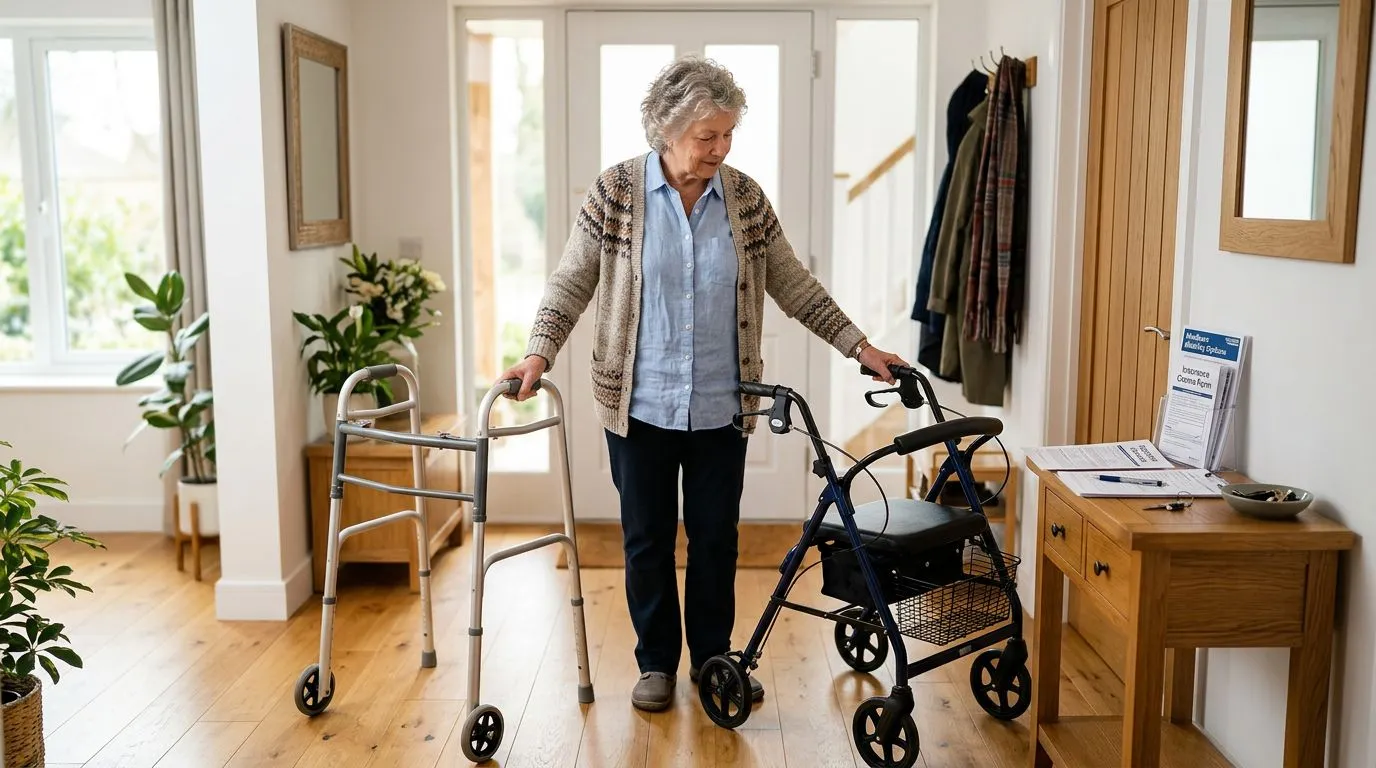
Renting vs Buying a Walker or Rollator Through Insurance: What U.S. Seniors Should Know
14 min read
Where to Buy a Rollator Walker Near You: In-Store vs Online Shopping Guide
13 min read