Disclosure: We may earn a commission when you buy through links on this page, at no extra cost to you. We buy nothing, sell nothing and accept no payment for coverage — commissions never decide what we recommend. How we make money.

You can save money on a walker or rollator by choosing the right type first, checking insurance or community funding before you buy, and turning down any device that fails basic safety checks. The safest low-cost option is not always the one with the lowest sticker price; it is the walker or rollator that fits your body, supports your weight, works in your home, and has dependable parts.
For many US shoppers, the best approach is to get a written recommendation from a clinician, compare new and refurbished options, and spend only on accessories that solve a real daily problem. A standard folding walker may be the lowest-cost choice for short indoor trips, while a rollator may be worth the higher price if you need wheels, hand brakes, and a seat for rest breaks.
Start With the 2-Question Choice: Walker or Rollator?
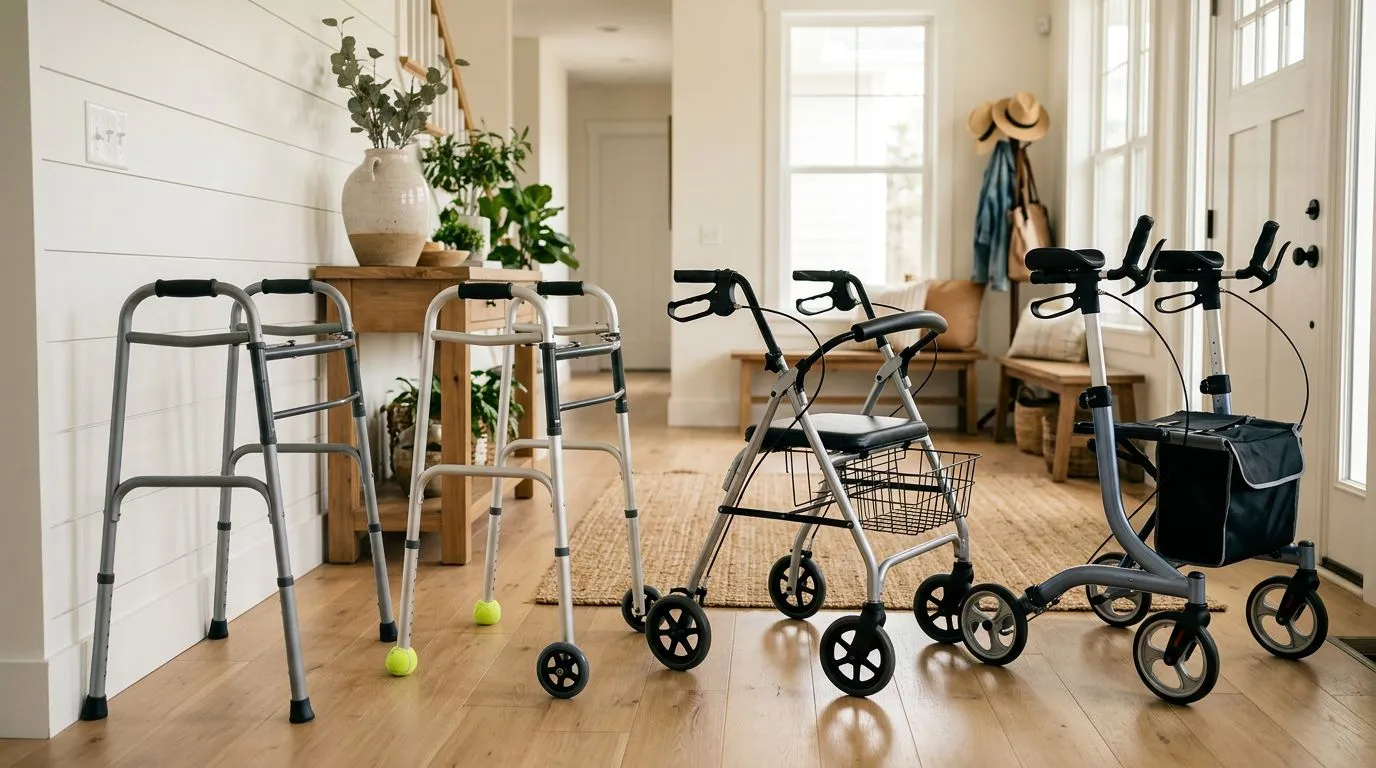
The first way to avoid wasting money is to buy the correct category. A walker and a rollator are not the same tool. A walker is usually a frame that you lift or lightly roll forward, often with no wheels or 2 front wheels. A rollator is a wheeled walker, usually with 3 or 4 wheels, hand brakes, and often a built-in seat.
Ask 2 questions before you shop: Do you need maximum stability while standing, or easier movement over distance? Do you need a seat for rest breaks, or would a simpler frame be safer and cheaper?
| Type | Common features | Who it is often best for | Money note |
|---|---|---|---|
| Standard walker | No wheels, 4 legs, very stable | People who need strong support and move slowly indoors | Often the simplest and least expensive type |
| Folding walker | Frame folds for storage or car use | People who travel by car or have limited storage | Worth considering if portability prevents a second purchase |
| 2-wheel walker | Front wheels, rear tips or glides | People who cannot comfortably lift a no-wheel frame each step | Usually less complex than a rollator |
| 3-wheel rollator | 3 wheels, hand brakes, compact turning | People who need maneuverability in tight spaces and do not need a large seat | May cost more than a walker but can reduce fatigue |
| 4-wheel rollator | 4 wheels, hand brakes, seat, storage pouch or basket | People who walk longer distances and need planned rest breaks | Pay for brakes and seat quality before extras |
| Upright rollator | Higher forearm supports, 4 wheels, hand brakes | People advised to walk in a more upright posture | Fit is critical; do not buy only because it looks comfortable |
| Bariatric walker or rollator | Wider, stronger frame, higher weight rating | People above standard device limits or needing a wider seat | Never save money by exceeding the listed weight capacity |
Many standard walkers support about 250 to 300 pounds, while bariatric walkers and rollators may be rated for 350 pounds, 500 pounds, or more, depending on the frame. Always check the printed weight capacity on the device or documentation. If that rating is missing on a used item, treat it as a safety problem, not a bargain.
Use 3 Timing Windows to Find a Lower Price
Timing matters because walkers and rollators are often bought under pressure after an injury, surgery, hospitalization, or sudden change in balance. When everything feels urgent, shoppers tend to overpay or choose the wrong type. If you have even 7 to 14 days before a planned procedure, use that time to compare options, ask about insurance coverage, and measure your home.
There are 3 practical shopping windows. The first is before a planned surgery or treatment, when you can ask your care team what type of device is likely to be needed. The second is during discharge planning, before leaving a hospital, rehab facility, or skilled nursing setting. The third is after the first few weeks of use, when you know whether the original device truly works in daily life.
- Before planned care: Ask whether you need a standard walker, 2-wheel walker, or rollator, and for how long.
- At discharge: Request written instructions, not just a verbal suggestion.
- After 2 to 4 weeks: Reassess fit, fatigue, storage, and whether accessories are actually needed.
If you are buying for a parent, spouse, or friend, do not assume a rollator is automatically better because it has wheels and a seat. Someone who needs to lean heavily on the frame may be safer with a walker. Someone who can walk steadily but needs rest breaks every few minutes may do better with a rollator with properly adjusted brakes.
Bring 4 Documents Before You Ask About Coverage
Documentation can make the difference between paying full price and getting part of the cost covered. Exact rules vary by insurance plan, state program, supplier, and medical need, but the right paperwork helps you ask better questions.
Try to gather 4 items: a clinician order or prescription if available, visit notes explaining the mobility need, your insurance card, and the exact device description. The description should be specific enough to distinguish a standard folding walker from a rollator with seat and hand brakes. If a clinician says you need a walker, ask whether that means a no-wheel walker, 2-wheel walker, or a rollator.
| Document | Why it helps | Money-saving tip |
|---|---|---|
| Clinician order | Shows the device is medically recommended | Ask that it name the type, such as folding walker or 4-wheel rollator |
| Visit notes | May explain balance, endurance, pain, or post-surgical limits | Keep copies for suppliers and appeals |
| Insurance information | Lets suppliers check benefits | Ask about deductible, coinsurance, and in-network suppliers |
| Home measurements | Helps avoid buying a device too wide or hard to use | Measure tight doorways, hallways, and car trunk space |
For home measurements, a standard interior doorway may be about 28 to 32 inches wide, but older homes and bathrooms can be tighter. Rollators are often wider than standard walkers, and bariatric models may be wider still. A lower price means little if the device cannot pass through the bathroom door.
Ask Insurance These 8 Questions Before Paying Cash
Insurance coverage for walkers and rollators can be confusing, especially when a device is considered durable medical equipment. Before paying out of pocket, call the number on your insurance card and ask direct questions. Write down the date, representative name, and reference number if one is offered.
- Is a walker covered under my plan as durable medical equipment?
- Is a rollator with seat and hand brakes covered, or only a basic walker?
- Do I need a prescription, prior authorization, or specific diagnosis code?
- Must I use an in-network medical equipment supplier?
- Will the plan rent or purchase the device?
- What deductible, copay, or coinsurance applies?
- How often can a walker or rollator be replaced?
- Are repairs, brake adjustments, or replacement parts covered?
Do the math before assuming insurance is cheaper. If the approved supplier price is higher and you have not met your deductible, paying cash for a basic walker could cost less. On the other hand, coverage may be valuable for a higher-cost rollator, bariatric frame, or device needed after a documented medical event.
Community options are worth checking, too. Some senior centers, local aging agencies, veterans organizations, faith-based lending closets, and short-term medical equipment loan programs offer walkers or rollators for temporary use. Availability varies widely, and you still need to inspect fit and condition. A free device is not safe if the brakes slip or the frame is the wrong height.
Compare New, Used, and Refurbished With 6 Safety Checks
Used and refurbished walkers and rollators can save money, but they call for a stricter inspection than new equipment. A simple standard walker has fewer parts to fail. A rollator has wheels, hand brakes, cables, a seat, hinges, and often a folding mechanism, so there is more to check.
Use these 6 checks before accepting a secondhand device. If you cannot inspect it in person, ask for clear photos and the exact weight capacity before you commit.
- Frame: Look for cracks, bends, rust, loose rivets, or uneven legs.
- Height adjustment: Push buttons or knobs should lock firmly at the same height on both sides.
- Wheels: Rollators should move smoothly without wobbling, flat spots, or grinding.
- Brakes: Hand brakes should slow the rollator and parking brakes should hold it still when seated.
- Seat and backrest: Check for tears, sagging, loose screws, or a seat too narrow for the user.
- Labels: Confirm weight capacity and basic instructions are still readable.
Refurbished can mean different things. It may mean professionally cleaned and inspected, or it may mean lightly used with no real service. Ask what was replaced, whether brake cables were adjusted, whether worn tips or glides were changed, and whether there is any return window. Even a 7-day return period can help you uncover fit problems at home.
Be cautious with online listings that show only one photo or claim one size fits all. Walkers and rollators are adjustable, but not infinitely adjustable. If the handgrips are too high, shoulders may shrug and fatigue quickly. If they are too low, the user may stoop or put weight through the device awkwardly.
Prioritize the 3 Accessories That Actually Solve Problems
Accessories can make a walker or rollator easier to live with, but they can also turn a low-cost purchase into an expensive one. Start with the device itself: correct type, correct height, correct weight capacity, and safe brakes if it is a rollator. Then choose accessories only for problems that show up in daily use.
The 3 most practical accessory categories are carrying, floor contact, and visibility. A walker bag or rollator pouch can help keep hands free. Replacement tips, glides, or skis can improve how a walker contacts the floor when the original parts are worn or wrong for the surface. Reflective tape or a small light may help if the device is used near driveways, parking lots, or dim hallways.
| Accessory | Useful when | Skip it when |
|---|---|---|
| Walker bag or rollator pouch | You need to carry a phone, keys, or water bottle | It swings, overloads the frame, or blocks folding |
| Tray | You move light items on flat indoor surfaces | It encourages carrying hot liquids or heavy loads unsafely |
| Replacement rubber tips | Walker tips are worn, cracked, or uneven | The current tips are new and grip well |
| Glides or skis | A 2-wheel walker drags on carpet or smooth floors | They reduce control on surfaces where more grip is needed |
| Cup holder | You regularly carry a covered bottle | It sticks out and catches on door frames |
| Seat cushion | A rollator seat is firm and the user rests briefly | It changes seat height or interferes with folding |
Avoid hanging heavy shopping bags from the handles. Extra weight can change how a walker or rollator tips, turns, and stops. If storage is important, look for a design with a built-in pouch or basket positioned low and centered instead of adding bulky bags later.
Do a 5-Minute Fit Check Before You Keep It
A poor fit can make a cheap walker expensive because it may lead to another purchase. Do a basic 5-minute check at home, preferably with guidance from a physical therapist, occupational therapist, or trained equipment professional when possible.
For many walkers and rollators, the handgrips are adjusted near wrist height when the user stands upright with arms relaxed at the sides. Elbows should bend slightly, often around 15 to 30 degrees, when hands rest on the grips. This is a general fitting rule, not a substitute for clinical advice, especially after surgery or with one-sided weakness.
- Height: Shoulders should feel relaxed, not shrugged.
- Width: The device should pass through key doorways with room for hands.
- Weight: The user should be able to lift or manage it as required.
- Brakes: On a rollator, the user must be able to squeeze and lock brakes with both hands unless a clinician recommends a different setup.
- Seat: On a rollator, the user should sit only with parking brakes locked and feet supported.
- Turning space: Test a bathroom, bedside path, and kitchen route, not just an open living room.
Seat height matters on rollators. Many rollator seats are roughly 20 to 23 inches from the floor, though designs vary. A seat that is too low may be hard to stand from, while a seat that is too high may leave feet unsupported. Width matters too. The user should not feel squeezed between the handles or perched on the edge of the seat.
For upright rollators, forearm support height and brake reach are especially important. If the user cannot comfortably steer, stop, and turn without leaning too far forward, it is not a good bargain. A bariatric rollator or walker also needs enough home clearance; a stronger frame helps only if it fits the spaces where it will be used.
Do Not Cut Costs on These 5 Safety Items
There are places to save and places to hold firm. You can skip a premium color, an extra pouch, or a tray you may never use. Do not cut corners on the parts that keep the device stable and controllable.
- Weight capacity: Choose a walker or rollator rated for the user, clothing, and typical carried items.
- Brake function: Rollator brakes must stop the wheels and lock securely for sitting.
- Frame condition: Avoid bent, cracked, rusty, or repaired frames.
- Correct height range: The device must adjust to the user, not the other way around.
- Return option: A short return window can prevent being stuck with an unsafe fit.
Pay attention to floor surfaces. Rubber tips may grip well on some floors but drag on others. Wheels that feel smooth in a store may behave differently on carpet thresholds, outdoor cracks, or sloped driveways. Test the real routes the person takes every day, including the 10 to 20 feet from bed to bathroom if nighttime trips are common.
If the device is for temporary recovery, consider borrowing or renting before buying a higher-cost rollator. If the need is long term, buying the right device once may be cheaper than replacing a poor fit in 3 months. Safety and value go together.
Build a 30-Minute Buying Plan Before You Shop
A short plan can prevent most expensive mistakes. Spend 30 minutes gathering measurements, coverage information, and must-have features. Then compare devices by type, fit, capacity, and condition rather than by appearance.
Here is a practical order of operations. First, confirm whether a walker or rollator is appropriate. Second, measure the user and the home. Third, ask insurance and local programs about coverage or loans. Fourth, compare new, used, and refurbished options. Fifth, inspect the device and test it before the return window closes.
Your must-have list should be short. For a walker, it may include folding frame, correct height range, 300-pound capacity, and replacement tips in good condition. For a rollator, it may include hand brakes that lock, a seat height that works, 4 wheels for outdoor paths, and a frame that fits through a 30-inch doorway. Nice-to-have features can wait.
The safest savings come from matching the device to the person and the place. A basic walker can be the right, economical choice for stable indoor support. A rollator can justify the higher cost when the user can control wheels and brakes and needs a seat for planned rests. Spend less where comfort and convenience allow, but protect fit, brakes, frame strength, and weight capacity every time.
FAQ: 5 Money-and-Safety Questions About Walkers and Rollators
Is a walker cheaper than a rollator?
Usually, a basic standard or folding walker costs less than a rollator because it has fewer parts. A rollator includes wheels, hand brakes, a seat, and often storage, so there is more hardware to buy and maintain.
Is it safe to buy a used rollator?
It can be safe if the frame is sound, the wheels roll smoothly, the brakes lock firmly, and the weight capacity is clearly labeled. Avoid any used rollator with missing brake parts, a cracked frame, unreadable capacity information, or no chance to test it.
Will insurance pay for a walker or rollator?
Some insurance plans cover walkers as durable medical equipment when medically necessary, but rules vary. Ask your plan whether a rollator is covered, whether you need a clinician order, and whether you must use an in-network supplier.
What accessory should I buy first?
Buy the accessory that solves the biggest daily problem. For many people, that is a simple bag or pouch to keep hands free, or replacement rubber tips if a walker is worn. Do not buy trays, cup holders, or cushions unless they improve safe daily use.
How do I know if a walker or rollator fits?
A common starting point is handgrips near wrist height when standing upright, with elbows slightly bent when holding the grips. The device should fit through key doorways, feel controllable, and match the user’s weight and strength. A clinician or equipment professional can help with individual fitting needs.
FAQ
Frequently asked questions
What walker or rollator accessory should I buy first? +
Start with the accessory that solves a real safety or daily-use problem, such as a walker bag to keep hands free or replacement rubber tips for worn walker legs. Skip extras that add bulk without improving use.
Keep reading
Related guides
How Much Does a Mobility Walker Cost? Price Ranges for Walkers, Rollators, and Upright Models
13 min read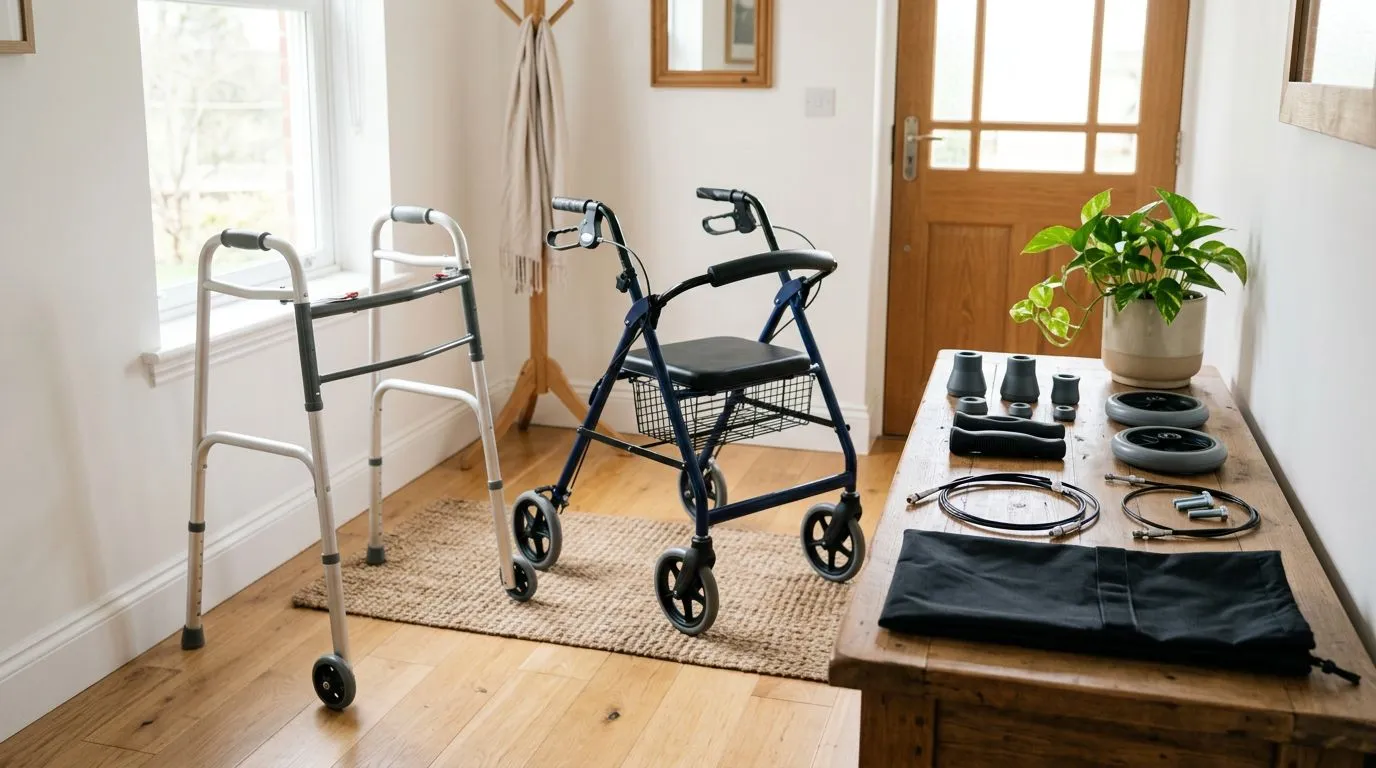
The True Cost of Owning a Walker or Rollator: Parts, Accessories, Maintenance, and Repairs
13 min read
Where to Buy a Mobility Walker in the U.S.: Local DME Suppliers, Retail Stores, and Online Options
14 min read