Disclosure: We may earn a commission when you buy through links on this page, at no extra cost to you. We buy nothing, sell nothing and accept no payment for coverage — commissions never decide what we recommend. How we make money.
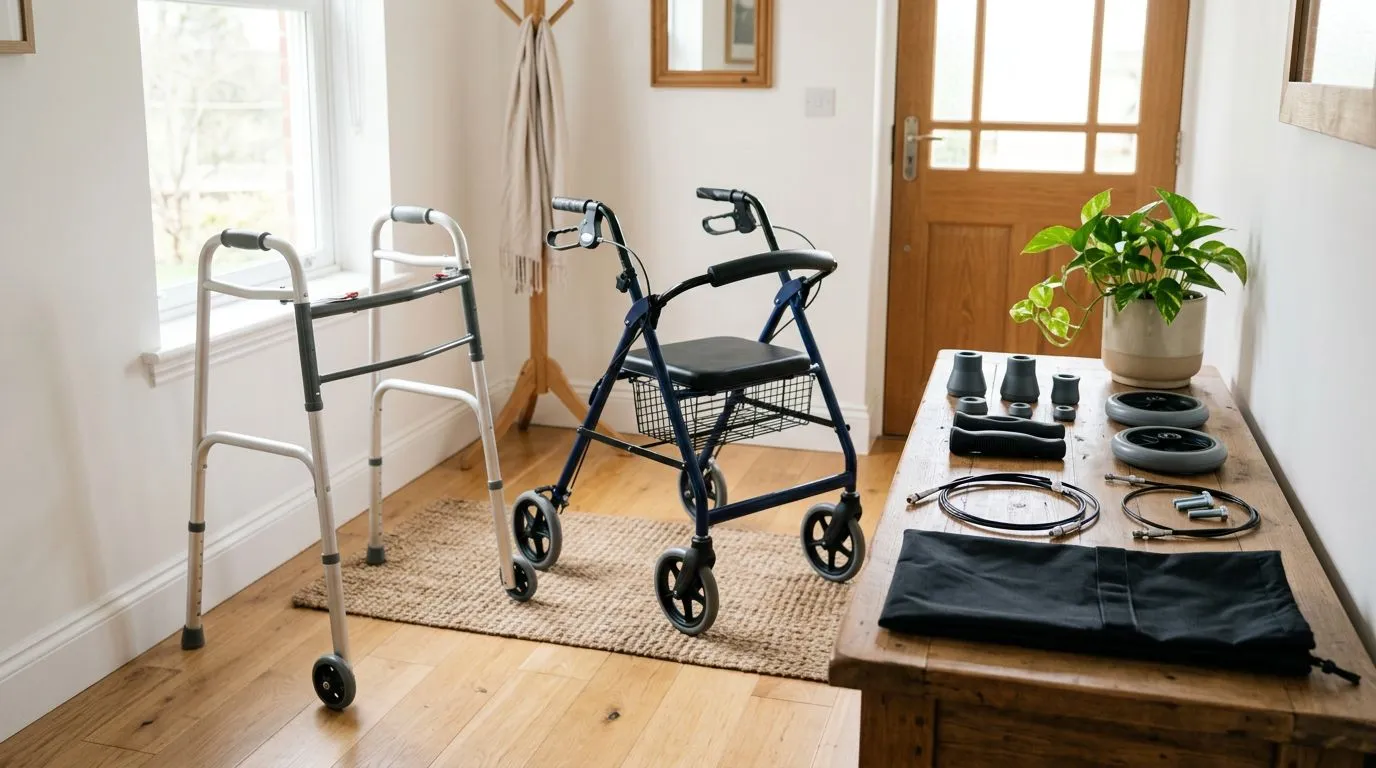
The true cost of owning a walker or rollator is the purchase price plus the parts, accessories, maintenance, and occasional repairs needed to keep it safe and comfortable. A basic walker may need only low-cost items such as glides, tips, or hand grips, while a rollator can cost more over time because it has wheels, hand brakes, cables, a seat, and more moving parts.
Most owners should plan for small annual upkeep costs and a larger repair or accessory purchase now and then, especially if the device is used outdoors every day. The exact amount depends on whether you use a no-wheel walker, a 2-wheel folding walker, a 3-wheel rollator, a 4-wheel rollator, an upright rollator, or a bariatric model.
First-year cost: the purchase price is only 1 line item
A walker or rollator is not always a one-time expense. In the first 12 months, many people buy at least 1 accessory, replace 1 wear item, or pay for a fitting adjustment if the device was not set up correctly.
For a standard walker, ongoing cost is usually modest because the frame is simple. Common add-ons include walker skis, tennis-ball-style glides, rubber tips, a basket, or a tray. A folding walker with 2 front wheels may also need wheel cleaning or wheel replacement after heavy use, but it still has fewer parts than a rollator.
A rollator offers more convenience features, and those features create more maintenance points. Four wheels, locking hand brakes, brake cables, a padded seat, a storage bag, and folding hinges all need periodic inspection. Upright rollators add forearm supports or armrests, which may require tightening or padding replacement. Bariatric rollators may have heavier frames and wider seats, and replacement parts can be larger and sometimes more expensive.
As a practical planning number, many owners should expect at least a small maintenance budget each year, even when the frame itself lasts several years. If the walker or rollator is used daily on sidewalks, parking lots, carpet, and thresholds, wear appears faster than it does for someone using it only inside the home.
Walkers vs. rollators: 6 parts that change ownership cost
The biggest cost difference is complexity. A no-wheel walker frame may have only hand grips, leg tips, height-adjustment buttons, and folding mechanisms. A rollator has those plus wheels, bearings or wheel hubs, brakes, cables, a seat, a backrest, and often a storage pouch.
That does not make a rollator a poor value. For the right person, a rollator can support longer outings because it rolls smoothly and provides a built-in place to sit. But if you do not need a seat or hand brakes, a simpler walker may have lower upkeep over 3 to 5 years.
| Device type | Main wear items | Typical upkeep level | Cost note |
|---|---|---|---|
| Standard no-wheel walker | Rubber tips, hand grips, folding buttons | Low | Few moving parts; tips may wear unevenly |
| 2-wheel folding walker | Rear tips or glides, front wheels, grips | Low to moderate | Wheels add comfort but also add replacement points |
| 3-wheel rollator | Wheels, brake cables, grips, pouch | Moderate | Often lighter and narrower, but no built-in seat on many designs |
| 4-wheel rollator | Wheels, brakes, seat, bag, backrest | Moderate | More features mean more parts to inspect |
| Upright rollator | Forearm pads, brakes, wheels, hinges | Moderate to higher | More adjustment points and padding |
| Bariatric rollator | Heavy-duty wheels, brakes, seat, frame hardware | Moderate to higher | Higher weight capacities, often 300 to 500+ lb, can mean larger parts |
Walkers and rollators also age differently. A walker often becomes annoying before it becomes mechanically complicated: worn tips drag, grips feel slick, or the frame rattles. A rollator may still feel comfortable while the brakes slowly lose tension, which is why routine brake checks matter.
Replacement parts: from $5 tips to $50 brake work
Replacement parts are the most predictable ownership cost. In broad U.S. retail terms, small rubber tips or glide caps are often among the lowest-cost items, while wheel assemblies, brake handles, and cable repairs usually cost more. Exact pricing varies by size, fit, material, and whether labor is included.
Compatibility matters. A rubber tip for a 1-inch walker leg will not fit every frame, and rollator wheels are not universal. Before buying parts, measure the leg diameter, wheel diameter, axle style, or brake cable length when possible. If the part affects braking, folding, or weight support, professional help is often worth considering.
| Part or supply | Used on | Why it wears | Common planning range |
|---|---|---|---|
| Rubber tips | Standard walkers, rear legs of some 2-wheel walkers | Friction with floors and pavement | Often a low-cost pair or set |
| Walker glides or skis | Rear legs of 2-wheel walkers | Scraping on carpet, tile, thresholds | Usually inexpensive, but may need repeat replacement |
| Hand grips | Walkers and rollators | Compression, sweat, cleaning products, cracking | Small accessory cost; comfort can improve noticeably |
| Front wheels | 2-wheel walkers | Outdoor use, hair buildup, rough sidewalks | Moderate part cost if wheel assemblies are needed |
| Rollator wheels | 3-wheel and 4-wheel rollators | Tread wear, wobble, hub damage | Can be moderate, especially for larger 8-inch wheels |
| Brake cables and handles | Rollators | Cable stretch, bent handles, loose tension | May require part plus labor |
| Seat or backrest | 4-wheel, upright, and bariatric rollators | Vinyl cracking, padding compression, loose hardware | Varies widely by size and design |
| Storage bag or pouch | Many rollators and some walkers | Seams tear, clips break, fabric stains | Accessory-level cost unless custom-fit |
One overlooked cost is buying the wrong part twice. If a rollator uses 6-inch wheels, an 8-inch replacement wheel will not solve the problem. If a walker leg is oval rather than round, a standard round tip may not seat securely. Keep a note with your device measurements, including handle height and wheel size.
Accessories: $10 to $100 can change daily convenience
Accessories are optional, but many become daily-use items. A walker basket, tray, cup holder, oxygen tank holder, cane holder, flashlight, or storage pouch can make the device easier to use at home or outside. Rollator users often add a larger under-seat bag, a seat cushion, a backrest cover, or reflective safety strips.
Accessory costs can add up because they solve real problems. Carrying a cup across the kitchen with both hands on a walker is not safe for many people, so a tray may be more than a convenience. A rollator bag can reduce the temptation to hang a heavy purse from one handle, which may affect balance or steering.
- For walkers: common accessories include trays, baskets, rear glides, walker bags, hand grip covers, and ski glides for carpet.
- For rollators: common accessories include under-seat bags, cup holders, cane holders, seat cushions, backrest pads, and weather covers.
- For upright rollators: forearm pad covers and adjustment hardware may matter more than decorative accessories.
- For bariatric rollators: check stated weight capacity for the accessory itself, not just the frame.
Be careful with add-ons that change width or balance. A basket mounted outside the frame can make a walker harder to fit through a 28- to 32-inch doorway. A heavy side bag on a rollator can pull the device to one side, especially on sloped sidewalks or ramps.
Maintenance schedule: 5-minute checks prevent bigger repairs
A 5-minute weekly check can catch most early problems. You do not need to be a mechanic; you are looking for loose, worn, sticky, or uneven parts. If something affects braking, height adjustment, folding, or weight support, stop using the device until it is corrected.
For walkers, inspect rubber tips and glides first. If one rear tip wears down faster than the others, the frame may be uneven or the user may be loading one side more heavily. Make sure height-adjustment buttons pop fully through the holes and that folding locks engage. Wipe the frame so dirt does not hide cracks or bent tubing.
For rollators, brakes deserve extra attention. Squeeze each hand brake and confirm both rear wheels slow or lock evenly. Push the rollator gently with the parking brakes engaged; it should resist movement on a flat surface. Check the cables for kinks, fraying, or looseness, and make sure wheels spin without wobbling.
| How often | Walker checks | Rollator checks |
|---|---|---|
| Weekly | Tips, glides, grips, folding latch | Brakes, wheels, grips, seat latch |
| Monthly | Leg height buttons, frame alignment, loose screws | Brake tension, cable condition, wheel nuts, backrest |
| Every 6 months | Replace worn tips or glides if needed | Consider brake adjustment and wheel inspection |
| After a fall or hard impact | Check for bent legs or cracked joints | Check frame, forks, brakes, seat, and folding hinge |
Cleaning also affects cost. Sand, hair, salt, and small stones can shorten wheel life. Mild soap and water are usually enough for the frame and grips, but avoid soaking brake cables or using slippery cleaners on handles, seats, or wheels.
Professional adjustments: a 15-minute tune-up can be worth it
Some maintenance is simple, but certain adjustments should be handled by a mobility equipment professional, repair technician, physical therapist, or occupational therapist. A 15-minute fit check may show that the handles are too high, the brakes are uneven, or the user is leaning forward because the device is the wrong style.
Professional help is especially useful for rollator brakes. Brake cables can stretch over time, and parking brake locks can become too loose or too tight. If a rollator continues moving when the parking brake is engaged, that is not a minor annoyance. It is a reason to stop and get the brakes adjusted or repaired.
Walkers can also need professional review. A standard walker that is too low can encourage stooping, while one that is too high may make it harder to bear weight through the arms. For a 2-wheel walker, the rear glides or tips need to match the flooring and the user’s gait pattern. A therapist can also help decide whether a person should be using a walker or a rollator at all.
Plan for service if the device is used heavily outside the home, if the user’s strength or balance has changed in the past 3 months, or if the frame has been dropped from a car trunk. A repair visit costs less than replacing the wrong part several times, and it can reduce the chance of using an unsafe device.
How to choose and measure before you buy: 3 numbers matter
The best way to control ownership cost is to buy the right type and size in the first place. Three numbers matter most: handle height, user weight, and the spaces the device must pass through. If those are wrong, you may spend more on accessories and repairs while still feeling uncomfortable.
For handle height, a common starting point is wrist crease height when the user stands upright in supportive shoes with arms relaxed at the sides. Many walkers and rollators adjust in 1-inch increments. When holding the handles, elbows are often slightly bent, roughly 15 to 30 degrees, though individual needs vary.
For weight capacity, do not buy at the limit. If a user weighs 295 lb and the device is rated for 300 lb, a higher-capacity frame may be more appropriate, especially for a rollator with a seat. Bariatric rollators often list capacities from about 300 to 500+ lb, but the seat, frame, and accessories should all match the intended use.
For home fit, measure narrow doorways, bathroom entries, hallways, and the space beside the bed. Many interior doorways are around 28 to 32 inches wide, and some rollators may feel bulky in tight bathrooms. A standard walker may be more stable for short indoor transfers, while a rollator may be better for longer, open routes.
| Measurement | Why it affects cost | What to check |
|---|---|---|
| Handle height | Poor fit can lead to grip changes, posture strain, or replacement | Wrist crease height; 1-inch adjustment holes |
| Weight capacity | Overloading can damage frame, seat, wheels, and brakes | User weight plus carried items |
| Overall width | Too wide may require a second device for indoors | Doorways, bathroom turns, car trunk space |
| Wheel size | Larger wheels may cost more to replace but handle rough surfaces better | Common rollator sizes include 6-inch and 8-inch wheels |
Think about transportation, too. A folding walker is often easier to lift into a car than a full-size rollator. Some rollators fold compactly, but the seat, basket, and larger wheels can add bulk. If a caregiver must lift the device several times a day, device weight matters.
Who it’s best for: matching cost to real use over 12 months
The lowest-cost option is not always the best value. A person who needs a seat every 100 feet may get more daily independence from a rollator than from a cheaper standard walker. A person who needs maximum stability for short indoor distances may be safer and better served by a simple walker frame.
Standard or folding walker
Best for people who need steady support, move at a slower pace, and do not need a built-in seat. It is often a good indoor choice because there are no brake cables or large wheels to maintain. Ongoing costs are usually limited to tips, glides, grips, and occasional hardware.
Two-wheel walker
Best for users who need more glide than a no-wheel walker but still want a stable rear contact point. Rear tips or glides may need replacement depending on flooring. It can be a practical middle ground for homes with carpet, tile, and short outdoor paths.
Three-wheel rollator
Best for users who want a narrower turning radius and lighter rolling support, often for errands or tight spaces. Many 3-wheel rollators do not include a seat, so confirm that before buying. Maintenance centers on wheels, brakes, grips, and the storage pouch.
Four-wheel rollator
Best for people who walk longer distances and need a seat for rest breaks. It usually has hand brakes, a padded seat, a backrest, and a bag, so upkeep is higher than for a basic walker. For many users, the convenience justifies the extra parts.
Upright and bariatric rollators
Best for specific needs, such as a more upright walking position or a higher weight capacity. These models can have more adjustment points, larger frames, wider seats, and specialized pads. Before buying, check serviceability because replacement forearm pads, brake parts, or heavy-duty wheels may not be as universal as basic walker tips.
FAQ: 5 common ownership-cost questions
How often should walker tips or glides be replaced?
Replace walker tips or glides when the tread is smooth, cracked, uneven, or worn through. For daily users, checking them every week and expecting possible replacement within 6 to 12 months is a reasonable habit, though outdoor use can shorten that timeline.
Do rollator brakes need regular adjustment?
Yes. Rollator brake cables can loosen or stretch with use. Test the brakes weekly, and get an adjustment if the rollator rolls when the parking brakes are locked, if one side grabs harder than the other, or if the brake handles feel too loose.
Are walker and rollator parts universal?
Some simple items, like certain rubber tips or grip covers, may fit many devices, but parts are not truly universal. Measure leg diameter, wheel size, axle style, and handle shape before buying replacements.
Is it cheaper to repair a rollator or replace it?
It depends on the frame condition and the repair. Replacing grips, a bag, or brake cables may make sense, but a bent frame, cracked joint, or repeated brake failure can make replacement safer and more practical.
Can accessories make a walker or rollator unsafe?
They can if they add too much weight, change balance, block folding locks, or make the device too wide for the home. Keep heavy items low and centered, and avoid hanging bags from one handle.
Will insurance cover maintenance or replacement parts?
Coverage varies by plan, medical necessity, supplier rules, and timing. Many accessories and wear parts are paid out of pocket, so ask the insurer or equipment supplier before assuming a part will be covered.
FAQ
Frequently asked questions
Will insurance cover walker or rollator maintenance parts? +
Coverage varies by insurance plan, medical necessity, supplier rules, and replacement timing. Many accessories and wear items are paid out of pocket, so check with the plan or supplier first.
Keep reading
Related guides

How to Save Money on a Walker or Rollator Without Sacrificing Safety
14 min read
How Much Does a Rollator Walker Cost? US Price Ranges, Features, and Value
11 min read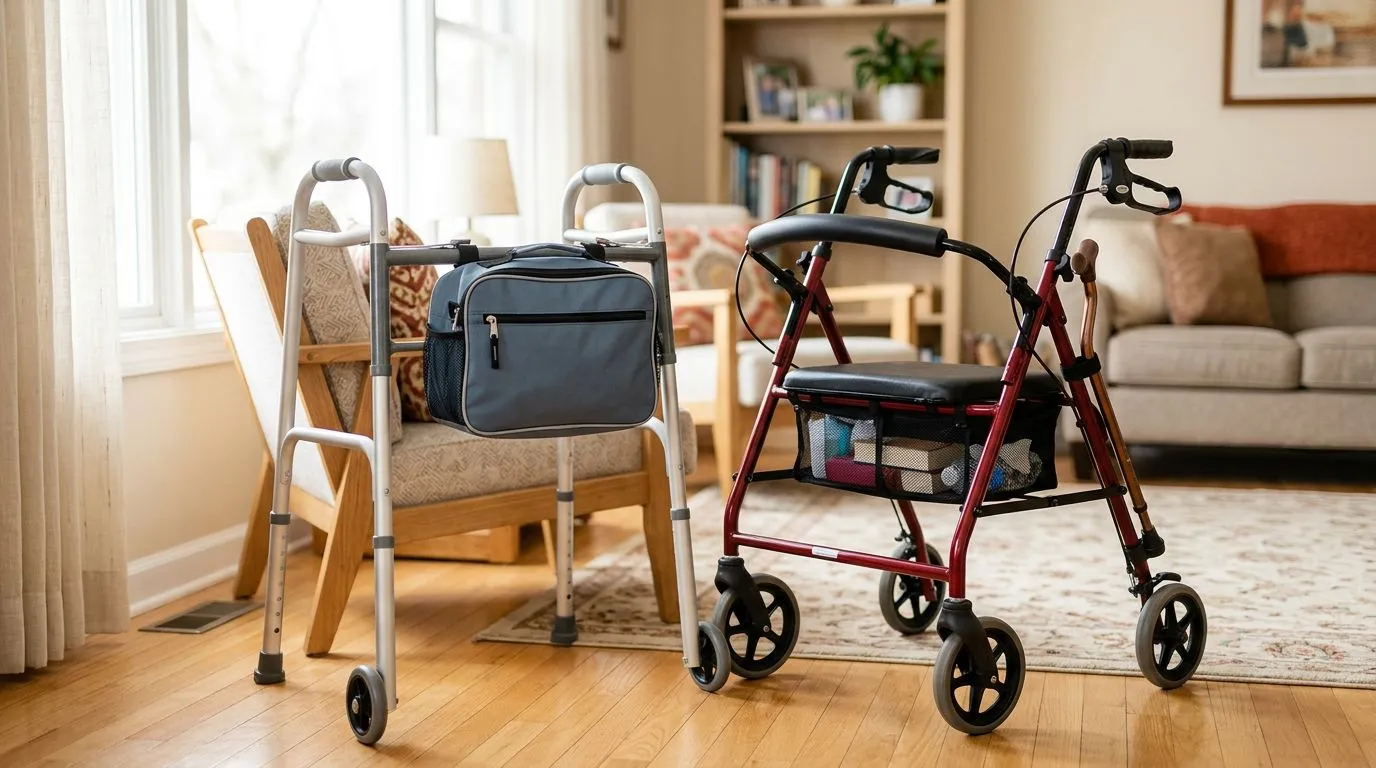
Mobility Walker Accessories and Replacement Parts: Bags, Baskets, Glides, Grips, and Brakes
16 min read