Disclosure: We may earn a commission when you buy through links on this page, at no extra cost to you. We buy nothing, sell nothing and accept no payment for coverage — commissions never decide what we recommend. How we make money.
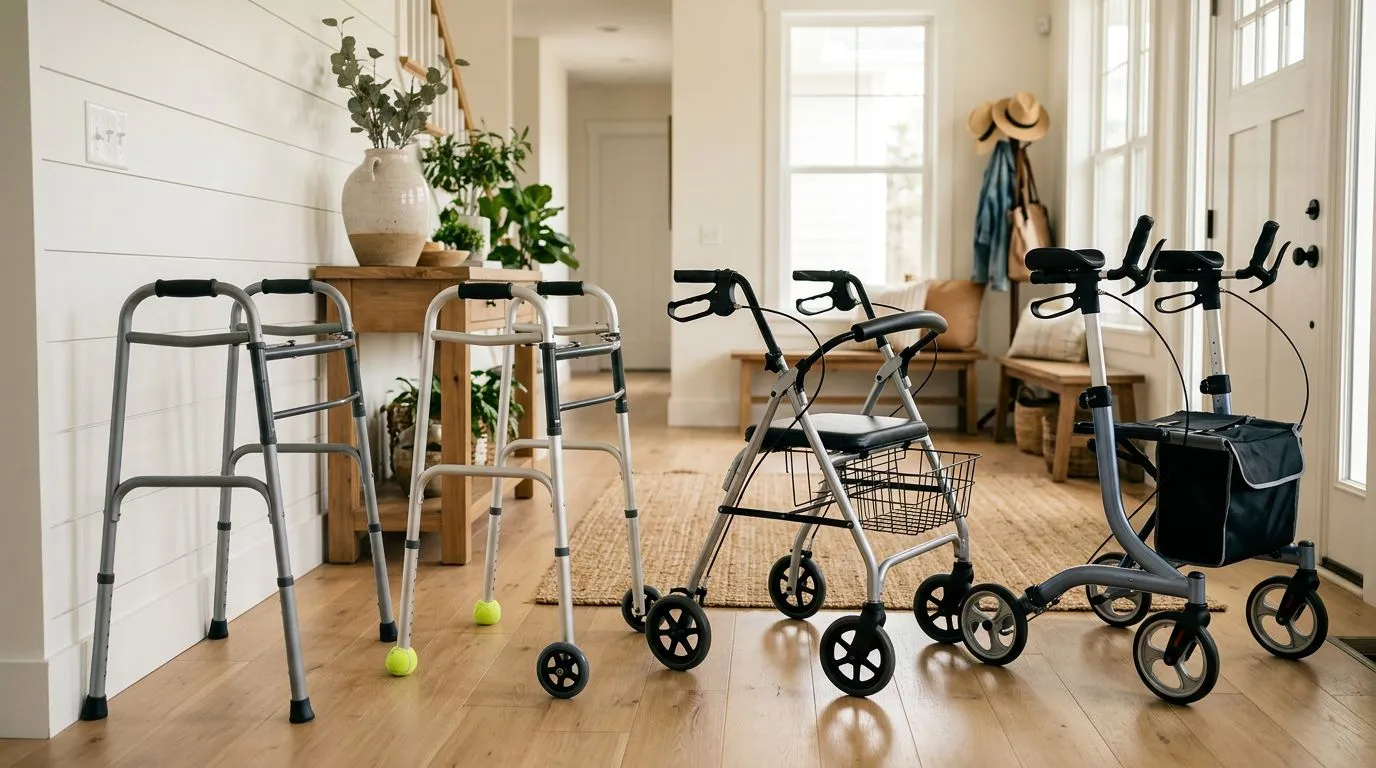
A mobility walker usually costs about $35 to $100 for a basic standard or two-wheel walker, while a rollator with a seat commonly runs about $70 to $250. Upright rollators and bariatric rollators cost more, often ranging from about $150 to $500 or higher, depending on frame strength, wheels, brakes, seat size, and folding design.
The right price level depends on where you will use it, how much support you need, whether you need a seat, and whether a health plan may help cover it. A lower-cost walker can be the safest choice for steady indoor support, while a rollator may be worth the extra cost if you walk longer distances and need hand brakes plus a place to rest.
Typical U.S. Price Ranges: About $35 to $500+
Most shoppers comparing walkers and rollators will notice a wide price spread. In general, no-wheel walker frames are at the low end, two-wheel walkers cost a little more, and rollators with seats cost more because they include 3 or 4 wheels, hand brakes, a seat, and often a storage pouch or basket.
Here are realistic out-of-pocket ranges for common mobility walker categories in the United States:
| Mobility aid type | Common price range | What that usually includes |
|---|---|---|
| Standard no-wheel walker | $35–$80 | Lightweight frame, rubber tips, adjustable height, folding option on many models |
| Folding walker | $40–$100 | Side-button or paddle folding, aluminum frame, indoor-friendly size |
| Two-wheel walker | $45–$120 | Front wheels, rear tips or glides, easier forward movement than a standard frame |
| 3-wheel rollator | $80–$220 | Three wheels, hand brakes, narrow turning, usually no full seat |
| 4-wheel rollator with seat | $70–$250 | Four wheels, locking hand brakes, seat, backrest, storage pouch or basket |
| Upright or stand-up rollator | $150–$500+ | Forearm supports, higher handles, larger frame, seat on many models |
| Bariatric walker or rollator | $90–$500+ | Higher weight capacity, wider frame, reinforced seat or tubing |
These are typical retail ranges, not fixed prices. Sale pricing, shipping, local medical supply stores, online retailers, and insurance arrangements can all affect the final amount paid.
Walker vs. Rollator: Why 0, 2, 3, or 4 Wheels Changes the Cost
A standard walker is a frame you lift and place with each step. It usually has 0 wheels and 4 rubber tips. That simple design is one reason it often costs under $80, and it can provide strong, stable support for short indoor distances.
A two-wheel walker has wheels on the front legs and rubber tips or glides on the rear legs. Many people choose this style when lifting a no-wheel walker is tiring but they still need more stability than a fully wheeled device. The price is often only $10 to $40 more than a comparable standard walker.
A rollator is different. It has wheels on all legs, hand brakes, and usually a built-in seat if it is a 4-wheel model. Because it has more parts, a more complex frame, brake cables, and a seating surface, it costs more than a basic walker. A 3-wheel rollator can be easier to maneuver in tight spaces, but many 3-wheel designs do not include a full seat, so shoppers should check that detail closely.
The main safety difference matters as much as the price. A walker is generally for people who need to put more weight through their hands for balance and support. A rollator is usually better for someone who can walk with a smoother pace, use hand brakes reliably, and benefit from a seat during longer outings.
Price Ranges by Type: From a $40 Frame to a $300 Seat-and-Brake Rollator
It helps to compare what you get at each price point. Paying more does not automatically make the device safer for your situation. The better question is whether the added features match your strength, balance, home layout, and daily walking distance.
| Type | Best price range to expect | Common strengths | Common tradeoffs |
|---|---|---|---|
| Standard walker | $35–$80 | Stable, simple, light, usually height adjustable | Must be lifted; slower walking pace |
| Folding walker | $40–$100 | Easier storage and car transport | Fold mechanism should be checked for ease of use |
| Two-wheel walker | $45–$120 | Less lifting, good for indoor hallways | Rear tips can catch on thick rugs if not set up well |
| 3-wheel rollator | $80–$220 | Tight turning, lighter than many 4-wheel rollators | Often lacks a seat; less resting support |
| 4-wheel rollator | $70–$250 | Seat, brakes, storage, outdoor-friendly options | Requires brake control and safe sitting technique |
| Upright rollator | $150–$500+ | Higher arm position, forearm supports, larger wheels on many designs | Bulkier, heavier, often more expensive |
| Bariatric option | $90–$500+ | Higher capacity, wider stance, reinforced structure | May be wider through doorways and heavier to lift |
For a person who only needs support getting from a bedroom to a bathroom, a $45 folding walker may be more appropriate than a $200 rollator. For someone walking 2 or 3 blocks to a community room and needing seated breaks, a rollator with reliable brakes and a comfortable seat may be the more practical purchase.
Who It’s Best For at Each Budget: Under $75, $75–$200, and $200+
Under $75 is often enough for a basic standard walker or some two-wheel walkers. This budget is best for people who need a simple frame for indoor use, short distances, and maximum simplicity. It is also a common range for a backup walker kept near a bed or in a bathroom area, as long as it fits and is adjusted correctly.
The $75 to $200 range is where many shoppers find rollators with seats, better folding features, larger wheels, or added storage. This price level works well for people who are steady enough to use brakes, want to walk farther, and need a place to sit during errands or social activities. Many everyday 4-wheel rollators fall in this middle zone.
Above $200, you are usually paying for specialized features: upright posture support, wider bariatric frames, higher weight capacities, larger wheels, improved seat dimensions, or more refined folding mechanisms. This level can be worthwhile when a basic device does not fit your body, your doorways, or your walking routine. It should not be purchased just because it looks more advanced.
One practical rule: spend more when the extra dollars solve a real problem. Examples include a 24-inch-wide seat for a larger user, 8-inch wheels for outdoor sidewalks, or forearm platforms for someone who has trouble gripping standard handles. Do not pay for a seat if you are not safe turning, locking the brakes, and sitting on it.
Features That Raise the Price: Seats, Brakes, Wheels, and 300+ lb Capacity
The biggest cost differences come from functional parts. A no-wheel walker has few moving components. A rollator adds wheels, brake handles, cables, a seat, hinges, and sometimes a backrest or cane holder. More parts usually mean a higher price and more things to inspect over time.
- Seat and backrest: A padded or wider seat can increase cost, especially on a rollator rated for higher weight. Common seat widths are roughly 12 to 18 inches, while some bariatric seats are wider.
- Hand brakes: Rollators use loop-style brakes that should lock for sitting. Better brake feel and easier adjustment can influence price.
- Wheel size: Smaller wheels may be fine indoors. Wheels around 8 inches are common on many rollators and can handle uneven sidewalks better than very small wheels.
- Frame material: Aluminum frames are common because they keep weight down. Reinforced steel or heavy-duty tubing can raise both price and overall device weight.
- Weight capacity: Many standard walkers and rollators list capacities around 250 to 300 lb, while bariatric models may be rated much higher. Always check the stated rating rather than guessing from appearance.
- Foldability: Side-folding rollators, compact-fold walkers, and easier trigger-release systems may cost more but can help with car trunks and small apartments.
Accessories can add to the total. Replacement tips, skis or glides, cup holders, trays, bags, and cane holders are usually separate purchases unless included. Even a $15 or $25 accessory matters if you are trying to keep the total under $100.
How to Choose and Measure Before Buying: Height, Width, and 1-Inch Fit Details
Fit affects safety and comfort more than color or style. For a standard walker or two-wheel walker, the handles are usually set near the crease of the wrist when the person stands upright with arms relaxed at the sides. When holding the grips, the elbows should have a slight bend, often around 15 degrees.
For a rollator, handle height is just as important because leaning too far forward can make the device harder to control. Upright rollators are measured differently because the forearms rest on supports, but the goal is still a stable, comfortable posture rather than reaching or hunching.
Measure at least 3 things before buying:
- User height: Compare your height with the product’s handle-height range in inches. A device that adjusts from 32 to 38 inches may not fit someone who needs 30 inches or 40 inches.
- Body width and seat size: If buying a rollator with a seat, check seat width and the space between handles. A seat that is too narrow may be uncomfortable or unsafe.
- Home pathways: Measure narrow doorways, bathroom entrances, and hallway turns. Many interior doors are about 28 to 32 inches wide, and some wider rollators may be awkward in tight bathrooms.
Weight matters too. A rollator that weighs 20 lb may feel manageable in a store but difficult to lift into a car several times a week. If you transport it often, check folded dimensions and lifting weight, not just the walking feel.
Bariatric Costs and Fit: Wider Frames and 350–500+ lb Ratings
Bariatric walkers and rollators are designed for higher weight capacity and more room through the frame. Many heavy-duty devices are rated around 350 lb, 400 lb, 500 lb, or more, depending on the design. Higher capacity usually requires stronger tubing, reinforced seats, wider spacing, and sturdier wheels or tips, so the price is commonly higher than a standard frame.
Cost is not the only consideration. A wider bariatric rollator may feel stable and comfortable for the user but may not fit through every doorway or between furniture. A heavy-duty walker may provide excellent support but weigh more than a basic aluminum frame, which can matter if a caregiver must fold and lift it into a vehicle.
Seat height is another detail to check. If the seat is too low, standing up can be difficult; if it is too high, the feet may not rest securely when seated. A few inches can make a real difference. For rollators, always confirm that the brakes lock firmly before sitting, and never use the seat on a slope or while the rollator is moving.
Insurance, Medicare, and Out-of-Pocket Cost: The 20% Rule to Know
Some walkers and rollators may be covered as durable medical equipment when they are medically necessary and prescribed by a qualified clinician. Medicare Part B, for example, may cover approved durable medical equipment through enrolled suppliers, and the beneficiary may owe 20% of the Medicare-approved amount after the Part B deductible is met. Deductibles and plan rules can change, so confirm details before buying.
Coverage does not always mean every style is paid for. A health plan may cover a basic walker but not an upgraded upright rollator, or it may require documentation showing why a rollator is medically necessary. Some plans use approved suppliers, prior authorization, or rental rules. Buying first and asking for reimbursement later can be risky.
If you have Medicare Advantage, Medicaid, VA benefits, or private insurance, call the plan and ask what documentation is needed, which suppliers are in network, and whether a walker, rollator, or bariatric device is covered. Use exact terms. A “walker” and a “rollator with seat and hand brakes” may be treated differently by the plan.
Even with coverage, out-of-pocket costs can include coinsurance, deductibles, delivery, accessories, or the difference between a covered basic device and an upgraded option. For a cash buyer, the simplest path may be to compare local medical supply stores and online retailers while still asking a clinician which type is safest.
New, Used, or Borrowed: Saving $25–$150 Without Skipping Safety
Used walkers can be inexpensive, and some community loan closets lend them at low or no cost. A basic standard walker may be found for far less than retail, and borrowing one can make sense for a short recovery period of a few weeks. Still, used mobility equipment needs a careful inspection.
Check rubber tips for wear, cracks, or uneven surfaces. On folding walkers, make sure both sides lock fully and do not wobble. On a two-wheel walker, confirm that the wheels roll smoothly and that rear tips or glides are matched and secure.
Used rollators require extra attention. Test both hand brakes, including the parking lock. Look for frayed cables, loose wheels, bent forks, torn seats, and missing backrests. Sit only after the brakes are locked on a flat surface, and avoid any rollator that shifts, collapses, or feels unstable.
A used device can save $25 to $150, but worn tips or faulty brakes are not small issues. If replacement parts are needed, add that cost before deciding whether the deal is worthwhile.
Simple Buying Scenarios: $50, $150, and $300 Budgets
A $50 budget often points toward a standard folding walker or a basic two-wheel walker. This is a practical level for short indoor walking, post-surgery recovery when recommended by a clinician, or a simple support frame for use around the home.
A $150 budget opens the door to many 4-wheel rollators with a seat and hand brakes, along with some lighter or better-equipped two-wheel walkers. This range is often the sweet spot for shoppers who need rest breaks, storage for small items, and smoother movement outside the home.
A $300 budget is more likely to include upright rollators, higher-capacity rollators, larger wheels, enhanced folding systems, or more spacious seats. At this level, compare dimensions carefully. A $300 rollator that is too tall, too wide, or too heavy is not a good value.
If the shopper is unsure, a physical therapist, occupational therapist, physician, or trained medical equipment supplier can help match the device to the person’s balance, strength, gait, and home setup. That guidance is especially important after a fall, surgery, stroke, or sudden change in mobility.
10-Point Cost and Safety Checklist Before You Pay
Before buying any walker or rollator, compare the total cost with the features you truly need. Use this quick checklist to avoid paying for the wrong device:
- Confirm whether you need a walker for support or a rollator for smoother walking and seated rest breaks.
- Check the handle-height range in inches against the user’s wrist-crease or forearm-support measurement.
- Compare the listed weight capacity with the user’s current weight, leaving an appropriate safety margin.
- Measure doorways, bathroom entries, and car trunk space before choosing a wide or upright model.
- Test the folding mechanism at least 3 times if the device will be transported often.
- For rollators, squeeze and lock both brakes before purchase.
- Sit on the rollator seat only if it is designed for sitting and the brakes are locked on level ground.
- Add the cost of accessories, replacement tips, delivery, and assembly if needed.
- Ask insurance about coverage before buying if you plan to submit a claim.
- Choose fit and control over the lowest price or the most features.
A mobility walker is not just a purchase; it is a daily safety tool. The best value is the walker or rollator that fits the user, fits the home, supports the right walking pattern, and stays within a realistic budget.
FAQ
Frequently asked questions
Are rollators more expensive than standard walkers? +
Yes, rollators usually cost more because they include wheels on all legs, hand brakes, a seat on many models, and storage. A standard walker may cost about $35 to $80, while many rollators with seats cost about $70 to $250.
What is the cheapest type of mobility walker? +
A basic standard walker with no wheels is usually the least expensive option. Many cost under $80 and provide simple, stable support for short indoor distances.
Will Medicare pay for a walker or rollator? +
Medicare Part B may cover a walker or rollator as durable medical equipment if it is medically necessary, prescribed, and obtained through an enrolled supplier. You may still owe the deductible and coinsurance, so check coverage before buying.
How much should I budget for a walker with a seat? +
Most walkers with seats are technically rollators. A typical 4-wheel rollator with a seat often costs about $70 to $250, with higher prices for upright, bariatric, or upgraded folding designs.
Is an upright rollator worth the higher price? +
It can be worth it if forearm supports, taller handle positioning, or a more upright walking posture are genuinely needed and the user can control the brakes safely. It is not automatically better for everyone, and fit should be checked carefully.
Can I buy a used walker or rollator safely? +
A used walker or rollator can be safe if it is the right size and in good condition. Inspect rubber tips, wheels, folding locks, frame stability, seat condition, and rollator brakes before use.
Keep reading
Related guides

How to Save Money on a Walker or Rollator Without Sacrificing Safety
14 min read
How Much Does a Rollator Walker Cost? US Price Ranges, Features, and Value
11 min read
Cheap Rollator Walkers: Safety and Comfort Trade-Offs to Check Before You Buy
14 min read