Disclosure: We may earn a commission when you buy through links on this page, at no extra cost to you. We buy nothing, sell nothing and accept no payment for coverage — commissions never decide what we recommend. How we make money.

Most rollator walkers in the US cost about $60 to $700+, and many everyday 4-wheel rollators fall in the $100 to $250 range. Basic models cost less because they use simpler frames and standard parts. Premium, upright, lightweight, or bariatric rollators cost more because they add stronger materials, specialty geometry, higher weight capacities, and more adjustability.
A rollator is not the same as a standard walker: it has wheels, hand brakes, and usually a built-in seat. If you do not need wheels or a seat, a standard or two-wheel walker may cost less and feel more stable for short indoor trips. A rollator may offer better comfort for longer walks and resting breaks.
Quick answer: most rollators cost $60 to $700+
For a practical shopping budget, expect $60 to $120 for a basic rollator, $120 to $250 for a better everyday model, and $250 to $700+ for upright, heavy-duty, ultra-lightweight, or specialty designs. Prices vary by retailer, shipping, local availability, and whether accessories are included.
The lowest price is not always the best value. A rollator that is too tall, too narrow, too heavy to lift into a car, or hard to brake can become frustrating after only a few days. Many shoppers also do not need the highest-priced option if a mid-range 4-wheel rollator fits well, rolls smoothly, and supports their daily routine.
| Rollator category | Typical US price range | Common value point |
|---|---|---|
| Basic 4-wheel rollator | $60 to $120 | Simple walking support with seat and hand brakes |
| 3-wheel rollator | $70 to $160 | Easier turning in tight spaces, usually no full seat |
| Mid-range 4-wheel rollator | $120 to $250 | Better fit, smoother wheels, improved folding, more comfort |
| Bariatric or heavy-duty rollator | $180 to $400+ | Wider frame and higher weight capacity |
| Upright or stand-up rollator | $250 to $700+ | Forearm support and a more upright walking posture |
| Premium lightweight/specialty rollator | $300 to $800+ | Lower carry weight, upgraded materials, refined adjustments |
Rollator vs walker costs: $30 frames vs $60+ rolling seats
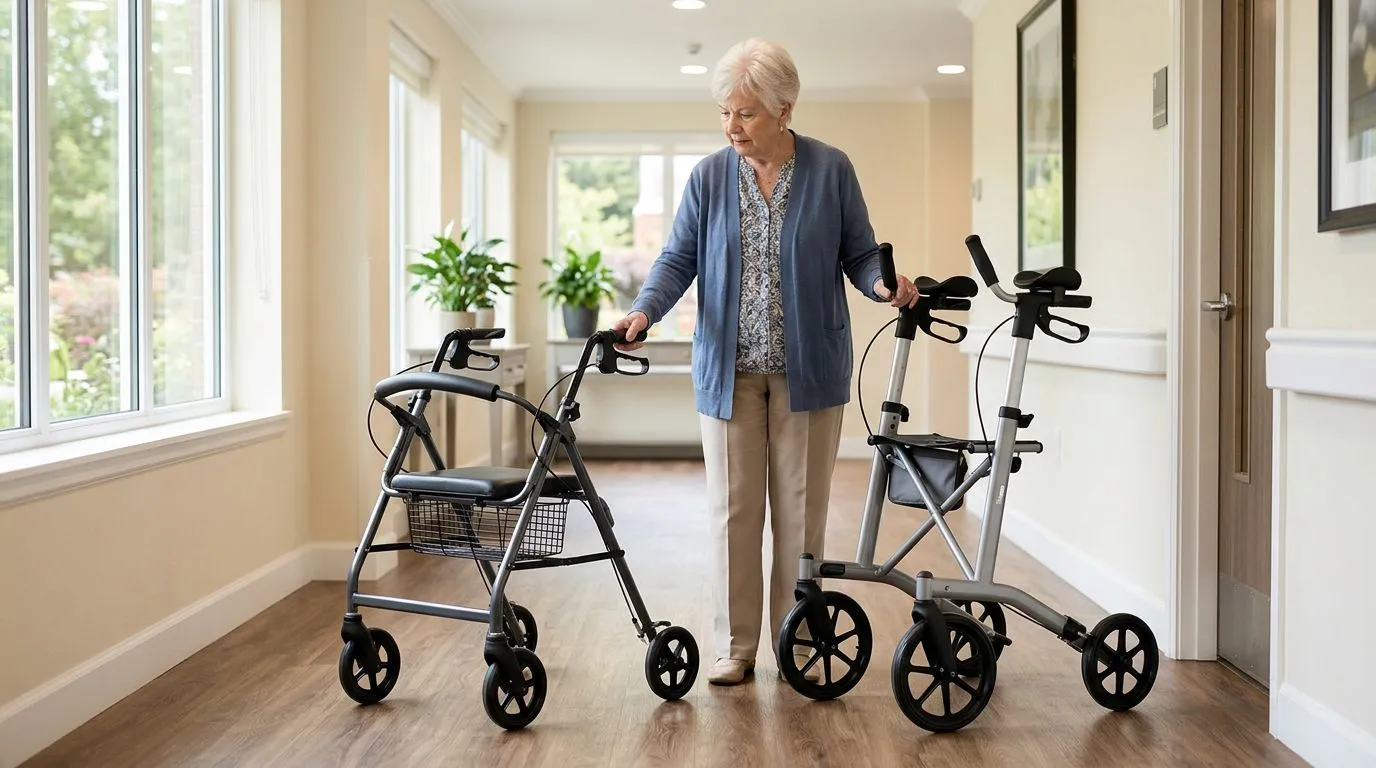
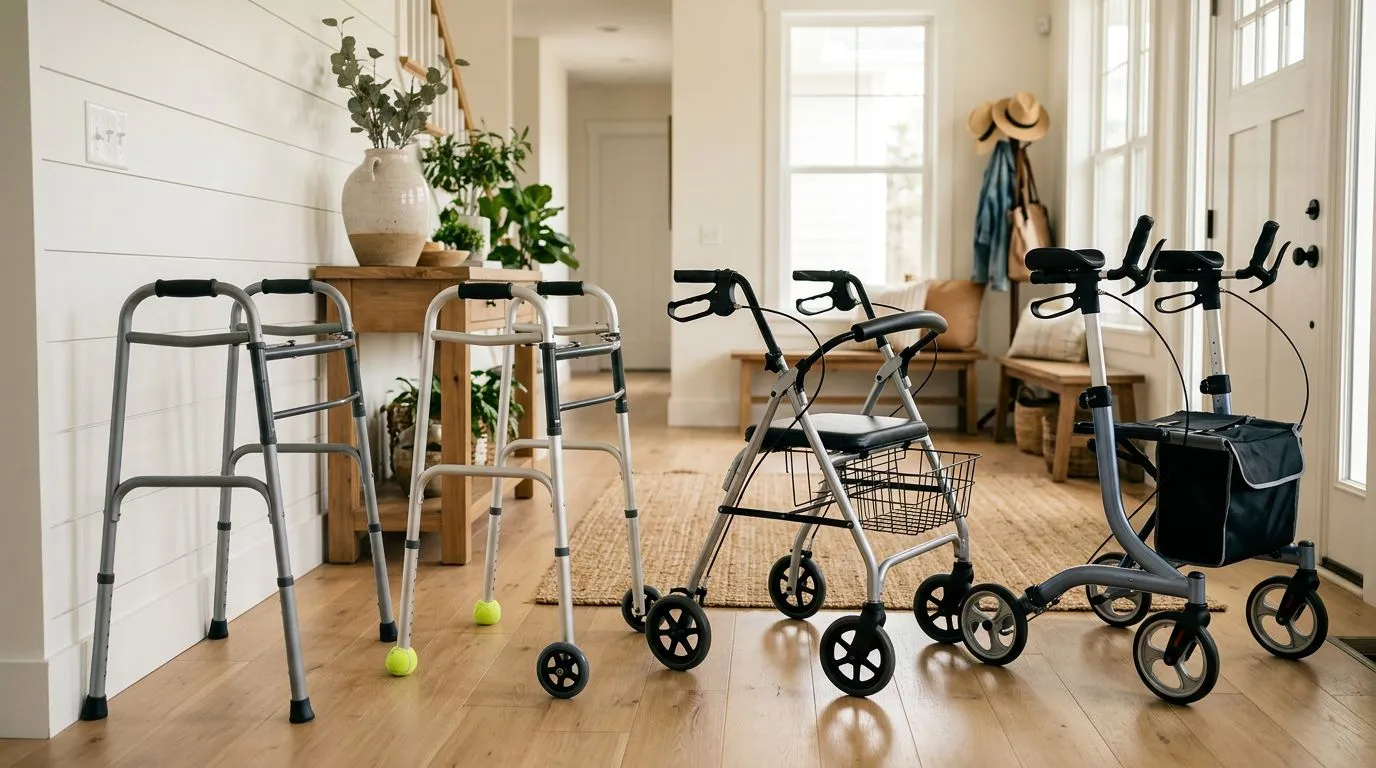
The word walker is often used broadly, but it helps to separate standard walkers from rollators before comparing cost. A standard walker or folding walker is usually a metal frame with no wheels, or sometimes 2 front wheels. A rollator is a wheeled walker with hand brakes and, in most 4-wheel designs, a seat.
That difference affects price. A basic standard walker may cost roughly $30 to $80, while a two-wheel walker often falls around $40 to $120. Rollators start higher because they include wheels, brake cables, handles, a seat, a backrest, and often a storage pouch or basket.
| Mobility aid type | Typical cost | Wheels | Seat | Best fit |
|---|---|---|---|---|
| Standard folding walker | $30 to $80 | 0 | No | Short indoor distances and maximum step-by-step stability |
| Two-wheel walker | $40 to $120 | 2 front wheels | No | Indoor use where sliding a no-wheel frame is difficult |
| 3-wheel rollator | $70 to $160 | 3 | Usually no full seat | Tight hallways, small apartments, quick errands |
| 4-wheel rollator | $60 to $250+ | 4 | Yes, commonly | Walking with rest breaks and storage |
| Upright rollator | $250 to $700+ | 4 | Often yes | Users who need forearm support and taller handle positions |
Choose a walker if you need a slower, more stable frame and do not need a seat. Consider a rollator if you can safely use hand brakes, want smoother movement outdoors, and need a place to sit during longer outings.
Price ranges by rollator type: 3 wheels, 4 wheels, upright, and bariatric
Rollator prices depend heavily on type. A compact 3-wheel rollator may cost less than a full upright rollator, but it serves a different purpose. A bariatric rollator may look similar to a standard 4-wheel model, yet its frame and seat are built for higher weight ratings, often in the 350 to 500 lb range or more depending on the product.
Basic 4-wheel rollators: about $60 to $120
Basic 4-wheel rollators are the entry point for many shoppers. They usually include a padded or molded seat, a simple backrest, loop-style hand brakes, and a storage pouch or basket. Wheel sizes are often around 6 to 8 inches, which can work well on smooth indoor floors and level sidewalks.
The tradeoff is refinement. The frame may be heavier, the seat may be less cushioned, and the folding mechanism may be less convenient. For occasional use, that may be acceptable. For daily walks, errands, or transportation in and out of a car, those details matter more.
Mid-range 4-wheel rollators: about $120 to $250
This is often the best value range for everyday use. Mid-range rollators commonly offer better handle adjustment, smoother brake action, sturdier seats, easier folding, and improved wheel performance. Some have larger 8-inch wheels that handle sidewalk cracks and thresholds better than smaller wheels.
A mid-range rollator is worth considering if it will be used several times a week. The added cost may buy comfort and usability rather than fancy extras.
3-wheel rollators: about $70 to $160
A 3-wheel rollator is narrower and easier to maneuver than many 4-wheel rollators. It can fit well in small apartments, crowded rooms, and tight doorways. Many 3-wheel models fold slim and weigh less than full-size rollators.
The main limitation is seating. Most 3-wheel rollators do not provide the same built-in resting seat found on 4-wheel models. If sitting during walks is important, a 4-wheel rollator is usually the better value even if it costs more.
Bariatric rollators: about $180 to $400+
Bariatric rollators are built with higher weight capacities, wider seats, and reinforced frames. Standard rollators often list weight capacities around 250 to 300 lb, while heavy-duty models may support 350, 400, 500 lb, or more depending on design.
Do not choose a rollator based only on user weight. Seat width, handle height, overall frame width, and turning space matter too. A wider bariatric rollator may feel more secure, but it may also be harder to move through a 30-inch bathroom doorway.
Upright rollators: about $250 to $700+
Upright or stand-up rollators use taller frames and forearm supports to help the user walk in a more upright position. They cost more because they require more adjustable components and a larger frame design.
They can help some users who dislike leaning down onto standard handles, but they are not automatically safer for everyone. The higher center of support changes how the device feels. If possible, test one for at least 10 to 15 minutes on flat ground, turns, and a doorway before deciding.
What you pay for: 7 features that affect rollator cost
A higher price should match features that improve fit, safety, comfort, or daily convenience. If a feature does not solve a real problem for your home, body size, or routine, it may not be worth paying for.
| Feature | Why it changes cost | Value question to ask |
|---|---|---|
| Wheel size | 8-inch wheels often cost more than smaller 6-inch wheels | Will you use it outdoors, on sidewalks, or over thresholds? |
| Frame weight | Lighter materials and better folding designs increase cost | Will you lift it into a car trunk? |
| Weight capacity | Reinforced frames and wider seats add material | Does the capacity leave a comfortable safety margin? |
| Seat size and height | More supportive seats require stronger frames | Can you sit and stand without strain? |
| Brake quality | Smoother cables and stronger hardware add cost | Can you squeeze and lock the brakes easily? |
| Handle adjustment | More range and sturdier adjustment points cost more | Do the handles reach your wrist crease when standing tall? |
| Foldability | Compact folding mechanisms add engineering | Will it fit in your car, closet, or hallway? |
Brakes deserve special attention. Most rollators use loop hand brakes: squeeze to slow, push down to lock. If hand strength is limited, the easiest brake may be worth more than a padded seat or larger storage bag.
Wheel size is another value driver. Smaller wheels may be fine indoors, but a rollator used outside should roll comfortably over small cracks, curb cuts, and uneven pavement. For many people, 8-inch wheels are a practical upgrade.
Who it’s best for at each budget level: 3 common shopper profiles
There is no single best rollator price. The right budget depends on how often the device will be used and where it will go. A person walking 20 feet from a bedroom to a kitchen has different needs than someone who uses a rollator for weekly grocery trips.
Budget rollator: best for occasional, mostly indoor use
A budget rollator can make sense for light use on smooth floors, short hallway walks, or as a backup device. It may also be reasonable for someone testing whether a rollator works better than a standard walker.
Look closely at brake feel, seat sturdiness, and handle height. If any of those are poor, the low price may not be a bargain.
Mid-range rollator: best for frequent daily use
A mid-range 4-wheel rollator is often the sweet spot for shoppers who need reliable support several days a week. It may offer better wheels, a sturdier seat, more comfortable grips, and easier folding without moving into premium pricing.
This range is especially sensible if the rollator will be used both indoors and outdoors. A little extra money can improve the parts you touch and use every day.
Premium, upright, or bariatric rollator: best for specific fit needs
Higher-cost rollators are easiest to justify when they solve a specific problem: a higher weight capacity, a taller handle range, a more upright walking position, a much lighter frame, or a wider seat. Paying more simply for a premium label is not the goal.
If the device is used daily and poor fit would limit activity, the extra cost may be worthwhile. If the feature is nice but not necessary, stay closer to the mid-range.
How to choose and measure before spending $100+
Before buying a rollator, take 5 measurements: user height, wrist height, doorway width, car trunk opening, and preferred seat height. These numbers help prevent many common buying mistakes.
- Handle height: Stand upright in supportive shoes with arms relaxed. The rollator handles should generally line up near the crease of the wrist. Many handles adjust across several inches, but the range must match the user.
- Seat height: Sit-to-stand should feel controlled. Common rollator seat heights are often around 20 to 23 inches, but shorter and taller users may need different ranges.
- Seat width: The seat should be wide enough to sit without squeezing. Check both seat width and space between the handles.
- Overall width: Measure narrow doors, bathroom entries, and hallways. A rollator that is comfortable in a store aisle may still be too wide at home.
- Folded size: If it will travel, measure the trunk or back seat space. Also consider whether the user or caregiver can lift the rollator’s full weight.
Weight matters more than many shoppers expect. A rollator that weighs 15 lb may be manageable for one person, while a 25 lb model may be too difficult to lift into a vehicle. Bariatric and upright rollators are often heavier, so check both rolling comfort and carrying needs.
If you are replacing a standard walker, do not assume a rollator will feel the same. A no-wheel walker offers more fixed stability because it does not roll away. A rollator requires brake awareness and enough balance to control a moving frame.
Ways to get better value: insurance, used options, and accessories under $50
Value is not just the sticker price. Delivery fees, assembly, accessories, replacement parts, and return policies can change the real cost by $20 to $100 or more.
Some rollators may qualify as durable medical equipment under Medicare Part B or private insurance when prescribed by a qualified clinician and purchased through an approved supplier. Coverage rules vary, and deductibles or coinsurance may apply. Check requirements before buying if reimbursement matters.
Used rollators can be a lower-cost option, sometimes selling for far less than new retail prices. Inspect carefully. The frame should not be bent, the brakes should lock firmly on both sides, the wheels should not wobble, and the seat should not sag or crack. Replace worn tips, grips, or brake parts if needed.
Accessories can add value when they solve daily problems. A cup holder, cane holder, light, tray, or upgraded storage bag often costs under $50, but not every accessory fits every frame. Confirm compatibility before purchasing.
Read the return policy as well. A rollator may look perfect online but feel wrong after 10 steps. A reasonable return window is valuable, especially if the user cannot test the device in person.
FAQ: 5 cost questions shoppers ask before buying
Is a $60 rollator safe enough?
It can be, if it fits the user, the brakes work well, and the rollator is used on appropriate surfaces. Low-cost rollators are often best for lighter, mostly indoor use. Check the weight capacity, handle height range, wheel condition, and brake locks before relying on it.
How much should I spend for everyday use?
Many everyday shoppers find good value around $120 to $250. This range often includes better wheels, easier folding, sturdier seats, and smoother brakes than the lowest-cost models. The best choice is still the one that fits your measurements and routine.
Are upright rollators worth the higher price?
They may be worth it for users who need forearm support or a taller walking position, but they are not the right match for everyone. Because upright rollators often cost $250 to $700+, try one first if possible and confirm it fits through your home.
Does Medicare pay for a rollator walker?
Medicare Part B may cover certain walkers or rollators as durable medical equipment when medically necessary, prescribed by a clinician, and obtained through an approved supplier. Coverage depends on eligibility, documentation, deductibles, and coinsurance, so confirm details before purchase.
Is a rollator better than a standard walker?
Not always. A rollator rolls more smoothly, usually has a seat, and works well for longer walks if the user can manage hand brakes. A standard walker or two-wheel walker may be better for slower indoor movement and users who need a more fixed support frame.
FAQ
Frequently asked questions
How much should I spend for an everyday rollator? +
Many everyday shoppers find good value around $120 to $250, where rollators often have better wheels, brakes, seats, folding, and adjustment than the cheapest models.
Keep reading
Related guides
How Much Does a Mobility Walker Cost? Price Ranges for Walkers, Rollators, and Upright Models
13 min read
Budget vs Premium Rollator Walkers: Which Features Are Worth Paying More For?
12 min read
How to Save Money on a Walker or Rollator Without Sacrificing Safety
14 min read