Disclosure: We may earn a commission when you buy through links on this page, at no extra cost to you. We buy nothing, sell nothing and accept no payment for coverage — commissions never decide what we recommend. How we make money.

An upright rollator can make sense when a regular rollator makes you lean forward, strain your wrists, or look down while walking, but you still need wheels, hand brakes, and often a seat. A regular rollator is usually the better fit when you want a lighter, simpler mobility aid that turns tightly, has familiar hand grips, and is easier to transport. The safest choice depends on your posture, balance, arm strength, home layout, and whether you can control the rollator confidently on turns, slopes, and stops.
Both are types of rollators, which are wheeled walkers with hand brakes. They differ from standard walkers, which typically have no seat and may have no wheels or only 2 front wheels. This guide compares upright rollators and regular rollators so you can decide when a stand-up walker design is helpful and when it may add unnecessary size, weight, or handling challenges.
Upright vs regular rollator at a glance: 6 key differences
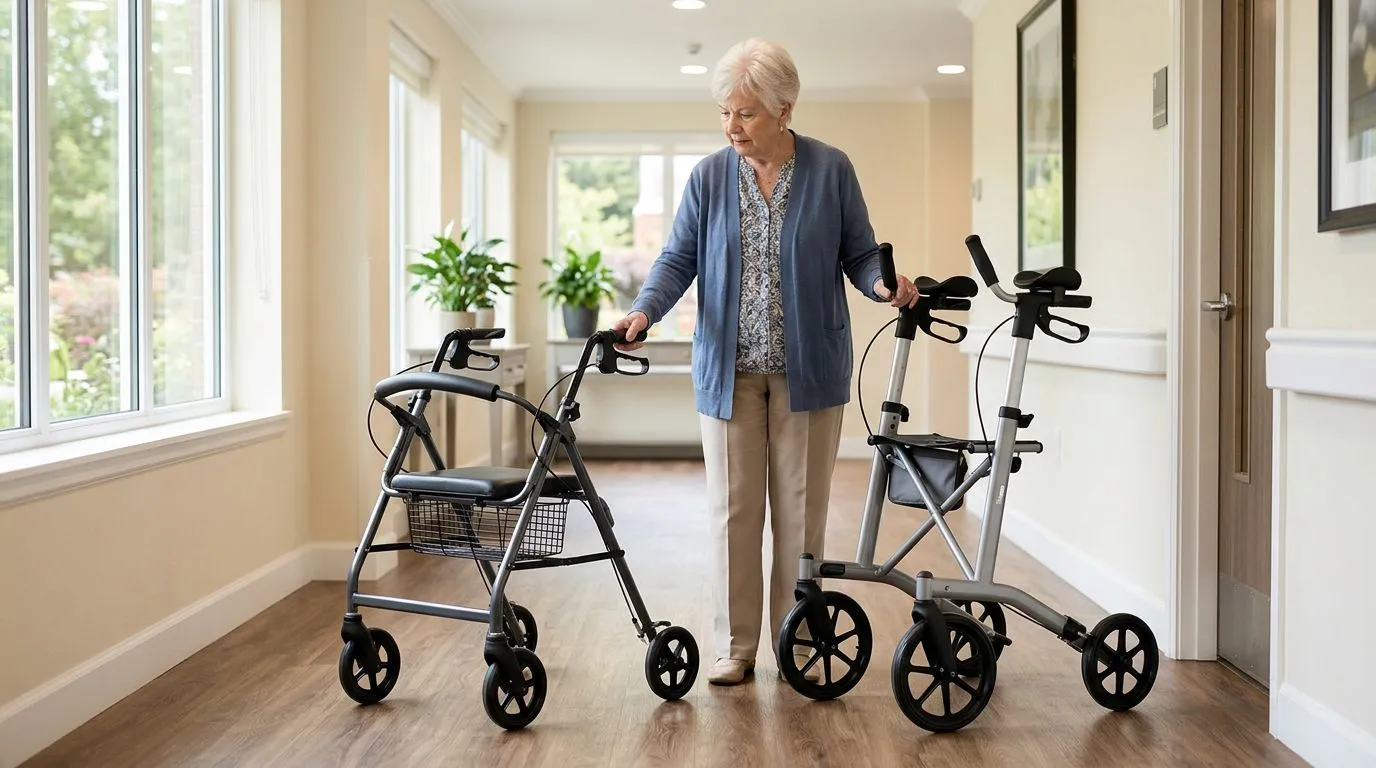
A regular rollator usually has hand grips at about wrist height, 3 or 4 wheels, hand brakes, and a seat on most 4-wheel models. An upright rollator, sometimes called a stand-up rollator or stand-up walker, raises the support point to the forearms with padded armrests and vertical or angled hand grips. Many upright rollators are about 3 to 8 inches taller at the support area than standard rollator handle settings, though exact ranges vary.
The main difference is not just height. It is where your weight goes. With a regular rollator, your hands and wrists do more of the steering and braking work. With an upright rollator, your forearms, shoulders, and upper body share more of the load, which feels more comfortable for some users and less stable for others.
| Feature | Regular rollator | Upright rollator |
|---|---|---|
| Support position | Hands on lower grips, typically near wrist crease | Forearms on padded supports with higher hand grips |
| Posture goal | Slight forward reach is common | Encourages a more upright walking position |
| Common wheel count | 3 or 4 wheels | Usually 4 wheels |
| Seat | Common on 4-wheel models; less common on 3-wheel models | Common, though seat access may feel different because of arm supports |
| Typical weight | Often about 12 to 20 lb, depending on frame and wheels | Often about 18 to 28 lb, sometimes more |
| Best fit | Users who need light support, easy turns, and compact storage | Users who benefit from forearm support and a taller, more upright stance |
Neither design is automatically safer. A rollator helps only when it matches the user and the environment. A model that improves posture but feels hard to brake or lift into a car may not be the best everyday tool.
Who an upright rollator is best for: 5 common use cases
An upright rollator is most useful for people who can walk with a rolling aid but feel limited by the bent-forward position of a regular rollator. The forearm supports may reduce pressure through the hands and help the chest and head stay more upright. For the right user, that can make hallway walking, outdoor paths, and longer trips feel more natural.
- People who hunch over standard handles. If regular rollator handles are adjusted correctly but you still bend at the waist, an upright frame may provide a better support height.
- Users with wrist or hand discomfort. Forearm pads can spread some pressure away from the palms and wrists, though you still need enough hand function to steer and brake.
- Taller adults who run out of handle height. Some regular rollators do not adjust high enough for users over about 6 feet, while many upright models are built with taller support ranges.
- People who walk longer indoor distances. In a senior living hallway that is 100 feet long, a more upright position may feel more comfortable than leaning into low handles.
- Users who can manage a larger turning radius. Upright rollators often need more room to turn than compact 3-wheel or narrow 4-wheel rollators.
Still, control has to be tested. If the rollator feels as if it is pulling you forward, or if you cannot keep it close without leaning into the armrests, the upright style may not be the right fit. A physical therapist or occupational therapist can help evaluate this, especially after surgery, a fall, or a change in balance.
Who a regular rollator is best for: 4 practical advantages
A regular rollator remains the better choice for many people because it is simpler, usually lighter, and often easier to maneuver in tight spaces. A typical 4-wheel rollator may be about 24 to 28 inches wide, while compact 3-wheel rollators can be narrower. That matters in bathrooms, small kitchens, older homes, and apartments with tight turns.
Regular rollators also place the brake levers directly at the hand grips, which many users find intuitive. You squeeze to slow down and push down or engage the mechanism to park, depending on the brake style. Because the frame is lower and often lighter, it may be easier to fold and lift into a trunk.
- Better for tight indoor spaces. Smaller frames can be easier around furniture, doorways, and bathroom fixtures.
- Often easier to transport. Many regular rollators weigh several pounds less than upright models.
- More familiar hand position. Users who already know standard hand brakes may adapt quickly.
- Good for users with adequate posture. If you can stand tall with properly adjusted handles, you may not need forearm supports.
A regular rollator can still support good posture when it is sized correctly. The handles should not be so low that you bend sharply, and they should not be so high that your shoulders shrug. Small adjustments of 1 inch can make a noticeable difference.
Posture and comfort: what changes when support moves up 6 inches
The main appeal of an upright rollator is posture. Instead of reaching down to hand grips, you rest your forearms on pads and hold higher handles. For some users, moving support upward by several inches reduces the feeling of walking behind the device and encourages a more forward-looking position.
Comfort depends on the whole fit, not just the label. Forearm pads should support the forearms without forcing the elbows too far out to the sides. Your shoulders should feel relaxed, not lifted. Your hands should reach the brake controls without stretching, and your elbows should have a comfortable bend.
Regular rollators can feel better for users who dislike pressure on the forearms or want more freedom of arm movement. They also allow a natural hand-down posture, which may feel steadier to people who use the rollator lightly rather than leaning on it. If you put heavy weight through either type of rollator, ask a clinician whether a walker, rollator, or another mobility aid is appropriate.
Standard walkers and 2-wheel walkers are worth mentioning here. A standard walker provides a more fixed base because you place it, step, and then place it again. A rollator rolls continuously, so it does not provide the same kind of support. If your main issue is needing firm weight-bearing help rather than posture comfort, a traditional walker may be safer than either rollator style.
Control and braking: 3 safety checks before you choose
Hand brakes are central to rollator safety. A regular rollator usually puts brake levers directly under the fingers at the main grips. An upright rollator may have brake handles positioned at the vertical grips near the forearm rests. Both can work well, but only if you can reach, squeeze, and lock them without changing your balance.
Before choosing, test these 3 controls if possible:
- Stopping distance. Walk at your normal pace and stop within 1 to 2 steps using the brakes. If the rollator keeps drifting, the brake reach, grip strength, or wheel setup may not fit you.
- Turning control. Make a slow 180-degree turn in a hallway or open room. You should not need to twist your back sharply or step outside the frame.
- Parking for the seat. Lock both brakes before sitting. The rollator should feel still, and you should be able to back up until you feel the seat behind your legs.
Upright rollators can feel different because your forearms may be more connected to the frame. Some users feel more guided; others feel less able to make quick corrections. On ramps, curb cuts, and uneven sidewalks, a taller frame can also feel more top-heavy. Larger wheels, often 8 inches or more, may roll more smoothly outdoors, but they do not replace careful braking and good judgment.
How to measure for an upright or regular rollator in 10 minutes
Good sizing starts with your shoes on and your walking posture as natural as possible. Use a tape measure, a helper if available, and a flat floor. Measuring takes about 10 minutes and can prevent many common fit problems.
For a regular rollator
- Handle height: Stand tall with arms relaxed at your sides. The hand grips should line up near the crease of your wrist. This often creates a slight elbow bend of about 15 degrees.
- Seat height: If the rollator has a seat, your feet should rest flat or nearly flat when seated. Common seat heights are roughly 18 to 24 inches.
- Width: Check the overall width against your narrowest doorway. Many interior doorways are about 28 to 32 inches wide, but older bathrooms can be tighter.
For an upright rollator
- Forearm pad height: Stand upright and bend your elbows comfortably, often around 90 degrees or slightly more open. The pads should meet your forearms without raising your shoulders.
- Grip reach: Your hands should hold the grips while your forearms stay supported. You should not have to slide forward on the pads to reach the brakes.
- Frame depth: Make sure you can stand inside or close to the rollator without the front wheels being too far ahead. Too much distance can encourage leaning.
For either type, confirm weight capacity. Many standard adult rollators support around 250 to 300 lb, while bariatric rollators may support higher capacities, often 350 lb or more. Capacity is not only about body weight; it also affects frame width, seat size, and overall weight.
Indoor, outdoor, and travel use: compare 7 real-world features
The best rollator for a smooth hallway may not be the best one for a parking lot, doctor visit, or car trunk. Think about your real week. If you use the device 20 times a day inside a small home, compact handling may matter more than outdoor wheel size. If you walk several blocks on sidewalks, comfort and wheel performance may matter more.
| Feature | Why it matters | Regular rollator | Upright rollator |
|---|---|---|---|
| Overall width | Doorways and bathrooms | Often more compact | May be wider due to arm supports |
| Weight | Lifting into a car | Often lighter by several pounds | Often heavier |
| Foldability | Storage and transport | Usually straightforward | May fold larger or require more steps |
| Wheel size | Outdoor bumps and thresholds | 6 to 8 inch wheels are common | 8 inch or larger wheels are common |
| Seat access | Rest breaks | Usually simple on 4-wheel models | Arm supports may affect how you turn and sit |
| Storage bag | Carrying personal items | Common under or near the seat | Common, but placement varies |
| Learning curve | Confidence and safe habits | Often shorter | May require more practice |
For travel, measure the folded size as well as the open size. A rollator that fits through a 30-inch doorway may still be awkward if it folds into a tall, bulky shape. If a caregiver will lift it, the caregiver’s safety matters too.
When a standard walker or 2-wheel walker may be safer than either rollator
Rollators are helpful because they roll smoothly, but that same feature can be a drawback for people who need firm, non-moving support. A standard walker has 4 legs with rubber tips and no wheels, while a 2-wheel walker has wheels in front and tips or glides in back. Many folding walker frames weigh under 10 lb, which can make them easier to place and control indoors.
Consider a walker rather than a rollator if you need to bear significant weight through the device, have trouble managing hand brakes, or feel unsafe with a frame that moves continuously. A standard walker is slower, but slower can be safer for some users. A 2-wheel walker can be a middle ground when lifting a no-wheel frame is too tiring but a 4-wheel rollator feels too mobile.
This is where the word walker can be confusing. In everyday conversation, people may call any mobility aid a walker. In practical terms, regular rollators and upright rollators are wheeled walkers with brakes; standard walkers are more stable but less convenient for continuous walking. If you are unsure which category fits your needs, get individualized guidance from a licensed clinician.
Decision guide: choose the right rollator in 5 steps
Use this quick decision path before you buy or borrow any rollator. It works best if you test both styles for at least 5 minutes on a flat surface, including one turn, one stop, and one sit-to-stand if the device has a seat.
- Start with safety, not posture. If you cannot control the brakes, turn smoothly, or keep the rollator close, do not choose that style.
- Check your natural walking position. If you stand tall with a regular rollator adjusted to wrist height, the upright version may not add much benefit.
- Notice where discomfort appears. Wrist, palm, or shoulder strain may point toward a different support style or adjustment.
- Match the home environment. Measure doorways, hallway turns, bathroom space, and car storage. A difference of 2 inches in width can matter.
- Confirm capacity and fit. Check user weight capacity, seat size, handle range, and whether your feet clear the frame while walking.
Choose an upright rollator if it improves your posture without reducing control. Choose a regular rollator if it gives you enough support with easier handling, lighter weight, and a better fit in your daily spaces. Choose a standard or 2-wheel walker if you need a more fixed base and do not need a built-in seat for frequent rest breaks.
FAQ: upright and regular rollator questions
Is an upright rollator safer than a regular rollator?
Not automatically. An upright rollator may help some users stand taller, but safety depends on braking, steering, fit, balance, and the walking surface. A regular rollator can be safer if it is easier for you to control.
Can I sit on an upright rollator?
Many upright rollators have seats, but not all seats feel the same. Always lock both brakes before sitting, turn carefully, and make sure the seat height and width fit you. Do not use any rollator seat like a wheelchair.
Are upright rollators good for back pain?
They may feel more comfortable for some people who bend forward on regular handles, but they are not a treatment for back pain. If pain affects your walking, ask a healthcare professional to assess your posture, strength, and mobility aid fit.
Do upright rollators work indoors?
Yes, but size matters. Some upright rollators are wider, taller, or heavier than regular rollators, so measure doorways, bathroom space, and turning areas. A compact regular rollator may work better in tight rooms.
What is the difference between a walker and a rollator?
A standard walker is a frame that usually has no wheels or has 2 front wheels and no built-in seat. A rollator has 3 or 4 wheels, hand brakes, and often a seat. Upright rollators are a specialized rollator style with forearm supports.
How high should upright rollator armrests be?
The forearm pads should let you stand upright with relaxed shoulders and comfortably bent elbows, often near a 90-degree bend. You should be able to hold the grips and reach the brakes without stretching forward.
Keep reading
Related guides
Upright Rollator Cost vs Standard Rollator Cost: Are Stand-Up Features Worth Paying More For?
13 min read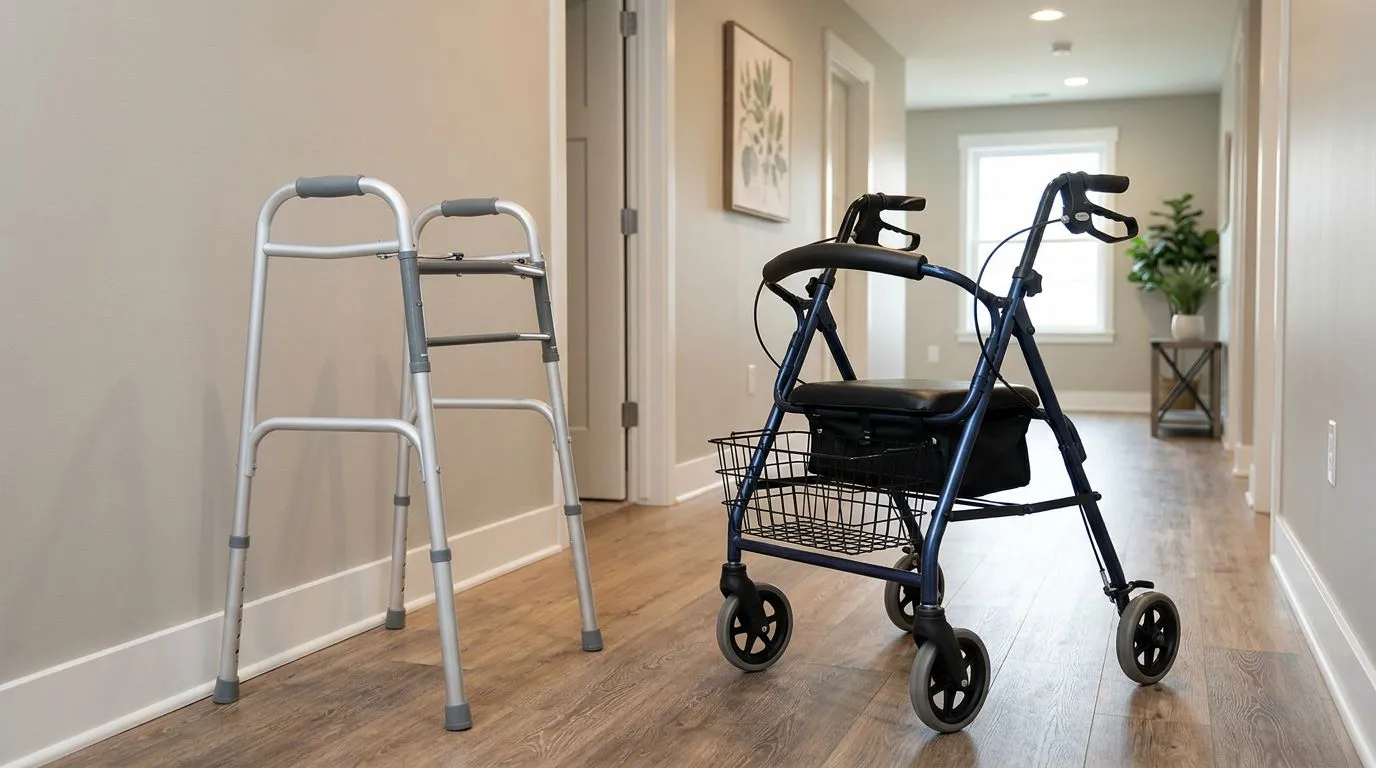
Mobility Walker With Seat vs Standard Walker: Which One Is Right for You?
14 min read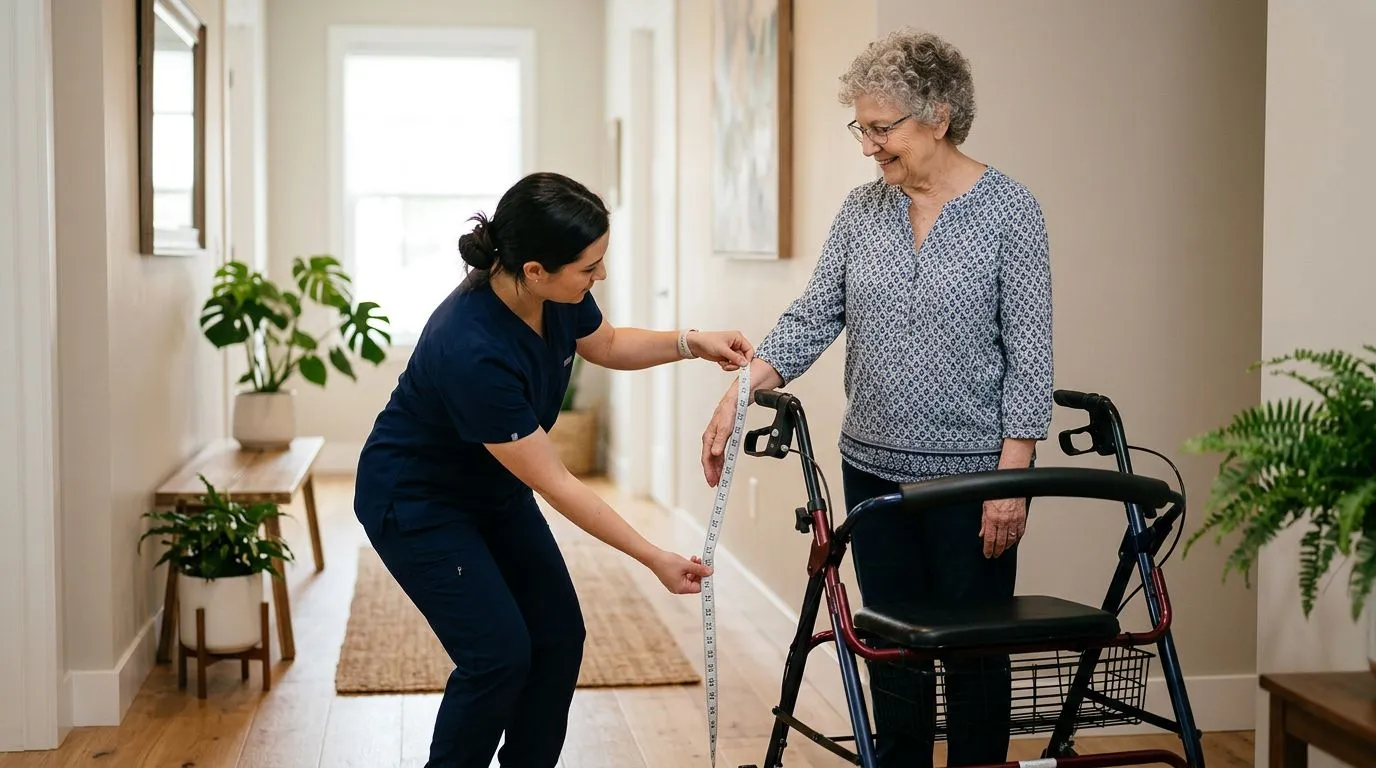
Rollator Seat Height and Handle Height: How to Measure for a Safer Fit
13 min read