Disclosure: We may earn a commission when you buy through links on this page, at no extra cost to you. We buy nothing, sell nothing and accept no payment for coverage — commissions never decide what we recommend. How we make money.

The best walker or rollator for a tall person or larger adult is one that matches the user’s wrist height, body width, walking style, and weight capacity with room to spare. For walkers, focus on handle height, frame width, stability, and a safe weight rating; for rollators, also check seat height, seat width, wheel size, and hand brake reach.
A poor fit can make a mobility aid harder to control. A frame that is too short may cause stooping, while a seat that is too low can make standing up difficult. The right features help the user stand upright, move with more confidence, and use the device as intended.
Walker vs. rollator fit: 2 devices with different jobs
A walker and a rollator are related, but they are not the same tool. A standard walker has no wheels, or sometimes 2 front wheels, and is lifted or advanced step by step. A rollator has 3 or 4 wheels, hand brakes, and usually a built-in seat. That seat is useful, but it also adds fit considerations that a basic walker does not have.
For many tall people, handle height is the first issue. For larger adults, frame width and weight capacity may matter most. For someone considering a rollator, the seat must be high enough and wide enough to use safely. These needs overlap, but they should not be treated as one checklist.
| Device type | Typical best use | Key fit features |
|---|---|---|
| Standard walker | Maximum stability at slower walking speeds | Handle height, frame width, weight rating, grip comfort |
| Folding walker | Home use plus easier storage or car transport | Folded size, locking mechanism, handle height range |
| Two-wheel walker | Users who need support but do not want to lift the frame fully | Wheel size, rear glide or cap setup, handle height |
| 3-wheel rollator | Tighter spaces and lighter maneuvering | Brake reach, handle height, width, no full seat on many designs |
| 4-wheel rollator | Walking with rest breaks on a built-in seat | Seat height, seat width, brakes, wheel size, weight capacity |
| Upright rollator | Users who need a more upright posture and forearm support | Forearm pad height, overall width, brake control position |
| Bariatric walker or rollator | Higher weight capacities and wider body clearance | Reinforced frame, wider seat or frame, 400+ lb ratings in many options |
One simple rule helps: choose a walker when stability is the priority and sitting is not required. Choose a rollator when the user can control wheels and brakes and needs a place to rest during walks.
Handle height: measure wrist height in 3 steps
Handle height is the most important fit feature for tall adults. When the user stands inside or just behind the walker with arms relaxed at the sides, the hand grips should line up close to the crease of the wrist. In that position, the elbows usually bend about 15 to 30 degrees when holding the grips.
Measure this before shopping. Have the person wear the shoes they normally walk in. Ask them to stand tall on a level floor. Measure from the floor to the wrist crease on one side, then compare that number with the adjustable handle range of the walker or rollator.
- Step 1: Stand in everyday shoes, not slippers unless those are normally worn.
- Step 2: Keep shoulders relaxed and arms hanging naturally.
- Step 3: Measure floor to wrist crease in inches, then choose a handle range that includes that number.
Many adult walkers adjust through a range of several inches, often in 1-inch button increments. Tall users may need an extra-tall frame if their wrist height is above the standard adjustment range. Do not assume that raising the handles to the highest hole solves the problem; the frame must still feel stable, and the user should not have to shrug the shoulders.
Rollators need the same wrist-height check, but brake access matters too. The user should be able to reach and squeeze the hand brakes without stretching the fingers or bending the wrists awkwardly.
Seat height and seat width for rollators: often 20 to 24 inches high
Walkers do not have built-in seats, but rollators usually do. For a tall or larger adult, the seat can make or break the fit. If the rollator seat is too low, standing up can feel like rising from a low couch. If it is too narrow, the user may avoid sitting or sit off-center, which is not safe.
Common rollator seat heights often fall around 20 to 24 inches from the floor, though compact and tall designs vary. Tall users commonly prefer a higher seat because it reduces the amount of knee and hip bend needed to sit and stand. Larger adults should also look at seat width and depth, not just the published weight capacity.
| Seat feature | Why it matters | What to check |
|---|---|---|
| Seat height | Affects how easy it is to sit and stand | Feet should rest on the floor; knees should not be forced too high |
| Seat width | Affects comfort and centered sitting | Allow body clearance without squeezing against side frames |
| Seat depth | Supports sitting comfort during short rests | User should sit back without the front edge pressing behind the knees |
| Backrest position | Helps prevent leaning too far back | Check that the back support contacts the user comfortably |
A rollator seat is for short rest breaks, not for being pushed like a transport chair unless the device is specifically designed for that purpose. The brakes should be locked before sitting, and the rollator should be on a firm, level surface.
Frame width and doorway clearance: measure both body and home in inches
For larger adults, width is more than a comfort issue. The user needs enough space between the side frames to walk naturally without hips, thighs, or clothing rubbing against the device. At the same time, the walker or rollator must fit through the places where it will be used every day.
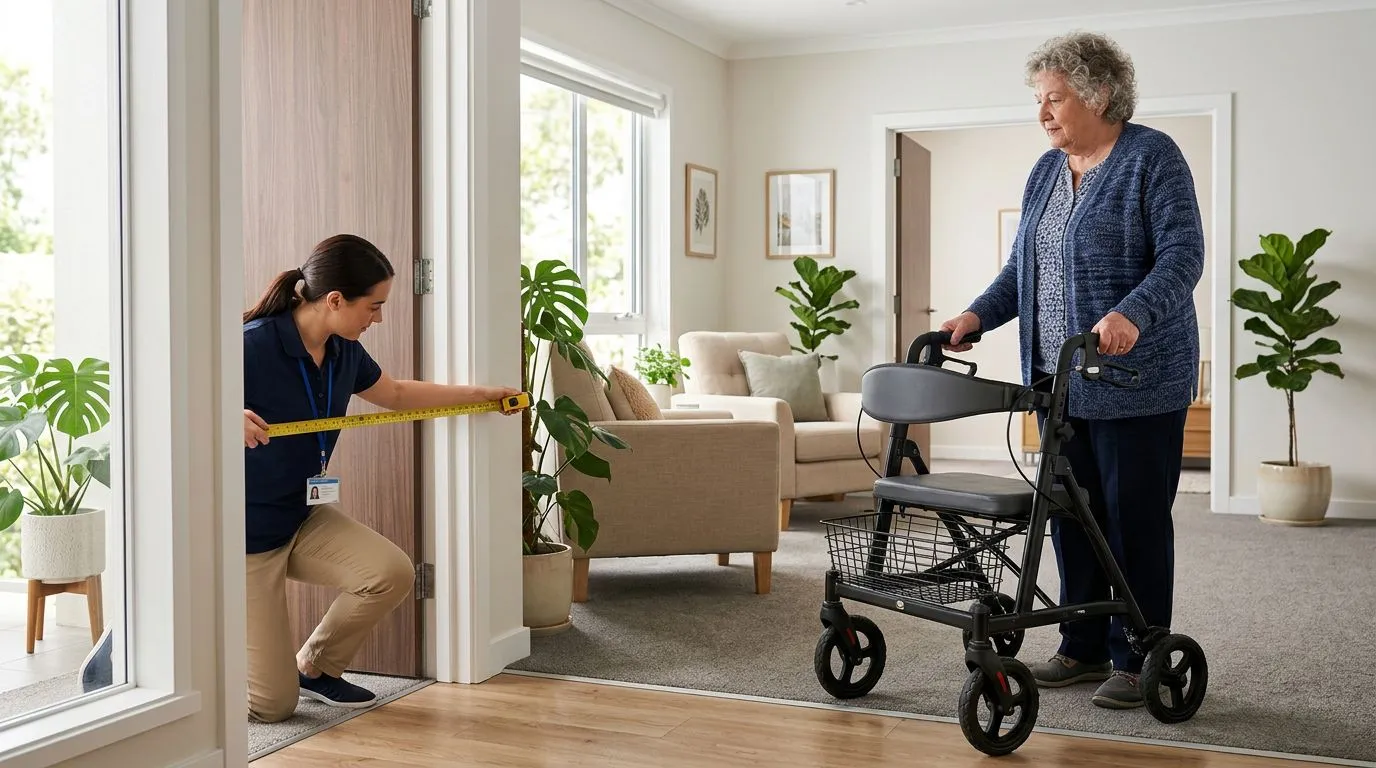
Many interior doorways in US homes are about 28 to 32 inches wide, though older homes, bathrooms, and closets may be narrower. Some bariatric walkers and rollators are wider than standard mobility aids, so a device that fits the person may not fit every room. Measure before buying.
- Measure the user: Check hip width or the widest point while wearing typical clothing.
- Measure the home: Check bedroom, bathroom, hallway, and exterior door openings.
- Check overall device width: This is different from seat width or inside frame width.
- Allow turning space: A tight 90-degree bathroom turn can be harder than a straight doorway.
Standard walkers are often narrower than heavy-duty bariatric frames. A 3-wheel rollator may be easier to maneuver in tight spaces, but it may not offer the seat size or stability a larger adult needs. A 4-wheel rollator may offer better seating and storage, yet it can be wider and harder to turn in small bathrooms.
If the user needs a higher weight capacity and a wider frame, home layout becomes part of the fit decision. The best device is not just the one that fits the body; it is the one the person can use in the kitchen, bedroom, bathroom, and entryway.
Weight capacity: compare 300, 400, 500, and higher lb ratings carefully
Weight capacity is a safety specification, not a suggestion. Many standard adult walkers and rollators list capacities around 250 to 300 pounds, while heavy-duty and bariatric versions may be rated for 400, 500, or more pounds depending on the design. Always follow the stated rating for the specific device.
Choose a capacity that leaves a reasonable margin above the user’s body weight, especially if they tend to lean heavily on the frame when standing or walking. The rating should account for normal use, but it does not mean the device is meant for climbing, rocking, being pushed sideways, or carrying heavy loads on the seat.
| Feature | Standard walker or rollator | Bariatric walker or rollator |
|---|---|---|
| Weight capacity | Often around 250 to 300 lb | Often 400 lb or higher, depending on model type |
| Frame | Lighter and narrower | Reinforced and usually wider |
| Transport | Easier to lift into a car | May be heavier and bulkier when folded |
| Best fit concern | Height range and daily maneuverability | Capacity, width, seat strength, and stability |
A higher weight rating often means more frame material and more total device weight. That can be a worthwhile tradeoff for stability, but it matters if a caregiver must lift the walker into a trunk several times a week. Check both user weight capacity and product weight.
Stability, wheels, and brakes: choose 0, 2, 3, or 4 wheels for the task
Wheel setup changes how a mobility aid behaves. A no-wheel standard walker offers the most stop-and-go stability because all 4 legs contact the floor. A two-wheel walker rolls forward more easily but still has rear legs or glides that add control. A rollator moves continuously on 3 or 4 wheels and depends on hand brakes for stopping.
For taller users, posture can affect stability. If handles are too low, the person may lean forward and put more force through the front of the frame. For larger adults, a wider base can feel more secure, but it may also make tight turns harder.
- No-wheel walker: Strong choice for slow, deliberate steps and higher stability needs.
- Two-wheel walker: Easier to move than a standard frame, useful when lifting is difficult.
- 3-wheel rollator: Turns tightly and often folds compactly, but may have less seating support.
- 4-wheel rollator: Better for longer walks with rest breaks, provided the user can use brakes reliably.
- Upright rollator: Can support a taller posture, but forearm platform height and width must fit correctly.
Rollator brakes deserve special attention. The user should be able to squeeze the brake handles, lock them before sitting, and release them without hand pain or confusion. If hand strength, sensation, or reaction time is limited, a clinician or mobility professional can help decide whether a wheeled device is appropriate.
Comfort features: 1-inch adjustments, grips, and folding weight matter
Fit is not only about measurements. Comfort determines whether the walker or rollator is used consistently. For tall people, small handle adjustments can noticeably change posture. For larger adults, grip shape, frame clearance, and seat comfort can affect confidence during daily use.
Look for height adjustments in small increments, often about 1 inch apart, so the handles can land close to the measured wrist height. Padded or contoured grips may reduce pressure on the hands, though they should still allow a secure hold. On rollators, a wider backrest and a comfortable seat edge can make short rests easier.
Foldability is another comfort feature in real life. A folding walker may collapse with a simple push-button or two-sided release. Rollators often fold side-to-side or front-to-back, but larger bariatric versions can be heavier. A device that weighs 25 pounds is very different from one that weighs 12 pounds when loading it into a car.
| Comfort feature | Helpful for | What to avoid |
|---|---|---|
| Small height increments | Tall users fine-tuning posture | Handles that remain too low at maximum setting |
| Wide inside frame | Larger adults needing hip clearance | A frame so wide it blocks bathroom use |
| Hand-friendly grips | Users with palm pressure or mild hand discomfort | Slippery grips or awkward brake reach |
| Higher rollator seat | Tall users who struggle with low seats | Seats so high the feet do not rest flat |
| Manageable folded weight | Car travel and caregiver handling | Choosing capacity without checking lifting needs |
Who it’s best for: 5 common fit profiles
The best choice depends on the person’s walking pattern, size, home, and support needs. These 5 profiles can help narrow the field without relying on brand names or model claims.
Tall adult who stoops over a standard walker
Look for a walker or rollator with a higher handle range. Measure wrist height first. An upright rollator may help some users maintain a more upright position, but only if they can safely manage wheels and brakes.
Larger adult who feels squeezed by the frame
Prioritize inside width, overall width, and weight capacity. A bariatric walker or bariatric rollator may be appropriate, but measure doorways before choosing a wider device.
User who needs maximum stability indoors
A standard walker or two-wheel walker may be a better starting point than a rollator. The slower movement pattern can provide more control during short trips to the bathroom or kitchen.
User who walks farther but needs rest breaks
A 4-wheel rollator with a properly fitted seat may be useful if the person can operate hand brakes. Check seat height, seat width, and brake reach before focusing on storage basket size.
Caregiver who transports the device often
Check folded dimensions and device weight. A heavy-duty frame may be necessary for capacity, but it should still be practical for the vehicle and the caregiver’s lifting ability.
How to choose and measure in 10 minutes
You can gather the most important fit information in about 10 minutes with a tape measure, the user’s regular shoes, and a quick look around the home. Write the numbers down before comparing product types.
- 1. Measure wrist height: Floor to wrist crease while standing tall in regular shoes.
- 2. Measure body width: Hip or widest seated area, depending on whether a rollator seat is being considered.
- 3. Check user weight: Choose a device with a stated capacity above the user’s weight.
- 4. Measure doorways: Include bathroom and bedroom doors, not just the front entry.
- 5. Consider walking surface: Smooth indoor floors, sidewalks, thresholds, and carpets affect wheel choice.
- 6. Test brake reach for rollators: The user should squeeze and lock brakes without strain.
- 7. Check seat height for rollators: The user should sit and stand with control, with feet placed securely.
- 8. Check folded handling: Confirm who will lift it and how often.
If possible, try the device with a physical therapist, occupational therapist, medical equipment specialist, or other qualified professional. This is especially important after surgery, a fall, a stroke, or a major change in strength or balance. A mobility aid should match the person’s current ability, not just their height or weight.
FAQ: 5 fit questions for tall and larger adults
What happens if walker handles are too low?
Handles that are too low can encourage stooping and may make the user push too much weight through the front of the frame. The grips should usually align near the wrist crease when the user stands upright in normal shoes.
Is a bariatric walker always better for a larger adult?
Not always. A bariatric walker or rollator may provide the needed weight capacity and width, but it may also be heavier and wider. The right choice must fit the user and the home.
Are rollators safe for higher weight capacities?
Rollators can be safe when the user matches the stated weight capacity, can control the wheels, and can use the brakes correctly. A rollator is not the best choice for every balance level.
What seat height is best for a tall rollator user?
Many tall users prefer a higher rollator seat, often in the low-to-mid 20-inch range, but the best height is the one that allows controlled sitting and standing with feet secure on the floor.
Should a tall person choose an upright rollator?
An upright rollator can help some people walk with less forward bending, but it is still a wheeled device with brakes. Forearm support height, overall width, weight capacity, and user control all need to fit.
FAQ
Frequently asked questions
How high should walker handles be for a tall person? +
Walker handles should usually line up near the user’s wrist crease when standing upright in normal shoes, with a slight elbow bend of about 15 to 30 degrees.
What should larger adults check before choosing a walker? +
Check the stated weight capacity, inside frame width, overall device width, handle height range, and whether the walker fits through key doorways at home.
Is a rollator better than a walker for a tall person? +
Not automatically. A rollator may offer a higher handle range and a seat, but it requires brake control and balance with wheels. A walker may be better when stability is the top priority.
What rollator seat height is best for tall adults? +
Many tall adults need a higher rollator seat, often around 20 to 24 inches or more depending on body size. The user should be able to sit and stand with control and keep feet secure.
Do higher weight capacity walkers fit through standard doors? +
Some do, but wider bariatric walkers and rollators may be difficult in narrow spaces. Measure bathroom, bedroom, hallway, and entry doors before choosing a wider frame.
Keep reading
Related guides
Heavy-Duty Rollator Walkers: Weight Capacity, Seat Width, Frame Strength, and Stability Basics
14 min read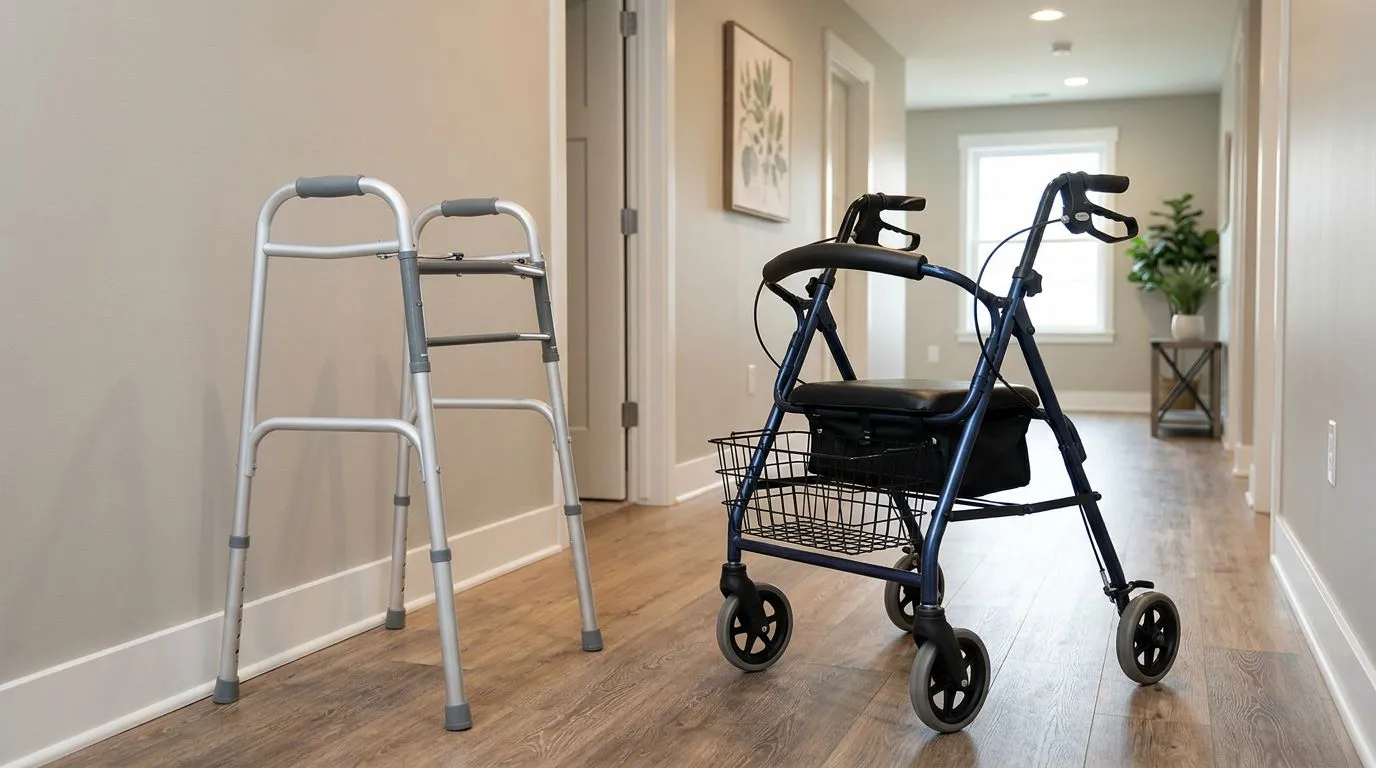
Mobility Walker With Seat vs Standard Walker: Which One Is Right for You?
14 min read
When a Rollator May Not Be the Safest Choice: Balance, Fall Risk, and Caregiver Considerations
11 min read