Disclosure: We may earn a commission when you buy through links on this page, at no extra cost to you. We buy nothing, sell nothing and accept no payment for coverage — commissions never decide what we recommend. How we make money.
For most cruise travelers who need steady support, a folding walker or two-wheel walker is safest in tight cabins and on uneven gangways. A 4-wheel rollator is better if you need a seat during long waits or shore excursions. A 3-wheel rollator can be easier to steer through narrow ship corridors, but it usually offers less stability and often no true resting seat. The right choice depends on your balance, walking distance, cabin size, port plans, and whether you can safely control hand brakes.
Cruise travel adds conditions you may not face at home: elevator crowds, metal thresholds, wet decks, changing gangway slopes, cobblestone ports, tender boats, and limited cabin storage. A device that works well in a grocery store may feel awkward on a ship. Use this guide to compare standard and folding walkers, two-wheel walkers, 3-wheel rollators, and 4-wheel seated rollators before you pack.
Walker vs. rollator on a cruise: 4 main differences
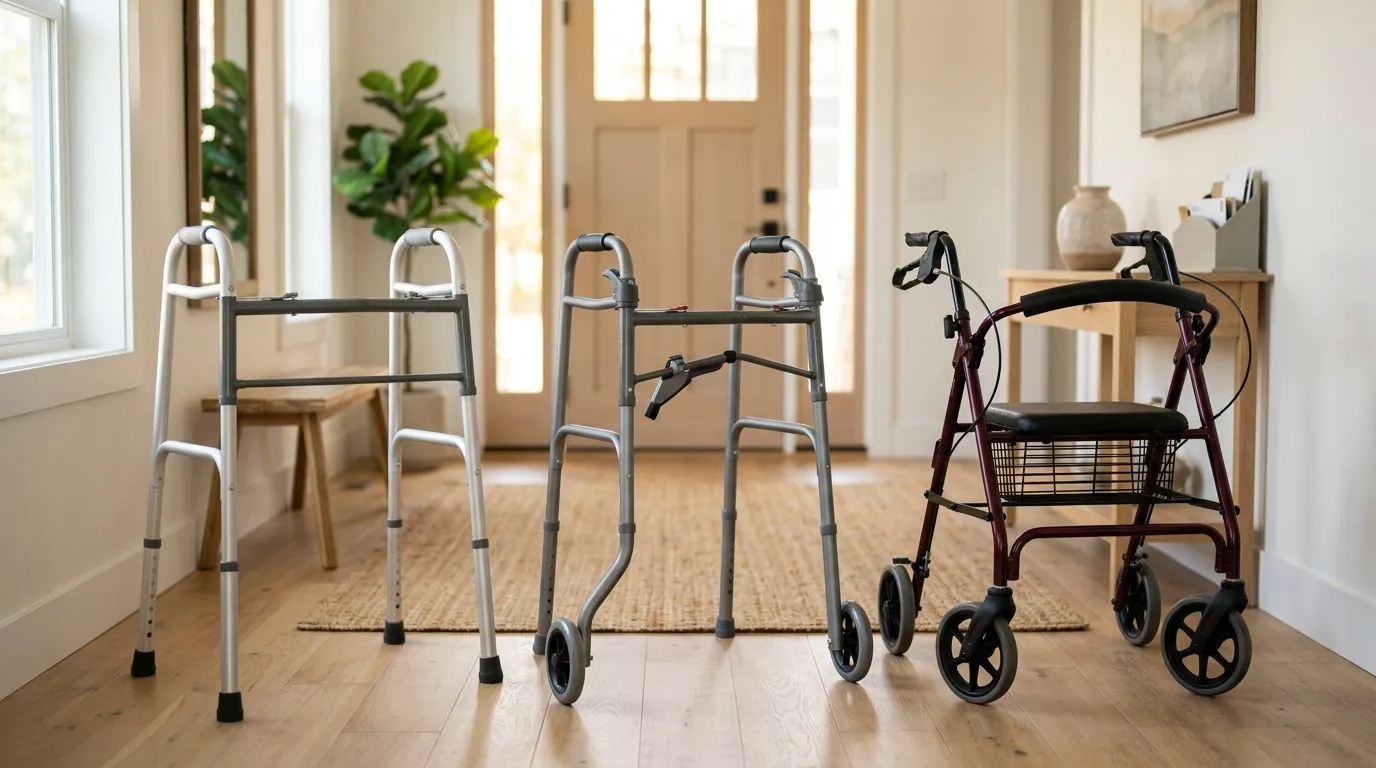
A walker is usually a lightweight frame with either no wheels or 2 front wheels, designed to be lifted or partially rolled forward. A rollator is a wheeled walker, most often with 3 or 4 wheels, hand brakes, and, on many 4-wheel models, a built-in seat. That difference matters on a cruise because ships combine narrow indoor spaces with long walking distances.
Typical standard walkers are about 24 to 25 inches wide and may weigh roughly 5 to 8 pounds. Many 4-wheel rollators are about 23 to 28 inches wide and commonly weigh 14 to 25 pounds, depending on frame size and weight capacity. Those numbers are general, not brand-specific, but they show the tradeoff: walkers tend to be simpler and lighter; rollators tend to be faster and more comfortable over distance.
| Mobility device | Best cruise strength | Main cruise drawback |
|---|---|---|
| Standard no-wheel walker | Maximum stability in short, controlled walks | Slow over long corridors and tiring to lift repeatedly |
| Folding walker | Easy cabin storage and simpler transport | Still requires lifting or step-by-step movement |
| Two-wheel walker | Good balance of stability and smoother forward motion | Not ideal for sitting breaks or long shore days |
| 3-wheel rollator | Tight turning in corridors and shops | Less stable than 4 wheels; often limited seating support |
| 4-wheel seated rollator | Seat, brakes, and better distance support | Heavier, larger, and needs safe brake control |
If you lean heavily on the device for balance, a walker often makes more sense. If you walk independently but need endurance support, a rollator may fit the trip better. The deciding question is not only “Can I walk?” It is also “Can I stop, turn, brake, fold, store, and manage this device when the ship is moving?”
Cabin storage and doorway fit: measure within 1 inch
Cabin storage is one of the most overlooked cruise mobility details. Standard cruise cabins can feel tight once luggage, beds, a desk chair, and a small bathroom are in use. Accessible cabins are usually easier to maneuver in, but you should still confirm dimensions with the cruise line before sailing.
Before choosing a walker or rollator, measure the overall width at the widest point, often the outside of the wheels or rear legs. Then measure the folded width and length. Leave at least 1 inch of clearance on each side for doorways and tight turns; more is better if your hands are painful or grip strength is limited.
- Cabin doorway: Ask for the clear doorway width, not just the door size.
- Bathroom entry: Raised thresholds can be harder than the door itself.
- Bedside space: Check whether you can park the device without blocking a nighttime path.
- Folded storage: Look for a safe place along a wall, not in front of the cabin door.
- Charging area: If traveling with other equipment, keep cords away from walker legs and wheels.
A folding walker is often the easiest choice for a small cabin because it can stand beside a closet or slide into a narrow space. A 4-wheel rollator may still fit, but the basket, seat, and larger wheels can make it awkward around the bed. Never store a walker or rollator in the hallway; cruise corridors are emergency routes and shared spaces.
Gangways, thresholds, and tender boats: plan for slopes over 1:12
Gangways are not all the same. Their slope changes with tide, dock height, ship position, and port equipment. A ramp that feels gentle in the morning can feel steeper later, and a slope steeper than a 1:12 ratio can be difficult for many mobility users, especially with a wheeled device.
On gangways, walkers and rollators behave differently. A no-wheel walker gives strong planted stability but can be tiring because it must be picked up and placed. A two-wheel walker can roll forward while the rear legs add braking friction. A rollator moves more easily, but that ease can become a risk if the slope, crowding, or wet surface causes it to pull ahead of you.
Handrails matter. If you normally need both hands on your walker or rollator, ask crew whether assistance is available before approaching the gangway. Do not assume every port stop will be equally accessible. Some itineraries use tender boats, where guests transfer from ship to smaller boat; this can involve steps, movement between vessels, and temporary restrictions for mobility devices.
- For walkers: Take small steps and keep all legs or rear tips firmly positioned before shifting weight.
- For two-wheel walkers: Avoid pushing too far ahead; keep the frame close enough that your elbows stay slightly bent.
- For rollators: Keep fingers ready on both brakes and avoid coasting down a slope.
- For seated rollators: Never sit on the seat on a gangway, ramp, or moving tender boat.
If a crew member recommends waiting for assistance or using a different route, take the advice seriously. A 2-minute delay is better than a fall at the port entrance.
Shore excursions: match the device to 3 common port surfaces
Shore days can be more demanding than ship days. You may walk from the cabin to the gangway, through a terminal, onto a bus, across a plaza, and then over uneven sidewalks. Three surfaces cause the most trouble: cobblestones, gravel or packed dirt, and broken pavement.
Small walker feet and rear glide tips can catch on gaps. Small rollator wheels can rattle or stop suddenly on stones. Larger wheels, often around 8 inches on many rollators, usually handle outdoor surfaces better than 6-inch wheels, but wheel size alone does not make a device safe. You still need balance, braking control, and enough strength to manage curbs.
| Excursion type | Better fit | Why |
|---|---|---|
| Museum, cruise terminal, paved promenade | Folding walker, two-wheel walker, or rollator | Mostly level surfaces and shorter walking segments |
| Old town with cobblestones | 4-wheel rollator with larger wheels, if brakes are controlled | Better rolling over uneven surfaces, but watch wheel gaps |
| Bus tour with frequent loading | Folding walker or lighter rollator | Easier to fold and hand to staff, often under 20 pounds if lightweight |
| Beach path or gravel garden | Case-by-case; sometimes not recommended | Loose surfaces can stop wheels and destabilize walker legs |
| Long shopping district | 4-wheel seated rollator | Seat allows rest breaks when benches are unavailable |
Read excursion descriptions closely. Words like “panoramic” or “easy” do not always mean step-free. Look for walking distance, stair count, bus access, and whether mobility aids can be accommodated. If the description lists 0.5 mile of walking, consider whether that distance includes standing time, slopes, heat, and the return route.
Who it is best for: 5 cruise traveler profiles
Choosing by device type is helpful, but choosing by traveler profile is better. Your usual walking distance, balance, and need for seated rest matter more than what another passenger uses.
1. Best for high stability needs: standard or folding walker
A standard no-wheel walker or folding walker is often best if you need to place weight through the frame and move slowly with deliberate steps. It can feel safer in a cabin, bathroom doorway, buffet line, or elevator area because it does not roll away. The downside is endurance; lifting a frame hundreds of times down a long corridor can be tiring.
2. Best for moderate support with less lifting: two-wheel walker
A two-wheel walker works well for many cruise travelers who want more forward motion without giving up the stabilizing effect of rear legs. It is often easier than a no-wheel frame in hallways that may be 30 inches wide or more, yet it remains compact compared with many rollators.
3. Best for narrow indoor spaces: 3-wheel rollator
A 3-wheel rollator can turn tightly around dining room chairs, cabin furniture, and shop displays. It is usually lighter and narrower than many 4-wheel seated rollators. The tradeoff is stability. Three wheels can feel agile, but agile is not the same as steady, especially on ramps or uneven sidewalks.
4. Best for rest breaks: 4-wheel seated rollator
A 4-wheel seated rollator is the strongest option when you can walk but need to sit every 5 to 10 minutes, or when lines at security, immigration, or shuttle stops are hard to tolerate. The seat is useful only when the rollator is parked on a flat, stable surface with brakes locked. It is not a wheelchair and should not be pushed while someone sits on it unless the device is specifically designed and rated for that use.
5. Best for higher weight capacities: bariatric walker or bariatric rollator
Bariatric walkers and bariatric rollators are designed with higher weight capacities, often starting around 300 pounds and going higher depending on the frame. They may be wider, heavier, and harder to fit in a standard cabin. If you need a higher-capacity device, confirm doorway clearance, folded dimensions, and storage space before booking.
How to choose and measure before you sail: a 7-step checklist
Do not wait until embarkation day to test a mobility aid. Try it on ramps, carpet, tile, thresholds, and outdoor pavement at least 2 weeks before travel if possible. That gives you time for height adjustment, brake tuning, or choosing a different type.
- Measure handle height. Stand upright in your usual walking shoes with arms relaxed. Handles should generally align near the wrist crease, allowing a slight elbow bend.
- Check overall width. Measure the widest point in inches, including wheels, brake cables, rear legs, or side knobs.
- Measure folded size. Confirm whether it folds flat, inward, or partially. A device that folds to 10 inches wide stores differently than one that folds to 16 inches.
- Weigh the device. If it is 18 to 25 pounds, decide who will lift it into shuttles, taxis, or storage areas.
- Confirm weight capacity. Include body weight plus any carried items, such as a day bag, water bottle, or medical supplies.
- Practice turning. Make a 180-degree turn in a hallway or bedroom-sized space. If you bump furniture at home, a cabin may be harder.
- Test brakes or tips. Rollator brakes should stop both rear wheels evenly; walker rubber tips should not be cracked, slick, or worn through.
If a clinician fitted your current walker or rollator, use that guidance first. If your mobility has changed since the device was issued, ask a physical therapist, occupational therapist, or qualified mobility professional to reassess it before travel.
Brake safety on ships: check both brakes in 30 seconds
Rollator brakes deserve special attention on a cruise. Ships have polished floors, elevator thresholds, wet pool-deck areas, and occasional motion underfoot. A quick 30-second brake check each morning can prevent surprises.
Stand behind the rollator on a flat surface. Squeeze both hand brakes and gently try to roll forward. Then push the brake levers down into the parking position, if your rollator has one, and confirm the wheels stay locked. If one side slips, the brake cable may need adjustment or the tire may be worn.
- Lock brakes before sitting. Always use both parking brakes on level ground before using the seat.
- Do not sit on slopes. Even locked brakes can slide or tip on angled, wet, or uneven surfaces.
- Keep bags light. Heavy bags on handles can change balance and may increase tipping risk.
- Use both hands. One-handed braking on a rollator can cause turning or drifting.
- Watch wet decks. Rubber wheels and tips can slip near pools, drink stations, and exterior doors.
Walkers need safety checks too. Inspect all 4 rubber tips, or 2 tips plus 2 wheels on a two-wheel walker. If a tip is worn smooth, it may slide on polished ship flooring. Replace worn parts before sailing rather than trying to solve the problem in port.
Airports, embarkation, and cruise line rules: allow 45 extra minutes
Your cruise experience begins before you reach the ship. Airports, rideshare drop-offs, port terminals, security lines, and check-in counters can add long stretches of walking or standing. Build at least 45 extra minutes into transfer days if you use a walker or rollator, especially at a large port.
Contact the cruise line ahead of time to ask about accessibility forms, pier assistance, tender policies, accessible shore excursions, and storage rules. Policies vary by ship and itinerary. Some ports have long terminal ramps; others use shuttle buses between the entrance and ship. If you use a rollator, ask whether crew can assist with steep gangways, but do not expect them to lift you in the device.
For flying to the cruise, mobility aids are commonly gate-checked or handled as assistive devices, but procedures depend on airline and airport. Attach a simple ID tag and remove loose baskets or personal items before handing over the device. If your walker has removable glides, tennis-ball-style covers, or accessories, make sure they are secure.
Best overall choice for cruises: compare 6 key features
There is no single best walker or rollator for every cruise. A traveler doing a 3-night cruise with mostly shipboard activities may need a different setup than someone taking 10 port-intensive days in Europe. Use features, not trends, to decide.
| Feature | Walker advantage | Rollator advantage |
|---|---|---|
| Cabin storage | Folding walkers are usually lighter and flatter | Some fold compactly, but seats and wheels add bulk |
| Gangway stability | More controlled placement, especially no-wheel frames | Easier movement but requires strong brake control |
| Long corridors | Can be tiring if lifted repeatedly | Rolls smoothly and supports a more natural pace |
| Rest breaks | No built-in seat | 4-wheel seated rollators provide a place to rest on level ground |
| Shore excursions | Good for short paved routes and high stability needs | Better for distance and larger outdoor wheels, if terrain allows |
| Weight and lifting | Often about 5 to 8 pounds | Often about 14 to 25 pounds, sometimes more for bariatric frames |
If you are most worried about falling, start the decision with stability and consider a standard, folding, or two-wheel walker. If you are most worried about fatigue, lines, and walking distance, consider a 4-wheel seated rollator. If cabin space and turning radius are your biggest concerns and you do not need a seat, a 3-wheel rollator may be worth considering.
The safest cruise mobility choice is the one you can manage calmly on your worst travel day: tired, in a crowd, on a slight slope, with luggage nearby. Test before you sail, confirm access with the cruise line, and choose the device that supports both safety and independence without adding avoidable stress.
FAQ
Frequently asked questions
Is a walker or rollator better for a cruise cabin? +
A folding walker is usually easier to store in a tight standard cabin because it is lighter and folds flatter. A rollator may still work, especially in an accessible cabin, but you should measure the full width and folded size before sailing.
Can I use a rollator on cruise ship gangways? +
Often yes, but it depends on the gangway slope, surface, crowding, and your ability to control both hand brakes. Use crew assistance when offered, keep both hands on the rollator, and never sit on a rollator seat while on a gangway.
Are 3-wheel rollators good for cruises? +
A 3-wheel rollator can be useful in narrow corridors, shops, and dining areas because it turns tightly and is often lighter than a 4-wheel rollator. It may be less stable, and many do not provide a true resting seat, so it is not ideal if you need frequent seated breaks.
Should I bring a seated rollator for shore excursions? +
A 4-wheel seated rollator can be helpful for long lines, promenades, museums, and shopping areas where benches may be limited. It is less suitable for loose gravel, sand, steep ramps, or very uneven cobblestones unless you can control it safely.
What measurements should I check before cruising with a walker or rollator? +
Check the device’s overall width, folded width, folded length, weight, handle height, and weight capacity. Also ask the cruise line about cabin doorway width, bathroom thresholds, accessible routes, and tender boat policies.
Can cruise crew store my walker or rollator outside the cabin? +
Do not plan on hallway storage. Walkers and rollators generally need to be stored inside your cabin because corridors are shared emergency routes. Ask the cruise line about storage rules before departure if space is a concern.
Keep reading
Related guides
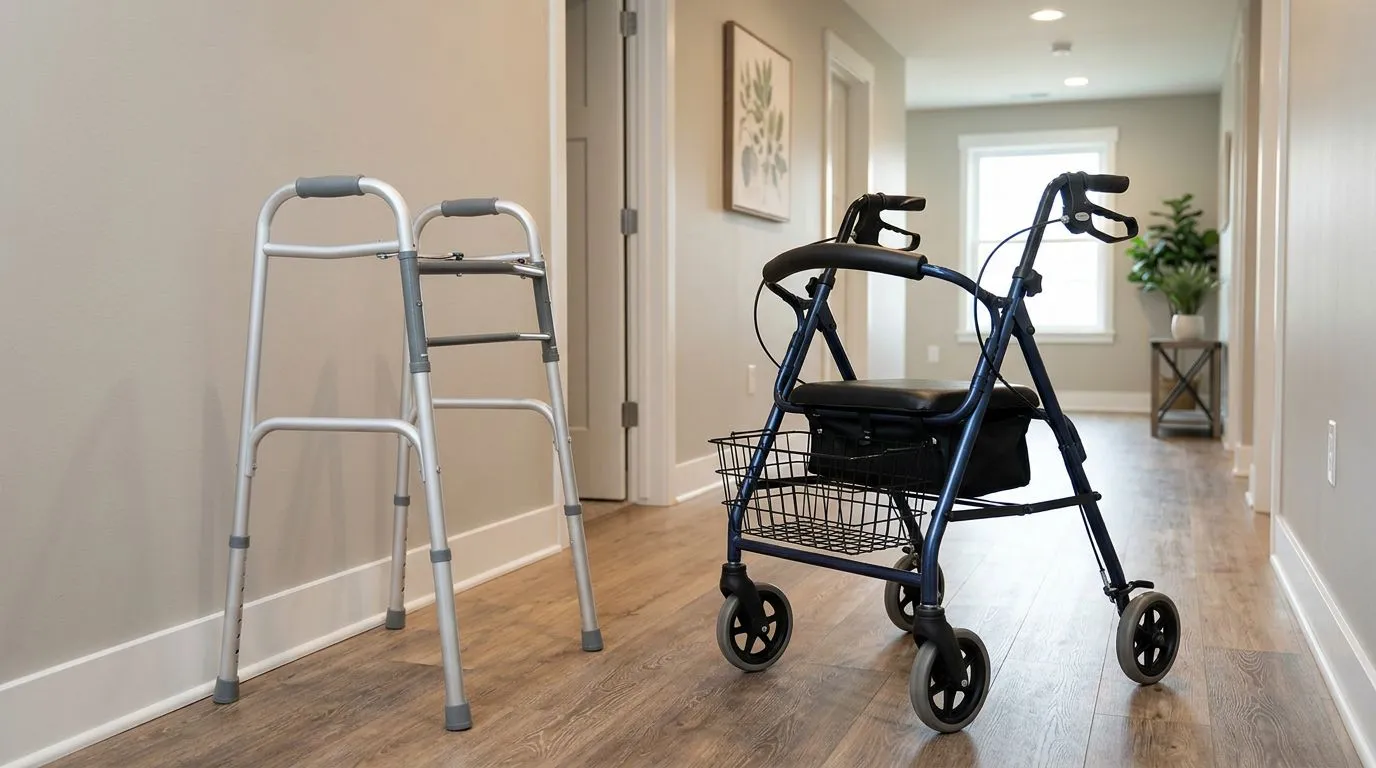
Mobility Walker With Seat vs Standard Walker: Which One Is Right for You?
14 min read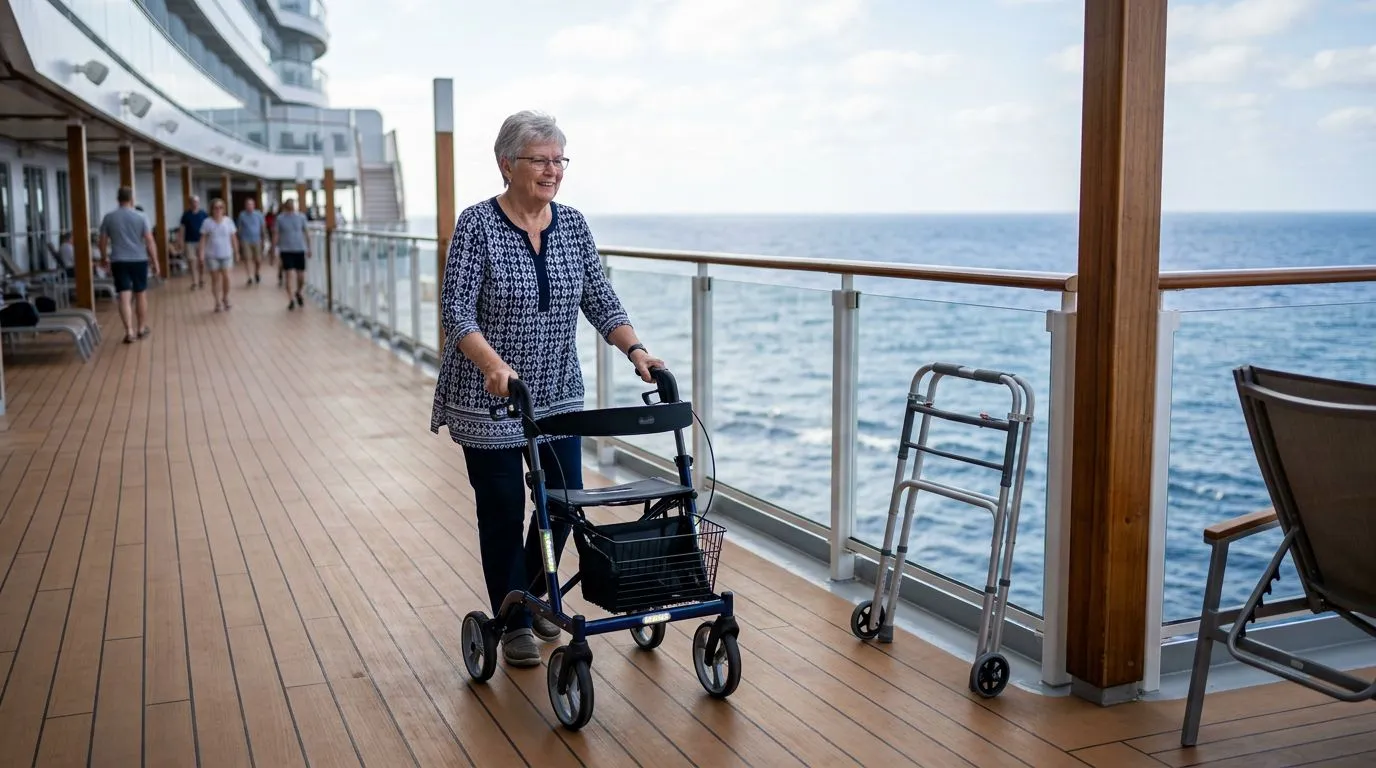
Cruise Travel With a Walker or Rollator: Cabin Fit, Boarding, Excursions, and Port-Day Safety
13 min read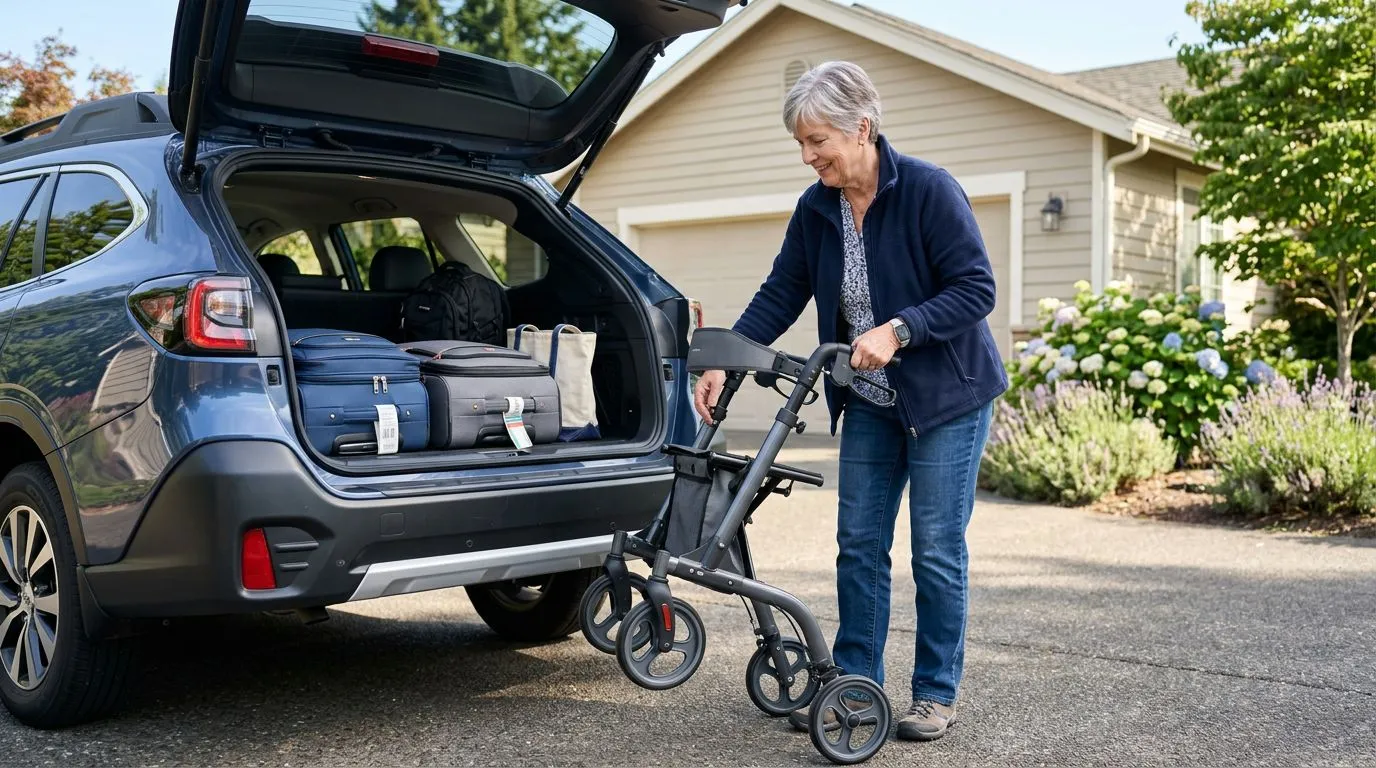
Traveling With a Rollator Walker: Car Trunks, Folding Size, and Airplane Rules
13 min read