Disclosure: We may earn a commission when you buy through links on this page, at no extra cost to you. We buy nothing, sell nothing and accept no payment for coverage — commissions never decide what we recommend. How we make money.
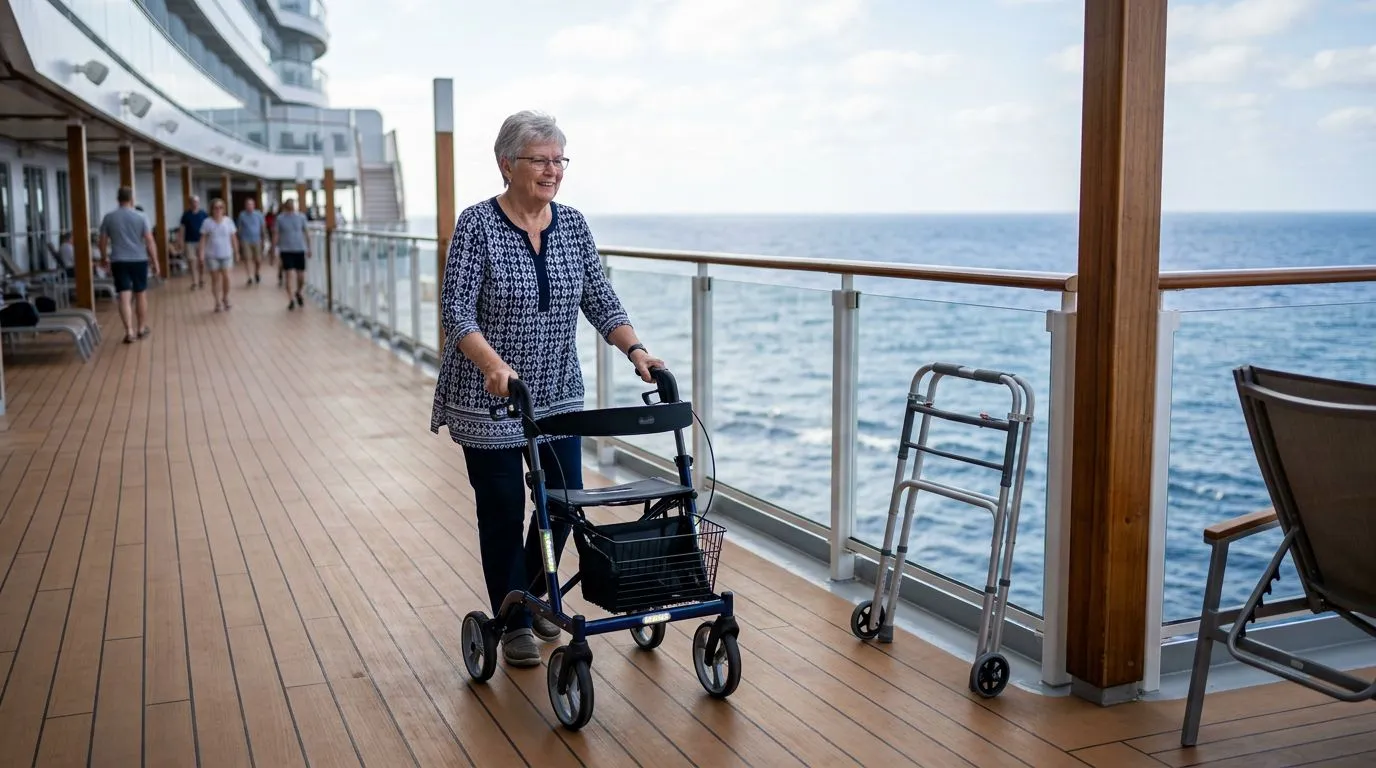
Yes, you can take a walker or rollator on a cruise, but the best choice depends on your balance, stamina, cabin layout, and the ports on your itinerary. A standard or two-wheel walker is often more stable in tight spaces, while a rollator can help with long ship corridors and built-in seating, as long as you can control the brakes safely. Before booking, confirm cabin accessibility, measure the device both folded and open, and ask specific questions about gangways, tender ports, and shore excursions.
Cruise ships can be friendly to mobility devices, but they are not all alike. A newer ship may have wider public areas, more accessible cabins, and smoother boarding ramps. An older or smaller ship may have tighter doorways, raised thresholds, and crowded elevators during peak times. Planning ahead matters more than the specific device you bring.
Will a Walker or Rollator Fit on a Cruise Ship? Key Widths: 22 to 32 Inches
Most standard folding walkers are about 22 to 25 inches wide when open, while many 4-wheel rollators are roughly 23 to 28 inches wide. Bariatric rollators and extra-wide walkers can be 26 to 30 inches or more. Cruise cabin doors vary, but accessible cabin doorways are commonly designed to offer about 32 inches of clear width; standard cabin doors may be narrower.
That difference matters. A compact folding walker may pass through a regular cabin doorway more easily than a larger rollator with a seat and wider rear wheels. A rollator, however, may be more comfortable for covering longer distances from the cabin to the dining room, theater, or elevator bank.
Do not assume that “mobility-friendly” means the same thing as “fully accessible.” A cabin may have enough room for a folding walker but not enough turning space for a rollator. A bathroom may have a step-in threshold, a narrow door, or limited floor space beside the toilet. Ask for measurements in inches whenever possible.
| Area on Ship | What to Check | Why It Matters |
|---|---|---|
| Cabin doorway | Clear opening width in inches | Determines whether the walker or rollator can enter without folding |
| Bathroom entrance | Threshold height and door width | Small lips can be difficult with wheels or walker legs |
| Bed clearance | Space on at least 1 side of the bed | Helps with transfers and nighttime walking |
| Hallways | Width and traffic patterns | Rollators need room to pass carts and other guests |
| Elevators | Cabin depth and crowding | Turning a rollator may be hard at busy times |
Walker vs. Rollator for Cruising: 6 Common Options Compared
Walkers and rollators solve different travel problems. A walker is usually a frame you lift or slide forward, with either no wheels or 2 front wheels. A rollator is a wheeled walker, usually with 3 or 4 wheels, hand brakes, and often a built-in seat. That seat is useful on a long pier, but the wheels and brakes require good control.
If your main concern is stability inside a cabin, a standard folding walker or two-wheel walker may be the better fit. If your main concern is walking 500 to 1,500 feet across the ship or through a cruise terminal, a rollator may reduce fatigue because it rolls instead of being lifted. The safest option is the one you already use well on real surfaces, not the one that looks easiest in a brochure.
| Device Type | Who It Is Best For | Port and Ship Considerations |
|---|---|---|
| Standard folding walker, no wheels | Travelers who need maximum stability for short distances | Very stable in cabins, but slower in terminals and long hallways |
| Two-wheel walker | People who need stability but want easier forward movement | Often a practical middle ground for ships with tight spaces |
| 3-wheel rollator | Travelers who need maneuverability and do not need a seat | Narrower turning can help indoors, but storage and braking still matter |
| 4-wheel rollator with seat | People who walk longer distances and need rest breaks | Useful on piers and promenades; may be bulky in small cabins |
| Upright or stand-up rollator | Users who are fitted for a taller forearm-support design | Can be taller and harder to store; check folded height and cabin space |
| Bariatric walker or rollator | Users who need a higher weight capacity, often 300 to 500+ lb depending on design | Check total width carefully; standard cabin doors may not work |
How to Measure Before Booking: 5 Numbers to Write Down
Measure your walker or rollator before you call the cruise line or travel agent. Do not rely on memory. Use a tape measure and write the numbers in inches, because accessibility staff can often compare them with cabin and ship specifications.
- Open width: Measure the widest point, usually wheel-to-wheel or outside frame-to-frame.
- Folded width: Measure the device when folded as you would store it beside a bed or near a cabin wall.
- Length or depth: Rollators can be 25 to 30 inches deep or more, which affects tight turns.
- Handle height: A common range is about 31 to 38 inches, but proper fit depends on your body.
- Weight capacity: Check the labeled capacity and do not guess, especially for bariatric equipment.
Ask the cruise line for the cabin doorway width, bathroom doorway width, threshold height, shower arrangement, and available floor space beside the bed. If you use a rollator, ask whether there is enough room to park it without blocking the cabin exit. A device in the exit path can become a hazard at night.
It also helps to measure your home bathroom door and bedroom walkway. If your rollator barely fits at home, a compact cruise cabin may feel even tighter. If you can turn safely in a 36-inch hallway at home, ask whether similar turning space exists in the cabin and bathroom areas you are considering.
Boarding Day, Gangways, and Ramps: Plan for 1 to 2 Hours of Movement
Embarkation day can involve curbside drop-off, security screening, check-in lines, waiting areas, ramps, gangways, and elevator rides. Even when everything goes smoothly, you may be on your feet or moving through the terminal for 1 to 2 hours. A rollator seat can help while waiting, but only if you lock the brakes before sitting and the area is level.
Gangways are the biggest variable. Some are wide, enclosed, and gently sloped. Others can be steeper because of tide, ship position, or port design. A standard walker may feel secure on a ramp, but it requires lifting and placing the frame repeatedly. A rollator rolls more smoothly, but it can get ahead of the user on a downhill slope if the brakes are not controlled.
If ramps, crowds, or long distances are a concern, request embarkation assistance in advance. Many cruise terminals can provide wheelchair assistance from check-in to the ship, even if you use your own walker or rollator once onboard. Policies vary, so arrange this before travel rather than asking at the curb when staff may be busy.
- Arrive during the assigned boarding window to reduce waiting.
- Keep medications, documents, and a small water bottle in an easy-to-reach bag.
- Use elevators instead of escalators when handling a walker or rollator.
- Lock rollator brakes before sitting, standing, or pausing on a slight slope.
- Ask crew for help at thresholds rather than rushing over them.
Cabin Fit and Storage in 150 to 250 Square Feet
Many standard cruise cabins are compact, often in the range of 150 to 250 square feet, depending on ship and category. Furniture placement can make that space feel larger or smaller. A folding walker can often stand against a wall or slide beside a closet, while a rollator may need a dedicated parking spot.
Accessible cabins are usually the better choice for travelers who need a mobility device every time they stand or walk. They may offer a wider doorway, more turning room, a roll-in or low-threshold shower, grab bars, and better bathroom access. Availability is limited, so book early if you truly need those features.
In a standard cabin, think about the nighttime route. You need a clear path from bed to bathroom, ideally wide enough that you are not turning sideways or moving furniture in the dark. If you use a rollator, park it with the brakes locked and the handles positioned so you can reach them before standing.
Do not store a walker or rollator in the hallway. Cruise corridors must stay clear for room stewards, luggage movement, wheelchairs, scooters, and emergency access. If the device will not fit safely in the cabin, that is a sign to revisit your cabin choice before sailing.
Elevators, Dining Rooms, and Theaters: Allow 10 Extra Minutes
Elevators can be the slowest part of cruising with a walker or rollator. Around dinner, show times, disembarkation, and port arrivals, elevator banks may be crowded. Build in at least 10 extra minutes when moving between decks so you do not feel pressured to squeeze into a full elevator or rush across a busy lobby.
With a walker, step fully into the elevator before turning around if space allows. With a rollator, keep both hands on the handles, control the wheels, and avoid backing up unless you can see clearly behind you. If the elevator is packed, waiting for the next one is often safer than trying to maneuver through bags, strollers, and other mobility devices.
Dining rooms can usually accommodate walkers and rollators, but the device may need to be folded or parked nearby after you are seated. Tell the host or dining staff if you need a table close to the entrance or with fewer steps. In theaters, arrive early and ask where mobility devices should be placed so aisles remain clear.
| Ship Area | Walker Tip | Rollator Tip |
|---|---|---|
| Buffet | Use short trips and ask staff for carrying help if needed | Do not hang heavy plates or bags from handles; it can tip |
| Pool deck | Watch for wet surfaces and raised door tracks | Brake before stopping; wet decks can reduce traction |
| Theater | Choose aisle seating only if the walker can be stored safely | Park where crew directs, not in an exit route |
| Dining room | Ask for a table with easy entry and no tight turns | Fold or park after transferring to the chair |
Shore Excursions and Port-Day Safety: Check Terrain Before a 3-Hour Tour
Port days can be more challenging than ship days. A 3-hour sightseeing tour may include a long pier, a shuttle bus, curb cuts, cobblestones, gravel, beach paths, museum steps, or uneven sidewalks. A rollator may be excellent on smooth pavement but difficult on loose stone or steep ramps. A standard walker may be stable but tiring over long distances.
Read excursion descriptions carefully and look for specific terms such as “wheelchair accessible,” “step-free,” “minimal walking,” “uneven terrain,” or “not suitable for guests with limited mobility.” These labels are not perfect, but they help you avoid surprises. If the description says guests must climb several steps into a coach, that can be a problem for both walker and rollator users.
Tender ports need special attention. At some destinations, the ship anchors offshore and guests ride smaller boats to land. Boarding a tender may involve steps, movement between the ship and tender, and crew judgment about sea conditions. Some rollators may be allowed only if folded, and some passengers may be advised not to tender if they cannot transfer safely. Ask about each port before you book excursions.
- Choose shorter excursions with seated breaks every 30 to 60 minutes.
- Ask whether buses have low steps, handrails, or lift access.
- Bring rubber tips in good condition for walkers and check rollator tire wear.
- Avoid hanging heavy shopping bags from a rollator handle.
- Turn back early if sidewalks, heat, or crowds are beyond your comfort level.
Who It Is Best For: 4 Cruise Traveler Profiles
A cruise can work well for many people who use walkers or rollators, but the right setup depends on how and where you walk. Think about the trip you are actually taking, not just the device you use at home.
1. The short-distance cabin-to-dining traveler
If you walk short distances and prioritize stability, a standard folding walker or two-wheel walker may be the best fit. It is usually easier to manage in tight cabins and bathrooms, though you may want wheelchair assistance for boarding or long piers.
2. The long-corridor cruiser
If you can walk steadily but fatigue after several hundred feet, a 4-wheel rollator with a seat may be useful. It can make long hallways and terminals more manageable, but you need dependable hand strength and brake control.
3. The tight-space navigator
If your main concern is elevators, narrow cabin entries, and crowded dining areas, compare a compact two-wheel walker with a 3-wheel rollator. A 3-wheel rollator may turn well, but it usually does not provide the same seated rest option as many 4-wheel designs.
4. The higher-support traveler
If you use a bariatric walker, bariatric rollator, or upright rollator, measurements matter even more. Wider frames and taller designs may be safer and more comfortable for the right user, but they can be harder to store in cabins and maneuver on tenders or buses.
Packing and Maintenance Checklist: 10 Items to Bring
A walker or rollator should be travel-ready before you leave home. A loose brake cable, worn walker tip, or missing adjustment button is much easier to fix before boarding than during a port day. Inspect the device at least 1 week before travel so you have time to replace basic parts if needed.
- Fresh rubber tips or glides for a walker, if your device uses them.
- Checked rollator brakes that stop both wheels evenly.
- A small luggage tag with your name and phone number.
- Reflective tape or a bright strap to help identify the device.
- A compact pouch for documents, not heavy hanging bags.
- Medication list and emergency contacts in your carry-on.
- Comfortable shoes with good traction for wet decks and piers.
- A lightweight rain cover or poncho for port days.
- A small flashlight or night-light for the cabin path to the bathroom.
- The device measurements written down in inches.
If you fly to the cruise port, ask the airline how it handles walkers and rollators. Many travelers use their device through the airport and gate-check it, but procedures vary. Remove loose bags or accessories before handing it over, and confirm where it will be returned after landing.
Booking Questions to Ask at Least 60 Days Before Sailing
Ask detailed questions as early as possible, ideally at least 60 days before sailing and earlier for popular accessible cabins. The goal is not to get a vague “yes, it is accessible.” The goal is to match your walker or rollator, your walking ability, and the ship’s actual layout.
- What is the cabin doorway width and bathroom doorway width?
- Is there a step or threshold into the bathroom or shower?
- Can the bed be arranged to create more walking space?
- Where can a walker or rollator be stored inside the cabin?
- Are gangways typically ramped, stepped, or variable by port?
- Which ports require tenders instead of docking?
- Which excursions are step-free or designed for limited mobility?
- Can embarkation and disembarkation assistance be requested in advance?
A walker or rollator should support your cruise, not add stress at every doorway and ramp. Measure carefully, choose the cabin based on function, and match excursions to your real walking tolerance. With the right planning, many travelers can enjoy the ship, the ports, and the independence their mobility aid provides.
FAQ
Frequently asked questions
Can I bring my own walker or rollator on a cruise ship? +
Yes. Most cruise lines allow personal walkers and rollators, but you should notify the cruise line if you need boarding assistance, an accessible cabin, or help with shore excursions. Your device must be stored in your cabin, not in the hallway.
Is a walker or a rollator better for a cruise? +
A walker is often better for stability and tight cabin spaces, while a rollator is often better for longer distances and seated rest breaks. The better choice depends on your balance, brake control, stamina, cabin size, and itinerary.
Will a rollator fit through a cruise cabin door? +
It depends on the rollator width and the cabin doorway. Many rollators are about 23 to 28 inches wide, while accessible cabin doors are often wider than standard cabin doors. Measure your device and ask the cruise line for the clear doorway width before booking.
Can I use a walker or rollator on shore excursions? +
Sometimes, but not every excursion is suitable. Look for step-free or limited-walking tours, and ask about bus steps, cobblestones, gravel, steep hills, and restroom access. Tender ports may be more difficult because boarding a small boat can require safe transfers.
Do cruise lines provide wheelchair assistance if I travel with a walker? +
Many cruise terminals can provide wheelchair assistance for embarkation and disembarkation, but you usually need to request it in advance. Availability and procedures vary by cruise line, port, and sailing.
Can I sit on my rollator while the ship is moving? +
Only sit on a rollator when it is on a level, stable surface with the brakes locked. Do not use a rollator as a transport chair unless it is specifically designed for that purpose, and avoid sitting on it in crowded or sloped areas.
Keep reading
Related guides
Walker or Rollator for Cruises: Cabin Storage, Gangways, Shore Excursions, and Brake Safety
13 min read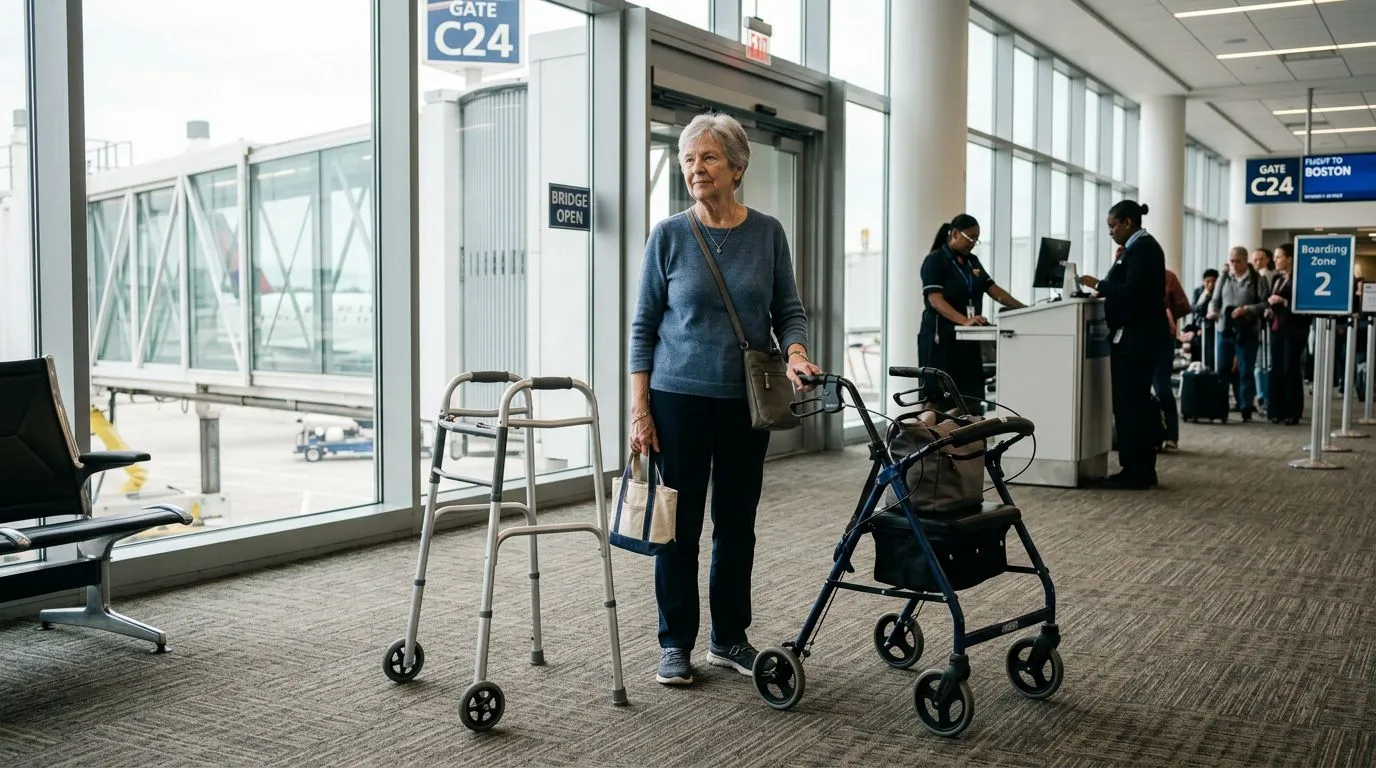
Can You Take a Walker or Rollator on a Plane? TSA Screening, Gate Check, and Damage Prevention
15 min read
Using a Walker or Rollator in Hotels and Vacation Rentals: A Practical Lodging Checklist
13 min read