Disclosure: We may earn a commission when you buy through links on this page, at no extra cost to you. We buy nothing, sell nothing and accept no payment for coverage — commissions never decide what we recommend. How we make money.
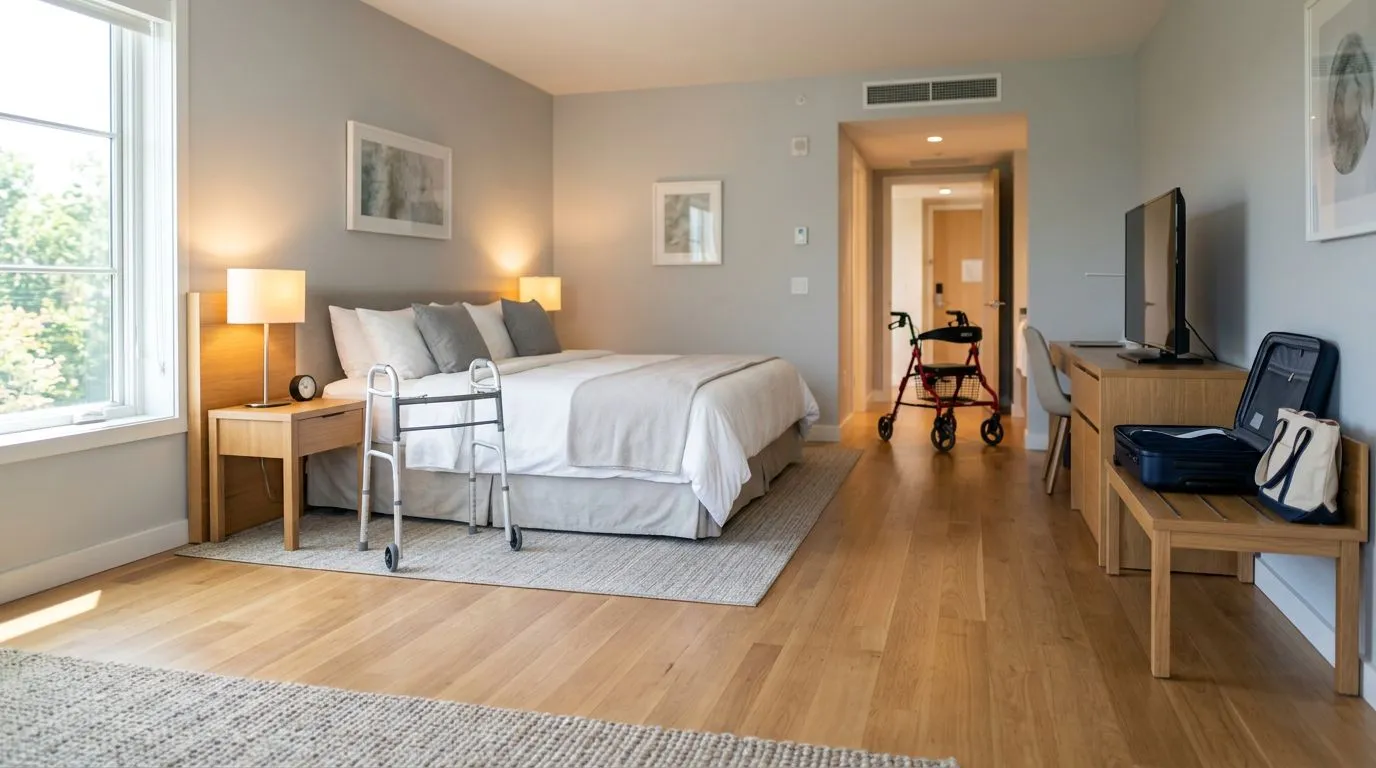
The safest hotel room or vacation rental for a walker or rollator has a clear route at least 30 inches wide, a bathroom door and entry door that match your device width, and enough space beside the bed to park, turn, and transfer. Before booking, confirm doorway widths, bathroom layout, elevator access, bed height, and where the walker or rollator can be stored without blocking nighttime walking paths.
A standard walker, folding walker, two-wheel walker, or rollator can make travel easier, but lodging spaces are often tighter than they appear in photos. The goal is simple: make sure your mobility aid fits the room before you arrive, not after a long day of travel.
Start with the 3 measurements that decide whether lodging will work
Three numbers matter most when you travel with a walker or rollator: the device width, the turning space you need, and the bed-to-bathroom route width. Measure your mobility aid at its widest point, usually from outside wheel to outside wheel or frame leg to frame leg. Many standard walkers and folding walkers are roughly 22 to 25 inches wide, while many 4-wheel rollators are around 23 to 28 inches wide. Bariatric rollators and some upright rollators may be wider.
Do not rely only on a room being called “accessible.” Accessible features vary by property type, building age, and country or local rules. In the United States, accessible hotel rooms commonly aim for wider doors and clear floor space, but vacation rentals can be unpredictable unless the host has measured them.
Use a tape measure at home before you book. Measure the walker or rollator unfolded, since that is the size you need for moving through doorways. Then measure it folded, since that is the size you need for storage near the bed, in a closet, or next to a wall.
| Measurement to know | Why it matters | Practical target |
|---|---|---|
| Device width | Determines whether it fits through doors and between furniture | Measure the widest point in inches |
| Clear walking path | Prevents catching wheels or rear legs on beds, chairs, and luggage | Aim for at least 30 inches when possible |
| Turning space | Needed for rollators, upright rollators, and anyone who cannot step backward easily | More space is better; 5 feet is a common accessible turning reference |
| Folded size | Helps decide if the device can be stored safely overnight | Measure height, width, and depth when folded |
Walkers vs. rollators in a 10-by-12-foot hotel room
A walker and a rollator are not the same, and the difference matters in a compact room. A standard walker or folding walker has no wheels and is lifted forward with each step. A two-wheel walker has wheels in front and rear legs or glides behind. A rollator has 3 or 4 wheels, hand brakes, and usually a built-in seat, basket, pouch, or under-seat storage.
In a small hotel room, a standard walker can feel easier to control near the bed because it does not roll unless you move it. It may also be easier to park in a narrow space. The tradeoff is that it requires enough arm strength and coordination to lift or advance the frame.
A rollator helps with longer hallways, lobby areas, and vacation rentals with open layouts. The built-in seat can be useful when waiting for elevators or rides. Inside a tight room, though, a 4-wheel rollator may need more turning space, and the brakes must be locked before sitting or transferring. A 3-wheel rollator is often narrower and easier to steer in tight spaces, but it typically does not provide the same seated resting option as a 4-wheel rollator.
| Type | Hotel or rental advantage | Watch for |
|---|---|---|
| Standard or folding walker | Stable in tight bed areas; often folds flat for storage | Must be lifted or advanced; slower over long corridors |
| Two-wheel walker | Easier forward movement than a no-wheel frame | Rear legs can catch on rugs, thresholds, or uneven flooring |
| 3-wheel rollator | Maneuvers well in narrow hallways and around furniture | Usually less seating support than a 4-wheel rollator |
| 4-wheel rollator | Seat and brakes help with long hotel corridors and waiting areas | Needs room to turn and a safe parking spot |
| Upright or bariatric rollator | May suit users needing a taller frame or higher weight capacity | Often wider, heavier, and harder to fit in compact rooms |
Room layout: keep a 30-inch path from bed to door
Lodging photos often show the bed, view, and décor, but not the walkway. For walker and rollator users, the most important part of the room is the route from the entry door to the bed, bathroom, light switches, thermostat, and phone. A clear path of about 30 inches helps many walkers and rollators pass without scraping furniture, though your exact need depends on your device width and walking pattern.
Look closely at listing photos. Watch for beds tight against walls, large ottomans at the foot of the bed, heavy chairs near the window, platform beds with sharp corners, and decorative rugs. A 4-wheel rollator may fit through a doorway but still be hard to turn between a bed and dresser.
Before arrival, ask whether movable furniture can be removed or shifted. In a hotel, staff may be able to take out a desk chair, luggage bench, or extra side table. In a vacation rental, the host may not be able to move furniture, so measurements matter more.
- Choose a room with space on both sides of the bed if two people are traveling.
- Avoid rooms where the bed touches one wall if the walker user needs that side.
- Keep luggage off the floor; use a stand, closet shelf, or tabletop.
- Move trash cans, decorative baskets, and loose cords out of the walking route.
- Place the walker or rollator on the side used for getting out of bed at night.
Bed height matters, too. Many hotel beds are 24 to 30 inches high, especially with thick mattresses or platform bases. If transfers are difficult, ask the property for the approximate bed height from floor to mattress top. A bed that is too high can be just as challenging as one that is too low.
Bathrooms: verify door swing, grab bars, and a 5-foot turning area
Bathrooms are where many lodging problems appear. A room may be spacious, but the bathroom door may be narrow, the toilet may sit behind the door swing, or the shower threshold may be too high for someone using a walker or rollator. A 5-foot turning circle is a common accessible design reference, but many standard hotel and rental bathrooms do not provide it.
For walkers, check whether the frame can enter far enough to reach the toilet and sink safely. A standard walker may be stable once positioned, but it still needs room for the user to step in and turn. For rollators, the key issue is safe braking and parking. Rollator seats are not substitutes for shower chairs, and hand brakes must be locked whenever the device is stationary during a transfer.
Door swing is easy to miss. An inward-swinging bathroom door can take up space a walker needs. Pocket doors, sliding doors, and outward-swinging doors often leave more usable floor area, but they still need handles that are easy to reach.
| Bathroom feature | Helpful detail to confirm | Why it matters |
|---|---|---|
| Door width | Ask for clear opening width, not just door size | Hinges and trim reduce usable space |
| Shower entry | Confirm whether it is roll-in, low-threshold, or tub-style | Tub walls can be difficult with walkers and rollators |
| Grab bars | Ask where they are located: toilet, shower, or both | Placement matters more than a vague “accessible” label |
| Toilet clearance | Ask about space beside and in front of the toilet | Transfers may require side approach or front approach |
| Floor surface | Ask about tile, bath mats, and shower drainage | Loose mats and wet tile increase slip risk |
If the property offers accessible rooms, ask for bathroom photos from the doorway and from inside the bathroom. One straight-on photo of the sink is rarely enough. You want to see the toilet area, shower entry, grab bars, and open floor space.
Elevators, hallways, and lobby areas: plan for 32-inch doors and crowds
Getting to the room can be harder than using the room. Long corridors, thick carpet, heavy fire doors, elevator thresholds, and crowded breakfast areas all affect walker and rollator use. A 32-inch clear doorway is often used as an accessibility benchmark, but older buildings may have tighter openings, especially in boutique hotels, converted homes, and historic rentals.
Standard walkers are generally manageable in elevators because they can be held still without brakes. Rollators need locked brakes whenever you stop, especially if the elevator starts or stops abruptly. Keep both hands available when entering an elevator; bags hanging from the handles can change the balance of a rollator or make steering harder.
Ask how far the room is from the elevator. A room that is “on the first floor” may still be 200 feet from the entrance. If fatigue is a concern, request a room close to the elevator, lobby, or accessible parking area. If noise is a concern, ask for the closest quiet room rather than the absolute closest room.
- Check whether the building has steps before the lobby entrance.
- Ask if there is a ramp and whether it has handrails.
- Confirm elevator access to your exact floor, not just “elevator on property.”
- Ask about hallway carpet thickness if pushing a rollator is tiring.
- Request help with doors if the entrance uses heavy pull handles.
Vacation rentals need an extra check. “Ground floor” does not always mean step-free. It may include one or two steps at the entrance, a raised threshold, a gravel path, or a sloped driveway. For a no-wheel walker, small thresholds may be manageable for some users. For a rollator, thresholds and gravel can interrupt wheel movement and increase effort.
Storage: keep a folded frame out of a 3-foot nighttime walking zone
Storage is a safety issue, not just a neatness issue. At night, a walker or rollator should be close enough to reach from the bed but not placed where it becomes a tripping hazard. Aim to keep at least a 3-foot clear zone along the walking route to the bathroom when the device is parked, luggage is open, and shoes are on the floor.
Folding walkers often store flat against a wall or inside a closet. Two-wheel walkers may fold similarly, though wheels can make them lean differently. Rollators vary more: some fold side-to-side, others fold front-to-back, and upright or bariatric rollators can be heavier to move once folded.
Do not store a rollator with bags hanging from the handles if it could tip or roll. Lock the brakes before leaving it beside the bed, near a dining chair, or in an elevator waiting area. If the room has hard flooring, check that the rollator stays put when the brakes are engaged.
Good storage spots include the wall beside the bed, the space near the entry door if it does not block exit, or a wide closet opening. Poor storage spots include behind the bathroom door, at the foot of the bed in a narrow aisle, or in front of an HVAC unit where it may be moved repeatedly.
How to choose lodging: use a 10-point call or message checklist
A 10-minute call can prevent a frustrating stay. For hotels, call the front desk directly rather than relying only on a central reservation line. For vacation rentals, message the host and ask for measurements in inches. Clear, specific questions are more useful than asking whether the place is “walker friendly.”
- What is the clear width of the room entry door?
- What is the clear width of the bathroom door?
- Is there a step at the building entrance, room entrance, balcony, or shower?
- How far is the room from the elevator, lobby, or parking area?
- Is elevator access available to the exact floor?
- What is the approximate bed height from floor to mattress top?
- Is there at least 30 inches of clear space on the side of the bed used for transfers?
- Can extra chairs, benches, or small tables be removed before arrival?
- Are grab bars located by the toilet, shower, or both?
- Can the property send current photos of the bathroom and bed area?
When measuring for your own needs, add a small margin. If your rollator is 25 inches wide, a 26-inch path is technically possible but not comfortable. Hands, elbows, brake cables, wheels, and the natural side-to-side movement of walking all need room. A few extra inches can make the difference between a relaxed trip and constant furniture bumping.
Arrival setup: do a 15-minute safety scan before unpacking
Once you arrive, take 15 minutes to set up the room before opening suitcases. Walk the route from the door to the bed, bed to bathroom, and bed to light switch using the walker or rollator. If anything catches, scrapes, or forces a sideways step, adjust the room immediately.
Move lightweight obstacles first: trash cans, ottomans, floor lamps, small tables, and decorative pillows. Ask hotel staff for help with heavier furniture. In a rental, avoid dragging furniture across floors without permission; instead, contact the host if the layout is not as described.
Check bathroom flooring before showering. Remove loose bath mats unless they have a secure non-slip backing and do not interfere with the walker or rollator. Keep towels within reach so the floor does not become wet between the shower and sink. If you use a rollator, remember that its seat is for resting in appropriate locations, not for use inside a wet shower unless the device is specifically designed for that environment.
Set up nighttime access before bed. Place glasses, phone, water, and medications on the side where you can reach them without leaning across the walker or rollator. Turn on a nightlight or leave the bathroom light partially on. Small lighting changes matter when navigating an unfamiliar room at 2 a.m.
Who each lodging setup is best for, from weekend hotels to longer rentals
Different trips call for different priorities. A one-night hotel stay may only require elevator access, a reachable bed, and a bathroom that fits your walker. A 2-week vacation rental needs more: kitchen access, laundry space, outdoor paths, and enough storage so the mobility aid is not constantly in the way.
Standard and folding walker users often do well in compact rooms if there is a clear bed-to-bathroom route and the bathroom door is wide enough. Two-wheel walker users should pay closer attention to rugs, thresholds, and carpet pile. Rollator users should prioritize turning space, elevator access, smooth flooring, and safe places to lock the brakes and sit. Upright and bariatric rollator users should be especially careful with doorway widths, vehicle drop-off areas, and whether the device can be stored without blocking the room exit.
| Traveler situation | Best lodging priority | Helpful mobility aid consideration |
|---|---|---|
| Short hotel stay of 1 or 2 nights | Room close to elevator and clear bathroom access | Folding walker or rollator should park beside bed |
| Long hallway or large resort | Minimal walking distance or shuttle support | Rollator seat may help during waits |
| Historic inn or older building | Measured doorways and step-free entry | Walker may fit tighter areas; rollator may struggle with thresholds |
| Vacation rental for a week or more | Kitchen, bathroom, bedroom, and laundry routes | Check every daily route, not just the entrance |
| Bariatric or upright rollator user | Wider doors, more turning room, sturdy seating surfaces | Confirm folded storage and elevator dimensions |
The best lodging choice is the one that matches both your mobility aid and your daily routine. Ask for measurements, trust current photos over vague descriptions, and plan the room layout before you arrive. A walker or rollator should support your trip, not turn every doorway and bathroom visit into a challenge.
FAQ
Frequently asked questions
What should I measure before booking a hotel with a walker or rollator? +
Measure your walker or rollator at its widest point when open, then measure it folded for storage. Ask the property for the clear width of the room door, bathroom door, bed-side clearance, shower entry, and any elevator or hallway limitations.
Is a walker or rollator better for hotel travel? +
It depends on the room and your mobility needs. A standard or folding walker can be easier to control in tight spaces, while a rollator may be better for long hallways because it rolls smoothly and often has a seat. Rollators need enough turning space and locked brakes during transfers.
Are accessible hotel rooms always suitable for rollators? +
Not always. Accessible rooms are often more spacious than standard rooms, but layouts vary. Confirm door widths, bathroom clearance, grab bar placement, bed height, shower entry, and the distance from the elevator before booking.
What bathroom features matter most for walker users? +
The most important features are a wide bathroom doorway, enough space to position the walker near the toilet and sink, a low-threshold or roll-in shower if needed, secure grab bars, and flooring that is not slippery when wet.
How can I store a walker or rollator safely in a hotel room? +
Park it close to the bed but outside the walking path to the bathroom. Fold it if needed, lock rollator brakes, keep bags off the handles, and move luggage or small furniture so there is a clear nighttime route.
Keep reading
Related guides
Renting a Walker or Rollator While Traveling in the U.S.: Delivery, Fit, Cost, and Return Questions
14 min read
Walker or Rollator for Day Trips and Events: Museums, Restaurants, Stadiums, and Crowded Places
12 min read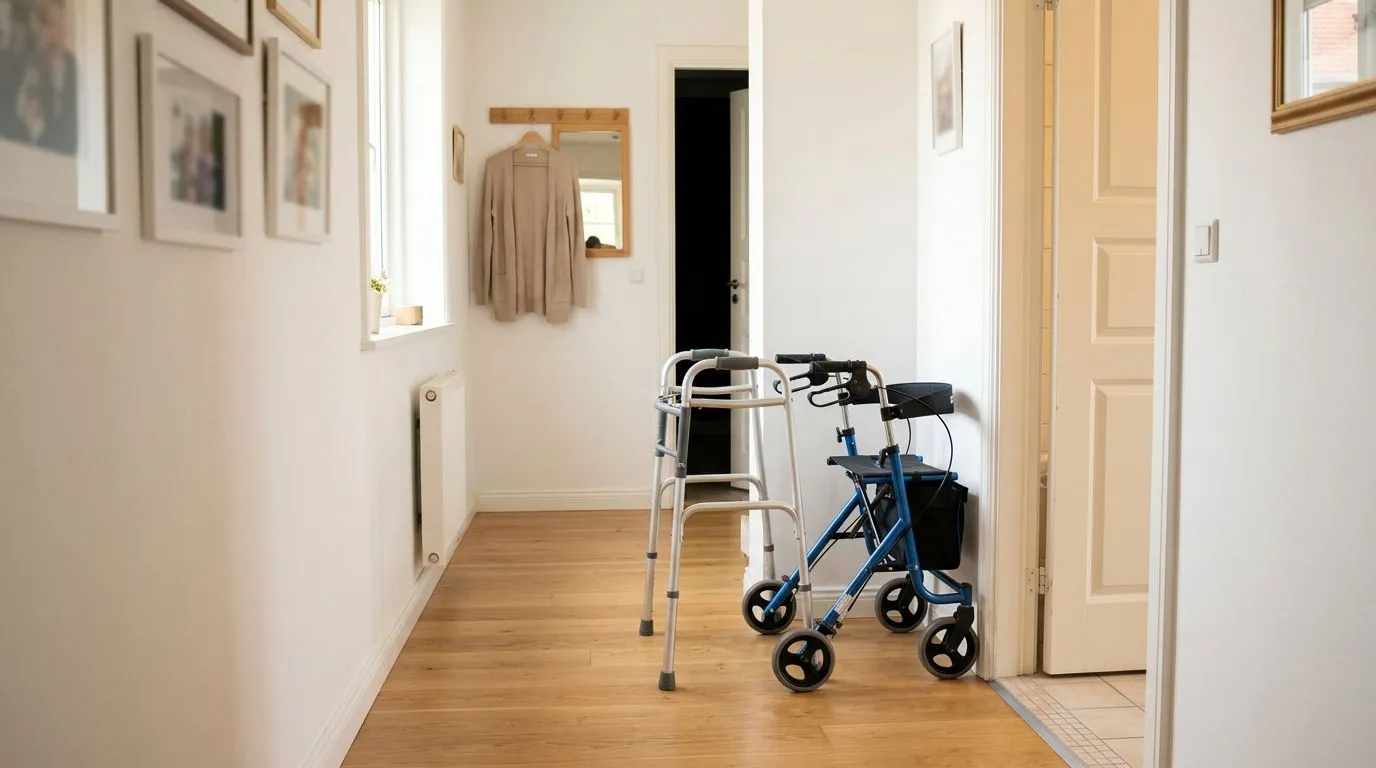
Indoor Mobility Walkers: Choosing a Walker or Rollator for Tight Spaces at Home
13 min read