Disclosure: We may earn a commission when you buy through links on this page, at no extra cost to you. We buy nothing, sell nothing and accept no payment for coverage — commissions never decide what we recommend. How we make money.
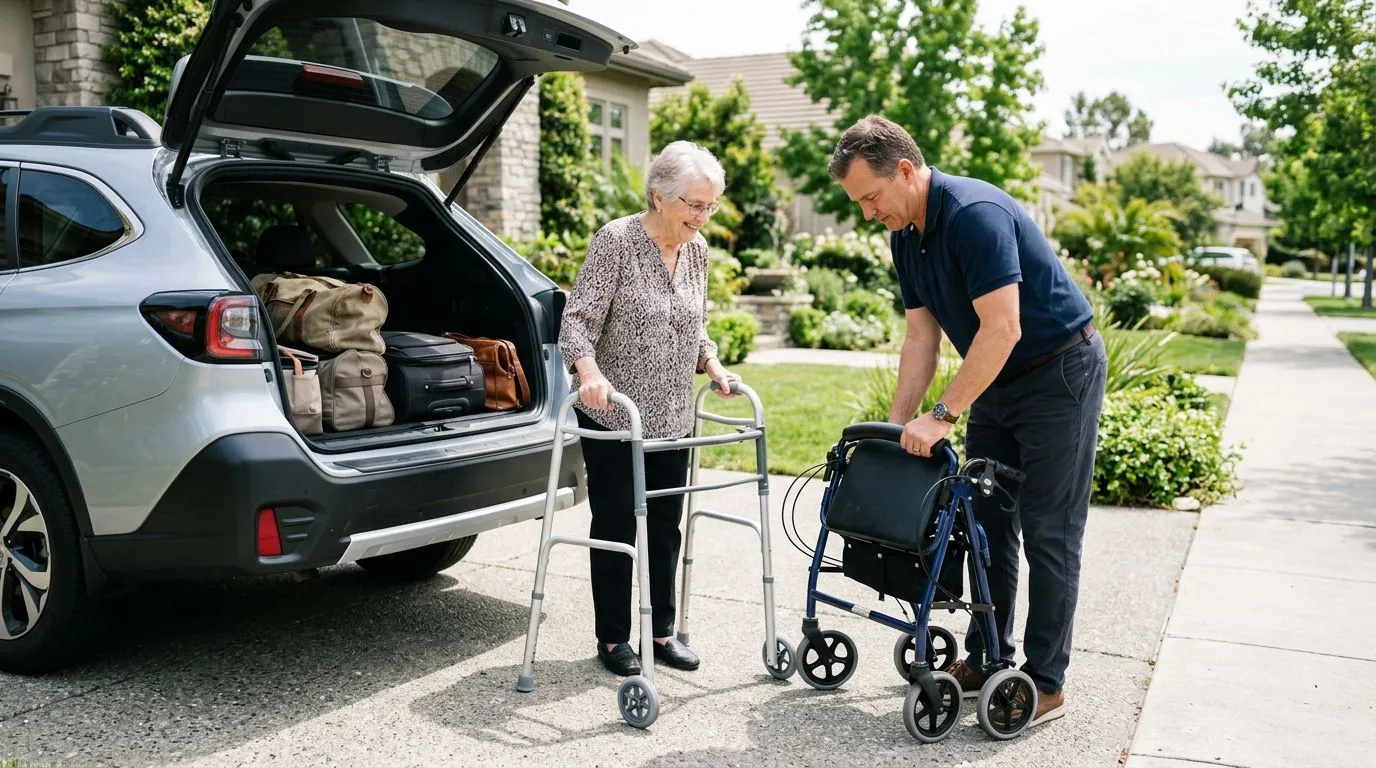
A travel bag or cover can protect a folding walker or rollator from scratches, dirt, loose parts, and rough handling during car rides, storage, or air travel. The right choice depends on what you use: a lightweight folding walker may only need a simple sleeve, while a 4-wheel rollator with a seat, brakes, and cables usually needs more space and better padding.
Before buying any cover, measure the mobility aid while it is fully folded, including wheels, handles, seat, brakes, and any baskets or pouches you plan to leave attached. A good travel bag should fit without forcing the frame, be easy to carry, and still allow quick access when you need the walker or rollator at your destination.
Why a Travel Bag or Cover Matters on a 1-Day Errand or a 2-Week Trip
Walkers and rollators are built for daily use, but travel adds a different kind of wear. A frame may be lifted into a trunk 4 times in one day, stacked with suitcases, slid across a hotel floor, or handled by airline staff when you are not nearby. A bag or cover is not only about keeping the frame clean. It can also keep small parts together and reduce snagging.
For a folding walker, the main concerns are scratched aluminum, bent glide caps, loose height-adjustment buttons, and rubber tips picking up dirt from parking lots or luggage areas. Standard folding walkers and two-wheel walkers are usually simpler than rollators, but their front wheels, rear tips, and cross braces can still catch on other luggage.
Rollators need a little more protection because they have more parts. A 3-wheel or 4-wheel rollator may include hand brakes, brake cables, a padded seat, a backrest, a storage pouch, and larger wheels. Upright rollators add taller forearm supports or higher handles. Bariatric rollators may have a wider frame and heavier tubing. These parts are useful, but they also create more places for a strap, zipper, or suitcase handle to catch.
Think of the bag as a travel layer, not a medical upgrade. It will not make an unsafe walker or rollator safe. It will not fix worn brakes or unstable wheels. What it can do is make transportation cleaner, more organized, and less frustrating.
Folding Walker vs. Rollator: What You Are Protecting in 5 Common Types
The best travel bag starts with the correct product type. In everyday language, many people call both devices “walkers,” but they are not the same. A walker is usually a frame that you lift or partially roll forward, depending on whether it has wheels. A rollator is a wheeled walker with hand brakes and a built-in seat. That difference matters because rollators are bulkier and have brake parts that need space.
| Mobility aid type | Common travel concerns | Bag or cover fit notes |
|---|---|---|
| Standard no-wheel walker | Rubber tips, side frames, height buttons | Often fits in a slim folding walker bag or simple dust cover |
| Two-wheel folding walker | Front wheels, rear tips, cross brace | Needs extra room at the wheel end; avoid tight sleeves |
| 3-wheel rollator | Triangular folded shape, brake cables, pouch | May need a tapered or wider cover than a standard walker bag |
| 4-wheel rollator with seat | Seat, backrest, wheels, brakes, basket or pouch | Usually needs a larger rollator travel bag with reinforced seams |
| Upright or bariatric rollator | Tall handles, wide frame, heavier weight | Measure carefully; some universal covers may be too short or narrow |
A standard folding walker may fold to only a few inches thick, while many rollators remain bulkier even when folded. A typical folding walker is often about 5 to 8 pounds, while many rollators weigh roughly 14 to 25 pounds, with bariatric and upright designs sometimes heavier. Those numbers affect the bag size, handle strength, and how comfortable the bag is to carry.
If your mobility aid has removable accessories, decide whether they will travel inside the same bag. A basket, cup holder, cane holder, or under-seat pouch can change the folded shape by 1 to 3 inches. That small difference may be enough to make a zipper hard to close.
Who It Is Best For: 4 Travel Situations Where a Bag Helps
A travel bag or cover is most useful when the walker or rollator will be moved, stored, or handled by someone besides the user. It is less necessary if the device stays open in the home and is rarely transported. The more often it is folded and lifted, the more a cover earns its place.
- Car travel: A cover helps keep trunk dirt, road salt, grass, and rubber-tip marks away from luggage and upholstery.
- Air travel: A padded or semi-padded bag may reduce scratches and snagging when a folded walker or rollator is gate-checked or transported in the cargo area.
- Apartment or facility storage: A dust cover can protect a folded walker stored in a closet, hallway, or community storage room for 30 days or longer.
- Family visits and hotels: A bag keeps loose accessories together when the device is carried through lobbies, elevators, or guest rooms.
For a person using a simple no-wheel walker, a lightweight sleeve may be enough. For someone using a 4-wheel rollator every day, a stronger travel bag with full-length zippers and reinforced handles is usually more practical. Rollators are harder to slide into narrow bags because the wheels, seat, and brake handles create an uneven shape.
Caregivers should also consider their own lifting comfort. A bag that adds 2 pounds may be fine for a walker, but noticeable on a rollator that already weighs more than 20 pounds. If the caregiver has to lift the bag into an SUV cargo area several times per day, handle placement matters as much as fabric thickness.
How to Measure Before Buying: Take These 5 Numbers in Inches
Measure the walker or rollator in its real travel condition, not in the open walking position. Fold it completely, lower or secure any adjustable parts if appropriate, and leave on the accessories you expect to travel with. Use a flexible tape measure if possible.
- Folded length: Measure from the highest handle or frame point to the lowest wheel, tip, or leg end.
- Folded width: Measure across the widest point, often wheel-to-wheel or outside frame-to-frame.
- Folded depth: Measure how thick the device is when folded, including seat, pouch, brake handles, or wheels.
- Weight: Check the manual or use a bathroom scale if you can do so safely. Bags have handle and seam limits.
- Accessory clearance: Add 1 to 2 inches if a basket, backrest, or pouch sticks out after folding.
Do not rely only on the open width listed for a walker or rollator. Open width helps you know if the device fits through a doorway, but it does not tell you whether it fits inside a travel cover. A rollator that is 24 inches wide when open may have a very different folded profile depending on wheel size and seat design.
Leave a little room. A bag that matches your folded measurement exactly can be difficult to zip, especially if the fabric has no stretch. As a practical rule, look for at least 1 inch of extra space in the tightest dimension and more if the rollator has protruding brake levers or large wheels. Too much extra room can also be annoying because the frame shifts inside the bag.
If two people will share lifting duties, have both test the folded size before the trip. The person who can fold the walker may not be the same person who can lift it into a vehicle. That matters when deciding between a full travel bag, a dust cover, or a simple securing strap.
Feature Comparison: 8 Bag Details That Affect Everyday Use
Travel bags and covers may look similar online, but small features change how easy they are to use. A bag for a 6-pound folding walker does not need the same construction as one used for a heavier 4-wheel rollator. Choose for the trip you actually take, not the most complicated trip imaginable.
| Feature | Why it matters | Best fit for walkers | Best fit for rollators |
|---|---|---|---|
| Full-length zipper | Makes loading easier and reduces forcing | Helpful, especially for two-wheel walkers | Very helpful due to wheels, seat, and brake handles |
| Padding | Helps reduce scratches and light impacts | Light padding is usually enough | Moderate padding is useful for air or bus travel |
| Reinforced handles | Supports repeated lifting | Good for car trips | Important for heavier 4-wheel, upright, or bariatric rollators |
| Water-resistant fabric | Protects against rain, snow, and wet pavement | Useful for trunk storage | Useful because seats and pouches can absorb moisture |
| Name tag window | Helps identify the device during group or air travel | Nice to have | Strongly useful for air travel and facilities |
| Interior straps | Limit shifting inside the bag | Optional for slim walkers | Helpful for bulky rollators |
| Wide opening | Reduces bending and twisting during packing | Helpful for caregivers | Often necessary |
| Storage pouch | Holds tips, small tools, or paperwork | Useful for spare walker tips | Useful for brake adjustment notes or removable accessories |
Padding is useful, but more is not always better. Thick padding increases bulk and may make the bag harder to store when empty. For car trips, a durable fabric cover may be enough. For air travel, where the device may be handled more roughly, a padded bag or a combination of cover plus extra protection around wheels and brake handles can make sense.
Pay close attention to zippers. A short zipper forces you to slide the walker or rollator into the bag from one end, which can be awkward and hard on the frame. A long zipper or clamshell-style opening lets you lay the device down and close the bag around it. That can reduce lifting strain by several inches and may be easier for a caregiver with limited hand strength.
Air Travel: Plan for Gate Checking, Labels, and 24-Hour Timing
Air travel requires more planning than a car ride. In the United States, many travelers use their walker or rollator through the airport and then gate-check it before boarding. Policies and handling details can vary, so contact the airline before travel, ideally at least 24 to 48 hours ahead, to ask how they handle mobility aids and what information they need.
A travel bag can help, but it must not keep you from using the device when you need it. If you plan to use a rollator through the terminal, do not pack it away at check-in unless you have another safe mobility option. Many people keep the rollator open until the gate, then fold it and add the cover just before boarding. The cover should be quick to install while seated or with assistance.
Remove loose personal items before handing over the device. This includes water bottles, bags, seat pouches with valuables, and anything hanging from the handles. If a pouch is part of the rollator and stays attached, empty it first. For walkers, check that glide caps or skis are secure and that height buttons are fully engaged.
Add identification in at least 2 places: one visible luggage tag on the outside of the bag and one label inside the cover or attached to the frame. Include your name and phone number, not sensitive medical information. A bright tag or ribbon can make the bag easier to spot, especially when many mobility aids and strollers are returned near the aircraft door.
If the rollator has brake cables, avoid wrapping straps tightly around them. A compressed or bent cable may affect brake feel after arrival. When you receive the walker or rollator back, inspect it before leaving the gate area. Check that the frame opens fully, wheels roll freely, brakes engage, rubber tips are present, and height adjustments have not shifted.
Car Rides and Storage: Protect the Trunk, Seat, and Frame in 10 Minutes
For local trips, the best accessory may be a simple cover plus a repeatable loading routine. Many vehicle trunks and cargo areas are 30 to 45 inches deep, but the usable space changes when suitcases, groceries, or medical equipment are already inside. Measure your vehicle space just like you measure the walker.
A folding walker usually slides flat behind a seat or into a trunk with little trouble. A two-wheel walker may need to be placed wheels-first to keep dirt away from soft luggage. A rollator often needs more care because the seat, wheels, and brake handles can press against upholstery or other bags. Upright rollators may be too tall for some trunks unless the handles fold or adjust downward.
Use the bag to solve the specific problem. If dirty rubber tips are the issue, a washable end cover or full sleeve may be enough. If the rollator bangs against the side of the trunk, a padded bag or folded towel between the frame and vehicle wall can help. If the frame shifts while driving, secure it with cargo straps or position it so it cannot slide into the tailgate.
Do not place heavy suitcases on top of a rollator seat or brake handles. A 40-pound suitcase can deform soft parts, strain cables, or make the rollator harder to unfold later. If space is tight, place the walker or rollator on top of flat luggage rather than under it, as long as it is stable and will not fall when the door opens.
Simple Cover or Full Travel Bag: A 3-Level Choice
You do not always need the most protective bag. The right level depends on how the mobility aid travels and how often it is handled. Use a simple 3-level decision approach.
| Protection level | What it usually includes | Best use | Limitations |
|---|---|---|---|
| Dust cover | Light fabric cover, often minimal padding | Closet storage, senior community storage, clean car trunks | Limited impact protection; may not support carrying |
| Soft travel bag | Zippered fabric, handles, water-resistant material | Car trips, hotels, family visits, routine transport | May not protect against heavy impacts |
| Padded travel bag | Thicker fabric, padding, reinforced seams, ID area | Air travel, bus trips, frequent handling by others | Bulkier, heavier, and harder to store when empty |
For a standard folding walker that rides in a clean back seat, a full padded bag may be unnecessary. For a 4-wheel rollator used during airport travel, a thin dust cover may be too light. Match the cover to the risk: dirt, scratches, snagging, shifting, or rough handling.
Storage at home has different needs. If the walker or rollator is stored for a season, breathability matters. A completely sealed plastic cover can trap moisture if the device is put away wet. Let wheels, rubber tips, and fabric seats dry before covering them, especially after rain or snow.
Packing Checklist: A 10-Minute Routine Before You Leave
A short checklist can prevent most travel-day problems. Set aside 10 minutes the night before a trip to inspect, fold, and pack the walker or rollator. Rushing at the curb or gate is when parts get forced or left behind.
- Wipe dirt from rubber tips, wheels, and lower frame sections.
- Check that walker height buttons are fully locked on both sides.
- For rollators, squeeze both hand brakes and confirm the wheels stop.
- Empty under-seat pouches, baskets, and hanging bags of valuables.
- Remove accessories that make folding difficult, such as large cup holders.
- Fold the frame fully without forcing the hinges or cross brace.
- Place the widest or heaviest end into the bag first if loading from one side.
- Keep brake cables and handles away from tight straps or zipper teeth.
- Add an ID tag outside and a second label inside or on the frame.
- Carry any small tools, spare rubber tips, or instructions in a separate pouch.
After arrival, reverse the process slowly. Open the bag on a stable surface, unfold the walker or rollator completely, and inspect it before placing body weight on it. A walker should sit evenly on all legs or tips. A rollator should roll straight, stop with the hand brakes, and lock if it has parking brakes.
If something feels different, do not ignore it. A brake that feels loose, a wheel that rubs, or a walker leg that no longer locks needs attention before regular use. Travel can reveal a maintenance issue that was already developing.
Common Buying Mistakes to Avoid, Including a 1-Inch Fit Problem
The most common mistake is buying a bag based only on the word “universal.” Universal does not mean every folding walker, every 3-wheel rollator, and every bariatric rollator will fit. It usually means the cover fits a range of common sizes. Your measurements still decide.
Another mistake is choosing a bag that is exactly the same size as the folded device. A 1-inch shortage in depth can make a zipper strain around wheels or brake handles. Over time, that stress can tear seams or bend small parts. If the bag looks tight the first time you use it at home, it will feel worse at an airport curb.
Do not overlook handle strength. A bag may fit the rollator but still be unpleasant to lift if the handles are narrow, poorly placed, or not reinforced. For heavier rollators, look for carrying points that let the frame stay balanced. If one end drops sharply when lifted, it may bump the ground or twist the caregiver’s wrist.
Finally, avoid covering up maintenance problems. A bag can protect a walker or rollator during travel, but it cannot make worn rubber tips, loose wheels, weak brakes, or damaged folding locks acceptable. Inspect first, then pack. That habit supports safer, smoother travel without asking a simple accessory to do more than it can.
FAQ
Frequently asked questions
Can I use the same travel bag for a folding walker and a rollator? +
Sometimes, but only if the folded measurements match. A folding walker is usually slimmer, while a rollator has wheels, a seat, brakes, and cables that need more room. Measure length, width, and depth before assuming one bag will fit both.
Do airlines require a bag for a walker or rollator? +
Airlines generally do not require a travel bag for mobility aids, but a cover can help reduce scratches, keep loose parts together, and make identification easier. Contact your airline before the trip for its current mobility aid handling process.
Should I remove the rollator basket or pouch before travel? +
Remove loose accessories when possible, especially if they make the rollator harder to fold or could fall off. If a pouch stays attached, empty it of valuables and check that it does not block the zipper or press against brake cables.
Is a padded bag necessary for a standard folding walker? +
Not always. A standard folding walker used mainly in a car may only need a lightweight cover to keep dirt off the frame and vehicle interior. Padding becomes more useful when the walker will be checked, stacked, or handled by others.
How much extra space should a walker or rollator bag have? +
Aim for at least 1 inch of extra room in the tightest dimension, and more if wheels, brake handles, or accessories protrude. The bag should close without forcing the zipper, but it should not be so oversized that the frame shifts excessively.
Keep reading
Related guides
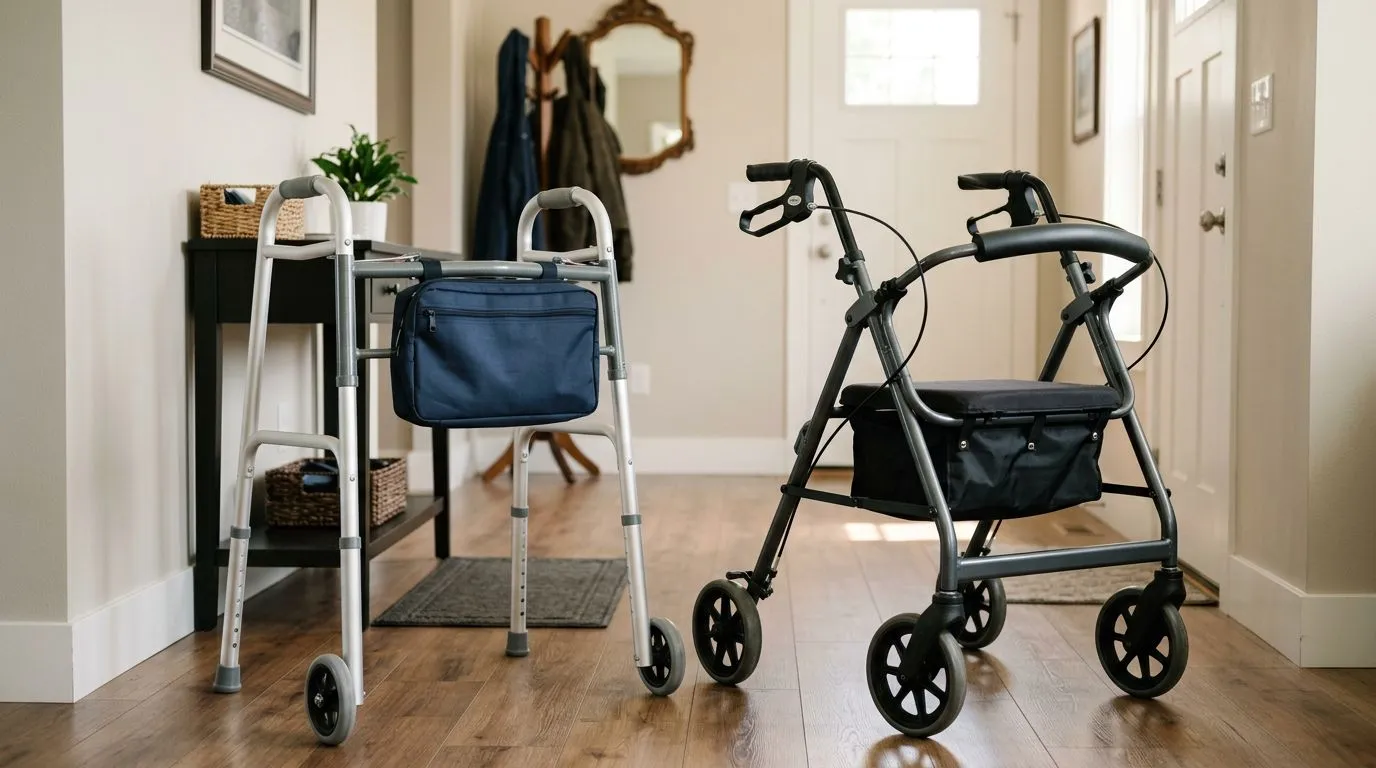
Walker Bags, Baskets, and Carriers: Safer Ways to Carry Items on Walkers and Rollators
15 min read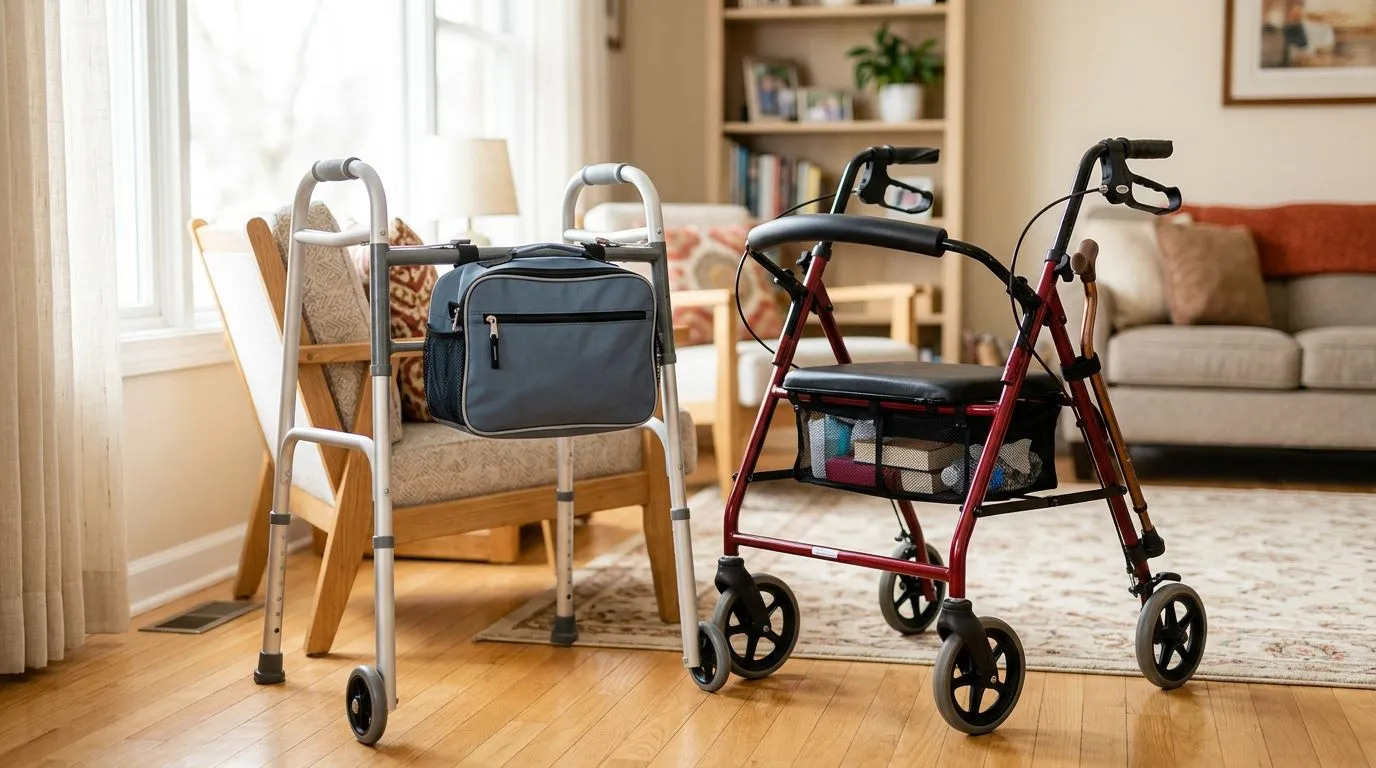
Mobility Walker Accessories and Replacement Parts: Bags, Baskets, Glides, Grips, and Brakes
16 min read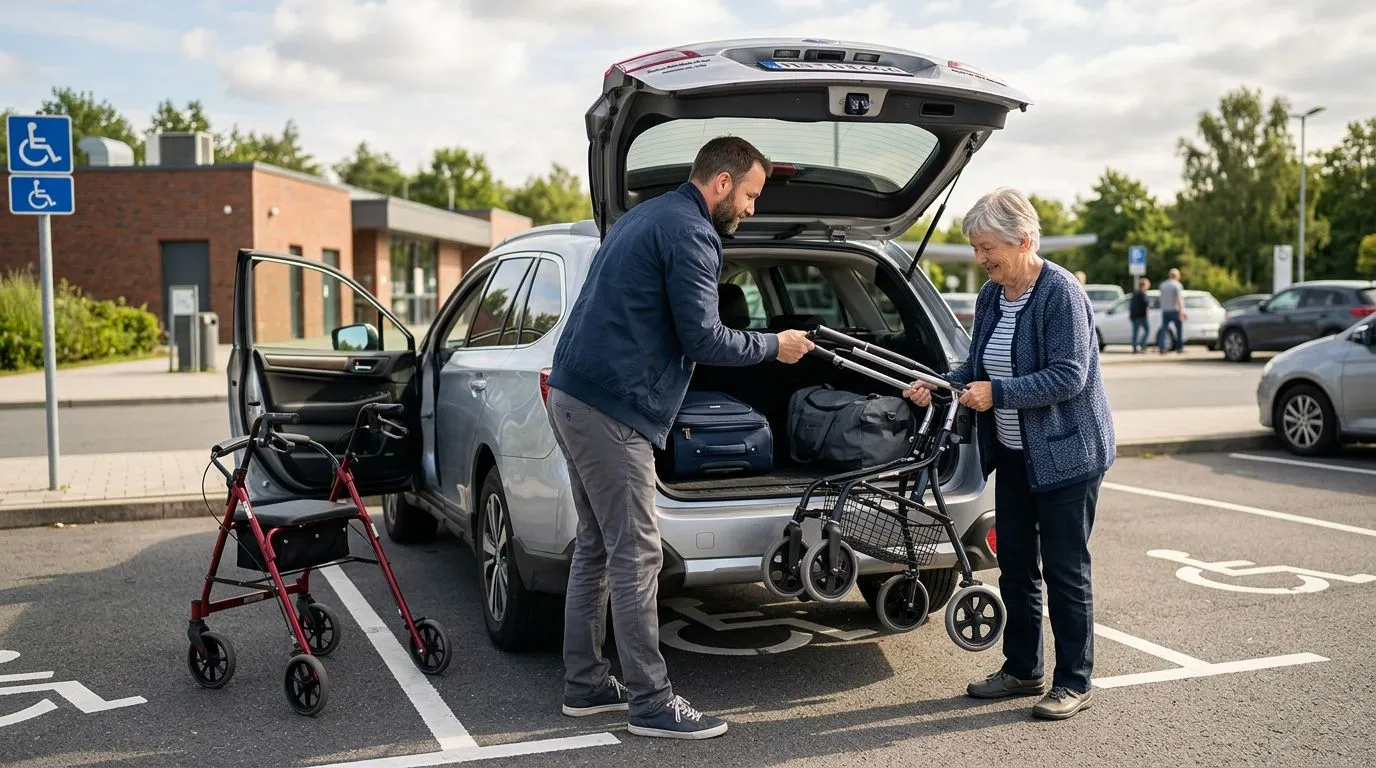
Road Trips With a Walker or Rollator: Loading the Car, Planning Stops, and Staying Safe
15 min read