Disclosure: We may earn a commission when you buy through links on this page, at no extra cost to you. We buy nothing, sell nothing and accept no payment for coverage — commissions never decide what we recommend. How we make money.
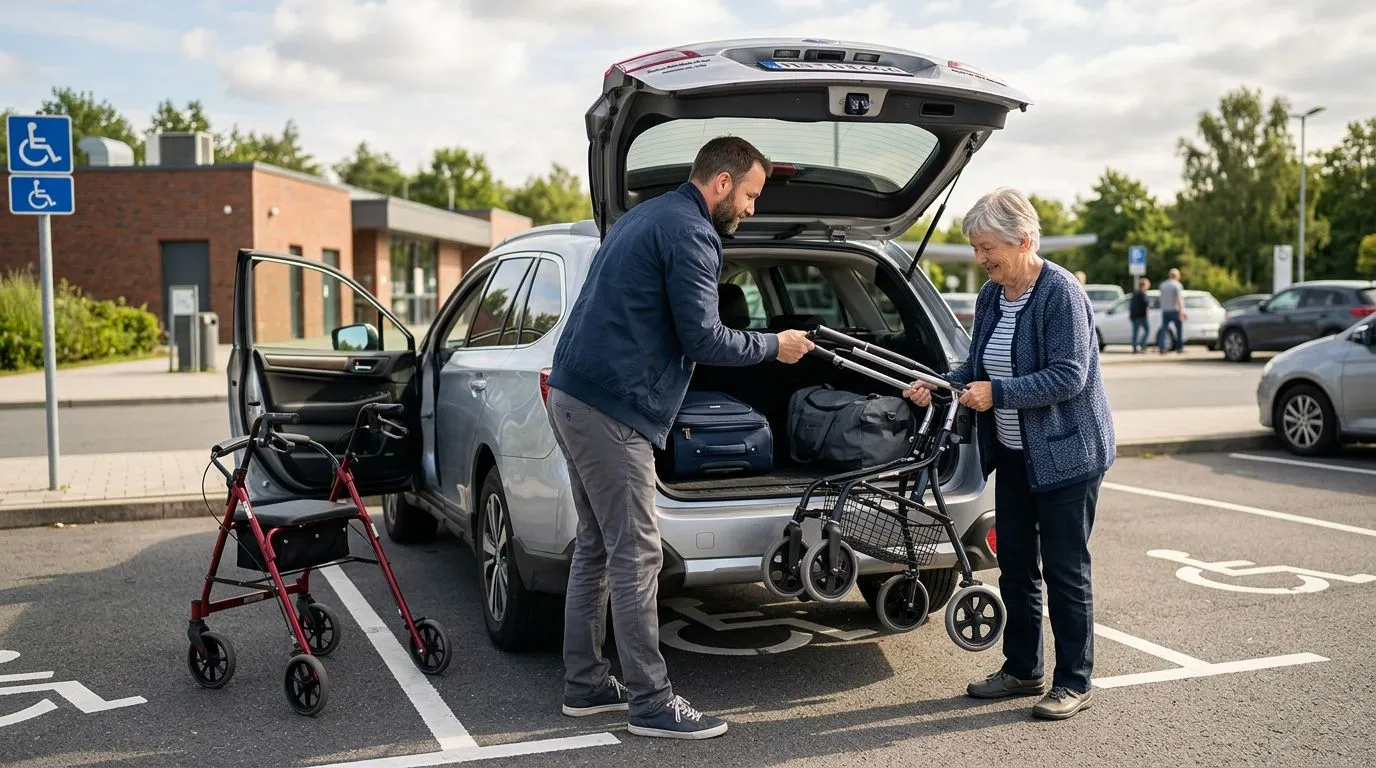
Road trips with a walker or rollator are easiest when you plan the car setup, lifting routine, rest stops, and overnight access before you leave. A folding walker or two-wheel walker is usually lighter and simpler to load. A rollator offers a seat and hand brakes, but it often takes more trunk space and lifting effort.
The safest approach is to test-fit your mobility aid in the vehicle, practice loading it without twisting, and schedule stops before fatigue builds. Away from home, measure doorways, confirm step-free access, and keep brakes, tips, wheels, and personal essentials within reach.
Before You Go: Do a 15-Minute Car Fit Check
A short test at home can prevent a long struggle in a parking lot. Set aside about 15 minutes the day before travel to fold your walker or rollator, place it where it will ride, and confirm that the driver can still see clearly through mirrors and windows.
Walkers and rollators do not pack the same way. A standard no-wheel walker frame may fold flat and weigh roughly 5 to 8 pounds. A two-wheel walker often folds in a similar way, but the front wheels add shape and a little bulk. A 4-wheel rollator may weigh about 15 to 25 pounds, and an upright or bariatric rollator can weigh more, depending on frame size and capacity.
Check three locations in this order: trunk or cargo area, back seat floor, and rear seat. The trunk is usually best because it keeps the device from becoming a loose object in a sudden stop. If the walker or rollator must ride inside the cabin, secure it so it cannot slide forward.
- Fold the device completely and latch it if it has a folding lock.
- Remove loose bags, cushions, trays, or baskets before lifting.
- Turn the wheels inward or downward if that helps it lie flatter.
- Confirm the trunk closes without pressing on brake cables or wheels.
- Keep one cane, grabber, or compact support item accessible if you cannot walk safely from the passenger seat to the trunk without help.
If you use both a walker at home and a rollator outdoors, test both. The lighter walker may work better for tight hotel rooms, while the rollator may be better for rest areas where you need a seat.
Walker or Rollator for a 2-Hour Drive: Which Travels Better?
For many road trips, the right choice depends more on the destination than the miles. A 2-hour drive to a relative's single-level home is not the same as a full-day trip with large rest areas, hotel lobbies, sidewalks, and restaurant stops.
A walker is typically chosen for maximum stability, lower weight, and easier lifting. Standard walkers and folding walkers without wheels are common for short, controlled walking distances. Two-wheel walkers reduce the need to pick up the frame with every step, but they still do not have a built-in seat or hand brakes like a rollator.
A rollator is a wheeled walker with hand brakes and, in most 4-wheel designs, a built-in seat. Three-wheel rollators are often narrower and easier to maneuver, but they usually do not offer the same seated resting option as a 4-wheel rollator. Upright rollators place the handles higher and may include forearm supports; they are intended for people who have been fitted for that posture and can safely control the frame. Bariatric rollators have higher weight capacities and wider frames, which can improve fit for some users but require more vehicle space.
| Travel situation | Walker option | Rollator option | Practical takeaway |
|---|---|---|---|
| Short stops under 10 minutes | Folding or two-wheel walker | 3-wheel rollator | Choose the device you can load quickly and safely. |
| Long rest areas or visitor centers | Two-wheel walker if seating is available | 4-wheel rollator with seat | A rollator seat can help when benches are far apart. |
| Tight hotel room | Standard or folding walker | Narrow 3-wheel rollator | Measure doorways and bed clearance before booking. |
| Uneven sidewalks | Two-wheel walker may catch less than small rear legs | Rollator with appropriate wheels and brakes | Hand brake control matters on slopes and ramps. |
| Higher weight capacity needs | Bariatric walker | Bariatric rollator | Check capacity, width, and vehicle fit together. |
Do not switch to a rollator just because it seems convenient for travel. If you need the firmer support of a no-wheel walker, a rollator may move too freely. If you have been trained to use a rollator, do not assume a standard walker will feel natural over long distances. When in doubt, ask a physical therapist or other qualified clinician to watch you use each device before the trip.
Loading a Folding Walker: 3 Safer Lifting Options
A folding walker is often the easiest mobility aid to load because it collapses into a flatter shape. Even so, awkward lifting can strain the back, shoulders, or hands. The goal is to keep the walker close to your body, avoid twisting, and use the car as a support surface when possible.
The first option is trunk loading. Stand close to the bumper, fold the walker, and hold it near the side rails rather than by a loose accessory. Bend at your knees if you can do so safely, slide one end into the trunk, then guide the rest in. This reduces the time you are holding the full weight in the air.
The second option is back-seat loading. Open the rear door wide, place one end of the folded walker on the seat or floor, then pivot the frame into place. This can work well for walkers around 24 to 30 inches wide when folded, depending on the vehicle. Protect upholstery with a towel if the walker tips are dusty or wet.
The third option is helper-assisted loading. One person should give clear directions, and the other should lift from the frame, not from wheels, handgrips, bags, or brake cables. Count together: 1, 2, 3, lift. Small coordination steps reduce dropped equipment and pinched fingers.
Who a folding walker is best for on road trips
- People who need stable, non-rolling support when standing or taking steps.
- Travelers using sedans or compact cars with limited cargo space.
- Anyone who cannot safely manage the extra weight of a rollator.
- Trips where chairs, benches, or indoor seating will be available every few minutes.
Before you close the trunk, check that rubber tips are not trapped against the latch and that the frame is not pressing on groceries, luggage, or oxygen tubing. A walker is durable, but bent legs or worn tips can affect stability.
Loading a Rollator: Managing 15 to 25 Pounds and More
Rollators are useful on trips because they roll smoothly, have hand brakes, and often provide a seat. The tradeoff is loading. A common 4-wheel rollator may weigh about 15 to 25 pounds, while upright and bariatric rollators can be heavier and bulkier.
Start by removing accessories. Take off the storage bag if it is packed, empty the basket, and secure any cane holder or cup holder that could catch on the car. Lock the brakes before folding, unless the design requires the wheels to move during the fold. Once folded, hold the main frame with two hands and keep the wheels away from your shins.
If the rollator has a seat strap or center pull handle, use it to fold the frame, not as the only lifting point unless the instructions for that specific generic design allow it. Brake cables can bend if the rollator is shoved into the trunk at an angle. Lay the rollator so the brake handles are not bearing the weight of luggage.
For taller upright rollators, measure height as well as width. Some upright frames do not fold as flat as a standard rollator, and the arm supports can take up vertical space. Bariatric rollators may have seat widths of 20 inches or more and higher weight capacities, but the wider frame can make rear-seat loading difficult in smaller cars.
| Feature | Why it matters in the car | Quick check |
|---|---|---|
| Folded width | Determines trunk or rear-seat fit | Measure the widest point with wheels included. |
| Total weight | Affects lifting safety | Practice one full load and unload before leaving. |
| Brake cables | Can snag or kink | Keep cables facing up or protected from luggage. |
| Seat and backrest | Add bulk | Confirm the trunk closes without pressure. |
| Wheel size | Larger wheels may raise the folded profile | Test with suitcases in place, not an empty trunk. |
If a rollator feels too heavy to load at the start of the trip, it will likely feel harder after 6 hours on the road. Consider having a travel partner handle loading, using a lighter walker at stops where seating is available, or arranging wheelchair assistance at large venues when appropriate.
Plan Stops Every 1 to 2 Hours, Before Fatigue Sets In
Fatigue can change how safely someone uses a walker or rollator. Rather than waiting until the last possible moment, plan breaks every 1 to 2 hours on longer drives. This gives time for bathroom access, hydration, circulation, and a calm transfer in and out of the vehicle.
Choose stops with paved, level parking when possible. Larger travel plazas may have accessible spaces, curb cuts, automatic doors, and family restrooms, but they can also require longer walking distances. Smaller stops may be closer to the car but less predictable. Look at map photos and recent reviews when planning the route.
Parking matters. An accessible parking space with a 60-inch access aisle can make it easier to open the door fully and unfold a walker or rollator beside the vehicle. If you do not have an accessible parking placard or plate, do not use those spaces; instead, look for an end space where you can open the door without blocking traffic.
At each stop, follow the same routine. Put the car in park, wait for traffic to clear, place both feet on the ground, and position the walker or rollator before standing. With a rollator, lock the brakes before sitting on the seat and before standing up from it. A rollator seat is for resting, not for being pushed like a transport chair unless the device is specifically designed for that purpose.
Rest stop problem-solving
- If the curb cut is far away, unload near the ramp rather than stepping over a curb.
- If the pavement slopes, face uphill when setting brakes on a rollator.
- If the bathroom floor is wet, slow down and shorten steps.
- If doors are heavy, ask a travel partner or staff member for help rather than pulling while balancing.
- If you feel rushed, pause. A 30-second reset is safer than a hurried transfer.
Keep medication, glasses, phone, and wallet in a small crossbody bag or waist pack rather than in a rollator basket that may be separated from you during loading.
Overnight Stays: Confirm 6 Measurements Before You Book
Hotels, rentals, and relatives' homes can vary widely in accessibility. A room described as ground floor may still have a threshold, narrow bathroom, or thick rug. Before booking, confirm at least 6 measurements or details that affect walker and rollator use.
- Doorway width, especially bathroom doors; 32 inches clear width is a common accessibility target.
- Step-free entry from parking to room, including ramps and elevator access.
- Bed height from floor to mattress top; very high beds can be difficult for transfers.
- Bathroom layout, including space beside the toilet and room to turn.
- Shower type, such as roll-in shower, low threshold, or tub.
- Distance from parking or drop-off to the room, lobby, and breakfast area.
For walkers, ask about rugs and tight turns. A no-wheel walker can catch on thick carpet edges if the user does not lift it fully. A two-wheel walker may roll more easily over firm carpet but still needs room at the rear legs. For rollators, ask whether hallways and elevators can handle the full width of the frame, especially for bariatric rollators.
If staying with family, a few small changes can make a big difference. Move electrical cords, clear a 36-inch walking path where possible, remove loose throw rugs, and place a firm chair with arms near the main sitting area. Good lighting matters, too. A night-light from bed to bathroom can reduce confusion during late-night trips.
Do not assume the rollator seat replaces a safe shower chair or bedside chair. Rollator seats are narrow, wheeled, and intended for brief rests with brakes locked on level ground. Bathrooms usually require equipment designed for wet surfaces if seating is needed.
How to Measure Your Walker, Rollator, and Vehicle in 10 Minutes
A tape measure can answer many travel questions quickly. In about 10 minutes, measure the mobility aid open, folded, and in the exact car configuration you will use on the trip.
Start with the device. Measure overall width at the widest point, often wheel to wheel or outside grip to outside grip. Measure folded width and folded height. For rollators, include the wheels, brake handles, seat, backrest, and any upright forearm supports. Write down the weight if you know it from the owner's materials, or have a helper weigh it safely if needed.
Next measure the vehicle. Measure trunk opening width, trunk depth, and the height from the trunk floor to the lowest point of the opening. A trunk may be large inside but have a narrow opening that makes loading awkward. For SUVs and hatchbacks, measure the lift height from the ground to the cargo floor; even a few extra inches can matter when lifting a heavy rollator.
Handle height also matters when you arrive. A walker or rollator that is too low can encourage leaning; one too high can make the shoulders tense and reduce control. A common starting point is handle height near the wrist crease when standing tall with arms relaxed at the sides, but individual needs vary. If your device was fitted by a clinician, keep that setting and mark it with a small piece of tape so it is easy to restore after folding or transport.
| Measurement | Why to write it down | Example of use |
|---|---|---|
| Open width | Checks doorways and bathroom access | Compare with a 32-inch doorway. |
| Folded length | Checks trunk depth | See if luggage can fit beside it. |
| Lift height | Shows how high you must raise it | Compare sedan trunk versus SUV cargo floor. |
| Device weight | Helps decide who loads it | Plan help for a 25-pound rollator. |
| Handle height | Preserves safe fit after travel | Reset handles after folding. |
Take photos of the folded setup in the trunk. On the return trip, the photo helps you repack without guesswork.
Staying Safe Away From Home: Use a 10-Second Check
New places create new hazards. A 10-second check before walking can help you spot uneven surfaces, wet floors, poor lighting, loose mats, pets, cords, and crowded pathways.
For walkers, inspect the rubber tips. Tips should not be split, smooth, or packed with gravel. If you use a two-wheel walker, make sure the wheels spin freely and the rear tips make firm contact with the ground. Sand, snow, and small stones can change how the walker feels.
For rollators, check the brakes at the start of each day. Squeeze the hand brakes to slow the wheels, then press or push them into the parking position if that is how your design locks. The rollator should stay still on level ground when the parking brakes are engaged. If the brakes feel loose, do not rely on the seat until the problem is addressed.
Use extra caution on ramps. A rollator can pick up speed downhill, and a standard walker may require more effort uphill. Take shorter steps, keep the device close, and avoid carrying open drinks, loose coats, or heavy bags on the handles. Hanging weight from one side can make a rollator or walker harder to control.
Weather changes the plan. In rain, dry the grips and seat when you return to the car. In heat, do not leave medications or sensitive supplies in a hot trunk. In cold weather, gloves can reduce grip feel on brakes, so test control before crossing a parking lot.
Packing List: 12 Items That Make Travel Easier
A small mobility travel kit can prevent common problems. Pack it where you can reach it, not under a stack of suitcases.
- Spare rubber tips for a standard or two-wheel walker.
- A small towel for wet grips, wheels, or seats.
- Reflective tape or a clip-on light for evening parking lots.
- A written list of device measurements and weight capacity.
- Basic contact information for your clinician or equipment provider.
- A lightweight bag that does not swing from the handles.
- Water and snacks for scheduled breaks.
- Medication in a carry-on bag, not the trunk.
- A phone charger and portable battery.
- Hand sanitizer and wipes for public restrooms.
- A stable cushion only if it does not interfere with transfers or brakes.
- Comfortable shoes with backs and nonslip soles.
Check the device's stated weight capacity before travel, including any items carried in a basket or pouch. Do not overload a rollator seat, storage bag, or walker pouch. Weight capacity is about safe use of the frame, not just whether the item physically fits.
A good road trip plan is simple: choose the mobility aid that matches your support needs, load it the same safe way every time, stop before fatigue takes over, and verify access before you arrive. With walkers and rollators, small details like 2 inches of trunk clearance or a 1-hour earlier rest stop can make the trip calmer, safer, and more enjoyable.
FAQ
Frequently asked questions
Can a rollator be stored in the trunk with luggage? +
Yes, if it fits without pressure on the brake handles, cables, wheels, or seat. Load the rollator first or place it where it will not be crushed, and keep needed items like medication and your phone in the cabin.
Is a walker or rollator better for rest stops? +
A walker is usually lighter and more stable for short, controlled distances. A rollator may be better at large rest stops if you can safely control the brakes and need a built-in seat for brief rests.
How often should seniors stop on a road trip when using a mobility aid? +
Many travelers do better with planned breaks every 1 to 2 hours, but the right timing depends on stamina, medications, bathroom needs, and medical guidance. Stop before fatigue makes transfers or walking feel rushed.
Can someone sit on a rollator while another person pushes it? +
Generally, no. Most rollators are not designed to be pushed like transport chairs unless the device is specifically made for that purpose. Use the rollator seat only as directed, with brakes locked on level ground.
What measurements should I check before booking a hotel room? +
Ask about doorway width, step-free entry, bathroom layout, shower type, bed height, and distance from parking to the room. These details matter for both walkers and rollators.
Keep reading
Related guides
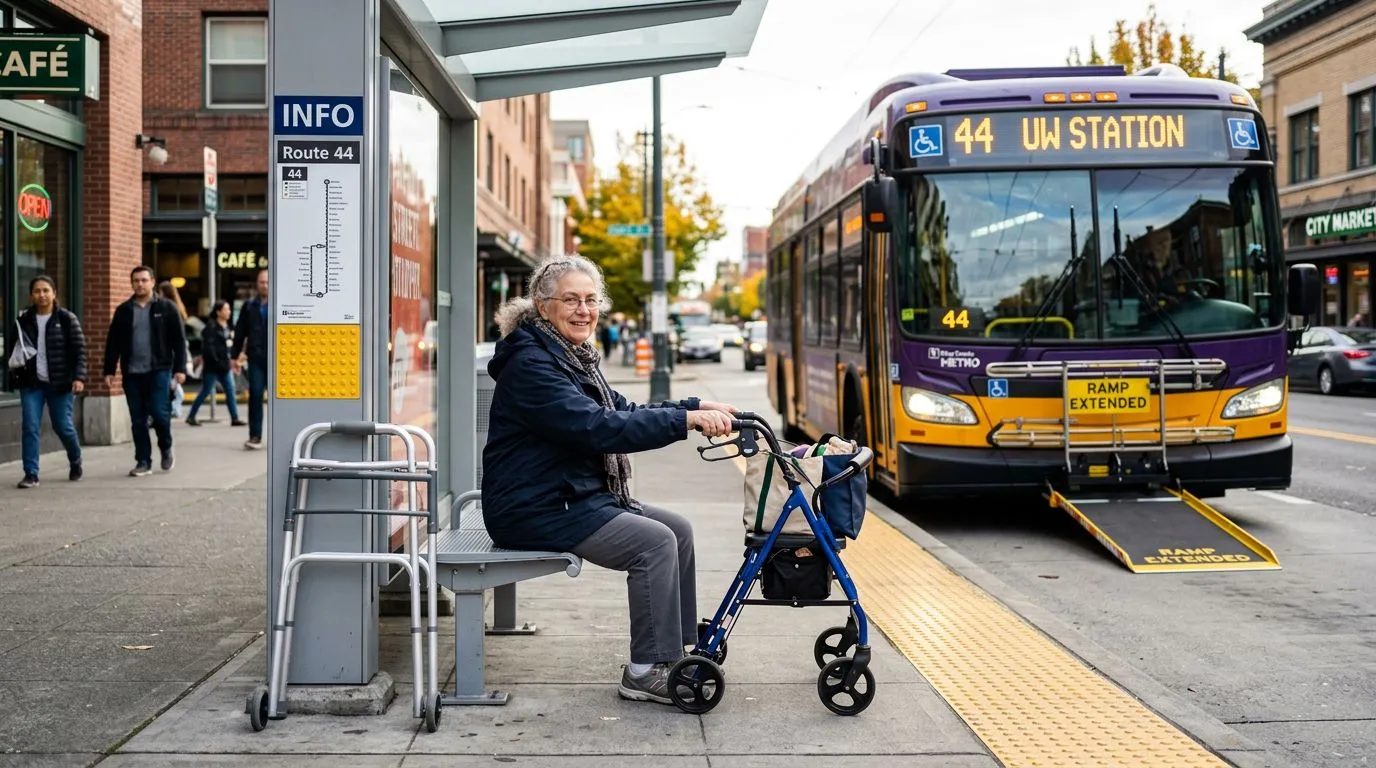
Taking a Walker or Rollator on Public Transportation: Buses, Trains, Subways, and Rideshares
13 min read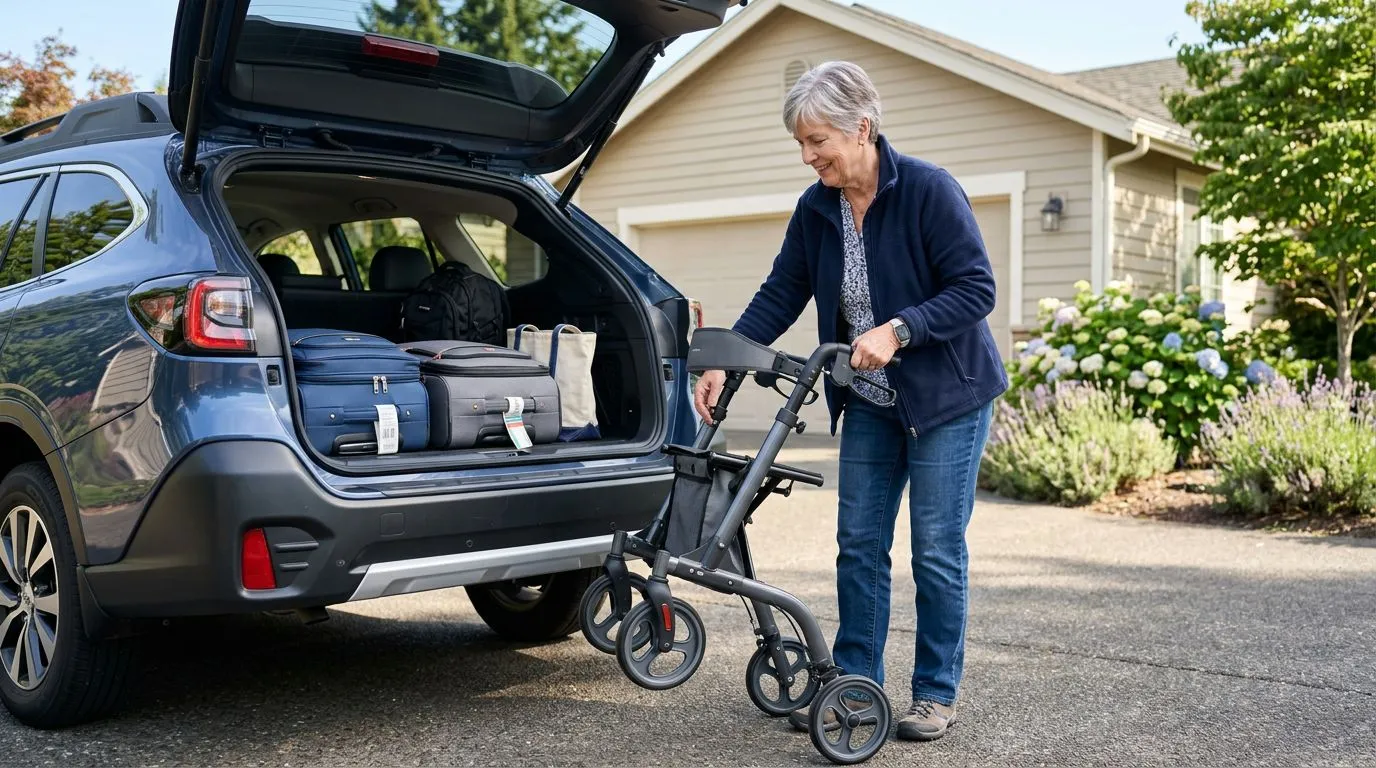
Traveling With a Rollator Walker: Car Trunks, Folding Size, and Airplane Rules
13 min read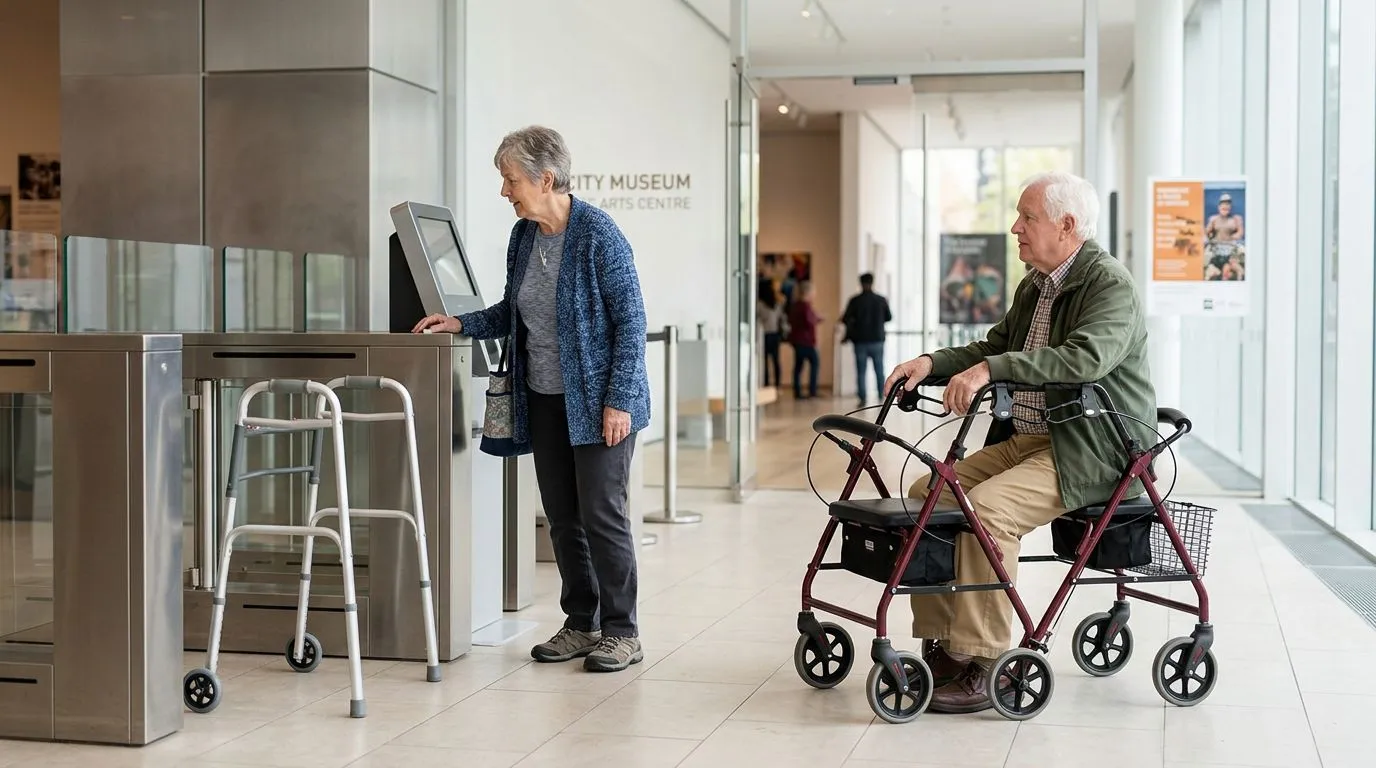
Walker or Rollator for Day Trips and Events: Museums, Restaurants, Stadiums, and Crowded Places
12 min read