Disclosure: We may earn a commission when you buy through links on this page, at no extra cost to you. We buy nothing, sell nothing and accept no payment for coverage — commissions never decide what we recommend. How we make money.
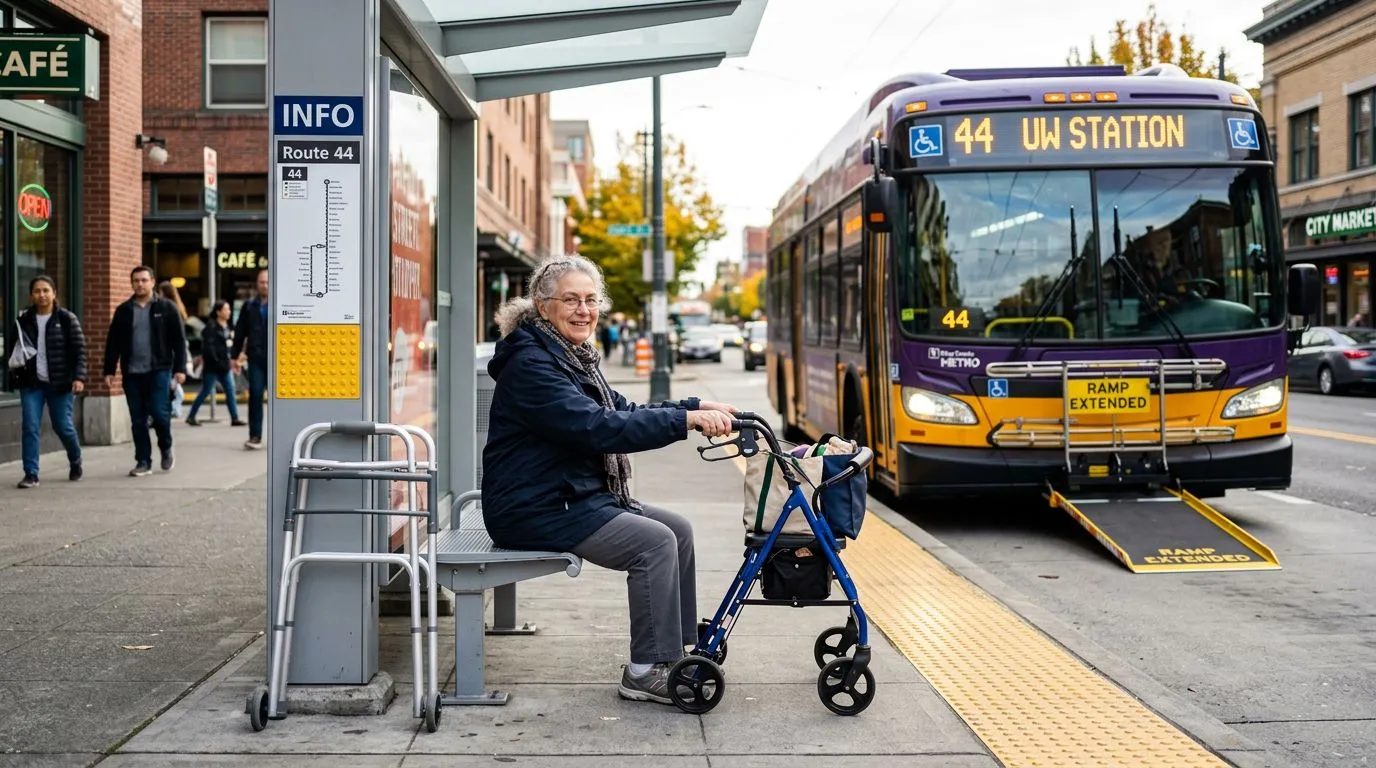
You can take a walker or rollator on most public transportation, but the easiest choice depends on how you board, fold, brake, sit, and transfer. A standard or two-wheel walker is often simpler in tight aisles and cars because it is lighter and folds flatter. A rollator may work better for longer waits because it has wheels, hand brakes, and a built-in seat. The safest plan is to practice folding, measure your mobility aid, and know where you will sit before the vehicle arrives.
Public transportation can help protect independence, but it also brings real challenges: bus ramps, subway gaps, train platforms, crowded elevators, and rideshare trunks. This guide covers walkers and rollators separately where it matters, so you can choose the right setup for buses, trains, subways, and car rides without relying on brand names or guesswork.
Quick 60-second decision: walker or rollator for transit?
If you are choosing what to bring for a specific trip, start with the environment. A 4-wheel rollator may feel great for walking 3 blocks to a bus stop, but it can be awkward in a narrow aisle. A standard folding walker may be slower outdoors, yet easier to lift, turn, and place beside your knees on a crowded train.
Think of a walker as a stability tool and a rollator as a mobility-and-rest tool. Standard walkers and two-wheel walkers usually require you to lift or partially lift the frame with each step. Rollators are pushed continuously on 3 or 4 wheels and include hand brakes; most 4-wheel models also include a seat. That difference matters when the vehicle moves, stops, or fills with other passengers.
| Mobility aid type | Best public transit fit | Watch-outs |
|---|---|---|
| Standard folding walker, no wheels | Short trips, tight aisles, rideshare trunks, people who need firm support when standing | Slower over long distances; can be tiring if you must lift it often |
| Two-wheel walker | Bus stops, stations, and platforms where you need some rolling help but still want a stable rear frame | Rear legs may drag on uneven pavement; not a seat |
| 3-wheel rollator | Narrow spaces, quick errands, and users who want a lighter rolling aid | Usually no full seat; less stable for resting than a 4-wheel rollator |
| 4-wheel rollator with seat | Long waits, large stations, and trips where you may need to sit before boarding | Must lock brakes before sitting or transferring; bulkier when boarding |
| Upright or stand-up rollator | Users who are fitted for a more upright posture and need forearm support | Taller frame can be harder to place in small vehicles or under train seats |
| Bariatric walker or rollator | Users needing a higher weight capacity, often 300 lb, 400 lb, or more depending on the frame | Wider frame may need extra planning for doorways, aisles, and car trunks |
Who is a walker best for? A walker is often best for someone who needs maximum standing stability, walks shorter distances, and can manage a slower pace. Who is a rollator best for? A rollator is often best for someone who can safely use hand brakes, walk with a rolling device, and benefits from a seat during waits.
Measure 3 things before your first trip
Before you ride, measure 3 numbers: overall width, folded size, and handle height. These measurements help you decide whether your walker or rollator will fit through vehicle doors, into elevators, along train aisles, and into a rideshare trunk.
Many standard walkers are about 22 to 25 inches wide, while rollators are commonly in the 23 to 28 inch range. Bariatric frames can be wider. Doorways and transit spaces vary, so do not assume your device will fit comfortably just because it fits at home. If your hallway is 36 inches wide and still feels tight during turns, a crowded bus aisle will likely feel tighter.
How to measure at home
- Measure width at the widest point, usually outside wheel to outside wheel or outside rear leg to outside rear leg.
- Fold the walker or rollator and measure its thickest folded depth. This matters for trunks and tight train seating areas.
- Measure handle height from the floor to the top of the grip. Handles that are too low can encourage stooping; too high can reduce control.
- Check weight. A lighter walker may be around 6 to 10 lb, while many rollators are heavier, often around 14 to 25 lb depending on size and features.
- Know the weight capacity printed in the manual or on the frame label. Do not use the seat on a rollator unless the capacity and instructions support it.
If you use a rollator, test the brakes too. Lock both brakes, gently try to roll the frame, and make sure it stays still. If the brakes do not hold on a slight slope, fix the problem before relying on the rollator at a bus stop or station.
Buses: board with a walker or rollator in 4 steps
Buses are often the most practical public transportation option for walker and rollator users because many have low floors, ramps, kneeling features, and priority seating near the front. The challenge is timing. Boarding may happen while other passengers are waiting behind you, so a simple 4-step routine helps.
Step 1: Pause and make eye contact
Stand back from the curb until the bus stops fully. Let the driver see your walker or rollator. If you need the ramp lowered, ask clearly and early. You do not need to rush into the doorway while the bus is still settling.
Step 2: Set brakes or stabilize the frame
With a rollator, squeeze or lock the brakes before stepping onto the ramp. With a standard walker, place all 4 legs firmly before shifting weight. A two-wheel walker should stay straight so the rear legs do not catch on the ramp edge.
Step 3: Board slowly and choose a seat first
Priority seats are typically near the front and reduce how far you must walk while the bus is moving. If you use a rollator, do not sit on the rollator while the bus is in motion. Transfer to a bus seat when possible, lock the rollator brakes, and keep the frame out of the aisle as much as you can.
Step 4: Exit with the same routine
Wait until the bus stops completely. Stand, position your walker or rollator, and move toward the exit only when you feel steady. If the ramp is needed, ask for it again. A careful 30-second exit is better than a rushed one.
For bus travel, a standard walker may be easier when the ride is short and the bus is crowded. A rollator may be better if the bus stop is several hundred feet from your home or if you often wait 10 to 20 minutes and need a place to rest before boarding.
Trains and subways: plan for 30-inch doors, gaps, and elevators
Train and subway trips usually involve more walking than bus trips. You may need to move from a parking area or sidewalk to an elevator, through fare gates, along a platform, and into a car. Even when train doors are around 30 inches wide or wider, the usable space can shrink quickly as passengers gather near the entrance.
Platform gaps and height changes are the main concerns. Some gaps are small; others are wide enough to catch a walker leg, rollator wheel, or cane tip. Approach the doorway straight on, avoid diagonal turns over the gap, and let other passengers move first if that gives you more room.
For a standard walker, lift and place the full frame inside the train before stepping forward. For a two-wheel walker, make sure the rear legs clear the gap. For a rollator, keep both hands on the grips, control the front wheels, and do not let the rollator pull you forward. If the gap looks unsafe, ask transit staff for help or use a more accessible boarding point when available.
Elevators, escalators, and stairs
Elevators are usually the best choice with a walker or rollator, even if they add 5 minutes to the trip. Escalators can be risky because wheels, walker tips, and balance can all shift at once. Stairs may be possible for some walker users with training, but they are not a good place to improvise. If stairs are part of your route, ask a physical therapist or mobility professional to teach a safe method specific to your device and ability.
| Transit feature | Walker strategy | Rollator strategy |
|---|---|---|
| Fare gate or turnstile | Use the wider accessible gate when available; keep the frame square | Use the accessible gate; slow the wheels before the gate closes |
| Platform gap | Place the walker fully across before stepping | Control front wheels and avoid being pulled forward |
| Crowded train car | Fold if seated and space allows | Lock brakes and position beside or in front of you, not in the aisle |
| Long station hallway | Allow extra time and rest at benches | Use brakes when stopping; sit only where safe and permitted |
On longer rail trips, a rollator’s seat can be valuable while you wait on a platform, but the train seat is usually safer once you are on board. A walker can be less convenient across a large station, yet easier to tuck near your legs when you sit.
Rideshares and taxis: fold and load in under 2 minutes
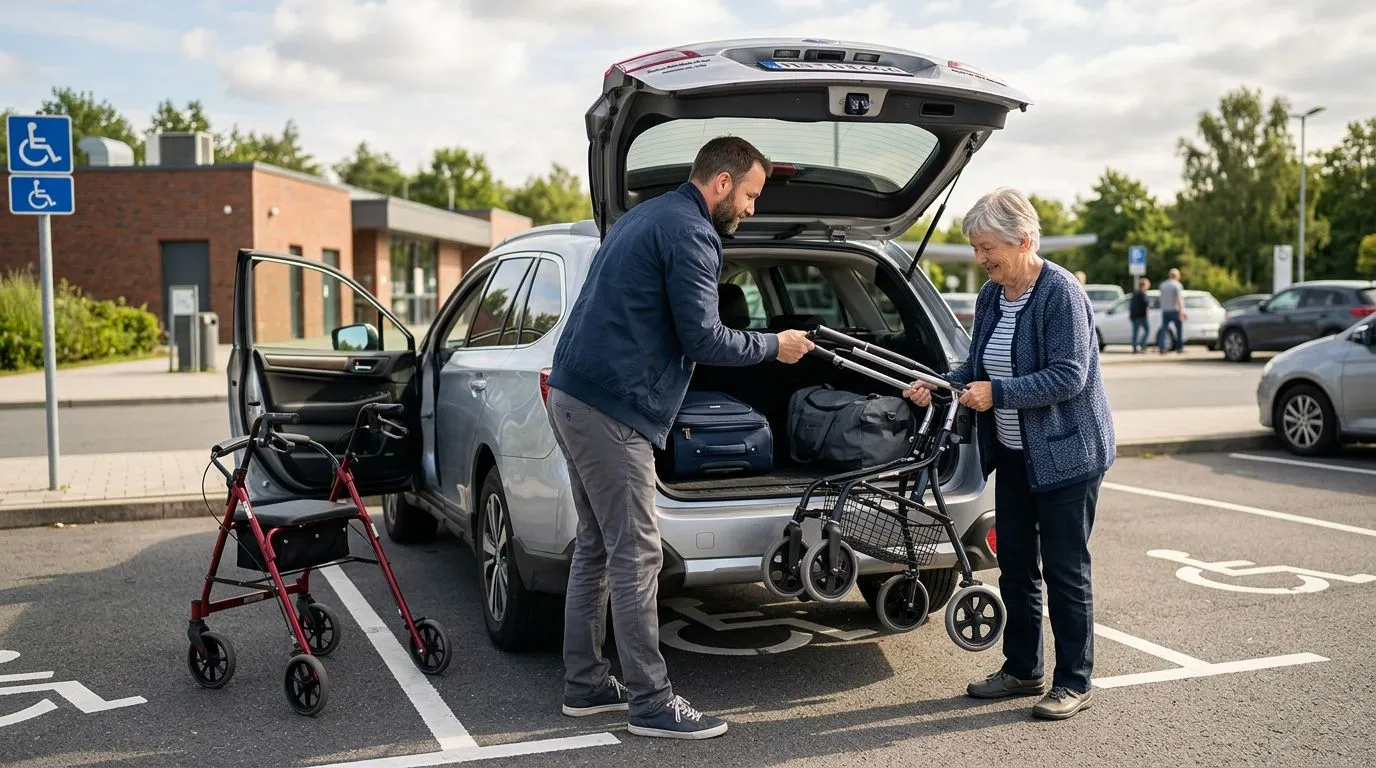
Cars create a different problem: storage. A folding walker often fits in a trunk, back seat, or footwell more easily than a rollator. Many walkers fold in seconds and have a flatter profile, while rollators may require lifting a heavier frame and managing a seat, basket, or larger wheels.
Before calling a rideshare or taxi, fold your walker or rollator once and note its size. If it takes you more than 2 minutes at home, practice until the motion feels familiar. Remove loose bags from the frame before the car arrives so they do not swing, spill, or prevent the device from folding.
Getting in and out of the car
Move slowly. Place the walker or rollator near the car door, turn so you can feel the seat behind your legs, sit first, and then bring your legs in. If another person loads the device, explain where to hold it. Rollators should not be lifted by brake cables, seat straps, or removable baskets.
When exiting, ask for the device to be placed fully open and close enough to reach before you stand. With a rollator, confirm both brakes are locked before you use it to steady yourself. With a standard walker, make sure all 4 tips are on the ground and not partly under the car.
If you regularly use rideshares, a standard folding walker or compact two-wheel walker may be the simpler travel tool for shorter outings. If you need a rollator because of walking distance or rest breaks, consider whether you can lift it independently or whether you typically travel with help.
Brakes, seats, and transfers: 5 safety habits
Rollator brakes and seats are helpful, but they require consistent habits. A walker has no hand brakes and usually no seat, so the safety focus is firm placement and controlled transfers. In both cases, the most important rule is simple: do not sit, stand, or turn while the device is moving.
- Lock both rollator brakes every time you stop to sit, stand, or transfer.
- Use the vehicle seat when the bus, train, or car is moving; a rollator seat is for stationary rest in appropriate areas.
- Keep bags light and balanced. A 10 lb bag hanging from one side can change how a rollator steers.
- Do not pull up on a walker or rollator from a low seat unless your clinician has taught you that method. Push from the seat or armrest when available.
- Keep your feet inside the frame area when standing with a walker, and avoid stepping too far behind a rollator.
Transfers are where many close calls happen. On a bus, the floor may tilt slightly at the curb. On a train, the car can move sooner than expected. In a rideshare, the door opening may be narrow. Give yourself an extra 5 to 10 seconds at every transfer point.
Pack 6 small items for smoother public transportation
A good transit setup is not about carrying more. It is about carrying the right small items, so you are not forced to solve problems in the middle of a platform or parking lane.
- A simple ID and emergency contact card in an easy-to-find pocket.
- A phone with enough charge for the return trip; a small power bank can help on trips over 4 hours.
- A lightweight bag that attaches securely without dragging or swinging.
- Weather protection, such as a compact poncho, because wet grips and brake handles are harder to manage.
- Replacement walker tips or knowledge of their condition; worn rubber tips reduce traction.
- A written route note with elevator locations, stop names, or pickup points if you are trying a new trip.
For rollators, keep the storage pouch modest. Overloading the basket can affect steering and make folding harder. For walkers, avoid hanging heavy bags from the front crossbar because it can change the way the frame lands when you step.
When a standard walker is easier than a rollator in 5 real situations
Rollators are popular for a reason: they roll smoothly, provide a seat, and help many people cover more distance. Still, a standard walker can be the better transit choice in several common situations.
- Crowded buses: a folded walker may take less room than a 4-wheel rollator.
- Short rideshares: a walker is often lighter to lift and easier to place in a trunk.
- Tight apartment-to-curb routes: no-wheel or two-wheel walkers can be easier to control in narrow hallways.
- Users who cannot reliably operate hand brakes: rollator brakes are essential, not optional.
- Frequent stand-and-sit transfers: a walker may offer steadier front support when properly fitted and used as instructed.
That does not mean a walker is always safer. If the trip involves 1,000 feet of walking through a station, a rollator may reduce fatigue and provide a planned rest option. The right choice is the device you can control for the whole trip, not just the first doorway.
Practice with a 20-minute dry run before a new route
A short practice session can reveal problems before you are standing at a busy bus stop. Set aside 20 minutes at home or with a caregiver, and rehearse the exact actions your trip will require.
Fold and unfold the walker or rollator 3 times. Practice locking and unlocking rollator brakes 10 times. Sit down and stand up from a chair while positioning the device the way you would on a bus or train. If you will use a rideshare, practice moving the folded device toward a car trunk or back seat without twisting suddenly.
Then do a small real-world test. Walk to the nearest stop without boarding, or visit the station entrance and locate the elevator. Time how long it takes. If the walk to the platform takes 12 minutes on a quiet day, allow more time during rush hour or bad weather.
If you are uncertain about fit, posture, braking, or transfers, ask a physical therapist, occupational therapist, or qualified mobility professional to review your setup. Public transportation is manageable for many walker and rollator users, but the safest plan is personal: the right device, the right route, and enough time to move without rushing.
FAQ
Frequently asked questions
Can I bring a walker or rollator on a city bus? +
Yes, walkers and rollators are commonly allowed on city buses. Use the ramp or kneeling feature if needed, board slowly, transfer to a bus seat when possible, and keep the device folded or positioned out of the aisle.
Is a walker or rollator better for subway travel? +
It depends on the route. A rollator can help with long station walks and waiting, while a folding walker may be easier in tight cars, elevators, and crowded platforms. Consider distance, crowding, gaps, and whether you can safely use rollator brakes.
Should I sit on my rollator while riding a bus or train? +
No. A rollator seat is intended for stationary rest when the brakes are locked and the surface is safe. On a moving bus or train, transfer to a vehicle seat when available.
Will a folding walker fit in a rideshare or taxi? +
Most folding walkers fit in many trunks or back seats, but vehicle size varies. Measure the folded walker at home and practice folding it before the ride arrives.
What should I do if there is a gap between the train and platform? +
Approach straight on, move slowly, and avoid turning over the gap. With a walker, place the frame fully into the train before stepping. With a rollator, control the front wheels carefully and ask transit staff for help if the gap feels unsafe.
Keep reading
Related guides
Road Trips With a Walker or Rollator: Loading the Car, Planning Stops, and Staying Safe
15 min read
Sitting and Standing Safely With a Walker or Rollator
13 min read
Walker or Rollator for Day Trips and Events: Museums, Restaurants, Stadiums, and Crowded Places
12 min read