Disclosure: We may earn a commission when you buy through links on this page, at no extra cost to you. We buy nothing, sell nothing and accept no payment for coverage — commissions never decide what we recommend. How we make money.
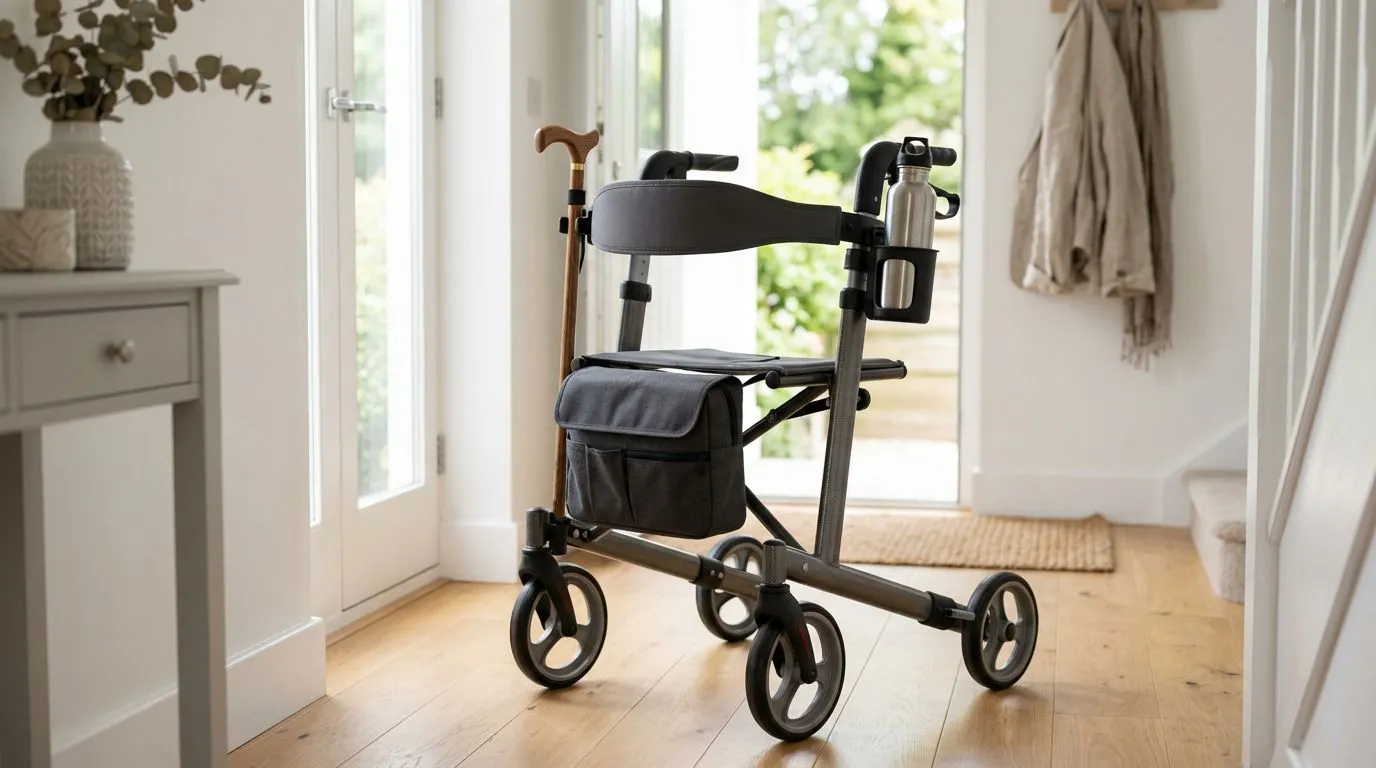
The most useful rollator add-ons solve a daily problem without making the rollator harder to steer, fold, brake, or store. Cup holders, cane holders, and small organizers can all be worthwhile, but only when they fit securely, stay out of your walking path, and do not overload the frame.
For most people, a small front or side organizer is the safest everyday upgrade. A cane holder helps if you switch between a cane and a rollator, and a cup holder is helpful only when it holds a covered drink firmly. The best choice depends less on the accessory itself than on fit, placement, weight, and how you actually use your rollator.
The quick answer: 3 add-ons that are often useful
A typical 4-wheel rollator has handlebars, hand brakes, a seat, a frame basket or pouch, and 6- to 8-inch wheels. That sounds like plenty, but everyday use often reveals small annoyances: no safe place for a water bottle, no spot for a cane, or a bag that sits too low to reach comfortably.
Here is a practical ranking for common convenience add-ons:
| Accessory | Most useful for | Main caution | Practical verdict |
|---|---|---|---|
| Small organizer pouch | Phone, keys, tissues, ID, glasses | Can interfere with folding or brakes if oversized | Usually useful |
| Cane holder | People who use both a cane and a rollator | Cane can rattle, swing, or catch on furniture | Useful for the right user |
| Cup holder | Covered water bottle or travel mug | Spills, tipping, and added side width | Helpful but placement matters |
The safest accessory is usually the one that holds lightweight items close to the frame. A 1-pound water bottle mounted far out on one side can feel more noticeable than a 1-pound pouch centered under the seat because side-mounted weight changes how the rollator feels when turning.
One rule helps: if an accessory makes the rollator wider, heavier on one side, or slower to fold, it needs to earn its place.
Rollator vs walker fit: 4 differences before you attach anything
Rollators and walkers are related, but their accessory needs are not identical. A rollator is a wheeled walker with hand brakes and usually a built-in seat; most 4-wheel rollators also include a basket, pouch, or under-seat storage. A standard walker or folding walker may have no wheels or 2 front wheels, no seat, and no hand brakes.
That difference matters. A cup holder on a rollator often attaches to the side frame near the handlebar. On a standard walker, the same type of clamp may not fit well because the frame tubing, crossbar location, and folding pattern are different. A no-wheel walker also gets lifted with each step, so dangling organizers and side-mounted bottles can swing more than they would on a rollator.
| Mobility aid type | Common frame features | Accessory fit considerations |
|---|---|---|
| Standard walker | 4 legs, no wheels, often folds inward | Keep add-ons light because the walker is lifted |
| Two-wheel walker | 2 front wheels, rear tips or glides | A small pouch may work; avoid items that swing |
| 3-wheel rollator | Narrower frame, hand brakes, no full seat on many designs | Limited mounting space; side accessories may affect tight turns |
| 4-wheel rollator | Seat, brakes, storage, wider frame | Best match for many organizers, cane holders, and bottle holders |
| Upright rollator | Forearm supports, taller frame, hand brakes | Check that add-ons do not block armrests or brake cables |
If you use a walker rather than a rollator, look for accessories described as walker-compatible and check the attachment method carefully. The accessory should not block the folding hinge, rubber handgrips, wheels, brake cables, or the area where your legs move.
Cup holders: useful for 12- to 24-ounce covered drinks
A rollator cup holder is most useful for a water bottle or lidded travel mug, not an open cup of coffee. Many common drink containers fall between about 12 and 24 ounces, and that added weight can shift when the rollator turns or crosses a threshold.
Who it is best for
A cup holder makes sense if you take longer walks, need water nearby, or move around a senior living community, clinic, grocery store, or neighborhood sidewalk. It also helps if you do not want to put a damp bottle inside a fabric pouch with a phone or wallet.
It is less useful if your rollator already feels wide in doorways, if you frequently fold it into a car, or if your main drink is an open cup. Spills can create a slip hazard, and a hot drink can be risky if the rollator bumps a door frame.
Fit and placement checks
- Keep it close to the frame. A holder that sticks out several inches can catch on chairs, counters, or door trim.
- Use covered containers. A screw-top bottle or sealed travel cup is safer than an open cup.
- Check turning clearance. Make a full 360-degree turn in a safe open area and watch whether the holder hits your leg or furniture.
- Test braking reach. Your hand should still reach the brake lever without shifting grip.
- Remove it before transport if needed. If the rollator folds to about half its open width, a cup holder may keep it from closing neatly.
For stability, a cup holder is usually better on a vertical or slightly angled frame tube than on a flexible fabric part. Clamp-style holders can be secure, but only when the tube diameter matches the clamp range and the holder does not rotate when loaded.
Cane holders: practical when you switch aids 2 or more times a day
A cane holder can be one of the most practical rollator add-ons for someone who uses a rollator outdoors but prefers a cane for short indoor distances. If you switch between the two at least 2 times a day, carrying the cane on the rollator may be easier than laying it across the seat or hooking it over the handle.
Who it is best for
This accessory is best for people who use a cane in tight bathrooms, narrow restaurant aisles, stair landings, or inside a home where a rollator may not fit. It can also help during outings when you park the rollator nearby and walk a few steps with a cane, if that is already part of your safe routine.
It is not ideal for every user. If you need both hands on the rollator at all times and do not safely use a cane, adding a cane holder may only add clutter. If the cane extends too far above or below the frame, it can bump walls, elevator doors, or car seats.
Fit and stability checks
- Check cane height. Many canes adjust in 1-inch increments, and the holder should secure the cane without letting it slide downward.
- Use two contact points when possible. A lower cup plus an upper clip is usually steadier than a single loose loop.
- Watch the cane tip. The rubber tip should not drag on the floor or point outward into walkways.
- Confirm folding clearance. Some cane holders block the rollator from folding flat.
- Test on a doorway. A standard interior doorway is often about 30 to 32 inches wide; the cane should not make the rollator much wider.
A cane holder is often safer than balancing the cane across the seat. A loose cane can fall, roll underfoot, or slide into the wheels. Still, the holder must grip firmly enough that the cane stays put when the rollator rolls over a sidewalk seam or elevator gap.
Small organizers: best for items under about 5 pounds
Small organizers are the most broadly useful rollator accessories because they keep daily items reachable without using your hands. A good organizer can hold a phone, keys, medication list, tissues, sanitizer, a small wallet, or reading glasses. Keep the total load modest; under about 5 pounds is a sensible target for many small pouches unless the rollator instructions allow more.
Who it is best for
A small organizer is best for someone who wants everyday essentials at handle height instead of under the seat. It can reduce the need to bend, unzip a low bag, or set items on the rollator seat. It is especially practical for appointments, community rooms, shopping trips, and short walks.
It may not be the right add-on if you already carry a large purse, oxygen equipment, or heavy shopping bags on the rollator. Rollators are mobility aids, not shopping carts. Extra weight can affect steering, braking, and tipping risk, especially when it hangs from the handles.
Organizer styles to compare
| Organizer type | Good for | Watch out for |
|---|---|---|
| Handlebar pouch | Phone, keys, ID, tissues | May swing or cover brake cables |
| Under-seat bag | Light jacket, small purchases | Requires opening or lifting the seat on some rollators |
| Side pouch | Water bottle, glasses case, small book | Can add width on one side |
| Front basket or fabric tote | Larger lightweight items | Heavy loads can affect steering |
The best organizer has simple closures, visible pockets, and a secure attachment. Zippers are good for valuables, but a zipper that takes both hands may be frustrating. Hook-and-loop straps are easy to adjust, but they should wrap tightly and not loosen after repeated folding.
How to measure before buying: 6 checks in 10 minutes
You can avoid most accessory problems with a tape measure and a short test. Spend 10 minutes checking the rollator before choosing an add-on. If you have the owner’s manual, confirm any limits for storage weight, folding, and approved attachment areas.
- Measure the frame tube diameter. Many clamps only fit a certain range, such as around 7/8 inch to 1 inch. Do not force a clamp onto a tube that is too large or too small.
- Measure available straight tubing. Look for at least 2 to 4 inches of clear space where a clamp or strap can sit without touching a hinge, cable, or curve.
- Check handle height and brake cables. Accessories should not rub the brake line or block your fingers from the lever.
- Measure folded clearance. Fold the rollator and see whether the planned location becomes trapped between frame parts.
- Check seat access. If your rollator has a seat, make sure the accessory does not prevent you from sitting squarely or lifting the seat for storage.
- Test with real weight. Put a filled bottle, cane, or loaded pouch in place and roll slowly across a rug edge or threshold.
Do this at home before taking the rollator into a busy store or clinic. If the accessory shifts during a slow test, it is not secure enough for crowded spaces, curb cuts, or uneven sidewalks.
Fit, stability, and safety: the 3 rules that matter most
Convenience should not come at the cost of control. A rollator depends on clear hand placement, working brakes, balanced weight, and predictable wheel movement. Even a small add-on can create trouble if it changes one of those basics.
Rule 1: Do not hang heavy items from the handles
Handles are tempting because they are easy to reach. The problem is leverage. A bag weighing 6 or 8 pounds near the handles can make the rollator feel rear-heavy, especially when you sit down or turn. Use built-in storage when possible, and keep heavier items low and centered.
Rule 2: Keep brakes and cables clear
Hand brakes must be easy to squeeze and lock. A pouch strap wrapped around the brake cable or a cup holder blocking the lever can delay stopping. After attaching anything, squeeze both brakes 5 times and lock them if your rollator has parking brakes.
Rule 3: Keep your walking space open
Your feet, knees, and clothing need room. An organizer that hangs inward can brush your legs. A cane that angles backward can catch your shoe. Walk 20 feet in a clear hallway and pay attention to contact, swinging, and noise.
Also consider the environment. A side cup holder may be fine in a wide hallway but annoying in a small apartment kitchen. A cane holder may be stable on smooth floors but rattle outdoors. Practical usefulness is always personal.
Which add-on should you choose first? A 5-situation guide
If you are deciding one accessory at a time, start with the problem you face most often. Buying every add-on can make a rollator crowded and harder to manage.
| Everyday situation | Most useful add-on | Why |
|---|---|---|
| You misplace phone, keys, or glasses | Small organizer pouch | Keeps essentials visible and reachable |
| You walk outdoors for 15 to 30 minutes | Cup holder for covered bottle | Makes hydration easier without using your hands |
| You use a cane in tight indoor areas | Cane holder | Gives the cane a secure place during rollator use |
| You fold the rollator into a car daily | Low-profile removable organizer | Less likely to block folding or storage |
| You live in a narrow apartment | Centered pouch, not side add-ons | Maintains doorway and furniture clearance |
For a 3-wheel rollator, choose especially carefully. These rollators are often valued because they are narrower and easier to turn, so a bulky side accessory can cancel out that advantage. For a bariatric rollator, do not assume every accessory fits just because the frame is larger; tube shape and diameter may differ, and weight limits still apply.
Upright rollators need their own caution. The forearm supports and taller handles can reduce open mounting space. Accessories should not interfere with arm placement, brake reach, or the user’s upright posture.
Common mistakes to avoid: 7 accessory problems
Most rollator accessory issues are simple fit problems. They often show up after a few days of use, not in the first minute.
- Choosing by looks instead of attachment type. A neat-looking pouch is not useful if the straps do not fit your frame.
- Blocking the fold. If you fold the rollator once a day, even a small obstruction becomes frustrating.
- Adding too much side width. Two inches can matter in bathrooms, bedrooms, and restaurant aisles.
- Carrying open drinks. Spills can create floor hazards and damage items in nearby pouches.
- Letting straps dangle. Loose straps can brush wheels or catch on hinges.
- Overloading storage. Groceries, books, and large bottles can quickly exceed what feels stable.
- Ignoring caregiver access. If someone helps load the rollator into a car, removable accessories may make that easier.
After any new accessory is installed, take a slow practice walk. Use the brakes, turn around, sit if your rollator has a seat, stand back up, and fold the frame. A useful add-on should pass all of those steps without needing a workaround.
FAQ: 5 answers about rollator add-ons
Can I put a cup holder on any rollator?
Not always. It depends on the frame tube diameter, available mounting space, brake cable location, and folding design. Check that the holder grips securely and does not stick out far enough to hit furniture or doorways.
Are rollator organizers safe?
They can be safe when they are light, secure, and positioned away from brakes, wheels, and your walking space. Avoid overloading them, and keep heavier items low and centered when possible.
Is a cane holder worth it?
A cane holder is worth considering if you regularly switch between a cane and a rollator. It is less useful if you rarely use a cane or if the holder lets the cane swing, rattle, or extend into walkways.
Can walker accessories fit a rollator?
Sometimes, but not always. Standard walkers, two-wheel walkers, and rollators have different frame shapes, folding points, and handle layouts. Always check measurements rather than assuming universal fit.
How much weight can I carry on a rollator?
Use the rollator’s manual for exact limits. As a practical habit, keep small organizers under about 5 pounds unless the manufacturer’s instructions allow more, and avoid hanging heavy bags from the handles.
Keep reading
Related guides
Walker and Rollator Accessories Guide: Bags, Trays, Cup Holders, Lights, and Comfort Add-Ons
14 min read
Mobility Walker Accessories and Replacement Parts: Bags, Baskets, Glides, Grips, and Brakes
16 min read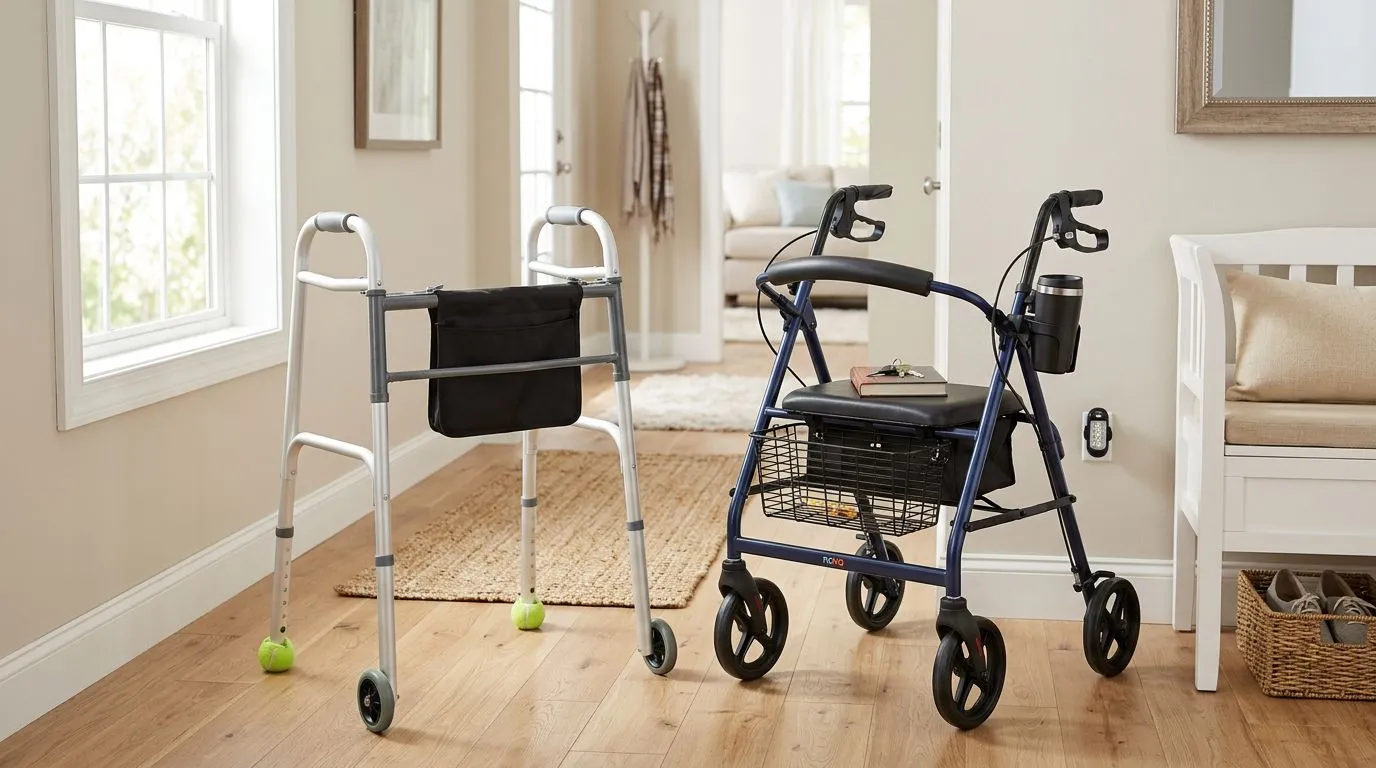
Budgeting for Walker and Rollator Accessories: What to Buy Now, What Can Wait, and What to Skip
11 min read