Disclosure: We may earn a commission when you buy through links on this page, at no extra cost to you. We buy nothing, sell nothing and accept no payment for coverage — commissions never decide what we recommend. How we make money.
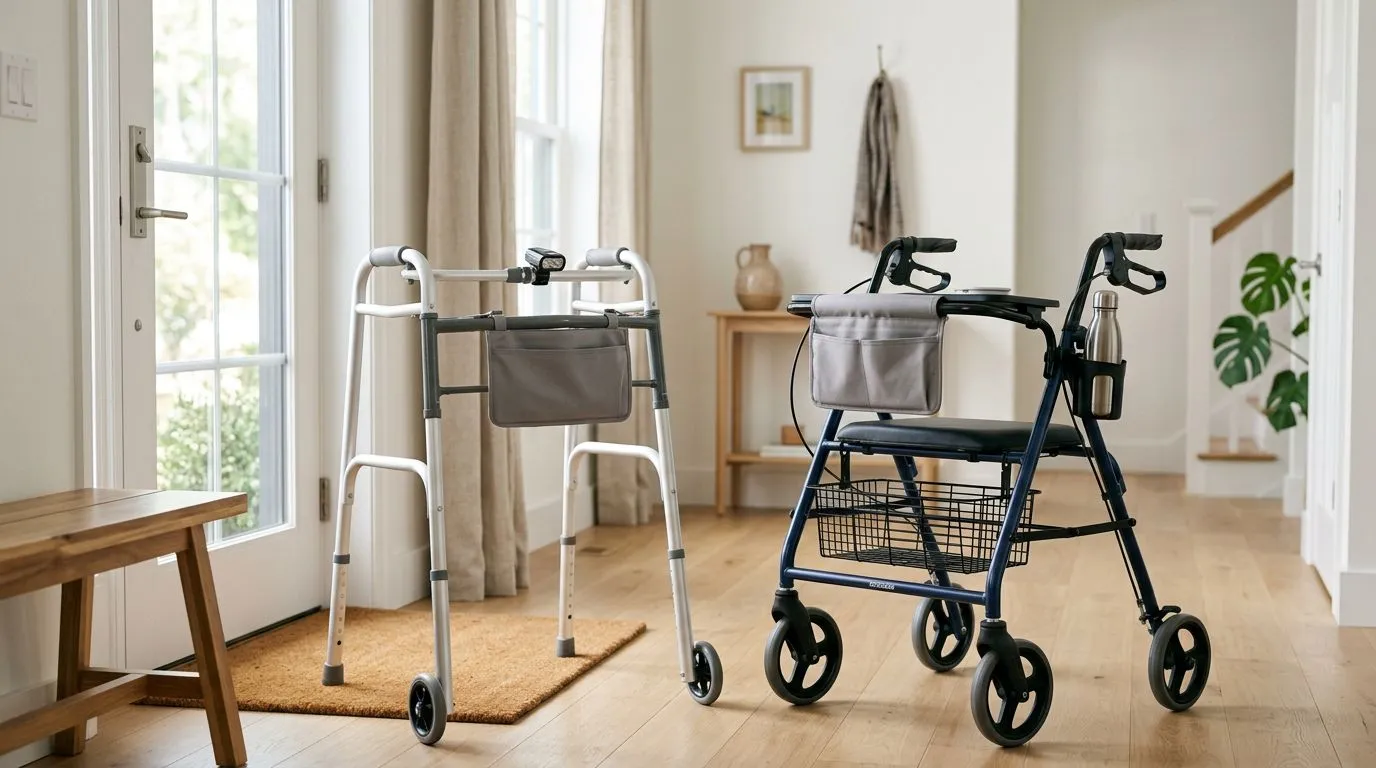
The best walker and rollator accessories solve a daily problem without making the mobility aid harder or less safe to use. Bags, trays, cup holders, lights, grip covers, glides, and seat or backrest pads can all help, but compatibility matters: a standard walker, two-wheel walker, and rollator do not support accessories the same way.
Start with your device type, frame width, handle style, and brake setup. Then choose add-ons that keep weight centered, leave your hands free, and do not interfere with folding, hand brakes, wheels, or your walking path.
Quick answer: 5 accessories worth considering first
If you are shopping from a short list, focus on accessories that improve everyday use without adding clutter. For many people, the 5 most practical options are a front bag or pouch, a tray, a cup holder, a visibility light, and a comfort grip or hand pad.
That does not mean everyone needs all 5. A tray can be useful at home but awkward outdoors. A bag may be essential for a rollator user walking to the mailbox, while a standard walker user may only need a small pouch for a phone, tissues, and reading glasses.
| Accessory | Most useful for | Best fit | Main caution |
|---|---|---|---|
| Walker or rollator bag | Phone, keys, wallet, small items | Standard walkers, two-wheel walkers, rollators | Do not overload or hang low enough to hit the legs |
| Tray | Carrying a plate, book, mail, or medication organizer | Many folding walkers and some rollators | Must sit level and not block safe hand placement |
| Cup holder | Water bottle or covered drink | Rollators and some walkers with round tubing | Use covered containers to prevent spills |
| Light or reflector | Dim hallways, early evening walks, parking lots | Most walkers and rollators | Mount where it does not catch on clothing or furniture |
| Grip or hand comfort add-on | Sore palms, pressure points, cold handles | Walkers and rollators | Grip size should still feel secure |
Think of accessories as small adjustments, not a replacement for a properly fitted walker or rollator. If the frame height is wrong by even 1 or 2 inches, a soft grip will not fix the posture problem.
Walker vs. rollator compatibility: 2 wheels, 4 wheels, seats, and brakes
Before buying any accessory, identify whether you use a walker or a rollator. In everyday conversation, many people use “walker” for both, but accessory fit can be very different.
A standard walker has 4 legs and no wheels. A two-wheel walker has wheels on the front 2 legs and rubber tips or glides on the back. A rollator is a wheeled walker, usually with 3 or 4 wheels, hand brakes, and often a built-in seat. Upright rollators have higher forearm supports, and bariatric rollators have wider, heavier-duty frames with higher weight capacities.
| Mobility aid type | Typical design | Accessory fit notes |
|---|---|---|
| Standard walker | 4 legs, no wheels, usually folds | Front pouches and trays often work well; avoid side items that hit doorways |
| Two-wheel walker | 2 front wheels, 2 rear tips or glides | Bags and trays can work; make sure weight does not pull the front downward |
| 3-wheel rollator | 3 wheels, hand brakes, no full seat on many designs | Good for small pouches and lights; tray and seat accessories may not fit |
| 4-wheel rollator | 4 wheels, hand brakes, usually seat and basket or pouch | Often accepts cup holders, bags, lights, and comfort add-ons |
| Upright rollator | 4 wheels, higher arm supports, hand brakes | Check handle and forearm platform shape before adding trays or bags |
| Bariatric rollator | Wider reinforced frame, often 300 lb to 500 lb capacity | Use accessories sized for the wider frame; do not assume standard trays fit |
The major safety difference is braking. Walkers do not have hand brakes. Rollators do. Any rollator accessory must leave the brake cables, brake levers, wheels, and folding hinges clear. A bag strap wrapped around a brake cable is more than a small inconvenience; it can affect control.
For standard and two-wheel walkers, watch the front crossbar and side frame. Accessories should not change how the walker lands on the floor. If one leg or glide does not contact the floor evenly after an accessory is installed, remove it and reassess.
Bags and baskets: keep loads light, often 5 to 10 lb
A walker or rollator bag is often the most useful accessory because it frees your hands. It can hold a phone, keys, wallet, tissues, a small water bottle, reading glasses, or a folded grocery list. Many people use it every day.
The safest bag is light, centered, and easy to open while seated or standing still. As a general habit, keep everyday loads modest, often in the 5 to 10 lb range unless your mobility aid and accessory instructions clearly allow more. Heavy items can change balance, especially when hung from one side.
Best bag placement
- Front-mounted bags often work well on standard walkers and two-wheel walkers because they keep items visible and centered.
- Under-seat bags are common on 4-wheel rollators and keep weight low, which is usually better for stability.
- Side pouches can be convenient but may catch on door frames, kitchen cabinets, or narrow bathroom entrances.
- Handlebar bags should be small, especially on rollators, because too much handle weight can affect steering.
For a standard walker, choose a bag that does not block your hands from gripping the side handles or top grips. For a two-wheel walker, make sure a full pouch does not swing into your knees as you step forward. For a rollator, keep the seat accessible if the bag attaches near the sitting area.
Open-top baskets may work for bulky lightweight items, but they are less secure for a phone or medication bottle. Zippered or hook-and-loop closures are safer when crossing thresholds or riding in a car.
Trays and food transport: measure 16 to 20 inches of frame width first
Trays help move a sandwich, cup with lid, mail, paperback book, or small household item from one room to another. They are especially popular with people who use a walker inside the home and want fewer trips between the kitchen and living room.
Compatibility depends on frame width and handle shape. Many adult walkers are roughly 16 to 20 inches wide between the inside of the handles, but actual measurements vary. A tray that is too narrow will not sit securely; one that is too wide may wobble or prevent folding.
Walker trays
Standard and two-wheel walkers are often the best candidates for trays because the upper frame provides a stable rectangular platform. Some trays rest across the top handles. Others clip or hook onto the frame. The tray should not cover the handgrip area you need for safe standing, turning, or sitting down.
Rollator trays
Rollator trays can be useful, but they require more caution. A 4-wheel rollator moves easily, which is exactly why carrying hot coffee or soup on a tray can be risky. If you use a tray on a rollator, use covered containers, lock the brakes when loading or unloading, and move slowly.
On upright rollators, trays may not work because the forearm supports and higher handles change the frame layout. On 3-wheel rollators, tray fit is often limited because the frame is narrower and triangular rather than rectangular.
Treat a tray as a light-duty convenience surface, not a cart. If an item is heavy enough that you would normally use 2 hands to carry it, it is probably too heavy or awkward for a walker tray.
Cup holders and cane clips: small add-ons with 1 big safety rule
Cup holders, cane holders, and small clips are convenient, but they share 1 important rule: they must not stick out where they catch on furniture, clothing, doorway trim, or a car door.
Cup holders usually attach to round or oval tubing. They are most common on rollators because the frame often has a handlebar area or side tube that accepts a clamp. Some walkers can accept cup holders too, though square tubing, folding joints, and tight handgrip spacing can make attachment harder.
Use a covered drink whenever possible. A spill near rubber tips, glides, or wheels can create a slipping hazard. Hot drinks need extra caution because a sudden stop at a rug edge or threshold could cause splashing.
When a cane holder makes sense
A cane clip can help if you use a rollator outdoors but still need a cane for a few steps in a tight restaurant, church pew, or bathroom stall. It should hold the cane firmly at 2 points if possible, not just dangle it from one hook.
For walker users, a cane holder is less common. If you rely on a standard walker because you need high stability, switching between a cane and walker should be discussed with a clinician who understands your balance and strength.
Lights, reflectors, and visibility: useful beyond 30 feet
Lights and reflectors can make a walker or rollator easier to see in dim spaces. They help in apartment hallways, assisted living corridors, parking lots, garages, and early evening neighborhood walks. A small light that helps someone notice you from 30 feet away can be meaningful.
For rollator users, front-facing lights can help others see you, and low-mounted lights may help you see surface changes such as sidewalk cracks. Rear reflectors or reflective strips are useful if you walk near driveways or shared paths.
For standard walkers and two-wheel walkers, lights are most practical indoors or near the home. A clip-on light should not make the frame top-heavy. It should also survive normal folding if you store the walker in a car trunk or closet.
Mounting tips
- Place lights where your hand will not hit them during turns.
- Keep switches easy to reach, but not so exposed that they turn on in storage.
- Avoid wrapping straps around brake cables on rollators.
- Check batteries or charging weekly if you walk after dark.
Lights are not permission to walk in unsafe conditions. Wet leaves, icy sidewalks, and poor curb cuts are still hazards, even with good visibility.
Comfort add-ons: 2 hands, 2 wrists, and many pressure points
Comfort accessories can make daily use easier, especially if your palms, wrists, or forearms get sore. Common options include padded grip covers, larger grip sleeves, seat pads, backrest pads, forearm support pads on upright rollators, and rear walker glides.
Grip covers are popular because walkers and rollators put repeated pressure through both hands. A slightly softer surface can reduce irritation, but it should not become slippery. If the grip becomes too wide for your hand, you may have less control, especially when braking on a rollator.
Walker glides and ski-style tips
Two-wheel walkers sometimes use rear glides so the back legs slide rather than lift with each step. They may help on smooth indoor floors, but they can behave differently on carpet, thresholds, or uneven outdoor surfaces. Rubber tips provide more stopping friction; glides reduce drag. That tradeoff matters.
Standard no-wheel walkers are usually lifted and placed, so glides may not be appropriate unless recommended for your situation. If glides make the walker move faster than you can control, switch back to standard tips and ask for guidance.
Rollator seat and backrest comfort
Many 4-wheel rollators include a built-in seat, often around 13 to 18 inches wide depending on frame size. A thin seat pad may improve comfort during short rests, but it should not slide, raise the seat too much, or block folding. Backrest pads should stay firmly attached and should not interfere with the brake cables.
Brake helpers or larger brake lever grips may be useful for some rollator users with hand discomfort, but braking ability is a safety issue. If squeezing the brakes is difficult, have the rollator adjusted or evaluated rather than relying only on an add-on.
How to choose and measure in 10 minutes
You can avoid many accessory mistakes with a 10-minute measuring check. Use a tape measure, look at the folding points, and test where your hands, knees, and feet move during normal use.
- Measure frame width. Check the outside width and the inside distance between handles or upper side rails. This helps with trays and front bags.
- Measure tubing shape and diameter. Many clamp-on accessories fit round tubing better than square tubing. Do not force a clamp onto the wrong shape.
- Check folded size. Fold the walker or rollator with the accessory attached if the instructions allow it. If it jams, remove the accessory before transport.
- Locate brake cables. On rollators, no strap, hook, clamp, or pouch should pull on a brake cable.
- Check walking clearance. Stand behind the walker or inside the rollator handles. March gently in place. Nothing should touch your knees, shins, or toes.
- Test doorways. Many interior doorways are about 28 to 32 inches wide. Side-mounted add-ons can make clearance tighter.
Also consider the user’s strength and routine. A person who folds a walker into a car 4 times a day may prefer one small pouch over a tray, basket, light, and cup holder. Each accessory adds a step.
Review any instructions that came with your walker, rollator, or accessory. Weight capacity belongs to the whole system, not just the frame. An accessory can fail even when the walker itself is strong.
Who each accessory is best for: 3 common routines
The right accessory depends less on the catalog description and more on the day-to-day routine. Here are 3 common examples.
Mostly at home
For someone who uses a standard walker or two-wheel walker inside a house or apartment, a front pouch and a tray may be the most useful combination. The pouch handles small essentials. The tray helps move lightweight items from the kitchen to a table. Rear glides may be considered for smooth floors, but only if the walker remains controlled.
Errands and neighborhood walks
A 4-wheel rollator user who walks outside may benefit from an under-seat bag, a cup holder for a covered water bottle, and reflective accessories. A light can help in parking lots and on shaded sidewalks. A cane holder may help if there are places where the rollator is too large to bring all the way in.
Longer rests and posture support
An upright or bariatric rollator user may care most about comfort: forearm pad condition, seat comfort, backrest feel, and easy-to-reach storage. Because these frames can be wider and more specialized, measuring is especially important. Standard-size trays and bags may not align with the frame.
| Need | Most helpful accessory | Better for walkers | Better for rollators |
|---|---|---|---|
| Carry phone and keys | Small pouch or front bag | Yes | Yes |
| Move a plate or mail indoors | Tray | Often | Sometimes |
| Carry a drink | Cup holder or covered bottle pouch | Sometimes | Often |
| Be seen in low light | Light or reflector | Yes | Yes |
| Rest during outings | Seat pad or backrest pad | No built-in seat | Often |
| Reduce hand pressure | Padded grip cover | Yes | Yes, if brakes remain easy to reach |
If an accessory makes the device more complicated than helpful, skip it. A safer setup with 1 or 2 well-chosen add-ons is better than a crowded frame.
Safety checks before the first 5-minute test walk
After installing any accessory, do a short 5-minute test walk in a clear indoor area before using it outside or in a busy place. The goal is to catch wobbling, rubbing, blocked brakes, or balance changes early.
- Confirm all straps, clips, or clamps are tight.
- Check that a walker still sits evenly on all legs, wheels, tips, or glides.
- On a rollator, squeeze both brakes fully and confirm the accessory does not interfere.
- Turn left and right in a hallway to see if the add-on hits walls or furniture.
- Step over a low threshold only if that is already part of your normal safe routine.
- Remove loose dangling cords, long straps, or anything near the wheels.
Pay attention to fatigue. Even a lightweight accessory can change how the device feels after several rooms, a long hallway, or a trip from the car to a clinic entrance. If steering, lifting, braking, or folding becomes harder, simplify the setup.
For anyone recovering from surgery, dealing with changing balance, or using a walker after a fall, it is wise to ask a physical therapist, occupational therapist, or other qualified clinician before adding equipment that changes how the walker or rollator moves. Accessories should support mobility and independence responsibly, not create a new hazard.
FAQ
Frequently asked questions
Can I use the same accessories on a walker and a rollator? +
Sometimes, but not always. Bags and lights may fit both, while trays, cup holders, seat pads, and brake-related add-ons depend on frame shape, tubing size, folding points, and whether the device has hand brakes.
Are walker trays safe for carrying food and drinks? +
Walker trays can be safe for light items if they fit securely and do not block your hand placement. Use covered cups, avoid hot liquids when possible, and do not treat the tray like a heavy serving cart.
Where is the safest place to put a bag on a rollator? +
An under-seat bag or centered front pouch is usually safer than a heavy side bag because it keeps weight lower and more balanced. Keep all straps away from wheels, brake cables, and folding hinges.
Do cup holders make walkers or rollators less stable? +
A small cup holder used with a covered drink usually adds little weight, but placement matters. If it sticks out, catches on doorways, or makes the frame harder to maneuver, remove it or reposition it.
Are lights useful on a walker if I only use it indoors? +
Yes, a small light can help in dim hallways, bedrooms, garages, or apartment corridors. Mount it where it does not interfere with your grip, folding mechanism, wheels, or rubber tips.
Should I ask a therapist before adding walker or rollator accessories? +
Ask a physical or occupational therapist if you have recent falls, changing balance, hand weakness, recent surgery, or difficulty braking or steering. Accessories should not change the way you safely use the device.
Keep reading
Related guides
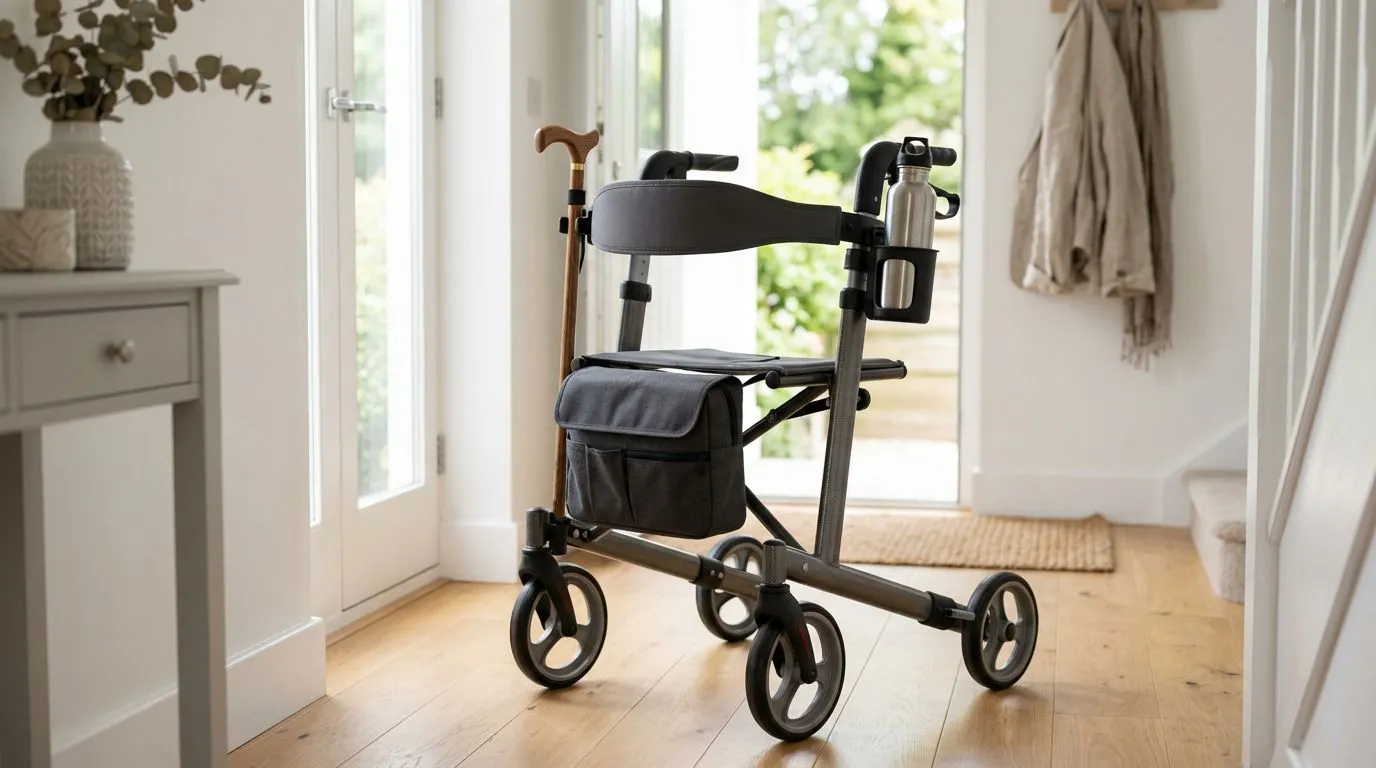
Rollator Cup Holders, Cane Holders, and Small Organizers: Which Add-Ons Are Actually Useful?
13 min read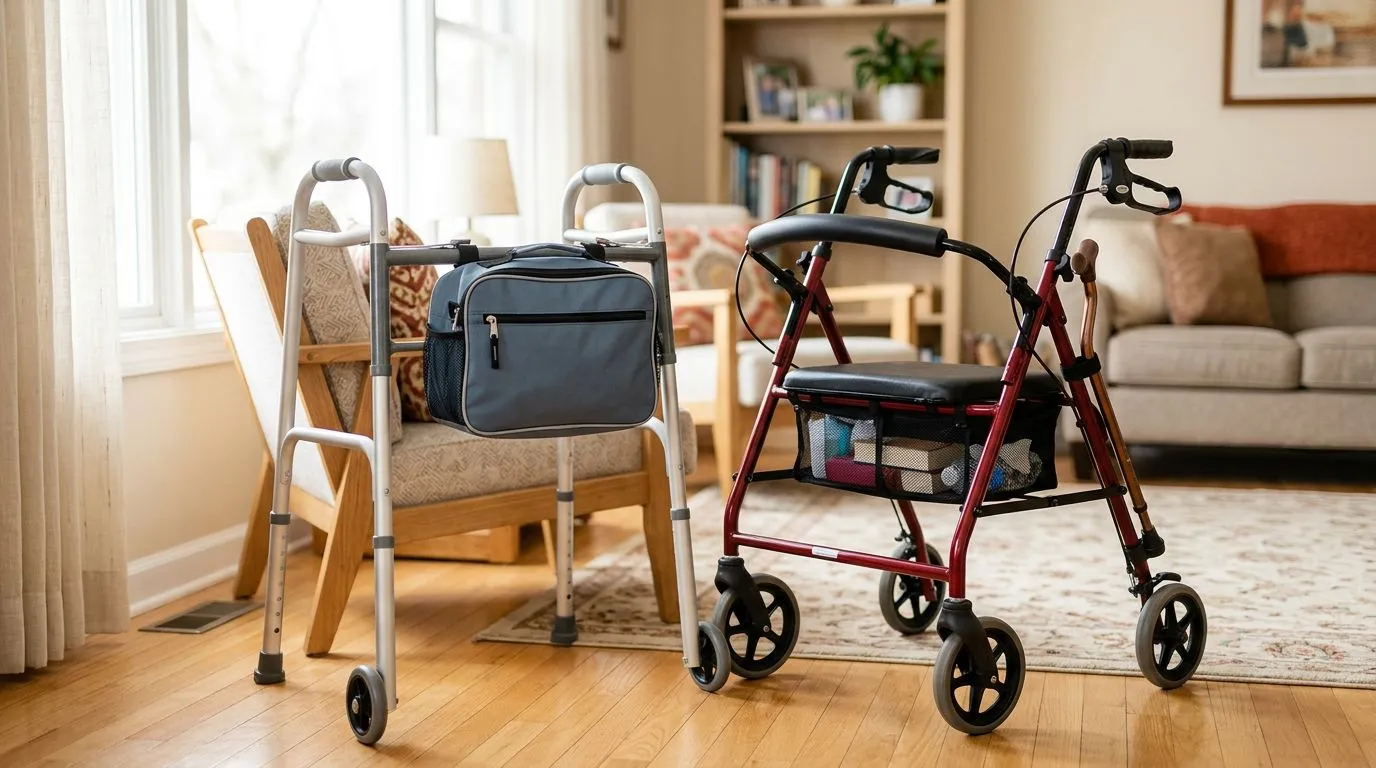
Mobility Walker Accessories and Replacement Parts: Bags, Baskets, Glides, Grips, and Brakes
16 min read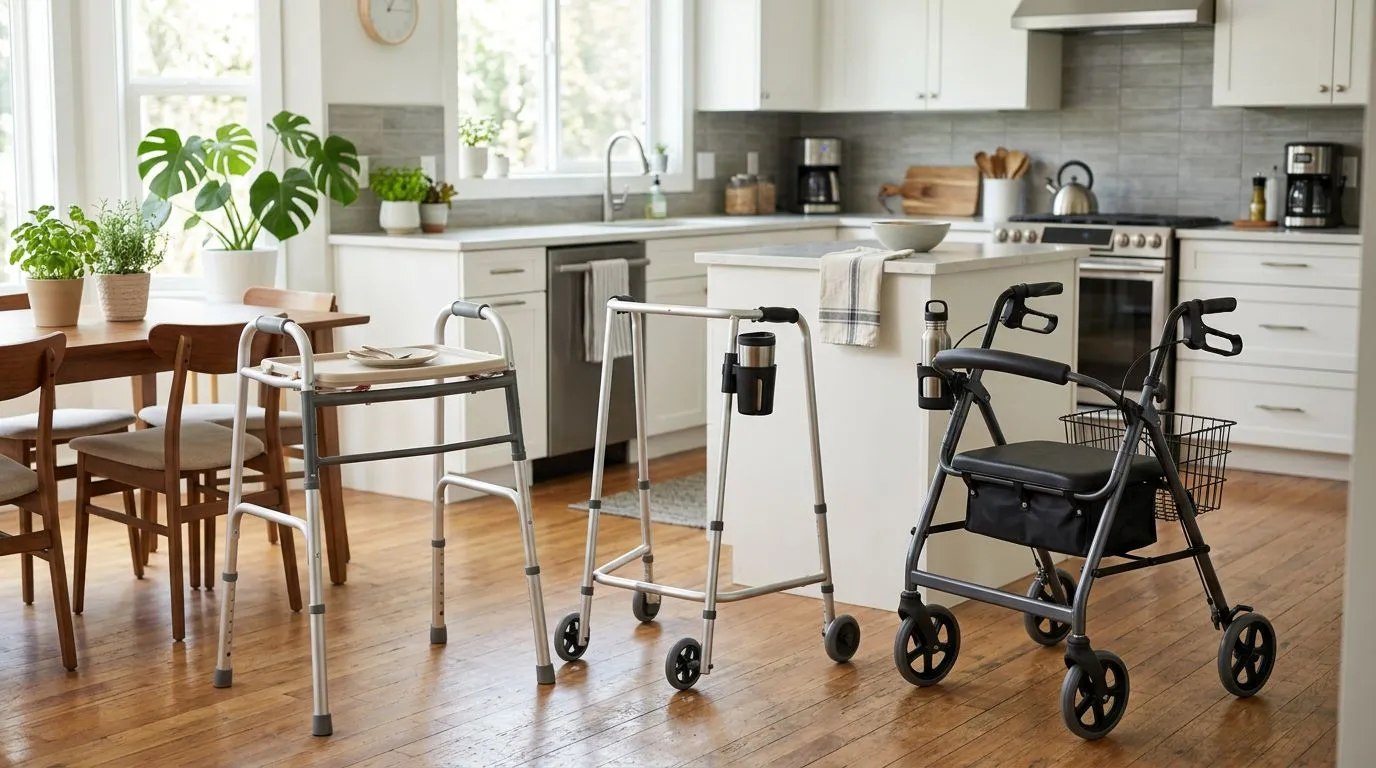
Walker Trays and Cup Holders: What Works Best for Standard Walkers, Two-Wheel Walkers, and Rollators
15 min read