Disclosure: We may earn a commission when you buy through links on this page, at no extra cost to you. We buy nothing, sell nothing and accept no payment for coverage — commissions never decide what we recommend. How we make money.
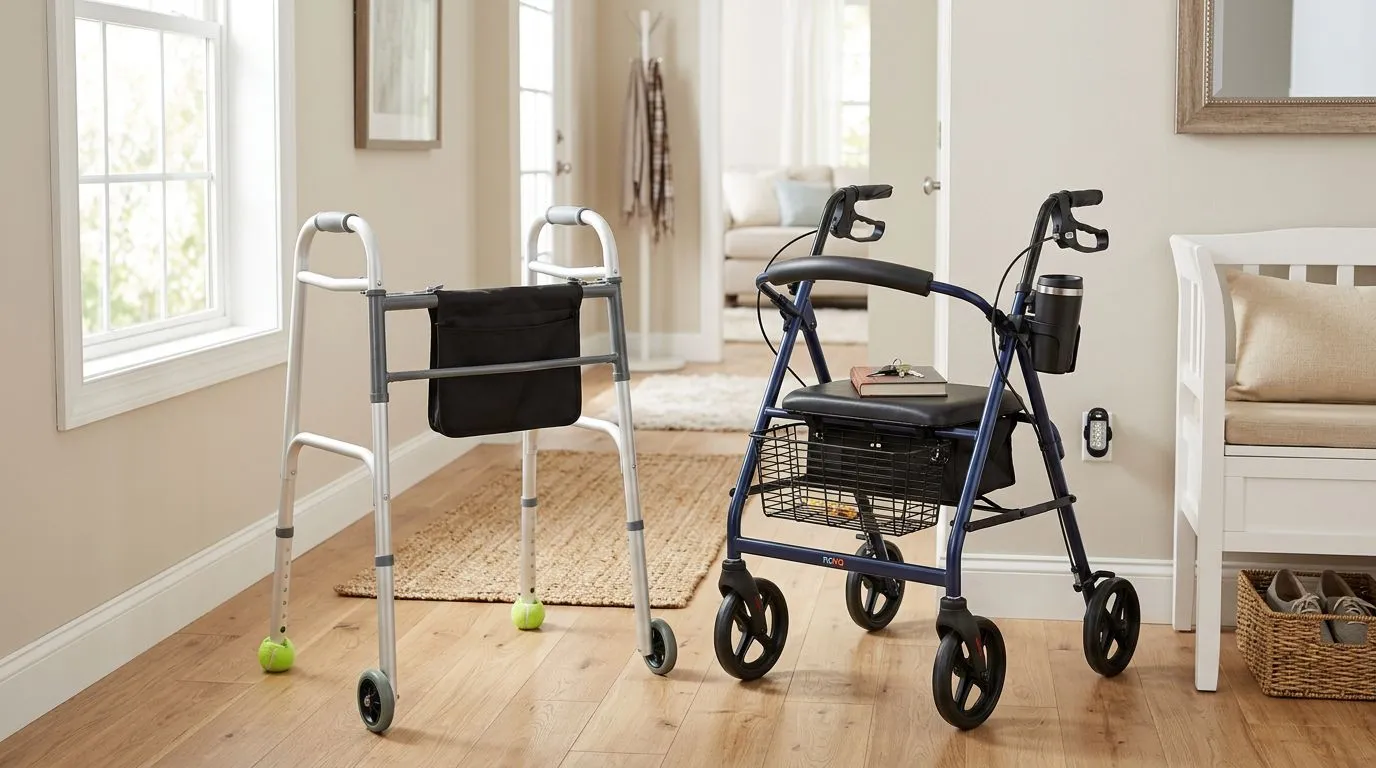
Start with accessories that make your walker or rollator safer and easier to use every day: a secure bag or basket, properly fitting glides or tips for walkers, and anything that improves visibility or safe braking. Trays, cup holders, padded covers, and decorative add-ons can usually wait until you know what you actually use for 1 to 2 weeks.
A good budget plan is simple: buy for safety first, daily carrying second, comfort third, and convenience last. Walkers and rollators need different accessories, so check the frame, wheels, brakes, folding points, and weight limit before buying anything that clips, straps, hangs, or adds bulk.
Start with a 3-tier accessory budget
A practical accessory budget works best in 3 tiers: buy now, wait, and skip. This helps you avoid spending money on items that look helpful but interfere with folding, balance, brake cables, or walking space.
For many people, the first accessory should solve a real daily problem. If you carry a phone, keys, tissues, medication list, or water bottle every time you leave a room, secure storage is more valuable than a tray used once a week. If your standard walker drags on carpet, properly chosen rear glides may matter more than a cup holder.
Rollator users have a different starting point. A 4-wheel rollator usually includes a seat, hand brakes, and some type of storage pouch or basket, but that does not make every add-on useful. Anything attached near the brake cables, seat hinge, or folding mechanism deserves extra scrutiny.
| Priority level | Best examples | Why it matters | Budget note |
|---|---|---|---|
| Buy now | Secure bag or basket, walker glides or replacement tips, reflective light if used in dim areas | Supports daily use and basic safety | Choose 1 or 2 items that solve a frequent problem |
| Can wait | Tray, cup holder, padded grip cover, cane holder | Helpful for some routines but not essential for everyone | Try the walker or rollator for 7 to 14 days first |
| Usually skip | Heavy hanging organizers, loose decorations, oversized add-ons | May affect balance, folding, or clearance | Avoid anything that changes safe use |
Walker vs. rollator accessories: 2 devices, different risks
A walker and a rollator are not the same, so their accessories should not be treated the same. A standard walker or folding walker may have no wheels, 2 front wheels, or rear glides; it is lifted or advanced in short steps. A rollator has 3 or 4 wheels, hand brakes, and usually a built-in seat.
That difference changes the budget. Walkers benefit most from accessories that keep the frame stable and reduce friction, such as properly fitted tips, ski glides, tennis-ball-style glides, or a small front pouch. Rollators benefit from accessories that do not interfere with braking, steering, seating, or folding.
Weight distribution matters, too. A bag hanging from the front of a 2-wheel walker can pull the frame forward if overloaded. A rollator basket under the seat is usually more stable than a heavy tote swinging from the handles. If an accessory makes the device harder to control, it is not a bargain.
| Device type | Common accessory fit | Watch out for | Best value picks |
|---|---|---|---|
| Standard no-wheel walker | Front pouch, replacement rubber tips, tray designed for walker frames | Anything that makes lifting uneven | Tips, lightweight storage |
| 2-wheel folding walker | Rear glides, pouch, basket, tray | Glides that are too slick for the floor surface | Glides and secure bag |
| 3-wheel rollator | Small bag, light, cup holder if narrow | Reduced stability compared with 4-wheel designs when overloaded | Compact storage and visibility add-ons |
| 4-wheel rollator | Under-seat bag, backrest pad, light, cup holder | Brake cable obstruction and seat access | Storage that stays low and centered |
| Upright or bariatric rollator | Larger bag, lights, armrest padding, cane holder | Added width, height, and total load | Comfort add-ons only after fit is confirmed |
Buy now: the 5 accessories most likely to earn their keep
The best first purchases are the ones you use several times a day. For most walker and rollator users, that means storage, floor contact parts, and visibility items before comfort extras.
1. A secure bag, pouch, or basket
A small storage accessory is often the most useful add-on because it keeps both hands available. Look for something that attaches firmly to the frame and does not swing. A good daily-carry setup should hold essentials such as a phone, wallet, keys, glasses, and a written medication list without blocking your knees or feet.
For walkers, a front pouch is often easier than a side bag because it keeps the load centered. For rollators, an under-seat bag or frame-mounted basket is usually better than a heavy handlebar tote. Keep the load modest; even a few extra pounds can change steering and balance.
2. Replacement tips or glides for walkers
Rubber tips are small, but they are safety-critical. Worn tips can reduce grip, especially on tile, hardwood, or smooth concrete. If a walker has 4 legs, all 4 contact points should be checked regularly so the frame sits evenly.
Rear glides can help a 2-wheel walker move more smoothly, especially indoors. The tradeoff is surface control. A glide that works well on carpet may feel too slippery on a polished floor, so match the accessory to the surfaces used most often.
3. A simple light or reflective accessory
Visibility is worth considering if the walker or rollator is used in dim hallways, parking lots, early mornings, or evenings. A small clip-on light or reflective strip can make the frame easier to see without adding much bulk. Place it where it will not shine into your eyes, block your grip, or interfere with brakes.
4. A cane or umbrella holder if used weekly
If you regularly switch between a walker or rollator and a cane, a holder can prevent awkward juggling. This is most useful for rollator users who sit, stand, and move through mixed environments. It is less valuable if the cane is only used occasionally.
5. Brake-related maintenance items for rollators
Rollator brakes are not accessories in the decorative sense, but brake function should come before any convenience add-on. If the brakes feel loose, uneven, or hard to squeeze, address that before buying extras. A rollator with 4 wheels and weak hand brakes is not improved by a cup holder.
Wait 7 to 14 days before buying trays, cup holders, and padding
Some accessories are useful, just not urgent. A 7- to 14-day trial period shows which tasks are actually difficult: moving a plate, carrying water, resting your hands, navigating doorways, or going outside after dark.
Trays are a good example. A walker tray can help carry a meal across a short, level distance, but it may also make the walker wider, harder to fold, or awkward to store. Rollator trays can be helpful when seated at a table-height surface, but they should not encourage carrying hot liquids over uneven floors.
Cup holders are another accessory to think through before buying. If you mainly use a lidded bottle, a side-mounted holder may be useful. If you drink from open cups, spills can create a slip hazard. The better value may be a sealed bottle placed in a bag.
Padded grip covers can help some users with tender hands, but they can also increase handle thickness. Many walker and rollator handles are already close to 1 inch in diameter, and added padding may make the grip too large for smaller hands. For rollators, padding should not make it harder to reach or squeeze the brake levers.
Seat and backrest pads for rollators can improve comfort during short rests, but they may affect folding or raise the seated position slightly. If you sit for only 2 or 3 minutes at a time, the original seat may be enough. If you rest often during longer outings, padding may be worth adding after you confirm it fits securely.
Skip add-ons that add 3 problems for 1 convenience
An accessory is not a good value if it creates 3 new problems while solving 1 small annoyance. The most common issues are added weight, added width, and reduced control.
Be cautious with large hanging bags, especially on the front of a walker or the handles of a rollator. A heavy bag can pull the device forward, swing during turns, or make it harder to keep the frame close to the body. If storage is needed, keep weight low, centered, and within the manufacturer’s guidance.
Oversized trays and wide baskets can also cause trouble in tight spaces. Many interior doorways are about 30 to 32 inches wide, and bathrooms can be tighter. An accessory that bumps door frames several times a day will quickly become frustrating.
Keep decorative items minimal. Loose ribbons, dangling charms, or soft items near wheels can catch, drag, or distract. Reflective tape is useful; clutter is not.
Universal accessories deserve a careful look. The word universal usually means adjustable, not guaranteed. If a clamp does not fit the tube diameter, if straps slide, or if a tray does not sit level, skip it rather than forcing it to work.
How to choose and measure before spending 1 dollar
Before buying any walker or rollator accessory, measure the device and identify where the accessory will attach. Many frames use round tubing, and common handle or frame tube diameters may be around 7/8 inch to 1 inch, but there is no single size across all devices.
Start with the frame. Look at the front bar, side tubes, handles, seat area, brake cables, and folding hinges. An accessory should not cover a height adjustment button, pinch point, brake wire, locking mechanism, or seat latch.
Next, measure clearance. If the walker or rollator must pass through a 30-inch doorway, an accessory that adds 2 inches on each side may become a daily obstacle. Also check car storage. A folding walker or folding rollator is only convenient if it still folds with the accessory attached, or if the accessory removes easily.
Then check weight capacity. The stated user weight capacity of a walker or rollator is not permission to add unlimited cargo. Accessories and carried items add load to the frame, wheels, brackets, and brakes. Bariatric rollators may have higher capacities, but added storage should still stay secure and balanced.
| What to check | Typical number to note | Why it affects the purchase |
|---|---|---|
| Frame tube diameter | About 7/8 to 1 inch on many devices | Helps clamps and straps fit securely |
| Doorway clearance | Often 30 to 32 inches indoors | Prevents accessories from making the device too wide |
| Folded storage space | Measure trunk, closet, or hallway space | Confirms the device still stores easily |
| Carry weight | List the items you carry daily | Keeps storage practical and balanced |
| Brake reach on rollators | Test with both hands on grips | Ensures accessories do not block braking |
Who benefits most from each accessory in 6 everyday situations
The right accessory depends less on the catalog description and more on the routine. Someone who uses a walker only inside the home may need different add-ons than someone who uses a 4-wheel rollator for medical appointments, grocery trips, and outdoor walks.
| Situation | Best accessory focus | Can usually wait | Reason |
|---|---|---|---|
| Indoor walker use on carpet | Rear glides or good rubber tips | Lights | Floor movement matters most |
| Walker use in kitchen or dining area | Small pouch, possibly a fitted tray | Cup holder | Hands-free carrying helps, but spills are a risk |
| Rollator use for appointments | Under-seat bag, ID or medication card pocket | Extra padding | Secure essentials are used every trip |
| Evening or low-light use | Reflective strip or clip-on light | Decorative accessories | Visibility has practical value |
| Longer rollator outings | Comfortable storage, brake check, seat/back comfort if needed | Tray | Resting and control matter more than serving surfaces |
| Small apartment or narrow hallway | Low-profile pouch | Basket, wide cup holder, large tray | Clearance is limited |
Caregivers should also consider setup time. If an accessory must be removed every time the walker folds into a car, it may be abandoned after a few trips. Simple, secure, and repeatable usually wins.
A practical buying order for the first 30 days
During the first 30 days with a walker or rollator, focus on real habits instead of wish-list accessories. The goal is not to own every add-on. The goal is to make the mobility aid easier to use without making it heavier, wider, or less stable.
In week 1, inspect the basics. Check walker tips, rollator brakes, wheel condition, handle height, and folding locks. If anything affects safe movement, address that first. Add only one storage solution if you are already carrying items in your hands.
In week 2, watch for repeated annoyances. Are you setting your phone on the seat and forgetting it? Is the walker catching on carpet? Are you struggling to carry a water bottle? These patterns point to worthwhile purchases.
In weeks 3 and 4, consider comfort and convenience. This is the right time to add a cup holder, grip padding, rollator seat cushion, cane holder, or tray if the need keeps showing up. Buy one item at a time when possible. Testing accessories one by one makes it easier to know what helped and what got in the way.
If a physical therapist, occupational therapist, or clinician helped fit the walker or rollator, ask before adding anything that changes posture, grip, reach, or braking. Accessories should support the way the device was intended to be used, not work around a poor fit.
The bottom line: value means safer daily use, not more gear
The best walker or rollator accessory is the one that solves a daily problem without reducing safety. For walkers, that often means reliable tips or glides and a lightweight pouch. For rollators, it often means secure low storage, clear brake access, and visibility in dim settings.
Trays, cup holders, padding, and comfort add-ons can be worthwhile, but they should prove their value in your routine before earning a place on the frame. If an accessory adds width, weight, wobble, or confusion, skip it. A simple setup that is used confidently every day is usually the better investment.
FAQ
Frequently asked questions
What walker accessory should I buy first? +
For most people, the first useful walker accessory is either a secure lightweight pouch or the correct replacement tips or glides. Choose based on the problem you face most often: carrying essentials or moving safely over your usual floor surfaces.
Are rollator cup holders worth buying? +
A rollator cup holder can be worthwhile if you use a lidded bottle often and the holder does not block the brakes, seat, or folding mechanism. It is less useful for open cups, which can spill and create a slip hazard.
Can accessories make a walker or rollator unsafe? +
Yes. Accessories can cause problems if they add too much weight, hang loosely, make the device wider, block brake cables, or interfere with folding and height adjustments. Keep added items secure, light, and balanced.
Do walker glides work on all floors? +
No. Some glides move well on carpet but may feel too slick on smooth tile or polished floors. Match glides to the surfaces you use most and replace worn rubber tips when grip becomes poor.
Should I buy a tray for a walker or rollator? +
A tray can help with light carrying on level indoor surfaces, but it should usually wait until you know you need it. Avoid carrying hot liquids or heavy items, and make sure the tray fits securely without affecting balance or folding.
Keep reading
Related guides
Walker and Rollator Accessories Guide: Bags, Trays, Cup Holders, Lights, and Comfort Add-Ons
14 min read
Mobility Walker Accessories and Replacement Parts: Bags, Baskets, Glides, Grips, and Brakes
16 min read
Weather, Visibility, and Protection Accessories for Walkers and Rollators
13 min read