Disclosure: We may earn a commission when you buy through links on this page, at no extra cost to you. We buy nothing, sell nothing and accept no payment for coverage — commissions never decide what we recommend. How we make money.
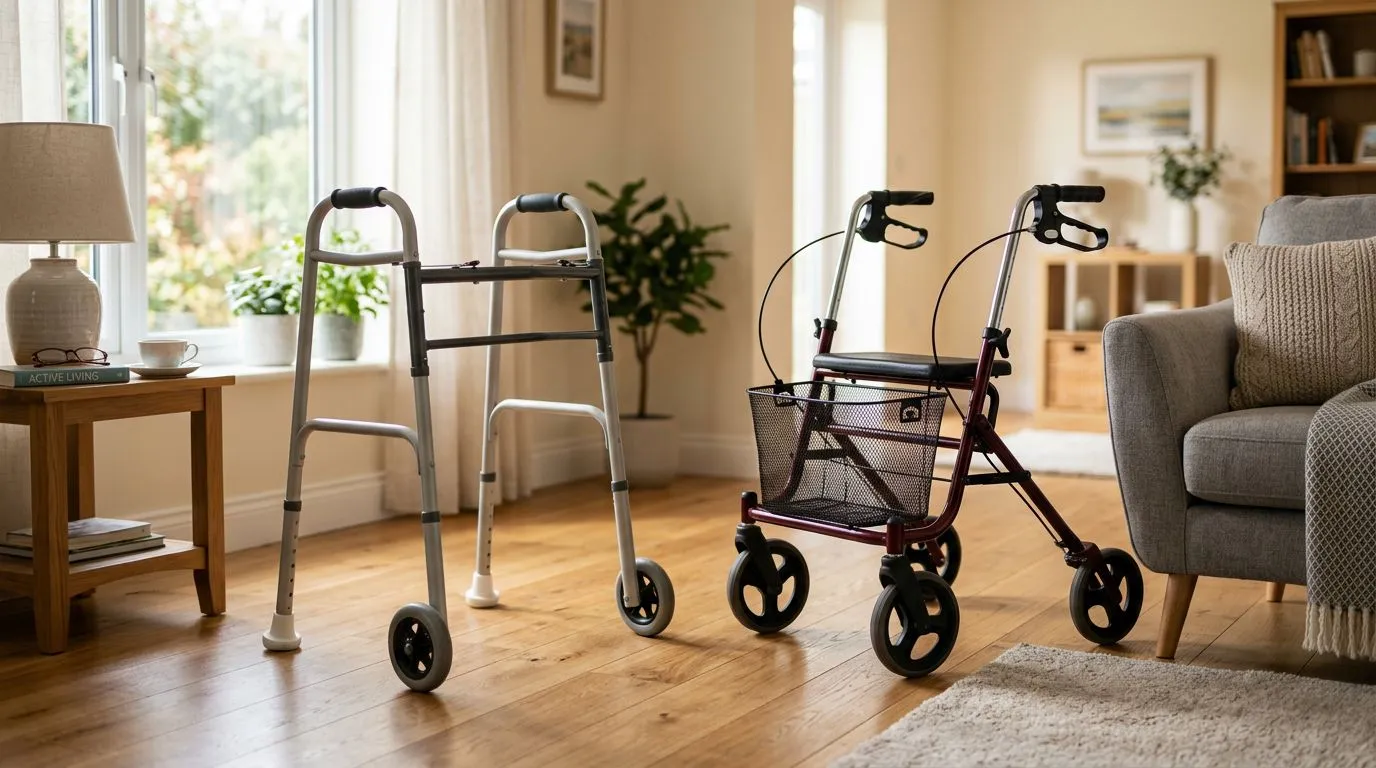
For most indoor floors, properly fitted walker glides are safer and more predictable than tennis balls. Front wheels can also make a standard walker easier to move without lifting it fully. Tennis balls may reduce scraping, but they wear quickly, collect grit, and can slide or snag when cut poorly. Rollators are different: they already have 3 or 4 wheels, hand brakes, and often a seat, so their safety depends more on brake function, wheel condition, and proper indoor clearance than on add-on glides or balls.
The best choice depends on your device, your flooring, and how much support you need. A no-wheel walker gives the most stable floor contact but requires lifting. A two-wheel walker with rear glides can move more smoothly indoors. A rollator offers continuous rolling, but it requires good hand control and enough space to brake and turn safely.
Quick answer: 3 indoor options and the 1-inch rule
The 3 common ways people try to make a walker move more smoothly indoors are glides, tennis balls, and wheels. Each one changes how the walker meets the floor. Even a small change matters, because a walker tip that catches on a 1-inch threshold can interrupt your step just as your weight is shifting.
Walker glides are smooth caps or ski-shaped attachments placed on the rear legs of many two-wheel walkers. They are designed to slide, and many styles are easier to clean than fabric-covered or fuzzy surfaces. On hard floors, they usually give a smoother, quieter motion than plain rubber tips.
Tennis balls are a common homemade solution for the rear legs of a walker. They can reduce noise and help the walker slide, but they are not designed as medical equipment. They may flatten, split, pick up dirt, or become slippery on certain floors. If the opening is cut unevenly, the ball can rotate or come loose.
Wheels reduce how much the walker must be lifted. On a two-wheel walker, the front wheels roll while the rear tips or glides help slow and stabilize the frame. On a rollator, all 3 or 4 wheels roll, and hand brakes are essential for control.
| Option | Common use | Main benefit | Main caution |
|---|---|---|---|
| Rear glides | Two-wheel walkers | Smooth indoor sliding | Must fit the leg size and be replaced when worn |
| Tennis balls | Temporary rear-leg covers on walkers | Quieter movement on some floors | Can collect grit, split, or slip |
| Front wheels | Standard or folding walkers converted to two-wheel use | Less lifting with each step | Can move too fast if the user needs heavy support |
| Rollator wheels | 3-wheel and 4-wheel rollators | Continuous rolling with brakes | Requires brake use, turning space, and hand control |
Walkers vs rollators: why 2 rear legs change the decision
A standard walker or folding walker often has 4 contact points: 4 rubber tips, or 2 front wheels plus 2 rear tips or glides. Those rear contact points matter because they create friction. That friction helps keep the walker from rolling away too easily.
A two-wheel walker with rear glides is often a good indoor compromise for someone who has trouble lifting a no-wheel walker but still needs more stability than a fully wheeled device. The front wheels roll forward; the rear glides stay in contact with the floor. This allows the user to push the walker slightly ahead instead of lifting it completely.
A rollator is not simply a walker with bigger wheels. Most rollators have 3 or 4 wheels, hand brakes, and a built-in seat. Four-wheel rollators are common for people who need a place to sit during longer walks, while 3-wheel rollators can be easier to turn in tighter indoor spaces. Upright or stand-up rollators place the handles higher and may include forearm supports. Bariatric rollators have higher weight capacities and wider frames. These features can be very helpful, but they also mean the device rolls freely unless the brakes are used correctly.
Because rollators already have wheels, adding tennis balls or glides to them is generally not appropriate. The safer questions are different: Are the brakes gripping? Are the tires worn? Does the frame fit through doorways? Can the user stop within 1 or 2 steps on a smooth floor?
Option comparison on 4 indoor floor types
Indoor flooring changes how glides, wheels, and tennis balls behave. A surface that feels easy in the hallway may feel unstable in a bathroom, kitchen, or doorway. The 4 common surfaces below are where most problems show up: hardwood or laminate, tile, low-pile carpet, and thresholds between rooms.
| Floor type | Glides | Tennis balls | Wheels | Rollator note |
|---|---|---|---|---|
| Hardwood or laminate | Usually smooth, but inspect for grit that can scratch | Can collect dirt and leave scuffs | Front wheels roll easily; avoid racing ahead | Use brakes before sitting and when stopping |
| Tile | May click or catch on grout if worn | Can drag through grout lines | Small wheels may bump over grout | Check brake traction on glossy tile |
| Low-pile carpet | May drag if too much friction | Often slides, but can snag at seams | Larger wheels usually roll better | Turning may require more space |
| Thresholds | Can catch if the leading edge is worn | Can stick or twist at the cut opening | Wheels handle small changes better | Approach straight, not at a sharp angle |
Bathrooms and kitchens need extra care. Water, powder, pet hair, and cleaning residue can make a surface unexpectedly slick. A glide that feels controlled on dry laminate may slide too freely on a damp tile floor. Wipe the floor first, then test the walker slowly before putting full weight through it.
Who each option is best for: 5 common situations
There is no single best attachment for every person. A safe setup matches the user's balance, hand strength, flooring, and daily routine. These 5 situations can help narrow the choice.
1. Best for maximum stability: no-wheel walker with rubber tips
A standard walker with 4 rubber tips is often the most stable style because it does not roll. The tradeoff is effort. The user must lift and place the walker with each step, which can be tiring and may be difficult after surgery, during weakness, or when shoulder pain is present. Rubber tips should be checked often because a worn tip can lose grip quickly.
2. Best for smoother indoor movement: two-wheel walker with rear glides
This setup is common for indoor use because it reduces lifting without letting the entire frame roll freely. It can work well in a hallway, bedroom, or living room where the user takes short, controlled steps. The glides should sit flat and should not rattle, twist, or wobble.
3. Best as a short-term fix only: tennis balls
Tennis balls may help when someone needs a temporary way to reduce scraping on a walker, but they should not be treated as a set-it-and-forget-it solution. They should be clean, evenly cut, firmly seated, and replaced when worn. If a ball turns sideways, develops a hole, or starts picking up grit, it is time to remove it.
4. Best for users who need a seat: 4-wheel rollator
A 4-wheel rollator can help people who walk longer indoor distances and need to rest. The built-in seat is useful only when the brakes are locked and the rollator is on a level surface. It should not be used as a wheelchair or pushed while someone is seated unless the device is specifically designed and labeled for that use.
5. Best for narrow spaces: 3-wheel rollator or compact folding walker
Many interior doorways are about 28 to 36 inches wide, and bathrooms can be tighter than that. A 3-wheel rollator may turn more easily, but it usually does not have the same seat style as a 4-wheel rollator. A folding walker may be easier to store beside a bed or in a closet. Measure first, especially if the route includes a bathroom doorway or a narrow hallway.
How to choose and measure: 6 checks before changing anything
Before adding glides, balls, or wheels, do these 6 practical checks. Small fit problems can create serious safety issues indoors, especially when the user is turning, backing up, or stepping over a threshold.
- Check the walker type. A no-wheel walker, two-wheel walker, and rollator are not modified the same way. Rear glides are most commonly used on two-wheel walkers, not on rollators.
- Measure the leg tubing or tip size. Walker legs often use round tubing, and replacement tips or glides must match the outside diameter. A loose fit can rotate or fall off.
- Confirm handle height. With shoes on, the handgrips should usually line up near the wrist crease when the arms hang relaxed at the sides. Elbows should have a slight bend, often around 15 to 30 degrees, when holding the grips.
- Look at the floor route. Walk the 20 to 30 feet used most often, such as bed to bathroom or chair to kitchen. Note rugs, cords, pet bowls, transitions, and wet areas.
- Test speed. If wheels or glides make the walker move faster than the user can step, the setup is not safer. Smooth is helpful only when it stays controlled.
- Ask whether brakes are needed. If the person needs a rolling device with a seat, a rollator may be appropriate, but only if they can operate the hand brakes reliably.
Height matters too. If the walker is too low, the user may lean forward and put extra load through the shoulders. If it is too high, the elbows may stay too straight, making the frame harder to control. Any height change after adding wheels should be rechecked.
Installation and maintenance: a 2-minute weekly safety check
A 2-minute weekly check can prevent many indoor problems. Pick the same day each week and inspect the device in good light. If the walker or rollator is used daily, a quick visual check before morning use is even better.
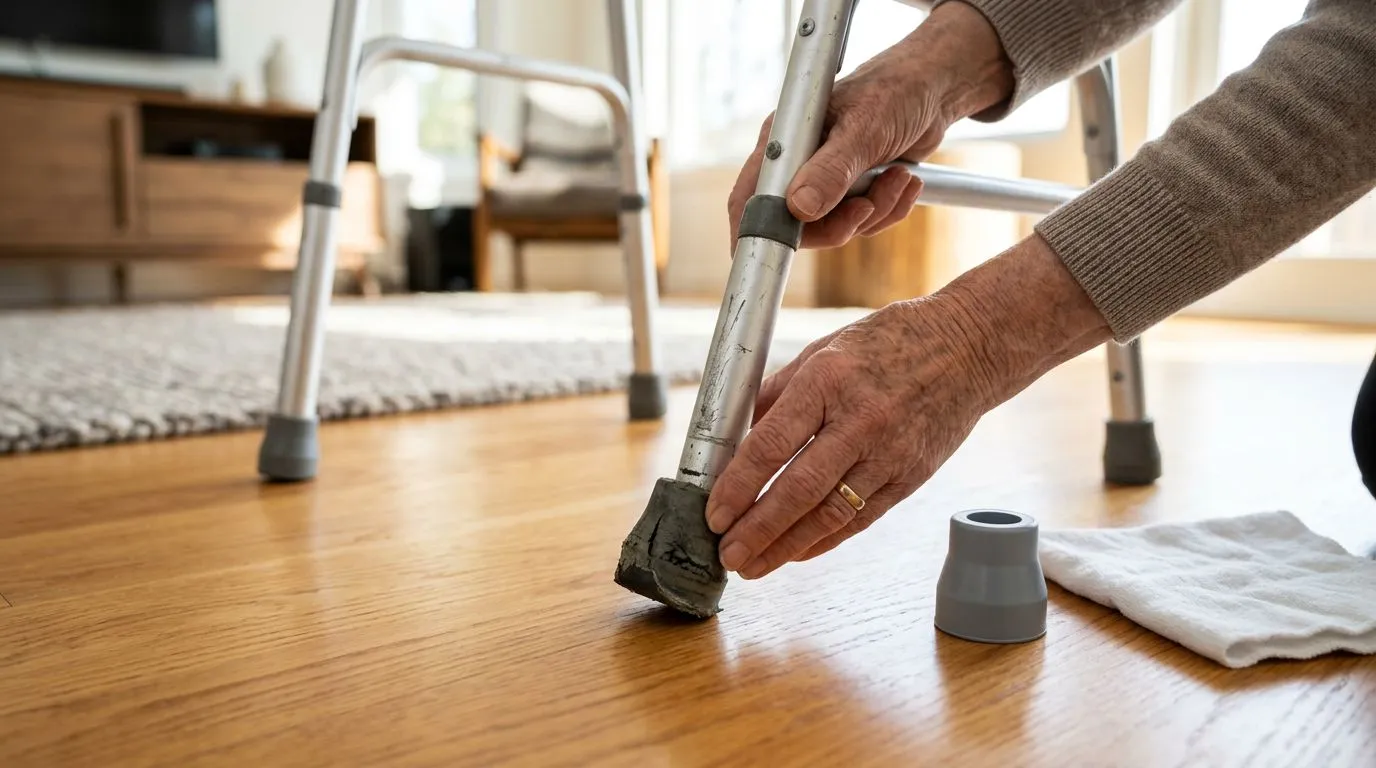
- Look underneath. Turn the walker slightly to see the bottom of each glide, tennis ball, rubber tip, or wheel. Replace anything cracked, flattened, torn, or uneven.
- Clean contact surfaces. Remove hair, grit, dust, and sticky residue. Dirt trapped under a glide or tennis ball can scratch floors and reduce control.
- Check tightness. Attachments should not spin freely, wobble, or slide off when pulled by hand.
- Inspect wheels. Make sure front walker wheels roll straight and do not bind. On rollators, check all wheels for looseness, flat spots, or debris wrapped around the axle.
- Test brakes. For rollators, squeeze the hand brakes and then lock them. The rollator should resist movement when pushed gently on a dry, level floor.
- Listen during use. New scraping, clicking, or dragging sounds often mean something has worn down or shifted.
If tennis balls are used, inspect the cut opening closely. A jagged cut can spread over time. The ball should not expose sharp edges, and the walker leg should not poke through the bottom. Replace both balls at the same time so the rear legs stay even.
Floor-specific safety tips for thresholds under 1 inch
Most indoor trips are not caused by a dramatic obstacle. They often happen at small changes in surface height, sometimes less than 1 inch. A doorway strip, rug edge, or tile-to-wood transition can be enough to stop a glide or twist a tennis ball.
On hardwood or laminate, keep floors clean and dry. Avoid waxy buildup or slippery polish in walking paths. If the walker begins to slide too easily, consider whether the rear glides are too slick for that surface or whether rubber tips would offer better control.
On tile, pay attention to grout lines. Worn glides can catch at the front edge, especially if the user pushes the walker at an angle. Rollator users should test brakes on tile after cleaning, because some cleaners leave a slick film until fully dry.
On carpet, remove loose throw rugs whenever possible. Low-pile carpet is usually easier for walkers and rollators than thick or shag carpet. Tennis balls can snag on carpet seams, while small wheels may sink into soft carpet and become harder to steer.
At thresholds, approach straight on rather than diagonally. Move slowly. With a two-wheel walker, the front wheels should clear the threshold before the rear glides follow. With a no-wheel walker, lift and place the full frame beyond the threshold instead of dragging the rear legs across it. With a rollator, keep both hands on the handles and be ready to brake after crossing.
When to call a clinician or repair shop: 7 warning signs
Some problems should not be solved with a quick accessory swap. If any of these 7 warning signs are present, it is wise to ask a physical therapist, occupational therapist, medical equipment provider, or qualified repair technician for help.
- The walker moves faster than the user can safely step.
- The user leans heavily forward or looks down constantly to control the device.
- One side of the walker drags more than the other.
- The user has had a recent fall, near fall, or repeated loss of balance.
- The rollator brakes do not hold on a dry, level floor.
- The walker frame is bent, cracked, or no longer sits evenly on all contact points.
- The user cannot safely manage bathroom turns, doorways, or nighttime trips.
A professional can check height, gait pattern, brake function, and whether a walker or rollator is the better match. That guidance is especially important after surgery, illness, a new diagnosis, or a noticeable change in strength or balance.
FAQ: 5 practical questions about indoor walker safety
Are walker glides safer than tennis balls?
Often, yes. Walker glides are designed to fit walker legs and slide in a controlled way. Tennis balls can work temporarily, but they wear unevenly, collect grit, and may loosen if cut poorly.
Can I put tennis balls on a rollator?
No. Rollators already have 3 or 4 wheels and hand brakes. Adding tennis balls or glides can interfere with the design and may make the device unsafe. For a rollator, focus on wheel condition, brake adjustment, and indoor clearance.
Do wheels make a walker less stable?
They can, depending on the user. Front wheels reduce lifting and may make movement easier, but they also allow the frame to move forward more readily. Someone who needs very firm support may do better with a no-wheel walker or a two-wheel walker with controlled rear glides.
How often should walker glides or tennis balls be replaced?
Replace them when they are cracked, flattened, loose, dirty beyond cleaning, or worn unevenly. For daily users, inspect them at least once a week. Heavy indoor use may wear them out faster.
What is the safest option for hardwood floors?
There is no universal answer. Clean, properly fitted glides often work well, but they must be kept free of grit to avoid scratches. Rubber tips may provide more grip for users who need extra stability. Test any change slowly in the room where it will be used most.
Keep reading
Related guides
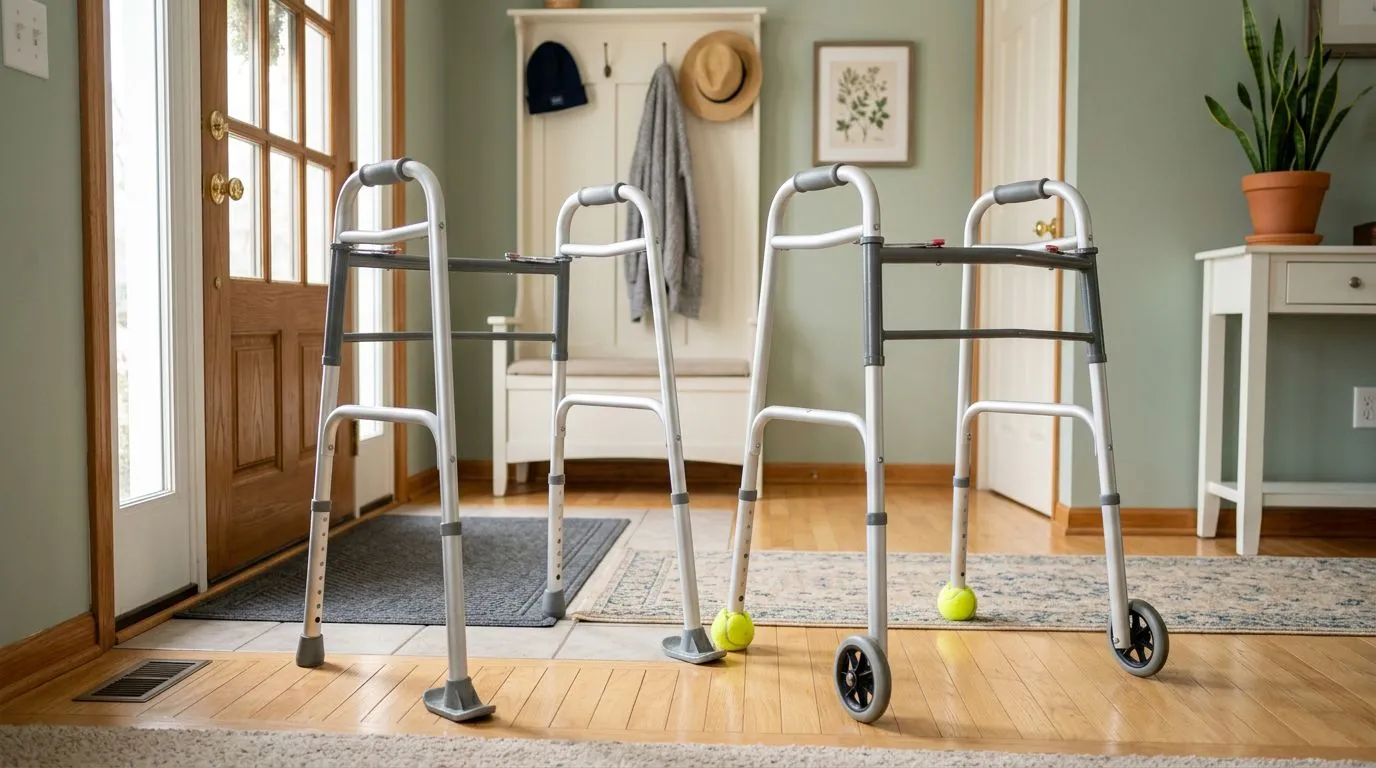
Walker Glides, Skis, Tennis Balls, and Rubber Tips: Which Walker Feet Are Best for Your Floors?
13 min read
Using a Mobility Walker Outdoors: Curbs, Ramps, Gravel, Grass, and Wet Surfaces
13 min read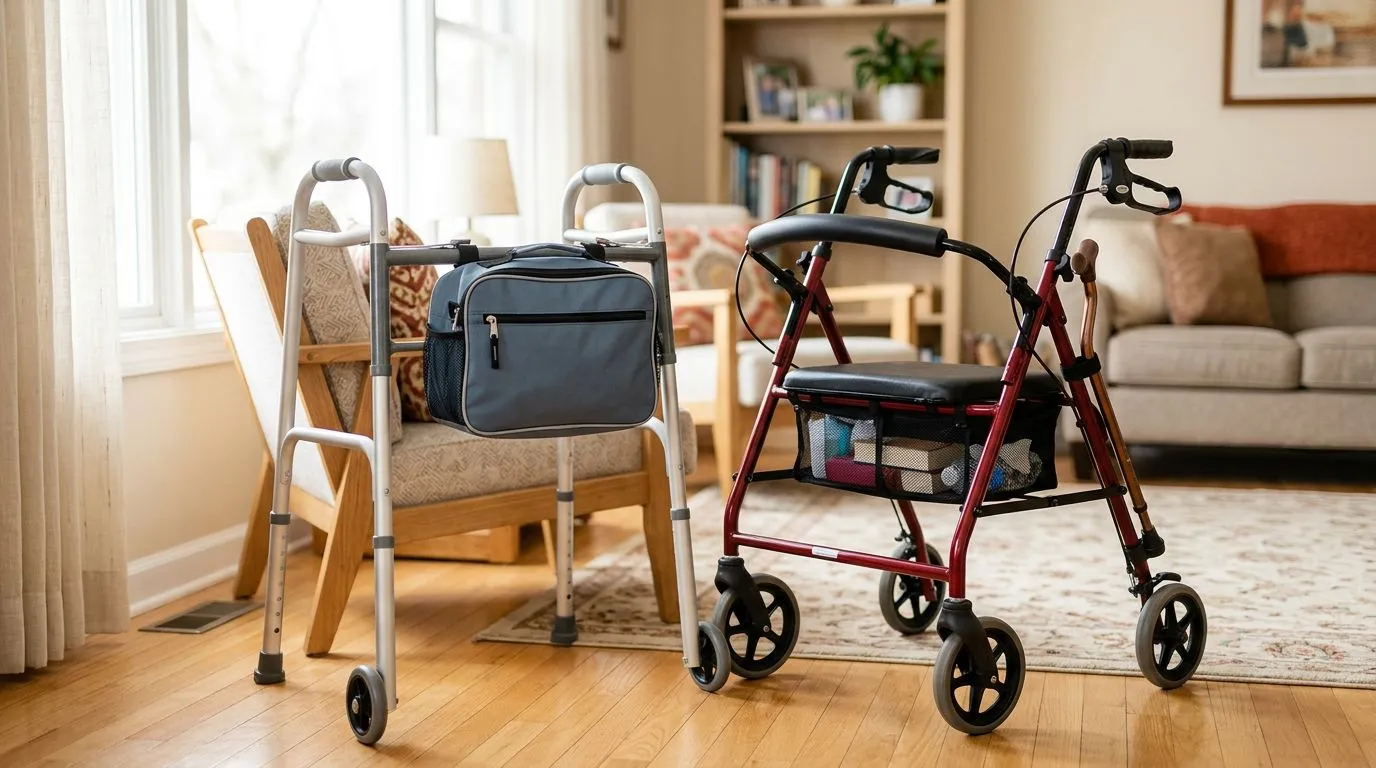
Mobility Walker Accessories and Replacement Parts: Bags, Baskets, Glides, Grips, and Brakes
16 min read