Disclosure: We may earn a commission when you buy through links on this page, at no extra cost to you. We buy nothing, sell nothing and accept no payment for coverage — commissions never decide what we recommend. How we make money.
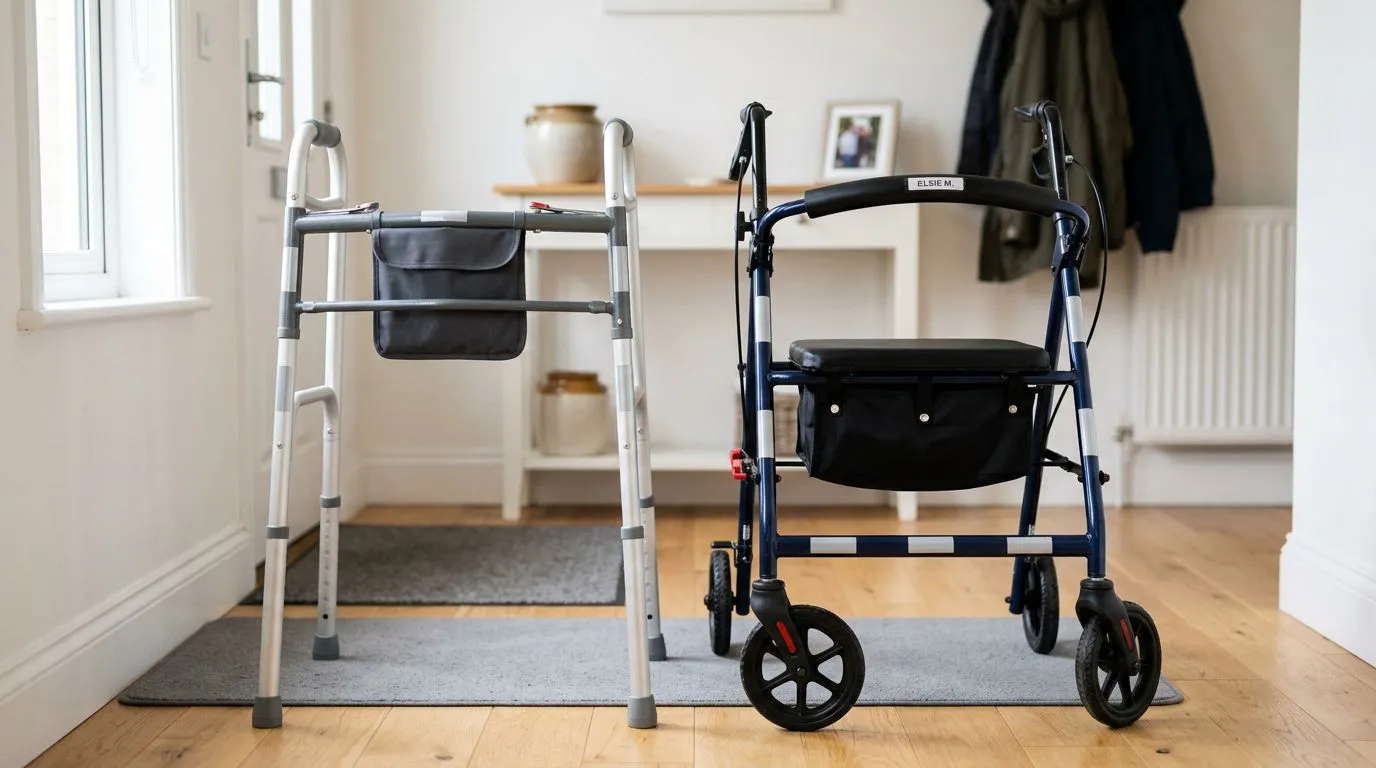
You can personalize a walker or rollator safely as long as every accessory stays clear of the brakes, wheels, rubber tips, folding latches, seat, and handgrips. Choose lightweight decorations, secure them so nothing dangles, and test the device for at least 30 seconds before each use to make sure it still folds, rolls, grips, and brakes correctly.
Decorating a mobility aid can make it easier to identify, more visible in low light, and more pleasant to use. The key is to treat personalization as a safety project first and a style project second, especially because walkers and rollators support balance in different ways.
Start with 3 safety rules before adding anything
A walker or rollator is not just a frame; it is a mobility device with contact points, moving parts, and weight-bearing areas. Before adding flowers, tape, charms, decals, bags, lights, or labels, follow three rules: keep function visible, keep movement unrestricted, and keep the center of gravity stable.
For standard walkers and two-wheel walkers, the main safety areas are the handgrips, folding buttons or latches, rubber tips, wheel axles if present, and the lower frame. These devices are often lifted or partially lifted with every step, so even small dangling decorations can catch on a rug edge, chair leg, or bedding.
For rollators, including 3-wheel, 4-wheel, upright, and bariatric rollators, priority areas include hand brakes, brake cables, wheels, seat hinges, folding joints, and storage areas. A rollator rolls continuously and may have a seat, so anything that interferes with braking or folding can create a real problem.
Use this quick check after any change: push the walker or rollator 10 feet, turn it in a tight space, stop it, and fold it if it folds. If anything rubs, swings, blocks your hand, or changes how the device feels, remove or reposition it.
Walkers vs. rollators: 6 accessory differences that matter
Walkers and rollators are related, but they should not be accessorized the same way. A no-wheel walker or two-wheel walker usually depends on rubber tips for traction and stability. A rollator depends on wheels and hand brakes, and many include a seat and under-seat pouch.
That difference affects what is safe. A bow tied to the front crossbar of a folding walker may be harmless if it is tight and lightweight. The same bow tied near a rollator brake cable could snag or hide a cable problem. A small name label on a walker leg is usually fine. A thick wrap around a rollator handle may affect grip size and make the brake lever harder to reach.
| Device type | How it supports movement | Safer accessory areas | Areas to keep clear |
|---|---|---|---|
| Standard no-wheel walker | Lifted and placed with each step | Upper side frame, front crossbar, small ID label | Rubber tips, handgrips, folding buttons |
| Two-wheel walker | Front wheels roll while rear tips provide braking friction | Side frame, small front pouch if balanced | Rear tips, front wheel path, folding latch |
| 3-wheel rollator | Rolls and turns in tighter spaces | Frame label, compact pouch made for the frame shape | Brake cables, front wheel, folding joint |
| 4-wheel rollator | Rolls on 4 wheels with hand brakes and often a seat | Reflective tape on frame, ID tag, fitted pouch | Brake levers, seat hinge, wheel spokes, backrest |
| Upright rollator | Supports forearms or higher hand position | Lower frame reflectors, small ID label | Forearm pads, brake controls, adjustable posts |
| Bariatric rollator | Wider, higher-capacity rolling support | Wide frame areas away from mechanisms | Reinforced joints, brakes, seat supports |
One practical rule works for every type: do not attach decorations to any part you use to steer, grip, brake, fold, sit on, or place on the floor.
Reflective add-ons: use 2 to 4 visible strips, not loose dangling lights
Reflective tape, clip-on reflectors, and small visibility tags can be useful because walkers and rollators often sit lower than a person’s chest and may be hard to see in parking lots, hallways, or dim rooms. This is one of the most practical forms of personalization.
For a walker, place reflective material on the front crossbar or side frame where it will not be touched during lifting. Two strips on the front and one strip on each side can improve visibility without adding bulk. Keep reflective tape at least 1 inch away from folding buttons, adjustable height holes, and sliding tubes.
For a rollator, use reflectors or tape on the front and side frame, not on wheels, brake levers, cables, or the seat. Reflective strips on rotating wheel parts can peel, shift, or collect dirt. If the rollator has a basket or pouch, reflective trim is safest when it is firmly sewn or attached and does not swing into the wheels.
Battery lights may help in some situations, but they need extra caution. A light that hangs from a cord can swing into a wheel or distract the user. If a light is used, it should be firmly attached to a fixed frame area, easy to turn on, and not aimed into the user’s eyes. Check batteries often; a dead light adds weight but no visibility.
Name labels and medical ID tags: keep them under 3 inches and easy to read
Labels are helpful in senior living communities, clinics, adult day programs, churches, and shared transportation settings where many walkers and rollators may look similar. A simple name label can prevent mix-ups. An emergency contact tag may also be useful, but it should not expose more personal information than the owner wants visible.
Good label placement is straightforward. On a walker, place the label on the side frame or upper front crossbar, away from handgrips and folding mechanisms. On a rollator, place it on a fixed frame section, under-seat pouch flap, or another area that does not move when braking or folding.
Keep labels compact. A tag around 2 to 3 inches wide is usually large enough for a first name, phone number, or room number without becoming a swinging object. Use flat labels rather than bulky tags when possible. If a hanging tag is needed, attach it with a short, secure loop so it cannot reach a wheel, rubber tip, or brake cable.
Think carefully about privacy. A full home address, diagnosis, or medication list may not be appropriate on the outside of a walker or rollator. Many people prefer a first name and phone number, or a simple message such as call family contact if found.
Pouches, baskets, and bags: keep everyday loads under 5 lb when possible
A pouch or basket can be genuinely useful. It can hold glasses, a phone, tissues, mail, a water bottle, or a small book. It can also create a tipping hazard if it is overloaded or attached in the wrong place.
As a conservative everyday guideline, keep carried items under about 5 lb unless the walker or rollator instructions allow more and the user can control the device safely. A few light items are usually easier to manage than a heavy purse, grocery bag, or laundry load. Weight matters because mobility aids are designed for body support and balance, not for hauling cargo.
For standard and folding walkers, a front pouch is usually better than side bags because it keeps weight centered. Avoid hanging a purse from one handle. Side weight can make a walker twist when lifted, especially for someone with weaker grip or uneven strength.
For two-wheel walkers, make sure any pouch stays above the wheel path and does not drag near the rear tips. Rear rubber tips need full contact with the floor. If a bag brushes the tips, it may reduce traction or wear down the material.
For rollators, an under-seat storage bag or frame-mounted pouch is usually safer than a tote hanging from the handles. Handle-hung bags can pull the rollator backward, change steering, or interfere with brake cables. Do not overload the seat area, and never place hard objects on top of the seat if the user may sit down without checking first.
Decorations that are safer: 1 smooth layer, no fringe near wheels or tips
Decorations can be cheerful without being risky. Safer options are flat, smooth, lightweight, and firmly attached. Examples include decals, reflective stickers, colored grip-safe tape placed away from hand contact areas, small fabric wraps on non-moving frame sections, or a short ribbon secured tightly to an upper frame bar.
Riskier decorations are long, fuzzy, sharp, heavy, or loose. Fringe, beads, garland, long ribbons, and dangling charms can catch on furniture, clothing, pets, oxygen tubing, thresholds, or vehicle doors. Seasonal decorations need the same caution. A walker decorated for a holiday may be fun, but tinsel near rubber tips or wheels is a problem waiting to happen.
Keep decorations to one smooth layer on the frame. Thick wraps can hide cracks, dents, missing screws, or height-adjustment holes. They can also make the frame harder to clean. If a decoration requires tape, use just enough to hold it securely and inspect it weekly for peeling edges.
Pay attention to texture. Anything that scratches the hand, catches a sleeve, or leaves sticky residue can affect safe use. If the user has fragile skin, arthritis, reduced sensation, or difficulty with fine motor control, keep decorations especially simple and easy to remove.
What not to block: 8 parts that must stay clear
Some areas should stay decoration-free on every walker and rollator. These parts either support weight, control movement, or allow the device to fold and adjust. Covering them can make the device harder to use or harder to inspect.
- Handgrips: Do not add thick wraps, slippery covers, bulky bows, or anything that changes the grip diameter unless it is specifically intended as a grip aid and does not affect control.
- Brake levers on rollators: The user must be able to reach, squeeze, and lock the brakes without shifting the hand into an awkward position.
- Brake cables: Do not tape, tie, or wrap decorations around cables. Cables need a clear path and should be easy to inspect for fraying or looseness.
- Wheels: Keep spokes, axles, forks, and the rolling surface clear. Decorations can jam, rub, or collect hair and debris.
- Rubber tips on walkers: Tips need full floor contact. Never paint, wrap, glue, or cover the bottom of a rubber tip.
- Folding latches and release buttons: These must remain visible and easy to operate. A covered latch may not lock completely.
- Height-adjustment holes: Tape or fabric should not hide push buttons or adjustment markings.
- Seat, hinges, and backrest on rollators: Decorations should not interfere with sitting, folding, or checking that the seat is fully open.
If an accessory covers one of these areas, it is in the wrong place. Remove it and choose a fixed frame section instead.
How to choose and measure accessories in 5 minutes
Before buying or making an accessory, take 5 minutes to measure the mobility aid and think about the user’s routine. You do not need specialized tools. A tape measure, a notepad, and a short test walk are enough.
First, identify the device type. A standard walker has no wheels. A two-wheel walker has front wheels and rear tips. A rollator has 3 or 4 wheels, hand brakes, and often a built-in seat. This matters because a rollator needs more clearance around moving and braking parts.
Next, measure the safe attachment zone. On many walker frames, a front or side bar may provide 6 to 12 inches of usable space, but folding joints and height buttons reduce that. On a rollator, look for fixed frame sections that do not move when the brakes are squeezed, the seat is lifted, or the frame is folded.
Then check floor clearance. Any pouch, ribbon, tag, or reflector should stay well above the floor and away from wheels or tips. A practical target is at least 2 inches of clearance during normal movement, with more if the accessory is soft or flexible.
Finally, do a function test. Fold and unfold the device if it is foldable. Adjust the height if needed. Walk 10 feet, turn around, stop, and step backward. For a rollator, squeeze and lock the brakes. For a walker, lift or slide it the way the user normally does. If the accessory moves into a danger zone, it fails the test.
| Accessory | Best placement | Safety check |
|---|---|---|
| Reflective tape | Fixed front or side frame | Does not cover latches, holes, or cables |
| Name label | Side frame, pouch flap, upper crossbar | Readable without dangling near wheels or tips |
| Small pouch | Centered front walker bar or rollator storage area | Does not swing, drag, or overload the frame |
| Ribbon or fabric accent | Short and tight on upper fixed frame | No loose ends longer than a few inches |
| Clip-on light | Secure fixed frame area | Does not glare, rotate, or loosen during turns |
Who personalization is best for: 4 common situations
Safety-conscious personalization can help many people, especially when it solves a real problem instead of adding clutter. The best accessory supports identification, visibility, comfort, or daily convenience without changing how the device works.
People in shared spaces
In a building where 10 or 20 walkers may be parked near a dining room, a clear label or distinctive strip of color can prevent someone from taking the wrong device. This is especially useful when several residents use similar folding walkers or 4-wheel rollators.
People who go out in low light
Reflective accents can help drivers, neighbors, and caregivers see a walker or rollator near sidewalks, driveways, and parking lots. They are not a substitute for good lighting or safe walking routes, but they are a sensible add-on.
People who carry small daily items
A lightweight pouch can reduce the temptation to carry items by hand while using a walker. For rollator users, storage can be convenient, but the brakes and seat must remain clear. Keep items light and easy to reach.
People who resist using a mobility aid
Some people feel better about using a walker or rollator when it looks less clinical. A modest personal touch, such as a color accent or neat label, may make the device feel more like personal equipment and less like a reminder of limitation. Even so, appearance should never override fit, stability, or proper use.
Caregiver checklist: inspect accessories every 7 days
Accessories can shift over time. Tape peels. Clips loosen. Pouches stretch. A decoration that was safe on Monday may be rubbing a wheel by the next week. A simple 7-day inspection helps catch small issues before they become safety problems.
- Check that all wheels spin freely and do not touch bags, cords, ribbons, or reflectors.
- Confirm rubber tips are clean, uncovered, and not worn through.
- Squeeze rollator brakes and confirm cables move freely without snagging.
- Make sure brake locks engage and release fully.
- Fold and unfold the walker or rollator to confirm decorations do not block latches.
- Look for peeling tape, loose clips, sharp edges, or sticky residue.
- Remove unneeded items from pouches and storage bags.
- Confirm the user can still grip the handles comfortably with both hands.
Repeat the inspection after travel, a fall, a hard bump, or a change in health status. If a walker or rollator suddenly feels harder to steer, lift, fold, or stop, remove the accessories first and test the device again. If the problem remains, have the mobility aid checked by a qualified professional or the equipment provider.
Safer personalization is simple: decorate the frame, not the function
The safest way to personalize a walker or rollator is to decorate stable frame areas while leaving all functional parts untouched. Flat labels, reflective strips, and centered lightweight pouches are usually better choices than dangling charms, heavy bags, or thick wraps.
Walkers need clear rubber tips, secure handgrips, and working folding latches. Rollators need unobstructed wheels, brakes, cables, seats, and hinges. If an accessory makes the device harder to hold, move, fold, stop, or inspect, it is not worth keeping.
Personal style matters. So does independence. With a few measurements and a quick safety test, a walker or rollator can look more personal while still doing its most important job: helping the user move with steadier, safer support.
FAQ
Frequently asked questions
Can I put stickers or decals on a walker or rollator? +
Yes, if they are flat, secure, and placed on fixed frame areas. Do not cover folding buttons, height-adjustment holes, brake cables, wheel parts, rubber tips, or any warning labels.
Is it safe to hang a purse from a rollator handle? +
It is usually safer not to. A purse on one handle can affect steering, pull on the rollator, or interfere with brake cables. Use a centered pouch or the built-in storage area if available, and keep the load light.
Where should reflective tape go on a walker? +
Place reflective tape on the front or side frame where it is visible but does not touch handgrips, folding latches, rubber tips, or adjustment holes. Keep it flat and check that the edges are not peeling.
Can decorations cause a rollator brake problem? +
Yes. Ribbons, bags, tape, or clips near brake levers or cables can block movement or hide wear. Keep all decorative items away from the braking system and test the brakes after adding anything.
How much weight can I carry in a walker or rollator pouch? +
Follow the device instructions if you have them. For everyday use, keeping items under about 5 lb is a cautious guideline, especially on walkers. Heavy or uneven loads can affect balance and steering.
How often should walker or rollator accessories be checked? +
Check accessories at least once a week and after travel, a bump, or any fall. Make sure nothing is loose, dragging, rubbing a wheel, covering a rubber tip, or interfering with folding or braking.
Keep reading
Related guides
Mobility Walker Accessories and Replacement Parts: Bags, Baskets, Glides, Grips, and Brakes
16 min read
Walker and Rollator Accessories Guide: Bags, Trays, Cup Holders, Lights, and Comfort Add-Ons
14 min read
Walker Covers, Lights, and Reflective Accessories: Protect Your Walker and Improve Visibility
14 min read