Disclosure: We may earn a commission when you buy through links on this page, at no extra cost to you. We buy nothing, sell nothing and accept no payment for coverage — commissions never decide what we recommend. How we make money.
Quick answer: match the device to 3 hand challenges
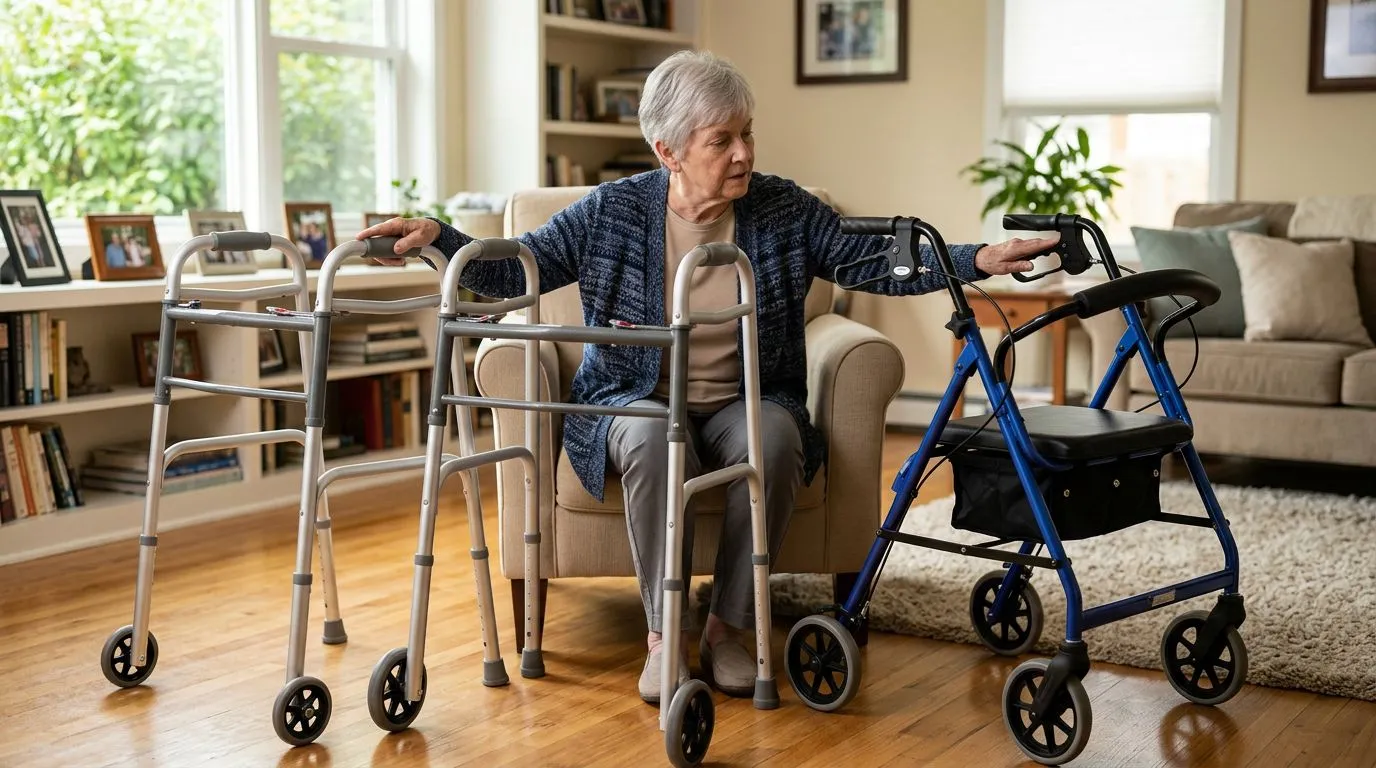
If arthritis, weak hands, or fatigue make mobility equipment hard to use, the easiest choice is usually the device that requires the least painful hand action: lifting, squeezing, or folding. Standard walkers and two-wheel walkers may work better when hand brakes are difficult, while rollators can help if you need a seat and can operate the brakes safely.
For many buyers, the decision comes down to 3 questions: Can you lift the frame a few inches without pain? Can you squeeze and lock hand brakes every time you stop? Can you fold and load the device without straining your fingers, wrists, or shoulders?
Hand comfort matters. A walker that is technically stable but painful to grip may end up abandoned in a closet. A rollator with smooth wheels but stiff brakes may feel unsafe. This guide compares standard walkers, two-wheel walkers, and rollators through the lens of arthritis, reduced grip strength, and fatigue.
Walkers vs. rollators: 4 differences that affect painful hands
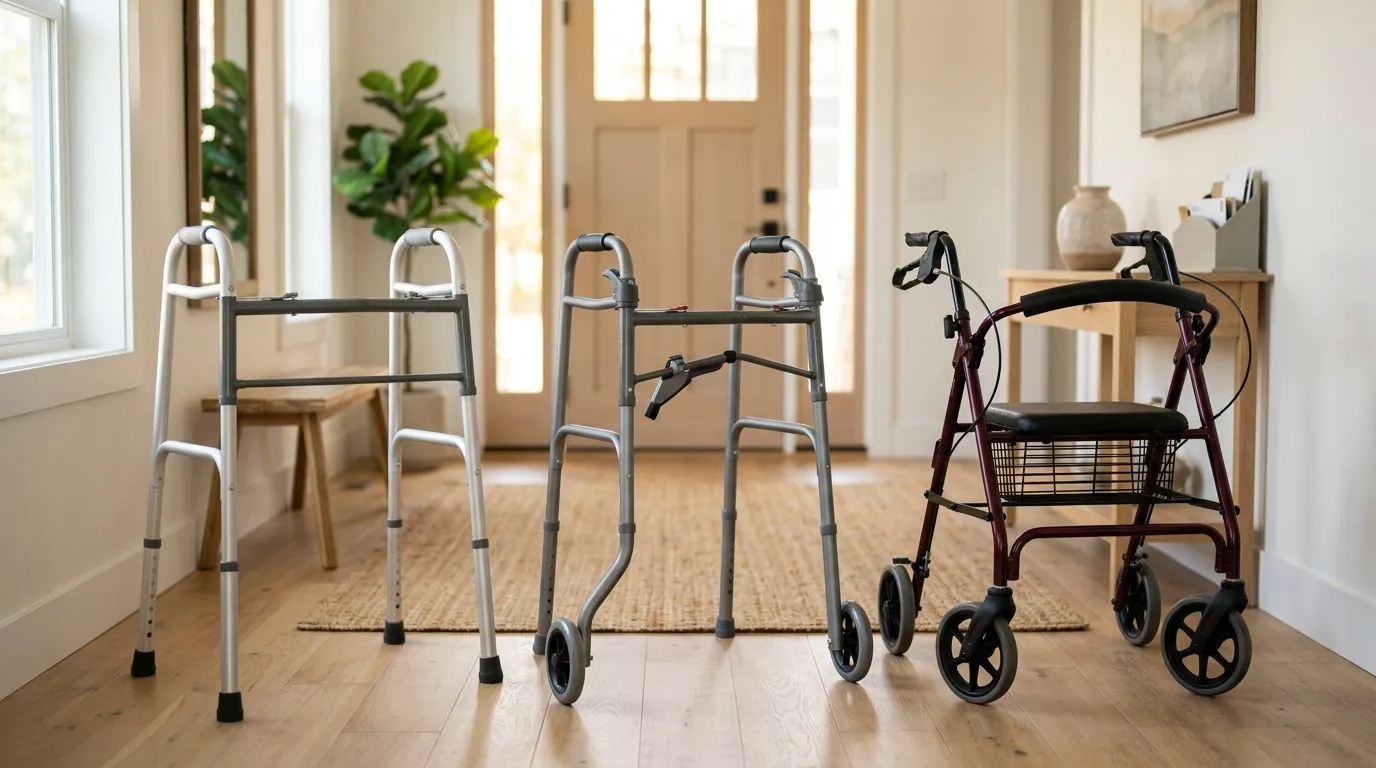
In everyday speech, many people call every mobility aid a walker. For shopping and safety, it helps to separate walkers from rollators. A standard walker is a frame with no wheels. A two-wheel walker has front wheels and back legs or glides. A rollator is a wheeled walker, usually with 3 or 4 wheels, hand brakes, and often a built-in seat.
The right choice is not about which one looks more advanced. It depends on how your hands, balance, stamina, and home layout work together over a normal day.
| Type | Hand action required | Common benefit | Possible challenge for arthritis or weak hands |
|---|---|---|---|
| Standard walker, no wheels | Grip both handles and lift the frame with each step | Very stable because it does not roll away | Repeated lifting can bother wrists, thumbs, elbows, or shoulders |
| Folding walker, no wheels | Same walking action, plus a button or release to fold | Easier to store or place in a car than a rigid frame | Some folding buttons are small or stiff |
| Two-wheel walker | Push front wheels forward, then step; little or no full lifting | Less lifting than a standard walker | Rear tips or glides must move smoothly on your floors |
| 3-wheel rollator | Steer and squeeze hand brakes | Narrower turning, often easier in tight spaces | Usually no full seat; less stable than many 4-wheel rollators |
| 4-wheel rollator with seat | Steer, brake, park, and sit only when brakes are locked | Seat helps with fatigue during walks or errands | Hand brakes must be comfortable and reliable for you |
| Upright or stand-up rollator | Use forearm platforms or higher handles, plus brakes | May reduce forward bending for some users | Often heavier and requires careful fitting |
If your hands cannot squeeze brakes consistently, do not assume a rollator is the safest option. If your wrists cannot tolerate lifting, a no-wheel walker may be too tiring. A two-wheel walker often sits in the middle: less lifting than a standard walker, but without the same brake demands as a rollator.
Grip comfort: look for 1 to 1.5 inch handles and less thumb strain
Grip shape is one of the biggest comfort issues with arthritis. Thin, hard handles can force the fingers and thumb into a tight pinch. A slightly larger, softer grip may spread pressure across the palm and reduce the need to clench.
Many walker and rollator handles are roughly 1 to 1.5 inches in diameter, but the feel can vary a lot. Foam grips may feel warmer and softer. Textured rubber can improve traction. Contoured grips may support the palm, although the molded shape will not fit every hand.
Pay attention to the thumb joint. Arthritis at the base of the thumb is common, and a handle that forces the thumb to wrap tightly can become painful after 10 minutes, even if it feels fine in the store. If possible, rest your hands on the grips with your fingers relaxed, then take several steps. Your shoulders should not rise toward your ears, and your wrists should not bend sharply.
- For painful fingers: avoid grips that require a narrow, tight curl.
- For tender palms: look for padding or a broader contact area.
- For sweaty or numb hands: choose a grip surface with dependable traction.
- For one hand weaker than the other: test both sides separately, not just your stronger hand.
Grip add-ons and covers can sometimes improve comfort, but they should not make the handle slippery or too large to control. Any added padding should stay firmly in place and allow full access to brakes if the device is a rollator.
Brakes and weak hands: test 2 motions before choosing a rollator
Rollators add freedom for many people because they roll smoothly and include a seat, but they also add a hand-brake system. Most 4-wheel rollators use loop-style brakes: you squeeze the levers to slow down and push them down to lock the parking brakes before sitting. That means you need 2 reliable motions: squeezing and locking.
Do not judge brakes by one quick squeeze. Try this practical test: squeeze both brake levers 10 times, then lock and unlock the parking brakes 5 times. If your fingers ache, your grip fades, or one brake is much harder than the other, that rollator may not be the right fit.
Brake tension can sometimes be adjusted, but adjustment has limits and should not make the brakes unreliable. If you have significant hand weakness, ask whether the brake style is appropriate for you. When possible, have the final setup checked by a knowledgeable professional, therapist, or equipment provider.
Also think about where you walk. A rollator on a long hallway or smooth sidewalk may feel effortless. On a sloped driveway, the same device demands steady brake control. If you live around ramps, hills, curb cuts, or uneven pavement, hand brakes become more important, not less.
| Brake-related question | Why it matters |
|---|---|
| Can you squeeze both brakes fully? | Partial braking may not slow the rollator enough. |
| Can you lock the brakes before sitting? | The seat should only be used when parking brakes are engaged. |
| Can you release the locks without pain? | A brake you avoid using is a safety problem. |
| Can you brake while turning? | Real walking often includes doors, corners, and people nearby. |
Frame weight: compare 6 lb walkers with 15 to 25 lb rollators
Weight affects hand pain in two different ways. A heavier device may roll or feel more planted during walking, but it can be harder to fold, lift into a trunk, or carry over a threshold. A lighter walker may be easier to lift, yet require more repeated hand and wrist motion with every step.
Typical standard walkers often weigh about 5 to 8 lb. Two-wheel walkers are commonly in the 6 to 10 lb range. Many 4-wheel rollators weigh roughly 15 to 25 lb, while bariatric rollators and some upright rollators can be heavier. These are general ranges, not rules, but they show why a device can feel manageable in a hallway and difficult at the car.
For weak hands, do not look only at total weight. Ask how the weight is handled. A standard walker may require small lifts hundreds of times during the day. A rollator may not need lifting while walking, but you may need to fold it, tip it, or load it. If you live alone and drive, loading weight may matter as much as walking weight.
- Mostly indoor use: a lighter standard or two-wheel walker may be easier around furniture.
- Longer outdoor walks: a rollator may reduce lifting effort if brakes are easy for you.
- Frequent car trips: check folded weight and whether you can lift it safely.
- Higher weight capacity needs: bariatric frames may offer wider seats and stronger construction, but often weigh more.
Weight capacity matters too. Common mobility aids may support around 250 to 300 lb, while heavy-duty or bariatric options may support 350 lb, 400 lb, or more. Choose a capacity that fits the user and any items carried in a pouch or basket, while still considering whether the frame is practical to handle.
Folding and storage: a 30-second fold test can reveal problems
Folding mechanisms are easy to overlook until your hands hurt. A folding walker may use a center release, side buttons, paddle releases, or a push-button system. A rollator may fold side-to-side, front-to-back, or by pulling a strap near the seat. Some require two hands; others can be started with one hand but still need control as the frame collapses.
Use a 30-second fold test before deciding. Fold the device, unfold it, and make sure it locks open. Then repeat the process after walking for a few minutes, when your hands are slightly tired. If the latch is hard to find, requires a strong pinch, or snaps too quickly, it may become frustrating at home.
For arthritis, large buttons and visible release points are usually easier than small metal pins. A folding walker that stands when folded may be easier in a closet. A rollator that stays latched while folded may be easier to load and less likely to open unexpectedly.
Check folded size against your real storage space. A hallway closet, back seat, or trunk opening can make a big difference. Measure the narrowest opening in inches, not just the largest space inside the car. Some rollators have wider wheelbases and baskets that interfere with loading even after the frame folds.
Who each type is best for: 5 buyer profiles
No single mobility walker is best for every person with hand pain. The best choice depends on whether your main problem is lifting, gripping, braking, fatigue, balance, or transportation.
| Buyer profile | Often worth considering | Why |
|---|---|---|
| Severe hand weakness but good ability to lift lightly | Standard or folding walker | No hand brakes to squeeze; stable when placed on the floor |
| Wrist or shoulder pain from lifting | Two-wheel walker | Front wheels reduce repeated lifting compared with a no-wheel frame |
| Fatigue after 5 to 10 minutes of walking | 4-wheel rollator with seat | Built-in seat can provide rest breaks when brakes are locked |
| Tight apartment or narrow indoor spaces | Narrow folding walker or 3-wheel rollator | May turn more easily, though stability and brakes still matter |
| Larger body size or need for wider support | Bariatric walker or bariatric rollator | Higher weight capacity and wider frames may fit better, but check weight and width |
A standard walker is often best when stability is the top priority and the user can lift the frame without pain. A two-wheel walker can be a strong option when the user wants less lifting but does not need a seat. A rollator may be best when stamina is limited and the user can manage brakes with confidence.
Upright rollators deserve special mention. They may help some users who dislike leaning over, but they must be adjusted carefully and may feel less intuitive at first. Because many upright designs are taller and heavier than basic rollators, hand control, turning space, and folded weight should be tested closely.
How to measure: a 5-minute fit check for height, hands, and stride
Proper height can reduce strain on painful hands and wrists. A common starting point is to stand upright in your usual shoes with arms relaxed at your sides. The walker or rollator handgrips should be near the crease of your wrist. When your hands rest on the grips, your elbows are often slightly bent, around 15 to 30 degrees.
This is only a starting point. Comfort and posture matter more than a perfect number. If the handles are too low, you may lean forward and overload your hands. If they are too high, your shoulders may tense and steering may feel awkward.
- Wear the shoes you use most often.
- Stand inside the walker frame or behind the rollator in a natural posture.
- Place both hands on the grips without clenching.
- Walk at least 20 to 30 feet if space allows.
- Turn left and right, stop, and restart.
- For a rollator, lock the brakes and sit only after confirming the frame is stable.
Width also matters. The device should fit through your interior doorways. Many US interior doorways are about 28 to 32 inches wide, but older homes can be narrower. Measure the bathroom door, bedroom door, and any hallway turns, because those are common trouble spots.
Seat height matters only for rollators with seats. If the seat is too low, standing up may require extra hand force. If it is too high, your feet may not rest comfortably when seated. Sit briefly, lock the brakes first, and notice whether standing up requires a painful push through the hands.
7 features that make walkers and rollators easier on hands
Small design details can make daily use easier. For arthritis or weak hands, prioritize features that reduce pinching, clenching, repeated lifting, and awkward wrist angles.
- Comfort grips: larger or padded grips may reduce pressure on finger joints.
- Height adjustment with clear holes: easy-to-read settings help keep both sides even.
- Large release buttons: better for stiff fingers than tiny pins or hidden latches.
- Smooth front wheels: on a two-wheel walker, wheels can reduce lift effort.
- Low-effort brake levers: on a rollator, brakes should be reachable without stretching.
- Stable folded position: a frame that stays folded is easier to manage near a car or closet.
- Appropriate wheel size: smaller wheels may suit indoor use, while larger wheels often handle outdoor cracks and thresholds better.
Accessories can help, but only when they do not interfere with safe use. A bag or basket can reduce the need to carry items in painful hands. However, overloading storage can change balance, especially on a rollator. Keep heavier items low and centered when possible.
A tray on a walker can be useful indoors, but it may block your view of your feet or encourage carrying too much. Cup holders, pouches, and cane holders should be securely attached and should not catch on door frames.
Safety check: spend 10 minutes testing your real home route
A walker or rollator should be tested where it will actually be used. Spend 10 minutes walking the route from bed to bathroom, chair to kitchen, and front door to car. These short daily paths reveal more than a smooth showroom floor.
Look for thresholds, loose rugs, cords, tight turns, and wet bathroom surfaces. Standard walkers can catch on rugs if lifted unevenly. Two-wheel walkers may drag if rear tips are worn or poorly suited to the floor. Rollators can move too quickly on slopes or slick surfaces if the brakes are not used correctly.
Never sit on a rollator unless the parking brakes are locked and the surface is level. A rollator seat is for short rests, not for being pushed while seated unless the device is specifically designed and prescribed for that purpose. Most rollators are not transport chairs.
If you have recent falls, dizziness, new weakness, severe pain, or changing medical symptoms, consult a clinician or physical therapist before choosing equipment. Mobility aids can support independence, but the best device and fit depend on your strength, balance, vision, medications, and home environment.
Bottom line: choose the least painful control system you can use every day
For arthritis or weak hands, the best mobility walker is the one that fits your body and minimizes your hardest hand task. If squeezing brakes is the problem, a standard or two-wheel walker may be safer than a rollator. If lifting is the problem, a two-wheel walker or rollator may reduce strain.
Balance comfort with control. Test the grips, brakes, frame weight, folding latch, doorway width, and car loading before you commit. A practical device you can use 20 times a day is more valuable than one that only feels good for the first few steps.
FAQ
Frequently asked questions
Is a walker or a rollator better for arthritis in the hands? +
It depends on which hand motion hurts most. A standard or two-wheel walker avoids hand brakes, but may require lifting or pushing. A rollator reduces lifting and adds a seat, but requires reliable brake squeezing and locking.
What type of walker is easiest if I have weak grip strength? +
A two-wheel walker is often easier than a no-wheel walker because it reduces lifting, and it does not require rollator-style hand brakes. The best choice still depends on balance, home layout, and whether you can control the frame safely.
Can rollator brakes be adjusted for easier squeezing? +
Many rollator brakes can be adjusted within a limited range, but they must still stop the wheels securely. If brakes feel too stiff or too loose, have them checked by a qualified equipment provider, therapist, or technician.
What handle height is best for reducing wrist pain? +
A common starting point is setting the grips near the crease of your wrist while standing in your usual shoes with arms relaxed. Your elbows should be slightly bent when holding the handles, and your wrists should feel neutral rather than sharply bent.
Are lighter walkers always better for painful hands? +
Not always. A lighter walker may be easier to lift and load, but it still has to feel stable and comfortable during use. Rollators are usually heavier, yet they may reduce repeated lifting if you can manage the brakes safely.
Keep reading
Related guides

Buying a Mobility Walker for an Older Parent: Questions to Ask Before You Shop
13 min read
Lightweight Mobility Walkers: Balancing Easy Lifting, Stability, and Weight Capacity
14 min read
Forearm Supports, Platform Attachments, and Upright Handles: How to Choose More Support Than Standard Grips
14 min read