Disclosure: We may earn a commission when you buy through links on this page, at no extra cost to you. We buy nothing, sell nothing and accept no payment for coverage — commissions never decide what we recommend. How we make money.
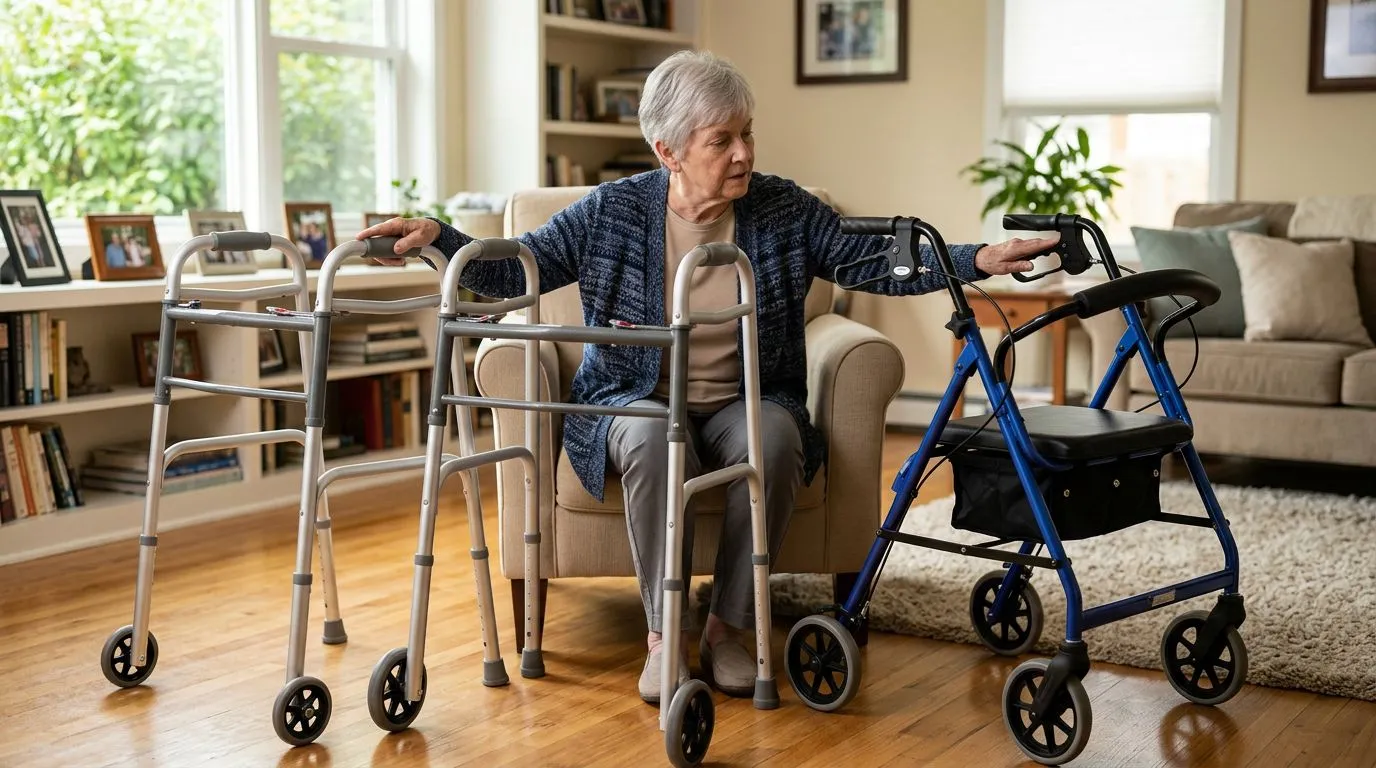
The best mobility walker for an older parent is the one that fits their balance, arm strength, home layout, need for rest, and ability to use brakes or follow safety steps. A standard or two-wheel walker usually gives more stability for slower, shorter indoor movement, while a rollator is often better for someone who walks farther, can control hand brakes, and needs a built-in seat. Before shopping, start with practical questions, then confirm the choice with a clinician when possible.
Caregivers often begin with size, price, or foldability. Those matter, but they should come after fit and function. A walker or rollator is not just a piece of equipment; it changes how your parent stands, turns, enters the bathroom, gets in a car, and moves when tired.
Start with the real goal: 3 common reasons families buy a walker
Most families are trying to solve one of three problems: prevent falls, reduce fatigue, or help a parent move more independently. Those goals overlap, but each one can point to different equipment. A parent who loses balance while standing at the sink for 30 seconds may need a different device than a parent who walks safely but needs to sit every 200 feet.
Write the main goal in one sentence before you compare types. For example: help Mom get from bed to bathroom at night; help Dad walk to the mailbox and sit if short of breath; help a parent recover after surgery without leaning on furniture. That simple sentence can keep you from buying a rollator when a more stable walker is needed, or buying a no-wheel walker when your parent actually needs a seat for longer outings.
Also note where the device will be used most. A walker that works well in a 36-inch hallway may be awkward in a small bathroom with a 24-inch doorway. A rollator that glides smoothly outdoors may be too wide or too fast for a parent who shuffles in a narrow apartment.
Walker or rollator: the 2-minute difference
In everyday language, many people say walker for any frame-style device. For shopping and safety, it helps to separate walkers from rollators. A walker is usually a frame that may have no wheels or two front wheels. A rollator is a wheeled walker with hand brakes and typically a built-in seat, often with 3 or 4 wheels.
| Type | Best fit | Key tradeoff |
|---|---|---|
| Standard no-wheel walker | Very slow, controlled indoor walking; needs maximum support | Must be lifted with each step, which requires arm strength |
| Folding walker | Home use plus car transport; many fold to a flatter shape in seconds | Still must fit doorways and bathroom turns |
| Two-wheel walker | People who need stability but cannot lift a frame repeatedly | Rear legs can drag; not ideal for fast walking |
| 3-wheel rollator | Tighter spaces, lighter maneuvering, short errands | Usually less stable than a 4-wheel rollator and seat options vary |
| 4-wheel rollator | Longer walks, rest breaks, outdoor paths, shopping trips | Requires brake use and safe sitting habits |
| Upright rollator | People who can safely use forearm platforms and prefer a taller posture | Often larger and may be harder to maneuver indoors |
| Bariatric walker or rollator | Users who need a higher weight capacity, wider frame, or wider seat | Can be heavier and wider, so home measurements matter |
A basic rule helps: if your parent needs the device to keep from falling during each step, start with walkers. If your parent is reasonably steady but gets tired or needs a place to sit, a rollator may be worth considering. There are exceptions, which is why clinician input is useful.
Question 1: How steady is your parent while standing for 30 seconds?
Balance comes before convenience. Watch your parent stand from a chair, settle their feet, and remain upright for about 30 seconds with someone close enough to help. Do they sway, grab furniture, look down constantly, or take several small steps to recover? If so, a rollator may move too freely unless a clinician specifically recommends it.
A no-wheel walker offers the most stop-and-go stability because it does not roll forward. A two-wheel walker can help when lifting a full frame is too hard, while still giving more control than a rollator. A 4-wheel rollator can be helpful for walking endurance, but it is not a substitute for balance. The user must be able to squeeze the brakes, slow the frame, turn carefully, and park it before sitting.
Strength matters too. A standard walker may weigh only several pounds, but lifting it hundreds of times per day can strain shoulders, wrists, or healing joints. If your parent has painful hands, arthritis, weakness on one side, or poor grip, ask a physical or occupational therapist which frame style is safest.
Question 2: Where will it be used? Measure 3 home spaces
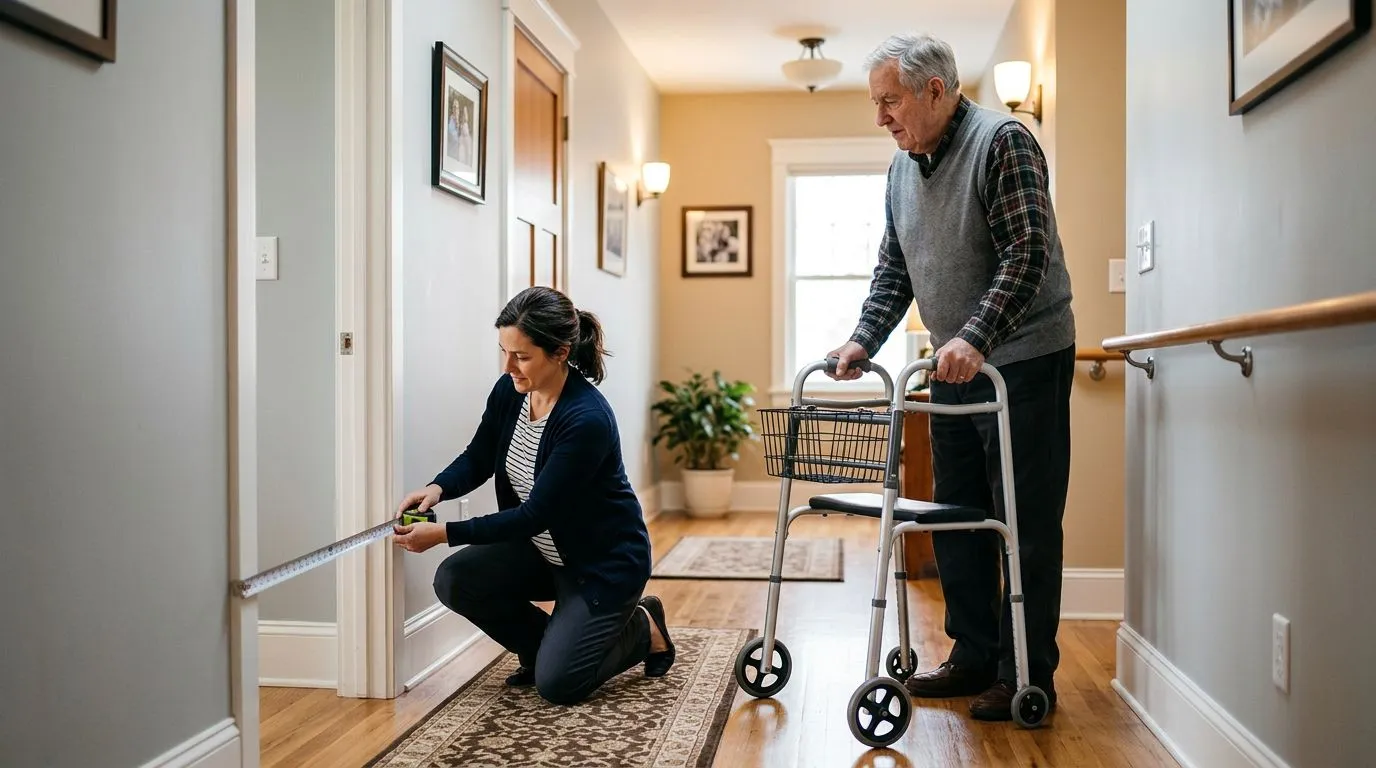
Measure before you shop. At minimum, check three places: the narrowest doorway, the bathroom path, and the route from bed to the toilet. Many interior doorways are around 28 to 32 inches wide, but older homes may be narrower. Bathrooms can be the hardest room because the walker must clear the doorway, turn near the sink or toilet, and avoid loose rugs.
Use a tape measure and write down the clear opening, not the door label. A 30-inch door may have less usable space once hinges, trim, or a towel rack are considered. Also measure hallway width, floor transitions, and the space beside the bed or favorite chair. A threshold of even 1/2 inch can catch a rear walker leg or make a small rollator wheel bump forward.
For small apartments and tight bathrooms, a standard or two-wheel folding walker may be easier to position than a larger rollator. For outdoor sidewalks, parking lots, and community centers, larger rollator wheels are often easier over cracks and small surface changes. If your parent will use both settings every day, you may need to prioritize the riskiest environment rather than the easiest one.
Question 3: How often do they need to rest in a 5-minute walk?
Rest needs are one of the biggest reasons caregivers consider a rollator. If your parent can walk safely but has to sit after a few minutes because of fatigue, pain, or shortness of breath, a 4-wheel rollator with a seat may make outings more comfortable. The seat is meant for resting with the brakes locked, not for being pushed like a wheelchair unless the device is specifically designed and labeled for that purpose.
Ask what happens during a normal 5-minute walk. Do they stop once, several times, or not at all? Do they lean on counters because their legs are tired? Do they avoid stores because benches are too far apart? These answers can point toward a rollator seat, a storage pouch for essentials, or a lighter walker for short indoor routes.
Seat height and width matter too. Many rollator seats are roughly chair-like, often around 20 to 23 inches high, but the right height depends on your parent’s leg length, hip comfort, and ability to sit and stand without losing balance. A bariatric rollator may offer a wider seat and higher weight capacity, but it may also be wider through doorways and heavier to load into a car.
Question 4: Can they manage brakes, folding, and 2-step safety cues?
A rollator asks more of the user than many families expect. Your parent must remember to use the hand brakes, lock them before sitting, keep both feet inside the frame while walking, and avoid pulling on the handles to stand up unless instructed. That is at least a 2-step safety routine every time they sit: lock brakes, then turn and sit carefully.
Cognition is not about labels; it is about real-world safety. If your parent forgets instructions, rushes to the bathroom, has poor judgment when tired, or becomes confused at night, rolling equipment may increase risk. A standard or two-wheel walker can still be used incorrectly, but it usually does not run away in the same way a poorly controlled rollator can.
Hand strength is part of this question. Some brakes require a firm squeeze. If your parent has neuropathy, severe arthritis, tremor, or one weaker hand, have them test brake control with supervision. They should be able to stop the rollator on level flooring, lock the brakes, and release them without pain or guessing.
Question 5: What did the clinician recommend, and why? Ask for 7 details
If your parent has fallen, had surgery, received a new diagnosis, or is suddenly weaker, ask a physician, physical therapist, or occupational therapist before buying. The most useful recommendation is not just walker or rollator. Ask for seven details: device type, handle height, weight-bearing limits, wheel preference, brake needs, home safety changes, and when to reassess.
For example, after certain surgeries, a person may be told to limit weight on one leg for a specific number of weeks. That can change the safest device. A rollator may not provide the right kind of support for partial weight-bearing instructions, while a standard or two-wheel walker may be preferred. Do not guess if medical restrictions are involved.
An occupational therapist can also look at daily tasks: toilet transfers, shower entry, kitchen movement, and getting in and out of bed. A physical therapist may focus on gait, balance, endurance, stairs, and safe turning. Both perspectives help caregivers choose equipment that fits the person, not just the trunk of the car.
Fit and measurement checklist: 5 numbers to write down
Good fit makes a walker or rollator safer and more comfortable. Bring five numbers when shopping: your parent’s height, approximate weight, wrist-to-floor height while standing in shoes, narrowest doorway width, and the highest threshold or floor transition. These numbers prevent many common mistakes.
- Handle height: Handles often fit near the crease of the wrist when the user stands upright with arms relaxed. Elbows should usually be slightly bent, often around 15 to 20 degrees.
- Weight capacity: Many standard devices support around 250 to 300 pounds, while bariatric options may support more. Always check the stated capacity for the exact device type.
- Overall width: Compare the outside width of the walker or rollator with your narrowest doorway and bathroom route.
- Seat size: For rollators, compare seat height and width with a chair your parent can use comfortably.
- Folded size and weight: If a caregiver will lift it into a car daily, even a few extra pounds can matter.
Do not set handles too high just because it seems more upright. High handles can raise the shoulders and reduce control. Handles that are too low can encourage stooping and extra pressure through the arms. If the adjustment holes are spaced 1 inch apart, choose the safest setting based on posture, control, and clinician guidance.
Feature comparison: 8 choices that affect daily use
Small features can decide whether the device is used every day or left in a corner. Compare features based on your parent’s routine, not the longest feature list. A person who walks only inside a one-level home may need a very different setup than someone who attends appointments twice a week.
| Feature | Why it matters | Caregiver question |
|---|---|---|
| No wheels vs 2 wheels | No wheels add control; 2 wheels reduce lifting | Can my parent lift a frame safely 50 or more times per day? |
| 3 wheels vs 4 wheels | 3-wheel rollators turn tightly; 4-wheel rollators usually feel steadier and offer better seating options | Is tight indoor turning or seated rest more important? |
| Brake style | Hand brakes must be squeezed and locked correctly | Can my parent use both brakes without pain? |
| Wheel size | Larger wheels handle outdoor cracks better; smaller wheels may feel more compact indoors | Will it be used mostly inside, outside, or both? |
| Seat and backrest | Important for rest breaks and safe sitting | Does my parent need a seat every 5 to 10 minutes? |
| Storage pouch or basket | Helps avoid carrying loose items by hand | Will they carry glasses, phone, keys, or medications? |
| Fold mechanism | Affects car loading and storage | Can the caregiver fold it with one hand while steadying the parent? |
| Frame weight | Lighter is easier to lift; heavier may feel more planted | Who will load it into the car, and how often? |
Storage is a safety feature when it keeps hands free. Carrying a purse, drink, or laundry basket while using a walker can change balance. If your parent needs to move items at home, ask a therapist about safe carrying options rather than improvising.
Who each type is best for: 6 practical caregiver scenarios
Matching the device to the person is easier when you picture real life. These scenarios are general, not medical prescriptions, but they can help you narrow the conversation.
- Standard no-wheel walker: Best for a parent who needs maximum stability for short indoor distances, such as 10 to 30 feet from chair to bathroom, and can lift the frame safely.
- Two-wheel walker: Best for someone who needs support but struggles to lift a walker with every step. It can work well on level indoor floors.
- Folding walker: Best when the device must be stored beside a chair, placed in a car, or moved between rooms. Confirm folded and open dimensions.
- 3-wheel rollator: Best for a steadier user who needs maneuverability in tight spaces and does not rely heavily on a large seat.
- 4-wheel rollator: Best for a parent who walks longer distances, can use brakes reliably, and benefits from seated rest during errands or appointments.
- Upright or bariatric rollator: Best only when the user’s size, posture, endurance, and brake control fit the design. These can be very helpful for the right person, but their larger footprint must fit the home.
If your parent already furniture-walks, do not assume any walker will fix the habit right away. They may need instruction and practice. The first week is often when families notice whether the device truly fits routines like turning at the toilet, approaching the refrigerator, or navigating bedroom rugs.
Red flags: 6 reasons to pause before buying
Some situations call for professional input before purchase. Pause if your parent has had 2 or more recent falls, new dizziness, sudden weakness, fainting, chest pain, a recent stroke, or a new weight-bearing restriction. The right device depends on what is causing the mobility change.
Also pause if the home has obvious hazards: loose rugs, poor lighting, cluttered walkways under 30 inches, pets underfoot, or electrical cords across walking paths. A walker can improve support, but it cannot make a hazardous route safe by itself.
Be careful with secondhand equipment, too. Used walkers and rollators can be practical, but check for bent frames, worn rubber tips, loose screws, cracked wheels, weak brakes, and missing height-adjustment buttons. A rollator with unreliable brakes is not a bargain.
A simple shopping plan for the next 24 hours
Start with observation, measurement, and advice. Watch your parent walk in their normal shoes at their usual pace. Measure the home route they use most. Write down the 5 key numbers: height, weight, wrist-to-floor height, narrowest doorway, and threshold height. If a clinician is involved, ask for device type and fitting guidance before you buy.
Choose the category before the features. If balance and step-by-step stability are the main issues, focus on standard, folding, or two-wheel walkers. If endurance and rest breaks are the main issues, and your parent can use brakes safely, compare 3-wheel and 4-wheel rollators. If size, posture, or higher capacity is a concern, include bariatric or upright designs only after confirming measurements and safe control.
The right mobility walker should make daily movement calmer, not faster at the expense of safety. When the device fits the person, the home, and the routine, it can support independence while giving caregivers a clearer plan for everyday mobility.
FAQ
Frequently asked questions
Should an older parent use a walker or a rollator? +
A walker is usually better when stability is the main concern, especially for short indoor distances or recovery with medical restrictions. A rollator may fit better when the person is steady enough to control hand brakes and needs to walk farther or sit for rest breaks.
How do I know what height a walker should be? +
A common starting point is to set the handles near the crease of the wrist while the person stands upright in normal shoes, with elbows slightly bent. A physical therapist can fine-tune the height based on posture, strength, and gait.
Are rollators safe for seniors with balance problems? +
Rollators can be safe for some older adults, but they require brake control, judgment, and balance while turning and sitting. If your parent sways, falls backward, forgets safety steps, or cannot lock the brakes reliably, ask a clinician before choosing a rollator.
What home measurements matter before buying a walker? +
Measure the narrowest doorway, bathroom route, hallway width, bedside space, and any thresholds or floor transitions. Compare those numbers with the outside width of the walker or rollator, not just the seat or frame description.
Can a rollator be used as a wheelchair? +
Most rollators are designed for walking support and seated rest, not for being pushed while someone sits on them. Unless the device is specifically designed and labeled for transport, using it like a wheelchair can be unsafe.
Keep reading
Related guides
No-Wheel Walker vs Two-Wheel Walker vs Rollator: How Wheels Change Stability, Effort, and Control
13 min read
Buying Your First Walker or Rollator: Questions to Ask Before You Order
15 min read
Mobility Walker With Seat vs Standard Walker: Which One Is Right for You?
14 min read