Disclosure: We may earn a commission when you buy through links on this page, at no extra cost to you. We buy nothing, sell nothing and accept no payment for coverage — commissions never decide what we recommend. How we make money.
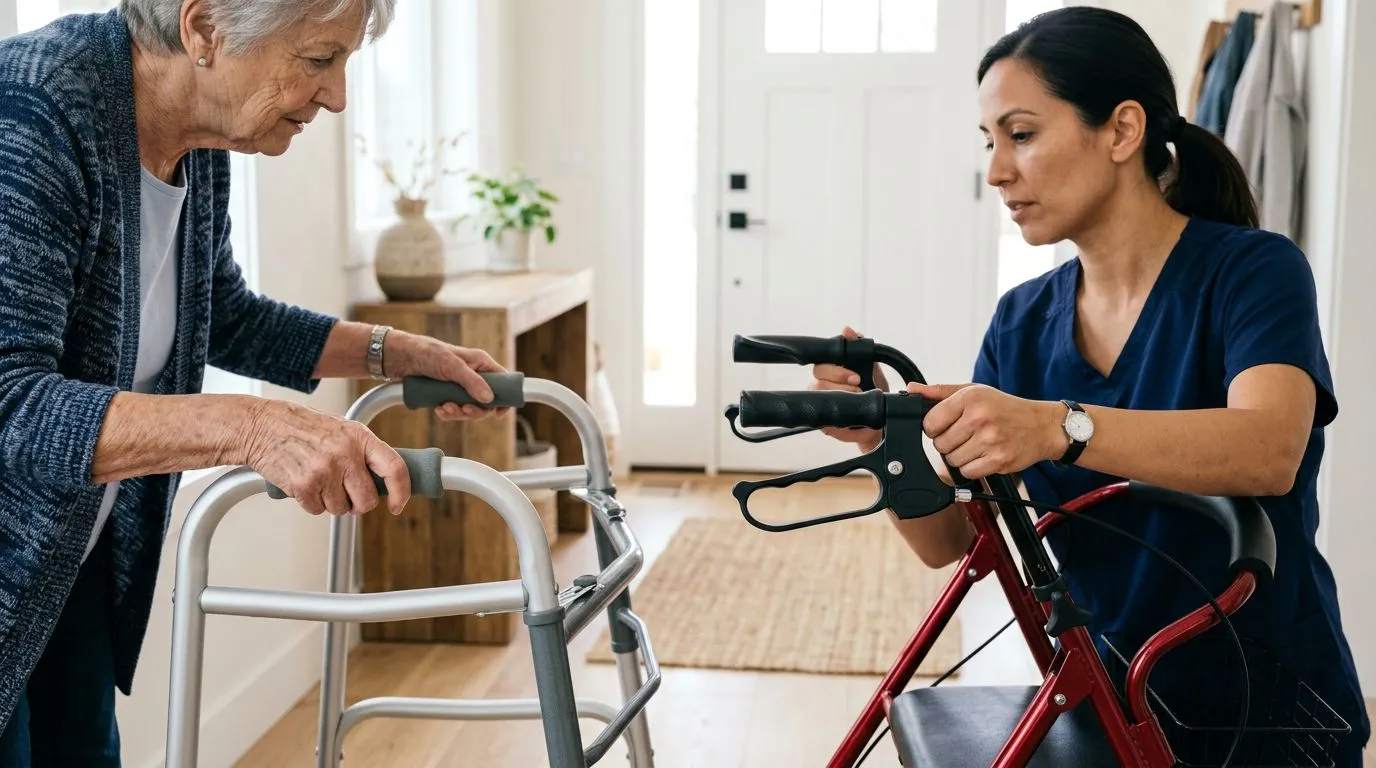
Loose or worn walker and rollator hand grips should be checked right away because they affect comfort and safety. Clean the grips first if they feel sticky, oily, or mildly slippery; tighten or re-seat them if they twist; replace them if they are cracked, compressed, torn, or still move after cleaning.
On a standard walker, the grip is your main hand contact point for lifting, stepping, and balance support. On a rollator, the grip also works with the brake handle, so a slipping hand can affect stopping control as well as comfort.
Why 1 loose grip can change how a walker or rollator feels
A hand grip may look like a small part, often only 4 to 6 inches long, but it changes how force transfers from your hand into the frame. If the grip twists, slides, or feels uneven, your wrist may compensate without you realizing it. That can lead to sore palms, strained fingers, or a less steady walking rhythm.
Walkers and rollators are different in this area. A standard walker or folding walker usually has fixed hand grips on the upper frame. Many two-wheel walkers use the same kind of grips, with front wheels and rear tips or glide caps. A no-wheel walker frame depends even more on secure grips because the user commonly lifts or partially lifts the frame with each step.
A rollator has wheels on all legs and usually includes hand brakes and a seat. On a 4-wheel rollator, your hands rest near brake levers that control stopping and parking. On a 3-wheel rollator, the grip and brake area is just as important, even though there is typically no full seat. An upright or stand-up rollator may use taller forearm supports plus hand grip areas, so wear can appear at more than one contact point.
The practical rule is simple: if a grip moves when your hand moves, fix it before using the device for longer walks.
A 60-second grip safety check for walkers and rollators
You do not need tools for the first inspection. Set the walker or rollator on a dry, level floor, lock rollator brakes if it has them, and take 60 seconds to test both sides. Compare left and right because one grip often wears faster depending on hand dominance.
| Check point | Standard walker or two-wheel walker | Rollator with hand brakes |
|---|---|---|
| Twist test | Hold the frame steady and try to rotate each grip by hand. It should not spin freely. | Test the grip without squeezing the brake, then while resting fingers on the brake lever. |
| Slide test | Push the grip inward and outward along the handle tube. Movement is a warning sign. | Make sure the grip does not slide toward the brake lever or interfere with lever travel. |
| Surface feel | Look for sticky buildup, slick skin oils, flattening, or cracks. | Check the grip and the brake lever area where fingers repeatedly pull. |
| Comfort | Press down as you normally would for 5 seconds. Note sharp edges or hard spots. | Stand behind the rollator and lightly brake. Watch for hand slipping during the squeeze. |
A grip that passes these checks should feel firm, even, and predictable. If one side feels different from the other, treat that as a maintenance clue.
Clean first when slipping is caused by oil, lotion, or dirt in 5 to 10 minutes
Cleaning is the right first step when the grip is intact but feels slick, sticky, or grimy. Hand lotion, sunscreen, cooking oils, sweat, and dust can build up quickly. In humid homes or during summer, a rubber grip can feel slippery even when it is not worn out.
Use mild dish soap and warm water. Dampen a cloth, wipe the full grip surface, then wipe again with a clean damp cloth to remove soap film. Dry the grip completely with a towel and let it air-dry for at least 10 minutes before use. A slightly damp grip can feel secure at first and then slip under pressure.
Avoid harsh solvents, petroleum-based cleaners, furniture polish, and oily wipes. These can soften rubber, break down foam, or leave a slick coating. Disinfecting wipes may be useful when illness is a concern, but choose one that does not leave a residue, and let the grip dry fully.
Foam grips need gentler cleaning. Do not soak them. Foam can hold moisture inside, which may weaken adhesive or encourage odor. For textured rubber grips, use a soft toothbrush only if dirt is trapped in grooves; scrub lightly to avoid tearing raised patterns.
Tighten or re-seat a grip if it moves more than 1/8 inch
If a grip slides or twists after cleaning, it may need to be re-seated or secured. Even movement of about 1/8 inch can feel unsettling when weight is placed through the hands. Stop using the device for long distances until the grip is stable.
Many walker grips are friction-fit over a metal tube. Over time, heat, pressure, or wear can loosen that fit. If the grip has partially worked its way off the end, you may be able to push it back into its correct position. The end of the grip should sit fully on the handle tube with no exposed sharp edge where your palm rests.
Do not use household glue, duct tape, electrical tape, or rubber bands as a long-term repair. Tape can unravel, shift, or create a raised ridge that irritates the palm. Glue may fail under body weight and can make later replacement harder. If a grip needs adhesive or a fastener, follow the device instructions or ask a mobility equipment professional to inspect it.
On a standard walker, tightening is usually about the grip-to-frame fit. On a rollator, the grip area may sit near brake hardware, cables, or molded handle parts. If grip movement changes how the brake lever rests, returns, or locks, have the rollator checked before using it outdoors.
Replace the grip when you see 6 clear wear signs
Replacement is the safer choice when cleaning and re-seating do not restore a firm, comfortable surface. Most walker and rollator grips are inexpensive parts compared with the cost of a fall, a strained wrist, or a rollator brake problem, but the replacement still must fit correctly.
Watch for these 6 signs:
- Cracks or splits: A visible crack can widen quickly under hand pressure.
- Loose rotation: The grip twists around the handle tube during normal use.
- Sliding: The grip moves lengthwise, especially toward the end of the handle.
- Compressed foam: The cushion feels flat, hard, or uneven after months of use.
- Sticky or glossy rubber: Rubber that remains tacky or slick after cleaning may be breaking down.
- Palm discomfort: New soreness, pressure points, or blisters can mean the grip surface no longer supports the hand well.
Replace both grips at the same time if one is badly worn and the other is close behind. Matching left and right grips helps keep hand height and feel consistent. This matters more than it may seem; even a small difference in cushion thickness can change wrist angle.
For rollators, inspect the brake levers while replacing grips. The brake handles should move smoothly, return normally, and lock in the parked position if that feature is built in. A new grip should never block brake travel.
Foam vs rubber grips: a 2-material comparison
Most replacement grips are foam or rubber, though some handles are molded as part of a larger assembly. The right choice depends on hand comfort, grip strength, moisture, and how much pressure you place through the device.
| Feature | Foam grip | Rubber grip |
|---|---|---|
| Feel | Soft and cushioned, often easier on tender palms. | Firmer and more defined, sometimes with texture. |
| Moisture | Can absorb sweat or water if damaged or soaked. | Usually easier to wipe clean and dry. |
| Wear pattern | May flatten, tear, or crumble over time. | May crack, become slick, or turn sticky as it ages. |
| Best fit | Often helpful for mild hand tenderness when properly sized. | Often helpful when a secure, wipeable surface is the priority. |
| Maintenance | Clean gently and avoid soaking. | Clean with mild soap and dry fully. |
Neither material is best for everyone. A person who uses a folding walker only inside the house for short transfers may prefer a softer foam feel. Someone who takes a rollator outside, touches brake handles often, and needs easy cleaning may prefer textured rubber.
Hand conditions matter too. Arthritis, reduced grip strength, neuropathy, or tender skin can change what feels safe. If pain or numbness is a regular issue, ask an occupational therapist, physical therapist, or clinician to look at your hand position and device height.
Rollator brake handles need a 3-part grip check
Rollators add one important layer: braking. A loose grip on a rollator is not only a comfort problem. It may reduce hand confidence when squeezing or locking the brakes, especially on ramps, parking lots, or thresholds.
Use a 3-part check. First, place your hand normally on the grip and squeeze the brake lever. Your palm should stay in place without sliding forward. Second, release the brake and confirm the lever returns freely. Third, engage the parking brake if your rollator has one and make sure the grip does not interfere with the locking motion.
Check both sides. Many people brake harder with one hand than the other, especially if one hand is stronger. If one lever feels harder to pull, easier to lock, or slower to return, the issue may be brake adjustment rather than grip wear.
Do not ignore cable or brake concerns. Rollator brakes are mechanical parts, and improper adjustment can affect stopping. If braking feels weak, uneven, noisy, or delayed after you replace or re-seat grips, have the rollator inspected by a qualified repair provider or mobility equipment professional.
Standard walkers do not have hand brakes. That makes grip stability simpler, but not less important. With a no-wheel walker frame, the hands help lift and place the frame repeatedly. With a two-wheel walker, the hands guide the front wheels and control rear tip contact. In both cases, slipping grips can disrupt timing.
How to measure replacement grips in 3 simple numbers
Before buying generic replacement grips, measure carefully. A grip that is too loose is unsafe, and a grip forced onto the wrong tube can split. You usually need 3 numbers: handle tube outside diameter, grip length, and available straight handle space.
First, measure the outside diameter of the handle tube. Many walker and rollator handle tubes are around 1 inch in diameter, but do not assume. Use a ruler, tape measure, or caliper if available. Second, measure the current grip length from end to end, often about 4 to 6 inches. Third, measure the straight section of the handle where the grip sits so you know the replacement will not crowd a bend, button, brake lever, or adjustment area.
For rollators, also check clearance near the brake handle. The replacement grip should allow fingers to wrap naturally and should not push the hand too far away from the lever. On upright rollators, check any forearm pad or vertical handle surface separately because those contact points may use different parts.
If the original grip is part of a molded handle assembly, do not cut it off without understanding how the handle is designed. Some rollator handles integrate brake lever mounts, cables, or locking parts. When in doubt, bring measurements and photos to a local mobility equipment store or repair service.
Who each fix is best for after 1 inspection
The best repair depends on what you find during inspection, not on a calendar alone. Cleaning, re-seating, and replacing solve different problems.
| What you notice | Best first action | Who it is best for |
|---|---|---|
| Grip feels dirty, oily, or mildly slick but does not move. | Clean and dry thoroughly. | Walker or rollator users with intact grips and normal brake function. |
| Grip has shifted slightly but is not torn. | Re-seat and check fit. | Standard walker users or rollator users whose brake lever clearance is unchanged. |
| Grip twists under hand pressure. | Replace or have it secured properly. | Anyone relying on the device for balance, transfers, or outdoor walking. |
| Foam is flat, torn, or crumbly. | Replace both grips if possible. | Users with palm discomfort or uneven left-right grip feel. |
| Rollator braking feels affected. | Stop and get brake area inspected. | 3-wheel, 4-wheel, upright, and bariatric rollator users. |
Bariatric rollators and heavy-duty walkers need special attention because users may place higher loads through the handles. Many heavy-duty frames are rated for higher weight capacities, sometimes 300 pounds, 400 pounds, or more depending on the device. The grip still needs to match the handle design and the way the device is used.
For caregivers, the key is to watch behavior. If a person suddenly avoids using one side, shakes out a hand, complains that the walker feels different, or brakes late on a rollator, inspect the grips the same day.
A 4-step maintenance schedule for safer handles
Grip care works best when it is routine. A simple 4-step schedule can prevent many problems before they become urgent.
- Daily or before each outing: Feel for looseness, moisture, or obvious slipping.
- Weekly: Wipe grips with mild soap and water if they collect lotion, sweat, or dirt.
- Monthly: Do the full twist, slide, surface, and comfort check on both sides.
- Every 6 months: Look more closely for material aging, especially cracks in rubber or compression in foam.
Storage helps too. Keep walkers and rollators away from prolonged heat, direct sun through a car window, and damp areas. Heat can soften some grip materials, while moisture can shorten the life of foam and create slick surfaces.
After any fall, near-fall, car transport, or airline trip, inspect the handles again. A walker folded into a trunk or a rollator loaded into a vehicle can have pressure placed directly on the grips. The damage may be subtle at first.
Safe mobility is not about keeping equipment perfect forever. It is about noticing small changes early. Clean when the surface is contaminated, tighten or re-seat when the grip has shifted, and replace when the material no longer gives secure, comfortable hand contact. For walkers, that supports steadier frame control. For rollators, it also helps protect reliable braking and confident movement.
FAQ
Frequently asked questions
Can I keep using a walker if one hand grip twists slightly? +
Do not ignore a twisting grip. Even slight movement can affect balance and hand comfort. Clean it first, then re-seat it if appropriate. If it still twists, replace the grip or have the walker inspected.
Are rollator hand grips different from standard walker grips? +
Often, yes. Rollator grips sit near brake levers and must not interfere with braking or parking brake function. Standard walker grips are usually simpler fixed hand contacts, but they still need a tight, secure fit.
Is foam or rubber better for walker grips? +
Foam is usually softer and may feel better on tender palms, while rubber is often easier to wipe clean and may offer a firmer surface. The better choice depends on hand comfort, moisture, grip strength, and proper fit.
Can I use tape to fix a loose walker or rollator grip? +
Tape is not a good long-term repair. It can shift, unravel, create pressure ridges, or become slippery. A loose grip should be properly re-seated, replaced, or checked by a mobility equipment professional.
How often should walker or rollator grips be replaced? +
There is no single replacement schedule. Inspect them monthly and replace them when they crack, flatten, tear, turn sticky, slide, twist, or cause new hand discomfort. Heavy daily use may wear grips faster.
What should I do if new rollator grips affect the brakes? +
Stop using the rollator for walking until the brake area is checked. New grips should not block lever movement, change hand position in a way that reduces control, or affect parking brake locking.
Keep reading
Related guides

Walker Hand Grips, Foam Covers, and Gloves: Comfort Upgrades for Sore Hands and Better Control
13 min read
Walker Rubber Tips and Glide Caps: When to Clean, Rotate, or Replace Worn Feet
15 min read
Walker and Rollator Maintenance Checklist: Weekly, Monthly, and Before Trips
13 min read