Disclosure: We may earn a commission when you buy through links on this page, at no extra cost to you. We buy nothing, sell nothing and accept no payment for coverage — commissions never decide what we recommend. How we make money.

If your hands hurt when you use a walker or rollator, start with the basics: grip fit, softer grip covers, and supportive gloves. Foam covers can cushion pressure, replacement grips can improve control, and gloves can reduce friction while helping you hold brakes or handles more securely.
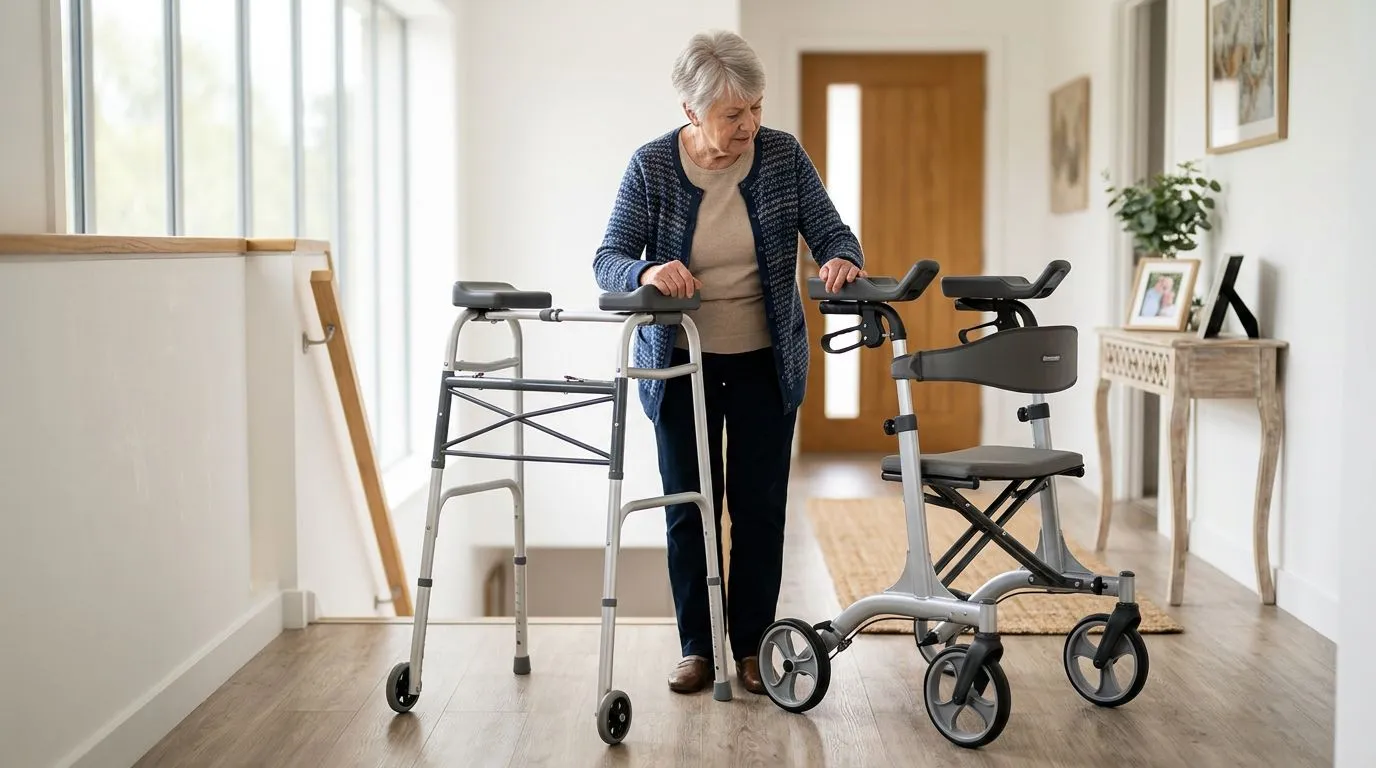
The right upgrade depends on what you use. A standard walker puts more downward pressure through the palms, while a rollator adds hand brakes that require finger control. Comfort accessories are not a substitute for proper walker height or medical care, but when they are chosen and installed carefully, they can make daily mobility easier.
Why walker and rollator handles can cause sore hands in 10 minutes
Hand soreness often begins with pressure. When someone leans on a standard walker, folding walker, or two-wheel walker, body weight travels through the palms into the frame. Even a small height mismatch of 1 inch can change wrist angle and increase pressure on the heel of the hand.
Rollators create a different pattern. A 3-wheel or 4-wheel rollator rolls continuously, so the hands guide the frame and operate loop-style brakes. If the handles are too low, the user may lean forward. If they are too high, the shoulders can rise and the wrists may bend back. Upright rollators shift some contact toward the forearms, but the hands still steer and brake.
Common causes of sore hands include hard plastic grips, narrow handles, sweating, arthritis, reduced grip strength, neuropathy, and holding the frame too tightly. Outdoor surfaces matter as well. A rollator used on a rough sidewalk for 20 minutes can vibrate more than a walker used inside on smooth floors.
Before buying an accessory, check the basics. When standing inside a walker or behind a rollator with arms relaxed, the handle tops are commonly set around wrist-crease height. Elbows should have a slight bend, often about 15 to 30 degrees, when holding the grips. If the frame is too tall or too low, even the best foam cover may not solve the problem.
Comfort upgrade options: 5 accessories that solve different hand problems
Walker and rollator hand accessories are not all the same. Some add cushion, some add traction, and others help with warmth or finger control. The best choice depends on whether the main problem is palm pressure, slipping, brake use, or skin irritation.
| Accessory type | Best use | Works on walkers | Works on rollators | Key caution |
|---|---|---|---|---|
| Foam grip covers | Cushioning hard handles | Yes | Yes, if brakes remain reachable | May make handles thicker |
| Gel or padded covers | Higher pressure relief for sore palms | Yes | Yes, with brake clearance | Can shift if not secured |
| Replacement hand grips | Worn, cracked, or slippery original grips | Yes | Yes, but brake style matters | Must match handle diameter |
| Grip tape or textured wrap | Better traction with less bulk | Yes | Sometimes | Edges can irritate skin |
| Padded gloves | Blisters, sweating, cold hands, weak grip | Yes | Yes | Must allow brake control |
For a standard no-wheel walker, cushioning usually matters most because the hands bear repeated downward load with each lift and step. For a folding walker with front wheels, the load may be slightly less than a full lift, but the palms still take pressure during turns and stops.
For a rollator, control is just as important as cushion. A thick cover can feel good at rest but make it harder to squeeze the brake lever, especially for someone with small hands or arthritis. On many rollators, keeping even a half inch of open reach around the brake lever can make a noticeable difference.
Foam grip covers: when 1/4 to 1/2 inch of cushion helps most
Foam covers are popular because they are simple, light, and usually easy to install. They slip over the existing hand grips or fasten around them. A cover that adds about 1/4 to 1/2 inch of padding can soften the contact point without dramatically changing how the walker feels.
They are often a good first upgrade for people using standard walkers, folding walkers, and two-wheel walkers. These frames are usually pushed down into the floor, then lifted or advanced. That creates repeated compression through the palm, and a soft cover spreads pressure over a larger area.
Foam also helps when the original grip is hard, cold, or slick. For indoor use, a smooth foam cover may be enough. For outdoor use, a textured cover may give better control when hands are sweaty or damp.
Rollator users should test foam covers more carefully. A 4-wheel rollator with loop brakes requires the fingers to wrap around the handle and pull the brake lever. If foam makes the grip too thick, brake response can suffer. A 3-wheel rollator often has a narrower frame and quick steering, so the user needs reliable hand contact on turns.
Check for twisting. After installation, hold the walker or rollator handle and rotate your wrist gently. The cover should not spin around the grip. If it moves during this simple test, it may move during a curb cut, doorway turn, or stop.
Replacement hand grips: measure the handle diameter before buying
Replacement grips make sense when the original walker or rollator handles are cracked, compressed, sticky, loose, or worn smooth. Many mobility handles are built around round tubing or shaped handle bars, but sizes vary. Measuring before purchase is essential.
Use a flexible tape measure or a strip of paper to estimate the outside diameter of the existing handle area. Some grips fit tubing around 7/8 inch to 1 inch, but not all walkers and rollators use the same shape. An oval or ergonomic handle may not accept a simple round replacement grip.
Standard walkers and folding walkers may have straight horizontal grips that are easier to replace. Rollators can be trickier because the hand grip may connect to a brake lever assembly. Do not remove or modify a brake handle unless the replacement is compatible with that brake design. Brakes are a safety feature, not a comfort accessory.
Look for a grip length that supports the whole palm. Many adult hands need about 4 to 5 inches of usable handle length. A grip that is too short can concentrate pressure near the thumb or outer edge of the hand.
Texture matters. A lightly textured surface can improve control without feeling abrasive. Deep grooves may bother sensitive skin, especially during longer walks. If you have arthritis, neuropathy, or fragile skin, a softer surface may be better than a highly ridged one.
Padded gloves: a 2-minute brake and fit test for rollators
Gloves can be an excellent comfort upgrade because they cushion the hand without changing the walker or rollator handle. They are especially useful when more than one person uses the same mobility aid, or when you do not want to alter the frame.
For walkers, padded gloves can reduce palm soreness and help prevent rubbing. For rollators, gloves can add traction while preserving access to the brake levers. The key is to test brake control before using them outside.
Try this 2-minute test indoors. Put on the gloves, stand behind the rollator, and squeeze both brakes 10 times. Then engage the parking brake if your rollator has one. Turn in a small circle, stop, and release the brakes. If the glove padding bunches up, fingers slip, or braking feels delayed, the glove is not a safe match.
Fingerless gloves can help people who want padding but need fingertip feel. Full-finger gloves may be better in cold weather or for delicate skin, but they should not reduce dexterity. A glove that is too large can wrinkle under the palm and create a new pressure point.
For sore thumbs, look at seam placement. A seam across the base of the thumb can become irritating after 15 or 20 minutes of walking. Soft, flat seams are usually more comfortable than bulky stitching.
Who each upgrade is best for: walkers vs. rollators in 6 common situations
Choosing between grips, covers, and gloves is easier when you match the accessory to the job. Walkers and rollators place different demands on the hands, so the same solution may not work equally well for both.
| Situation | Likely best upgrade | Why it helps | Extra note |
|---|---|---|---|
| Standard walker causes palm soreness | Foam or gel covers | Spreads downward pressure | Check walker height first |
| Folding walker grips are cracked | Replacement grips | Restores a secure surface | Measure diameter and length |
| Two-wheel walker slips in sweaty hands | Textured covers or gloves | Adds traction | Avoid abrasive tape on fragile skin |
| 4-wheel rollator brakes feel hard to reach | Thinner gloves or low-profile grips | Keeps fingers close to levers | Do not add bulky foam first |
| 3-wheel rollator feels twitchy on turns | High-traction grips | Improves steering control | Practice indoors before outdoor use |
| Upright rollator irritates palms and forearms | Forearm pad adjustment plus gloves | Reduces rubbing at contact points | Check armrest height and angle |
If you use a bariatric walker or bariatric rollator, pay close attention to grip security. Higher weight capacities often mean stronger frames, but the hand contact points still need to stay firmly in place. Any cover that twists, slides, or compresses unevenly should be replaced.
People with one-sided weakness, tremor, or reduced hand sensation should be especially cautious with thick covers. More padding can feel comfortable but may reduce feedback from the frame. If you cannot tell whether the walker leg or rollator wheel is stable, control can suffer.
How to choose and measure: 7 checks before changing any grip
A comfort upgrade should make the mobility aid easier to use, not harder to control. Use these 7 checks before changing walker or rollator grips.
- Check handle height. Stand tall in your usual shoes. The handle should commonly align near the wrist crease, with a slight elbow bend when holding it.
- Measure grip length. Confirm that the padded area supports your palm, usually about 4 to 5 inches for many adults.
- Measure diameter or circumference. A grip that becomes too thick can fatigue the hand. Smaller hands usually need a lower-profile cover.
- Test brake reach. On a rollator, you should be able to squeeze the brake lever fully without shifting your hand into an awkward position.
- Look for secure attachment. Covers should not rotate, slide, or bunch up after 10 firm pushes or pulls.
- Consider skin sensitivity. Avoid rough seams, sticky tape edges, or hard ridges if your skin bruises or tears easily.
- Think about cleaning. Handles collect sweat and dirt. Choose materials you can wipe down regularly.
For a walker, test the upgrade by taking 10 slow steps on a flat indoor surface. Lift or advance the walker as you normally do, and notice whether your wrist stays neutral or bends back.
For a rollator, test starts, stops, and turns. Walk 20 to 30 feet, squeeze the brakes, lock the parking brake, sit if your rollator has a seat, then stand and release the brakes. The accessory should not interfere with any of those actions.
Installation and safety checks: spend 5 minutes before the first walk
After installing grip covers or replacement grips, take 5 minutes for a safety check. Comfort matters, but a loose grip can create a fall risk.
First, inspect the fit. Both left and right handles should feel the same unless the accessory is intentionally shaped. If one side feels thicker or softer, remove and reinstall it. Uneven hand height can make the frame feel crooked.
Second, test movement. Push down with your body weight as you would with a standard walker. Then pull backward gently. The cover or grip should stay fixed. On a rollator, squeeze each brake lever fully and confirm that the wheels stop as expected.
Third, check clearance. Foam should not press against brake cables, brake handles, folding buttons, or height-adjustment holes. On some rollators, a bulky cover can rub against the brake lever and prevent it from returning fully.
Fourth, practice in the safest setting available. A hallway with good lighting and a flat floor is better than starting on a driveway, ramp, or uneven sidewalk. If you use the walker or rollator after a recent surgery, illness, or therapy change, ask a clinician or therapist to review the setup.
Finally, recheck after a few days. Foam can compress. Tape can loosen. Gloves can stretch. A quick weekly inspection helps catch small problems before they affect control.
Cleaning and replacement: inspect grips every 30 days
Hand grips collect sweat, lotion, dirt, and cleaning residue. A slippery handle is not just unpleasant; it can reduce control. Wipe grips and covers regularly with a mild cleaner appropriate for the material, then let them dry completely before use.
Inspect your walker or rollator grips at least every 30 days, and more often if you use the device outdoors daily. Look for cracks, flattening, sticky spots, torn seams, or areas that slide under pressure. Replace covers when they no longer spring back or when the surface becomes slick.
Gloves need care too. Wash them according to their material instructions and replace them if padding shifts, seams open, or the palm surface becomes polished smooth. If gloves are used for rollator braking, worn palms can make levers harder to hold.
Avoid adding multiple layers of padding without testing. Two covers may feel soft but can make the handle too large. Too much bulk can also raise the effective hand position by about 1/2 inch or more, which may change posture.
When hand pain needs more than a grip upgrade after 1 week
Comfort accessories can help with pressure and friction, but they cannot diagnose or treat medical problems. If hand pain, numbness, tingling, swelling, or weakness lasts more than 1 week despite adjusting height and grip comfort, it is wise to speak with a healthcare professional.
Sudden loss of grip strength, new one-sided weakness, severe wrist pain, or skin breakdown should be addressed promptly. People with diabetes, circulation problems, neuropathy, or fragile skin should be especially careful about blisters and pressure spots.
A physical therapist or occupational therapist can also check whether your walker or rollator is the right type. A standard walker may offer more stability but more hand loading. A rollator may reduce lifting but requires brake judgment and enough hand control. The safest choice depends on balance, endurance, strength, home layout, and outdoor walking needs.
Sometimes the real fix is not a new grip. It may be a height adjustment, different walker style, better footwear, brake adjustment, or training in how to step and turn. Accessories work best when the mobility aid itself fits well.
FAQ: 5 common questions about walker hand comfort
Do foam covers fit both walkers and rollators?
Many foam covers can fit both, but rollators need extra caution because of the hand brakes. Make sure the cover does not block the brake lever, cable, parking brake function, or your ability to wrap your fingers around the handle.
Are gloves better than padded grips?
Gloves are better when you want cushioning without changing the handle size. Padded grips are better when the original handle is hard or worn. Rollator users should choose the option that still allows full brake control.
Can thicker grips help arthritis?
Sometimes. A slightly larger, softer grip may reduce the need to squeeze tightly, but a grip that is too thick can strain the hand. Try a low-profile cover first and test it indoors.
Should I use grip tape on a walker?
Grip tape can improve traction, especially on a slick handle, but it should be smooth enough for sensitive skin. Avoid rough edges and check that the tape does not unravel or become sticky.
How do I know if my walker handles are too low?
If you hunch forward, lock your elbows, or feel wrist pressure after a short walk, the handles may be too low. A common starting point is wrist-crease height while standing in your usual shoes.
Keep reading
Related guides
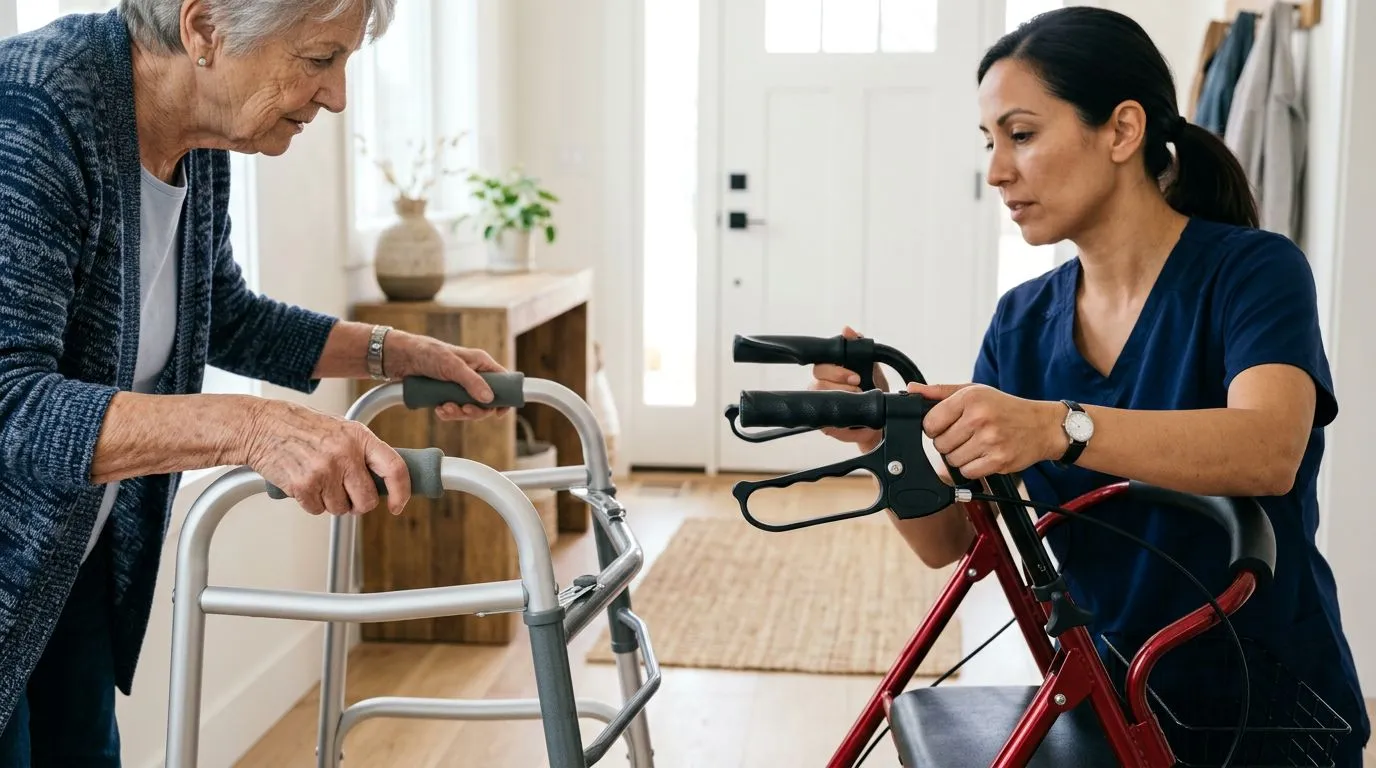
Loose or Worn Walker and Rollator Hand Grips: When to Clean, Tighten, or Replace Them
12 min read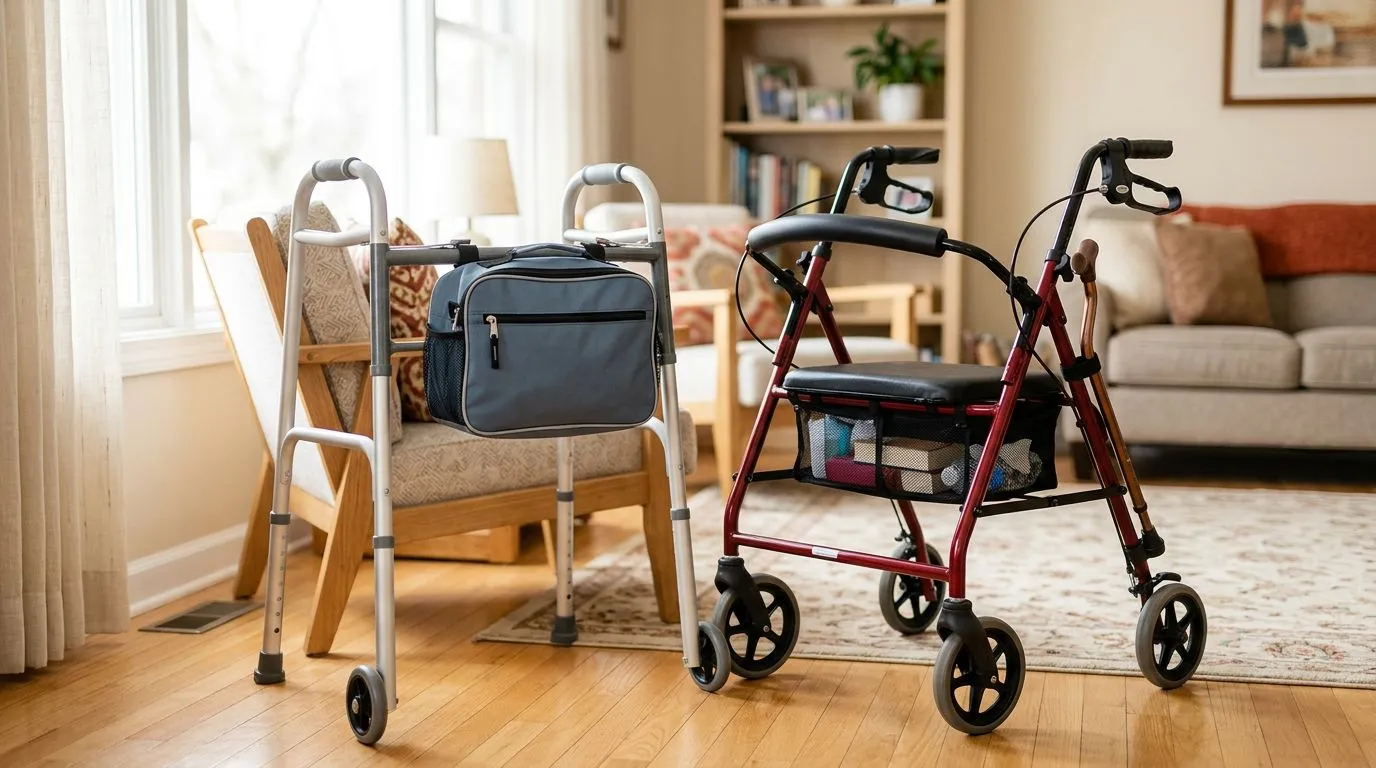
Mobility Walker Accessories and Replacement Parts: Bags, Baskets, Glides, Grips, and Brakes
16 min read
Mobility Walkers for Arthritis or Weak Hands: Grips, Brakes, Weight, and Folding
13 min read