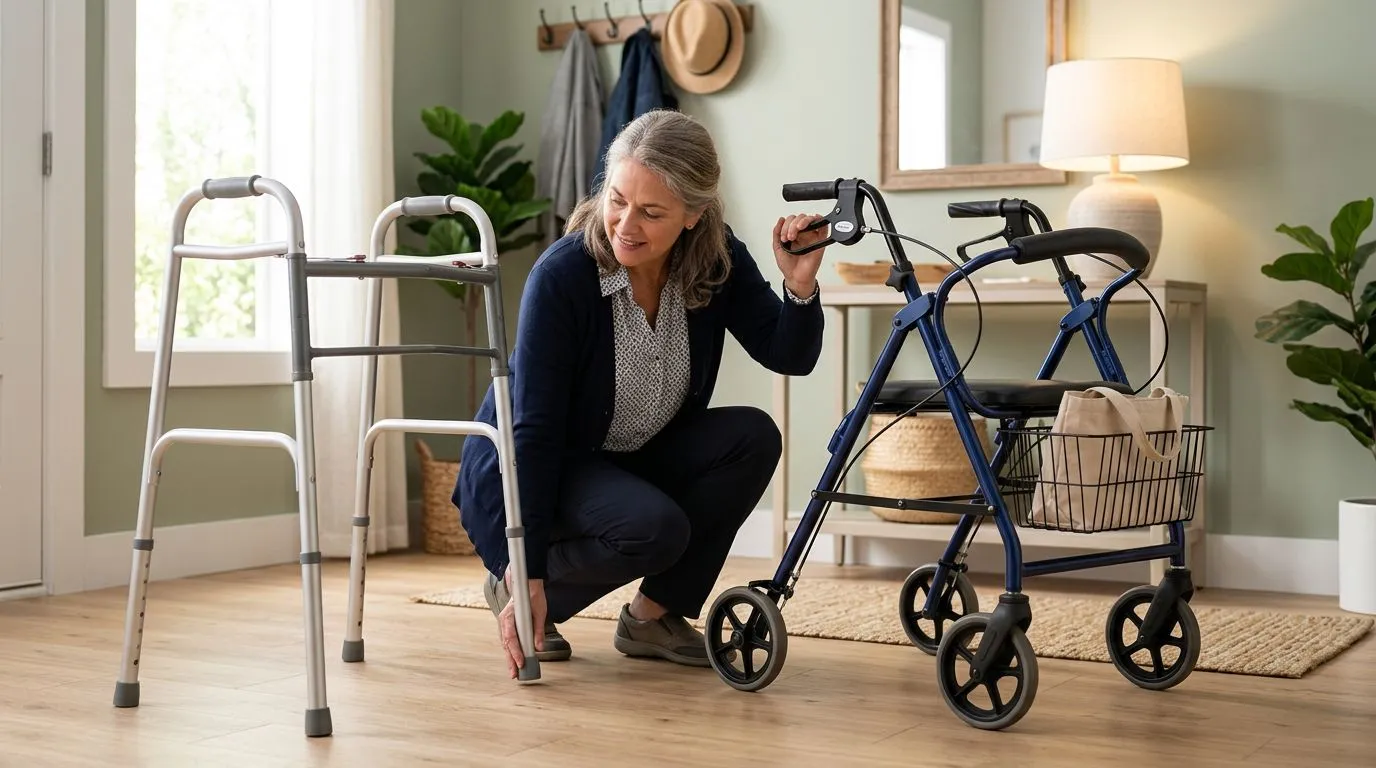
Disclosure: We may earn a commission when you buy through links on this page, at no extra cost to you. We buy nothing, sell nothing and accept no payment for coverage — commissions never decide what we recommend. How we make money.
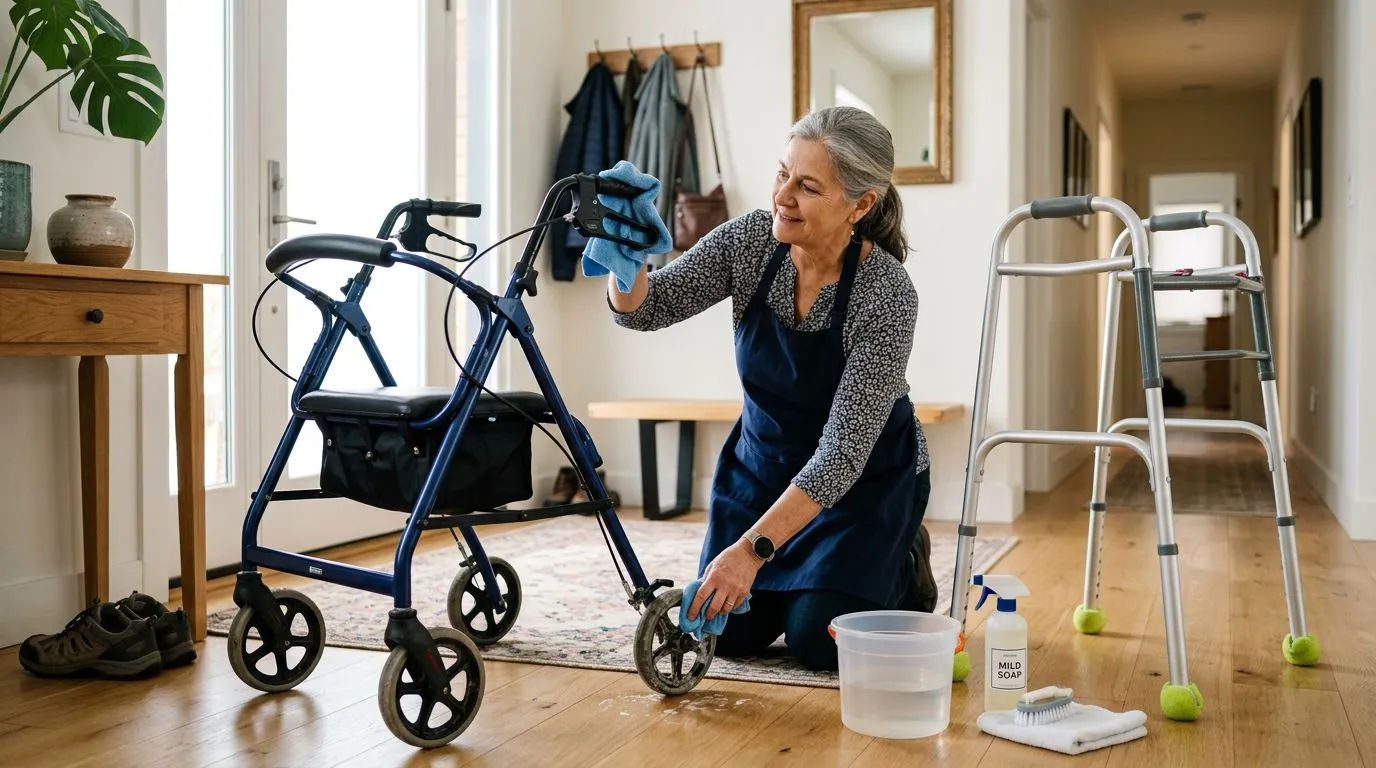
To clean and disinfect a walker or rollator without damaging it, remove dirt first with mild soap and water. Then disinfect only the hard, nonporous surfaces with a compatible product, and dry everything thoroughly. Pay close attention to hand grips, brake handles, seats, frame joints, wheels, and rubber tips, since these areas are touched often or collect outdoor debris. Avoid soaking the device, spraying into brake cables or bearings, or using harsh products that can crack rubber, dull finishes, or corrode metal.
Walkers and rollators are close-contact mobility aids. A standard walker, folding walker, two-wheel walker, or no-wheel walker frame has fewer moving parts, while a rollator has 3 or 4 wheels, hand brakes, and usually a built-in seat. The goal is the same for both: remove grime, reduce germs on high-touch areas, and keep the device safe to use.
Cleaning a walker or rollator: the safe 10-minute routine
For everyday care, most walkers and rollators can be cleaned in about 10 minutes with a soft cloth, warm water, a small amount of mild dish soap, and a dry towel. Disinfecting adds a few more minutes because many disinfectants require 1 to 10 minutes of wet contact time, depending on the product label.
Start with the simplest method that works. Soap and water remove sweat, skin oils, food spills, road dust, and sticky residue. Disinfectant should be used after cleaning, not before, because visible dirt can make a disinfectant less effective.
Basic supplies
- 2 to 3 microfiber cloths or soft cotton rags
- Warm water and mild soap
- A small soft brush or old toothbrush for wheel treads and joints
- Disposable gloves if cleaning after illness or heavy soil
- EPA-registered disinfecting wipes or spray suitable for hard, nonporous surfaces
- A dry towel for the frame, grips, wheels, and seat edges
Park the walker or rollator on a flat surface before you begin. If it is a rollator, lock the hand brakes. Remove baskets, bags, trays, cup holders, cushions, or personal items so moisture does not get trapped underneath.
What to clean on walkers vs. rollators: 6 common contact points
A standard walker may have only 4 legs and 2 hand grips, while a 4-wheel rollator can have more than a dozen areas where dirt collects, including brake handles, seat seams, wheel forks, and storage pouches. Both types need cleaning, but their parts are not identical.
| Device type | Parts to clean most often | Extra care point |
|---|---|---|
| Standard or folding walker | Hand grips, aluminum frame, folding buttons, rubber tips | Check all 4 tips for wear and moisture trapped inside |
| Two-wheel walker | Hand grips, front wheels, rear glide caps or tips, frame crossbar | Remove hair or grit from the 2 front wheels |
| No-wheel walker frame | Grips, leg tubes, height adjustment holes, rubber feet | Dry the height holes so corrosion does not start |
| 3-wheel rollator | Grips, brake handles, 3 wheels, frame joints, storage pouch | Clean the center front wheel because it picks up debris when turning |
| 4-wheel rollator | Grips, hand brakes, seat, backrest, 4 wheels, basket area | Keep water away from brake cables and wheel bearings |
| Upright or bariatric rollator | Forearm pads, taller handles, seat, brakes, reinforced frame, wider wheels | Wipe support pads and inspect the higher-contact arm surfaces |
Do not treat a rollator like a simple walker frame. Rollators have braking systems and more moving parts. A no-wheel walker can usually handle a careful wipe-down, but a rollator needs extra attention around cables, wheels, and the seat area.
How often to clean and disinfect: daily, weekly, and after illness
For a walker or rollator used every day, wipe the hand grips and brake handles daily or at least several times per week. A deeper cleaning once a week is reasonable for many home users, and immediate cleaning is wise after a spill, a muddy outing, or exposure to body fluids.
Disinfect more often when the device is shared, used in a clinic, taken to a crowded indoor setting, or handled by multiple caregivers. If someone in the home has been sick, clean first, then disinfect high-touch areas such as grips, brake handles, seat edges, folding levers, and storage handles.
- After each outdoor trip: Wipe wet wheels, rubber tips, and lower frame tubes.
- Daily for frequent users: Clean hand grips and brake handles in 1 to 2 minutes.
- Weekly: Wash the frame, wheels, seat, backrest, and accessories.
- After illness or visible contamination: Clean, disinfect, and allow full label-listed contact time.
More disinfectant is not always better. Repeated harsh cleaning can shorten the life of rubber grips, foam pads, painted finishes, and vinyl seats. A safer habit is consistent light cleaning with targeted disinfection when needed.
Step-by-step cleaning for frames, grips, seats, brakes, and wheels
This detailed method takes about 20 to 30 minutes for a rollator and about 10 to 15 minutes for a basic folding walker. Work from the cleaner upper areas to the dirtier lower areas so you do not drag wheel grime onto hand surfaces.
1. Secure the device
Place the walker or rollator on a towel or easy-to-clean floor. Lock the brakes on a rollator. For a folding walker, make sure it is fully opened and stable so you can reach both sides without pinching your fingers.
2. Clean hand grips and brake handles
Hand grips collect the most skin oil. Wipe them with a damp, soapy cloth, then wipe again with clean water. If the grips are textured, use a soft brush lightly; avoid sharp tools that can gouge rubber or foam. On rollators, clean the brake handles, but do not flood the area where the brake cable enters the handle.
3. Wash the frame
Wipe aluminum or steel tubes with a damp cloth. Focus on folding hinges, push buttons, height adjustment holes, and crossbars. If your walker has height markings in 1-inch increments, wipe around the holes and dry them carefully so moisture does not remain inside the tubing.
4. Clean the seat, backrest, and pads
Most rollator seats are vinyl, plastic, or padded synthetic material. Use soap and water first, especially along seams and edges. Upright rollators may have forearm pads that collect sweat; wipe the top and underside. Do not soak padded seats or arm supports because trapped moisture can lead to odor and material breakdown.
5. Scrub wheels, glides, and rubber tips
Wheels and tips touch sidewalks, bathroom floors, parking lots, and kitchen spills. Use a small brush to remove hair, crumbs, lint, and grit from wheel treads and forks. For standard walkers, inspect all 4 rubber tips or rear glide caps, and wipe dirt from the bottom surface.
6. Disinfect high-touch surfaces
Once the device is visibly clean, apply disinfectant to hard, nonporous surfaces such as plastic brake handles, metal frame sections, and sealed vinyl seats. Keep the surface wet for the time listed on the disinfectant label, often between 1 and 10 minutes. If the label says to rinse food-contact or skin-contact surfaces, wipe with clean water afterward and dry.
7. Dry before use
Dry the grips, seat, frame, wheels, and tips with a clean towel. Let the device air dry for 15 to 30 minutes if any moisture remains near hinges, brake parts, seat seams, or height adjustment holes. A damp grip or wet floor-facing tip can be slippery.
Safe cleaning products and what to avoid: 70 percent alcohol, bleach, and soap
Mild soap and water are the safest first choice for routine cleaning. For disinfecting, 70 percent isopropyl alcohol or an EPA-registered disinfectant may be appropriate for many hard, nonporous surfaces, but always follow the product label and the device care instructions if you have them.
| Product type | Best use | Caution |
|---|---|---|
| Mild soap and warm water | Routine cleaning of grips, frames, seats, wheels, and tips | Do not leave water sitting in tubes, seams, or brake areas |
| 70 percent isopropyl alcohol | Quick disinfection of hard surfaces and some plastic handles | May dry out certain rubber, foam, or coated surfaces with repeated use |
| EPA-registered disinfecting wipes | High-touch areas after outings or shared use | Surface must stay wet for the listed dwell time |
| Diluted household bleach solution | Occasional disinfection of compatible hard, nonporous surfaces | Can corrode metal, fade fabric, and irritate skin; rinse and dry if label directs |
| Vinegar solution | Light odor control or mineral residue on some hard parts | Not a reliable disinfectant for healthcare-level germ reduction |
If using a household bleach solution, common public health guidance is 1/3 cup bleach per 1 gallon of room-temperature water for certain hard surfaces, but it is not ideal for every walker or rollator part. Use good ventilation, wear gloves, and never mix bleach with ammonia, vinegar, alcohol, or other cleaners.
Avoid abrasive powders, steel wool, pressure washers, steam cleaners, furniture polish, oily lubricants on grips, and direct spraying into bearings or brake cables. Strong solvents can weaken plastic or rubber. Oily residue on hand grips, seats, or rubber tips can create a slip risk.
Who each cleaning approach is best for: 4 practical situations
The right routine depends on how the mobility aid is used. A walker kept indoors on clean floors needs less wheel scrubbing than a rollator used outdoors 7 days a week. A shared device needs more frequent disinfection than one used by only 1 person at home.
| Situation | Best cleaning approach | Who it is best for |
|---|---|---|
| Indoor walker used by 1 person | Soap-and-water wipe of grips and frame, weekly tip check | Seniors using a standard or folding walker mainly at home |
| Outdoor rollator used daily | Daily grip and brake wipe, weekly wheel and seat cleaning | Active users taking a 3-wheel or 4-wheel rollator outside |
| Shared walker or rollator | Clean and disinfect high-touch surfaces between users | Caregivers, adult day programs, and multi-user households |
| Upright or bariatric rollator | Clean arm pads, wider seat, reinforced frame, brakes, and all wheels | Users with larger frames, taller posture supports, or higher-contact armrests |
Caregivers should also consider stamina. If a full deep clean is too much at once, split it into a 5-minute hand-contact cleaning today and a 15-minute wheel-and-frame cleaning tomorrow. The most important surfaces are the ones touched by hands and the ones that affect traction.
How to measure and check parts before cleaning or reassembly
Before removing accessories or adjusting parts, take 2 simple measurements: handle height from the floor to the top of the grip, and seat height from the floor to the top of the rollator seat if it is adjustable. Many walkers adjust in 1-inch increments, and recording the starting position helps you put everything back correctly.
Use a tape measure or take a clear phone photo of the adjustment holes on both sides. Both handles should be set to the same height unless a clinician has advised a different setup. If you clean around push buttons and leg tubes, confirm each button clicks fully back through its hole after drying.
For rollators, check that the seat latches securely, the backrest is firmly attached, and the brake cables are not pulled, kinked, or wet. Squeeze each hand brake 3 to 5 times after cleaning. The wheels should stop evenly, and the parking brake should hold the rollator still on a flat surface.
For standard walkers, look at the rubber tips from underneath. If a tip is cracked, smooth, uneven, or worn through, cleaning will not restore traction. Replacement tips must match the leg tube diameter, commonly measured across the opening in inches, so do not guess if the fit looks unusual.
Drying, inspection, and safe return to use: 5 checks
Do not return a walker or rollator to use until it is dry and stable. A final 5-point inspection can catch problems that cleaning sometimes reveals, such as loose hardware, worn tips, sticky brakes, or debris caught in a wheel.
- Grip check: Handles should feel dry, secure, and not slippery.
- Tip and wheel check: Rubber tips should sit flat; wheels should spin without scraping.
- Brake check: Rollator brakes should engage smoothly and hold when locked.
- Seat check: The seat and backrest should be dry, attached, and free of residue.
- Frame check: Folding joints, height buttons, and bolts should be secure before walking.
If a brake feels weak after cleaning, a wheel wobbles, or the frame does not lock open, stop using the device until it is inspected or repaired. Cleaning is not a substitute for maintenance, and it should never leave the device wetter, slicker, or less stable than before.
FAQ: 5 common questions about cleaning walkers and rollators
Can I use disinfecting wipes on walker hand grips?
Usually, yes for many hard plastic or sealed rubber grips, but check the wipe label and avoid over-wetting. If the grip is foam, cracked, sticky, or absorbent, use mild soap and a barely damp cloth first, then dry it well. Repeated alcohol or bleach exposure can shorten the life of some grip materials.
Is it safe to hose off a walker or rollator?
It is not recommended. A hose can force water into frame tubes, wheel bearings, brake cables, folding joints, and padded seats. A damp cloth and small brush give better control and reduce the chance of rust, corrosion, or brake problems.
How do I clean rollator wheels that picked up mud or hair?
Let thick mud dry slightly, brush off the loose debris, then wipe the wheels with warm soapy water. Use tweezers or a small brush to remove hair from axles or forks, but do not cut near brake parts unless you can see clearly. Dry the wheels before bringing the rollator back onto smooth flooring.
Can bleach damage a walker or rollator?
Yes, bleach can corrode some metals, discolor fabrics, dry rubber, and irritate skin if residue remains. If bleach is used, it should be properly diluted, limited to compatible hard surfaces, never mixed with other cleaners, and rinsed or dried according to the label.
What should caregivers clean first when time is limited?
Clean the hand grips first, then brake handles if it is a rollator, followed by seat edges and folding levers. If the device was used outside, quickly wipe the rubber tips or wheels so dirt is not tracked indoors. Even a 3-minute wipe-down can help when done consistently.
FAQ
Frequently asked questions
How often should I disinfect a walker or rollator? +
Disinfect high-touch areas after shared use, illness exposure, or crowded outings. For one-person home use, regular soap-and-water cleaning with targeted disinfection as needed is usually more practical.
What parts should caregivers clean first when time is limited? +
Start with hand grips, then rollator brake handles, seat edges, folding levers, and any visibly dirty wheels or rubber tips. These are the highest-touch and highest-soil areas.
Keep reading
Related guides
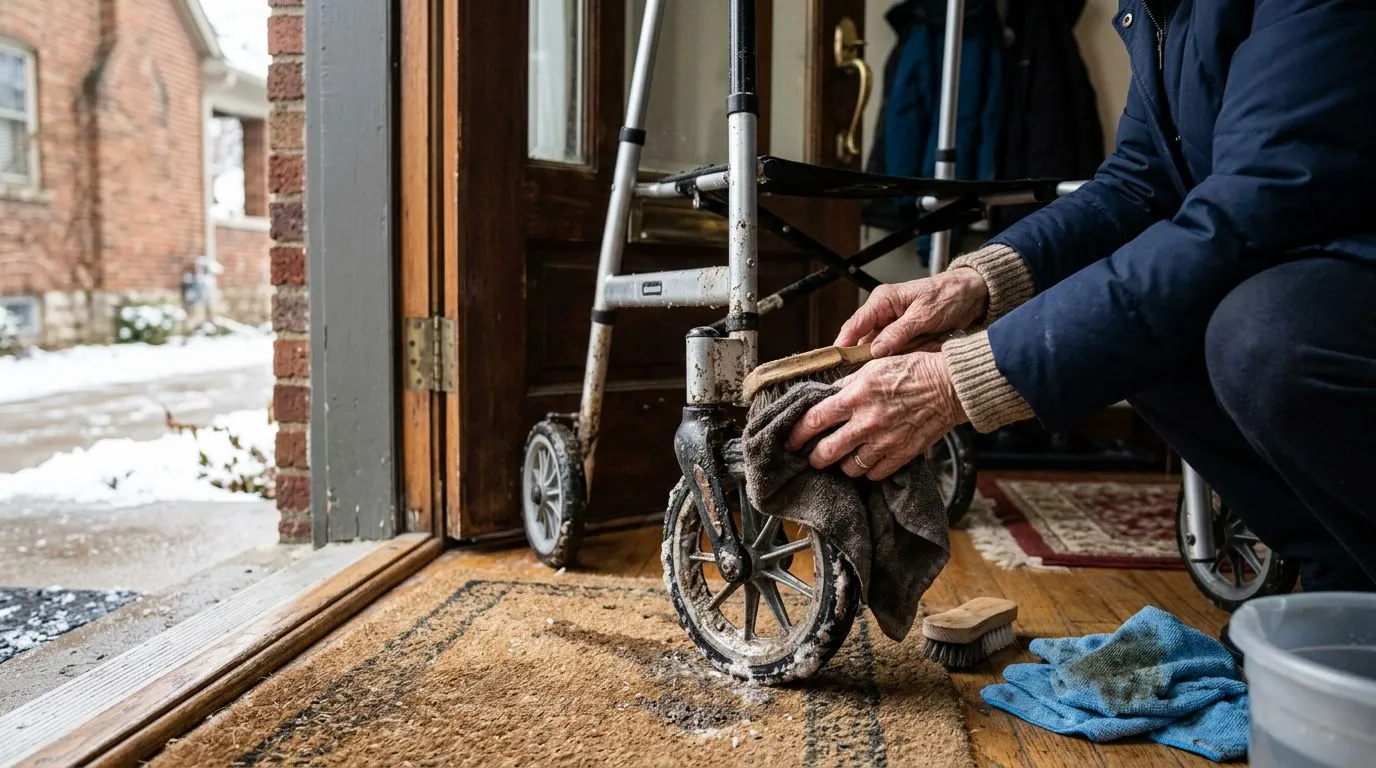
Outdoor Walker Care: Cleaning Mud, Rain, Road Salt, and Rust Before They Cause Damage
14 min read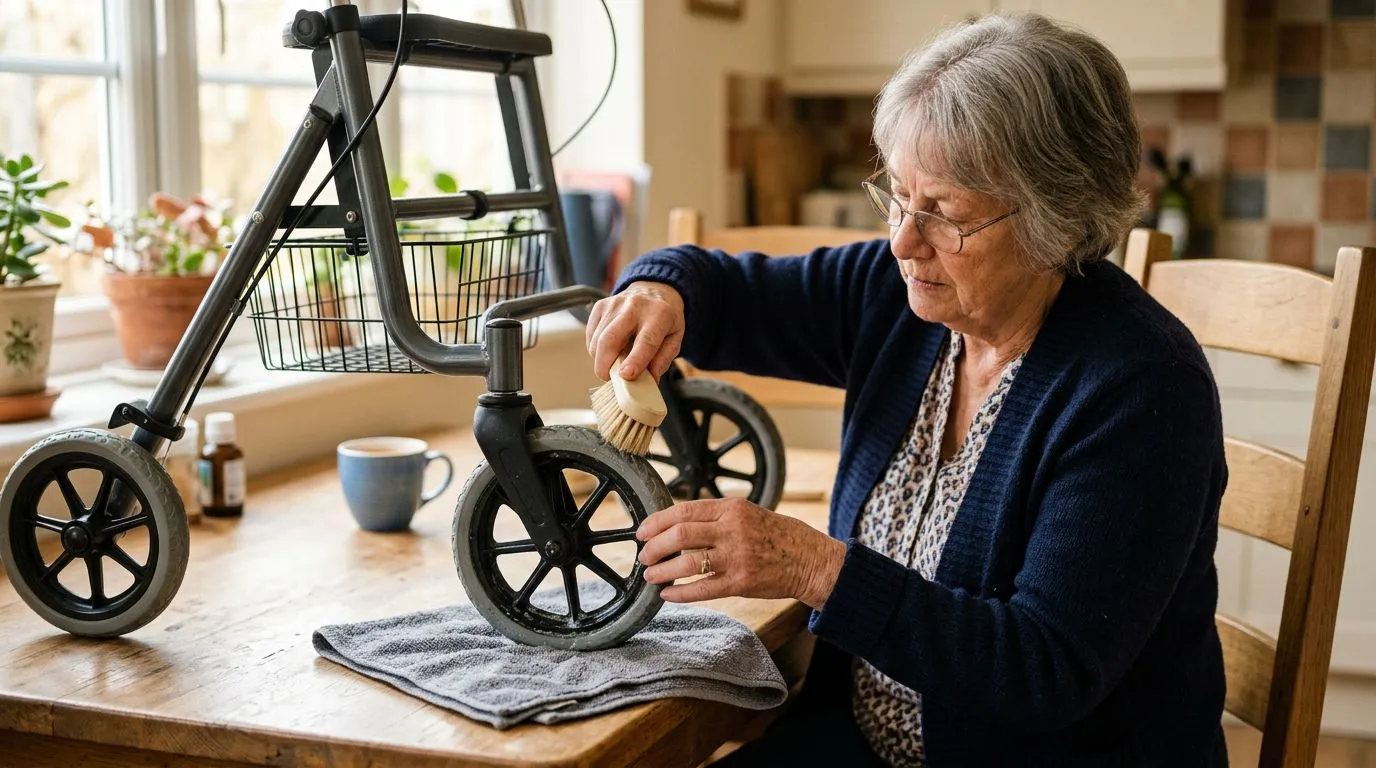
Rollator Wheel Maintenance: How to Remove Hair, Dirt, and Debris for Smoother Rolling
12 min read
Loose or Worn Walker and Rollator Hand Grips: When to Clean, Tighten, or Replace Them
12 min read