Disclosure: We may earn a commission when you buy through links on this page, at no extra cost to you. We buy nothing, sell nothing and accept no payment for coverage — commissions never decide what we recommend. How we make money.
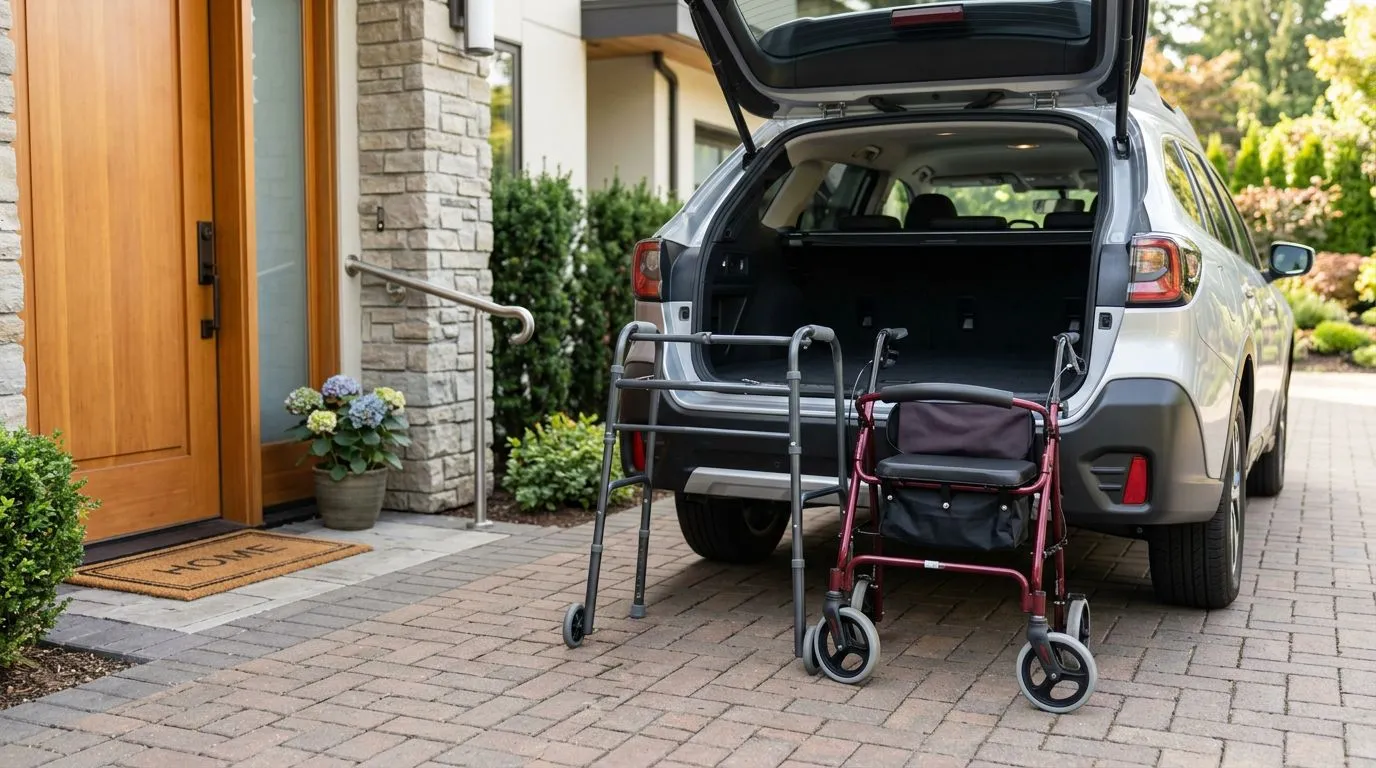
A folding walker is usually the better value when your top priorities are low lift weight, simple trunk storage, and maximum stability with the least bulk. A folding rollator is worth the portability upgrade when you need wheels, hand brakes, a built-in seat, and easier movement over longer distances, even though it is typically heavier and takes up more space.
The best choice depends on how often you lift it, where you store it, and whether you need a place to sit. For many shoppers, the real question is not simply walker or rollator, but which folding features solve a daily problem without adding unnecessary weight.
Walker vs rollator portability basics: 5 to 25 lb makes a difference
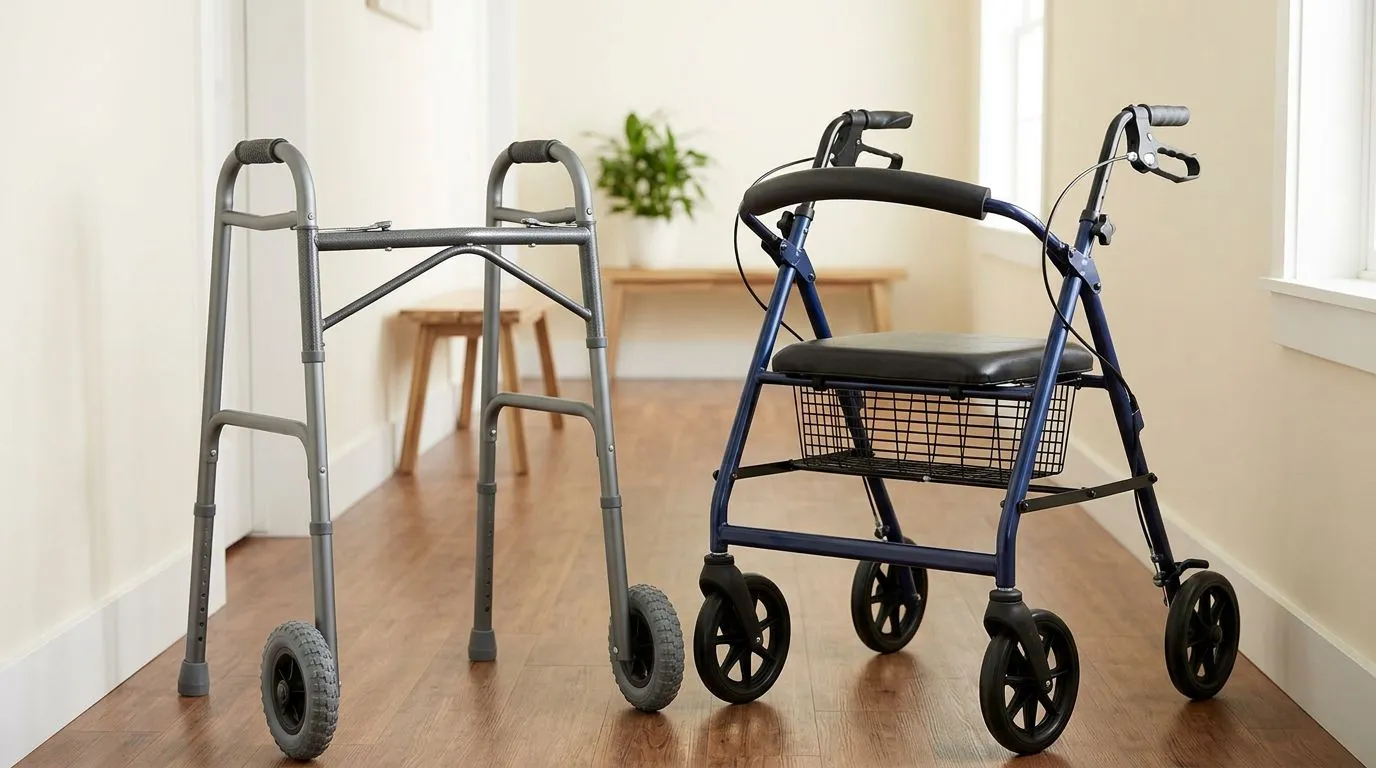
Folding walkers and folding rollators both support mobility, but they are designed around different priorities. A standard folding walker or two-wheel walker is a lightweight support frame, often about 5 to 8 lb depending on materials and accessories. A folding rollator is a wheeled walker with hand brakes and a seat, and many 3-wheel and 4-wheel models are closer to about 15 to 25 lb, with bariatric and upright designs often weighing more.
That weight difference matters every time the device goes into a car, onto a porch, through a doorway, or into a closet. A 7 lb folding walker can often be lifted with one hand. A 20 lb rollator may require two hands, better balance, or help from a caregiver.
The tradeoff is function. A walker is lifted or partly advanced, then stepped into. A two-wheel walker rolls at the front and slides or lifts at the rear, but it still moves more deliberately. A rollator rolls continuously on 3 or 4 wheels and uses squeeze hand brakes for slowing, stopping, and parking. Most 4-wheel rollators include a seat and backrest; 3-wheel rollators are usually narrower and lighter but typically do not offer the same seated rest option.
| Type | Typical portability strength | Typical tradeoff | Best for |
|---|---|---|---|
| Standard folding walker | Very light, often around 5 to 8 lb | Must be lifted or advanced slowly | Short indoor trips and strong stability needs |
| Two-wheel folding walker | Still light, easier to move than no-wheel frames | Less smooth outdoors than a rollator | Users who need support but dislike lifting every step |
| 3-wheel folding rollator | Narrow turning, often lighter than 4-wheel rollators | Usually no full seat | Tight indoor spaces and quick errands |
| 4-wheel folding rollator | Seat, basket or pouch, hand brakes | Heavier and bulkier | Longer walks, shopping, and rest breaks |
| Upright or bariatric rollator | Specialized posture or higher weight capacity | Often the largest folded size | Users needing forearm support, taller handles, or reinforced frames |
Folded size and trunk fit: a 4-inch frame can beat a 12-inch fold
Folded size is where a walker often wins on pure value. Many basic folding walkers collapse side-to-side into a fairly flat frame, commonly only several inches thick at the narrowest point when accessories are removed or folded in. A folding rollator may fold front-to-back, side-to-side, or by pulling up on the seat, but the wheels, brakes, handles, and seat structure still add bulk.
In a small sedan trunk, the difference between a folded frame that is roughly 4 to 6 inches thick and a folded rollator that may be closer to 10 to 15 inches thick can mean easy loading versus rearranging groceries. SUVs and hatchbacks are more forgiving, but trunk height still matters. Large 8-inch wheels, a padded seat, and a wide frame can make a rollator awkward even when the folding mechanism works well.
Do not judge portability only by whether it folds. Look at the shape it becomes after folding. A flat walker frame can slide behind a seat, stand in a closet, or lie across a trunk floor. A rollator may fold, yet still behave like a compact chair on wheels.
Trunk-fit features that usually matter
- Folded thickness: Smaller is better for sedans, tight closets, and rideshare trunks.
- Overall folded length: Long frames can hit the trunk wall even if they are thin.
- Wheel size: 6-inch wheels save room; 8-inch wheels roll better outside but add bulk.
- Removable accessories: A basket, pouch, tray, or cane holder may add 1 to 4 inches in practical storage space.
- Handle position: Handles that fold or lower can help a rollator fit under a cargo cover.
If you use a compact car, measure the trunk opening, not just the trunk floor. A device that fits once inside can still be frustrating if it has to be angled through a narrow opening.
Lift weight: a 10 lb upgrade can feel bigger than it sounds
Lift weight is the most underrated portability feature. On paper, moving from a 7 lb folding walker to an 18 lb folding rollator is an 11 lb difference. In daily use, that difference shows up when reaching into a trunk, lifting from the curb, or carrying the device up 3 porch steps.
Weight also feels different depending on shape. A walker frame is usually easy to grip near the crossbar. A rollator has wheels, cables, a seat, and sometimes a storage bag, so the weight can shift while you lift. If the rollator does not have a clear lifting handle, it may feel heavier than its listed weight.
When comparing value, start with the person who will lift the device most often. If the user lives alone and drives, a lighter folding walker or lightweight two-wheel walker may be the practical choice. If a caregiver usually loads the device, a heavier 4-wheel rollator may make sense because the seat and rolling ease add daily comfort.
| Portability question | Walker advantage | Rollator advantage |
|---|---|---|
| Can I lift it with one hand? | Often yes, especially under 8 lb | Sometimes, but many require two hands |
| Can it stand folded? | Some do, but many lean flat | Many stand when folded, depending on design |
| Is it easy to grab? | Simple frame gives multiple grip points | Look for a stable frame grip or seat pull strap |
| Does added weight buy function? | Usually buys little beyond accessories | Buys brakes, seat, wheels, and storage |
A simple test can help. If possible, simulate the weight with a household object before buying. Lifting a 15 to 20 lb bag from floor to trunk height several times can show whether a rollator will be manageable every week.
Storage at home: 24 to 36 inches of clearance changes the answer
Home storage is not only about square footage. It is about where the device rests between uses. Many interior doorways are around 28 to 32 inches wide, while accessible routes are commonly planned around wider clearances. A walker or rollator that feels easy in an open showroom may feel clumsy in a 30-inch hallway with a laundry basket nearby.
A folding walker stores well in tight spaces because it can stand beside a dresser, slide behind a door, or hang on a wall hook if the hook and wall are appropriate for the weight. A rollator needs more floor depth because the wheels and seat remain three-dimensional even when folded. Some rollators stand upright when folded, which is valuable in apartments, but others tip unless leaned against a wall.
Think about the first 10 feet inside the front door. That is where the device will often be folded, parked, or transferred. If the entry is narrow, a walker can be less intrusive. If the user needs to sit while removing shoes or waiting for a ride, a rollator seat may justify the storage footprint.
Storage features worth paying attention to
- Self-standing fold: Helpful if floor space is limited and bending is difficult.
- Fold lock: Keeps the frame from opening unexpectedly when carried or stored.
- Compact wheelbase: A narrower rollator can be easier to park beside a bed or sofa.
- Accessory placement: Under-seat bags are usually neater than front baskets in tight spaces.
- Easy handle adjustment: Lowering handles can reduce storage height by several inches.
For rollators, always lock the brakes before sitting and avoid using the seat as a household chair. The seat is for short rests on a stable, level surface, not for being pushed while seated.
Travel convenience: 2 wheels, 4 wheels, airlines, and car trips
For travel, the best value depends on the trip. A folding walker is usually easier for quick car rides, medical appointments, and places where the device will be lifted often. A folding rollator often becomes more valuable during longer outings, such as a museum visit, shopping trip, or airport day with long walking distances.
Air travel adds another layer. In the US, mobility aids are generally treated as assistive devices rather than standard luggage, and many travelers can use a walker or rollator to the gate and have it checked there. Airline procedures vary, so confirm details before flying and label the device with your name and contact information. Removable bags, trays, and loose accessories should be secured before gate check.
For road trips, think about how many times the device is loaded in a day. If it goes into the trunk 6 or 8 times during errands, a lighter walker can save energy. If the outing includes long sidewalks and waits in line, a rollator seat may reduce the need to look for benches.
| Travel situation | Better value choice | Why |
|---|---|---|
| Short appointment with close parking | Folding walker | Light, quick to load, stable indoors |
| Grocery shopping or pharmacy trip | Either, depending on stamina | Walker is light; rollator adds storage and easier rolling |
| Airport or large clinic | Folding rollator for many users | Seat and rolling movement help over long distances |
| Small car with narrow trunk | Folding walker | Flatter folded frame usually fits more easily |
| Outdoor event on paved paths | 4-wheel rollator | Larger wheels and brakes support longer walking |
Outdoor ground matters. Small walker glides or small rollator wheels may catch on cracks, gravel, thresholds, or thick mats. Larger wheels, often around 8 inches, handle outdoor surfaces better, but they increase folded bulk.
Portability upgrades worth it: 6 features that add real value
Not every folding feature is worth paying more for. The best upgrades reduce a repeated burden: lifting, storing, braking, sitting, or fitting into a vehicle. For many shoppers, 6 portability features stand out because they affect daily use, not just appearance.
| Feature | Worth it when | Walker or rollator? | Value note |
|---|---|---|---|
| One-hand folding | The user folds it several times a day | Both | Especially helpful after appointments or car transfers |
| Fold lock | It is lifted into a trunk or closet | Both | Prevents surprise unfolding |
| Self-standing fold | Storage space is tight | Mostly rollators, some walkers | Useful in apartments and entryways |
| Lightweight frame | The user lifts it without help | Both | A 3 to 5 lb difference can be noticeable |
| Removable storage bag | Travel and car loading are common | Mostly rollators | Lets you reduce bulk and secure personal items |
| Adjustable or folding handles | Trunk height is limited | Mostly rollators | Can help fit under cargo covers or shelves |
For walkers, the most worthwhile upgrades are usually simple: easy-release folding buttons, a secure fold lock, appropriate front wheels if needed, and lightweight construction. For rollators, higher-value upgrades are more about managing bulk: side-folding frames, handles that adjust easily, reliable brake cables that stay tucked in, and a seat that does not interfere with lifting.
Be cautious with accessories. A tray, cup holder, large basket, cane holder, or oxygen-tank holder may be useful, but each one can change folded size or balance. If portability is the main goal, add only what the user truly needs.
How to choose and measure: use a 10-minute fit check
A 10-minute measuring check can prevent a poor purchase. You do not need technical equipment; a tape measure, bathroom scale, and the vehicle or storage area are enough. Measure before comparing features, because portability problems usually come from inches and pounds, not from the folding label itself.
Step 1: Measure the user for handle height
With shoes on, stand upright with arms relaxed at the sides. The walker or rollator handles should generally line up near the wrist crease, allowing a slight bend in the elbows, often around 15 to 30 degrees. Handles that are too low can encourage leaning; handles that are too high can reduce control.
Step 2: Measure the car and storage space
- Measure trunk opening width, height, and usable depth.
- Measure the narrowest hallway or doorway the device must pass through.
- Measure the closet, entry corner, or garage space where it will be stored.
- Allow extra room for wheels, brake handles, bags, and your hands while loading.
Step 3: Check lifting ability
Look at the listed product weight, then consider real handling. A 16 lb rollator lifted from a flat showroom floor is not the same as a 16 lb rollator lifted at an angle into a trunk. If grip strength, shoulder pain, or balance is a concern, choose the lighter device or plan for assistance.
Step 4: Match the device to the walking environment
For mostly indoor use on level floors, a folding walker or two-wheel walker often offers strong value and simple storage. For longer paved routes, frequent rest breaks, or carrying small personal items, a rollator may justify its extra weight. For rough ground, neither device should be assumed safe without checking wheel size, brakes, and professional guidance when needed.
Step 5: Confirm weight capacity
Many mobility devices have stated weight capacities, and bariatric walkers or bariatric rollators are built for higher limits with reinforced frames. Do not treat capacity as a suggestion. Choose a device with an appropriate rating for the user and any items routinely carried.
Who each folding option is best for: 3 common shopper profiles
Most people fall into one of 3 portability profiles. Matching the device to the profile is more useful than chasing the most compact or most feature-rich design.
The car-loading minimalist
This person drives or rides to appointments, makes short trips, and values a device that folds and lifts quickly. A folding walker or two-wheel folding walker is usually the best value. It is lighter, flatter, and simpler to place in a trunk or back seat.
The longer-distance errand runner
This person walks through stores, parking lots, clinics, or community spaces where distances add up. A 4-wheel folding rollator can be worth the upgrade because the seat, brakes, and storage pouch solve real problems. The extra 10 lb or more may be acceptable if loading help is available or the user can manage the lift safely.
The tight-space apartment user
This shopper needs a device that parks neatly near a door, bed, or kitchen. A folding walker wins when floor space is extremely limited. A 3-wheel rollator may also work if the user wants continuous rolling movement in narrow areas, but the lack of a full seat may reduce its value for those who need rest breaks.
Upright rollators and bariatric rollators deserve separate thought. They can be excellent tools for the right user, but they often have larger frames, higher handle structures, and more weight. Their portability value depends heavily on whether the special support or capacity is necessary.
Bottom line: upgrade when the extra 8 to 15 lb solves a daily problem
A folding walker is the better portability value when the device must be lifted often, stored in a tight space, or fit easily into a small trunk. It keeps the design simple and light, which matters for daily independence.
A folding rollator is worth the upgrade when the added weight buys features the user will use every week: a seat for rest breaks, hand brakes for controlled rolling, larger wheels for paved outdoor routes, and a storage bag for errands. If those features prevent fatigue or make longer outings realistic, the portability tradeoff can be reasonable.
The smartest choice is the one that fits the user, the car, and the home. Measure first, lift realistically, and choose the simplest device that supports safe, comfortable movement in the places it will actually be used.
FAQ
Frequently asked questions
Is a folding walker easier to transport than a folding rollator? +
Usually, yes. A folding walker is typically lighter and flatter when folded, which makes it easier to lift into a trunk, store behind a door, or carry for short distances. A folding rollator adds wheels, brakes, a seat, and storage, so it is often heavier and bulkier.
When is a folding rollator worth the upgrade? +
A folding rollator is worth considering when the user needs continuous rolling support, hand brakes, a place to sit during outings, or a pouch for small items. It is most valuable for longer walks, shopping trips, large clinics, airports, and paved outdoor routes.
Do all folding rollators fit in a car trunk? +
No. Folded size varies by frame style, wheel size, handle height, and accessories. Measure the trunk opening and usable trunk space, then compare those measurements with the rollator's folded dimensions before buying.
Is a 3-wheel rollator more portable than a 4-wheel rollator? +
Often, a 3-wheel rollator is narrower and may be lighter than a 4-wheel rollator, which can help in tight spaces. The tradeoff is that many 3-wheel rollators do not provide the same full seat and stability features as 4-wheel rollators.
What is the most important portability feature to look for? +
Lift weight is often the most important feature because it affects daily loading, storage, and travel. After weight, look at folded thickness, whether the frame locks when folded, and whether it can stand upright in storage.
Should I choose a walker or rollator for air travel? +
For short, simple trips, a folding walker is easier to handle and gate check. For large airports or long walking distances, a folding rollator may be more convenient because it rolls smoothly and provides a seat. Always confirm airline procedures before travel.
Keep reading
Related guides
When Is It Worth Upgrading to a Lightweight, Heavy-Duty, or All-Terrain Walker?
14 min read
Folding Mobility Walker Buying Guide: Choosing a Compact Walker or Rollator
15 min read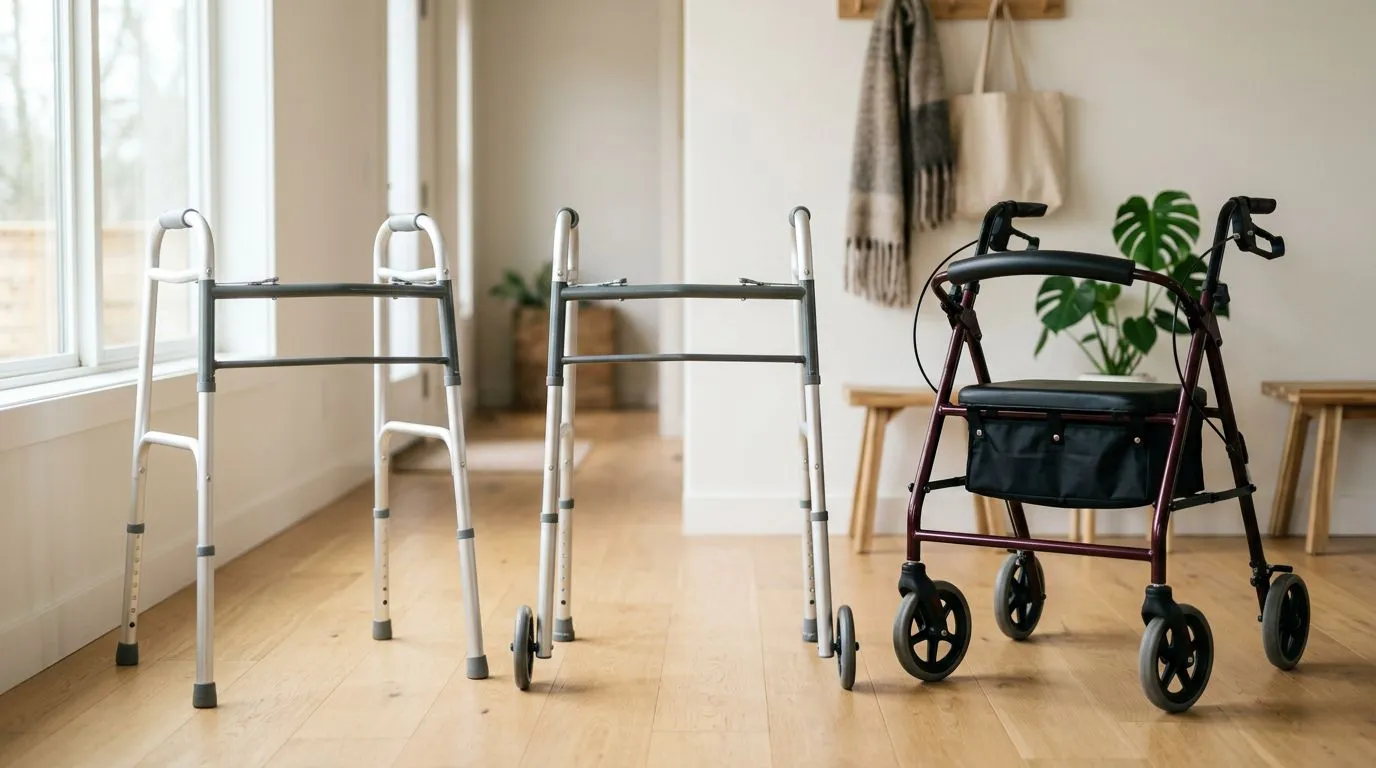
Lightweight Mobility Walkers: Balancing Easy Lifting, Stability, and Weight Capacity
14 min read