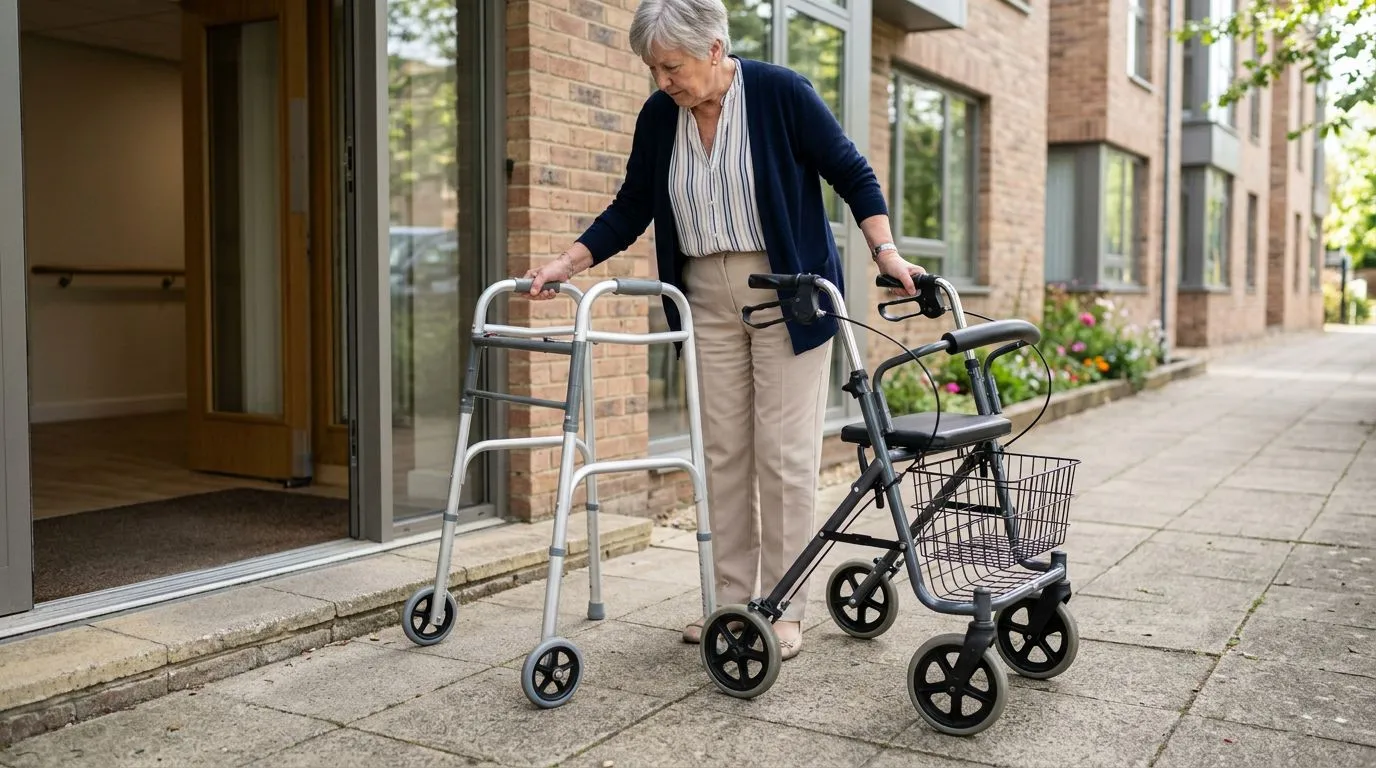
Disclosure: We may earn a commission when you buy through links on this page, at no extra cost to you. We buy nothing, sell nothing and accept no payment for coverage — commissions never decide what we recommend. How we make money.
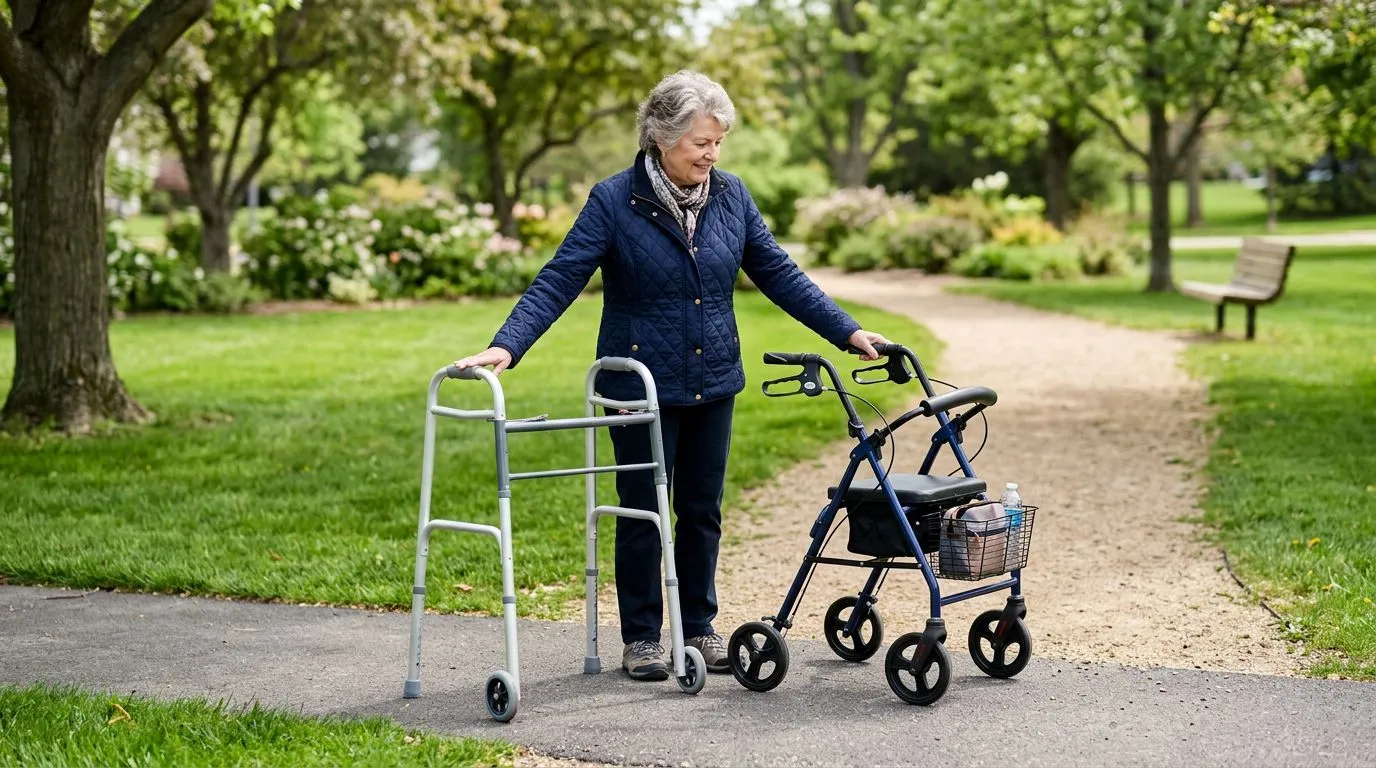
The best all-terrain mobility aid depends on the surface. A standard or two-wheel walker is usually safest for short, careful outdoor trips on firm pavement, while a large-wheel rollator is often easier for longer walks on sidewalks, packed dirt, and mild gravel. Grass, loose stones, slopes, and uneven ground call for more caution. Bigger wheels improve rolling, but they do not eliminate the risk of tipping, sinking, or losing brake control.
If you need maximum stability and can lift or step a walker forward, start with a walker. If you need a seat, hand brakes, and smoother rolling over longer distances, consider a rollator with larger wheels and a frame that fits your height, weight, and outdoor route.
Quick answer: match the device to the 4 surfaces you use most
Outdoor mobility rarely involves just one surface. A typical neighborhood route may include a 36-inch sidewalk, a 1-inch curb lip, a sloped driveway, wet grass near a mailbox, and a stretch of gravel beside a parking lot. The right choice is the one that handles your most common surfaces safely, not the one that sounds most rugged.
For smooth sidewalks, a folding walker, two-wheel walker, or 4-wheel rollator can all work, depending on balance and endurance. For grass or gravel, a no-wheel walker frame can feel stable but may be tiring because it must be lifted; a two-wheel walker rolls more easily but can catch; and a large-wheel rollator can move better but requires steady brake control. On uneven ground, slower is safer.
| Surface | Walker option | Rollator option | Main tradeoff |
|---|---|---|---|
| Smooth sidewalk | Standard, folding, or two-wheel walker | 3- or 4-wheel rollator | Walkers feel steadier; rollators are less tiring |
| Grass | Standard walker for short distances | 4-wheel large-wheel rollator on firm, dry grass | Small feet or wheels may sink |
| Gravel | Two-wheel walker for very short packed gravel | Large-wheel 4-wheel rollator on firm packed gravel | Loose stones can stop wheels suddenly |
| Uneven ground | Standard walker if the surface allows full foot contact | Rollator only if mild unevenness and brakes are controlled | Tip risk increases with ruts, roots, and slopes |
Walkers vs. rollators outdoors: 5 differences that matter
A walker and a rollator are not the same device. A walker is a frame you place or roll forward, usually without a seat or bicycle-style hand brakes. A rollator is a wheeled walker, commonly with 3 or 4 wheels, hand brakes, and a built-in seat. That distinction matters outdoors, where the ground is less predictable than a hallway floor.
Standard walkers and folding walkers, including no-wheel frames, provide a wide base of support. Many people like them for short trips from a car to a front door, especially when every step needs to feel controlled. The downside is effort: lifting a walker repeatedly over 50 to 100 feet can be tiring.
Two-wheel walkers reduce lifting. The front wheels roll while the rear legs or glide tips help slow the frame. They can be useful on smooth outdoor pavement, but they are not all-terrain in the way many people imagine. A small front wheel can catch on a sidewalk seam, twig, or gravel ridge.
Rollators are easier to push over distance, and larger wheels can ride over small surface changes better than tiny wheels. However, rollators keep moving unless the user controls them. The hand brakes must be reachable, adjusted, and strong enough to slow the device on a decline. A seat is helpful, but it is for resting only when the brakes are locked and the rollator is on level, stable ground.
| Feature | Walker | Rollator |
|---|---|---|
| Wheels | None or 2 front wheels | 3 or 4 wheels |
| Brakes | Usually none; rear legs help resist movement | Hand brakes and parking locks |
| Seat | Usually no built-in seat | Common on 4-wheel and upright rollators |
| Outdoor effort | More lifting or stop-and-go movement | Smoother for longer walks |
| Stability feel | Very stable when planted flat | Stable when fitted well, but can roll away if brakes are not used |
Sidewalks and curb cuts: what works over 1/2-inch seams
Sidewalks are the easiest outdoor surface, but they are not perfectly flat. Expansion joints, cracked concrete, driveway slopes, and curb cuts can create edges of 1/2 inch or more. That is enough to interrupt a small wheel or make a walker leg land unevenly.
A standard or folding walker works well on sidewalks when the user can lift it fully and place all 4 feet down before stepping. This approach is slow, but predictable. It can solve a short, familiar route, such as 30 feet from an accessible parking space to a clinic entrance.
A two-wheel walker can be a good middle ground on pavement. The front wheels reduce lifting, while the back legs add friction and control. The user still needs to slow down at cracks, curb ramps, and changes in slope. Pushing hard into a raised seam can make the frame stop abruptly.
A rollator is often the easiest option for longer sidewalk routes because all wheels stay in motion. A 4-wheel rollator usually feels more stable than a 3-wheel rollator when stopping to rest, and the seat can help if benches are more than 200 or 300 feet apart. Still, curb cuts deserve respect. Approach straight on when possible, keep both hands on the grips, and avoid turning while one wheel is on the ramp and the others are on flat sidewalk.
Grass and lawns: why 8-inch wheels help but do not make it easy
Grass is harder than it looks. Even short lawn grass can hide soft soil, sprinkler dips, roots, and holes. A wheel that rolls smoothly on concrete may sink into damp turf, and a walker foot can press into the ground instead of sliding forward.
For very short grass crossings, such as 10 to 20 feet from a walkway to a picnic table, a standard walker may be safest if the user has the strength to lift and set it down. Wide, stable contact matters. The challenge is landing the walker evenly; if one leg drops into a depression, the frame can tilt.
Two-wheel walkers are mixed on grass. The rear legs may drag, and the front wheels may plow if the soil is soft. They are usually better for dry, firm lawns than for wet yards. If the grass is long enough to cover the wheel path, hazards become too easy to miss.
Large-wheel rollators can perform better on firm grass because a larger wheel is less likely to dig in with every push. A 4-wheel design is typically more reassuring than a 3-wheel design on lawn surfaces because it gives a wider base and a seat for planned rests. Even so, a rollator should not be treated like an off-road cart. Avoid side slopes, wet grass, and areas where the front wheels sink more than a small fraction of an inch.
Gravel and packed dirt: control matters more than speed over 10 feet
Gravel creates two problems at once: resistance and surprise. Small stones shift under feet and wheels, and a loose patch can stop one wheel while the rest of the frame keeps moving. Packed dirt is usually easier, though ruts and washboard texture can still shake the hands and wrists.
A standard walker can be stable on packed dirt if each leg can be placed flat. It is less comfortable on loose gravel because the legs may settle at different depths. For a short crossing of 10 feet, careful placement may be practical. For a long gravel driveway, it can become exhausting.
A two-wheel walker may help on very firm, packed gravel, but the wheel size and rear-leg drag are limiting. If the front wheels are small, they may ride poorly over stones larger than pea gravel. The user often compensates by lifting the walker slightly, which reduces the benefit of having wheels.
A large-wheel 4-wheel rollator is often the better rollator choice for packed gravel or hard dirt paths. The key word is packed. Loose decorative gravel, deep crushed stone, sand, and mulch are poor surfaces for most walkers and rollators. A 3-wheel rollator may turn easily in tight spaces, but that same easy turning can feel less steady on gravel. For many users, the best outdoor route is the one that avoids loose stone altogether, even if it adds 1 or 2 minutes.
Uneven ground, slopes, and thresholds: the 3 biggest stability tradeoffs
Uneven outdoor ground forces a choice between rolling ease, braking control, and planted stability. No device wins every category. The three biggest tradeoffs are wheel movement, frame width, and user posture.
First, rolling ease can reduce effort but increase the need for control. A rollator that glides nicely on level pavement may pull ahead on a driveway slope. Brakes should slow the rollator smoothly, and parking locks should hold before the user sits. If squeezing the brakes is painful or inconsistent, outdoor rollator use may be risky without adjustment or a different device.
Second, frame width affects both stability and access. A wider base can feel steadier on rough ground, but it may be harder to fit through a 30-inch doorway, a narrow garden gate, or between parked cars. Bariatric walkers and bariatric rollators commonly have higher weight capacities and wider frames, which can improve fit for some users but may limit maneuvering in tight outdoor spaces.
Third, posture affects visibility and balance. Upright or stand-up rollators place the forearms higher and may encourage a more upright walking position for some people. That can improve comfort during longer walks, but it also changes how force travels through the frame. On slopes or bumpy paths, the user still needs strong hand control, proper fitting, and a surface that keeps all wheels in contact. Upright rollators are not automatically safer on rough ground.
Who each outdoor walker or rollator is best for
The best choice depends on balance, hand strength, stamina, walking distance, and surface. A person walking 40 feet to a mailbox has different needs than someone walking 1/4 mile around a park loop.
| Outdoor option | Who it is best for | Best surfaces | Use caution on |
|---|---|---|---|
| Standard or folding walker with no wheels | Someone who needs maximum stop-and-place stability and can lift the frame | Firm sidewalks, short paved routes, flat entries | Grass, loose gravel, long distances |
| Two-wheel walker | Someone who wants less lifting but still wants rear-leg resistance | Smooth sidewalks, indoor-to-outdoor transitions, short paved errands | Raised cracks, soft grass, stones |
| 3-wheel rollator | Someone who needs maneuverability in tight outdoor and indoor areas | Smooth pavement, narrow paths, light errands | Rough gravel, slopes, resting needs because many have no full seat |
| 4-wheel rollator | Someone who benefits from a seat, brakes, and smoother movement over distance | Sidewalks, packed paths, firm dry grass with care | Loose surfaces, steep driveways, side slopes |
| Upright rollator | Someone fitted for higher forearm support and longer upright walking | Level sidewalks, parks with paved paths | Bumpy ground, tight turns, slopes if braking is difficult |
| Bariatric walker or rollator | Someone who needs a higher weight capacity and a wider, stronger frame | Firm, wide routes with enough turning space | Narrow doors, crowded sidewalks, uneven side slopes |
Weight capacity should be treated as a safety limit, not a comfort rating. Many mobility aids have listed capacities in the 250- to 300-pound range, while heavy-duty or bariatric options may be rated higher. The right capacity, seat width, handle height, and frame width should match the individual user, not just the outdoor surface.
How to measure and choose in 6 practical steps
Measure before comparing features. A walker or rollator that is too tall, too low, too wide, or too hard to brake can make a good outdoor route feel unsafe.
- Check handle height. With the user standing in supportive shoes and arms relaxed, the handgrips should usually align near the wrist crease. A slight elbow bend, often around 15 to 20 degrees, is a common fitting goal.
- Measure the route. Note narrow spots such as a 30-inch doorway, a tight hallway, a garden gate, or the space beside a parked car. Outdoor stability is not useful if the device cannot get to the sidewalk.
- Look at the worst 20 feet. The roughest section matters most. One broken curb cut or loose gravel patch may decide whether a walker, rollator, or alternate route is safer.
- Test braking ability. For rollators, the user should be able to squeeze both brakes while standing upright and lock the parking brakes before sitting. Weak grip, numb fingers, or arthritis can affect this.
- Match wheels to surfaces without overdoing it. Larger wheels can help over seams, packed paths, and firm grass, but they do not make deep gravel, mud, sand, or steep slopes safe.
- Confirm transport needs. If the device must go into a car trunk, check folded size and lifting weight. A difference of even 3 to 5 pounds can matter for a caregiver loading it several times a week.
Whenever possible, try the device on the type of surface you actually use. A rollator that feels perfect on a store floor may feel different on a sloped driveway. A walker that feels steady indoors may become tiring outdoors after 5 minutes.
Outdoor safety habits that take 30 seconds
Small checks prevent many outdoor problems. Before leaving the house, take about 30 seconds to look at the surface, the device, and your own energy level.
For walkers, make sure the frame opens fully and locks if it folds. Check that rubber tips are not worn through, cracked, or slippery. If the walker has 2 front wheels, look for debris caught around the axle and confirm the rear tips or glides are secure.
For rollators, test both hand brakes before the first slope. Lock the parking brakes before sitting, and sit only on level, firm ground. Do not use the seat on grass, gravel, curb ramps, or any surface where one wheel may sink or roll.
Plan rest points. If the outdoor route is 300 feet and there is no bench, a rollator seat may be useful, but only if there is a safe level place to use it. If fatigue changes your posture or slows your reactions, turn back before you are tired. Outdoor independence works best when the route, device, and pace all match the person using them.
Bottom line: choose for your real route, not the roughest label
All-terrain is not a guarantee. For walkers and rollators, it usually means better performance on common outdoor surfaces, not safe travel over every lawn, gravel path, slope, or broken sidewalk. A no-wheel or two-wheel walker can be the right answer for short, careful trips where stability matters most. A large-wheel 4-wheel rollator can be the better answer for longer paved routes, packed paths, and planned rests.
The safest choice is specific: your height, your hand strength, your balance, your weight capacity needs, and the hardest 20 feet of your usual route. If you are unsure which device fits your medical condition or fall risk, ask a physical therapist, occupational therapist, or qualified mobility professional to assess you on real surfaces, not just indoors.
FAQ
Frequently asked questions
Are all-terrain walkers safe on gravel? +
Some walkers can be used carefully on short sections of firm, packed gravel, but loose or deep gravel is difficult and can be unsafe. A standard walker may feel stable if all four legs can be placed flat, while a two-wheel walker can catch or drag. For longer packed gravel routes, a large-wheel rollator may roll better, but brake control and surface firmness are essential.
Is a walker or rollator better for grass? +
For a short, dry, firm grass crossing, a standard walker may offer more planted stability if the user can lift it. A large-wheel 4-wheel rollator may be easier to move across firm grass, but wheels can sink in soft or wet ground. Avoid slopes, hidden holes, and long grass with either device.
What wheel size is best for outdoor rollators? +
Many outdoor rollators use larger wheels than basic indoor models, often around 8 inches or more. Larger wheels can help with sidewalk seams, packed paths, and firm grass, but wheel size alone does not make a rollator safe on loose gravel, mud, sand, or steep slopes.
Can a two-wheel walker be used outdoors? +
Yes, a two-wheel walker can work well on smooth sidewalks and short paved outdoor routes. The front wheels reduce lifting, while the rear legs help slow the frame. Use caution around raised cracks, curb cuts, gravel, grass, and any surface where the small front wheels might catch.
Are upright rollators good for uneven ground? +
Upright rollators can support a more upright walking posture for some users, but they are not automatically better on uneven ground. They still require good brake control, proper fit, and a stable surface. Bumpy paths, side slopes, and loose ground can increase tipping or rolling risk.
When should I ask a professional for help choosing an outdoor walker or rollator? +
Ask a physical therapist, occupational therapist, or qualified mobility professional if you have a recent fall, poor balance, weak grip, dizziness, changing medical symptoms, or uncertainty about brakes and fit. Professional fitting is especially helpful when you need to use the device on slopes, curb cuts, grass, or gravel.
Keep reading
Related guides
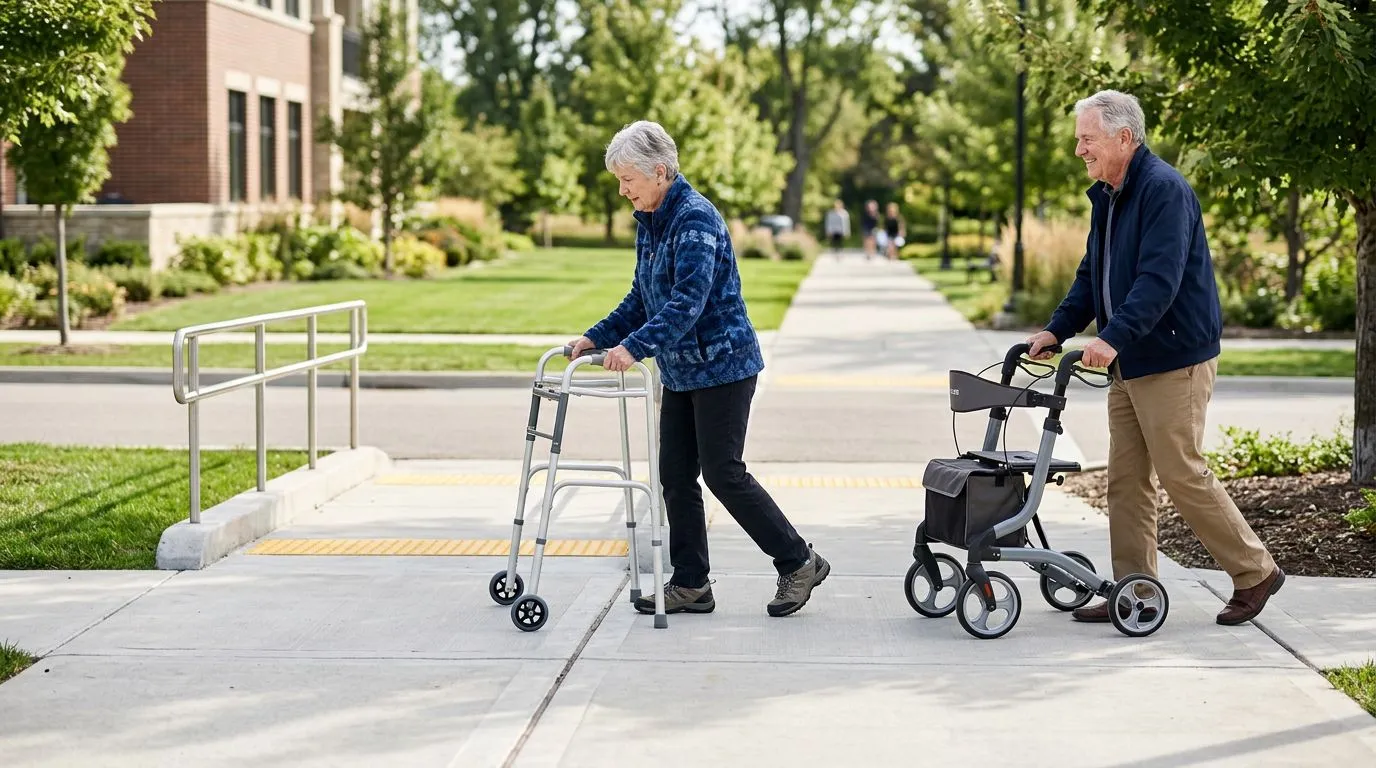
Using a Mobility Walker Outdoors: Curbs, Ramps, Gravel, Grass, and Wet Surfaces
13 min read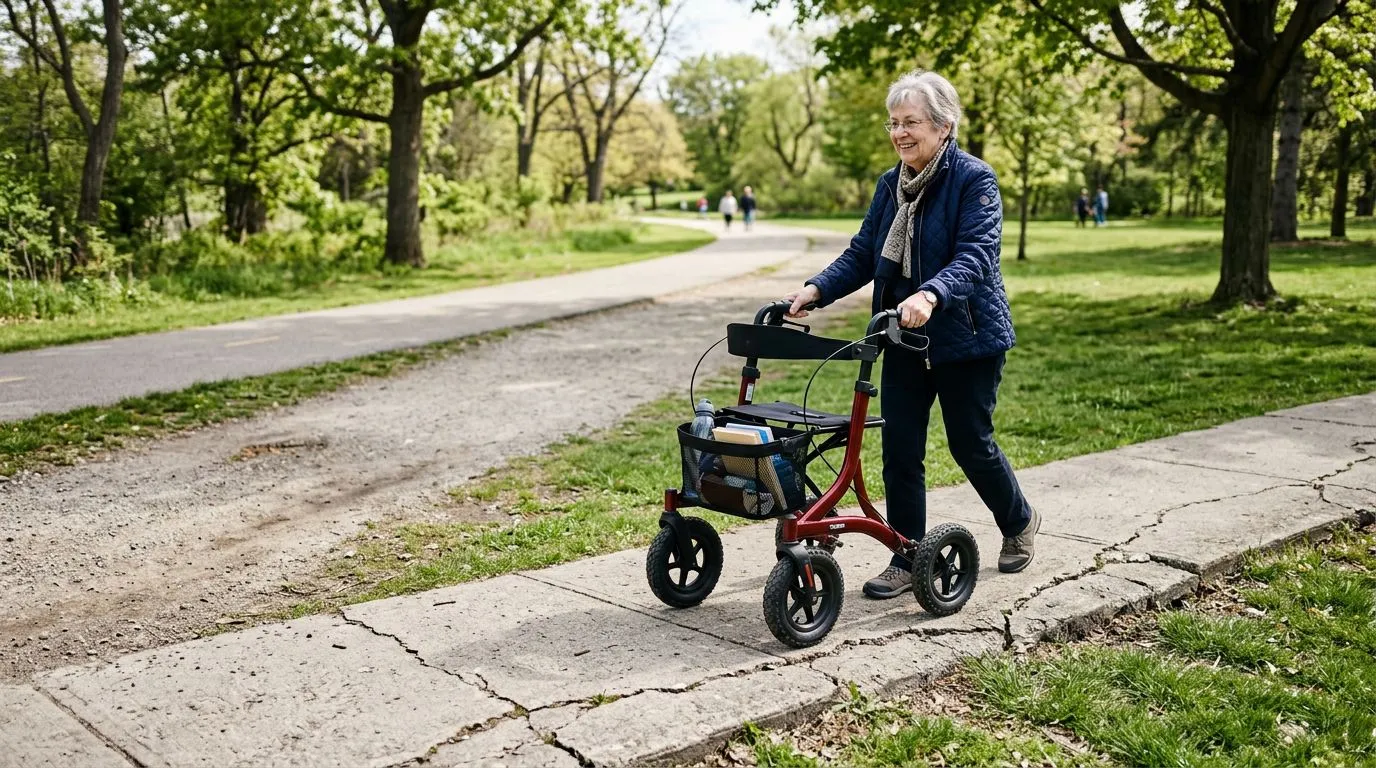
All-Terrain Rollator Walkers: How to Choose for Sidewalks, Gravel, Grass, and Rough Ground
14 min read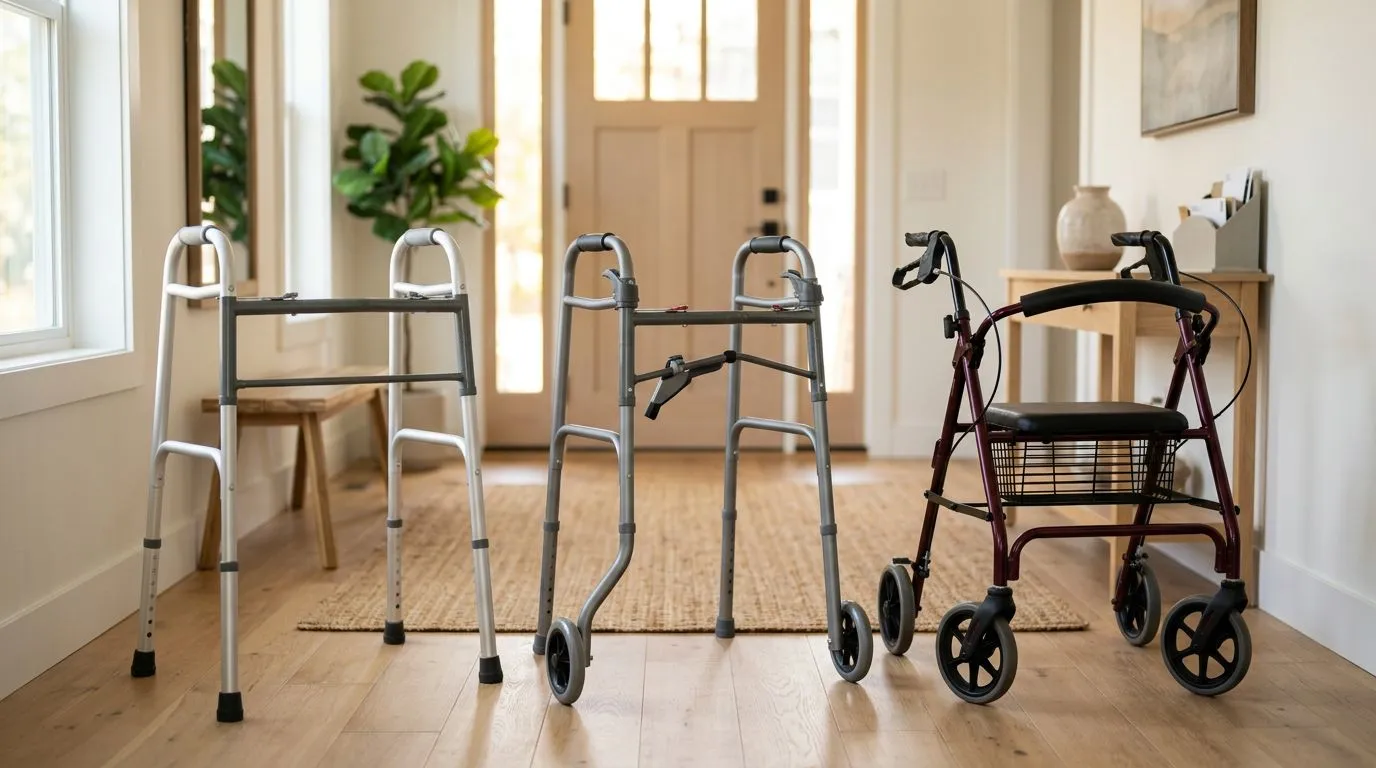
No-Wheel Walker vs Two-Wheel Walker vs Rollator: How Wheels Change Stability, Effort, and Control
13 min read