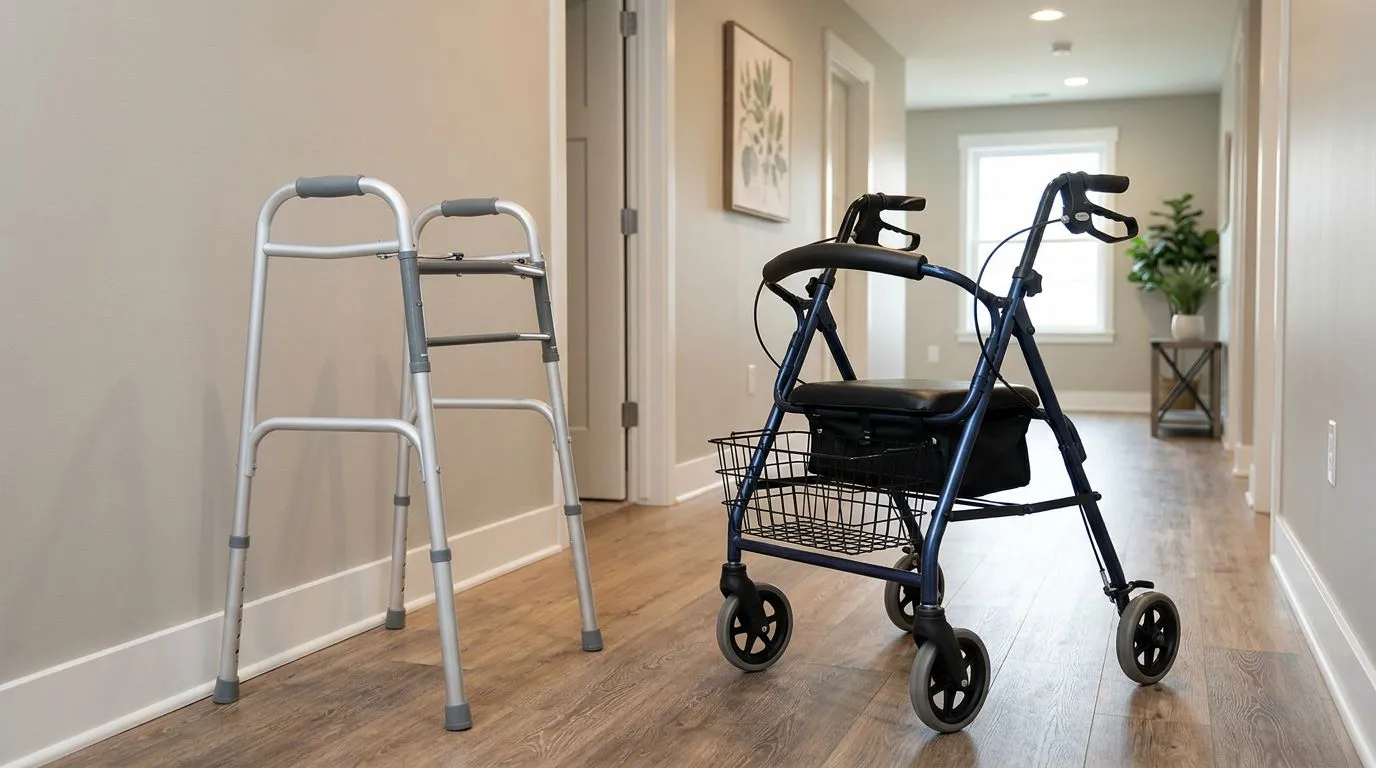
Disclosure: We may earn a commission when you buy through links on this page, at no extra cost to you. We buy nothing, sell nothing and accept no payment for coverage — commissions never decide what we recommend. How we make money.
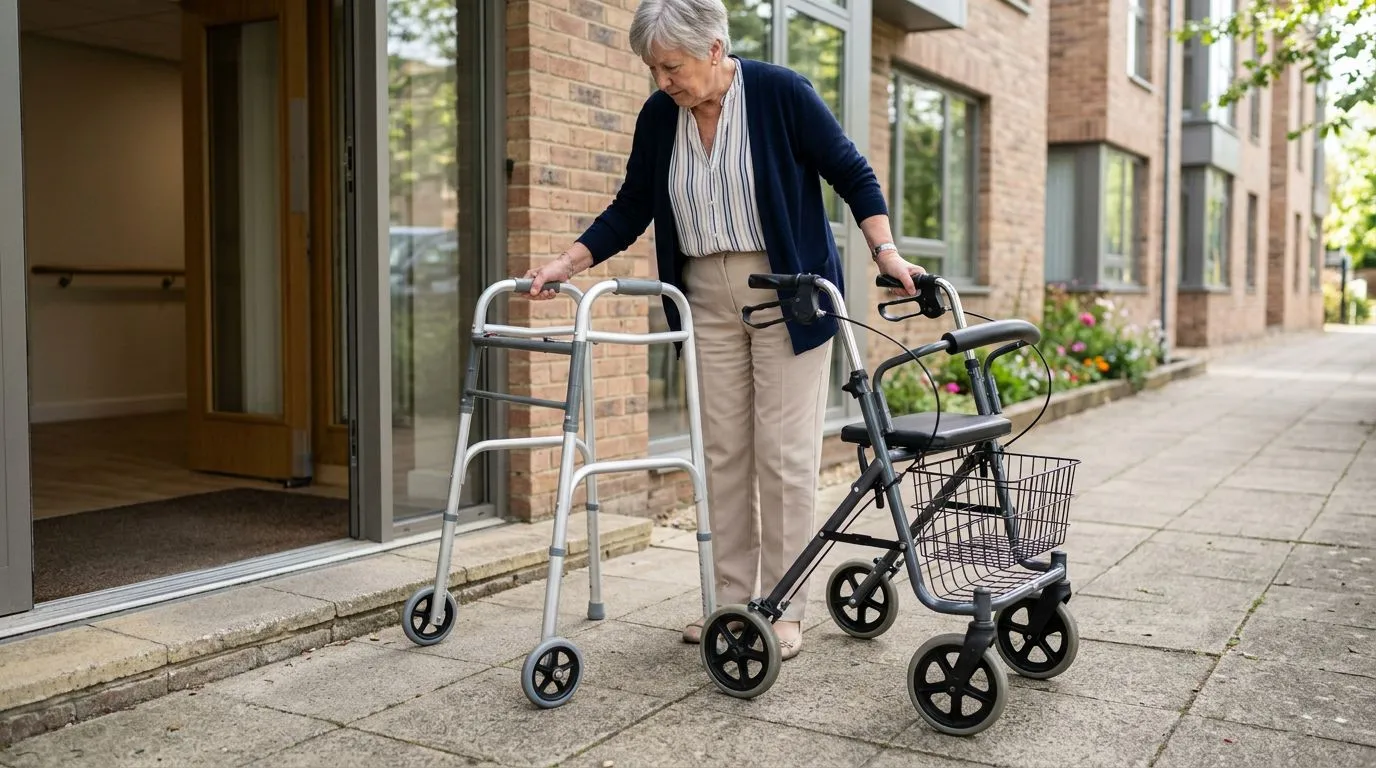
Walker and rollator wheel size affects three things right away: how easily the device turns indoors, how smoothly it rolls outdoors, and how much control you have on uneven ground. Small wheels are usually easier in tight rooms, while larger wheels move over sidewalk cracks, thresholds, and outdoor surfaces with less jarring.
A two-wheel walker is usually the more controlled choice when you need stability and do not want a device that can roll away quickly. A 3-wheel or 4-wheel rollator usually works better when you can walk at a steadier pace, use hand brakes safely, and need smoother movement over longer distances.
Quick comparison: 0, 2, 3, and 4 wheels change how the device behaves
The biggest difference is not just wheel diameter. It is the whole setup: no wheels, two front wheels, three rolling wheels, or four rolling wheels with brakes. A standard walker with no wheels must be lifted with each step. A two-wheel walker rolls forward but still has rear legs that add friction and control. A rollator has three or four wheels and is designed to roll continuously.
| Type | Common wheel setup | Best for | Watch for |
|---|---|---|---|
| Standard walker | No wheels | Maximum stop-and-go control indoors | Must be lifted; slower pace |
| Two-wheel walker | Usually 2 fixed front wheels | Controlled forward movement on floors and short trips | Less smooth outdoors than a rollator |
| 3-wheel rollator | 3 wheels, often swiveling front wheel | Tight turning in apartments, shops, and narrow halls | No seat on many designs; can feel less planted |
| 4-wheel rollator | 4 wheels with hand brakes; often a seat | Outdoor walks, rests, and longer indoor routes | Requires brake use and enough space to turn |
Most walker wheels are small compared with rollator wheels. Many two-wheel walkers use wheels around 5 inches, while many rollators use 6-inch, 8-inch, or larger wheels. That 2- or 3-inch difference may feel minor in a store aisle, but it can be noticeable at a doorway threshold or driveway seam.
Walker vs. rollator basics: the brake, seat, and wheel count matter
A walker is a stability aid first. Standard walkers, folding walkers, no-wheel frames, and two-wheel walkers are typically chosen when the user benefits from a slower, more deliberate walking pattern. The frame supports weight through the hands, and the device does not encourage speed.
A rollator is a wheeled mobility aid first. Three-wheel and four-wheel rollators are made to keep rolling as you walk. Most 4-wheel rollators include hand brakes and a built-in seat; many also have a storage pouch or basket. Upright rollators raise the hand position so the user can stand more upright, while bariatric rollators use wider, stronger frames with higher weight capacities.
That difference affects wheel choice. On a two-wheel walker, small front wheels can be appropriate because the rear tips or glides help slow the frame. On a rollator, all wheels are part of the rolling system, so diameter, tread, and brake quality matter much more.
- Choose a walker if you need more stopping control, move slowly, or are not comfortable using hand brakes.
- Choose a rollator if you can manage brakes, walk with a more continuous stride, and need a seat or outdoor comfort.
- Ask a clinician if you are unsure whether your balance, strength, or recovery plan fits a walker or rollator better.
Small wheels, usually 3 to 6 inches: easier indoors, less forgiving outside
Small wheels shine in tight spaces. In a bathroom, kitchen, or bedroom with furniture close together, a smaller wheel is easier to place and less likely to bump cabinets, chair legs, or baseboards. Many two-wheel walkers use compact front wheels because the goal is steady forward movement, not all-terrain rolling.
For indoor surfaces such as hardwood, vinyl, low-pile carpet, and smooth tile, 5-inch wheels can work well when the frame height is fitted correctly and the user walks at a measured pace. They also help keep the walker lightweight, which matters if the device has to be folded and lifted into a car several times a week.
The tradeoff is comfort. Small wheels drop more abruptly into sidewalk cracks and can catch on raised transitions. A 1-inch threshold at a doorway may feel like a bump with larger rollator wheels, but it can stop a small walker wheel if approached at the wrong angle.
Who small wheels are best for
- People who use the device mostly inside the home.
- Users with narrow rooms, tight hallways, or small bathrooms.
- Two-wheel walker users who want a controlled, slow pace.
- Anyone who needs a lighter frame for folding and transport.
Small wheels are not wrong. They are simply specialized. If 80 percent of use is indoors and the longest trip is from bedroom to kitchen, a compact wheel may be more practical than a large outdoor-style wheel.
Large wheels, often 8 to 12 inches: smoother on sidewalks and rougher surfaces
Larger rollator wheels roll over surface changes more easily because they meet obstacles at a shallower angle. An 8-inch wheel usually handles sidewalk seams, textured pavement, and shallow gravel better than a 5-inch wheel. A 10- or 12-inch wheel may add even more comfort on outdoor paths, though it can also make the device bulkier.
For outdoor use, wheel size becomes a comfort and safety issue. Larger wheels reduce the sharp stop that can happen when a small wheel reaches a crack, pebble, or uneven brick. They do not make a rollator safe on every surface, but they can make normal community walking feel less tiring.
Large wheels are common on 4-wheel rollators and upright rollators because those designs are often used for longer distances. A person walking 20 minutes around a neighborhood may appreciate bigger wheels much more than someone moving only across a living room.
Who large wheels are best for
- People who regularly walk on sidewalks, parking lots, ramps, or paved trails.
- Users who feel jolts through their hands or wrists with small wheels.
- Rollator users who need a seat during longer outings.
- Taller users or upright rollator users who prefer a larger frame stance.
The tradeoff is maneuverability. A rollator with larger wheels may need more room to pivot beside a bed or toilet. It may also weigh several pounds more than a compact indoor model, depending on frame style and weight capacity.
Swivel wheels vs. fixed wheels: turning radius can differ by several feet
Swivel wheels rotate side to side, making turns easier. Fixed wheels point straight ahead, which improves tracking and can feel more predictable. The difference is especially noticeable in spaces under 36 inches wide, such as older hallways, small bathrooms, and crowded kitchens.
Many two-wheel walkers have fixed front wheels. This supports straight-line stability: the walker rolls forward, then the rear legs provide stopping resistance. Some walker wheels can be adjusted or paired with rear glides, but the basic feel remains controlled rather than free-rolling.
Rollators commonly use swivel front wheels, especially 3-wheel rollators and many 4-wheel designs. A swiveling front wheel helps the device turn around store displays, dining chairs, and apartment corners without lifting the frame. For people with limited upper-body strength, that can be a real advantage.
| Wheel action | How it feels | Best setting | Possible drawback |
|---|---|---|---|
| Fixed front wheels | Tracks straight, less wandering | Two-wheel walkers and controlled indoor walking | Wider turns; may need small lifts to reposition |
| Swivel front wheels | Turns easily with less effort | Rollators in stores, apartments, and community spaces | Can feel twitchy on slopes or rough ground |
| Large swivel wheels | Smoother turning over bumps | Outdoor rollator use with frequent direction changes | Bulkier and may need more brake control |
If a rollator feels too quick, wheel size may not be the only issue. Brake adjustment, handle height, walking speed, and posture all affect control.
Two-wheel walkers: a 5-inch front wheel can add movement without too much speed
A two-wheel walker sits between a no-wheel walker and a rollator. The front wheels roll, while the back legs usually have rubber tips or glides. This design provides forward movement without letting the whole frame roll freely.
That is why many people use two-wheel walkers after surgery, during recovery, or when balance is uncertain. The user can push the walker forward a short distance, step into it, and still feel the rear legs resist motion. It is slower than a rollator, but slow is sometimes safer.
Wheel size on a two-wheel walker is usually modest. A 5-inch wheel is common because it clears small indoor transitions while keeping the frame compact. Larger front wheels can help outdoors, but once outdoor distance becomes the main need, a rollator may be the better category to consider.
Best fit for a two-wheel walker
- You need more support than a rollator provides.
- You mostly walk on level indoor surfaces.
- You do not need a built-in seat.
- You prefer not to manage squeeze brakes while walking.
Pay attention to the rear contact points. Rubber tips grip more but may catch on carpet. Glides move more easily but reduce friction. A physical therapist can help decide which setup matches the user’s gait and balance.
Three-wheel rollators: 3 wheels make tight turns, but seat options are limited
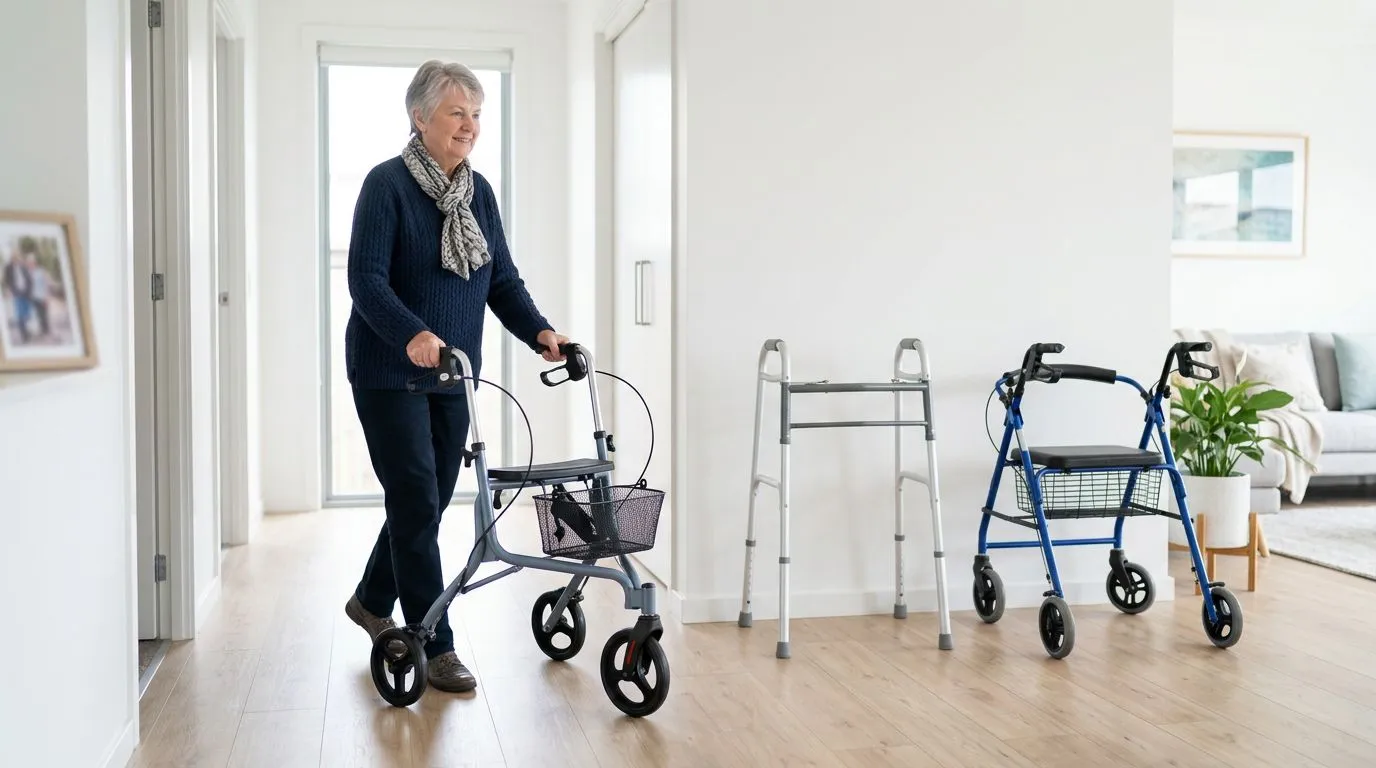
A 3-wheel rollator is usually narrower and more agile than a 4-wheel rollator. The triangular design can turn sharply, making it useful in apartments, small kitchens, and stores with tight aisles. Many use a single front swivel wheel and two rear wheels with hand brakes.
The main appeal is maneuverability. A 3-wheel rollator can often make a tight U-turn where a larger 4-wheel rollator needs a wider arc. If indoor turning is the top priority, this design is worth considering.
The main limitation is rest support. Many 3-wheel rollators do not have a built-in seat, and those that do may feel less roomy than a 4-wheel seated rollator. If sitting down during a 10- or 15-minute outing is important, compare seat stability and frame width carefully.
Best fit for a 3-wheel rollator
- You can safely use hand brakes.
- You want a narrower device for indoor and community spaces.
- You do not need a large seat for frequent rests.
- You walk at a steady pace but dislike bulky frames.
Wheel size still matters. A 3-wheel rollator with 8-inch wheels may feel much better outdoors than one with smaller wheels, but the narrow frame can also feel less planted on uneven ground. If possible, try turns, doorways, and gentle slopes before deciding.
Four-wheel rollators: 8-inch wheels, brakes, and a seat suit longer routes
A 4-wheel rollator is often the most versatile rollator style. Four wheels create a broader base than a 3-wheel design, and the built-in seat gives the user a place to rest when the brakes are locked. Many people choose this type for errands, medical appointments, and neighborhood walks.
For wheels, 8 inches is a common all-around size because it balances indoor manageability with outdoor comfort. Smaller wheels may be fine for indoor-only use. Larger wheels may feel more comfortable on rough sidewalks but can be harder to store in a trunk or turn in a tight bathroom.
Brakes are central to control. Rollator hand brakes should slow the rear wheels when squeezed and lock securely when parked for sitting. If hand strength, sensation, or reaction time is limited, brake style and adjustment deserve as much attention as wheel diameter.
Best fit for a 4-wheel rollator
- You need a seat for planned rests.
- You walk outdoors or through large buildings.
- You can operate and remember to lock hand brakes.
- You want more rolling comfort than a two-wheel walker provides.
Upright rollators are a variation of the 4-wheel design. They typically place the forearm supports or handles higher, encouraging a taller posture. They may also be larger, so check hallway width, vehicle storage, and turning space before choosing one.
How to choose and measure: check 3 widths, 1 handle height, and real surfaces
Good wheel choice starts with the places you actually walk. Measure the narrowest doorway, the bathroom entrance, and the tightest hallway turn. Many interior doorways are about 28 to 32 inches wide, but older homes and bathroom doors can be narrower.
Next, check handle height. When standing inside or just behind the device, handles should generally align near the wrist crease with arms relaxed, allowing a slight elbow bend of about 15 to 30 degrees. Handles that are too low can encourage leaning; handles that are too high can reduce control.
Match wheel size to surfaces after that. Do not choose outdoor wheels if the device cannot turn beside the bed. Do not choose tiny indoor wheels if daily life includes cracked sidewalks and parking lots.
| Your main setting | Likely better choice | Wheel guidance | Reason |
|---|---|---|---|
| Small home or apartment | Two-wheel walker or compact rollator | Small to mid-size wheels | Easier turning and storage |
| Mostly indoor recovery | Standard or two-wheel walker | No wheels or 5-inch front wheels | More deliberate control |
| Stores and appointments | 3-wheel or 4-wheel rollator | 6- to 8-inch wheels | Rolling efficiency with maneuverability |
| Neighborhood sidewalks | 4-wheel rollator | 8-inch or larger wheels | Smoother over cracks and seams |
| Rough paved paths | Outdoor-style 4-wheel or upright rollator | Large wheels, good tread, strong brakes | Better comfort and obstacle rollover |
If possible, test the device on the worst surface you use regularly, not the smoothest floor in a showroom. A 30-second test over a doorway threshold can reveal more than a long roll across polished tile.
Surface checklist: thresholds, carpet, gravel, ramps, and 1-inch obstacles
Different surfaces reveal different weaknesses. A walker or rollator that feels excellent in a hallway may feel unstable on a driveway slope or tiring on thick carpet. Let the surface, not the label, guide the choice.
- Hard indoor floors: small wheels and two-wheel walkers often work well, as long as the frame does not slide too quickly.
- Low-pile carpet: small wheels may drag slightly; rear glides can help a walker move but may reduce stopping friction.
- Thick carpet or rugs: wheels can sink or catch. Loose rugs are a common trip hazard and should be removed or secured.
- Door thresholds: larger wheels handle raised transitions better, especially around 1 inch or more.
- Sidewalk cracks: 8-inch rollator wheels are usually more forgiving than 5-inch walker wheels.
- Gravel or grass: even large wheels can struggle. Use extra caution, go slowly, and avoid loose or sloped areas when possible.
- Ramps: brakes and hand control matter more than wheel size alone. A rollator can gain speed on a slope.
For rougher surfaces, larger wheels help but are not magic. A rollator is not an off-road device. If the path is uneven enough that the front wheels twist, stop, or bounce, it may not be a safe route without assistance.
Control and maintenance: check brakes weekly and wheel wear every 30 days
Wheel size gets attention, but control depends on maintenance. On a rollator, brakes should engage evenly on both sides. If one wheel stops before the other, the rollator may pull or pivot unexpectedly. Brake cables can stretch over time and may need adjustment.
Once a week, squeeze the hand brakes while standing still and confirm the wheels slow smoothly. Lock the brakes and gently try to move the rollator forward; it should resist movement. Before sitting on a rollator seat, both brakes should be locked every time.
For walkers, inspect rear tips or glides. Rubber tips that are worn smooth can slide. Plastic glides that are cracked can catch on flooring. A monthly check is a simple habit that can keep small equipment problems from becoming walking problems.
Also check wheel tread, wobble, and hair or debris around the axle. A wheel that no longer spins freely can make the device pull to one side. If a walker or rollator suddenly feels harder to control, do not assume it is only a change in strength or balance; check the equipment too.
Bottom line: match wheel size to your main 80 percent of use
The best wheel size is the one that fits where you walk most often. If daily use is mostly indoors, a standard walker, folding walker, or two-wheel walker with small front wheels may provide the best control. If daily use includes sidewalks, stores, and longer routes, a 3-wheel or 4-wheel rollator with 6- to 8-inch or larger wheels may feel smoother and less tiring.
Choose the category first: walker for slower, more supported movement; rollator for continuous rolling, brakes, and often a seat. Then choose wheel size based on real surfaces, doorway space, turning needs, hand brake ability, and comfort. When safety is uncertain, bring the device to a physical therapist or other qualified clinician for fitting and gait advice.
FAQ
Frequently asked questions
Are bigger wheels always better on a rollator? +
No. Bigger wheels usually roll more smoothly outdoors, but they can make the rollator heavier, bulkier, and harder to turn in tight rooms. Choose larger wheels when sidewalks, thresholds, or outdoor routes are a regular part of use.
What wheel size is best for a two-wheel walker? +
Many two-wheel walkers use front wheels around 5 inches because that size works well on level indoor floors and keeps the frame controlled. If outdoor use is frequent, a rollator may be worth considering instead of simply looking for larger walker wheels.
Do swivel wheels make a walker or rollator less stable? +
Swivel wheels make turning easier, but they can feel less predictable on slopes or rough surfaces. Fixed wheels track straighter, which is why many two-wheel walkers use fixed front wheels for controlled movement.
Is a 3-wheel rollator better than a 4-wheel rollator indoors? +
A 3-wheel rollator is often easier to maneuver in tight indoor spaces because it is narrower and turns sharply. A 4-wheel rollator usually offers a broader base and a more practical seat, which can be better for longer outings.
Can rollators be used on gravel or grass? +
Rollators can struggle on loose gravel, grass, sand, and uneven ground, even with larger wheels. If the wheels sink, twist, or stop suddenly, the surface may not be safe without assistance.
How do I know if my rollator brakes are adjusted correctly? +
The brakes should slow both rear wheels evenly when squeezed and lock firmly when parked. If one side grabs first, the rollator rolls while locked, or the brake handles feel too loose or too tight, have the brakes adjusted before regular use.
Keep reading
Related guides
3-Wheel Rollator Safety: When Tight Turning Helps and When It Adds Risk
12 min read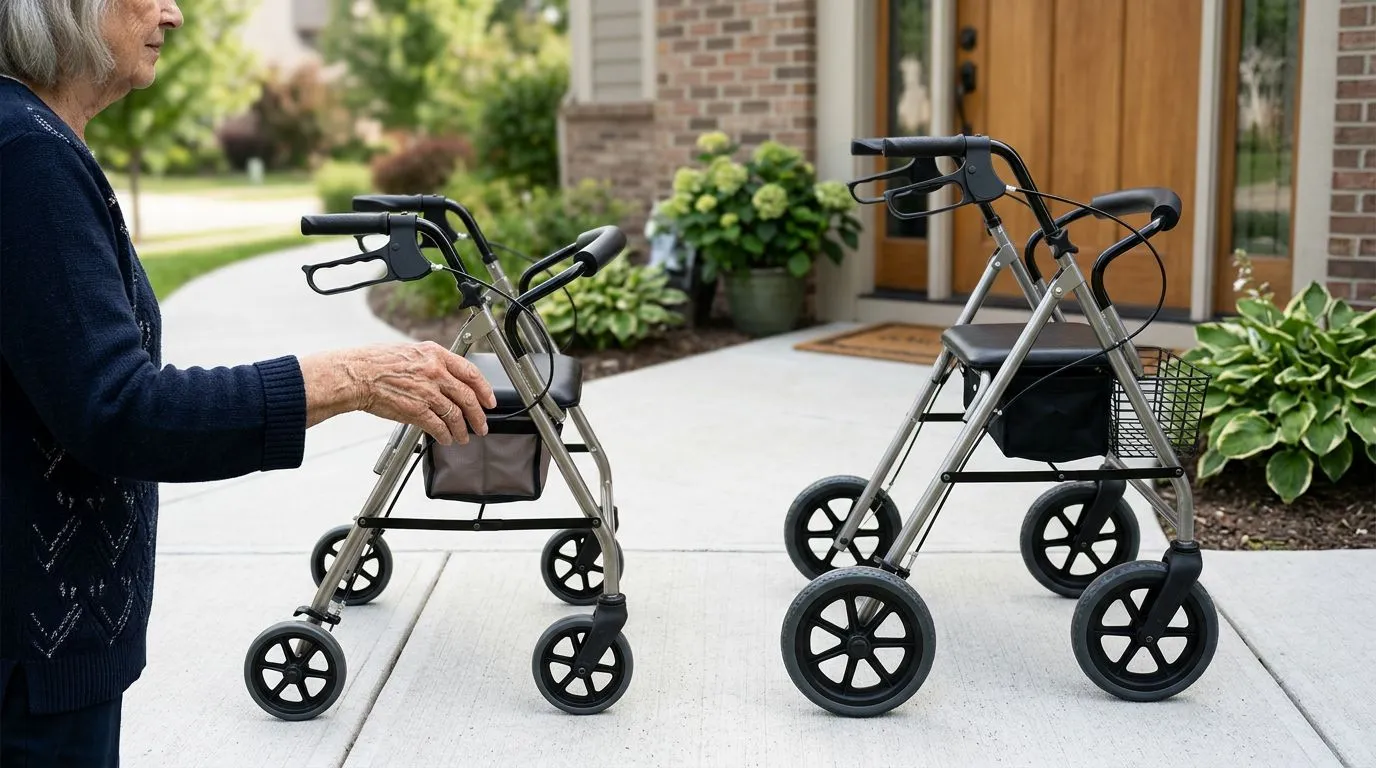
Large-Wheel vs Small-Wheel Rollators: How Wheel Size Affects Fit, Stride, and Stability
12 min read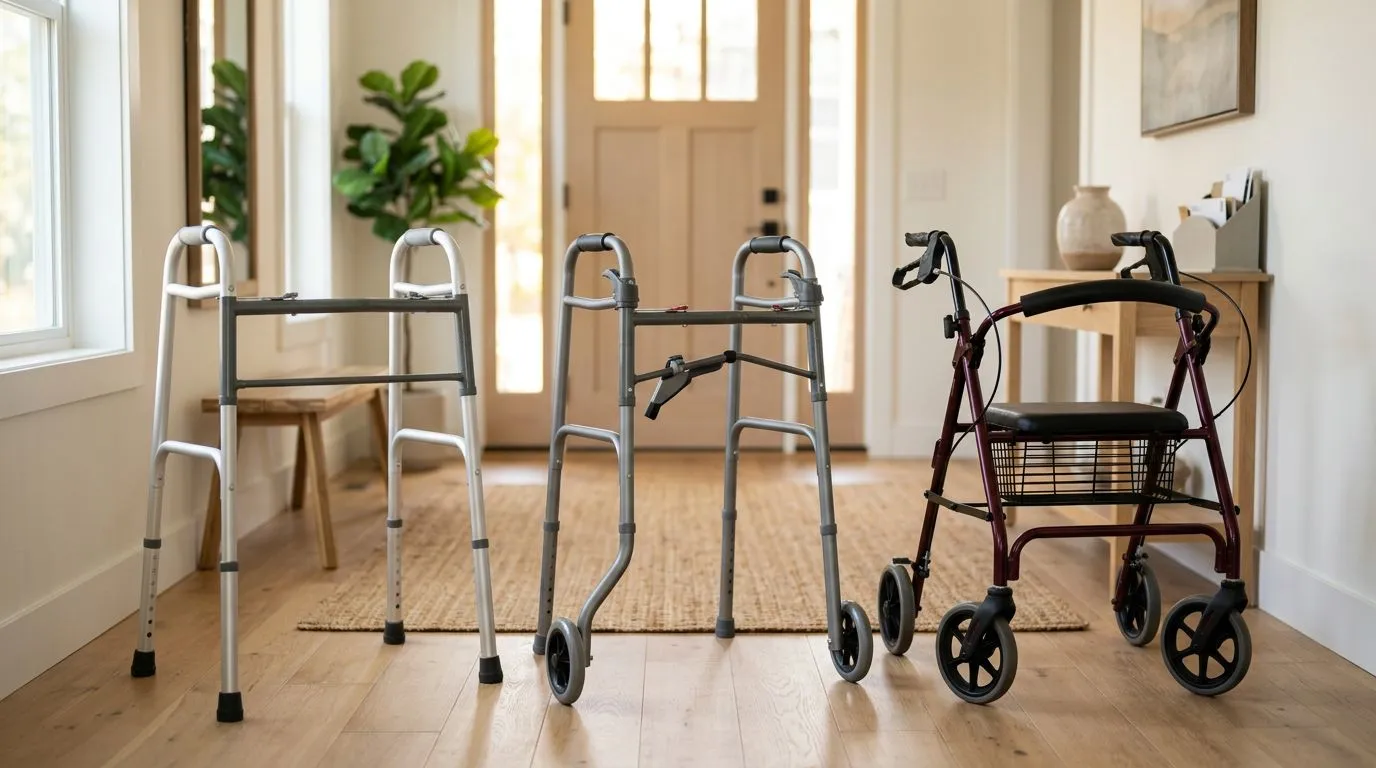
No-Wheel Walker vs Two-Wheel Walker vs Rollator: How Wheels Change Stability, Effort, and Control
13 min read