Disclosure: We may earn a commission when you buy through links on this page, at no extra cost to you. We buy nothing, sell nothing and accept no payment for coverage — commissions never decide what we recommend. How we make money.
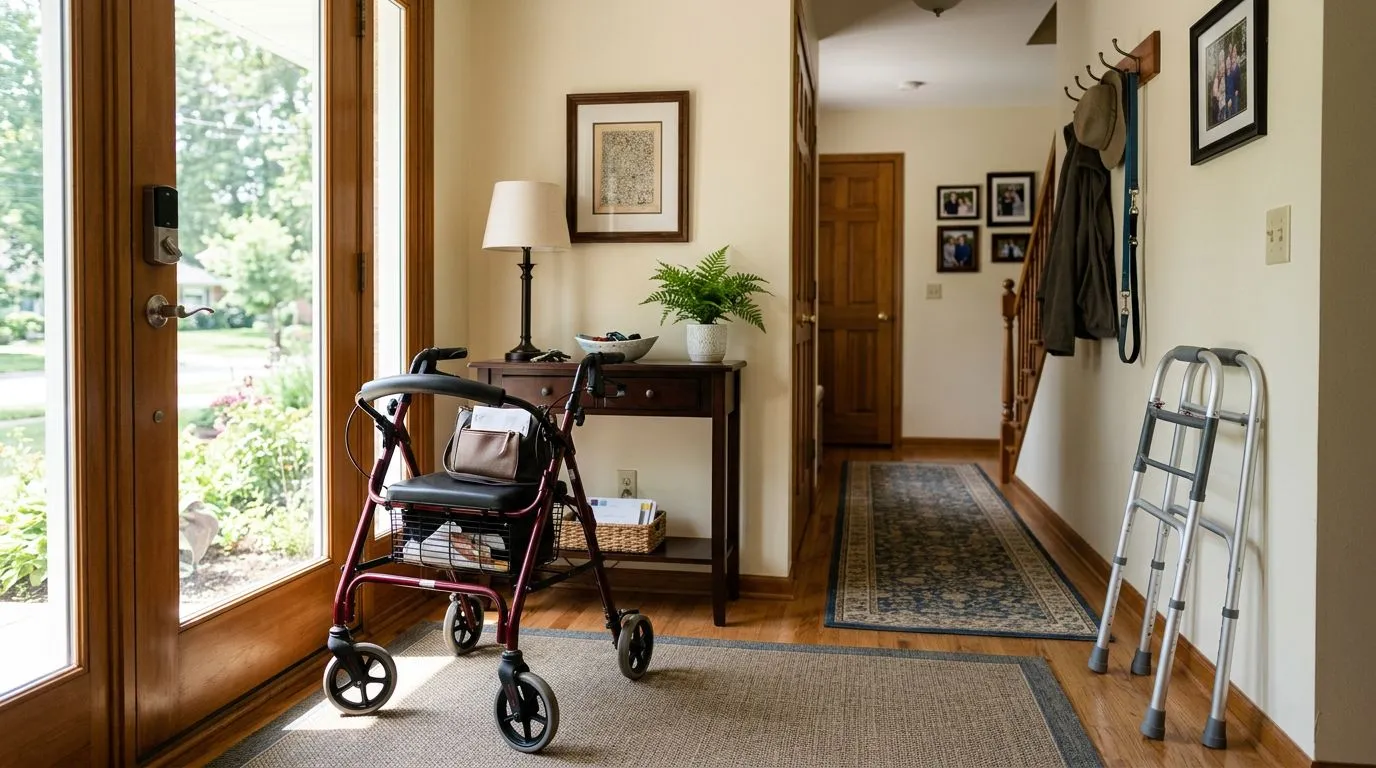
Using a standard walker indoors and a rollator outdoors can be a better value when your home calls for maximum stability in tight spaces, but trips outside require wheels, a seat, and hand brakes. One all-purpose mobility aid may cost less upfront and take up less storage space, but two purpose-fit aids can be safer, easier, and less frustrating over months of daily use.
The key is matching the device to the setting. A no-wheel or two-wheel walker is often best for short indoor distances, narrow hallways, bathroom turns, and controlled standing support. A 3-wheel or 4-wheel rollator is usually better for longer outdoor walks, as long as the user can safely manage brakes and steering.
Walker vs. rollator basics: 0 wheels, 2 wheels, 3 wheels, or 4 wheels
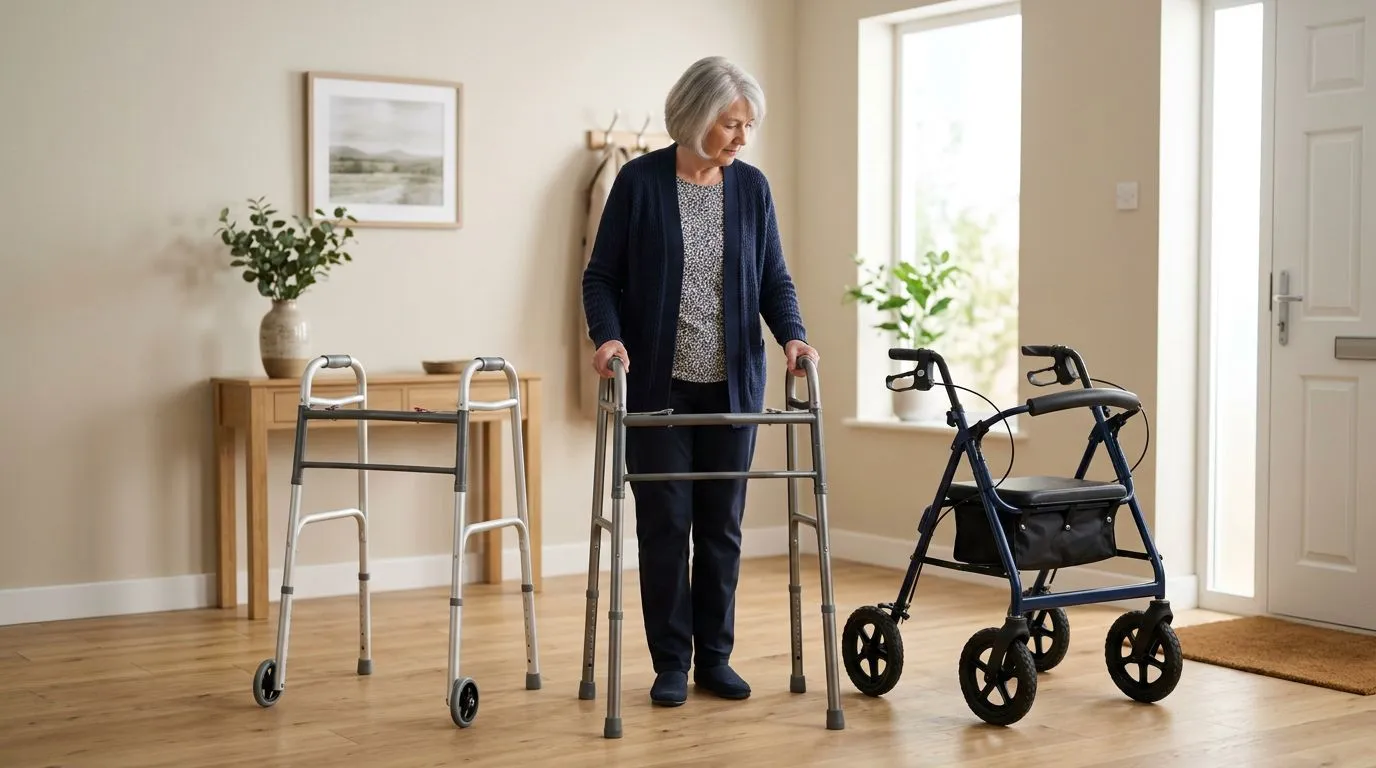
A walker and a rollator are related, but they are not the same tool. A standard walker has 4 legs and no wheels, so the user lifts it, places it ahead, and steps into it. A folding walker follows the same basic design, with a frame that folds for storage or transport. A two-wheel walker has wheels on the front legs and rubber tips or glides on the back legs, so it moves more easily while still providing controlled resistance.
A rollator is a wheeled walker with hand brakes. Most rollators have 3 or 4 wheels, and many 4-wheel rollators include a built-in seat and backrest for resting. Upright or stand-up rollators use higher forearm supports or taller handles to promote a more upright posture. Bariatric rollators are built with wider frames and higher weight capacities, commonly in the 400 to 500 lb range, though exact limits vary by model type.
The practical difference is straightforward. A standard walker is more stable when weight is placed through the frame, but it is slower and requires lifting or controlled sliding. A rollator rolls continuously, which can make it efficient outside, but it also requires brake use, steering control, and good judgment on slopes, curbs, rugs, and uneven pavement.
| Type | Typical setup | Best use | Key tradeoff |
|---|---|---|---|
| Standard walker | 4 legs, no wheels | Indoor stability, short distances, standing support | Slower; must be lifted or moved step by step |
| Two-wheel walker | 2 front wheels, 2 rear tips or glides | Indoor walking with less lifting | Less stable than no-wheel, less smooth than rollator |
| 3-wheel rollator | 3 wheels, hand brakes, no full seat on many designs | Tighter outdoor paths, errands, maneuverability | Usually less sitting support than 4-wheel rollator |
| 4-wheel rollator | 4 wheels, hand brakes, seat on many designs | Outdoor walking, longer trips, rest breaks | Requires brake control and more storage space |
| Upright rollator | 4 wheels, higher supports, hand brakes | Users who need a taller, more upright support style | Often larger and heavier than basic walkers |
The 2-device value question: 20 feet at home vs. 200 feet outside
Many people use a mobility aid in two very different ways. Inside the home, the distance may be only 10 to 30 feet at a time: bed to bathroom, recliner to kitchen, hallway to laundry. Outside, the same person may need to cross a parking lot, walk 200 feet to a clinic entrance, or stand in line long enough to need a seat.
That is where one all-purpose device can become a compromise. A rollator may feel convenient outside but too fast, wide, or awkward in a bathroom. A standard walker may feel secure indoors but tiring on a sidewalk or in a shopping center. If the person uses the wrong tool several times a day, the hidden cost is not just money. It is extra effort, skipped outings, caregiver strain, and increased risk from forcing one design into every situation.
A two-aid setup usually means keeping a basic standard or two-wheel walker where indoor transfers and room-to-room walking happen, while storing a rollator near the door, in the car, or with a caregiver for outdoor trips. The value improves when each aid solves a specific daily problem.
Cost and ownership: why 2 simpler aids can beat 1 premium all-purpose aid
Because there is no single universal price for mobility aids, it is more useful to think in categories than dollar amounts. Basic standard walkers are typically the least complex. Rollators add wheels, hand brakes, brake cables, a seat, a folding mechanism, and sometimes a storage bag or backrest. Upright and bariatric rollators usually add more frame material and specialty geometry.
The cheapest decision is not always the best value. One higher-feature rollator may seem efficient because it covers indoor and outdoor use on paper. But if it is too wide for a 24-inch bathroom doorway, too heavy to lift into a trunk, or too quick on smooth kitchen flooring, the user may avoid it or use it unsafely. In that case, a lower-cost indoor walker plus a practical outdoor rollator can provide more usable support each day.
Think about value in 4 buckets:
- Daily usability: How many times a day will the aid actually be used without frustration?
- Fit to environment: Does it turn in the bathroom, clear doorways, and handle sidewalks?
- Maintenance: Rollator brakes, wheels, and cables need periodic checks; standard walkers have fewer moving parts.
- Caregiver workload: A lighter indoor walker may be easier to reposition, while a rollator may reduce the need for outdoor rest stops.
If an indoor walker prevents awkward furniture grabbing 8 times a day and an outdoor rollator makes weekly appointments manageable, the combined practical value can be strong even if two items cost more than one basic device.
Who it’s best for: 5 common home-and-outdoor situations
A walker-plus-rollator plan is not for everyone, but it can be a smart fit in several real-life situations. The common thread is contrast: the home environment demands control, while the outside world demands distance, wheels, and rest options.
1. The home has narrow turns or small bathrooms
Many bathrooms, older hallways, and bedroom layouts leave only a few inches of clearance on each side. A standard folding walker or compact two-wheel walker may be easier to square up at a toilet, sink, or bedside than a wider 4-wheel rollator with a seat.
2. Outdoor trips involve longer walking distances
Parking lots, medical campuses, apartment corridors, and grocery stores often require 100 to 500 feet of walking before a chair is available. A rollator with a seat can provide a planned rest point, as long as the brakes are locked and the user can turn safely to sit.
3. The user needs high stability indoors but endurance support outdoors
Some people feel steadier when a walker does not roll away. Indoors, a standard walker may support careful step-by-step movement. Outdoors, that same lifting motion can become tiring, especially on long sidewalks or ramps.
4. A caregiver transports the outdoor aid
If a family member drives to appointments, a rollator that stays in the trunk can be used only when needed. This avoids pulling a larger wheeled device through every room of the house.
5. The user’s mobility changes during the day
Morning stiffness, afternoon fatigue, pain flares, or medication timing can change what feels safe. Having 2 different aids available allows the person and care team to choose the right support for that moment, not just the right support in a showroom.
How to choose and measure: 6 checks before buying one or two aids
Before deciding between one device and two, measure the real spaces and real tasks. A tape measure and a 10-minute walk-through can prevent an expensive mismatch.
1. Measure doorway and hallway clearance
Interior doorways are often about 24 to 32 inches wide, but trim, door swing, and nearby cabinets can reduce usable space. Measure the narrowest doorway the aid must pass through, especially the bathroom. Then compare that with the overall outside width of the walker or rollator type you are considering.
2. Check handle height at the wrist crease
For many walkers and rollators, a common starting point is setting the handles near the user’s wrist crease when standing upright in supportive shoes, with arms relaxed at the sides. The elbows should usually have a slight bend when holding the grips. A clinician can fine-tune this if posture, balance, or pain issues are involved.
3. Consider frame weight and lifting demands
A standard walker is often lighter than a full-featured rollator. That matters if the user must lift it over thresholds or if a caregiver loads it into a car several times per week. A rollator that folds but is too heavy to lift is not truly portable for that household.
4. Match wheels to the surface
Small wheels may work on smooth indoor floors but catch more easily on cracks, gravel, thick thresholds, or uneven sidewalk joints. Larger rollator wheels, often around 6 to 10 inches depending on design, tend to handle outdoor surfaces better, though they can also make the frame bulkier.
5. Test brake understanding and hand strength
Rollator brakes are useful only if the user can reliably squeeze, lock, and release them. This matters especially before sitting on a rollator seat. If arthritis, weakness, memory changes, or neuropathy make brake use unreliable, a rollator may require supervision or may not be the best primary aid.
6. Confirm weight capacity and seat size
Mobility aids have stated weight limits. Standard adult models commonly list capacities around 250 to 300 lb, while heavy-duty or bariatric versions may support more. For a rollator with a seat, also consider seat width, seat height, and whether the user can back up, lock brakes, turn, and sit without rushing.
Feature comparison: 1 all-purpose aid vs. a 2-aid setup
The right answer depends on the person, not the product category. A single device works best when the home, car, and outdoor environment are all compatible with the same frame. A 2-aid setup works best when indoor and outdoor demands are clearly different.
| Decision point | One all-purpose walker or rollator | Indoor walker + outdoor rollator |
|---|---|---|
| Upfront cost | Often lower than buying 2 items | Often higher than one basic item, but may avoid overbuying one complex aid |
| Indoor control | Good if the frame fits all rooms | Strong if a standard or two-wheel walker stays inside |
| Outdoor distance | Good only if the device rolls well and has needed rest support | Strong if the rollator is chosen specifically for sidewalks, stores, and appointments |
| Storage | Only 1 item to store | Needs 2 storage spots, such as bedroom and entryway |
| Maintenance | Less to track if using a walker; more if using a rollator | Walker is simple; rollator brakes and wheels still need checks |
| Caregiver ease | Simpler routine with fewer items | Can reduce lifting indoors and improve outdoor pacing |
A useful practical test is the “7-day friction test.” For one week, note every time the current aid is too wide, too slow, too fast, too heavy, or not available where needed. If the same complaints repeat in separate indoor and outdoor settings, two simpler purpose-fit aids may create better value than one compromise.
When one device is still the better value: 3 scenarios
Two mobility aids are not automatically better. For some households, one carefully chosen walker or rollator is safer, simpler, and more economical.
1. The user has limited space for storage
In a small apartment, assisted living room, or shared home, an extra frame can become clutter. If 2 devices create tripping hazards near the bed, door, or hallway, the added convenience may not be worth it.
2. The user may confuse which aid to use
If memory, judgment, or vision issues make it hard to select the right device, one consistent aid may reduce mistakes. A care team should weigh routine and simplicity heavily in these situations.
3. The same aid works well in all daily settings
If the person lives in a modern accessible home with wide doorways, smooth floors, no tight bathroom turns, and only short outdoor trips, one device may be enough. A two-wheel walker or compact rollator might handle everything without a meaningful loss of safety or comfort.
The best value is the setup that gets used correctly. A second aid that stays folded in a closet has little practical value, while one well-fitted device used confidently every day may be the smarter choice.
Safety, storage, and caregiver realities: 24-inch doors and car trunks
Safety details often decide whether a two-device plan works. Start with the home. If the indoor walker stays near the bed, leave enough room for a clear path to the bathroom at night. Avoid placing either device where it blocks a doorway, oxygen tubing route, or walker-to-chair transfer path.
For the outdoor rollator, choose a storage spot that supports the routine. Near the entry door may work for daily walks. In a car trunk may work for appointments, but only if the user or caregiver can lift it without strain. Folding size matters, but so does the folded shape; some rollators fold flat, while others fold side-to-side and remain tall.
Brakes deserve special attention. Check that both brakes engage evenly, that the parking lock holds before sitting, and that cables do not drag or snag. Wheels should spin freely and not wobble. Rubber tips on a standard walker should be inspected for wear, especially if used on rough thresholds or outdoor steps.
Use each aid only as designed. A standard walker seat does not exist unless the product specifically includes one, and a rollator seat should be used only with brakes locked on a level surface. Avoid using a rollator as a wheelchair unless it is specifically designed and labeled for transport use.
A practical way to decide: use a 10-point scoring check
If the choice still feels unclear, score the options from 0 to 2 in each category below. A score of 0 means poor fit, 1 means workable, and 2 means good fit. Compare one all-purpose device against the two-aid setup.
| Category | What to judge | Score 0 to 2 |
|---|---|---|
| Indoor fit | Doorways, bathroom turns, bedside access | 0 / 1 / 2 |
| Outdoor performance | Sidewalks, ramps, parking lots, store aisles | 0 / 1 / 2 |
| Stability | Confidence during starts, stops, and turns | 0 / 1 / 2 |
| Brake safety | Ability to use rollator brakes correctly | 0 / 1 / 2 |
| Rest needs | Need for a seat during trips longer than a few minutes | 0 / 1 / 2 |
| Transport | Folding, lifting, car loading, caregiver effort | 0 / 1 / 2 |
| Storage | Safe parking spots without clutter | 0 / 1 / 2 |
| Maintenance | Comfort checking tips, wheels, and brakes | 0 / 1 / 2 |
| Routine simplicity | Likelihood the setup will be used correctly every day | 0 / 1 / 2 |
| Overall value | Support gained compared with total cost and effort | 0 / 1 / 2 |
If the two-aid setup scores clearly higher, especially for indoor fit and outdoor performance, it may be the better value. If one device scores nearly the same and is easier to store, maintain, and remember, keep it simple.
When balance problems, recent falls, surgery recovery, neurological conditions, or significant weakness are part of the decision, ask a physical therapist, occupational therapist, or other qualified clinician to assess the person’s gait and home setup. The goal is not to own more equipment. The goal is to use the right support in the right place, every time it is needed.
FAQ
Frequently asked questions
Is it cheaper to buy one rollator instead of a walker and a rollator? +
Sometimes, but not always in practical value. One rollator may cost less than buying two separate aids, but it can be a poor value if it is too wide, too fast, or too awkward for indoor use. A basic indoor walker plus an outdoor rollator may be worth it when each device solves a different daily problem.
Can a rollator be used safely inside the house? +
Yes, if the user can control the brakes and the rollator fits the home. Check bathroom doors, hallway turns, rugs, thresholds, and bedside space. In tight rooms or during transfers, a standard walker may offer more controlled support than a wheeled rollator.
Who should not use a rollator as the main mobility aid? +
A rollator may not be appropriate for someone who cannot reliably use hand brakes, has difficulty steering, leans heavily into the frame, or becomes unsafe on slopes and turns. A clinician can help determine whether a standard walker, two-wheel walker, rollator, or supervised use is safer.
Where should I keep a second mobility aid? +
Keep each aid where it is actually needed. An indoor walker often belongs near the bed, recliner, or bathroom route. An outdoor rollator may work best near the entry door or in the car, as long as it does not block walkways or create a tripping hazard.
How do I know if my walker or rollator is the right height? +
A common starting point is setting the handles near the wrist crease when standing upright in everyday shoes with arms relaxed. The elbows should have a slight bend while holding the grips. If posture, pain, or balance issues are present, ask a physical or occupational therapist to fine-tune the fit.
Keep reading
Related guides
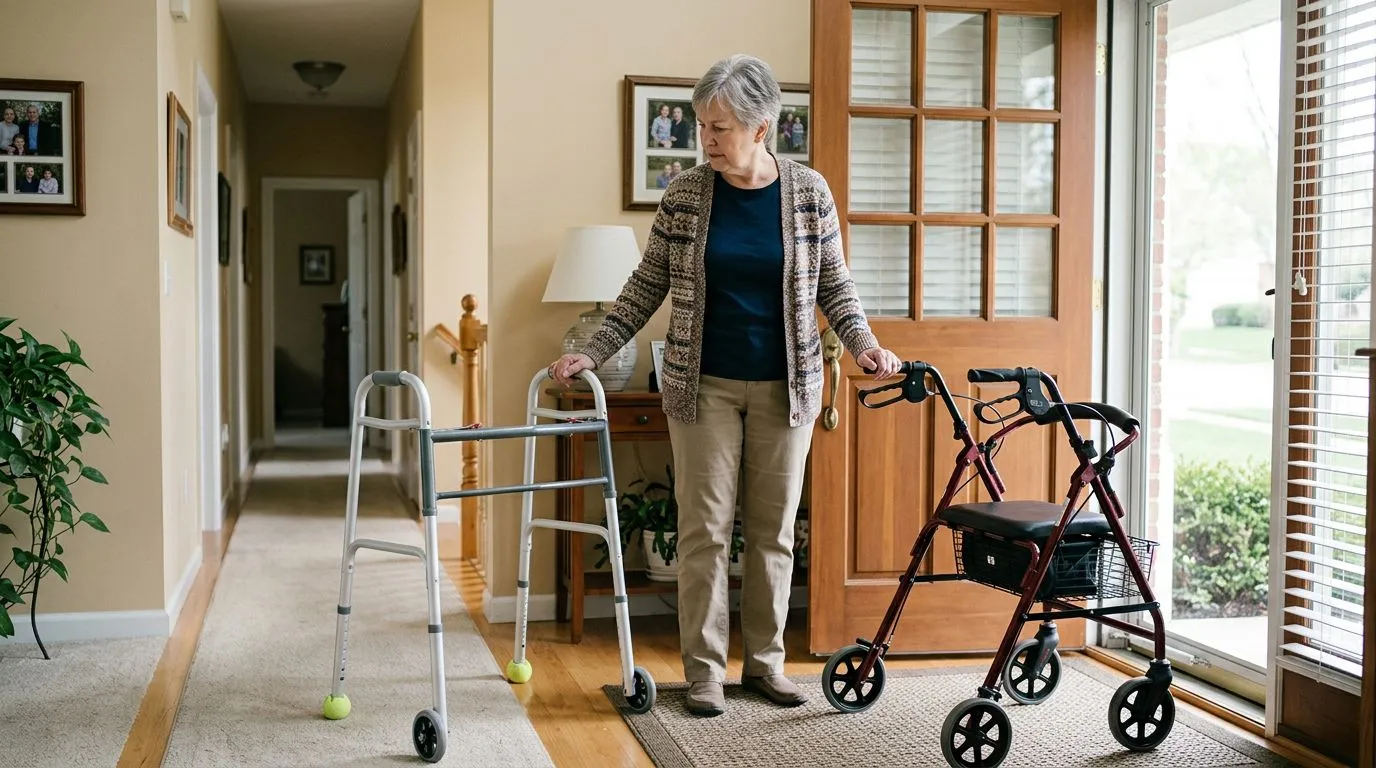
One Mobility Walker for Home and Outdoors? Standard Walkers vs Rollators for Daily U.S. Use
13 min read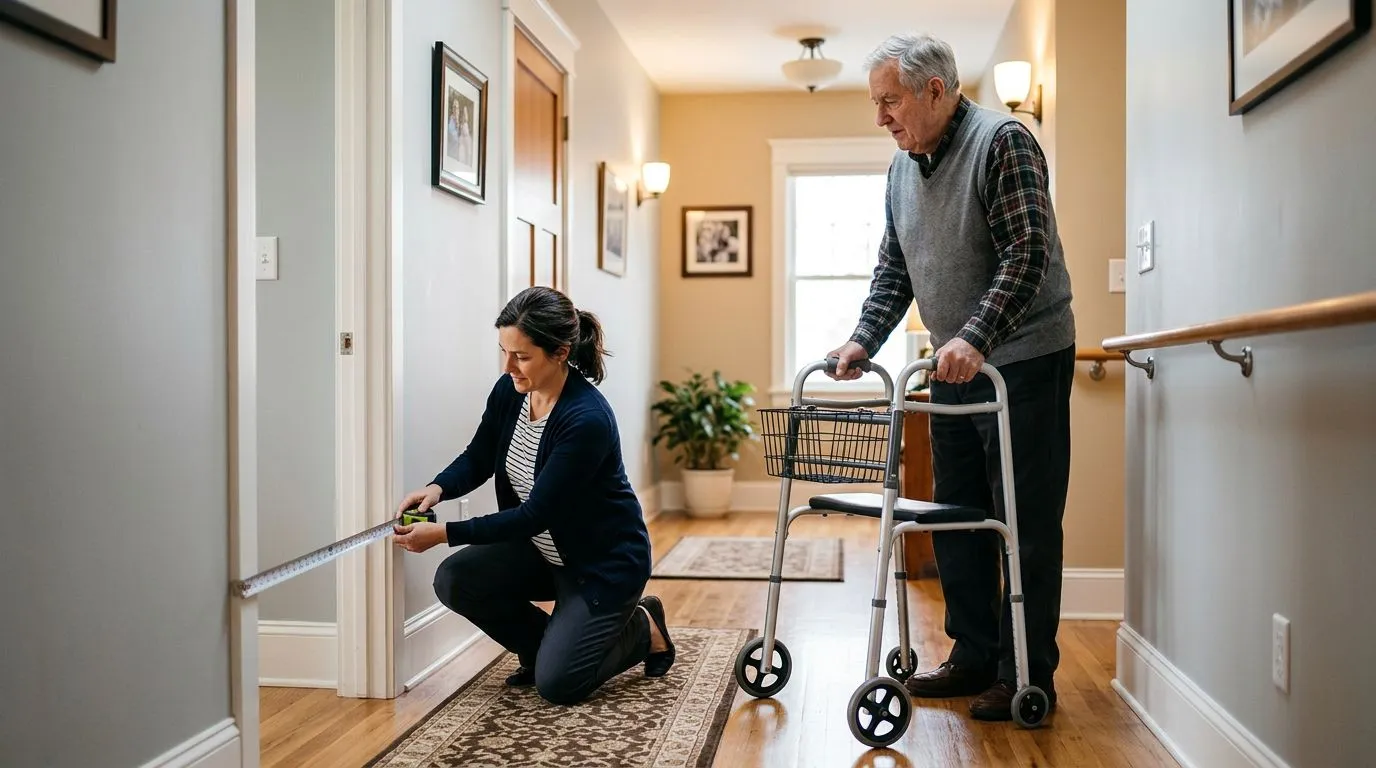
Buying a Mobility Walker for an Older Parent: Questions to Ask Before You Shop
13 min read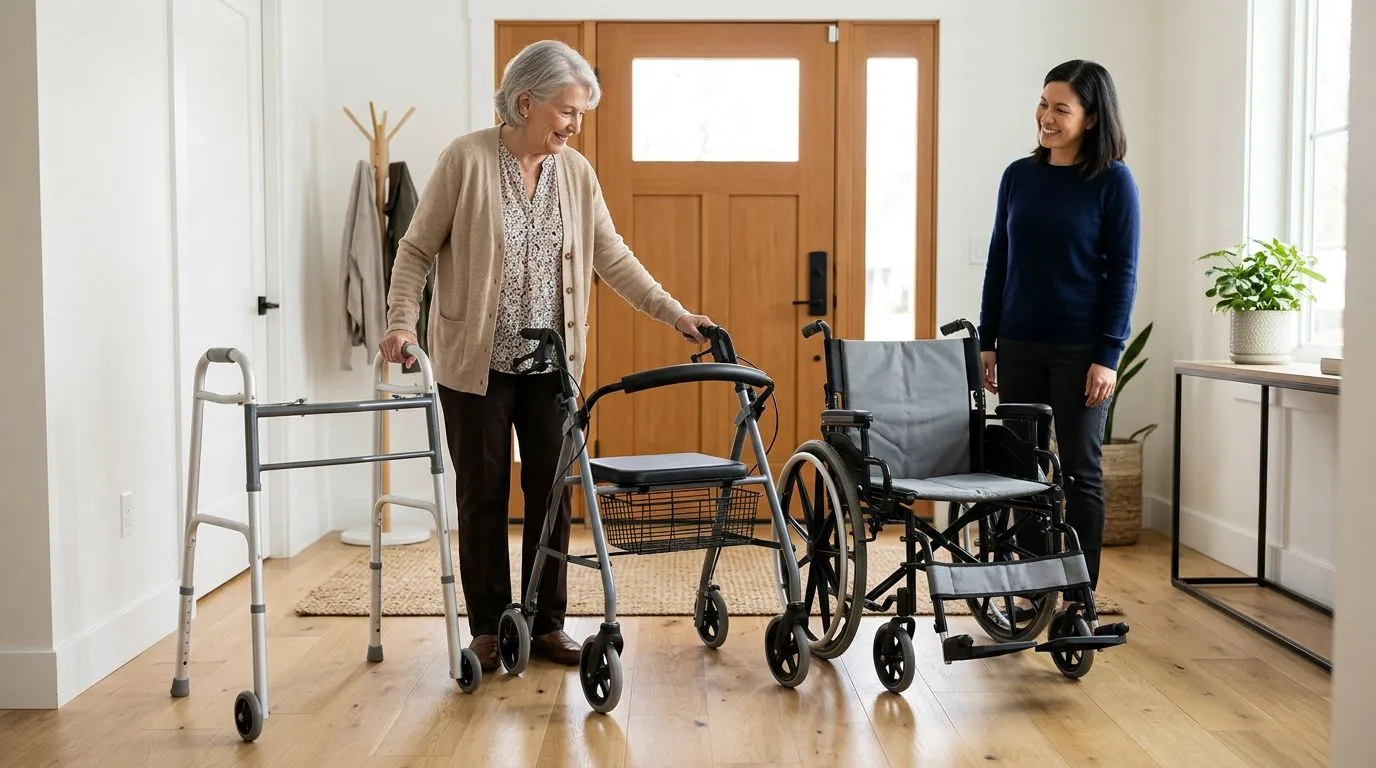
Are 2-in-1 Rollator Transport Chairs Worth the Cost?
11 min read