Disclosure: We may earn a commission when you buy through links on this page, at no extra cost to you. We buy nothing, sell nothing and accept no payment for coverage — commissions never decide what we recommend. How we make money.
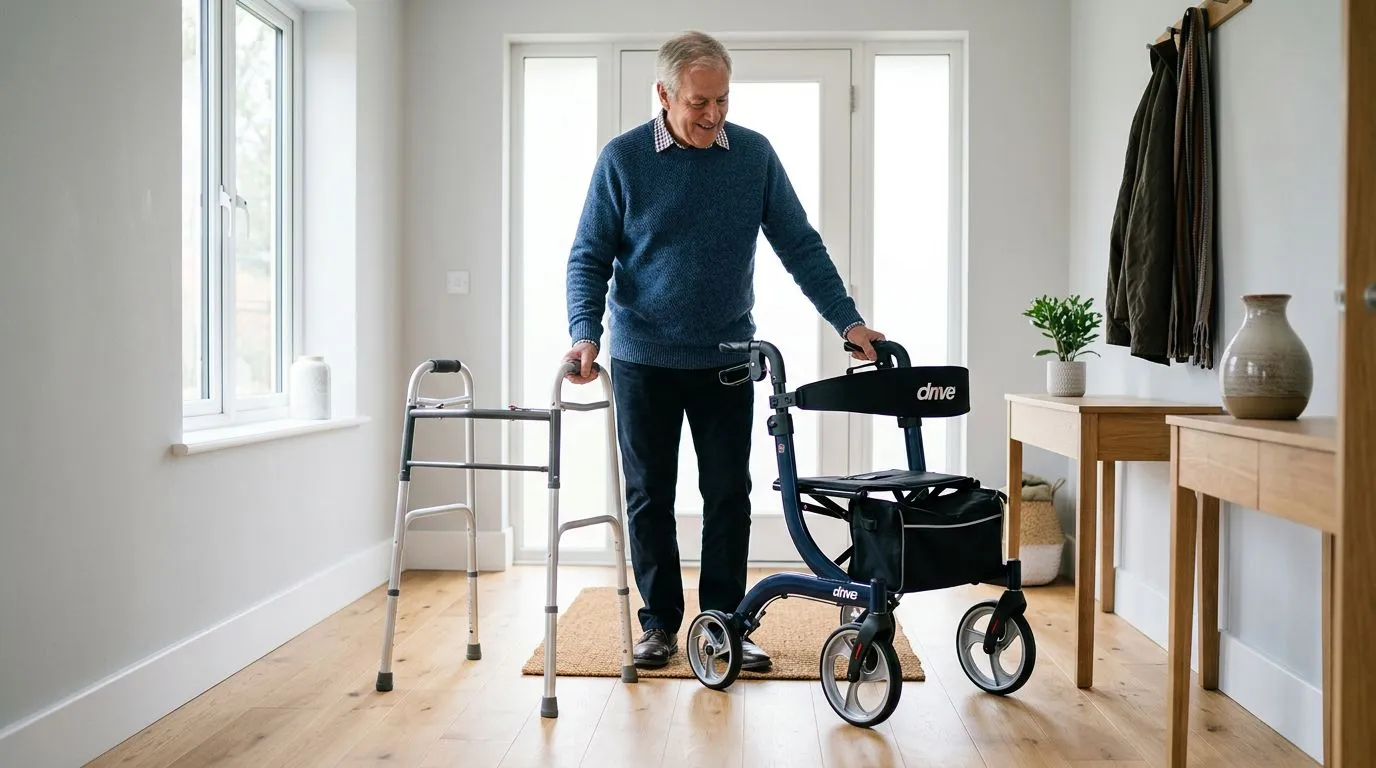
If you are shopping for a mobility walker with a seat, you are usually looking for a rollator: a wheeled walker with hand brakes and a built-in seat for short rests. A rollator may be the right choice if you can walk steadily, control hand brakes, and mainly need support for fatigue or longer distances. If you need to put significant weight through the frame for balance, a standard walker or two-wheel walker may be safer.
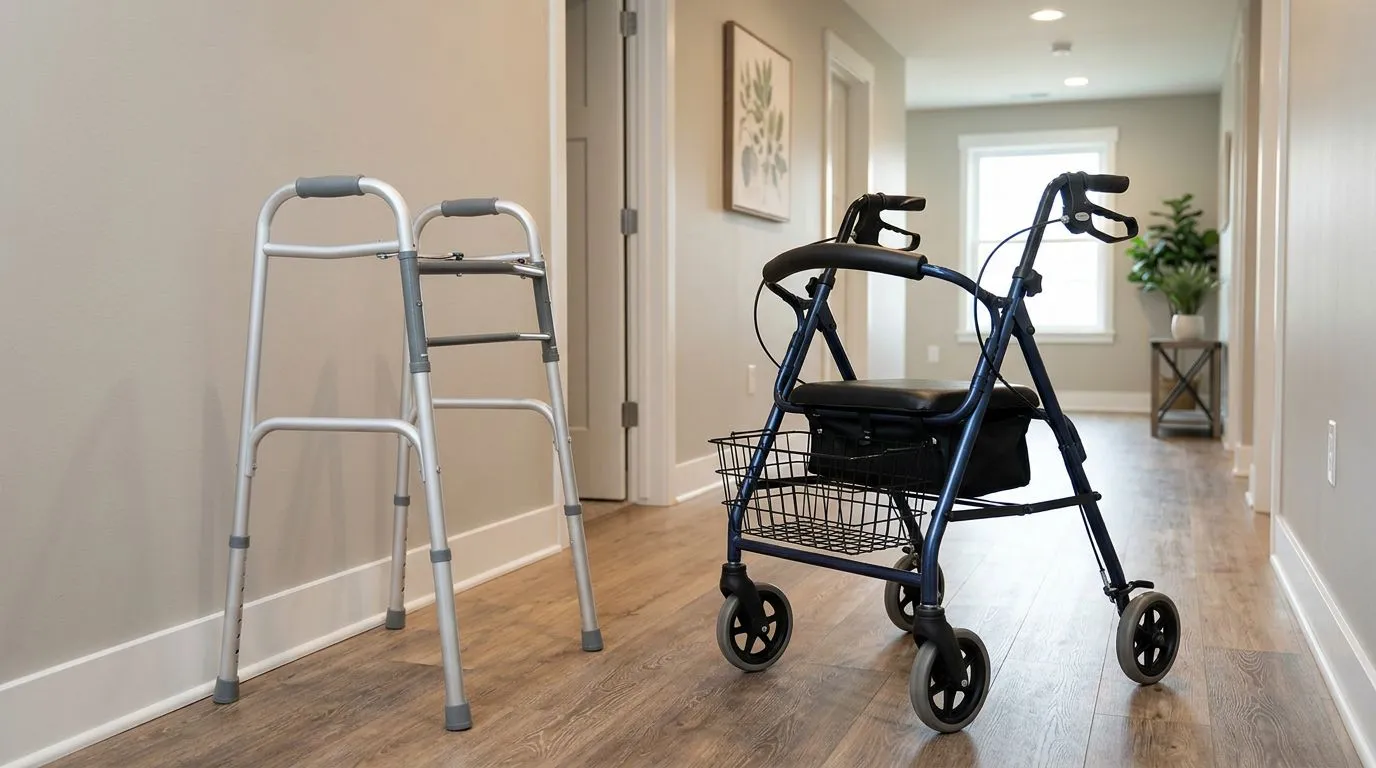
The word “walker” is used broadly, which can make the choices confusing. A traditional walker is a stable frame, usually with no wheels or two front wheels, and it does not have a seat. A rollator is a wheeled mobility aid, typically with 3 or 4 wheels, brakes, and often a padded seat. Both can improve day-to-day mobility, but they address different needs.
Walker With a Seat vs. Rollator: The 3 Key Differences
A seated rollator commonly has 4 wheels, loop-style hand brakes, and a seat height around 20 to 24 inches from the floor. A standard walker usually has 4 legs, no seat, and is lifted or advanced step by step. That design difference matters because it affects how much stability you get and how much control you need.
| Feature | Standard or Two-Wheel Walker | Seated Rollator |
|---|---|---|
| Wheels | No wheels, or 2 front wheels | Usually 3 or 4 wheels |
| Seat | No built-in seat | Built-in seat on most 4-wheel rollators |
| Brakes | Usually none; stability comes from the frame | Hand brakes, often with a parking lock |
| Best use | Higher stability, shorter indoor movement, post-surgery support when prescribed | Longer walking, fatigue management, errands, outdoor paths |
| User control needed | Lower speed, more frame support | Good brake control and balance while moving |
A rollator is easier to roll continuously, so it can feel more natural on sidewalks, in stores, or along long hallways. The tradeoff is that it can move away from you if you lean too hard or forget to brake. A standard walker is slower, but that slower pace is exactly why it may be safer for someone who needs a very stable base.
Who a Seated Rollator Is Best For: 5 Common Situations
A rollator with a seat is most useful when walking ability is limited by endurance rather than severe balance loss. For example, someone who can walk 5 to 10 minutes but needs a safe place to rest before continuing may benefit from a seated rollator.
- You tire before your destination. A seat can help during grocery trips, medical appointments, community events, or walks through a large building.
- You can stand and walk without pulling heavily on the device. Rollators are designed to guide and support movement, not to carry a large portion of body weight with every step.
- You can use both hands. Most rollators require two hands for steering and braking, especially on ramps or uneven pavement.
- You can understand and remember brake use. Locking the brakes before sitting is not optional; it is a basic safety step.
- You need mobility outside the home. Larger wheels, often around 6 to 8 inches, can handle thresholds and sidewalks better than small walker tips.
A seated rollator can also reduce the pressure to “make it all the way” without stopping. That can help people stay active in practical ways: getting to the mailbox, walking into a clinic, or browsing a store without searching for a chair. The benefit is independence, not speed.
When a Standard or Two-Wheel Walker May Be Safer
If you need to lean heavily through your arms with each step, a 4-leg standard walker or a two-wheel walker may provide more control than a rollator. Many basic walkers support users up to about 300 pounds, while bariatric versions may support higher capacities, but the right choice depends on balance, strength, and how the device is used.
A standard walker may be the better option if you have frequent loss of balance, significant weakness on one side, poor brake control, or a recent surgery where a clinician instructed you to use a walker. It may also be safer for people who tend to push a device too far ahead, because a rollator can roll faster than expected.
A two-wheel walker sits between the two categories. It has wheels on the front legs and glide tips or rubber tips on the back legs. You do not have to lift it as much as a no-wheel walker, but the rear legs add friction and help slow the frame. This can be useful indoors, in therapy settings, or for someone who needs more stability than a rollator but less lifting than a standard frame.
One important point: do not sit on a standard walker, folding walker, or two-wheel walker unless it is specifically designed and labeled for sitting, which traditional walkers are not. A walker seat is not something to improvise. If a built-in seat is a priority, you are almost always shopping in the rollator category.
Types of Walkers and Rollators Compared by Seat, Wheels, and Brakes
Most mobility aids in this category weigh somewhere between about 6 and 25 pounds, depending on frame type, wheel size, and whether a seat is included. Lighter models are easier to lift into a car, while heavier frames may feel steadier and may offer higher weight capacity.
| Type | Seat? | Typical Design | Who It Is Best For |
|---|---|---|---|
| Standard walker | No | 4 legs, no wheels, often folds | Maximum frame stability at a slower pace |
| Folding walker | No | Standard or two-wheel frame that folds flat | Home use, travel, storage in a car trunk |
| Two-wheel walker | No | 2 front wheels, 2 rear tips or glides | Users who need stability but cannot lift a walker repeatedly |
| 3-wheel rollator | Usually no full seat | Triangular frame, hand brakes, narrow turning radius | Tight indoor spaces and lighter support needs |
| 4-wheel rollator | Yes, commonly | 4 wheels, hand brakes, padded seat, storage pouch or basket | Shoppers who want a walker with a seat for rests |
| Upright rollator | Often yes | Forearm supports, taller handles, 4 wheels | Users who prefer a more upright posture and can control a larger frame |
| Bariatric rollator | Yes, commonly | Reinforced wider frame, higher weight capacity | Users who need a wider seat and capacity above standard limits |
For most shoppers typing “walker with a seat,” a 4-wheel rollator is the main product to compare. A 3-wheel rollator can be easier to maneuver in narrow spaces, but many do not provide the same kind of full sitting surface. Upright rollators can help some people avoid a hunched posture, but they are not automatically safer; they tend to be larger and require confident steering.
How to Measure for a Rollator in 4 Steps
A good fit starts with handle height, seat height, overall width, and weight capacity. Even a 1- or 2-inch mismatch can make a rollator feel awkward, especially if the handles are too low or the seat is too high for your feet to rest securely.
1. Measure handle height
Stand in your usual shoes with your arms relaxed at your sides. The hand grips should line up close to the crease of your wrist. When holding the grips, your elbows should be slightly bent, often around 15 degrees, not locked straight and not sharply bent.
2. Check seat height
When you sit, your feet should touch the floor comfortably. Many rollator seats fall around 20 to 24 inches high, but petite and tall users may need a different range. If the seat is too high, sitting and standing become less secure.
3. Measure doorways and hallways
Many interior doorways are about 28 to 32 inches wide. Compare that with the rollator’s overall width, not just the seat width. If you live in an older home, apartment, or assisted living unit with narrow bathroom doors, this measurement matters.
4. Respect weight capacity
Choose a frame with a stated capacity above the user’s body weight, and do not treat the basket or pouch as unlimited storage. Standard rollators commonly support around 250 to 300 pounds, while bariatric rollators may support more, depending on the design. Always follow the device label.
Feature Checklist: Brakes, Wheels, Seat, Foldability, and Storage
For everyday use, small details matter. A rollator that is 17 pounds may be manageable for one person to lift into a vehicle, while a 25-pound frame may be too much without help.
- Brakes: Look for hand brakes that are easy to squeeze and a parking brake that locks firmly before sitting.
- Wheels: Wheels around 6 inches are common for indoor and light outdoor use; 8-inch wheels often roll more smoothly over sidewalk cracks and thresholds.
- Seat and backrest: A padded seat can make short rests more comfortable. A backrest or curved support helps you sit facing the correct direction on many rollators.
- Foldability: Check how the frame folds and whether it stays folded. Some rollators fold side-to-side; others fold front-to-back.
- Storage: Under-seat pouches and baskets are useful for a wallet, phone, water bottle, or light jacket. Heavy shopping bags can affect balance.
- Grip comfort: Larger handles may be easier for stiff or arthritic hands, but brake reach still needs to feel natural.
- Turning radius: A tighter turning radius helps in kitchens, bathrooms, elevators, and exam rooms.
Do not buy on the seat alone. A comfortable seat on a poorly fitted frame is still a poor choice. The best seated rollator is the one you can brake, steer, fold, lift if needed, and use consistently in the places you actually go.
Indoor vs. Outdoor Use: Match the Walker to Real Spaces
A home hallway may be only 36 inches wide, while a grocery store aisle may allow much more turning space. The places where you use the device most should guide the type you choose.
For mostly indoor use, a standard walker, folding walker, or narrow two-wheel walker can be easier to control in tight rooms. It may also be more practical beside a bed, in a bathroom, or around furniture. Rollators can work indoors, but they need enough space to turn and park safely.
For outdoor use, a rollator often has the advantage. Four wheels and hand brakes make it easier to move along sidewalks, through parking lots, or across a senior living campus. Larger wheels can reduce jarring, but no rollator is meant for rough ground, steep slopes, or unstable surfaces like loose gravel.
If you split your time between home and community outings, you may need different priorities. Some people use a standard walker indoors and a rollator for appointments or errands, if their clinician agrees and they can use both safely. The safest choice is the one that fits the setting, not the one with the most features.
Safe Use Basics Before Sitting or Walking
Plan to spend at least 10 minutes practicing brake locks, turns, and sitting technique before taking a new rollator into a busy store or parking lot. Familiarity is part of safety.
- Lock the brakes before sitting. Push down or engage the parking brake as designed, then test that the rollator does not move.
- Turn fully before sitting. Back up until you feel the seat behind your legs, then reach back if you can do so safely.
- Sit only on level ground. Avoid sitting on ramps, sloped driveways, or uneven pavement.
- Do not use it as a wheelchair. Most rollators are not transport chairs and should not be pushed while someone is seated unless specifically designed for that purpose.
- Keep the rollator close. Walking too far behind the handles can lead to a forward-leaning posture and loss of control.
For standard walkers and two-wheel walkers, the safety habits are different. Keep the frame close enough that you are not reaching forward, place all walker tips or wheels securely before stepping, and avoid carrying loose items in your hands. If you are unsure, ask a physical therapist, occupational therapist, or other qualified professional to watch you use the device.
Quick Decision Guide: Choose the Right Device in 60 Seconds
If you can answer 6 simple questions, you can narrow the choice quickly. This does not replace professional fitting, but it helps you shop with a clearer plan.
| Choose This | If This Sounds Like You |
|---|---|
| Standard walker | You need the most stable frame and move at a slower pace indoors. |
| Two-wheel walker | You need stability but have trouble lifting a no-wheel walker every step. |
| 4-wheel rollator with seat | You walk fairly steadily but need seated rest breaks during longer outings. |
| 3-wheel rollator | You want easy turning and light support, and a full seat is not your main need. |
| Upright rollator | You prefer forearm support and a taller posture, and you can control a larger wheeled frame. |
| Bariatric rollator | You need a wider frame, wider seat, or higher weight capacity than a standard rollator offers. |
A mobility walker with a seat is usually a rollator, and for the right person it can make errands, appointments, and social outings more manageable. Still, the seat should not outweigh the basics: balance, brake control, fit, and the ability to use the device safely. If your main need is strong weight-bearing support, start with a standard or two-wheel walker conversation. If your main need is a reliable place to rest while walking longer distances, a seated rollator is often the category to compare.
FAQ
Frequently asked questions
Is a walker with a seat the same as a rollator? +
In most cases, yes. A mobility walker with a built-in seat is usually a rollator, meaning it has wheels, hand brakes, and a seat for short rests. Traditional standard walkers and two-wheel walkers usually do not include seats.
Who should not use a rollator with a seat? +
A rollator may not be safe for someone who needs to lean heavily on the frame, cannot reliably use hand brakes, has frequent balance loss, or tends to let the device roll too far ahead. In those situations, a standard walker or two-wheel walker may offer better control.
Can you sit on a rollator and be pushed like a wheelchair? +
Most rollators are not designed to be used as wheelchairs. Unless the device is specifically made and labeled for transport use, you should not be pushed while seated on it.
What seat height is best for a rollator? +
The best seat height lets the user sit with feet flat or comfortably supported on the floor. Many rollator seats are around 20 to 24 inches high, but the right height depends on the user’s leg length and ability to sit and stand safely.
Are 3-wheel or 4-wheel rollators better? +
A 3-wheel rollator can turn more easily in tight spaces, but it usually does not provide the same seated resting option as a 4-wheel rollator. If a full seat is important, a 4-wheel rollator is usually the better category to compare.
Should I ask a clinician before buying a walker or rollator? +
Yes, especially after surgery, a fall, a new diagnosis, or any major change in walking ability. A physical therapist, occupational therapist, or other qualified professional can help confirm the safest device type and fit.
Keep reading
Related guides
Mobility Walker With Seat vs Standard Walker: Which One Is Right for You?
14 min read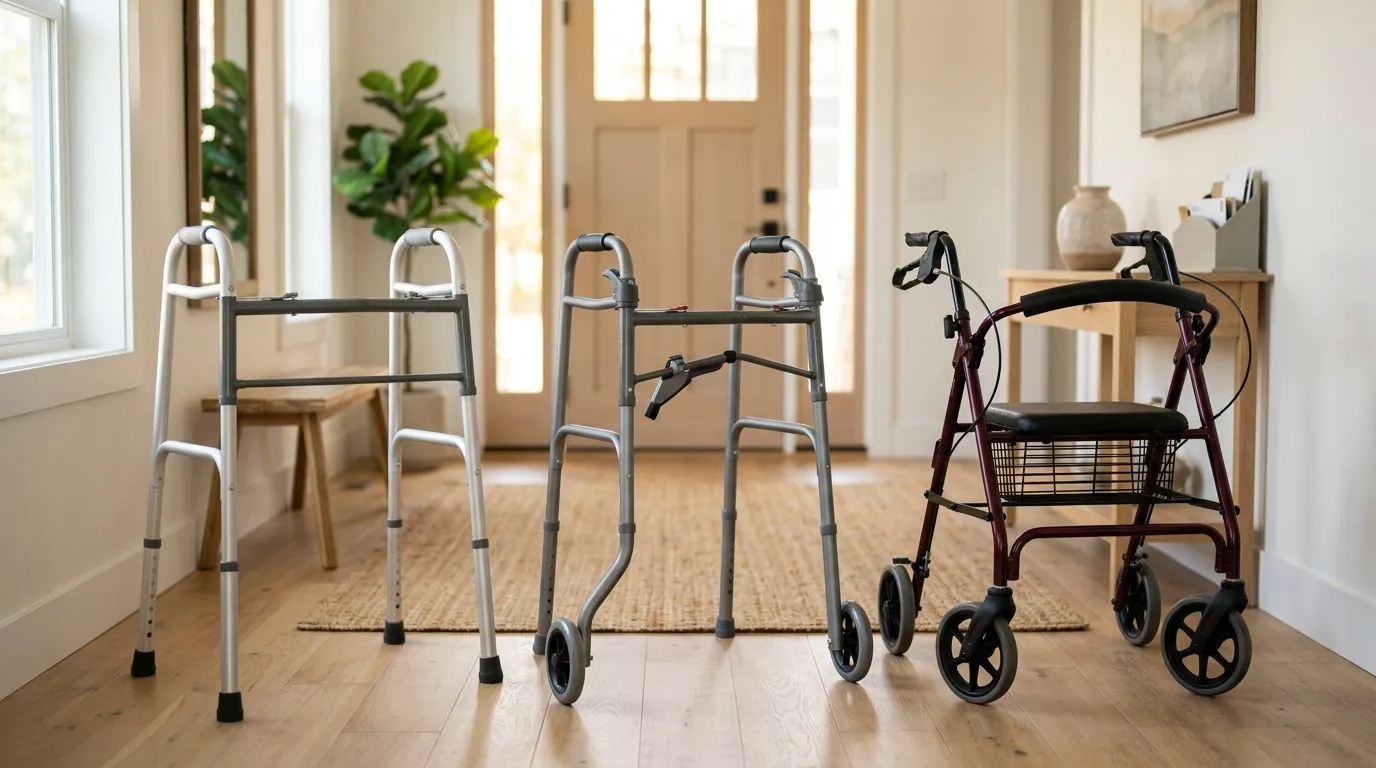
No-Wheel Walker vs Two-Wheel Walker vs Rollator: How Wheels Change Stability, Effort, and Control
13 min read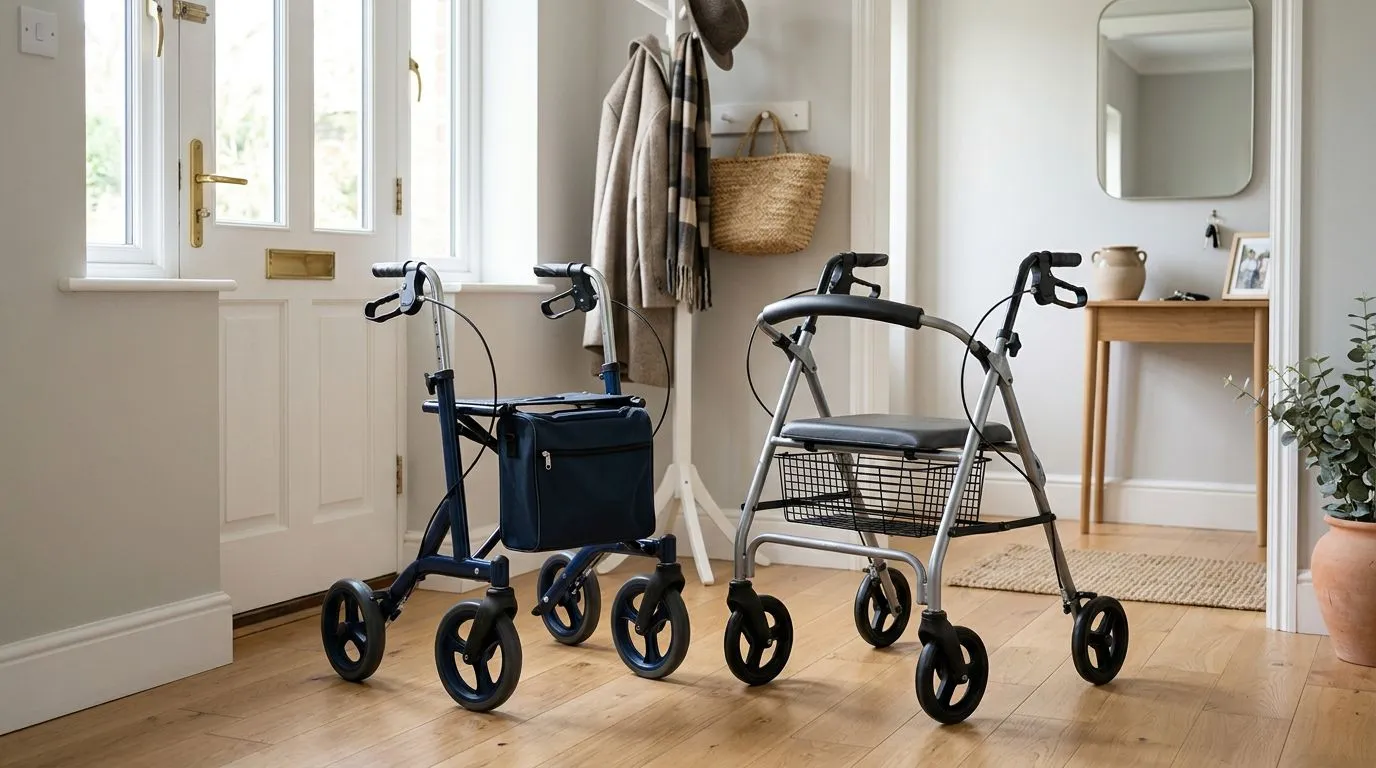
3-Wheel vs 4-Wheel Rollator Walkers: Which Design Fits Your Needs?
11 min read