Disclosure: We may earn a commission when you buy through links on this page, at no extra cost to you. We buy nothing, sell nothing and accept no payment for coverage — commissions never decide what we recommend. How we make money.
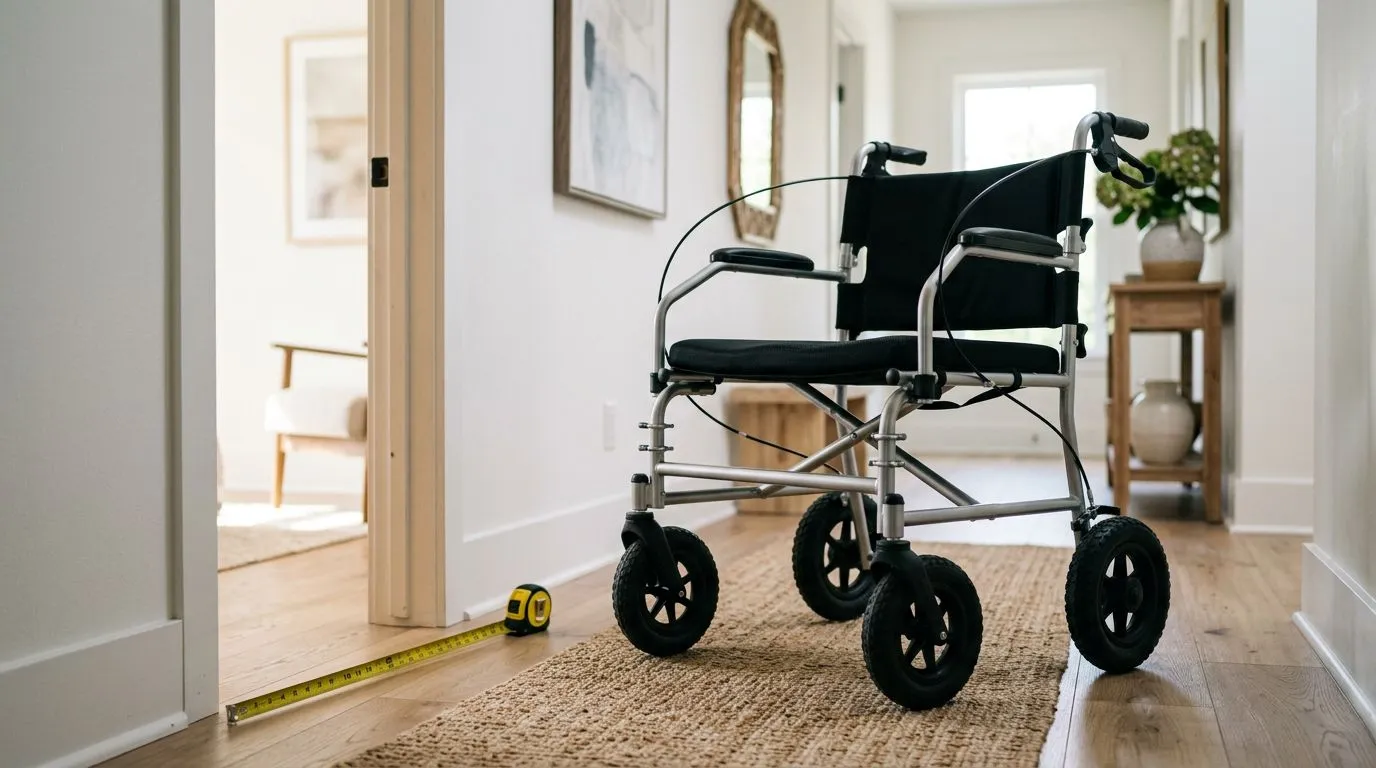
A heavy-duty rollator is a wheeled walker with a seat, hand brakes, and a reinforced frame, usually designed for higher weight capacities and wider seating than a standard rollator. To choose one safely, compare more than the weight rating: look at frame width, seat dimensions, brake strength, wheel size, turning space, and how stable the rollator feels when walking, turning, and sitting.
For many shoppers, the phrase “bariatric walker with seat” really refers to a bariatric rollator. A standard walker or folding walker may offer more step-by-step support, but it does not include the same built-in seat and hand-brake system found on a rollator.
1. Heavy-duty rollators vs. bariatric walkers: know the difference first
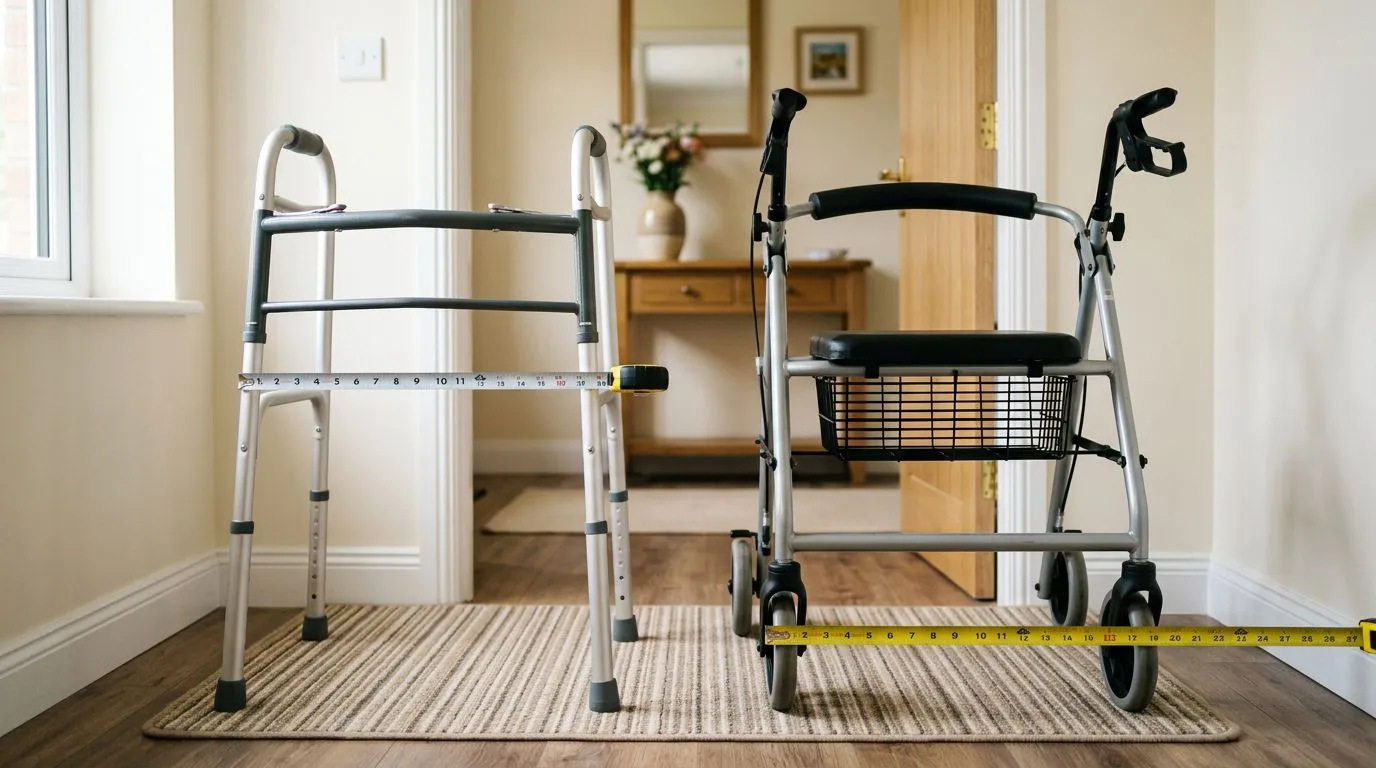
A rollator has 3 or 4 wheels, hand brakes, and often a padded seat. A walker, in the strict sense, is a simpler frame that may have no wheels or 2 front wheels, and the user usually lifts or partly lifts it forward with each step.
This distinction matters because “bariatric walker with seat” is often used in everyday shopping searches, even though most seated products are rollators. If you need a place to rest during a 200-foot hallway walk or while waiting in a clinic line, a rollator may fit that need. If you need maximum steadying support for short, careful steps, a standard or two-wheel walker may be safer.
| Mobility aid type | Typical setup | Best use | Main trade-off |
|---|---|---|---|
| Standard walker | No wheels, 4 legs | Slow, stable indoor walking | No seat; must be lifted |
| Two-wheel walker | 2 front wheels, 2 rear tips | People who need some glide but extra control | Usually no built-in seat |
| Folding walker | No wheels or 2 wheels; folds flat | Travel, storage, tight rooms | Less convenient for resting |
| Heavy-duty rollator | 4 wheels, hand brakes, seat | Walking with rest breaks | Requires brake control and turning space |
| Upright bariatric rollator | 4 wheels, forearm supports, seat on some designs | More upright posture support | Larger frame and wider turning radius |
Do not choose a rollator just because it looks more convenient. A rollator keeps rolling unless you control it with the brakes and your body position. That can help with endurance, but it is not right for everyone.
2. Weight capacity is only 1 rating, not the whole safety story
Heavy-duty rollators commonly list capacities such as 300, 400, 500, or even 600 pounds, depending on the design category. That number is important, but it is not the same as real-world comfort, fit, or stability.
Weight capacity usually reflects the manufacturer’s tested load limit under specific conditions. It does not tell you whether the seat is wide enough, the handles adjust to your height, the brakes feel strong on a ramp, or the rollator can pass through a 30-inch bathroom doorway.
A smart buying process starts with capacity, then quickly moves to fit and function. If two rollators both list a 500-pound rating, the better choice may still be the one with the wider seat, stronger brake feel, better wheel material, or narrower overall frame for your home.
- Leave a margin. Avoid choosing a rollator at the very top of its listed capacity if another properly fitting option offers more reserve.
- Check seated support. The seat, crossbar, and frame design should feel solid when you sit down and stand up.
- Think about movement. Turning, braking, and rolling over thresholds may stress a frame differently than simply sitting still.
- Ask for clinical input. A physical therapist, occupational therapist, or mobility professional can help match support level to your gait and balance needs.
Capacity is the first gate, not the finish line.
3. Seat width, seat depth, and frame width can differ by 2 to 6 inches
For bariatric rollators, seat comfort and frame width often matter more than shoppers expect. A wider seat can make resting safer and more comfortable, but a wider frame may be harder to maneuver indoors.
Measure the user while seated on a firm chair. Seat width should let the person sit fully on the cushion without feeling pinched by the side frame. Seat depth should support the thighs without pressing behind the knees. Many rollator seats fall somewhere around 13 to 18 inches wide, while heavy-duty and bariatric seats may be wider, often in the 18 to 24 inch range depending on product type.
Then measure the environment. Interior doorways in older homes may be about 28 to 30 inches wide, while many modern accessible doorways are closer to 32 to 36 inches. A rollator that feels roomy in the store can become frustrating if it barely clears the bathroom door.
| Measurement | How to check it | Why it matters |
|---|---|---|
| Seat width | Measure hip width while seated; add comfort room | Affects sitting comfort and safe resting |
| Seat height | Compare to the user’s comfortable chair height | Affects standing up and sitting down |
| Overall width | Measure outside wheel to outside wheel | Determines doorway and hallway clearance |
| Handle height | Check wrist crease height while standing upright | Affects posture and steering control |
| Folded width | Measure storage or car trunk space | Important for travel and transport |
Do not assume the widest rollator is automatically best. A larger seat helps only if the rollator still fits through the places where it will be used every day.
4. Wheel size and durability matter on 1-inch thresholds and rough sidewalks
Most heavy-duty rollators use larger wheels than basic indoor models, often around 8 inches, though some designs use smaller or larger wheels. Bigger wheels can help with sidewalk cracks, carpet transitions, and small thresholds, but they also add bulk and may raise the frame.
Wheel material matters too. Solid wheels are common because they require little maintenance and will not go flat. Softer tread may feel smoother on indoor flooring, while firmer wheels can roll efficiently outdoors. The right choice depends on where the rollator will spend most of its time.
For indoor-only use, a very large wheel may not be necessary. For outdoor use, especially across parking lots, uneven pavement, curb cuts, and 1-inch floor transitions, a more durable wheel setup can make the rollator feel less jarring and easier to control.
- 6-inch wheels: Often compact, but less forgiving on uneven surfaces.
- 8-inch wheels: A common all-around size for many rollators, including heavy-duty options.
- 10-inch wheels or larger: Often better for outdoor rolling, but may increase turning space and weight.
Look closely at the front forks, rear wheel mounts, and wheel spacing. A heavy-duty rollator should not just have a stronger frame; the wheel assemblies should also look and feel substantial enough for daily use.
5. Brakes should be easy to squeeze and hold for at least 5 seconds
Brakes are central to rollator safety. A bariatric rollator should have hand brakes the user can squeeze comfortably, use to slow the rollator predictably, and lock before sitting down.
Many rollators use loop-style hand brakes. The user squeezes to slow down and pushes down to lock, though exact mechanisms vary. What matters is whether the person can operate both brakes consistently with their hand strength, finger comfort, and reaction time.
A simple in-person test is to lock the brakes, wait 5 seconds, and gently shift weight as if preparing to sit. The rollator should not creep forward or wobble in a way that feels uncertain. This is not a substitute for professional assessment, but it is a practical check.
- Grip comfort: The brake handles should not require painful squeezing.
- Locking feel: The locked position should be clear and secure.
- Cable adjustment: Cables may need periodic adjustment as brakes wear.
- Rear wheel traction: Brakes work best when the wheels maintain contact and grip.
If the user has arthritis, neuropathy, limited grip, or one weaker hand, brake operation deserves extra attention. A rollator that cannot be braked confidently is not the right rollator, even if the frame capacity looks excellent.
6. Stability improves with width, but turning space may increase by 12 inches or more
A wider heavy-duty rollator can feel more planted, especially when standing up from the seat or walking with a broader stance. The trade-off is maneuverability. Wider frames and longer wheelbases often need more room to turn.
In a small apartment, narrow hallway, or tight bathroom, an extra 3 or 4 inches of overall width can be a real problem. The turning path can increase even more, sometimes by a foot or more compared with a compact rollator or folding walker.
Before buying, map the home. Measure the narrowest doorway, the space beside the bed, the bathroom entry, the route from chair to kitchen, and the car trunk if the rollator will travel. Use a tape measure, not a guess.
| Home area | What to measure | Buying implication |
|---|---|---|
| Bathroom doorway | Clear opening width in inches | May limit overall rollator width |
| Hallway turn | Width of hall and turn angle | Affects turning radius |
| Bedroom path | Space beside bed and dresser | Determines everyday usability |
| Dining area | Chair spacing and table clearance | Wider frames may catch on furniture |
| Vehicle storage | Trunk opening and folded dimensions | Important for appointments and travel |
Stability is not only about width. It also depends on wheel placement, frame rigidity, handle height, user posture, and how smoothly the brakes engage.
7. Who a heavy-duty rollator is best for after a 10-minute walking test
A heavy-duty rollator is best for someone who can walk on their own but needs extra support, seated rest breaks, and a stronger frame than a standard rollator. It is not meant to be pushed like a wheelchair, and the seat is for resting only when the brakes are locked and the rollator is on a safe, level surface.
If possible, evaluate the rollator over a 10-minute trial rather than a 10-second glance. The user should walk straight, turn, stop, lock the brakes, sit, stand, and fold the rollator if transport matters. A short test often reveals whether the handles are too low, the seat feels too narrow, or the brakes require too much hand force.
Who it is usually best for
- People who need frequent rest breaks during walking.
- Users who exceed the comfort or capacity range of standard rollators.
- People who can safely operate hand brakes with both hands.
- Users who have enough space at home for a wider frame.
- Those who walk outdoors on sidewalks, parking lots, or longer hallways.
Who may need a different mobility aid
- Someone who cannot control a rolling device safely.
- A person who needs full body-weight support with each step.
- Anyone who cannot lock and unlock hand brakes reliably.
- A user whose home has very narrow doorways or tight turns.
- Someone who needs to be transported while seated; that calls for a different type of device.
When balance, falls, recent surgery, or changing strength is part of the picture, ask a clinician for guidance. The safest mobility aid is the one that fits the person’s body, abilities, and environment.
8. How to measure handle height within about 1 inch
Handle height affects posture, steering, and braking. A common starting point is to have the user stand in their usual walking shoes with arms relaxed at their sides, then measure from the floor to the wrist crease. The rollator handles should adjust close to that height, often within about 1 inch.
If the handles are too low, the user may hunch forward and push the rollator too far ahead. If they are too high, the shoulders may rise and steering may feel awkward. Either problem can make the rollator harder to control.
Also check elbow bend. Many people are comfortable with a slight bend at the elbows when holding the grips. For an upright rollator, the measurement process changes because the forearms rest on supports; forearm pad height should allow a more upright posture without forcing the shoulders upward.
- Put on the shoes most often used for walking.
- Stand tall, but not stiff, on a level floor.
- Let arms hang naturally at the sides.
- Measure from floor to wrist crease for standard rollator handles.
- Adjust both handles to the same marked height.
- Walk 20 to 30 feet and recheck comfort, posture, and brake reach.
Height fit should be checked again after adding thicker shoes, orthotics, or any major change in posture or strength.
9. Seat support and standing up: check the 3 contact points
Using the seat safely involves 3 key contact points: the locked wheels, the stable frame, and the user’s feet on the floor. If any one of these is unreliable, sitting and standing can feel unsafe.
Before sitting, the rollator should be positioned on a level surface with both brakes locked. The user should back up until they feel the seat behind the legs, then reach carefully as instructed by a therapist or mobility professional. They should not drop heavily into the seat or sit down while the rollator is moving.
Seat height deserves special attention. A seat that is too low may make standing difficult, while a seat that is too high may leave the feet unsupported. Many adults find chair heights around 17 to 19 inches familiar, but rollator seat heights vary widely, especially in heavy-duty and upright designs.
- Feet flat: The user should be able to place feet securely on the floor when seated.
- Seat surface: Padding should feel supportive, not sagging or unstable.
- Backrest position: If included, it should support resting posture without pushing the user forward.
- Stand-up space: The frame should not block the user’s natural standing motion.
Do not use the rollator seat on a slope, in a doorway, or in a crowded walkway where someone may bump the frame.
10. Compare features in 5 minutes before choosing
Once fit and safety basics are clear, compare practical features. A heavy-duty rollator may be used multiple times per day, so small details can matter over weeks and months.
| Feature | Why it matters | What to look for |
|---|---|---|
| Frame material | Affects weight, rigidity, and transport | Strong construction with manageable lifting weight |
| Foldability | Important for storage and car trips | Easy folding without pinched fingers |
| Storage bag or basket | Helps carry light personal items | Position that does not affect walking space |
| Brake cables | Need periodic inspection | Clean routing without snagging |
| Seat and backrest | Affects rest breaks | Stable, supportive, and correctly sized |
| Overall weight | Affects lifting into a vehicle | Choose a weight the caregiver or user can manage |
| Wheelbase | Affects stability and turning | Balanced size for the home and outdoor routes |
Accessories should not drive the decision. A cup holder or storage pouch is useful, but brake control, fit, seat support, and maneuverability matter more.
Also consider upkeep. Brake cables can loosen, wheel treads can wear, and folding joints can collect dirt. A quick monthly check can catch problems early: squeeze the brakes, inspect the wheels, confirm the handles are tight, and make sure the seat hardware feels secure.
11. Final buying checklist with 7 must-check items
Use this checklist to compare bariatric rollators without getting distracted by a single number on the label. Weight capacity matters, but the best heavy-duty rollator is the one that fits the user, the home, and the way it will actually be used.
- 1. Capacity: Choose a rating that provides an appropriate margin for the user.
- 2. Seat fit: Check width, depth, height, and how easy it is to stand up.
- 3. Overall width: Confirm it clears the narrowest doorway and hallway turn.
- 4. Brakes: Make sure the user can squeeze, slow, and lock them reliably.
- 5. Wheels: Match wheel size and durability to indoor or outdoor surfaces.
- 6. Handle height: Adjust within a comfortable range based on wrist height or forearm support needs.
- 7. Transport: Confirm the folded size and lifting weight work for appointments, vehicles, and storage.
If the rollator passes those 7 checks, it is far more likely to work in daily life. If it fails one of them, keep comparing. A bariatric rollator should support mobility and independence responsibly, not create new obstacles at the doorway, bathroom, or curb cut.
FAQ
Frequently asked questions
Is a bariatric walker with a seat the same as a bariatric rollator? +
Usually, yes in everyday shopping language. A mobility aid with wheels, hand brakes, and a built-in seat is generally called a rollator. A standard walker or two-wheel walker usually does not include a seat or the same braking system.
What weight capacity should I choose for a heavy-duty rollator? +
Choose a rollator with a listed capacity above the user’s body weight, with a reasonable safety margin. Do not rely on capacity alone; also confirm seat width, brake control, frame stability, handle height, and doorway clearance.
Are wider bariatric rollators always more stable? +
A wider frame can improve the planted feel, but it can also make turning and doorway clearance harder. Stability also depends on wheel placement, handle height, brake performance, frame rigidity, and how the user walks.
Can someone be pushed while sitting on a rollator seat? +
No. A rollator seat is intended for resting while the brakes are locked on a safe, level surface. Rollators are not designed to transport a seated person like a wheelchair or transport chair.
What wheel size is best for a heavy-duty rollator? +
Many heavy-duty rollators use wheels around 8 inches, which can work for mixed indoor and outdoor use. Smaller wheels may be easier in tight spaces, while larger wheels may handle rough sidewalks and thresholds better.
When is a standard walker safer than a heavy-duty rollator? +
A standard or two-wheel walker may be safer when the user needs slower, more controlled step-by-step support or cannot reliably manage hand brakes. A clinician or therapist can help decide which device matches the person’s balance and strength.
Keep reading
Related guides
Bariatric Walker and Rollator Fit: Seat Width, Frame Width, and Weight Capacity Checklist
15 min read
Buying Your First Walker or Rollator: Questions to Ask Before You Order
15 min read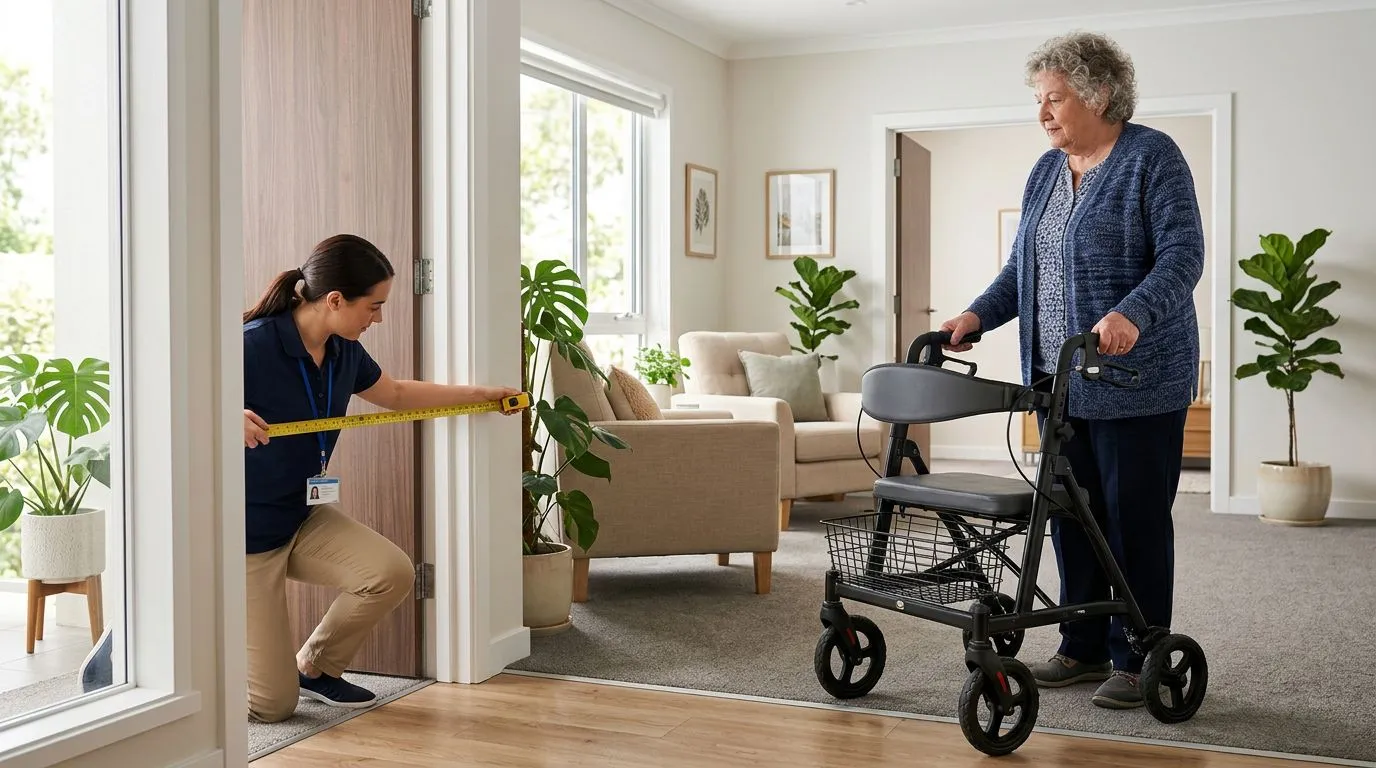
Heavy-Duty Rollator Walkers: Weight Capacity, Seat Width, Frame Strength, and Stability Basics
14 min read