Disclosure: We may earn a commission when you buy through links on this page, at no extra cost to you. We buy nothing, sell nothing and accept no payment for coverage — commissions never decide what we recommend. How we make money.
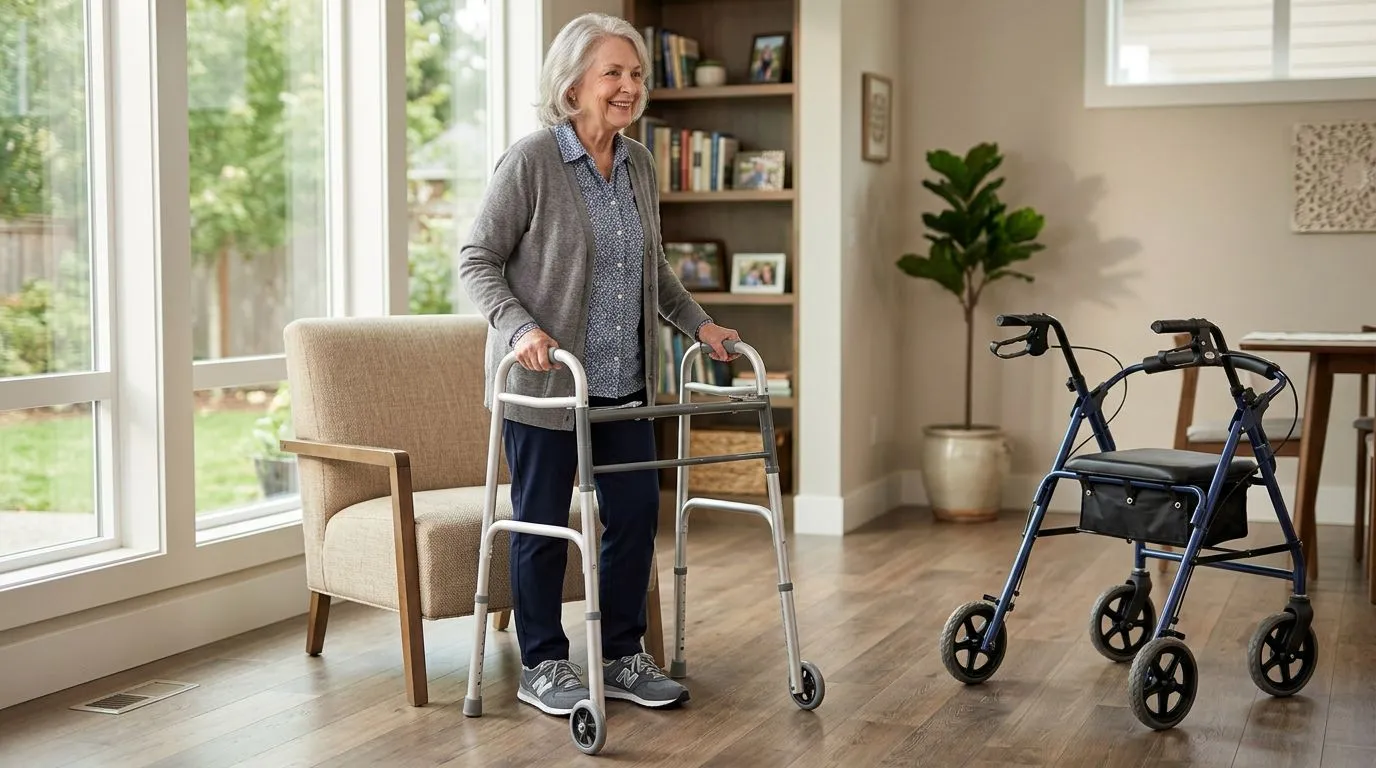
After surgery or a fall, a walker is usually the safer first choice if you have weight-bearing limits, poor balance, pain, dizziness, or a high risk of falling again. A rollator may fit better once you can stand and walk more steadily, need a seat for fatigue, and can safely control hand brakes on three or four wheels.
The right mobility aid depends less on age than on your recovery instructions, home layout, strength, endurance, and fall risk. If your surgeon, physical therapist, or discharge team gave you a specific device or weight-bearing order, follow that guidance first.
Walker vs rollator after surgery or a fall: the 4 recovery factors that matter
A walker and a rollator are both mobility aids, but they address different recovery needs. A standard walker, folding walker, or two-wheel walker gives you a stable frame in front of you and is often used when each step needs control. A rollator is a wheeled walker with hand brakes and usually a built-in seat; it is made for smoother, more continuous walking when balance and brake control are dependable.
Think through these 4 factors before choosing: weight-bearing limits, fall risk, fatigue, and the walking environment. Someone recovering from a hip fracture repair, knee replacement, ankle surgery, or a hard fall may use more than 1 device as strength returns. That is normal.
| Recovery factor | Walker often fits when... | Rollator often fits when... |
|---|---|---|
| Weight-bearing limits | You are told to limit weight through 1 leg, such as toe-touch or partial weight bearing. | You are allowed to bear weight as tolerated and can walk without leaning heavily on the frame. |
| Fall risk | You need a wider, more stable base and slower step-by-step movement. | You have enough balance to manage wheels, turns, and brakes without drifting forward. |
| Fatigue | You tire but can rest in chairs placed along the route. | You need a built-in seat for short rests during longer walks. |
| Home layout | Your home has narrow halls, tight bathrooms, or thick rugs that require controlled movement. | Your routes are open, level, and wide enough for safe turning, often 30 inches or more. |
Neither device is automatically “better.” A walker can be safer even if it feels less convenient. A rollator can improve comfort and distance for the right person, but it can also roll away if used before balance and braking habits are ready.
When a walker is the safer recovery choice: 5 common situations
A walker is often the first mobility aid recommended after surgery or a fall because it moves only when you move it, especially if it has no wheels. That stop-and-go pattern can help during the first few days or weeks, when pain, swelling, medications, or fear of falling make walking unpredictable.
Walkers come in several common forms. A standard walker has 4 legs and no wheels. A folding walker collapses for storage or transport, usually with push buttons or a center release. A two-wheel walker has wheels on the front and tips or glides on the rear legs, which can reduce lifting while still adding some braking friction.
Who a walker is best for during recovery
- People with weight-bearing restrictions on 1 leg after orthopedic surgery or injury.
- People who need to push down through both hands to unload a painful hip, knee, ankle, or foot.
- People who feel unsteady when turning, standing up, or taking the first 3 to 5 steps.
- People recovering in a small home where bathroom doorways may be only 24 to 28 inches wide.
- People who have been told by a therapist to practice a specific gait pattern, such as “walker, surgical leg, strong leg.”
A no-wheel walker is usually the most stable option, but it requires enough arm and shoulder strength to lift or slightly unweight the frame with each step. A two-wheel walker may be easier if lifting the frame causes shoulder pain or fatigue, while still giving more control than a four-wheel rollator.
For many recoveries, a walker is a temporary tool. That does not make it a setback. If it helps prevent 1 repeat fall during the most fragile part of healing, it is doing its job.
When a rollator may fit recovery: seat, brakes, and walking distance
A rollator may be appropriate when you are allowed to walk with full or near-full weight bearing, can stand upright without heavy support, and have the judgment and hand strength to use the brakes every time you stop or sit. Most rollators have 3 or 4 wheels, hand brakes, and a seat; many 4-wheel styles also include a backrest or storage pouch.
The main advantage is endurance. If you can walk 100 feet but must sit before returning, a rollator seat can make short community trips or longer indoor routes more manageable. Still, the seat is only safe when the brakes are locked, the rollator is on level ground, and you turn carefully before sitting.
Who a rollator is best for during recovery
- People who are steady enough to walk without pushing heavily down on the device.
- People with fatigue, reduced stamina, or shortness of breath who need planned rests.
- People walking on smooth indoor floors, paved sidewalks, or clinic hallways.
- People who can squeeze and lock hand brakes with both hands, usually several times per walk.
- People whose home has open turning space, because many 4-wheel rollators need more room than a narrow folding walker.
A 3-wheel rollator can turn tightly and may feel nimble in small spaces, but it usually does not provide the same seated rest option as many 4-wheel designs. A 4-wheel rollator is more common for recovery when a seat is important. An upright or stand-up rollator supports a more vertical posture with higher forearm or handle positions, but it still requires brake control and is not a substitute for medical weight-bearing support.
Bariatric rollators are built for higher weight capacities and wider frames. The added width can improve comfort for some users, but it may also make narrow bedroom paths or bathroom entries harder to navigate. Always compare the frame width with the narrowest doorway you need to use every day.
How weight-bearing limits affect the choice in the first 6 weeks
Weight-bearing instructions are one of the strongest reasons to choose a walker over a rollator during early recovery. Common orders include non-weight bearing, toe-touch weight bearing, partial weight bearing, and weight bearing as tolerated. These terms are not interchangeable, and the differences can affect healing and fall risk.
If you are non-weight bearing on 1 leg, you generally need a device and training plan that keeps that foot off the floor. Some people use a walker for short transfers, while others may need a wheelchair, crutches, or another aid depending on strength and home setup. A rollator is usually not appropriate for strict non-weight-bearing walking because it can roll forward and does not provide the same controlled support.
Partial weight bearing also favors a walker in many cases. With a standard or two-wheel walker, you can place the frame, load your arms, step carefully, and keep your movement slow enough to follow the prescribed limit. A bathroom trip of only 12 feet can still be risky if the device encourages you to move faster than your leg can safely tolerate.
Weight bearing as tolerated is more flexible, but it does not automatically mean a rollator is safe on day 1. Pain, swelling, dizziness from medication, or fear after a fall can still make a walker the better short-term choice. Many people progress from a walker to a rollator only after a clinician confirms that balance, gait pattern, and braking ability are ready.
How to choose and measure: height, width, brakes, and home space
Good fit matters. A poorly adjusted mobility aid can lead to stooping, shoulder strain, short shuffling steps, or unsafe leaning. Most walker and rollator handles adjust in 1-inch increments, which helps because shoes, posture, and arm length all affect fit.
Handle height measurement
Stand upright in your usual walking shoes with your arms relaxed at your sides. The handgrips should line up near the crease of your wrist. When you place your hands on the grips, your elbows should bend slightly, often around 15 to 30 degrees. If the handles are too low, you may hunch. If they are too high, you may lose leverage and stability.
Frame width and turning space
Measure the narrowest doorway, hallway pinch point, and bathroom entry you use daily. Many interior doors are about 28 to 32 inches wide, but older homes may have tighter openings. A walker may fit where a wider seated rollator does not, especially if the bathroom has a vanity, toilet, and door swing competing for space.
Weight capacity and body fit
Check the listed weight capacity for the device type. Many standard mobility aids fall in a common adult range, while bariatric walkers and bariatric rollators are made for higher capacities and wider seating or frames. Do not choose based on capacity alone; the device also needs to fit your hands, hips, stride, and home.
Brake control for rollators
Before using a rollator, test whether you can squeeze both hand brakes, hold them while standing, and lock them before sitting. This should be easy to repeat, not something you can do only once. If arthritis, weakness, nerve symptoms, or confusion affects brake use, a walker may be safer until those issues are addressed.
| Feature to check | Why it matters after surgery or a fall | Practical test |
|---|---|---|
| Handle height | Affects posture, arm loading, and control. | Grip height near wrist crease with 15 to 30 degree elbow bend. |
| Overall width | Determines whether the device fits through doors and beside furniture. | Measure your tightest daily doorway in inches before choosing. |
| Wheels | More wheels usually mean easier rolling but less stop-and-go control. | Try a straight path, a turn, and a stop on your home flooring. |
| Seat | Useful for fatigue but only safe with locked brakes and level ground. | Practice turning, locking brakes, reaching back, and sitting slowly. |
| Foldability | Helpful for car rides, clinic visits, and storage. | Confirm you or a caregiver can fold and lift it safely. |
Home layout after a fall or operation: a 10-minute safety scan
Your home may answer the walker-versus-rollator question before your preference does. Spend 10 minutes looking at the routes you actually use: bed to bathroom, chair to kitchen, entry door to car, and recliner to medication area. Recovery happens on these small paths, not in a showroom aisle.
Remove loose throw rugs, electrical cords, laundry baskets, pet toys, and low footstools from walking routes. Even a 1-inch edge can catch a walker tip or rollator wheel. If you need to cross thresholds, practice with supervision before doing it alone.
Bathrooms deserve special attention. A rollator may not fit beside the toilet or inside a small bathroom, and its seat is not a replacement for a raised toilet seat, shower chair, or grab bar. A standard or folding walker may be easier to position at the sink or toilet, but wet floors still increase slip risk.
For stairs, neither a walker nor a rollator should be improvised without instruction. Many people need a separate device or a staged plan, such as one walker upstairs and one downstairs, but this should be set up with professional guidance. Carrying a rollator up steps after a fall is a common unsafe shortcut.
Safe progression: 3 stages from walker to rollator to less support
Recovery is not always a straight line, but many people move through 3 broad stages. The timeline may be days for a minor fall with bruising or several weeks after a major operation. Pain, swelling, medication changes, sleep, and confidence all influence the pace.
Stage 1: maximum control
In the earliest stage, the goal is safe transfers and short walks. A standard walker, folding walker, or two-wheel walker often fits because each step can be deliberate. You may only be walking 10 to 30 feet at a time, such as from bed to bathroom or chair to kitchen.
Stage 2: more distance with reliable balance
Once you can walk with a steady pattern and follow your weight-bearing instructions without constant reminders, a rollator may be considered if fatigue is the main barrier. At this point, a seat, smoother wheels, and hand brakes can help, especially for longer hallways or outdoor paved paths.
Stage 3: stepping down support
Some people later move from a walker or rollator to a cane, trekking pole-style aid, or no device. Others continue using a mobility aid long term because it reduces fall risk and helps them stay active. The safest choice is the one that matches your current function, not the one you think you “should” be using.
Ask for reassessment if you start furniture-walking, leaving the device behind, tripping on the frame, or feeling pulled forward by a rollator. These are signs the device, fit, or training plan may need to change.
Common mistakes to avoid in the first 14 days
The first 14 days after a surgery, hospitalization, or serious fall are often when routines are least settled. Small mistakes can create big risks, especially at night or when rushing to the bathroom.
- Choosing a rollator because it looks easier. Easy rolling is not the same as safe support. If you need to lean heavily, a walker is usually more controlled.
- Using the rollator seat without locking brakes. Lock both brakes before sitting, every time.
- Setting handles too low. Stooping can shift your weight forward and make turning harder.
- Ignoring footwear. Slippers without backs can slide off. Supportive shoes often improve stability.
- Carrying items in your hands. Use an approved basket, pouch, or caregiver help so both hands stay on the grips.
- Rushing nighttime trips. Add night lights along the route and keep the device within arm’s reach of the bed.
One more mistake is emotional: treating a walker as a loss of independence. During recovery, a walker or rollator is often the tool that lets you move safely, attend therapy, and avoid preventable setbacks.
Bottom line: match the mobility aid to today’s recovery needs
If your recovery involves weight-bearing limits, high fall risk, weak balance, or tight home spaces, start the conversation with a standard, folding, or two-wheel walker. If your balance is steady, your weight-bearing status allows it, and fatigue limits your distance, a 3-wheel, 4-wheel, upright, or bariatric rollator may be a better fit.
The safest plan may include progression: walker first, rollator later, and less support only when your gait and confidence are ready. When in doubt, ask your physical therapist, occupational therapist, surgeon, or primary care clinician to watch you walk at least 20 to 30 feet, turn, stop, and sit. That short observation can reveal more than any feature list.
FAQ
Frequently asked questions
Is a walker or rollator safer right after surgery? +
A walker is often safer right after surgery if you have weight-bearing limits, pain, dizziness, or poor balance. A rollator may be appropriate later if you can bear weight, walk steadily, and use the hand brakes reliably.
Can I use a rollator if I am partial weight bearing? +
Usually, a standard or two-wheel walker is safer for partial weight bearing because it allows slower, more controlled steps. Follow your surgeon or physical therapist’s instructions, since some weight-bearing restrictions require very specific gait training.
When should I switch from a walker to a rollator? +
Consider a switch only when you can walk with a steady pattern, follow your weight-bearing instructions, turn without losing balance, and operate rollator brakes every time you stop or sit. A therapist can help confirm the timing.
Is a rollator seat safe to use during recovery? +
A rollator seat can be helpful for fatigue, but it is safe only when the brakes are locked, the rollator is on level ground, and you turn fully before sitting. It should not be used as a transport chair unless the device is specifically designed for that purpose.
What type of walker is best for a small home? +
A folding walker or standard walker often works better in tight spaces than a wider seated rollator. Measure your narrowest doorway and bathroom entry, and make sure you can turn safely in the areas you use every day.
Do I need a bariatric walker or bariatric rollator? +
You may need a bariatric option if your body size, comfort needs, or required weight capacity exceed a standard device. Check both the listed weight capacity and the frame width, because a wider device must still fit safely through your home.
Keep reading
Related guides

How to Walk With a Walker After Hip or Knee Surgery
14 min read
Buying Your First Walker or Rollator: Questions to Ask Before You Order
15 min read
Knee Walker vs Rollator vs Standard Walker: Which Mobility Aid Fits Injury Recovery or Long-Term Use?
15 min read