Disclosure: We may earn a commission when you buy through links on this page, at no extra cost to you. We buy nothing, sell nothing and accept no payment for coverage — commissions never decide what we recommend. How we make money.

If you need a walker or rollator only for a short recovery after surgery, borrowing is usually the best cash-pay value when the device fits, is clean, and matches your weight-bearing instructions. Renting can make sense for a few weeks if you need delivery, a seat, bariatric capacity, or a better fit than a loan closet can offer. Buying out of pocket is worth considering when recovery may last 8 to 12 weeks or longer, when you expect future procedures, or when the rental math gets close to the purchase cost.
The right answer depends on three things: how long you will need support, what type of mobility aid your surgeon or physical therapist recommends, and whether a borrowed or rented device can be safely adjusted to your height and body size. A basic folding walker and a rollator are not the same tool, so start with function before comparing costs.
Start With the Recovery Window: 1 Week, 6 Weeks, or 12+ Weeks
Short-term mobility costs are easier to judge when you put a likely timeline on paper. Some people need a walker for only several days after an outpatient procedure. Others use one for 4 to 6 weeks after joint replacement, foot or ankle surgery, abdominal surgery, or a hospital stay. A longer recovery, complications, balance changes, or a second planned procedure can push that timeline past 12 weeks.
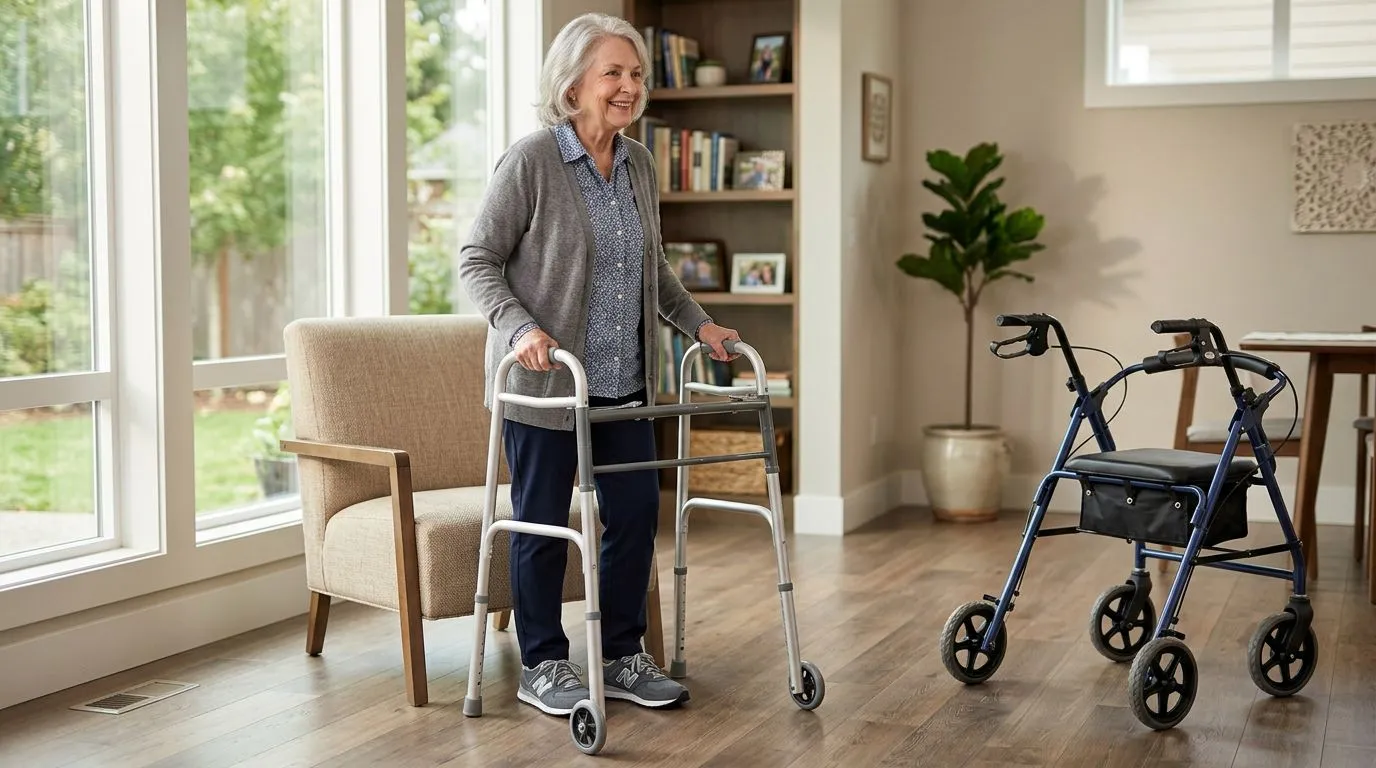
Ask your care team two direct questions before spending money: how many weeks should I expect to use a mobility aid, and should it be a walker or a rollator? If your instructions include partial weight bearing, toe-touch weight bearing, or non-weight bearing, a standard walker or two-wheel walker is often the more appropriate starting point because it provides a more stable frame. A rollator, which has 3 or 4 wheels, hand brakes, and usually a seat, is easier to move but less stable for unloading a painful leg.
Use this simple timeline to frame the decision:
| Expected use | Best cash-pay starting point | Why it may fit |
|---|---|---|
| 1 to 2 weeks | Borrow first | Lowest out-of-pocket cost if the height, tips, and frame size are safe |
| 3 to 6 weeks | Borrow or rent | Rental may be worthwhile if you need delivery, a specific size, or a rollator seat |
| 8 to 12 weeks | Compare renting vs. buying | Rental charges can add up; buying may be simpler if you will keep it for backup |
| More than 12 weeks | Consider buying | A properly fitted device can support a longer recovery and future needs |
Borrowing: Best for 1 to 8 Weeks When the Fit Is Right
Borrowing a walker is often the first place to look for temporary recovery. Many communities have lending closets run by senior centers, houses of worship, local service groups, veterans organizations, community health programs, or neighborhood mutual-aid groups. These programs commonly loan basic walkers, two-wheel walkers, raised toilet seats, shower chairs, and sometimes 4-wheel rollators for a limited period, often around 30 to 90 days.
Who it is best for: borrowing is best for people who need a basic walking aid for a short time, can pick it up before surgery, and have someone who can inspect and adjust it. It is especially practical for a folding walker or two-wheel walker because these devices have fewer moving parts than a rollator.
Free does not automatically mean safe. A walker that is 2 inches too low can make you hunch forward, while a device that is too high can raise your shoulders and reduce control. Rubber tips can harden or wear down. A rollator may have weak brakes, loose handles, or a seat that is too narrow for comfortable use.
Before accepting a loaned device, confirm these details:
- Height range: the hand grips should adjust to your wrist crease when you stand tall in your regular shoes.
- Weight capacity: the listed capacity should be above the user’s body weight, with a reasonable margin.
- Condition: check for cracks, bent legs, loose screws, worn tips, and sticky folding buttons.
- Home fit: measure narrow doorways and bathroom paths; many interior doorways are about 28 to 32 inches wide.
- Return date: make sure the loan period matches your expected recovery window.
Borrowing a rollator calls for extra care. Test both hand brakes while standing still, then lock the parking brakes and gently push the frame. If the wheels move while the brakes are locked, choose a different device or have it serviced before use.
Renting: Useful for 2 to 12 Weeks When You Need Delivery or a Better Match
Renting fills the gap between a free loan and a purchase. It can help when your surgery date is close, the lending closet does not have the right size, or you need a feature that is harder to borrow, such as a bariatric rollator, an upright rollator, or a 4-wheel rollator with a wider seat. Rentals may be weekly or monthly, and the total can include delivery, pickup, cleaning, a refundable deposit, or late fees.
Who it is best for: renting is best for people who need a device for a defined window, often 2 to 12 weeks, and want help getting the right height, wheel style, or weight capacity. It can also help when family members cannot pick up equipment before discharge.
Do not compare rental and purchase based only on the posted weekly or monthly rate. Use total cost:
Total rental cost = setup or delivery fees + rental rate for the full period + pickup or service fees − refunded deposit.
Then compare that number with an out-of-pocket purchase of a similar type. The break-even point is simple:
Break-even weeks = purchase cost ÷ weekly rental cost.
If the break-even point is 5 weeks and your physical therapist expects 6 to 8 weeks of use, buying may deserve a closer look. If you need the device for only 10 days, renting or borrowing usually keeps cash spending lower.
| Rental factor | Walker impact | Rollator impact |
|---|---|---|
| Cleaning and inspection | Important for tips, grips, and folding joints | Important for brakes, wheels, seat, and frame locks |
| Delivery | Helpful if discharge is within 24 to 48 hours | Helpful because rollators are bulkier and heavier |
| Size availability | Standard and two-wheel walkers are common | Upright, bariatric, and narrow rollators may be less common |
| Training need | Usually lower, but gait pattern still matters | Higher because brakes and sitting transfers must be learned |
Buying Out of Pocket: Makes Sense Around 8 to 12 Weeks or for Repeat Use
Buying is not always the most expensive choice. If your recovery may run 8 to 12 weeks, you have another surgery planned, or you want a backup device for future flare-ups, an out-of-pocket purchase can be the better value. It also lets you choose the type, width, handle style, seat height, and foldability instead of accepting whatever is available to borrow.
Who it is best for: buying is best for people with longer recovery timelines, ongoing balance concerns, chronic joint pain, or a clear preference for a device that fits their home and vehicle. It is also practical for bariatric users who may have fewer safe loaner options.
Buying a walker can be fairly straightforward because standard folding walkers and two-wheel walkers are simple, durable, and easy to store. Buying a rollator requires more decisions. A 3-wheel rollator is often easier to turn in tight spaces but usually lacks a full seat. A 4-wheel rollator commonly includes a seat, backrest, storage pouch, and hand brakes. An upright or stand-up rollator supports a more vertical posture through forearm platforms or higher handles, but it can be heavier and may not fit well in every car trunk.
For a temporary surgical recovery, avoid paying for features you will not use. A seat can be valuable if fatigue is expected after a 5-minute walk to the mailbox, but it does not replace a safe chair for longer resting. Large wheels can roll more smoothly outdoors, yet they may add size and weight. A bariatric frame should be chosen for capacity and width, not just comfort.
Walker vs. Rollator After Surgery: 7 Features That Change the Value
A walker and a rollator both help with mobility, but they solve different problems. A standard walker has no wheels and must be lifted or advanced forward. A two-wheel walker has front wheels and back tips or glides. A rollator has 3 or 4 wheels, hand brakes, and typically a seat on 4-wheel models. That difference matters after surgery because stability, weight bearing, braking, and fatigue are not equal.
| Type | Best for | Key value point | Watch-outs |
|---|---|---|---|
| Standard no-wheel walker | Maximum stability for short indoor distances | Simple frame, fewer parts, often easiest to borrow | Requires lifting; may be tiring after 20 to 30 steps |
| Folding walker | Home use plus transport | Folds for car rides and storage | Folding buttons must lock securely |
| Two-wheel walker | People who need stability but cannot lift a frame easily | Front wheels reduce effort while rear tips add control | Not as fast as a rollator; tips still wear down |
| 3-wheel rollator | Tight indoor spaces and lighter support needs | Turns easily in hallways and small kitchens | Often no full seat; less stable than a 4-wheel frame |
| 4-wheel rollator | People who can use brakes and need rest breaks | Seat and storage can improve daily convenience | Not ideal for significant weight-bearing restrictions |
| Upright rollator | Users who need a more vertical posture and can manage a larger frame | Forearm support may reduce stooping for some users | Heavier and harder to fit in small spaces |
| Bariatric rollator or walker | Users needing higher weight capacity or a wider frame | Safer fit when capacity and seat width match the user | Wider frames may not clear 28-inch doorways |
If your surgeon says to keep weight off one leg, do not choose a rollator simply because it has a seat. Rollators are designed to move continuously and require reliable hand control. A walker is usually the better cash-pay value when the main need is controlled support during a temporary healing phase.
How to Choose and Measure in 10 Minutes
You can make a safer choice in about 10 minutes with a tape measure, your discharge instructions, and the shoes you will wear during recovery. Measuring matters even more for cash-pay choices because returns, exchanges, and rental changes may add time or fees.
Measure handle height
Stand upright with your arms relaxed at your sides. The top of the walker or rollator hand grips should line up near the crease of your wrist. When you hold the grips, your elbows should bend slightly, often around 15 to 30 degrees. If you are between adjustment holes, ask a clinician which setting is safer for your posture and gait.
Measure your home path
Check the narrowest doorway, bathroom entry, hallway turn, and the space beside the bed. A device that feels fine in a store or rental office may be frustrating in a 30-inch bathroom doorway. If you have stairs, ask whether you need a second device upstairs or downstairs; carrying a walker on stairs after surgery can be unsafe.
Match wheels to the surface
Small wheels can work well indoors on firm flooring. Larger wheels can handle sidewalk cracks better, but they increase overall size. If your first 2 weeks will be mostly bedroom, bathroom, and kitchen, indoor maneuverability may matter more than outdoor wheel size.
Check weight capacity and seat fit
For any device, confirm the stated weight capacity. For rollators, check seat width and seat height too. A seat that is too low can make standing harder after hip, knee, or abdominal surgery, while a narrow seat can feel unstable.
Safety and Hygiene Checks Before Use: 12 Points to Inspect
Whether you borrow, rent, or buy, inspect the device before the first post-surgery walk. This takes about 5 minutes and can prevent a problem when you are tired, medicated, or moving to the bathroom at night.
- All height-adjustment buttons click fully through the holes.
- Hand grips do not twist or slide.
- Rubber tips are not cracked, smooth, or uneven.
- Front wheels spin freely without wobbling.
- Folding joints lock open and closed.
- Frame tubes are not bent or visibly cracked.
- Rollator hand brakes stop both wheels.
- Parking brakes hold when locked.
- The rollator seat is firmly attached.
- Backrest or strap is secure.
- Storage pouch does not drag near the wheels.
- Device has been cleaned on grips, seat, brakes, frame, and wheels.
Clean high-touch areas with a disinfectant appropriate for durable medical equipment, and let surfaces dry fully before use. If a borrowed walker needs new rubber tips, replacing them may still be a good value, but do not use a device with structural damage.
A Cash-Pay Decision Plan for the First 48 Hours
The 48 hours before discharge or surgery can feel rushed. A simple order of operations keeps the decision practical.
Step 1: Confirm the device type. Ask whether you need a standard walker, two-wheel walker, or rollator. Write down any weight-bearing limits.
Step 2: Check borrowing options. Call local lending closets, senior centers, community groups, and relatives. Ask for height range, condition, loan length, and whether rollator brakes have been checked.
Step 3: Get one rental quote. Ask for the full total, not just the weekly or monthly rate. Include delivery, pickup, deposit, cleaning, and late-return rules.
Step 4: Compare a purchase. Look at a similar type, not a completely different device. Comparing a basic walker rental to an upright rollator purchase will not help.
Step 5: Decide by recovery length. For 1 to 2 weeks, borrow if safe. For 3 to 6 weeks, compare borrow versus rent. For 8 to 12 weeks or longer, include buying in the final decision.
Cash-pay value is not just the lowest number. The best choice is the device you can get on time, adjust correctly, use safely, and return or keep without adding stress during recovery.
FAQ
Frequently asked questions
Is it cheaper to borrow, rent, or buy a walker after surgery? +
For very short use, borrowing is usually the lowest cash cost if the walker fits and is in safe condition. Renting can be worthwhile for a defined few-week recovery when you need delivery or a specific size. Buying may make more sense if you expect to use the device for 8 to 12 weeks or longer.
Can I use a rollator instead of a walker after surgery? +
Sometimes, but not always. A rollator is easier to push and often has a seat, but it is less stable for strict weight-bearing limits. If your surgeon or physical therapist recommends a standard or two-wheel walker, follow that guidance rather than choosing a rollator for convenience.
Where can I find a walker to borrow temporarily? +
Check local senior centers, community lending closets, houses of worship, veterans groups, neighborhood mutual-aid groups, and area aging services. Ask about the loan period, height range, weight capacity, and condition before you pick it up.
What should I check on a borrowed rollator before using it? +
Test both hand brakes, lock the parking brakes, inspect the wheels, confirm the frame is not bent, check the seat and backrest, and make sure the handles adjust to your wrist height. If the brakes do not hold firmly, do not use it until it is serviced.
How do I know if a walker is the right height? +
Stand in your regular shoes with your arms relaxed. The hand grips should line up near the crease of your wrist, and your elbows should bend slightly when you hold the grips. If it cannot adjust to that range, choose a different size.
Should I buy a bariatric walker or rollator for short-term recovery? +
Buy or rent a bariatric device if you need its higher weight capacity, wider seat, or stronger frame. For short-term use, borrowing may be harder because bariatric equipment is less commonly available, so confirm capacity and doorway clearance early.
Keep reading
Related guides
Renting vs Buying a Walker or Rollator Through Insurance: What U.S. Seniors Should Know
14 min read
Renting vs Buying a Walker or Rollator in the US: Short-Term Recovery, Travel, and Long-Term Use
16 min read
Buying a Walker or Rollator Before Insurance Approval: Reimbursement Risks and Smarter Next Steps
12 min read