Disclosure: We may earn a commission when you buy through links on this page, at no extra cost to you. We buy nothing, sell nothing and accept no payment for coverage — commissions never decide what we recommend. How we make money.
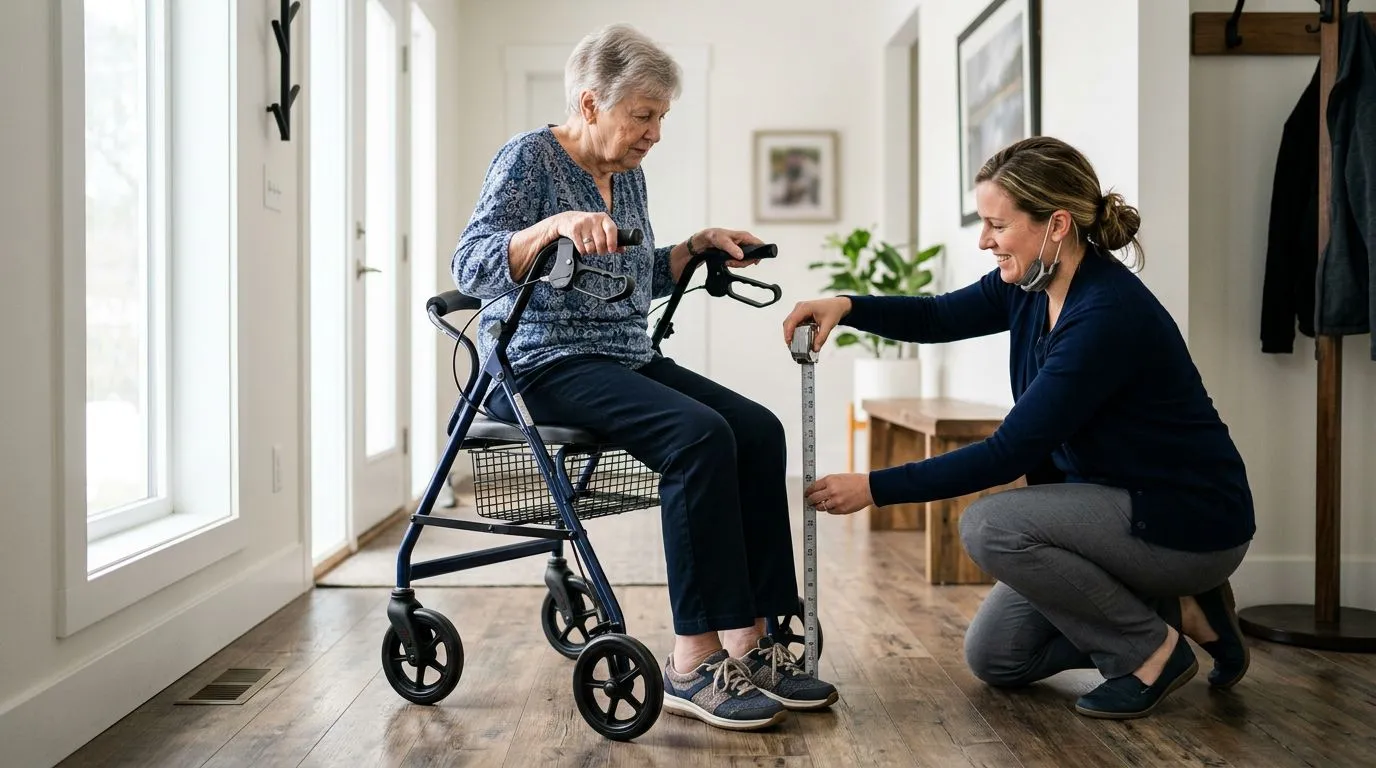
A comfortable rollator seat should be wide enough for your hips, deep enough to support your thighs, firm enough to feel stable, and matched with a backrest that lets you rest upright without slouching. For many adults, that means checking seat width, seat depth, seat height, padding thickness, backrest shape, and the rollator's weight capacity before choosing a wheeled walker with a seat.
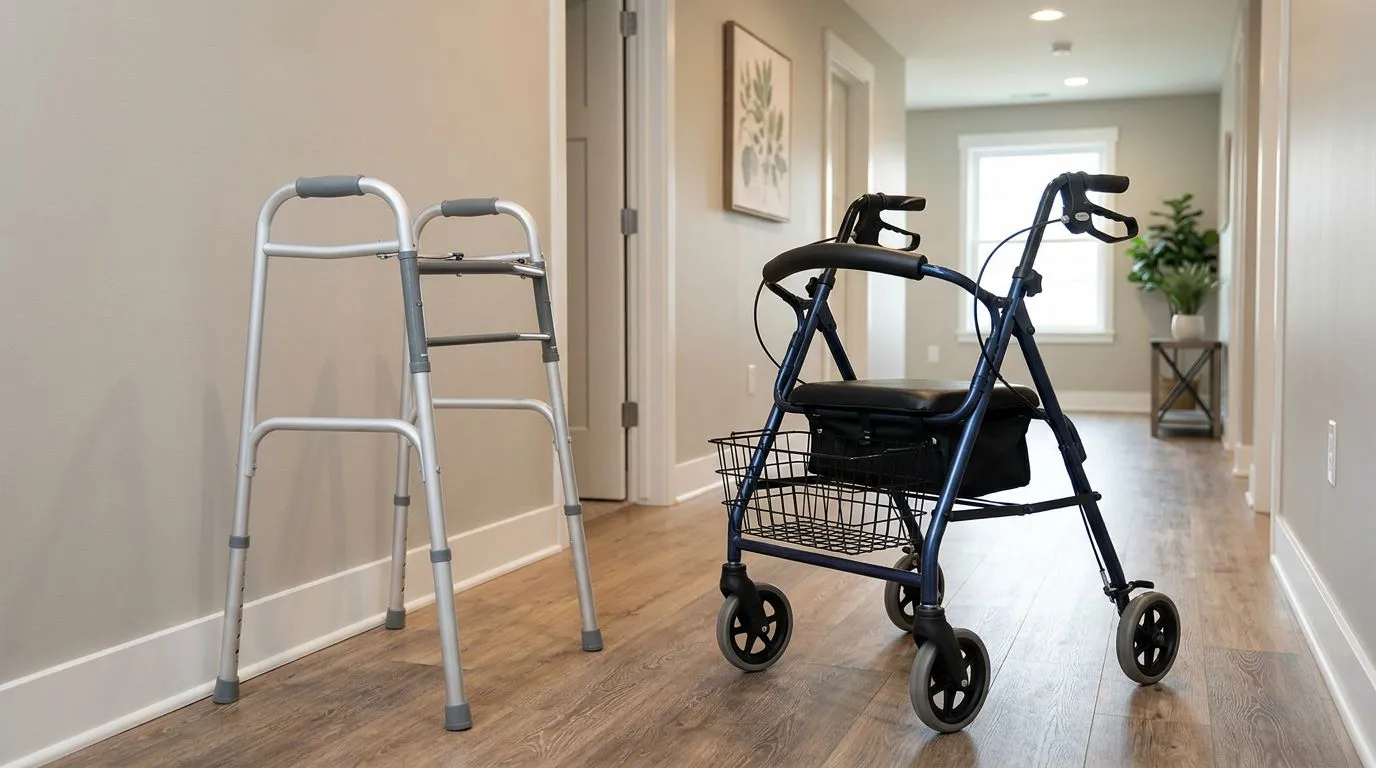
If you are searching for a walker with a seat, you are usually looking for a rollator rather than a standard walker. A standard or two-wheel walker is built for step-by-step support and normally does not include a seat, while a rollator has 3 or 4 wheels, hand brakes, and a built-in resting seat for short breaks.
Why rollator seat comfort matters for 5-minute rests
A rollator seat is not meant to replace a dining chair, recliner, transport chair, or wheelchair. It is designed for short seated breaks, often 2 to 10 minutes at a time, while walking through a store, hallway, park, clinic, or community event. Comfort still matters because an awkward seat can make even brief rests feel unstable or tiring.
The best seat for you is not automatically the thickest or widest one. A very soft cushion may feel pleasant at first but can make it harder to rise. A seat that is too high can leave your feet dangling. One that is too low can make standing back up difficult, especially if you have knee, hip, or leg weakness.
Think of rollator seat comfort as a mix of fit and support. The frame needs to match your body size, the brakes need to hold securely, and the seat should let you rest with both feet on the floor and your back supported. If one part is off by even 1 or 2 inches, the rollator may feel less comfortable than expected.
It also helps to separate rollators from standard walkers. A folding walker, no-wheel walker frame, or two-wheel walker may be better when a person needs maximum front support and moves slowly with a lift-and-place pattern. A 3-wheel or 4-wheel rollator is usually chosen when the user can control rolling movement, operate hand brakes, and benefit from a built-in seat during longer outings.
Seat width: allow about 1 to 2 inches of side clearance
Seat width is one of the first numbers to check. Many rollator seats fall roughly in the 13- to 18-inch range, while heavy-duty and bariatric rollators may offer wider seating and higher weight capacities. The right seat should let you sit without your hips pressing hard into the side frame, but it should not be so wide that the rollator becomes difficult to maneuver indoors.
A practical fit rule is to measure your seated hip width and add about 1 to 2 inches total for clearance. For example, if your seated hip width is 16 inches, a seat near 17 or 18 inches wide may feel more comfortable than a narrow 14-inch seat. This is only a starting point, but it helps you avoid guessing from product photos.
Seat width also affects the overall rollator width. A wider seat usually means a wider frame. That can help outdoors, but it may be frustrating in a 24-inch bathroom doorway, a narrow bedroom path, or a crowded restaurant aisle. Before choosing a wide rollator, measure the tightest doorway or walkway you use often.
| Seat width factor | Why it matters | Practical check |
|---|---|---|
| Narrow seat | May press at the hips or feel restrictive | Sit with light clothing and check for side pressure |
| Medium seat | Often balances comfort and indoor maneuvering | Compare hip width plus 1 to 2 inches |
| Wide seat | May suit larger body sizes but adds frame width | Measure doorways, hallways, and car trunk space |
| Bariatric seat | Built for higher weight ratings and wider support | Confirm both seat size and total weight capacity |
Seat depth: 10 to 14 inches changes thigh support
Seat depth is the front-to-back measurement of the rollator seat. Many rollator seats are relatively shallow compared with household chairs, often around 10 to 14 inches deep. That is intentional. A rollator seat must fit within a mobile frame, leave room for the user's legs, and allow easier standing.
Too little depth can make you feel as if you are perching on the front edge. Too much depth can press behind the knees, tip the pelvis backward, and encourage slouching. The goal is light thigh support without pressure at the back of the knees.
To estimate a good depth, sit on a firm chair and measure from the back of your hips to about 1 or 2 inches before the crease behind your knee. A rollator seat will often be shorter than this ideal chair measurement, but the comparison helps you judge whether a shallow seat will feel acceptable for short rests.
Depth is especially important for taller users and for people who need a few moments to recover their balance before standing. A deeper seat can feel more secure, but only if the user can still plant both feet flat and lean slightly forward to stand. If you tend to slide forward when seated, the seat depth, seat height, or backrest position may be mismatched.
Seat height: aim for feet flat and knees near 90 degrees
Seat height is the distance from the floor to the top of the rollator seat. Common rollator seat heights may range from about 18 to 24 inches, with some compact or tall frames falling outside that range. This number is just as important as handle height because it affects how easily you can sit down and stand up.
When seated, your feet should rest flat on the floor or ground. Your knees should be close to a 90-degree bend, though a slightly higher seat may be easier for some people who have difficulty rising from low chairs. If your toes barely touch the floor, the seat is too high for safe resting. If your knees sit much higher than your hips, the seat may be too low.
To measure at home, sit on a firm chair that feels easy to stand from. Measure from the floor to the top of the chair seat. Use that number as a comparison point when reviewing rollator seat heights. If a 19-inch dining chair is difficult but a 22-inch firm chair feels better, you may prefer a taller rollator seat, assuming your feet still contact the floor.
Seat height also needs to work with handle height. A rollator can have a comfortable seat but handles that are too low, causing the user to bend forward while walking. Most rollators have adjustable handles, but the seat height is usually fixed. Check both numbers.
Padding and firmness: 1 inch of cushion is not always better
Padding affects comfort, but more padding is not always safer or more supportive. Some rollator seats are molded plastic, some are lightly padded, and others have thicker cushion-style tops. A padded seat may reduce pressure during a short rest, but a cushion that compresses too much can make the seat feel wobbly.
Firm support is often easier to rise from. Think about the difference between standing from a firm kitchen chair and standing from a soft couch that sinks 3 or 4 inches. The soft option may feel cozy, but it can require more leg strength. Rollator seats follow the same principle on a smaller scale.
For short indoor rests, a lightly padded or firm seat may be enough. For longer outdoor walks, a bit more cushioning can feel better, especially on a cold plastic seat. If you use a separate cushion, be cautious: adding even 1 inch can change seat height, raise your center of gravity, and reduce the effectiveness of the backrest. Any cushion should stay in place and should not slide when you sit or stand.
| Seat surface | Comfort feel | Best fit | Watch for |
|---|---|---|---|
| Firm molded seat | Stable, easy to clean | Brief rests and users who need firm push-off | May feel hard during longer waits |
| Light padding | Moderate softness with structure | Everyday errands and clinic visits | Check for cracking or flattening over time |
| Thicker padding | Softer feel | Users who rest often and can stand safely | Can feel less stable if overly soft |
| Add-on cushion | Customizable comfort | Occasional use after fit is confirmed | May raise seat height by 1 inch or more |
Backrests: strap, padded bar, or upright support within 2 inches of your back
Most 4-wheel rollators include some type of backrest, while many 3-wheel rollators do not have a seat at all. Backrest designs vary. Some use a flexible strap, some use a curved padded bar, and upright rollators may position the body differently because the forearm supports and taller frame encourage a more vertical walking posture.
A backrest should meet your lower or mid back without forcing you to round your shoulders. When you sit all the way back, you should not have to lean several inches behind you to make contact. As a practical check, if the backrest sits more than about 2 inches away from your natural resting position, it may not provide much support.
A flexible strap backrest can be comfortable because it has some give, but it may feel less structured. A padded bar can feel more secure, especially for users who prefer a defined stopping point behind them. Frame shape matters too. On some rollators, the backrest is attached to the handles; on others, it is integrated lower on the frame.
Backrests are for resting, not for leaning hard or rocking backward. Always lock the hand brakes before sitting. Sit centered on the seat, keep both feet on the ground, and avoid twisting to reach into a bag while your weight is against the backrest.
3-wheel, 4-wheel, upright, and bariatric rollators: 4 seat-related differences
Rollator type strongly affects seat comfort. A 4-wheel rollator is the most common style with a built-in seat. A 3-wheel rollator is narrower and turns easily, but many do not include seats because the triangular frame does not provide the same seated platform. Upright and bariatric rollators may offer different seat heights, frame widths, and posture options.
Walkers without seats still have an important role. A standard folding walker or two-wheel walker may be preferable when the user needs a slower, more controlled device and does not need seated breaks built into the frame. If the main priority is a place to rest every few hundred feet, a rollator is usually the category to compare.
| Type | Seat comfort profile | Who it's best for | Tradeoff |
|---|---|---|---|
| Standard walker or two-wheel walker | Usually no built-in seat | Users needing maximum step-by-step stability | No resting seat; slower travel |
| 3-wheel rollator | Often no seat or a very limited perch | Tight spaces and light outdoor errands | Less resting support than 4-wheel styles |
| 4-wheel rollator | Common seat, backrest, and storage pouch | Users who need short rest breaks during walks | Wider and more rolling movement to control |
| Upright rollator | Seat may be higher; posture differs | Users who prefer a taller walking position | Can be larger and heavier |
| Bariatric rollator | Wider seat and higher weight rating | Larger users needing more frame capacity | May be harder to fit through narrow spaces |
Weight capacity deserves careful attention. Many standard rollators list capacities around the low-to-mid 300-pound range, while bariatric options may be rated higher. Do not use the seat if your body weight exceeds the stated capacity of the rollator. The rating applies to the whole frame, not just the seat panel.
Resting posture: use the brakes and take 3 simple steps
Good resting posture begins before you sit. Rollator seats are safest when the frame is still, the brakes are locked, and the surface is level. A slope, thick gravel, soft grass, or a doorway threshold can change how the rollator behaves when weight is added.
Use a simple 3-step routine. First, stop and position the rollator so all wheels are stable and facing forward. Second, lock both hand brakes. Third, turn carefully, feel the seat behind your legs, and lower yourself with control. Once seated, keep both feet on the floor and sit centered between the frame sides.
Your resting posture should feel upright but relaxed. Hips should be back on the seat, shoulders comfortable, and hands free to rest rather than gripping the handles tightly. If you feel as if you must hold the handles to avoid sliding, the seat height, seat depth, or surface angle may be wrong.
A rollator seat should not be used like a wheelchair. Do not sit and push yourself around with your feet, and do not have someone else push you while you are seated unless the device is specifically designed and labeled for that use. Most rollators are walking aids with temporary seats, not transport chairs.
How to measure for a comfortable rollator seat in 10 minutes
You can gather useful fit numbers at home in about 10 minutes with a tape measure, a firm chair, and the shoes you normally wear outdoors. If possible, have another person help so you do not twist or bend while measuring.
- Seated hip width: Sit upright and measure the widest part across your hips. Add about 1 to 2 inches for seat clearance.
- Preferred seat height: Measure a firm chair that lets you stand comfortably. Compare that height with rollator seat heights.
- Thigh depth: Measure from the back of your hips toward the back of the knee, stopping 1 to 2 inches before the knee crease.
- Doorway clearance: Measure the narrowest doorway or hallway you use daily. Compare it with the overall rollator width, not just the seat width.
- Storage and transport space: Measure your car trunk opening or closet space if you plan to fold the rollator often.
- User weight plus carried items: Check the rollator's stated weight capacity, especially if you carry a bag, oxygen equipment, or groceries.
Handle height should be checked too, even in a seat-focused guide. With arms relaxed at your sides, the handgrips often line up near the wrist crease when you are standing in your walking shoes. Your elbows should have a slight bend when holding the grips. If the handles fit but the seat does not, keep looking.
If you are between sizes, prioritize safe standing and braking over softness. A comfortable seat that is difficult to rise from is not a good match. A clinician, physical therapist, or occupational therapist can help fine-tune fit if you have a history of falls, recent surgery, neurological symptoms, or changing strength.
Who a rollator seat is best for after 100 to 500 feet of walking
A rollator seat is best for someone who can walk with a wheeled frame, manage hand brakes, turn safely, and benefit from planned rest breaks. Many people use a rollator because they can walk independently for a distance, such as 100 to 500 feet, but need a reliable place to sit before returning home or continuing an errand.
It may be a good fit if you avoid outings because benches are unpredictable, need to pause while waiting in lines, or tire during long hallways at medical offices. The seat can support independence when it is used responsibly and matched to your strength, balance, and environment.
A rollator may not be the right choice if you cannot safely control rolling wheels, forget to lock brakes, need to put heavy downward weight through the handles at every step, or require someone to push you while seated. In those cases, a standard walker, two-wheel walker, transport chair, or wheelchair evaluation may be more appropriate.
Body size matters as well. Petite users may need a lower seat and narrower frame. Taller users may need higher handles and a seat that does not feel like a low stool. Larger users should compare bariatric rollators by seat width, frame width, and stated weight capacity rather than choosing by seat width alone.
Feature checklist: 8 seat details to compare before buying
When comparing rollators without relying on brands or model names, focus on measurable seat and frame details. A product photo can make every seat look comfortable, but the numbers reveal whether it is likely to fit your body and home.
| Feature | What to look for | Why it affects comfort |
|---|---|---|
| Seat width | Hip width plus about 1 to 2 inches | Prevents side pressure without oversizing the frame |
| Seat depth | Enough thigh support without knee pressure | Reduces perching and slouching |
| Seat height | Feet flat, knees near 90 degrees | Helps with safe sitting and standing |
| Padding firmness | Supportive, not overly sinking | Makes rising easier |
| Backrest position | Contacts the back without leaning far | Improves short-rest posture |
| Brake locks | Easy to engage with both hands | Keeps the rollator still while seated |
| Frame capacity | Rated for user weight and carried items | Protects frame stability |
| Folded size | Fits car, closet, or entryway | Encourages regular use |
Do a seated trial whenever possible. Sit for at least 3 to 5 minutes, then stand up the way you would during a real outing. Comfort is not only how the seat feels at first contact; it is also whether you can get up smoothly, unlock the brakes, and continue walking with confidence.
The right rollator seat should make rest breaks simpler, not more complicated. Choose by fit, posture, brake control, and the places you actually go. That practical approach will serve you better than picking the softest cushion or the widest frame on paper.
FAQ
Frequently asked questions
What is a good seat width for a rollator? +
Measure your seated hip width and add about 1 to 2 inches total for clearance. Many rollator seats are around 13 to 18 inches wide, while bariatric rollators may be wider. Also check the overall frame width so it fits through your doorways.
Should a rollator seat be soft or firm? +
A rollator seat should be comfortable but still firm enough to feel stable and make standing easier. Very soft padding can compress, raise balance concerns, or make it harder to rise from the seat.
Can I add a cushion to my rollator seat? +
You may be able to use a thin, secure cushion, but be careful. A cushion can raise the seat height, slide during transfers, or change how the backrest supports you. If you add one, test sitting and standing with the brakes locked.
Is a rollator seat safe to use on a slope? +
It is best to sit only on a level, stable surface with both hand brakes locked. Slopes, gravel, grass, and uneven thresholds can make the rollator shift when you put weight on the seat.
Do all walkers with seats have brakes? +
Most devices sold as walkers with seats are rollators, and rollators should have hand brakes and locking parking brakes. Standard walkers and two-wheel walkers usually do not have built-in seats.
How long should I sit on a rollator seat? +
A rollator seat is intended for short rest breaks, often just a few minutes. It is not a replacement for a wheelchair, transport chair, or regular chair for prolonged sitting.
Keep reading
Related guides
Mobility Walker With Seat vs Standard Walker: Which One Is Right for You?
14 min read
Sitting and Standing Safely With a Walker or Rollator
13 min read
Rollator Seat Height and Handle Height: How to Measure for a Safer Fit
13 min read