Disclosure: We may earn a commission when you buy through links on this page, at no extra cost to you. We buy nothing, sell nothing and accept no payment for coverage — commissions never decide what we recommend. How we make money.

Rollator brake cable problems often show up as loose brake handles, uneven stopping, dragging wheels, or parking brakes that will not lock securely. If your rollator does not slow down smoothly or stay still when the brakes are locked, stop using it for longer walks until the brakes are adjusted, repaired, or replaced.
A rollator differs from a standard walker because it has wheels, hand brakes, and often a built-in seat. These features can make walking easier for many people, but only when the brake cables work correctly.
Rollator brakes vs. walker frames: 2 different safety systems
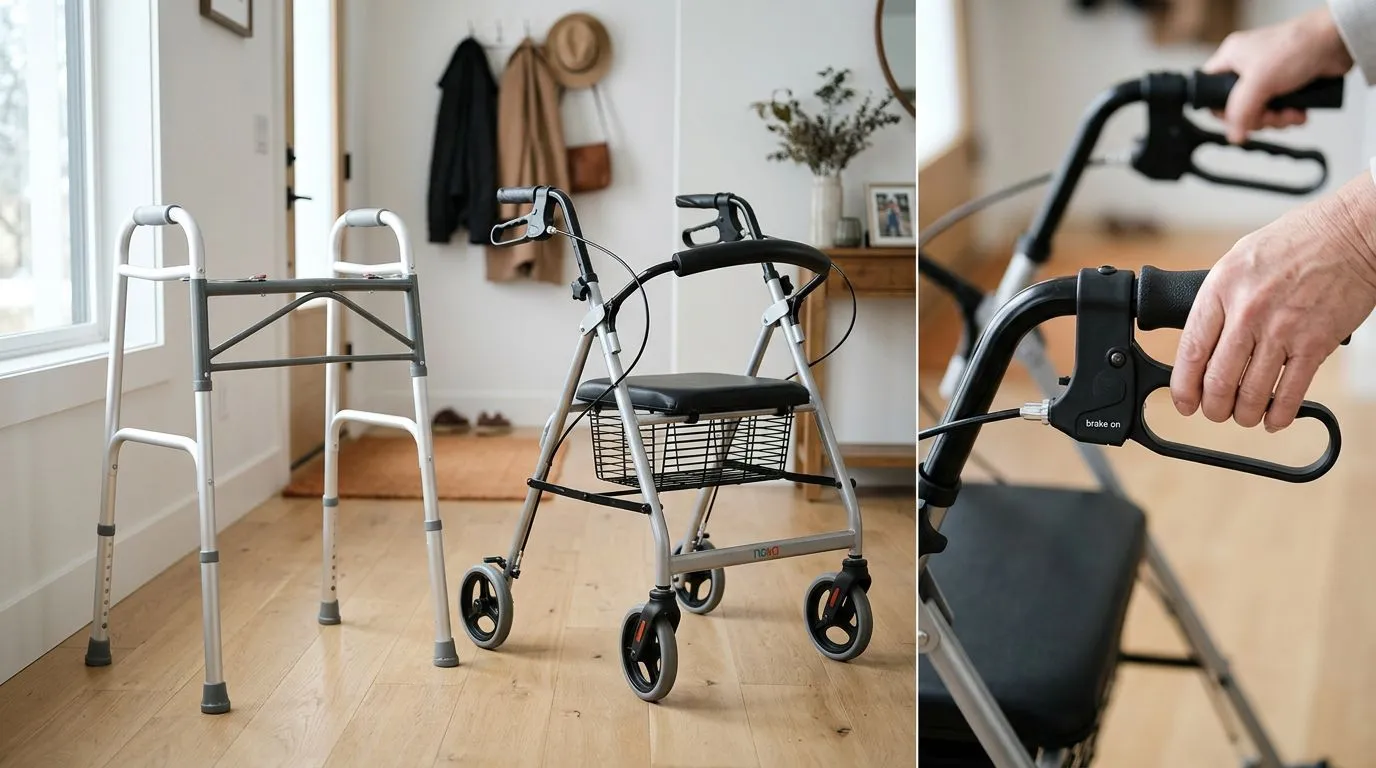
A standard walker, folding walker, no-wheel walker frame, or two-wheel walker does not use bicycle-style hand brakes or brake cables. These walkers rely on the user lifting or partly lifting the frame, placing it ahead, and using the rubber tips or rear legs for stability.
A rollator is a wheeled walker. Most 4-wheel rollators and many 3-wheel rollators use squeeze hand brakes connected to the rear wheels by cables. Many also include a parking brake feature: push the handles down, and the brakes lock so the rollator should not move while you sit or stand.
That difference matters. If a no-wheel walker feels unstable, the issue may be worn rubber tips, incorrect height, or frame damage. If a rollator feels unsafe, the problem may be brake cable tension, a worn brake pad, a bent cable housing, a loose clamp, or a wheel that is not aligned. The fix is not the same.
| Mobility aid type | Typical brake setup | Common concern |
|---|---|---|
| Standard or folding walker | No hand brakes or cables | Worn tips, wrong height, loose frame pins |
| Two-wheel walker | Usually no hand brakes | Rear glides or tips wearing unevenly |
| 3-wheel rollator | Hand brakes with cables | Uneven braking during turns |
| 4-wheel rollator | Hand brakes, cables, parking lock | Brake lock not holding when seated |
| Upright or bariatric rollator | Longer or heavier-duty brake assemblies | Cable routing, higher user weight, larger wheels |
7 warning signs your rollator brakes need attention
Most rollator brake cable issues give small warnings before the brakes fail completely. A quick weekly check can catch many of these problems before a trip to the mailbox, a grocery aisle, or a doctor visit becomes risky.
1. The brake handles feel loose or pull too far
If you can squeeze the brake handle all the way to the grip before the wheel slows, the cable may be stretched or out of adjustment. On many rollators, a properly adjusted hand brake begins slowing the wheel before the lever reaches the handle grip. There should still be room for your fingers, especially if you have arthritis or limited grip strength.
2. One wheel stops before the other
Uneven braking is one of the most common rollator brake complaints. If the left wheel grips sooner than the right, the rollator can pull to one side. This is especially noticeable on a hallway turn, a sloped driveway, or a store entrance ramp.
3. A wheel drags even when the brake is released
A dragging wheel may make the rollator feel heavy or hard to push. The brake pad may be sitting too close to the wheel, the cable may be kinked, or the adjustment may be too tight. Dragging also wears the wheel and brake surface faster.
4. The parking brake will not lock
A rollator seat is safe to use only when the parking brakes hold firmly. If the brake handle will not click down, pops back up, or locks but the rollator still moves, the brake system needs attention before anyone sits on it.
5. The rollator moves while you are standing up
This is a serious warning sign. Many falls happen during transfers, not long walks. If the rollator rolls even 1 or 2 inches while you push up from the seat or handles, the brakes may not be holding well enough for daily use.
6. The brake cable is frayed, rusted, kinked, or exposed
Look near the brake handle, along the frame, and down by the wheel. A cable with broken metal strands, cracked outer housing, rust, or a sharp bend should not be ignored. A frayed cable can snap without much warning.
7. The brakes work only sometimes
Intermittent braking can be harder to diagnose than a complete failure. Dirt near the wheel, a loose fastener, a slipping cable clamp, or damaged cable housing can all make the brakes feel fine one minute and weak the next.
What the brake cable does in 3 basic parts
Most rollator brake systems are simple, but they must be adjusted correctly. The brake handle, cable, and wheel brake mechanism work together. If one part is loose or worn, the whole system can feel unreliable.
- Brake handle: The lever you squeeze to slow down and push down to lock on many rollators.
- Cable and housing: The inner metal cable slides through an outer sleeve, usually routed along the frame.
- Brake pad or brake arm: The part near the wheel that presses against the tire or wheel surface to create friction.
When you squeeze the handle, the cable tightens and pulls the brake mechanism against the wheel. When you release the handle, the cable relaxes and the brake should move away from the wheel. If cable tension is too loose, braking feels weak. If it is too tight, the wheel may drag.
Rollators are not all built exactly the same. A 6-inch indoor-style wheel may use a slightly different brake position than an 8-inch outdoor-friendly wheel. Upright rollators may have longer cable routing because the handles sit higher. Bariatric rollators may use heavier frames and wider seating, so brake performance is especially important because there is more mass to stop and stabilize.
Adjustment, repair, or replacement: a 3-way decision table
Not every brake problem means the entire rollator is worn out. Some issues can be solved with a small cable adjustment, while others require a replacement cable, brake handle, wheel, or professional service. The table below offers general guidance, not a substitute for a technician’s inspection.
| What you notice | Likely issue | Common next step |
|---|---|---|
| Brake handle pulls close to the grip | Cable tension too loose or cable stretched | Adjust cable tension if the cable is in good condition |
| Wheel drags when brake is off | Cable too tight, pad misaligned, or debris near wheel | Loosen adjustment slightly and inspect the wheel area |
| Only one side brakes well | Uneven cable tension or worn part on one side | Balance left and right brake adjustment |
| Parking brake will not stay locked | Loose cable, worn lock mechanism, or worn brake surface | Repair promptly; do not sit on the rollator until fixed |
| Cable has broken strands or rust | Damaged brake cable | Replace the cable rather than only adjusting it |
| Brake handle is cracked or bent | Damaged control lever | Replace the handle assembly or have it serviced |
Adjustment is most appropriate when the parts are intact and the brakes are simply too loose or slightly too tight. Repair is more likely when a fastener, spring, brake pad, or handle mechanism is damaged but the rest of the rollator is sound. Replacement is the safer choice when the cable is frayed, corroded, kinked, or no longer slides smoothly through the housing.
How to check your rollator brakes at home in 10 minutes
You do not need special equipment for a basic inspection. Choose a flat, dry surface with good lighting. A kitchen floor, garage, or level sidewalk can work if the rollator cannot roll away.
- Step 1: Check the wheels. Spin each wheel with the brakes released. It should turn freely without scraping or stopping suddenly.
- Step 2: Squeeze each hand brake. The wheel should slow and stop before the handle bottoms out against the grip.
- Step 3: Compare left and right. Both sides should feel similar. One handle should not feel much looser than the other.
- Step 4: Lock the parking brakes. Push the handles down into the locked position if your rollator uses that style. Try to roll the rollator gently forward and backward.
- Step 5: Inspect the cable path. Look for sharp bends, crushed housing, broken wire strands, rust, missing clips, or cable rubbing against the frame.
- Step 6: Test with body position, not body weight. Stand behind the rollator as you normally would, lock the brakes, and apply gentle forward pressure. Do not sit on it if the brakes slip.
For many users, handle height also affects brake control. A rollator handle is commonly set around wrist height when you stand upright with arms relaxed at your sides. If the handles are too high, squeezing the brakes may feel awkward. If they are too low, you may lean forward and put extra force through the frame.
If you use a standard walker instead of a rollator, this 10-minute brake test does not apply. Check rubber tips, folding buttons, hand grips, and frame stability instead. Walkers and rollators solve related mobility needs, but their safety checks are different.
How brake cable adjustment usually works in 2 places
Many rollators allow minor brake adjustment at the hand brake, near the wheel, or both. The exact hardware varies, so follow the owner’s instructions for your device. If you do not have the instructions, be cautious and make only small changes.
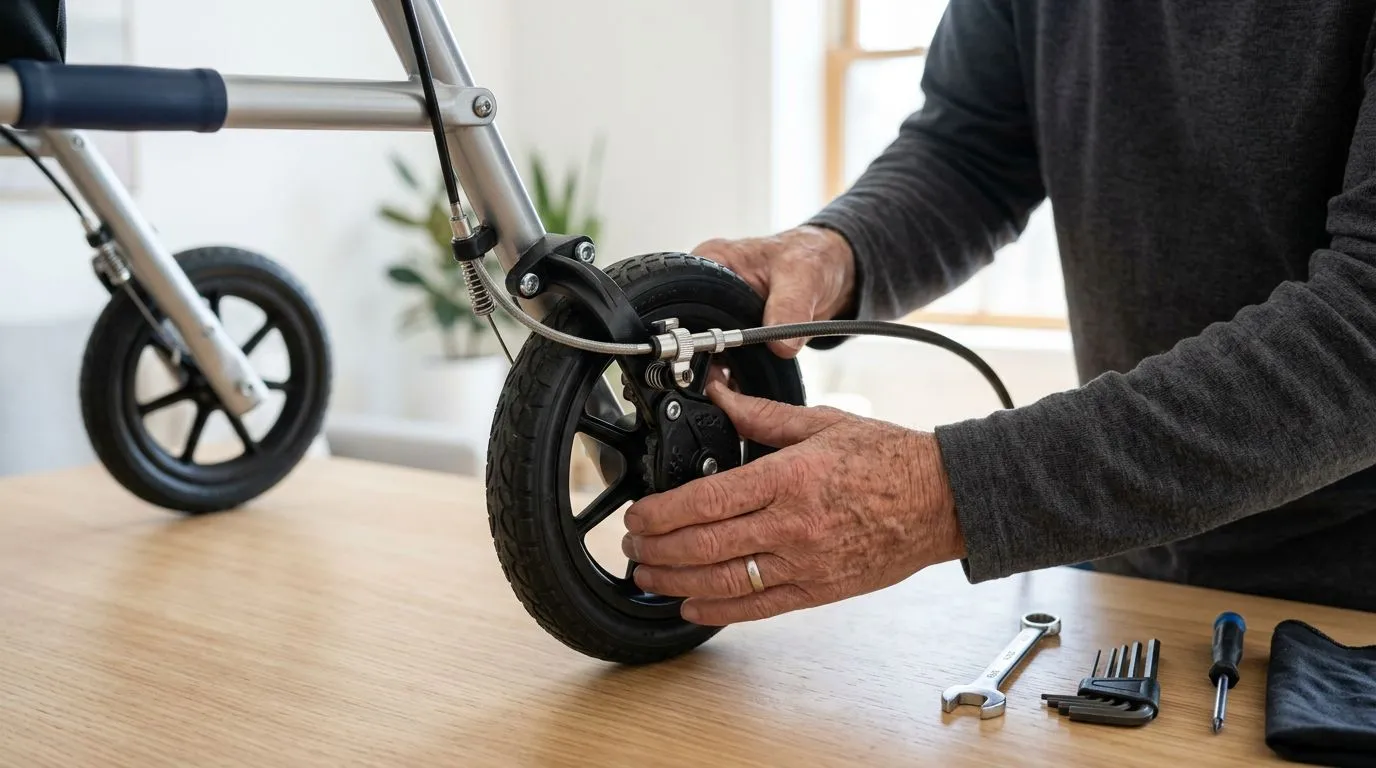
One common adjustment point is a small barrel adjuster near the brake handle. Turning it can add or reduce cable tension. Another common adjustment point is near the brake arm by the wheel, where the cable may be held by a clamp or nut. A small adjustment can make a big difference, so move gradually and test after each change.
- If the brake is too loose, the cable usually needs slightly more tension.
- If the wheel drags, the cable may need slightly less tension.
- If one side stops harder, compare both sides and bring them closer to the same feel.
- If the cable slips after tightening, a clamp, fastener, or cable end may be worn.
Do not defeat the parking brake to make the rollator easier to push. A rollator that rolls nicely but will not lock is not safe for sitting, standing transfers, or use on a slope.
Who should get prompt repair within 24 to 48 hours
Some brake problems should be treated as urgent. If the brakes do not lock, the cable is visibly damaged, or the rollator moves during transfers, arrange repair as soon as possible and use another mobility aid if you have one available.
- People who sit on the rollator seat: The parking brakes must hold before sitting down.
- People using the rollator outdoors: Sidewalk cracks, curb cuts, and driveways place extra demand on brakes.
- People with limited grip strength: Loose handles may require more hand force than is comfortable or safe.
- People using upright rollators: Longer cable routes and higher handles can make correct adjustment especially important.
- People using bariatric rollators: Higher weight capacities require dependable stopping and locking performance.
- People recovering from surgery or illness: Balance and reaction time may be reduced, so brake reliability matters more.
If you are choosing between a walker and a rollator because brake problems are frustrating, consider the setting. A standard walker can be steadier for slow, short indoor movement because it does not roll away. A rollator can be better for longer distances and rest breaks, but only if the brakes and seat lock are dependable.
Choosing replacement brake cables: 5 measurements to match
Replacement brake cables are not always universal. Even when parts look similar, length, end shape, cable housing, and brake handle style can vary. Measure carefully before buying generic replacement parts or asking a repair shop to order them.
| Measurement or feature | Why it matters |
|---|---|
| Overall cable length in inches | A cable that is too short may pull when the rollator folds or turns |
| Outer housing length | The housing guides the cable and protects it from bends |
| Cable end shape | The end must fit the brake handle and wheel-side mechanism |
| Wheel size, often 6 to 10 inches | Brake position and cable routing can differ by wheel size |
| Handle style and parking lock design | Some locks engage by pushing down; others use different hardware |
Take photos before removing any part. Capture the cable path from the handle to the wheel, including clips, bends, and attachment points. If the rollator folds, check that the new cable will not pinch when folded. A pinched cable can fail early even if it is new.
For upright and bariatric rollators, matching parts can matter more because the frame geometry may be different from a compact 3-wheel rollator or a basic 4-wheel rollator. When in doubt, have a mobility equipment technician, medical supply store, or repair service identify the correct cable type.
Preventing brake cable problems with a 30-day routine
A simple monthly routine can prevent many brake surprises. It takes about 5 minutes once you know what to look for, and it is especially useful if the rollator is used outdoors or transported in a car trunk.
- Wipe dirt, grit, and moisture from the wheels and brake area.
- Check that both brakes stop smoothly and lock firmly.
- Look for cable fraying at the handle and near the wheel.
- Make sure cable clips are holding the housing against the frame.
- Fold and unfold the rollator once, watching that cables do not pinch.
- Check tire or wheel surfaces for uneven wear where the brake contacts.
Storage matters too. A rollator left in a damp garage or on a porch can develop rust on cables and fasteners. If it gets wet in rain, dry the brake handles, cable housing, and wheel brake area before storing it.
Be careful with lubricants. A tiny amount may help a sticky cable in some designs, but lubricant on the wheel or brake contact surface can reduce stopping power. If you are not sure where lubricant is safe, skip it and ask a repair professional.
When to stop using the rollator: 4 clear red flags
Some issues are too risky for a wait-and-see approach. Stop using the rollator for regular walking or seating until it is inspected if you notice any of these problems.
- The parking brake will not hold the rollator still on a flat floor.
- A brake cable has visible broken strands or a kink that will not straighten.
- The rollator pulls sharply to one side when braking.
- The brake handle, wheel, or brake arm is cracked, bent, or loose.
If you have another safe mobility aid, such as a properly fitted standard walker, use it temporarily. Do not use a rollator seat as a chair unless both brakes lock firmly. Also avoid using a rollator on ramps or uneven sidewalks when the brakes are questionable.
A well-adjusted rollator should help you move with more confidence, not make you wonder whether it will stop. Brake cables are small parts, but they control one of the most important safety functions on the device. Pay attention to loose handles, uneven stopping, dragging wheels, and failed parking locks, and address them early.
FAQ
Frequently asked questions
Why do my rollator brake handles feel loose? +
Loose rollator brake handles usually mean the brake cable has stretched, slipped, or gone out of adjustment. The cable may need more tension, but if it is frayed, rusted, or kinked, replacement is safer than adjustment alone.
Can I still sit on my rollator if one brake works? +
No. Both parking brakes should lock firmly before you sit on a rollator seat. If one side slips, the rollator can twist or roll during sitting or standing, which increases fall risk.
Why is one rollator wheel dragging? +
A dragging wheel may be caused by a brake cable that is too tight, a misaligned brake pad, debris near the wheel, or a kinked cable housing. The wheel should spin freely when the brake is released.
Are rollator brake cables universal? +
Not always. Cable length, housing length, cable end shape, handle style, wheel size, and parking brake design can differ. Measure the old cable and match the routing before choosing a replacement.
Do standard walkers have brake cables? +
Most standard walkers, folding walkers, no-wheel walkers, and two-wheel walkers do not have hand brakes or brake cables. Brake cable issues mainly apply to rollators, which are wheeled walkers with hand brakes and often a seat.
When should a rollator brake cable be replaced instead of adjusted? +
Replace the cable if you see broken strands, rust, crushed housing, sharp kinks, or if the cable does not slide smoothly. Adjustment is best for intact cables that are simply too loose or too tight.
Keep reading
Related guides
Rollator Brake Cables and Replacement Brake Parts: What to Know Before You Repair or Replace
13 min read
Why Your Rollator Brakes Still Slip After Adjustment
14 min read
Rollator Brake Safety Checklist: How to Stop, Lock, Test, and Avoid Brake-Related Falls
11 min read