Disclosure: We may earn a commission when you buy through links on this page, at no extra cost to you. We buy nothing, sell nothing and accept no payment for coverage — commissions never decide what we recommend. How we make money.

To keep a walker or rollator from rusting, dry it after rain or snow, wipe off road salt the same day, and store it in a dry indoor space rather than on a porch, in a garage, or in a car trunk. Pay close attention to screws, wheel axles, brake hardware, folding joints, and the lower frame, since these areas hold moisture and grit longer than smooth tubing.
Most modern walkers and rollators are made with aluminum tubing, steel fasteners, plastic grips, rubber tips, wheels, and brake parts. Aluminum does not rust the way steel does, but it can corrode. The steel hardware on both walkers and rollators can still rust if moisture and salt sit on it for days.
Why rust can start after 1 wet trip outside
One walk through rain, slush, or salted sidewalks can leave moisture in small gaps for 24 hours or more. That matters because corrosion often begins where you cannot easily see it: inside adjustment holes, around bolts, under rubber tips, near wheel bearings, and at brake cables.
Walkers and rollators have different rust risks. A standard walker or folding walker has fewer moving parts, but its legs, push-button height holes, folding hinges, and rubber tips can trap water. A rollator has wheels, hand brakes, cables, a seat frame, and more hardware, which gives water and salt more places to collect.
Road salt is especially hard on mobility equipment. In many U.S. states, sidewalks, ramps, parking lots, and building entrances are treated with salt or ice melt from roughly November through March. Salt draws moisture from the air and keeps metal damp longer, which can speed up rust on steel screws, axles, and brake components.
Rust is not just cosmetic. Surface rust on a screw head may be minor, but corrosion on a brake cable, wheel axle, folding latch, or height-adjustment button can affect how smoothly the device works. If you notice cracking, wobbling, sticking brakes, sharp rust flakes, or a frame that feels weaker than before, stop using the walker or rollator until it is checked by a qualified repair person or replaced.
Walker vs. rollator rust risks: 4 key differences
Walkers and rollators are both mobility aids, but they are built differently. A walker is usually lifted and moved forward, or lightly rolled if it has 2 front wheels. A rollator is a wheeled walker with 3 or 4 wheels, hand brakes, and usually a built-in seat. Those design differences affect how you clean and dry them.
| Feature | Standard or folding walker | Rollator |
|---|---|---|
| Typical wheels | None or 2 front wheels | 3 or 4 wheels |
| Brakes | Usually no hand brakes | Hand brakes with cables or linkages |
| Seat | No built-in seat | Usually has a seat on 4-wheel models |
| Rust-prone areas | Height holes, folding joints, screws, lower legs | Brake parts, axles, folding joints, seat supports, screws |
| Cleaning time after salt | Often 5 to 10 minutes | Often 10 to 15 minutes because of wheels and brakes |
If you use a no-wheel walker indoors and only take it outside occasionally, focus most on the lower legs and rubber tips. If you use a rollator outdoors several times a week, wheels and brakes should be part of your regular cleaning routine.
Upright or stand-up rollators may have taller frames and longer brake cables than standard-height rollators. Bariatric rollators may have heavier frames, wider seats, and larger hardware. Both types can be durable, but they still need drying around joints, bolts, and brake areas after wet weather.
A 10-minute drying routine after rain, snow, or slush
You do not need special tools for everyday drying. A clean towel, a small soft cloth, and a few extra minutes can prevent many rust problems. Try to dry the device as soon as you come indoors, especially if it will sit overnight.
- Park it on a dry surface. Avoid leaving a wet walker or rollator on carpet for hours. A towel, boot tray, or washable mat works better.
- Wipe the frame from top to bottom. Start with the lower tubing, where road spray usually lands.
- Dry hardware and joints. Dab around screws, push buttons, folding hinges, seat brackets, and cross braces.
- Check rubber tips or wheels. Dry around walker tips, rear glide caps, wheel forks, and axles.
- Open and close folding parts once. This helps expose trapped water, but move slowly and keep fingers away from pinch points.
- Let it air-dry indoors. Leave it unfolded for 30 to 60 minutes if space allows.
For a rollator, squeeze and release the hand brakes a few times after wiping them dry. They should move freely and return fully. If a brake lever sticks, the wheel does not stop well, or the cable looks frayed or rusty, treat it as a safety issue rather than a cleaning task.
For a standard walker, press each height-adjustment button after drying the legs. It should pop out cleanly and lock into the hole. If a button sticks, feels gritty, or does not lock, do not rely on that leg setting until it is inspected.
How to remove salt before it sits for 24 hours
Salt is the winter problem that needs quick attention. A walker or rollator used on salted sidewalks should be wiped the same day, not at the end of the week. Even a thin white film on the frame, wheels, or tips means salt is present.
Use a damp cloth with plain warm water first. Wipe the lower 12 to 18 inches of the frame, where slush usually splashes. On a rollator, clean wheel treads, wheel forks, and the area around the brake pads or brake contact points. On a walker, clean the legs, tips, and any front wheels.
After the damp wipe, dry everything with a separate towel. Do not leave rinse water sitting in adjustment holes, around screws, or under the seat frame. If salt has dried into crusty spots, hold the damp cloth on that area for 30 to 60 seconds to soften it, then wipe gently. Avoid aggressive scraping that could damage paint or protective coatings.
Mild dish soap can help with grime, but use only a small amount and wipe again with a clean damp cloth. Strong household cleaners, bleach, and abrasive pads can damage finishes, rubber, plastics, and grips. If you use any cleaner, test it on a small hidden area first and follow the device’s care instructions if you have them.
| Winter mess | Best response | What to avoid |
|---|---|---|
| Wet rainwater | Towel-dry frame, joints, tips, and wheels | Leaving it folded while wet |
| Snow or slush | Brush off clumps, wipe with damp cloth, then dry | Letting snow melt into hinges or brakes |
| White salt film | Warm damp wipe the same day | Waiting several days |
| Grit around wheels | Wipe treads, forks, and axles carefully | Spraying high-pressure water into bearings |
Best storage spots within 40% to 60% indoor humidity
The best place to store a walker or rollator is indoors in a dry, temperature-stable area. A bedroom corner, hallway space, entry area, or closet usually protects it better than a porch, shed, damp basement, garage, or car trunk.
Many homes feel comfortable at roughly 40% to 60% indoor relative humidity. If a room smells musty, has condensation on windows, or often feels damp, it is not ideal for long-term storage. Basements can be especially risky because concrete floors and poor airflow hold moisture.
Do not store a wet rollator folded tightly in a closet. Folding is useful for transport, but it can trap moisture between frame parts, under the seat, and near brake cables. If the rollator is wet, dry it first and let it air out before folding it for storage.
Car trunks create another problem. In winter, a trunk may stay cold and damp after snow melts off the frame. In summer, it may become very hot, which can age rubber grips, tires, seats, and brake parts. Short transport is fine, but a trunk should not be the regular home for a walker or rollator.
If you must store mobility equipment in a garage for a short time, raise it off wet concrete, keep it away from snow shovels and salt bags, and cover it with a breathable fabric cover instead of sealed plastic. Plastic can trap condensation against the metal.
What to inspect every 30 days during wet seasons
A monthly check is a practical habit, especially from late fall through early spring. Set a reminder every 30 days, or pair the inspection with another routine task, such as changing a calendar page or refilling a pill organizer.
For standard, folding, and 2-wheel walkers
- Look at each height-adjustment hole for rust, grit, or sticking buttons.
- Check folding mechanisms for smooth locking and unlocking.
- Inspect rubber tips for embedded salt, cracks, or uneven wear.
- Look at front wheels, if present, for hair, grit, rusted screws, or wobble.
- Make sure all 4 legs sit evenly on the floor when the walker is open.
For 3-wheel, 4-wheel, upright, and bariatric rollators
- Test both hand brakes before walking more than a few steps.
- Inspect brake cables, cable ends, and adjustment points for rust or fraying.
- Spin each wheel and listen for scraping, grinding, or uneven movement.
- Check the seat supports and frame bolts for rust stains or looseness.
- Confirm the folding latch locks securely before use.
Small orange spots on exposed screw heads may be surface rust. Wipe the area clean and monitor it. Rust that spreads, flakes, pits the metal, or appears near a load-bearing joint is more serious. A mobility aid supports body weight and balance, so do not ignore corrosion in structural areas.
How to choose rust-resistant features before the first winter
If you are shopping for a walker or rollator and live in a wet or snowy region, think about corrosion resistance before you buy. The right choice depends on how and where you use the device, not just whether it folds or has a seat.
| Need | Walker features to consider | Rollator features to consider |
|---|---|---|
| Mainly indoor use | Light folding frame, simple legs, easy-to-clean tips | Compact frame, indoor-friendly wheels, manageable weight |
| Outdoor sidewalks | 2 front wheels may reduce lifting on uneven surfaces | Larger wheels, reliable brakes, easy wheel access for cleaning |
| Frequent rest breaks | Walkers usually do not include a seat | 4-wheel rollator with seat and locking brakes |
| Posture support | Proper handle height is essential | Upright rollator may help some users walk taller, if fitted correctly |
| Higher weight capacity | Check stated capacity and frame width | Bariatric rollator with appropriate capacity and seat width |
Aluminum frames are common because they are lightweight and do not rust like steel. Still, look at the entire device. Screws, axles, bearings, brake parts, and some folding hardware may be steel. Painted or coated parts should have an even finish without chips or bare metal at the time of purchase.
Wheel size matters for outdoor rollator users. Larger wheels, often around 8 inches on many outdoor-friendly designs, may roll over cracks and light debris better than small wheels, though exact performance depends on the design. Larger wheels also collect more slush and grit, so they still need cleaning.
For walkers, removable rubber tips are helpful because they wear down and can trap grit. Tips should fit securely and be replaced when worn. A walker with damaged tips can slip more easily, especially on wet tile or smooth entry floors.
How to measure fit in 3 minutes so moisture protection does not hurt safety
Rust prevention should never interfere with proper fit. A clean, dry walker that is set too high or too low can still be unsafe. Handle height is one of the easiest things to check at home.
Stand upright in your usual walking shoes with your arms relaxed at your sides. The handgrips should line up close to the crease of your wrist. When your hands rest on the grips, your elbows should bend slightly, often around 15 degrees. If you change the height after cleaning, make sure each push button locks fully into the same-numbered hole on both sides.
Rollator users should also check brake reach. You should be able to hold the grips and operate both brake levers without stretching your fingers. If gloves make braking harder in winter, test the brakes indoors before going outside.
Seat height matters on 4-wheel rollators. When you sit, your feet should reach the floor comfortably, and the brakes should be locked before you lower yourself. Never sit on a rollator seat on a slope, and do not use the seat as a transport chair unless the device is specifically designed and labeled for that purpose.
If you are unsure about height, brake adjustment, weight capacity, or the right type of mobility aid, ask a physical therapist, occupational therapist, medical equipment professional, or clinician familiar with your situation. A few minutes of fitting help can prevent daily frustration.
Who each rust-prevention routine is best for: 2 simple profiles
The right care routine depends on exposure. Someone who uses a walker only inside a dry apartment needs less maintenance than someone who takes a rollator through salted parking lots every morning.
Best for mostly indoor walker users
If you use a standard walker, folding walker, or 2-wheel walker mostly indoors, focus on weekly dusting and monthly inspection. Dry the legs and tips after any trip through rain or snow. Check the lower 6 inches of the legs and the height buttons, since these areas see the most moisture.
Best for outdoor rollator users
If you use a 3-wheel, 4-wheel, upright, or bariatric rollator outdoors several days a week, use the 10-minute drying routine after wet trips and the salt wipe-down after winter outings. Test brakes before each outdoor walk. Wheels, axles, and brake hardware need more attention than the seat basket or storage pouch.
For caregivers, the easiest routine is to keep supplies near the entry door: 2 towels, a small brush, and a washable mat. That makes it more likely the walker or rollator gets cleaned before salt dries overnight.
When rust means repair or replacement within 1 day
Some rust can be managed with cleaning and monitoring. Other signs call for prompt action. If the walker or rollator no longer locks, rolls, brakes, or supports weight normally, do not wait for the next monthly check.
- Brake levers stick, fail to engage, or do not stop the wheels firmly.
- A wheel wobbles, grinds, or leans to one side.
- A height-adjustment button does not pop out completely.
- Folding hinges or latches do not lock with a clear, secure feel.
- Rust appears on a load-bearing joint, cracked weld, axle, or brake cable.
- The frame bends, creaks, or feels unstable during normal use.
Do not cover serious rust with tape or paint and keep using the device as if nothing changed. Paint may hide the problem without restoring strength. Lubricants can also create hazards if they get on handgrips, brake surfaces, rubber tips, flooring, or wheel treads. If lubrication is recommended by the manufacturer, apply it only where directed and wipe away excess.
A walker or rollator is safety equipment. Keeping it dry, clean, and properly stored is not about making it look new. It is about preserving the parts that help you move with steadier support through wet sidewalks, winter entrances, and everyday routines.
FAQ
Frequently asked questions
Can a walker or rollator be used in the rain? +
Yes, many walkers and rollators can be used in light rain, but they should be dried afterward. Pay close attention to wheels, tips, brakes, screws, and folding joints because moisture can collect there.
Does aluminum on a walker rust? +
Aluminum does not rust the way steel does, but it can corrode. Also, many walkers and rollators have steel screws, axles, brake parts, or hardware that can rust if exposed to moisture and salt.
How often should I clean road salt off a rollator? +
Clean road salt off the same day whenever possible. A warm damp cloth followed by a dry towel is usually enough for routine salt film on the frame, wheels, and brake areas.
Is it safe to store a walker in a garage? +
Short-term garage storage may be acceptable if the space is dry, but garages are often damp and exposed to temperature swings. Indoor storage is safer for preventing rust, corrosion, and rubber deterioration.
Should I oil squeaky rollator wheels or brakes? +
Do not apply oil to wheels or brakes unless the care instructions specifically recommend it. Oil in the wrong place can reduce brake performance, make grips slippery, or create a fall hazard.
When should rust on a walker or rollator be considered unsafe? +
Rust is more concerning when it affects brakes, wheel axles, folding locks, height-adjustment buttons, welds, or load-bearing frame parts. If the device wobbles, sticks, fails to lock, or does not brake properly, stop using it until it is inspected.
Keep reading
Related guides
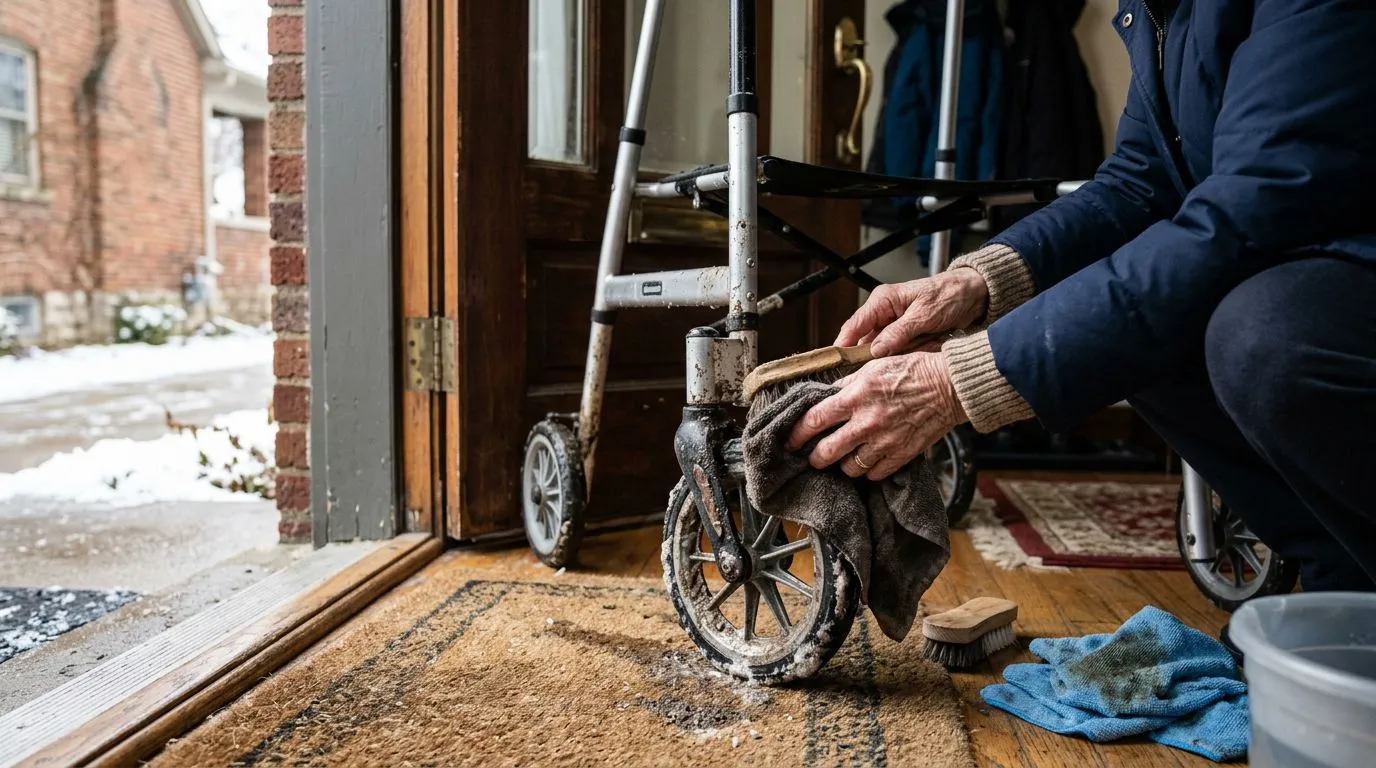
Outdoor Walker Care: Cleaning Mud, Rain, Road Salt, and Rust Before They Cause Damage
14 min read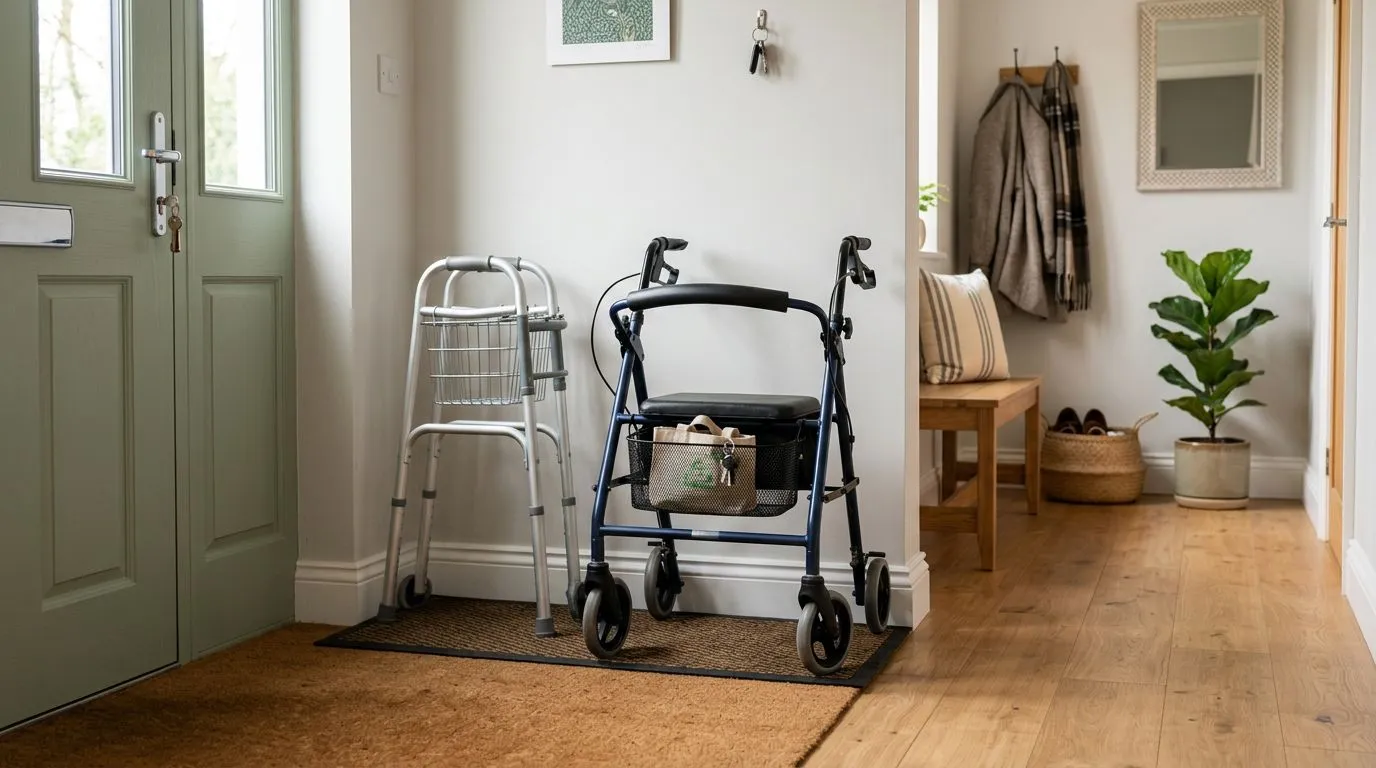
How to Store a Walker or Rollator to Prevent Rust, Warping, and Brake Problems
13 min read
Can a Mobility Walker or Rollator Be Repaired? DIY Fixes, Replacement Parts, and When to Get Service
14 min read