Disclosure: We may earn a commission when you buy through links on this page, at no extra cost to you. We buy nothing, sell nothing and accept no payment for coverage — commissions never decide what we recommend. How we make money.

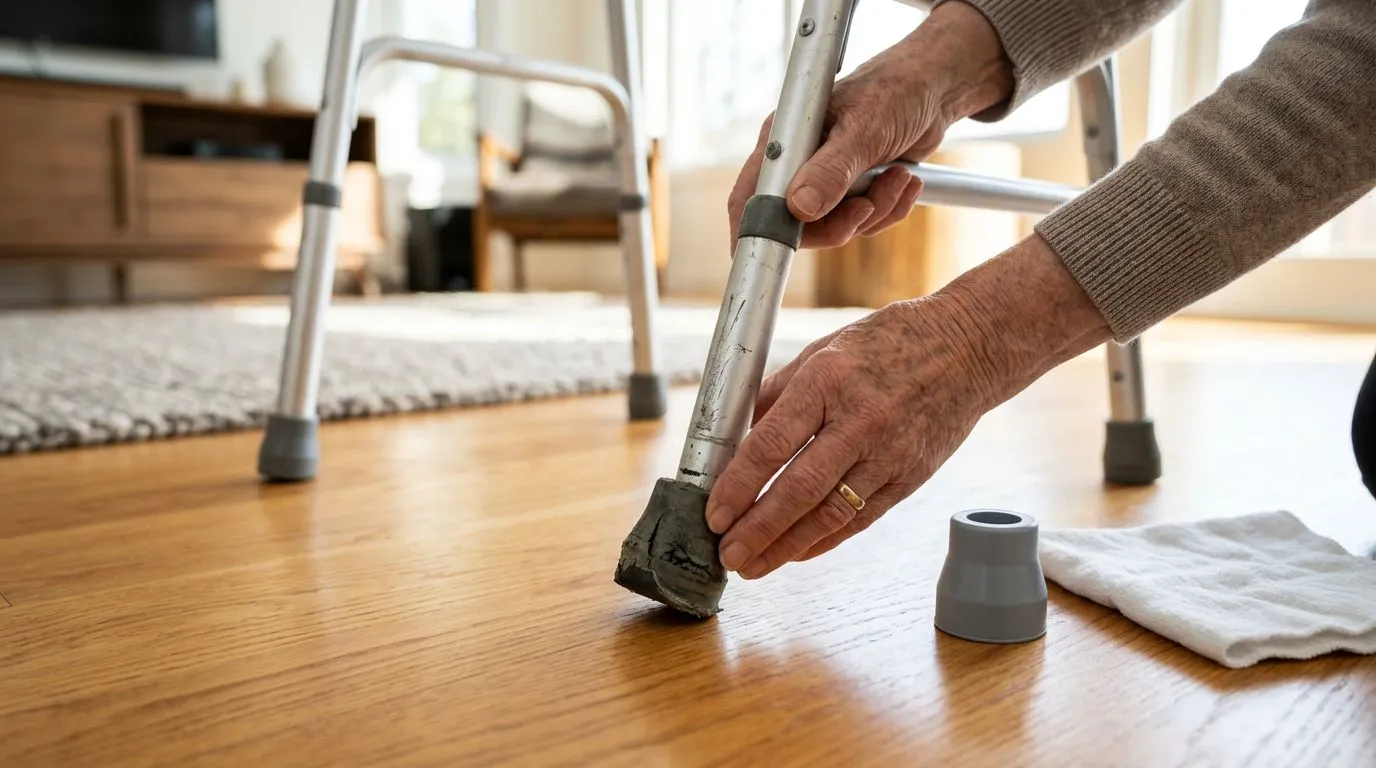
Replace walker tips, glides, wheels, or rollator tires when they become smooth, cracked, uneven, loose, or no longer grip the surface you use most. A good rule is to inspect every contact point every 30 days, or sooner if you walk outdoors, notice slipping, or hear new scraping, clicking, or rattling sounds.
For standard walkers and two-wheel walkers, the main wear parts are rubber tips, rear glides, and front wheels. For rollators, the main concerns are wheel tread, tire condition, axle stability, and whether the hand brakes still stop the wheels securely.
The 30-day safety check for walkers and rollators
A walker or rollator is only as stable as the parts that touch the ground. On a standard walker, that usually means 4 rubber tips. On a two-wheel walker, it means 2 front wheels plus 2 rear tips or glides. On a 4-wheel rollator, all 4 wheels and both hand brakes matter every time you stop, turn, or sit.
Set a simple monthly reminder to check the bottom of each tip, glide, wheel, or tire. This 30-day habit catches wear before it becomes a slip on tile, a skid on a ramp, or a wobbly turn in a parking lot. If the device is used daily outside, a 2-week check is more realistic.
Replace parts right away if you see any of these warning signs:
- Rubber tips are worn flat, cracked, split, or hardened.
- Tread grooves are nearly gone or less than about 1/8 inch deep.
- A glide has worn through, becomes sharp, or scratches flooring.
- A wheel wobbles side to side, sticks, squeaks, or drags.
- A rollator tire has a flat spot, chunk missing, or uneven wear.
- Brakes no longer hold the rollator still on a slight slope.
Small changes matter. A worn rear tip can let a two-wheel walker slide forward too quickly. A flat-spotted rollator wheel can make the frame pull to one side. A cracked rubber tip on one rear leg can leave the walker sitting unevenly, even when the frame itself is fine.
What wears out on 3 common mobility aids
Walkers and rollators solve different mobility problems, so they wear in different ways. A standard walker or folding walker is lifted and set down, which puts repeated pressure on the rubber tips. A two-wheel walker rolls at the front while the rear legs drag or step, so the back tips or glides often wear fastest. A rollator has 3 or 4 wheels, a seat, and hand brakes, so tire condition and braking performance are central to safety.
| Device type | Typical contact parts | Wear pattern to watch | Who it is often best for |
|---|---|---|---|
| Standard or folding walker | 4 rubber tips | Flattened bottoms, cracks, uneven height | People who need high stability and can lift the frame |
| Two-wheel walker | 2 front wheels and 2 rear tips or glides | Rear dragging, glide wear, front wheel wobble | People who need support but want easier forward movement |
| 3-wheel rollator | 3 wheels or tires, hand brakes | Uneven tire wear, brake slip, loose caster movement | People who need maneuverability in tighter spaces and do not need a built-in seat |
| 4-wheel rollator | 4 wheels or tires, hand brakes, brake cables | Worn tread, flat spots, reduced braking, wheel wobble | People who need a seat, brakes, and smoother rolling over longer distances |
The key difference is control. A walker is controlled mostly by placing the frame and relying on the rubber tips to grip. A rollator is controlled by rolling, braking, and steering, so wheel and brake wear should be checked together.
Replace walker tips when tread is under 1/8 inch
Rubber walker tips are small, but they do a big job. They help prevent sliding, reduce noise, and protect the floor. Most are used on standard walkers, folding walkers, and the rear legs of some two-wheel walkers.
Look at the bottom of each tip. Many new tips have grooves, rings, or a textured surface. When that pattern wears smooth or is down to about 1/8 inch of usable tread, traction drops. If the tip looks shiny, hard, or polished, it may slide even if it is not visibly torn.
Replace walker tips if you notice:
- One tip is shorter than the others by even 1/4 inch.
- The rubber is cracked around the side wall.
- The metal walker leg is close to poking through.
- The walker rocks when all 4 legs are on a flat floor.
- The bottom is smooth enough to skid on tile, wood, or vinyl.
Do not wait until the rubber fails completely. Once metal touches the floor, it can scratch surfaces and remove the grip the walker depends on. It can also make the frame feel unexpectedly unstable during turns.
Replace tips in pairs or sets when possible. If only one rear tip is new and the other is worn, the walker may sit slightly unevenly. A standard walker works best when all 4 contact points meet the floor at the same height.
Replace walker glides when edges become thin, sharp, or noisy
Walker glides are often used on the rear legs of two-wheel walkers to help the frame move across indoor floors with less lifting. They may be made of plastic or another low-friction material. Some people use them because rubber tips can catch or chatter on carpet, while glides move more smoothly.
That smoother movement has a tradeoff. Glides usually provide less traction than rubber tips, especially on wet surfaces, polished floors, or outdoor concrete. If a glide becomes thin on one side, sharp at the edge, or worn through in the center, it should be replaced.
A quick test takes less than 60 seconds. Turn the walker so you can see both rear glides. Compare the left and right sides. If one glide has a flattened angle, deep scraping, or exposed hardware, it is no longer giving even contact. Then set the walker on a flat floor and gently move it forward 12 inches. If it pulls to one side or makes a harsh scraping sound, the glides may be worn or mismatched.
Glides are usually better for dry indoor use than rough outdoor use. On sidewalks, asphalt, and textured ramps, they can wear much faster. If you use a two-wheel walker outdoors every day, inspect rear glides weekly and consider whether rubber tips offer better stopping control for your routine.
Replace walker wheels when they wobble, stick, or lose roundness
Front wheels on two-wheel walkers reduce the need to lift the frame with every step. Common walker wheel sizes are often in the 3-inch to 5-inch range, though exact sizing varies. Smaller wheels can work well indoors, while larger wheels may roll more easily over door thresholds and uneven outdoor surfaces.
Wheels need replacement when they no longer roll straight and smoothly. A worn wheel may wobble from side to side, develop a flat spot, drag on one side, or collect hair and grit around the axle. Sometimes the problem is not the wheel surface but the axle, fork, or fastener holding it in place.
Check each front wheel by lifting the walker slightly and spinning the wheel by hand. It should rotate freely for a moment, without grinding or stopping abruptly. Then hold the wheel and try to move it side to side. A tiny amount of movement may be normal, but visible wobbling or clicking deserves attention.
Replace the wheel or have the assembly checked if:
- The wheel has a flat spot larger than about 1/4 inch.
- The walker veers left or right on a 10-foot straight path.
- The wheel stops spinning after less than a full turn.
- The surface is cracked, chunked, or separating from the hub.
- The axle area rattles even after basic cleaning.
A two-wheel walker should not feel like it is steering you. If it does, worn or loose wheels are one of the first places to look.
Replace rollator tires when tread, braking, or steering changes
Rollators are wheeled walkers with hand brakes, and many 4-wheel rollators also include a built-in seat. Because they are designed to roll continuously, their wheels and tires wear differently than the wheels on a two-wheel walker. Outdoor use, body weight, braking style, and surface texture all affect how quickly the tires wear.
Common rollator wheels are often around 6 to 10 inches in diameter. Larger wheels generally handle outdoor cracks, gravel paths, and uneven sidewalks better than small wheels, but all tires eventually wear. A rollator used 1 mile a day outdoors will usually wear contact surfaces faster than one used mainly across carpet and kitchen flooring.
Replace rollator tires or wheels when you see bald tread, cracking, missing chunks, or uneven wear from left to right. Pay attention to performance too. If the rollator vibrates, pulls to one side, or feels bumpy on a smooth hallway, a wheel may be out of round.
Brakes are part of this check. On many rollators, the hand brake presses against the wheel or controls a mechanism near it. If the tire surface is slick, worn unevenly, or contaminated with oil, the brakes may not hold as expected. Test the brakes on a dry, flat surface first, then on a very mild incline if it is safe to do so. The rollator should stay still when the parking brake is engaged, especially before sitting on the seat.
For upright or stand-up rollators, tire and brake wear can feel more dramatic because the user’s posture and hand position are different. For bariatric rollators, higher weight capacity and heavier frames can increase stress on wheels, tires, forks, and brake parts. Check these devices at least every 30 days, and more often with daily outdoor use.
Indoor floors and outdoor surfaces can double the wear rate
Where you walk matters as much as how often you walk. A walker used only inside on smooth floors may go months before tips or glides show major wear. A rollator used on rough sidewalks, curb cuts, asphalt, and parking lots can show visible tire wear much sooner. In practical terms, outdoor surfaces can wear contact parts at 2 times the rate of indoor use, and sometimes faster.
Indoor floors create their own problems. Smooth tile, laminate, vinyl, and hardwood can become slippery when a rubber tip gets polished smooth. Thick carpet can catch worn glides or make small wheels harder to push. Area rugs are a common trouble spot because worn tips may drag at the edge and worn wheels may not climb the rug cleanly.
Outdoor surfaces add abrasion and impact. Concrete can sand down rubber. Asphalt can chew up softer tires. Gravel can nick wheel surfaces and lodge small stones near axles. Wet leaves, snow, and sloped curb cuts reduce traction even when parts are in good shape.
| Surface | Part most affected | What to look for | Check frequency |
|---|---|---|---|
| Tile, vinyl, hardwood | Rubber tips and brakes | Smooth, shiny rubber or skidding | Every 30 days |
| Carpet and rugs | Glides and small wheels | Dragging, catching, uneven movement | Every 30 days |
| Sidewalks and asphalt | Tips, glides, tires | Flattening, chips, rapid tread loss | Every 2 weeks if used daily |
| Gravel or uneven paths | Rollator wheels and axles | Wobble, embedded debris, rough rolling | After each heavy use |
If you move between indoors and outdoors often, wipe off tips, glides, and wheels before coming inside. Grit stuck to the bottom can reduce traction and scratch floors.
How to choose the right replacement in 4 measurements
Replacement parts need to match the device, not just look similar. A tip that is too loose can fall off. A wheel that is the wrong size can change the walker’s height or handling. A rollator tire that does not match the brake contact area can affect stopping power.
Use these 4 measurements before buying generic replacement parts:
- Leg tube diameter: For walker tips and some glides, measure the outside diameter of the walker leg where the part attaches. Common sizes vary, and a difference of 1/8 inch can matter.
- Wheel diameter: Measure across the wheel from edge to edge, such as 5 inches or 8 inches.
- Wheel width: Measure the rolling surface width, especially for rollators with brake contact near the tire.
- Axle or mounting style: Note whether the wheel uses a bolt, fork, stem, or built-in caster assembly.
Take a photo of the old part from the side, front, and mounting point before removing it. If the mobility aid has a printed label with weight capacity or frame information, keep that handy too. Do not exceed the device’s stated weight capacity with altered parts, and avoid mixing parts that change the height on only one side.
After installing new parts, do a 3-step test. First, place the walker or rollator on a flat surface and check that all contact points sit evenly. Second, walk 10 to 15 feet slowly and listen for scraping, clicking, or dragging. Third, for rollators, engage the parking brakes and confirm the wheels stay still before using the seat.
Who should replace wear parts sooner than average
Some users should not wait for the typical monthly check to reveal major wear. Replacement timing depends on body weight, walking distance, surfaces, and how much support the device provides. A person using a walker for 20 feet inside the home has a different wear pattern than someone using a rollator for several blocks outdoors every day.
Consider earlier replacement if any of these 6 situations apply:
- You use the walker or rollator outdoors daily.
- You rely heavily on the frame for balance or weight support.
- You live in a building with ramps, long hallways, or uneven entryways.
- You notice one side of the device wearing faster than the other.
- You use an upright rollator or bariatric rollator with larger forces on the frame.
- You have had a recent slip, near fall, or sudden change in walking confidence.
This is not about replacing parts by calendar alone. It is about replacing them when performance changes. If a walker suddenly feels less stable, or a rollator takes more effort to steer or stop, inspect the contact parts before assuming the whole device is worn out.
If you are unsure whether the issue is normal wear, ask a physical therapist, occupational therapist, medical equipment provider, or repair technician to check the device. A 5-minute inspection can often identify whether the fix is a tip, wheel, brake adjustment, or frame problem.
A practical replacement schedule for the next 12 months
There is no single replacement schedule that fits every walker or rollator, but a simple 12-month plan helps keep wear from sneaking up on you. Think of it the way you would think about tires on a car: tread, alignment, surface, and braking all matter.
| Time frame | Standard walker | Two-wheel walker | Rollator |
|---|---|---|---|
| Weekly | Check for missing or loose tips if used daily | Look for rear dragging and front wheel debris | Test hand brakes and look for tire damage |
| Monthly | Inspect all 4 tips for cracks and tread | Inspect 2 wheels plus 2 rear tips or glides | Inspect all 3 or 4 wheels, tires, and brake contact |
| Every 3 months | Compare tip height and replace uneven pairs | Spin wheels and check glide thickness | Check for wheel wobble, loose hardware, and brake cable changes |
| Every 12 months | Consider replacing tips if used regularly | Consider new rear wear parts and evaluate wheels | Review tire wear, brake holding, and overall frame condition |
Replace parts sooner if they fail any safety check. A low-cost rubber tip or wheel is not worth stretching past its useful life if it reduces traction or makes the device unpredictable.
Keep one spare set of the most likely wear parts if the walker or rollator is used every day. For a standard walker, that may mean 4 correctly sized tips. For a two-wheel walker, it may mean rear tips or glides. For a rollator, it may mean knowing the correct wheel size and brake-compatible tire type before there is an urgent problem.
The bottom line: traction and stability come first
Walker tips, glides, wheels, and rollator tires are wear items. They are meant to be inspected, cleaned, and replaced before they become unsafe. Smooth rubber, sharp glides, wobbly wheels, and worn rollator tires are not minor cosmetic issues; they change how the device grips, rolls, turns, and stops.
For standard walkers, protect stability by keeping all 4 tips in good condition. For two-wheel walkers, watch both the rolling front wheels and the rear tips or glides. For rollators, check tire tread and brake performance together, especially before sitting on the built-in seat.
If you remember only one number, make it 30 days. A monthly inspection, plus immediate replacement when wear appears, is a practical way to keep your walker or rollator dependable on indoor floors and outdoor surfaces.
FAQ
Frequently asked questions
How often should walker tips be replaced? +
Inspect walker tips every 30 days and replace them when the tread is smooth, cracked, uneven, hardened, or worn down to about 1/8 inch. Daily outdoor use may require more frequent replacement.
Are walker glides safe for outdoor use? +
Walker glides can be used outdoors in some situations, but they usually wear faster on concrete and may provide less traction than rubber tips. They are generally better suited to dry indoor floors.
How do I know if my rollator tires are worn out? +
Replace rollator tires or wheels if the tread is bald, the tire is cracked or chunked, the wheel has a flat spot, the rollator pulls to one side, or the brakes no longer hold securely.
Should I replace all walker tips at the same time? +
For a standard walker, replacing all 4 tips together is often best because it keeps the frame level. At minimum, replace tips in pairs if one side is noticeably more worn than the other.
Can worn wheels make a walker or rollator unsafe? +
Yes. Worn, loose, or flat-spotted wheels can reduce stability, make steering harder, and affect braking on rollators. Any wobble, dragging, grinding, or sudden pulling should be checked promptly.
Keep reading
Related guides
Walker Rubber Tips and Glide Caps: When to Clean, Rotate, or Replace Worn Feet
15 min read
Can a Mobility Walker or Rollator Be Repaired? DIY Fixes, Replacement Parts, and When to Get Service
14 min read
Daily Walker Safety Checklist: What to Inspect Before Each Use
13 min read