Disclosure: We may earn a commission when you buy through links on this page, at no extra cost to you. We buy nothing, sell nothing and accept no payment for coverage — commissions never decide what we recommend. How we make money.
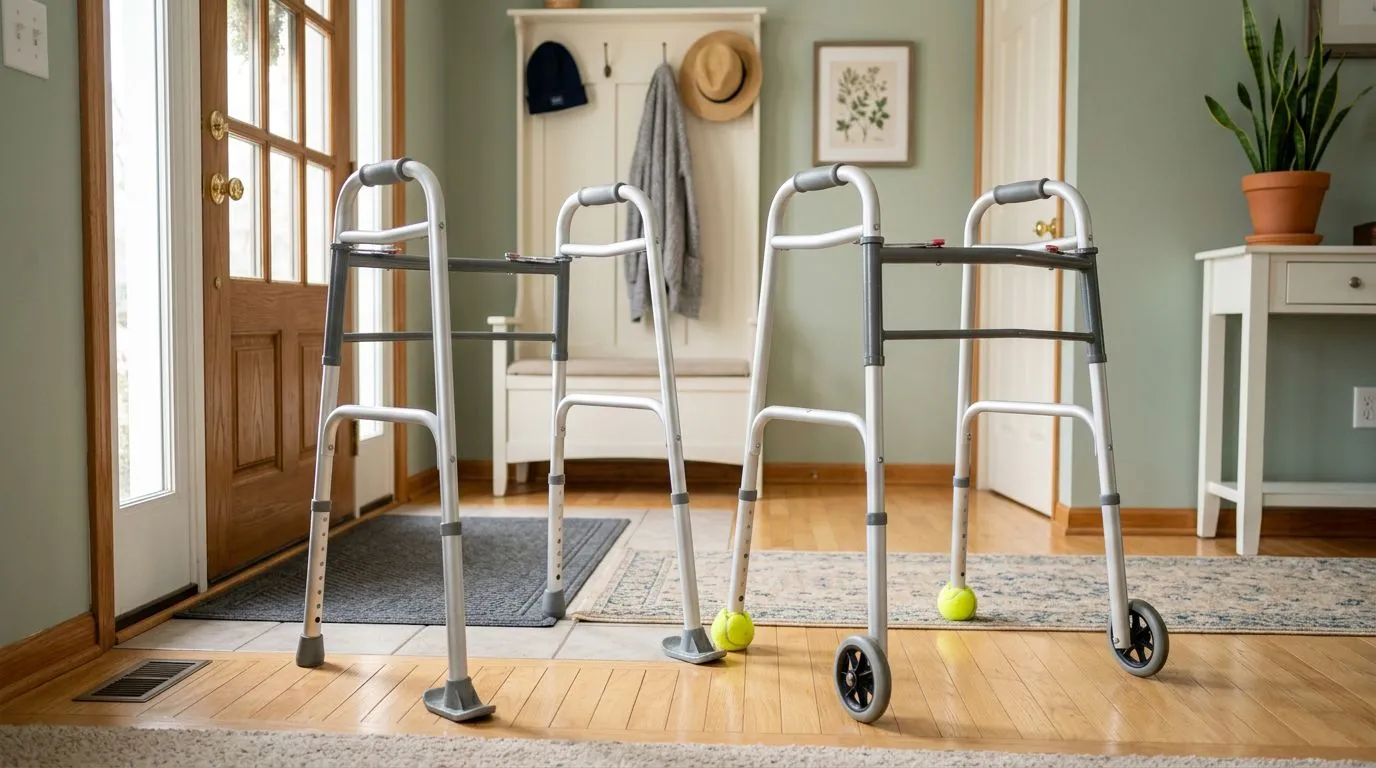
The best walker feet depend on your floor surface and how much stability you need. Rubber tips offer the most grip, walker glides and skis move more easily over carpet and smooth indoor floors, and tennis balls are a low-cost but less durable option that can collect dirt and wear unevenly.
For most standard walker and two-wheel walker users, the safest setup is one that lets the walker move without catching while still slowing it enough to feel controlled. That balance changes across carpet, tile, hardwood, sidewalks, and mixed indoor surfaces.
The 4 common walker feet, compared by surface
Standard walkers usually have 4 legs that touch the floor. Two-wheel walkers have 2 front wheels and 2 rear legs, and those rear legs are where glides, skis, tennis balls, or rubber tips are most often used.
These accessories may look simple, but they change how the walker behaves. A sticky rubber tip can help prevent sliding, but it may also catch on carpet. A slick plastic glide can make each step smoother, but it may slide too easily on polished tile if the user leans heavily on the walker.
| Walker foot option | How it works | Common use | Main tradeoff |
|---|---|---|---|
| Rubber tips | Grip the floor with a rubber contact surface | Standard walkers, indoor use, users who need firm stopping power | Can catch on thick carpet or wear smooth over time |
| Walker glides | Small plastic or nylon caps that slide over the rear legs | Two-wheel walkers on carpet, tile, vinyl, and mixed indoor floors | Less grip than rubber tips |
| Walker skis | Longer curved plastic glides shaped like mini skis | Carpeted homes and transitions between rugs and hard floors | Can feel too slippery on very smooth surfaces |
| Tennis balls | Cut balls placed over walker legs to reduce dragging | Budget indoor use, usually on rear legs of a two-wheel walker | Wear quickly, collect dirt, and may not fit securely |
If your walker has 4 rubber tips and no wheels, it is designed to be lifted and set down with each step. Adding sliding feet can make it easier to move, but it can also reduce the stability that a no-wheel walker is meant to provide. If you use a standard walker because you need maximum support, ask a physical therapist, occupational therapist, or clinician before changing all 4 feet to a slicker accessory.
Best walker feet for 5 surfaces: carpet, tile, hardwood, vinyl, and sidewalks
Most homes do not have just one type of surface. A walker may move from bedroom carpet to a hallway runner, across a tile bathroom, then out to a concrete porch. The right feet should suit the surface you use most often, not just the one that causes the most annoyance.
| Surface | Best starting point | Why it helps | Use caution when |
|---|---|---|---|
| Low-pile carpet | Walker glides or skis on rear legs | They reduce catching and dragging | The walker slides faster than expected |
| Thick carpet | Skis or larger glides | More surface area can move over pile more smoothly | The carpet is plush enough to make the walker unstable |
| Tile or vinyl | Rubber tips for grip, or glides if dragging is a problem | Rubber slows movement; glides reduce scraping | The floor is wet, waxed, or highly polished |
| Hardwood or laminate | Clean rubber tips or smooth glides | Clean contact surfaces help reduce scuffs and grit marks | Old tennis balls have trapped dirt or small stones |
| Sidewalks and driveways | Rubber tips in good condition | Rubber handles rough texture better than soft fabric-covered surfaces | Tips are cracked, uneven, or worn through |
On carpet, friction is usually the problem. The back legs of a two-wheel walker may dig in, causing the user to push harder or lift the walker awkwardly. Glides or skis can help by letting the rear legs follow the front wheels more smoothly.
On tile, vinyl, and hardwood, control becomes the bigger concern. Smooth floors can make a walker feel fast, especially if the user puts a lot of weight through the hand grips. Rubber tips provide more braking action, while glides trade some grip for easier movement.
For sidewalks, rubber tips are usually the more practical choice. Outdoor concrete can wear down plastic glides and tennis balls, and grit picked up outside can scratch indoor floors later. If you walk outdoors daily, check the feet often and consider keeping indoor and outdoor accessories separate when practical.
Who each walker foot is best for: 4 practical user profiles
The best choice is not only about the floor. It also depends on the person using the walker, their strength, their balance, and whether the walker is a standard no-wheel frame or a two-wheel walker.
1. The user who needs the most stability
Rubber tips are usually the best starting point. They help the walker stay planted when it is placed on the floor. This is important for someone who uses a standard walker because they need a stable base before stepping.
The tradeoff is effort. Rubber can catch on carpet, so the user may need enough arm and shoulder strength to lift the walker cleanly. If lifting causes fatigue or poor posture, a professional fitting may help determine whether a two-wheel walker or another mobility aid is more appropriate.
2. The user with a two-wheel walker on carpet
Glides or skis on the 2 rear legs often make daily movement easier. The front wheels roll, and the rear feet slide instead of thumping or snagging. This setup is common in homes with wall-to-wall carpet or several area rugs.
Skis may feel smoother over carpet edges because of their curved shape. Smaller glides can be less bulky and may be easier to maneuver in tight spaces, such as between a bed and dresser.
3. The user worried about floor marks
Cleanliness matters more than the accessory name. A clean rubber tip may be gentler on hardwood than a dirty tennis ball that has picked up grit. Any walker foot can mark a floor if it is worn, cracked, or carrying sand from outside.
For hardwood and laminate, inspect the contact surface weekly. Wipe it with a damp cloth, dry it, and look for embedded debris. If the surface is rough enough to catch a fingernail, it may be rough enough to scuff a finish.
4. The user who wants a low-cost quick fix
Tennis balls are widely used because they are inexpensive and easy to recognize. They can reduce scraping and help a walker slide more easily indoors. Still, they are not purpose-built medical accessories.
A tennis ball must be cut open to fit over the walker leg, and the cut needs to be secure enough that the ball does not twist or fall off. Tennis balls also absorb dirt and moisture, which can make them less suitable for bathrooms, kitchens, and outdoor walking.
How to choose and measure walker feet in 3 steps
Fit is not optional. A loose glide, ski, or ball can shift at the wrong moment, and a rubber tip that is too small may split. Most walker legs are round metal tubing, but the outside diameter can vary, so measure before buying replacement feet or accessories.
Step 1: Identify your walker type
Start with the frame. A standard walker has 4 legs and no wheels. A two-wheel walker has 2 front wheels and 2 rear legs. The front wheels are usually left alone; the rear legs are where most people add glides, skis, tennis balls, or replacement rubber tips.
If your walker folds, open it fully and make sure the side braces lock before measuring. Folding walkers can look slightly misaligned when they are not fully opened, which can lead to an inaccurate read.
Step 2: Measure the leg diameter
Use a ruler or tape measure across the outside of the lower walker leg. Many walker accessories are made for common tubing sizes around 1 inch, but you should not assume. Measure the actual leg, not the old tip, because worn rubber can stretch or deform.
If the leg is oval, angled, or unusually shaped, standard slip-on accessories may not seat correctly. In that case, look for accessories specifically described for that type of walker frame or ask a mobility equipment professional for help.
Step 3: Match the accessory to your main surface
Choose based on where the walker is used most during a typical 24-hour day. If 80% of use is indoors on carpet, glides or skis may matter more than sidewalk performance. If the walker is used outside every morning, durable rubber tips may be more important.
After installing new feet, test them in a safe area before normal use. Stand near a stable counter, have another adult nearby if needed, and try a few slow steps. The walker should move predictably without sudden sliding, wobbling, or catching.
Rubber tips: best for grip, but replace them before the tread is flat
Rubber tips are the default feet on many standard walkers and the rear legs of many two-wheel walkers. They are simple, quiet, and effective when the rubber is fresh and the floor is dry.
The underside usually has ridges, rings, or texture. Once that tread wears smooth, the tip provides less traction. A cracked tip can also expose the metal walker leg, which may scratch floors and make the walker less stable.
Check all tips at least once a month if the walker is used daily, and more often if it is used outdoors. Look for 4 signs: flattened tread, uneven wear, cracks along the side, and looseness around the metal leg. Replace the tip if any of those signs are noticeable.
Rubber tips are often best for bathrooms and kitchens where water can be present, but no walker foot is safe on a wet floor. Wipe spills promptly, avoid loose bath mats, and use grab bars or other properly installed supports where recommended by a clinician.
Walker glides and skis: smoother movement with 2 rear legs
Walker glides and skis are most often used on the rear legs of a two-wheel walker. The idea is simple: the front wheels roll while the back feet slide, so the user does not have to lift the frame as much.
Small glides are compact. They can work well in apartments, narrow hallways, and rooms with several turns. Skis are longer and curved upward at the front, which can help them pass over low carpet edges and small floor transitions more smoothly.
The main concern is speed. If a user leans forward heavily, slick rear feet may let the walker move too far ahead. That can reduce control. A good setup should allow short, steady steps while keeping the walker close enough that the user is not reaching.
On hardwood, glides and skis should be kept clean. Plastic that has become rough or embedded with grit can leave marks. If you hear scraping, stop and inspect the bottom surface before continuing across finished floors.
Tennis balls on walkers: useful in some homes, limited after 2 to 4 weeks of heavy use
Tennis balls can make a walker quieter and easier to slide, especially on indoor hard floors. They are common because they are inexpensive and easy to install with a simple cut, but they are not ideal for every user or every surface.
The biggest weakness is wear. With frequent daily use, a tennis ball can flatten, tear, or collect grime within weeks. Once the felt wears thin or the ball becomes misshapen, the walker may drag unevenly.
They can also be hard to clean. Felt holds dust, pet hair, moisture, and grit. That is a problem for hardwood floors and for homes where the walker moves between outdoor and indoor surfaces.
If tennis balls are used, they should fit snugly and be checked often. The cut opening should not spread so far that the ball rotates freely around the walker leg. If it twists, slips, or looks uneven, replace it or switch to a purpose-made glide or rubber tip.
Mixed indoor use: a 10-minute home walk-through can prevent the wrong choice
Before choosing walker feet, walk the main route the user takes each day. This may include the bed to bathroom path, the route to the kitchen, a favorite chair, the front door, and any hallway turns. A 10-minute review can reveal problems that are easy to miss when looking at one room at a time.
Pay special attention to thresholds. Even a small transition between tile and carpet can affect walker movement. Area rugs are another common issue because edges can curl or slide. In many homes, removing or securing a rug is safer than trying to make the walker foot climb over it.
Doorways matter too. A standard walker may be about 24 to 28 inches wide, depending on the frame style. If the user has to angle the walker through a narrow bathroom doorway, bulky skis may bump more than compact glides or rubber tips.
Test turning, backing up, and approaching a chair. Some accessories feel fine in a straight hallway but awkward in tight spaces. The goal is controlled movement throughout the home, not just smooth sliding on the largest floor surface.
What about rollators, upright rollators, and 3-wheel walkers?
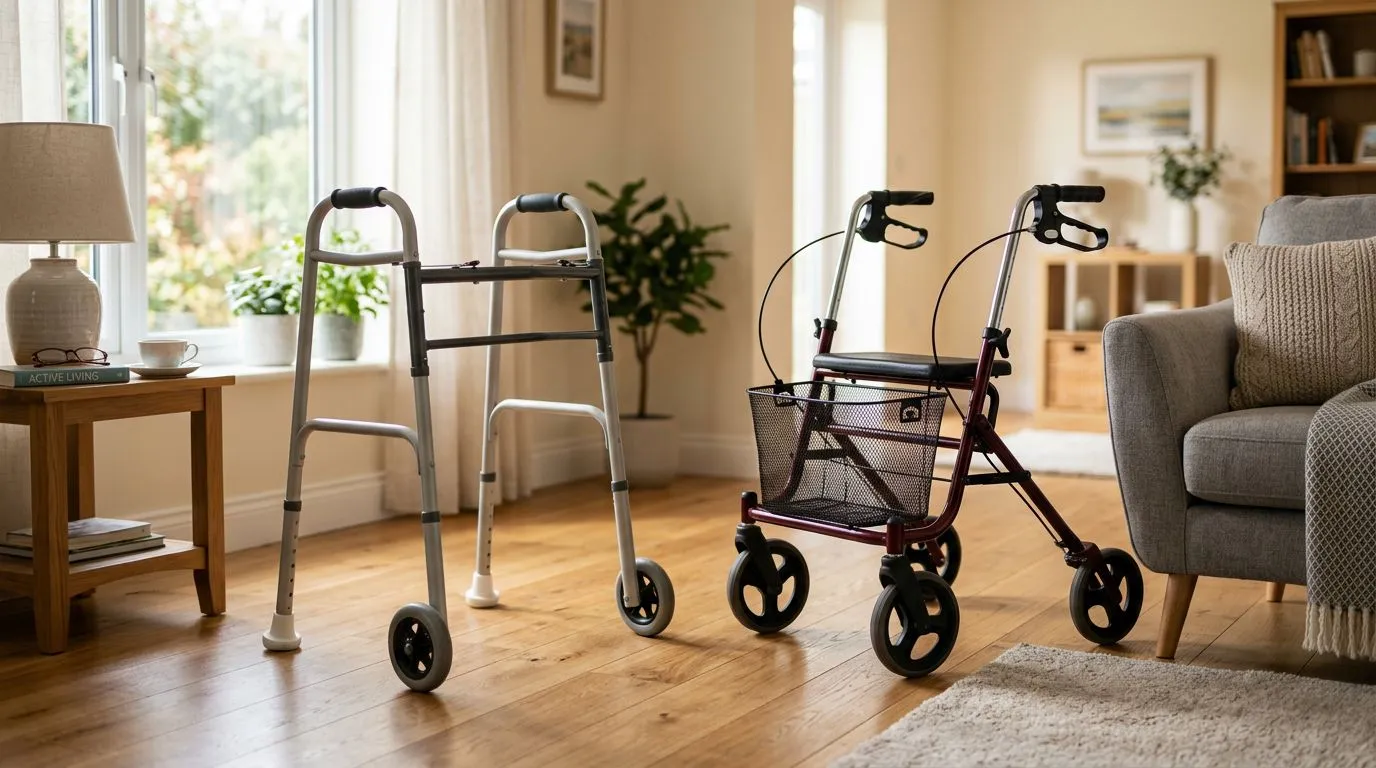
Rollators are different from standard walkers and two-wheel walkers. A typical 4-wheel rollator has 4 wheels, hand brakes, and often a built-in seat. A 3-wheel rollator has 3 wheels and hand brakes, usually without the same seated rest setup as many 4-wheel designs. Upright rollators position the forearms or hands higher to encourage a more upright posture.
Because rollators roll on wheels, they generally do not use rear glides, skis, tennis balls, or rubber walker tips the same way a standard walker does. Their safety depends more on wheel condition, brake adjustment, handle height, frame fit, and the user’s ability to control speed.
If you are trying to solve dragging rear legs, you are probably dealing with a standard walker or a two-wheel walker, not a rollator. If you want a seat, hand brakes, and continuous rolling movement, a rollator may be worth discussing with a clinician or mobility professional. It is not automatically safer; it simply solves a different mobility problem.
Simple maintenance: inspect walker feet every 30 days
Walker feet are wear parts. They touch every surface the user crosses, and small changes can affect stability. A quick monthly check is a good habit for daily users, while outdoor users may need to inspect weekly.
- Look underneath. Check for flat spots, cracks, holes, or exposed metal.
- Check the fit. Twist each tip, glide, ski, or ball by hand. It should not wobble loosely.
- Clean the contact surface. Remove grit before walking on hardwood, laminate, or tile.
- Compare left and right. Uneven wear can make the walker feel crooked.
- Listen for changes. New scraping, squeaking, or thumping may mean a foot is damaged or loose.
Also check walker height after changing accessories. A thicker glide or ball can raise the rear of the walker slightly. The hand grips should generally line up near the wrist crease when the user stands upright with arms relaxed, though individual needs vary. Elbows are often slightly bent when holding the grips.
If a new accessory changes posture, step length, or confidence, do not ignore it. Small equipment changes can have a big effect on how a walker feels. When in doubt, ask a physical therapist, occupational therapist, or qualified mobility equipment provider to review the setup.
Bottom line: match walker feet to your floor and your need for control
Rubber tips are usually best when grip and stability are the priority. Glides and skis are often best for two-wheel walkers that drag on carpet or mixed indoor floors. Tennis balls can help in some homes, but they wear quickly and need frequent inspection.
The right choice should let the walker move smoothly without racing ahead. Start with the surface used most, measure the walker leg, test the accessory slowly, and replace worn feet before they become a safety problem.
FAQ
Frequently asked questions
Are walker glides safer than tennis balls? +
Walker glides are purpose-made for walker legs, so they usually fit more securely and wear more predictably than tennis balls. Tennis balls can work indoors for some users, but they collect dirt, flatten, and may loosen over time. The safer choice depends on fit, floor surface, and how much grip the user needs.
Can I put skis or glides on all four legs of a standard walker? +
It is usually better to be cautious. A standard no-wheel walker is designed to be lifted and placed down for stability. Adding slick feet to all four legs can reduce grip and may make the walker slide unexpectedly. Ask a physical therapist, occupational therapist, or mobility professional before making that change.
What walker feet are best for hardwood floors? +
Clean rubber tips or smooth purpose-made glides are usually good options for hardwood. The key is keeping the contact surface free of grit and replacing worn parts. Old tennis balls can trap dirt and small debris, which may scuff wood finishes.
How often should rubber walker tips be replaced? +
Replace rubber tips when the tread is flat, the rubber is cracked, the tip feels loose, or the metal walker leg is close to coming through. Daily users should inspect tips about once a month, and outdoor users may need to check them more often.
Do rollators use walker glides, skis, or tennis balls? +
Most rollators do not use these accessories because they have wheels instead of rear walker legs. Rollator safety depends more on wheel condition, brake function, handle height, and frame fit. Glides, skis, tennis balls, and rubber tips are mainly for standard walkers and two-wheel walkers.
Keep reading
Related guides
Walker Glides, Wheels, and Tennis Balls: Safety Tips for Indoor Floors
12 min read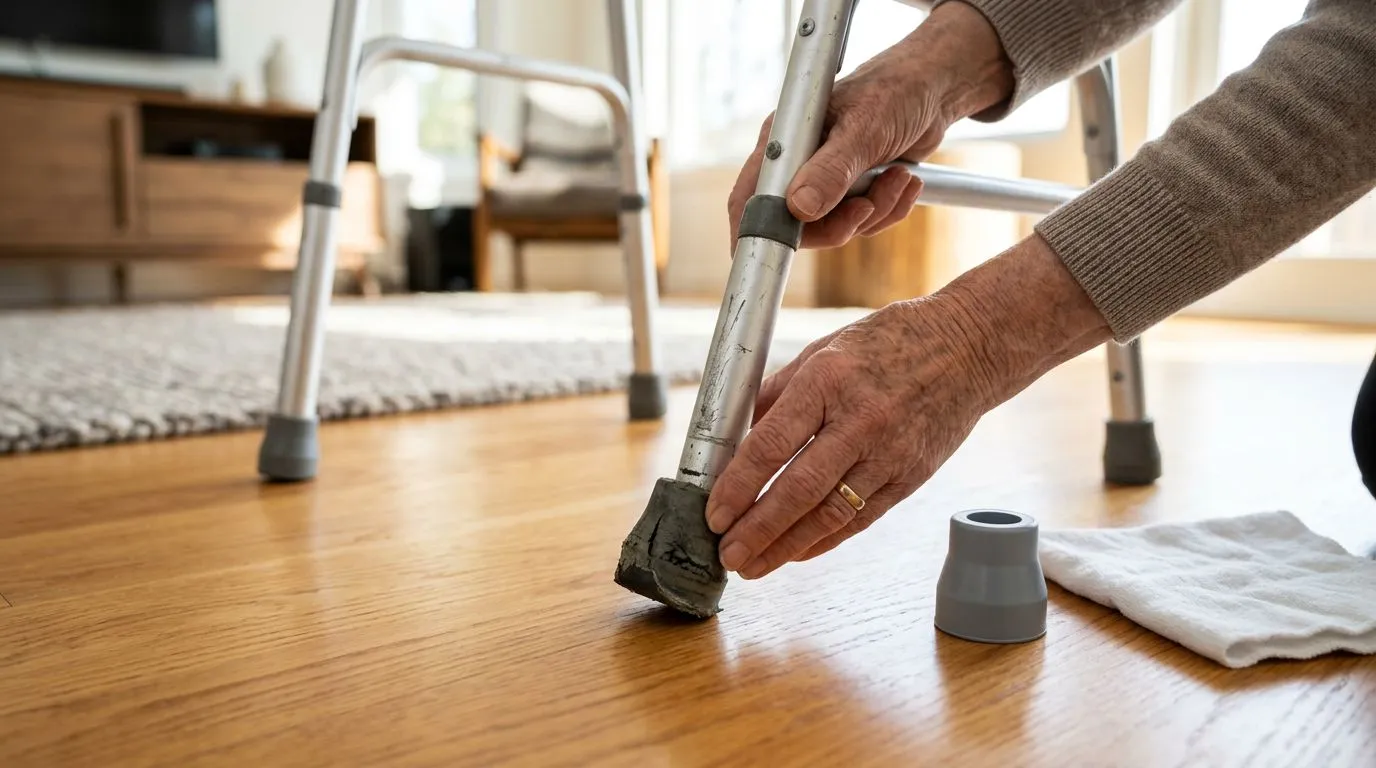
Walker Rubber Tips and Glide Caps: When to Clean, Rotate, or Replace Worn Feet
15 min read
Mobility Walker Accessories and Replacement Parts: Bags, Baskets, Glides, Grips, and Brakes
16 min read