Disclosure: We may earn a commission when you buy through links on this page, at no extra cost to you. We buy nothing, sell nothing and accept no payment for coverage — commissions never decide what we recommend. How we make money.

A secondhand mobility walker can save money when it fits the user, has a solid frame, and needs only simple wear items like new rubber tips. A used rollator can be a good buy as well, but the savings can disappear quickly if the brakes, wheels, seat, or folding mechanism need repair. Before buying used, compare the full cost of making the device safe, not just the asking price.
This guide covers both walkers and rollators because they meet different needs. Standard walkers, folding walkers, and two-wheel walkers are usually simpler and easier to inspect. Rollators have more moving parts: 3 or 4 wheels, hand brakes, cables, seats, backrests, and sometimes upright handles. That can make them more convenient for some people, but also more expensive to put right if something is worn or missing.
New vs used walkers and rollators: the 5-minute cost reality check
The simplest way to compare new and secondhand mobility equipment is to ask one question: what will it cost to make this device safe, correctly fitted, and complete? A used walker that needs 4 new tips and a cleaning may still be a bargain. A used rollator with weak brakes, cracked wheels, and a missing backrest may not be worth taking home at any price.
Walkers tend to hold up well because many have no cables, no brake handles, and no seat hardware. A standard no-wheel walker or a basic folding walker may have only a lightweight frame, hand grips, leg tips, and a folding latch. If the frame is straight and the height adjusts properly, there may be little to fix.
Rollators are different. A 4-wheel rollator may have 2 brake handles, 2 brake cables, 4 wheels, a padded seat, a basket or pouch, a backrest, and a folding hinge. Each of those parts can affect safety or usability. Used rollators can be a smart purchase, but they deserve a more careful inspection than a basic walker frame.
A good rule: if repairs involve basic contact parts such as tips or grips, used may still make sense. If repairs involve braking, frame stability, or weight capacity, be cautious.
Used walker vs used rollator: 6 differences that affect savings
Walkers and rollators are often grouped together, but the cost picture is not the same. Walkers generally provide more stability for slower, step-by-step movement. Rollators are wheeled walkers with hand brakes and usually a seat, designed for people who can control a rolling device and need a place to rest.
| Type | Common parts to inspect | Used-buy risk level | Cost-saving potential |
|---|---|---|---|
| Standard no-wheel walker | Frame, grips, rubber tips, height buttons | Low if frame is straight | Often good |
| Folding walker | Folding latch, hinges, crossbar, grips, tips | Low to moderate | Often good |
| Two-wheel walker | Front wheels, rear tips, frame alignment | Moderate | Good if wheels roll smoothly |
| 3-wheel rollator | Brakes, cables, wheels, folding mechanism, pouch | Moderate | Good only if brakes work well |
| 4-wheel rollator | Brakes, seat, backrest, wheels, frame, storage | Moderate to high | Depends heavily on condition |
| Upright or bariatric rollator | Arm supports, brakes, reinforced frame, wheels, weight rating | High if parts are worn | Can save money, but inspect carefully |
Weight capacity matters, too. Many standard walkers and rollators have stated user-weight limits, and bariatric versions may be built for higher capacities with wider frames and reinforced components. Never assume a used device is appropriate because it “looks sturdy.” If the label is missing and the seller cannot confirm the rating, that uncertainty becomes part of the cost.
Width also affects value. A wider rollator may feel roomy, but it still has to pass through the user’s home. Many interior doorways are around 28 to 32 inches wide. A device that cannot clear the bathroom doorway or bedroom hallway may turn into an expensive garage item.
When a secondhand standard or folding walker is a smart buy
A used standard walker is often the safest secondhand category to consider because the design is simple. There are fewer hidden systems to fail. If the frame is square, the legs adjust evenly, the grips are secure, and the rubber tips are not worn through, a secondhand walker may offer good value.
Folding walkers can also be good used purchases. Check that the folding mechanism locks fully on both sides and does not collapse with light pressure. Open and close it at least 3 times. A folding walker that sticks slightly may only need cleaning, but one that fails to lock should be avoided.
Two-wheel walkers fall in the middle. They can be easier to move than no-wheel walkers because the front legs roll while the rear legs or glides provide braking friction. Inspect the front wheels closely. They should spin freely, point forward evenly, and not wobble from side to side. Rear tips or glide caps should be even, not cracked or worn down at an angle.
Who used walkers are best for
- People who move at a slower pace and need a stable frame more than a seat.
- Shoppers who can inspect the frame in person before paying.
- Users who already know their correct handle height.
- People who need a temporary walker for a short recovery period, such as a few weeks after a procedure, with professional guidance.
- Homes where tight spaces make a compact folding walker easier than a wide rollator.
The biggest cost advantage is simplicity. If a basic walker needs only new tips or grips, the repair is usually straightforward. If the aluminum frame is bent, one leg is shorter, or the push-button height adjuster is stuck, skip it.
When a used rollator can cost more than expected
Used rollators can be appealing because they combine support, wheels, brakes, and a seat in 1 device. That convenience is exactly why inspections matter. More features mean more possible repairs.
Start with the brakes. On most rollators, the hand brakes should slow the wheels when squeezed and lock the wheels when pushed down or otherwise engaged, depending on the brake style. If the handles feel loose, one side grabs more than the other, or the lock will not hold on a gentle slope, do not treat it as a small detail. Brake adjustment may be simple for a handy person, but worn cables, damaged housings, or missing brake parts can turn a cheap rollator into a poor buy.
Then test the seat and backrest. A rollator seat is meant for resting, not for being pushed like a transport chair unless the device is specifically designed for that purpose. Look for cracks, sagging, missing screws, loose backrest brackets, and bent seat supports. Sit only after confirming the brakes lock and the frame is rated for the user.
Upright rollators deserve extra attention because they place the user’s forearms on supports and often have more adjustable hardware. Check that both arm platforms adjust securely to the same height. Bariatric rollators also need careful review; a higher weight rating only helps if the frame, wheels, axles, and brakes are still in good condition.
Who used rollators are best for
- People who walk more continuously and can safely manage wheels and hand brakes.
- Users who need a built-in seat for rest breaks during errands or walks.
- Shoppers who can test brake locking, steering, folding, and seat stability before buying.
- People replacing a similar rollator with the same approximate height, width, and wheel style.
If the rollator has 6-inch or 8-inch wheels, test it on the surfaces where it will be used. Larger wheels often handle outdoor cracks and thresholds better, while smaller wheels may feel easier indoors. In either case, flat spots, splitting tires, and wobbly axles are warning signs.
Hidden costs checklist: 12 items that can erase the savings
The asking price is only the first number. A used walker or rollator may need parts, cleaning, transportation, or professional adjustment before it is safe to use. Some costs are small. Others are deal breakers.
| Hidden cost | Why it matters | More common on |
|---|---|---|
| Worn rubber tips | Reduced grip can make a walker slide | Standard and folding walkers |
| Cracked hand grips | Poor grip comfort and control | Walkers and rollators |
| Loose frame rivets or bolts | Can create wobble under load | All types |
| Sticky height buttons | May prevent even leg adjustment | Walkers |
| Uneven leg lengths | Can cause rocking or tipping | Walkers |
| Worn wheels | Harder steering and less predictable rolling | Two-wheel walkers and rollators |
| Weak brakes | Rollator may not stop or stay parked | Rollators |
| Damaged brake cables | Brake response may be delayed or uneven | Rollators |
| Missing seat or backrest hardware | Resting may be unsafe | 4-wheel rollators |
| Missing storage pouch or basket | May affect daily convenience | Rollators |
| Deep rust or corrosion | Can weaken metal parts | All types |
| No visible weight rating | Hard to confirm proper use | Older used devices |
Not every missing accessory is a safety issue. A missing basket may be inconvenient but not dangerous. Missing brake parts, cracked frame pieces, or a seat that shifts under body weight are different. Price safety-related repairs into the decision before you buy.
How to inspect a used walker or rollator in 10 minutes
Bring a tape measure, a flashlight, and a calm checklist. A quick inspection can catch many problems before money changes hands.
- Check the frame from all 4 sides. Look for bends, dents near joints, cracked welds, deep scratches, or corrosion.
- Press down on the handles. A walker or rollator should not twist, creak sharply, or rock on a flat floor.
- Test every height setting. Push buttons should pop fully through the holes. Both sides should match.
- Inspect the tips or wheels. Rubber tips should have tread. Wheels should roll without grinding or wobbling.
- Fold and unfold it. Do this at least 2 times. The latch should lock without forcing.
- For rollators, test both brakes. Squeeze to slow, then lock to park. Try gently pushing the rollator while locked.
- Check the seat. Look underneath for missing fasteners, cracks, or bent supports.
- Confirm the label. Look for a weight capacity label and general size information.
Use your ears. Clicking can be normal when height buttons lock, but rattling inside a tube, scraping wheels, or a brake lever that snaps back weakly deserves attention. If the seller rushes you or will not allow a test, walk away.
Cleanliness matters, too. A used mobility device should be wiped down thoroughly before use, especially grips, brake handles, seats, and storage pouches. If fabric parts are heavily stained or carry strong odors, replacement may be difficult unless generic parts fit.
How to choose and measure fit before you pay
A used walker that does not fit can be a bad deal even if it is in excellent condition. Handle height is the first measurement. With the user standing upright in supportive shoes and arms relaxed at the sides, the walker or rollator handles should generally line up near the wrist crease. When holding the handles, the elbows should have a slight bend, often around 15 to 30 degrees.
Measure both the user and the home. For walkers, check the height adjustment range and overall width. For rollators, check handle height, seat height, seat width, overall width, and folded size. A rollator seat that is too low may be hard to stand from; one that is too high may not allow the feet to rest comfortably while seated.
| Measurement | Why it matters | How to check |
|---|---|---|
| Handle height | Affects posture and control | Compare handles to wrist crease while standing |
| Overall width | Must fit through doors and hallways | Measure device at widest point |
| Seat height | Affects safe sitting and standing | Feet should reach floor comfortably |
| Weight capacity | Must match the user | Read label or documentation |
| Folded size | Matters for cars and storage | Fold it and measure height, width, depth |
| Wheel size | Affects indoor vs outdoor use | Compare 6-inch, 8-inch, or larger wheels to surfaces |
Poor fit creates hidden costs. You may need a different device, replacement accessories, or professional adjustment. If the walker is for recovery, ask a clinician, physical therapist, or occupational therapist what type and height range are appropriate. That advice can prevent buying the wrong category altogether.
Who should buy new instead of secondhand
Buying new makes sense when fit, safety, or support matters more than the initial savings. This is especially true if the user has had a recent fall, has rapidly changing mobility, needs a bariatric weight rating, or cannot test the device in person.
New may also be better for rollators with brakes, upright rollators with forearm supports, and any device used daily outside the home. A new device should come complete, with visible specifications and unworn parts. It may also be easier to return if the height, width, or seat does not work.
Consider buying new if any of these 7 situations apply:
- The user needs a specific weight capacity and the used label is missing.
- The rollator brakes feel weak or uneven.
- The frame is bent, cracked, rusty, or repaired with tape.
- The device must fit a narrow bathroom, hallway, or car trunk and measurements are uncertain.
- The user needs an upright rollator or bariatric rollator with precise support.
- The walker or rollator will be used every day on outdoor surfaces.
- The seller cannot answer basic questions about condition or missing parts.
There is no shame in choosing new. The goal is not to get the cheapest walker. The goal is to get the right walker or rollator at a sensible total cost.
Where to buy used and 8 questions to ask the seller
Secondhand walkers and rollators are commonly found through local listings, community groups, estate sales, thrift stores, senior centers, and medical equipment loan closets. Local pickup is usually better than shipping because you can inspect size, fit, and stability in person.
Before you drive across town, ask clear questions. Good sellers should be able to answer most of them or send photos.
- What type is it: standard walker, folding walker, two-wheel walker, 3-wheel rollator, or 4-wheel rollator?
- What is the handle height range?
- What is the overall width at the widest point?
- Is the weight capacity label still readable?
- Do all height buttons and folding latches work?
- For rollators, do both brakes lock firmly?
- Are any parts missing, including tips, grips, seat hardware, pouch, basket, or backrest?
- Why is it being sold?
Photos should show the full device, the feet or wheels, the handles, the folding joint, the seat underside if it is a rollator, and the product label if present. If the seller says “it just needs a small fix,” treat that as something to inspect, not a promise.
Bottom line: used can be smart, but safety sets the limit
Used standard walkers and folding walkers often provide the best secondhand value because they have fewer parts and are easier to inspect. Used rollators can save money too, especially when the brakes, wheels, seat, and frame are all in excellent condition, but they carry more hidden repair risk.
Make the decision in 3 steps: confirm the device type fits the user’s mobility needs, inspect the condition, and measure the fit before paying. If a used walker needs only minor wear parts, it may be a practical buy. If a used rollator needs brake work, frame repair, or unknown replacement parts, buying new may be the more cost-conscious choice.
FAQ
Frequently asked questions
Is it safe to buy a used mobility walker? +
It can be safe if the walker fits the user, has a straight frame, locks securely, and has unworn tips or wheels. Avoid any used walker with a bent frame, stuck height buttons, missing parts, or uncertain weight capacity.
Are used rollators riskier than used walkers? +
Usually, yes. Rollators have brakes, cables, wheels, seats, and folding parts, so there are more things to inspect and potentially repair. A used rollator can still be a good buy if the brakes lock firmly and the frame, wheels, and seat are solid.
What parts commonly need replacing on a secondhand walker? +
Common wear items include rubber tips, hand grips, glide caps, and sometimes front wheels on two-wheel walkers. If the frame, folding latch, or height adjustment buttons are damaged, it is usually better to keep looking.
How do I know if a used walker or rollator fits? +
With the user standing in shoes, the handles should generally line up near the wrist crease, with a slight elbow bend when holding the grips. Also check the overall width, seat height for rollators, folded size, and stated weight capacity.
When should I buy new instead of used? +
Buy new if the user needs a specific weight rating, the device will be used daily, the brakes or frame are questionable, or you cannot confirm fit before buying. New is also often wiser for upright rollators, bariatric rollators, and users with changing mobility needs.
Keep reading
Related guides

How to Save Money on a Walker or Rollator Without Sacrificing Safety
14 min read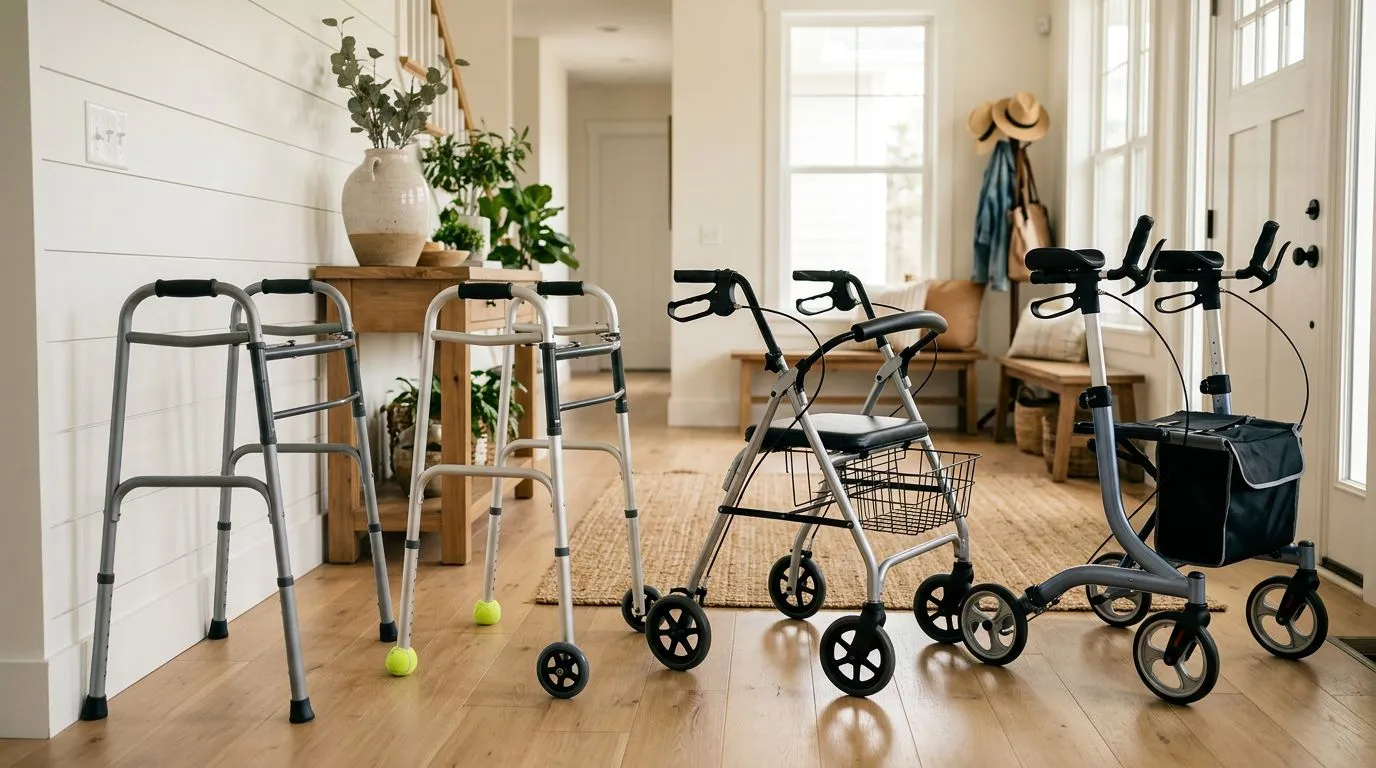
How Much Does a Mobility Walker Cost? Price Ranges for Walkers, Rollators, and Upright Models
13 min read
Cheap Rollator Walkers: Safety and Comfort Trade-Offs to Check Before You Buy
14 min read